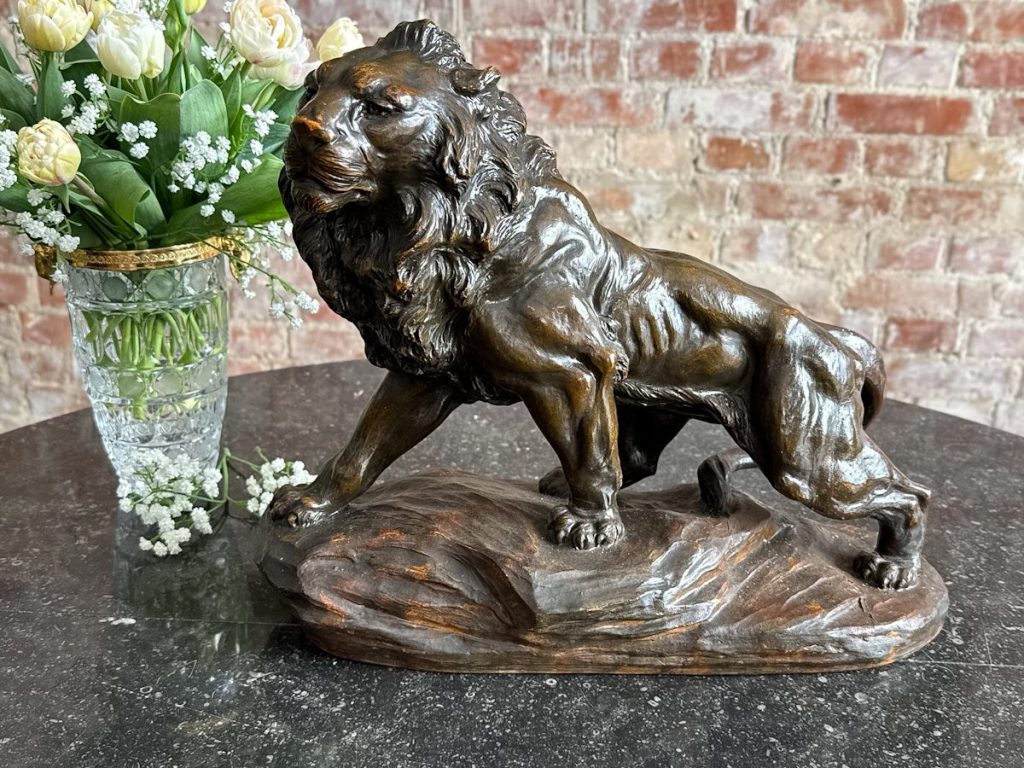
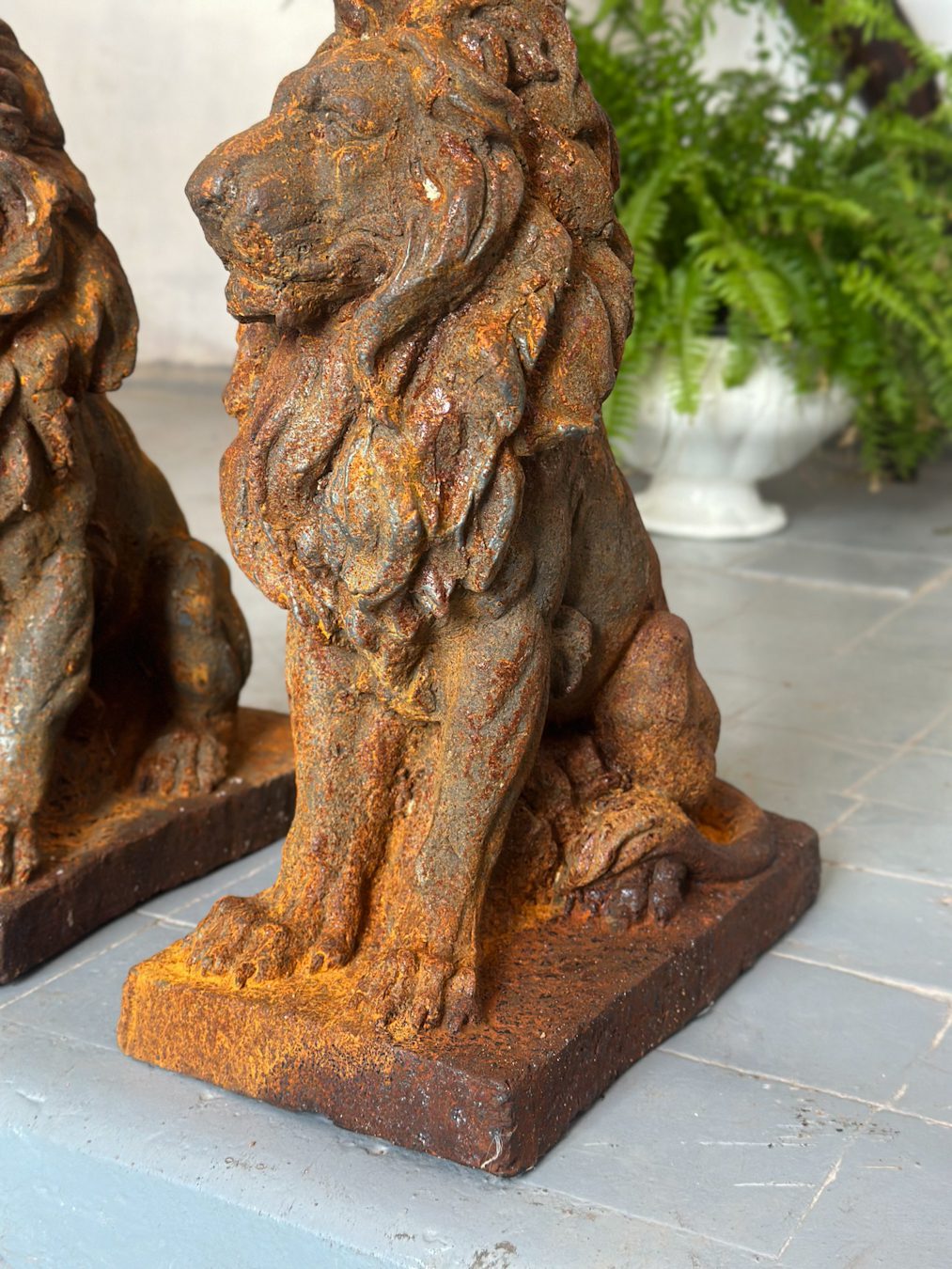
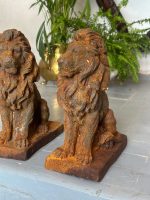
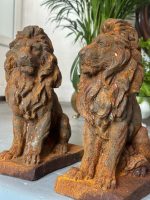
A pair of cast iron lions with a rusted effect—a late 19th-century European foundry tradition. This set, priced for the pair, embodies the Historicism era’s decorative garden and architectural sculpture, making monumental art accessible beyond palaces. Featuring classic design with rich, natural rust patina, these lions are perfect for outdoor spaces or as an eclectic interior accent. 430,00 €
You’re now subscribed to price tracking for this product. We’ll notify you if the price drops. 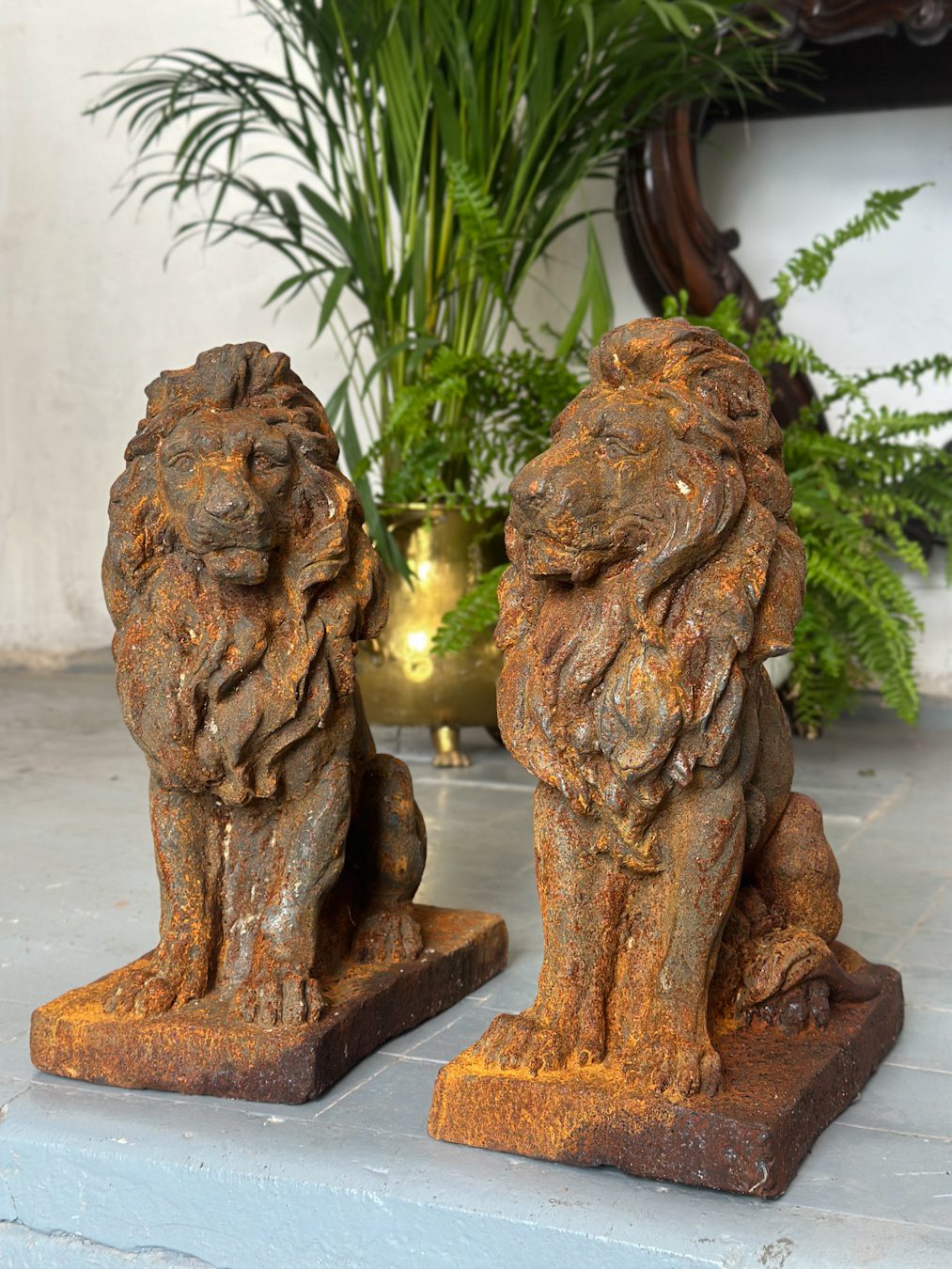
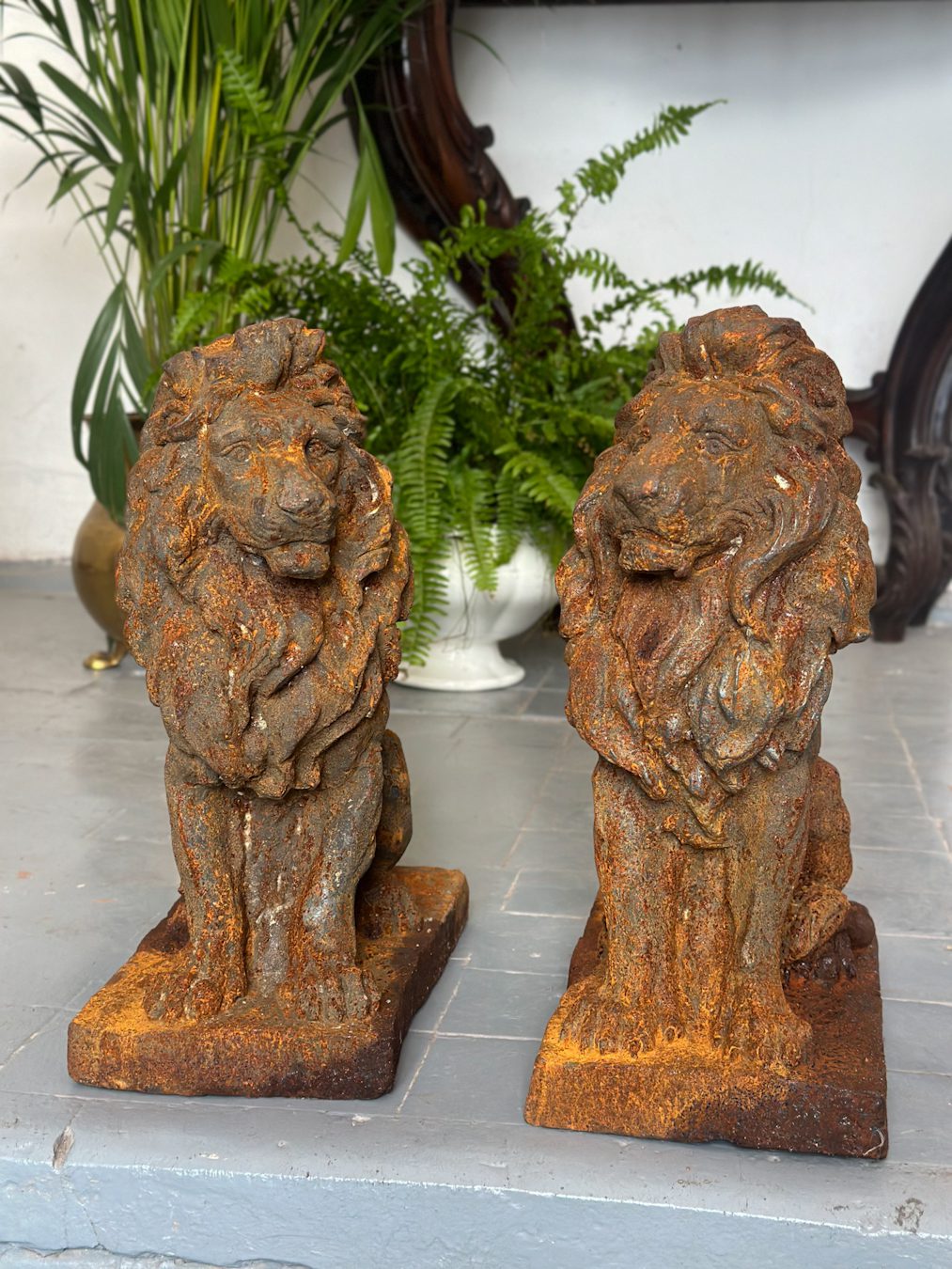
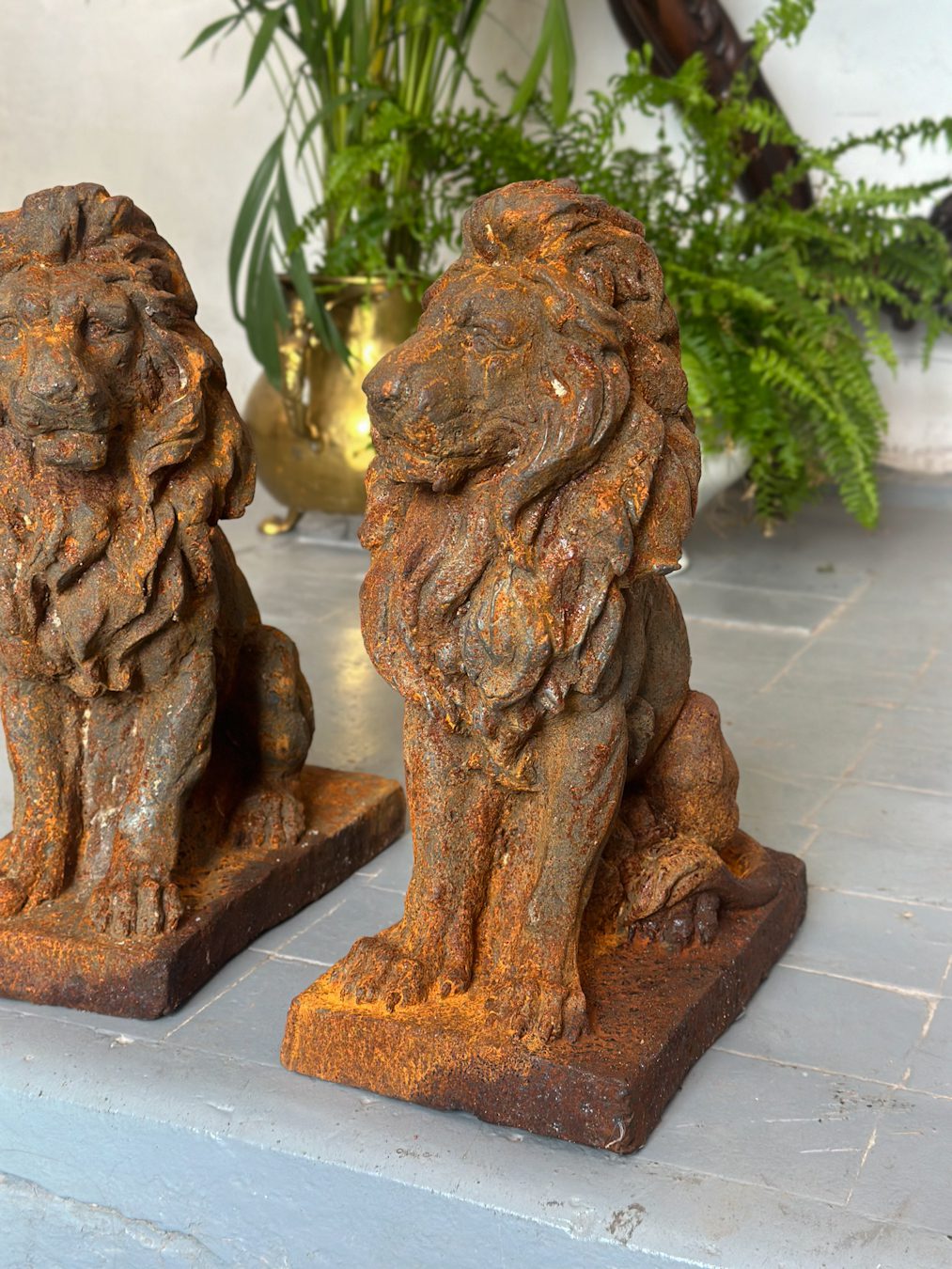
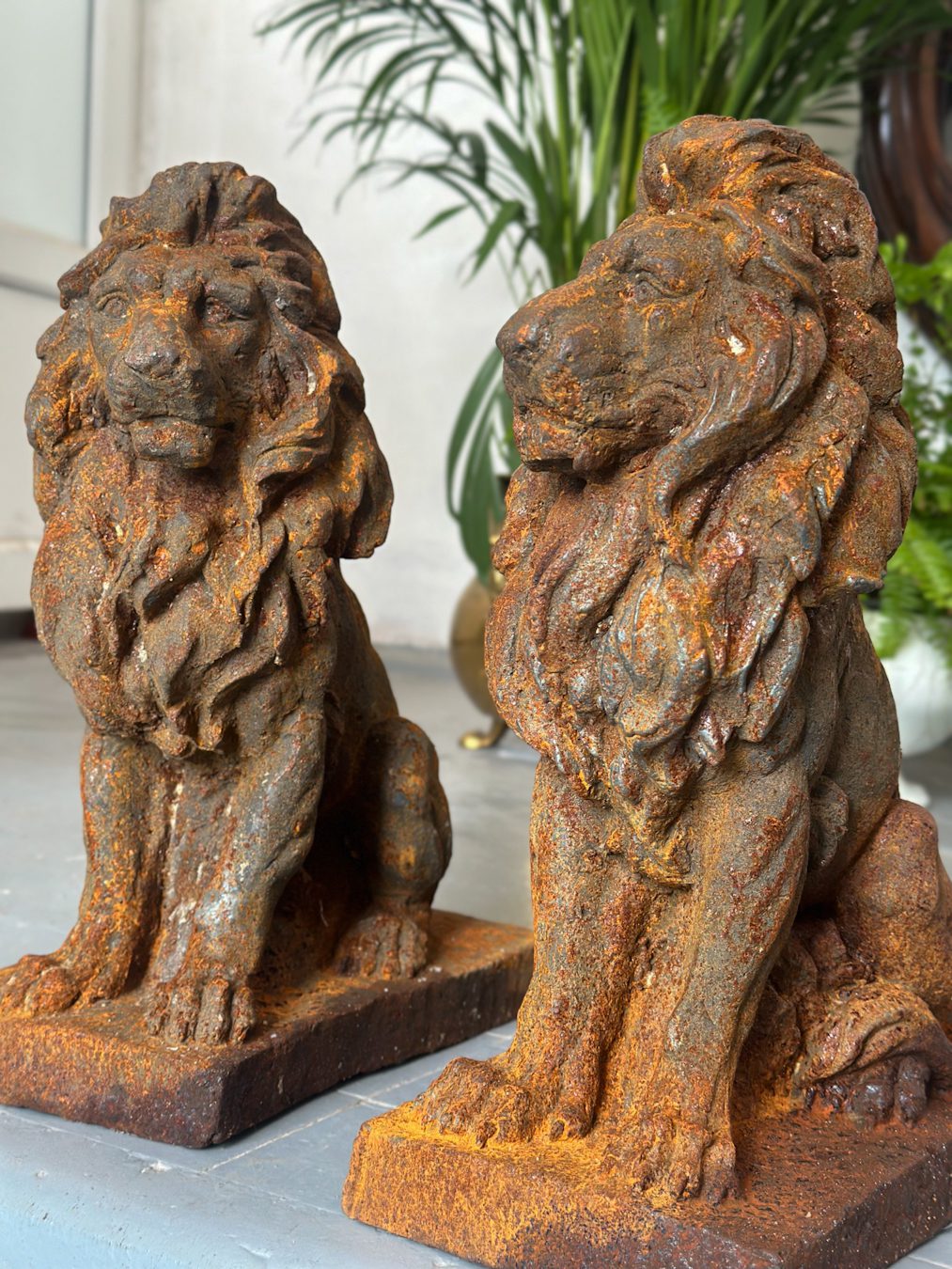
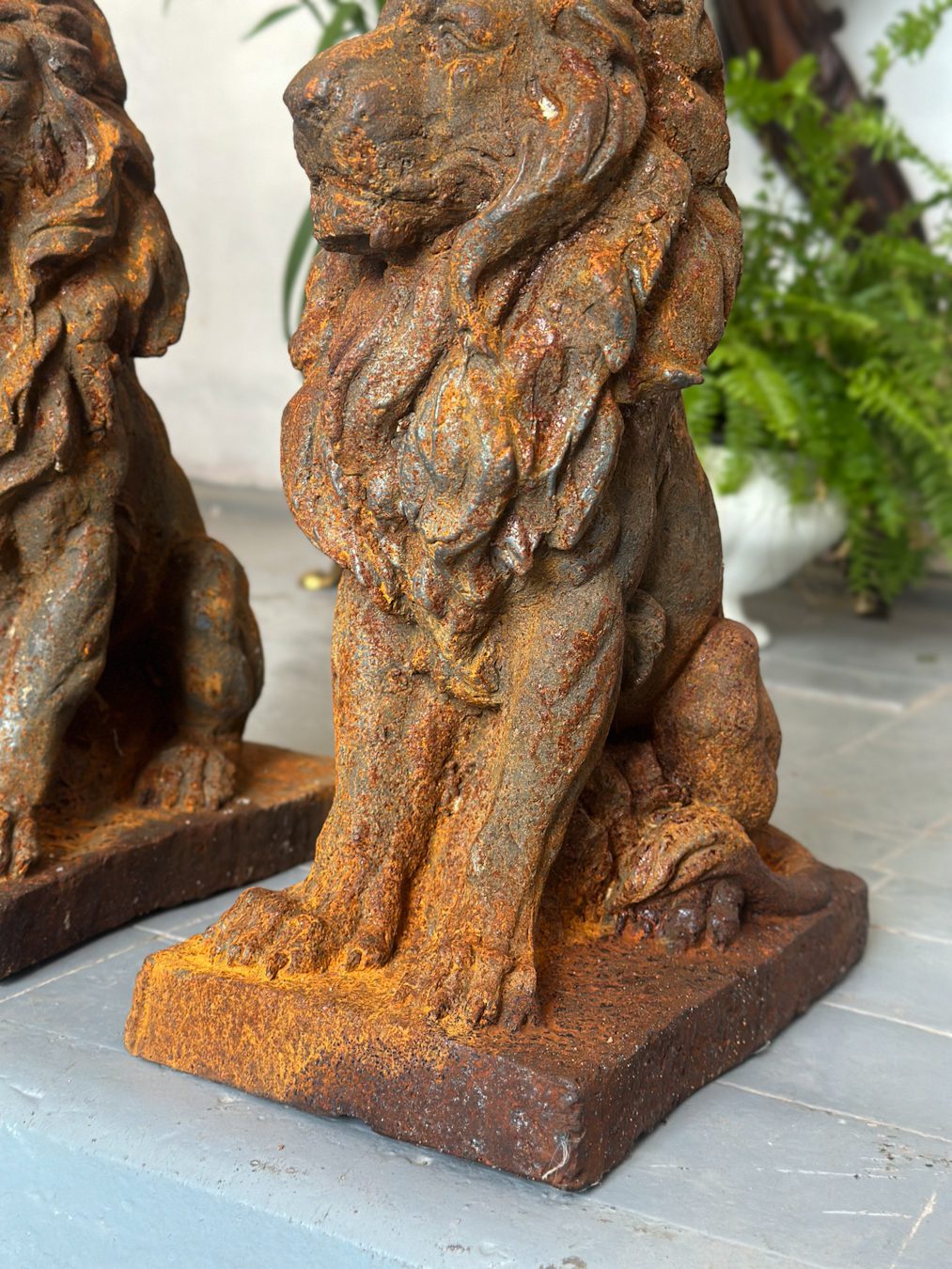
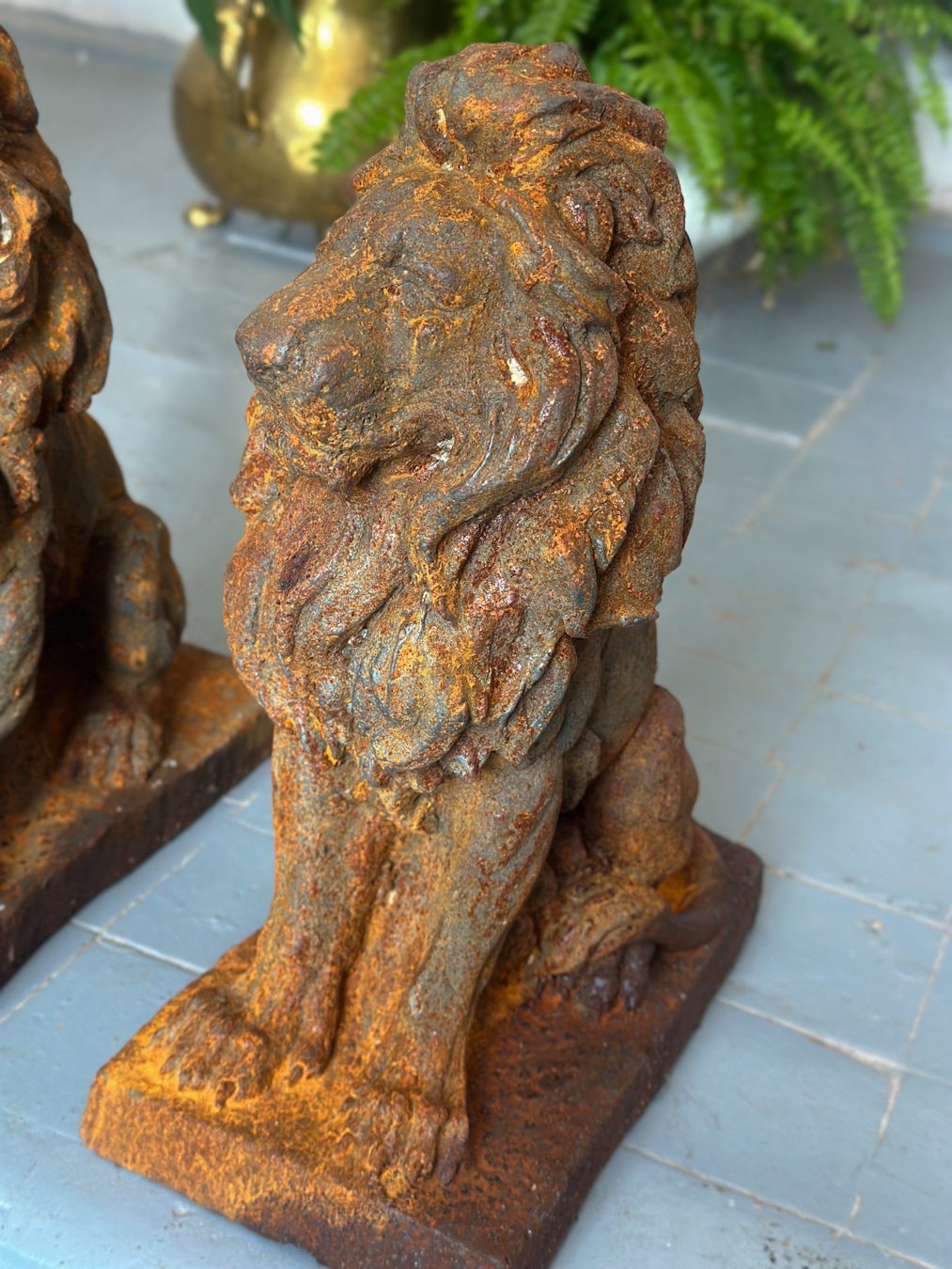
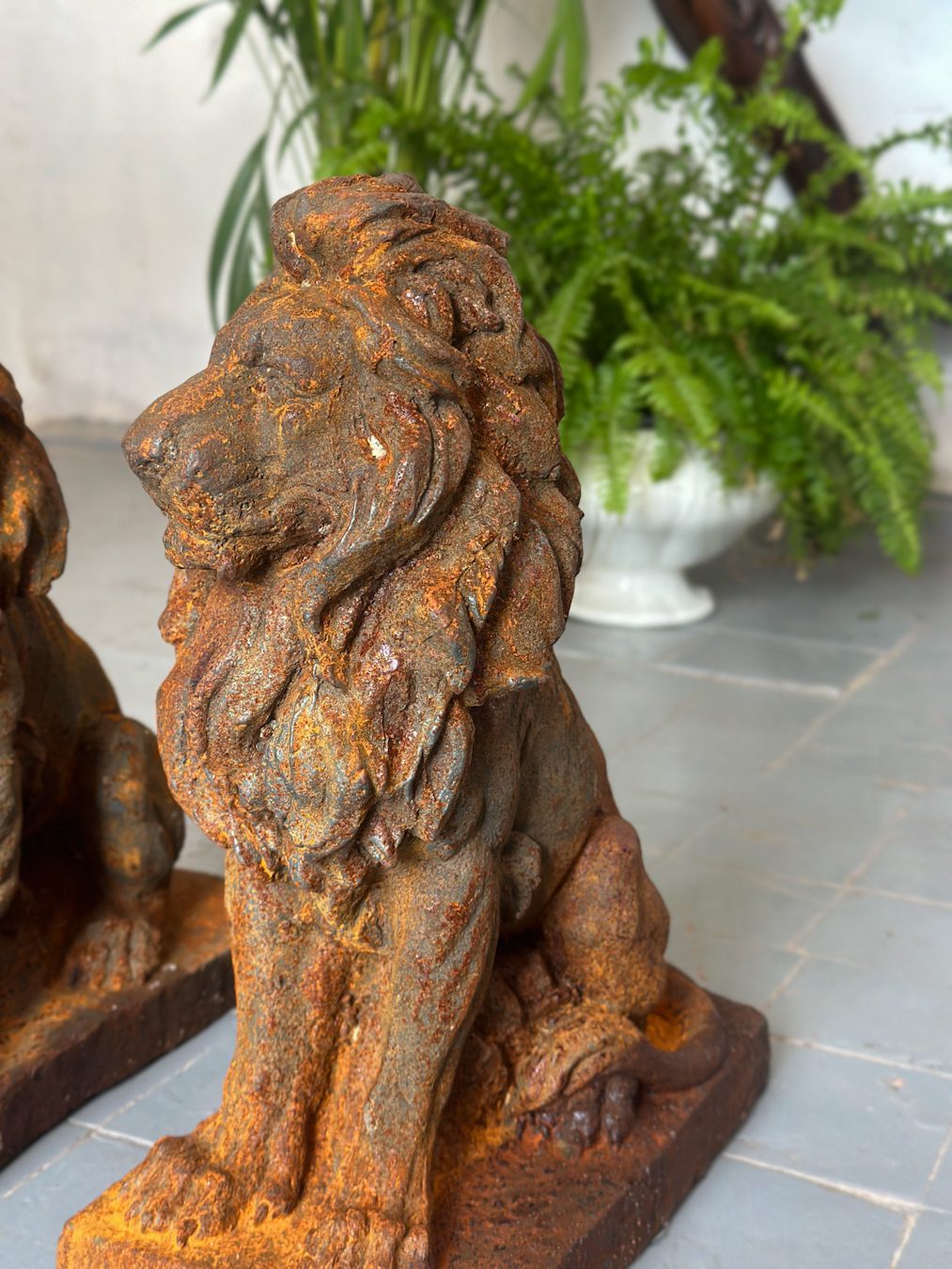
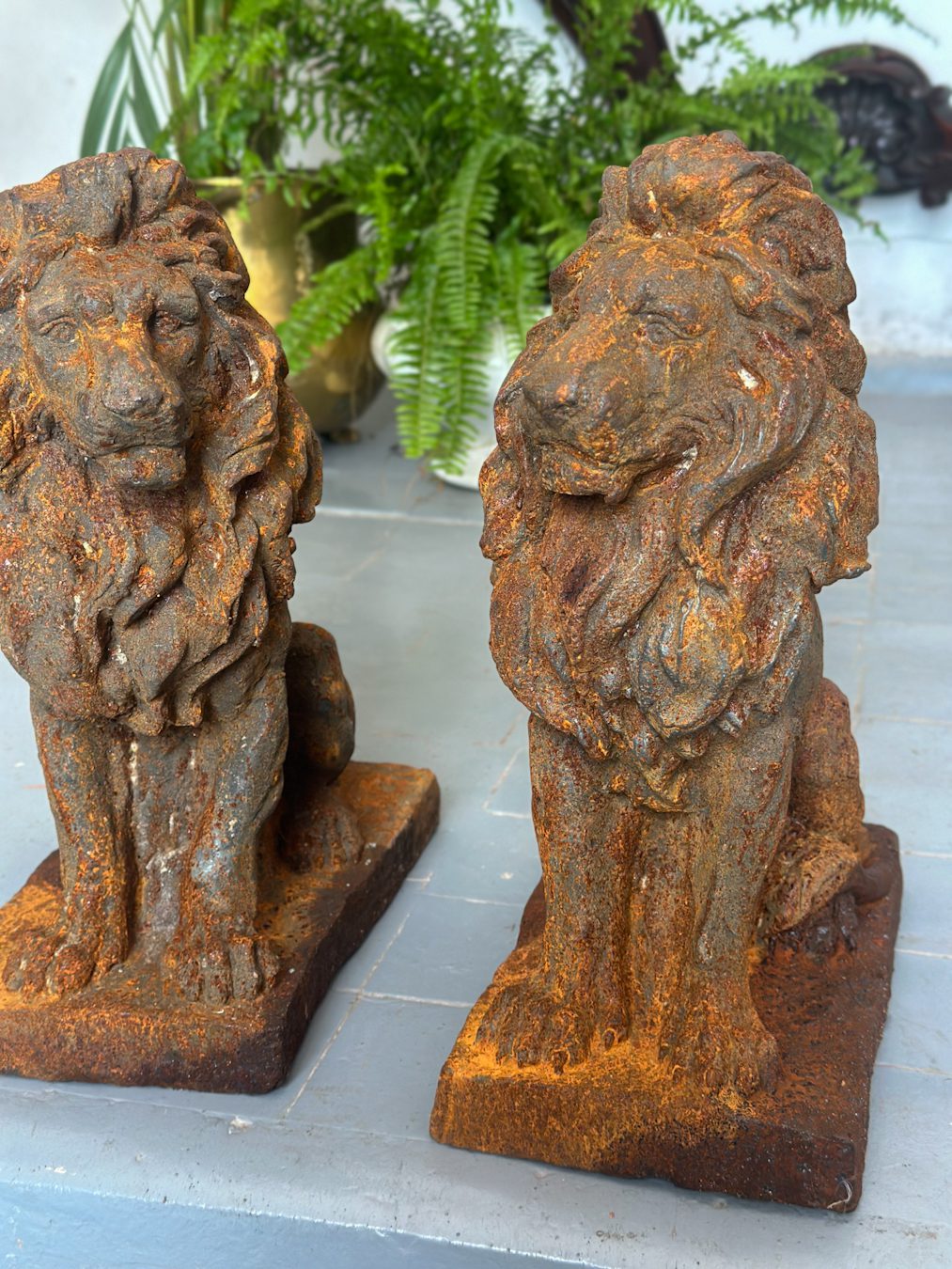
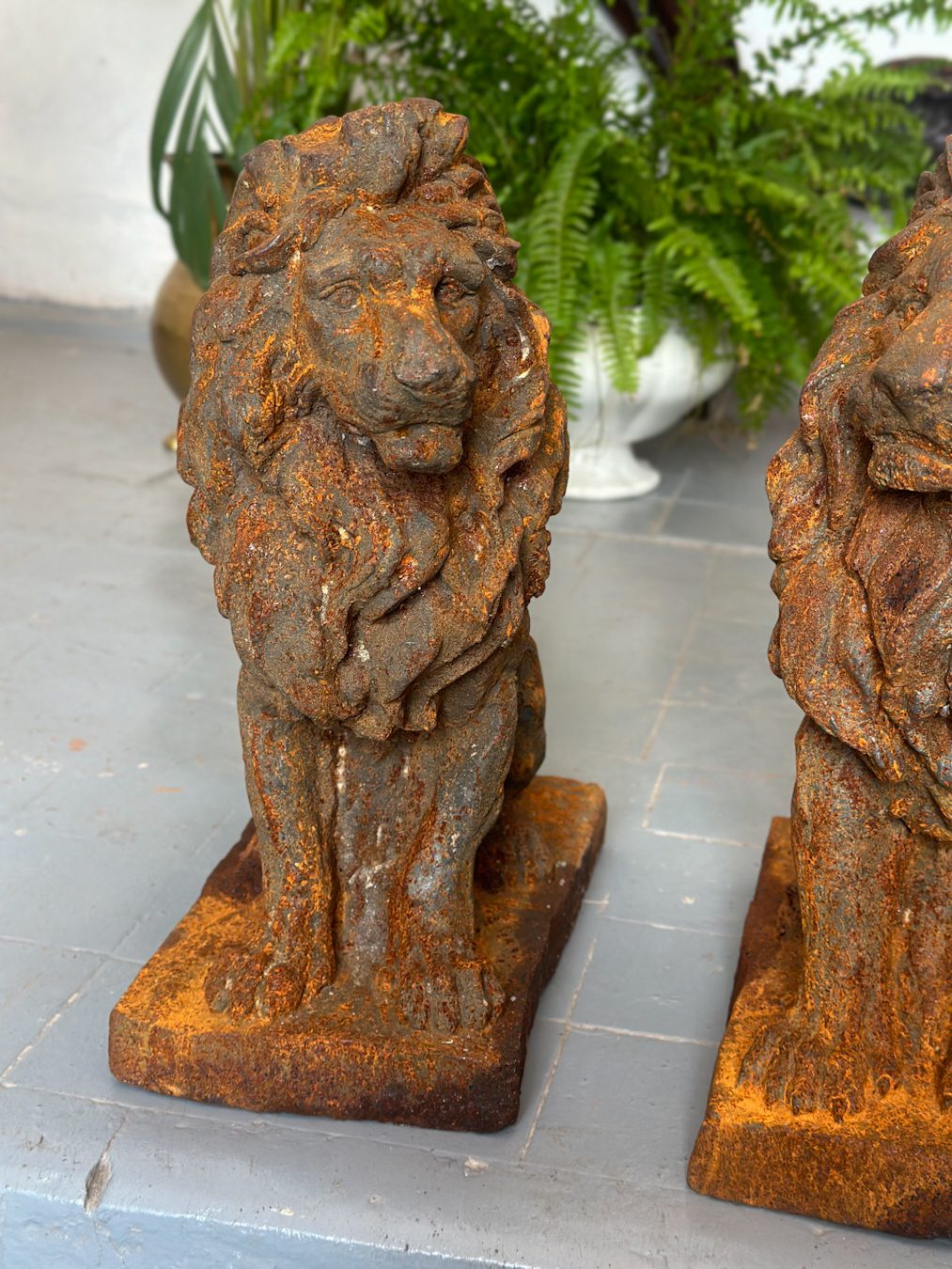
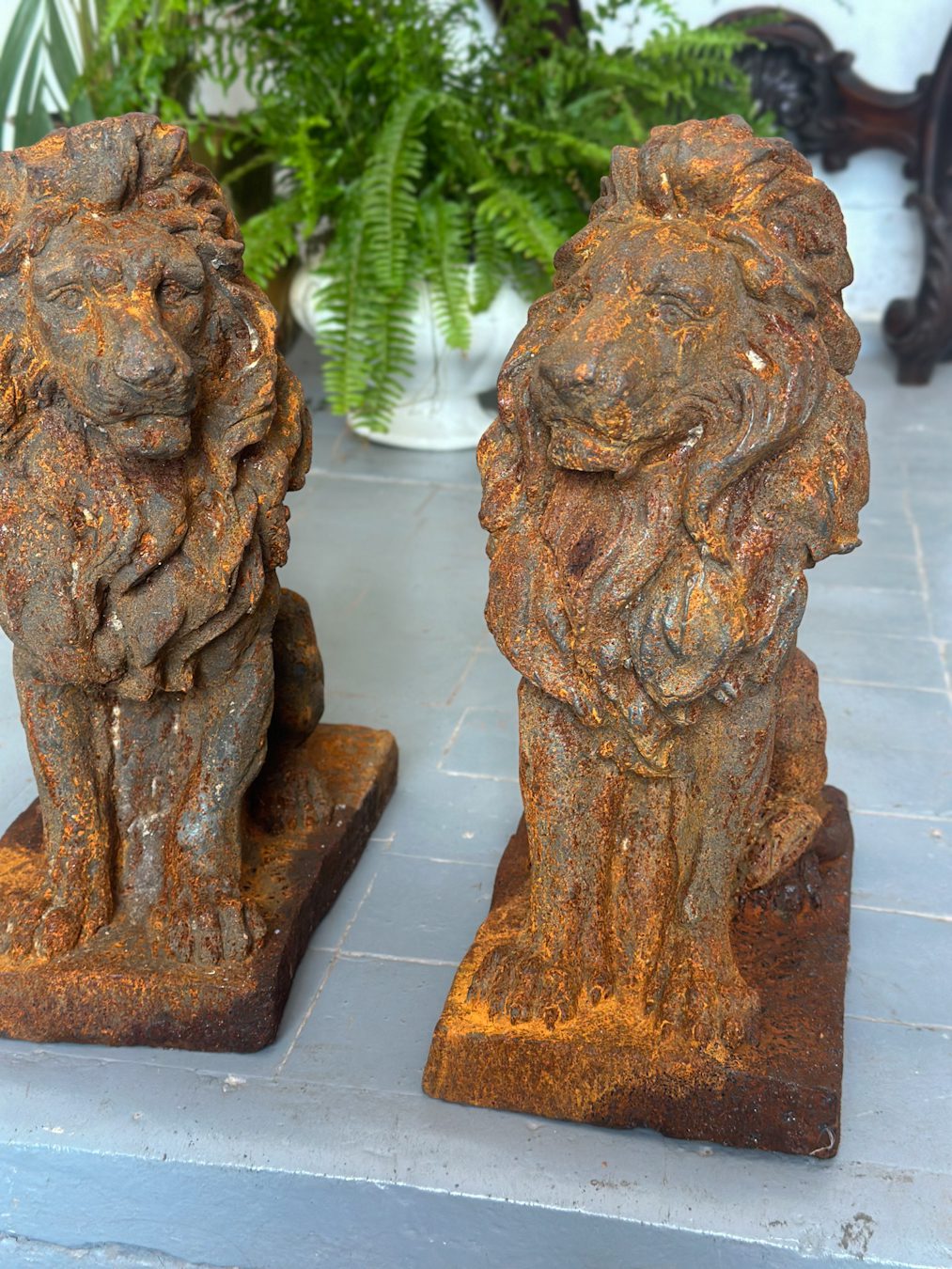
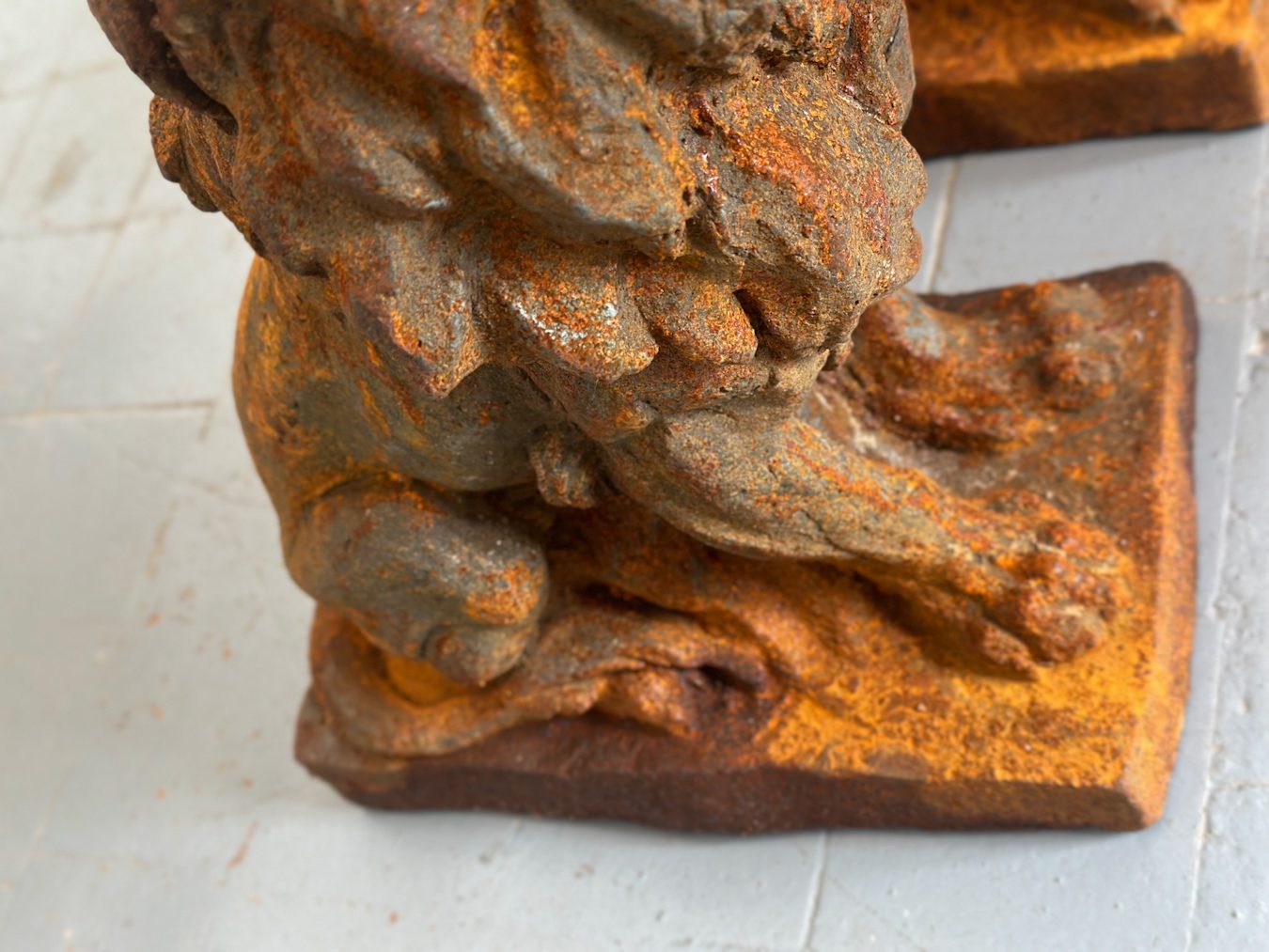
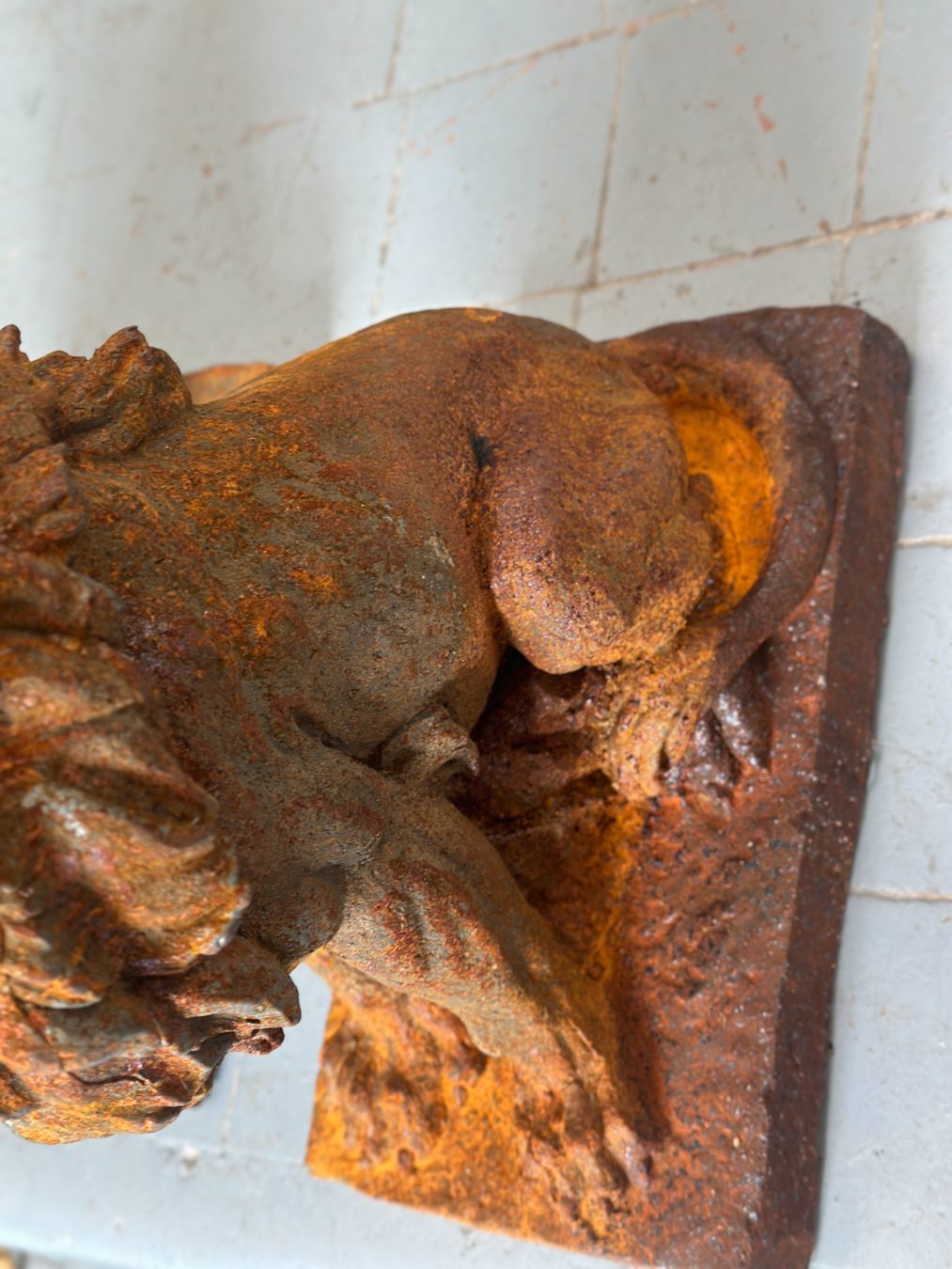
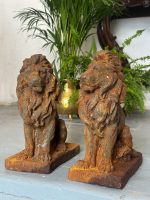
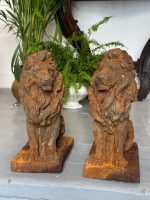
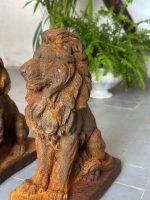
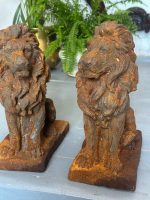
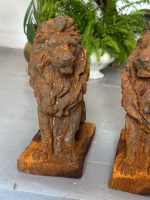
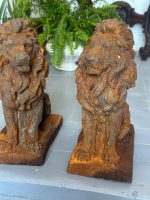
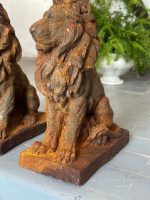
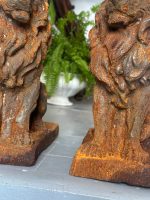
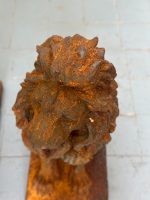
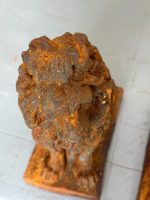
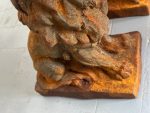
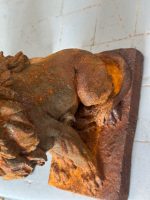
Cast Iron Lion Pair with Rusted Effect, Sitting Lions — Cast Iron, European Foundry Tradition, Late 19th Century (4878)
Height 37 cm Width 14 cm Color BrownNaturalOrange
Description
Pair of Seated Lions — Cast Iron, European Foundry Tradition, Late 19th — Early 20th Century
Belle Époque period snapshot: In the autumn of 1897, Émile Zola purchased a new property in Médan on the Seine and instructed his workers to build a new set of gate piers. While the masons worked, he stood a little to one side, hands in pockets, watching as two cast iron lions were set into place. Then he went inside and said almost nothing over dinner.
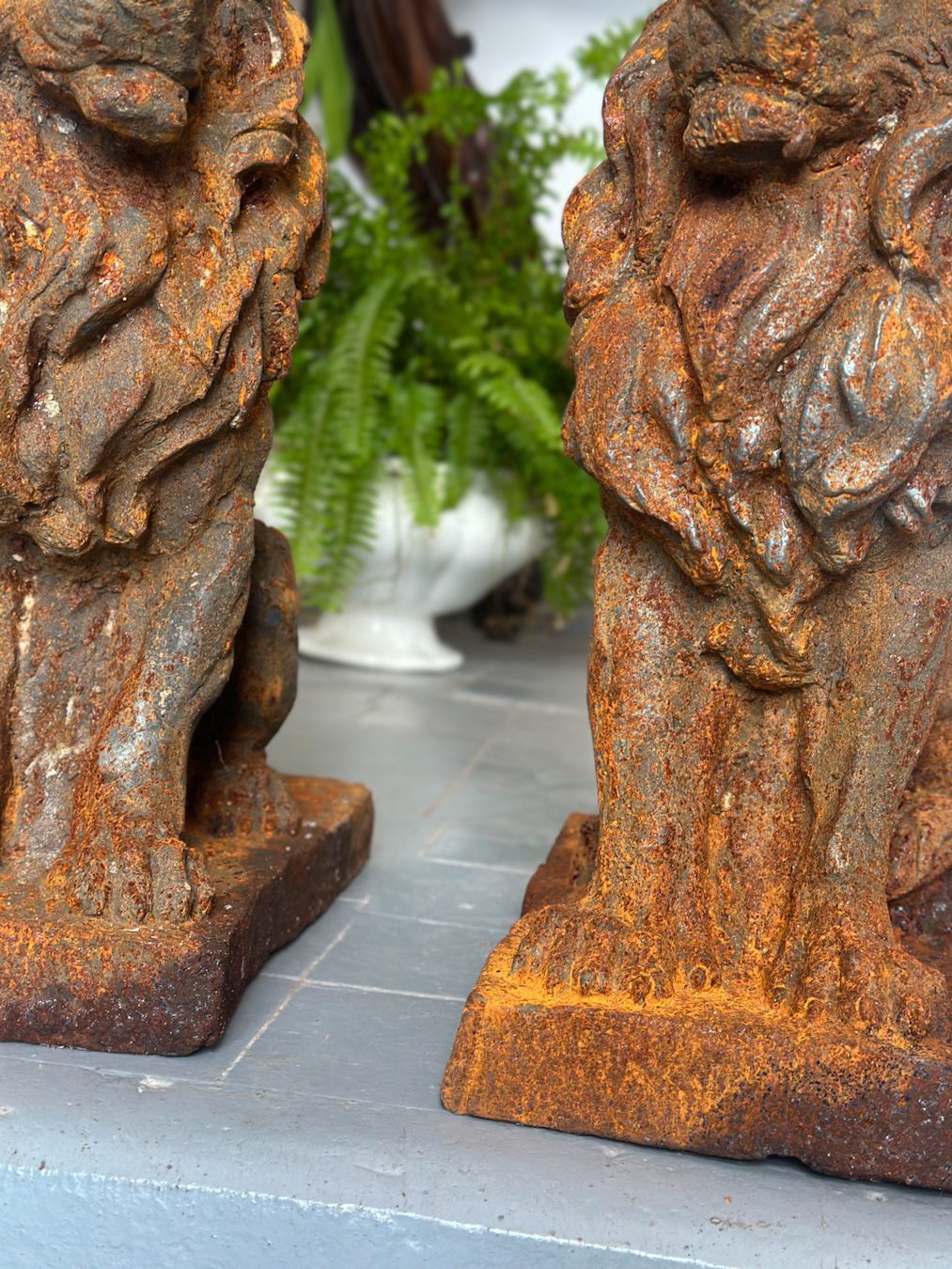
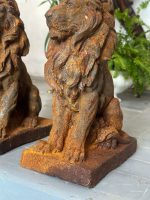
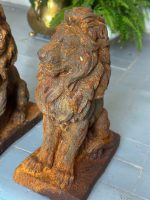
This matched paire belongs to the decorative sculptural tradition of the Historicism era, when advances in cast iron technology made monumental garden sculpture accessible to the prosperous bourgeoisie across Europe — from town houses to Pestates and Imperial civic buildings. The model is a classic symmetrical pair, each lion turned slightly away from the other — evidence of a deliberately conceived compositional set. The manes are rendered with deep relief, the paws with anatomical precision characteristic of high-quality 19th-century foundry work.
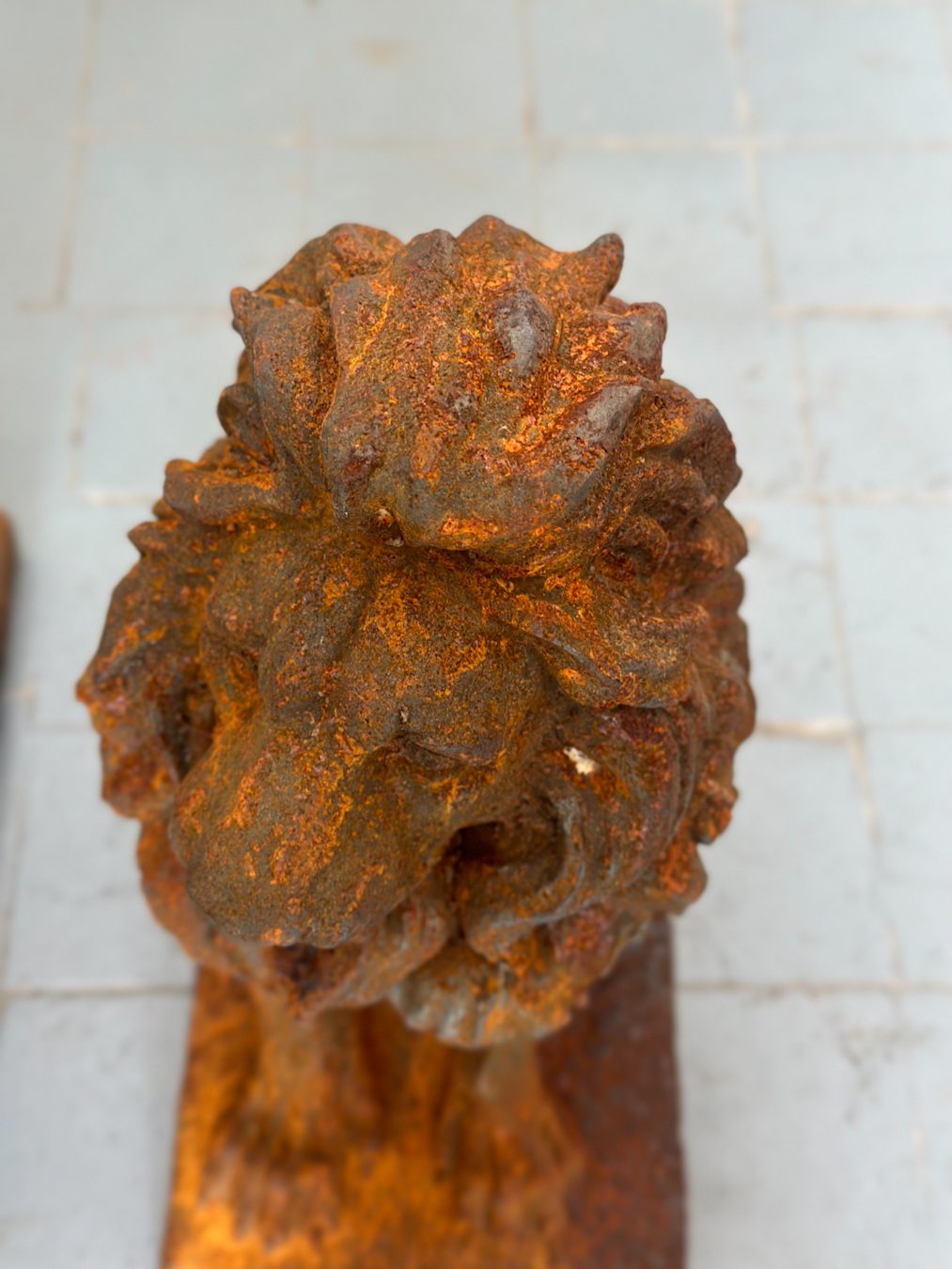
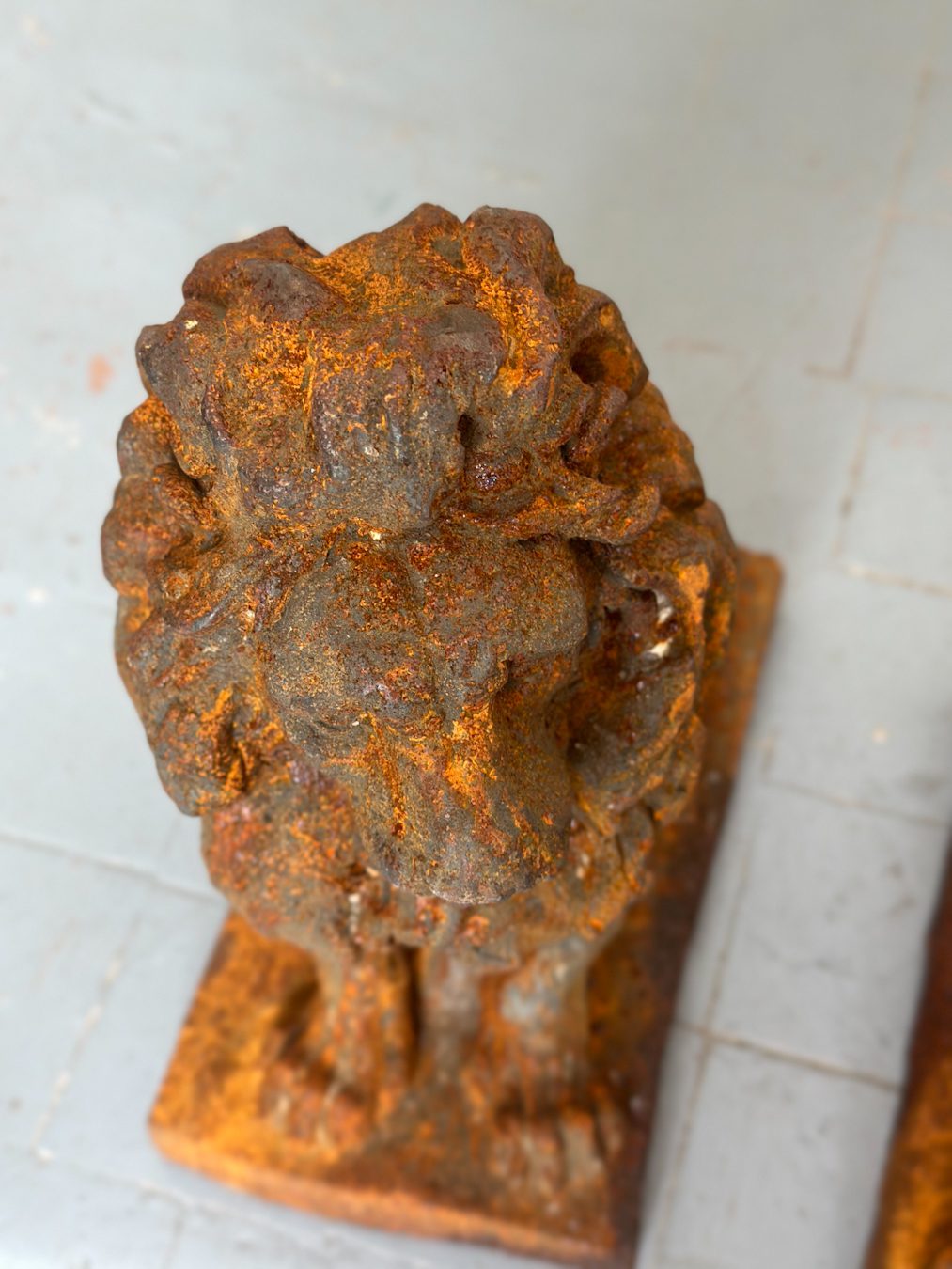
The surface carries a rich, naturally formed rust patina in orange-brown tones layered over the grey-green metal ground — decades of weathering that no artificial treatment can convincingly replicate. No foundry mark is present, which is typical of mass-produced architectural ornament of this period, when multiple competing , and foundries produced identical catalogue models in parallel.
Well-preserved cast iron lion paires with intact natural patina and confirmed matching sets are increasingly rare. Most comparable examples have been separated or painted over. The sculptures are equally suited to exterior use — flanking gate piers, terrace steps, or garden entrances — and to interior settings such as industrial loft spaces, eclectic living rooms, or entrance halls.
The condition of the item is fully reflected in the photographs.
⚠️ This item is not an original of the period indicated, but rather a stylistic continuation — produced in this aesthetic tradition in the mid-20th century.
Höhe: 37 cm. Tiefe: 27 cm. Breite: 14 cm.
Preis für 2 Stück (Set — paire).
Paire de lions assis — fonte de fer, tradition de fonderie européenne, fin XIXe — début XXe siècle
Instantané de l’époque Belle Époque : À l’automne 1897, Émile Zola fit l’acquisition d’une nouvelle propriété à Médan, au bord de la Seine, et chargea ses ouvriers d’élever de nouveaux piliers de portail. Pendant que les maçons travaillaient, il se tenait un peu en retrait, les mains dans les poches, à regarder deux lions de fonte prendre leur place. Puis il rentra et ne dit presque rien au dîner.
Cette paire s’inscrit dans la tradition de la plastique décorative de l’ère Historiciste, quand le développement de la fonte permit à la haute bourgeoisie européenne d’orner ses villas et propriétés de sculptures monumentales. Les deux lions forment un ensemble compositionnel intentionnel, légèrement tournés l’un vers l’opposé de l’autre. La crinière est traitée en haut-relief, les pattes avec une précision anatomique caractéristique du meilleur moulage du XIXe siècle.
La surface porte une riche patine de rouille naturelle en tons orange-brun, formée sur des décennies — impossible à reproduire artificiellement. Aucune marque de fonderie n’est présente, ce qui est courant pour les ornements architecturaux de série de cette époque, produits parallèlement par plusieurs fonderies es, anglaises et allemandes concurrentes.
Ces lions conviennent parfaitement à une utilisation extérieure — de part et d’autre d’un portail, au bas d’un escalier de terrasse ou à l’entrée d’un jardin — ainsi qu’à un intérieur dans le style loft industriel ou éclectique.
L’état de la pièce est entièrement reflété dans les photographies.