

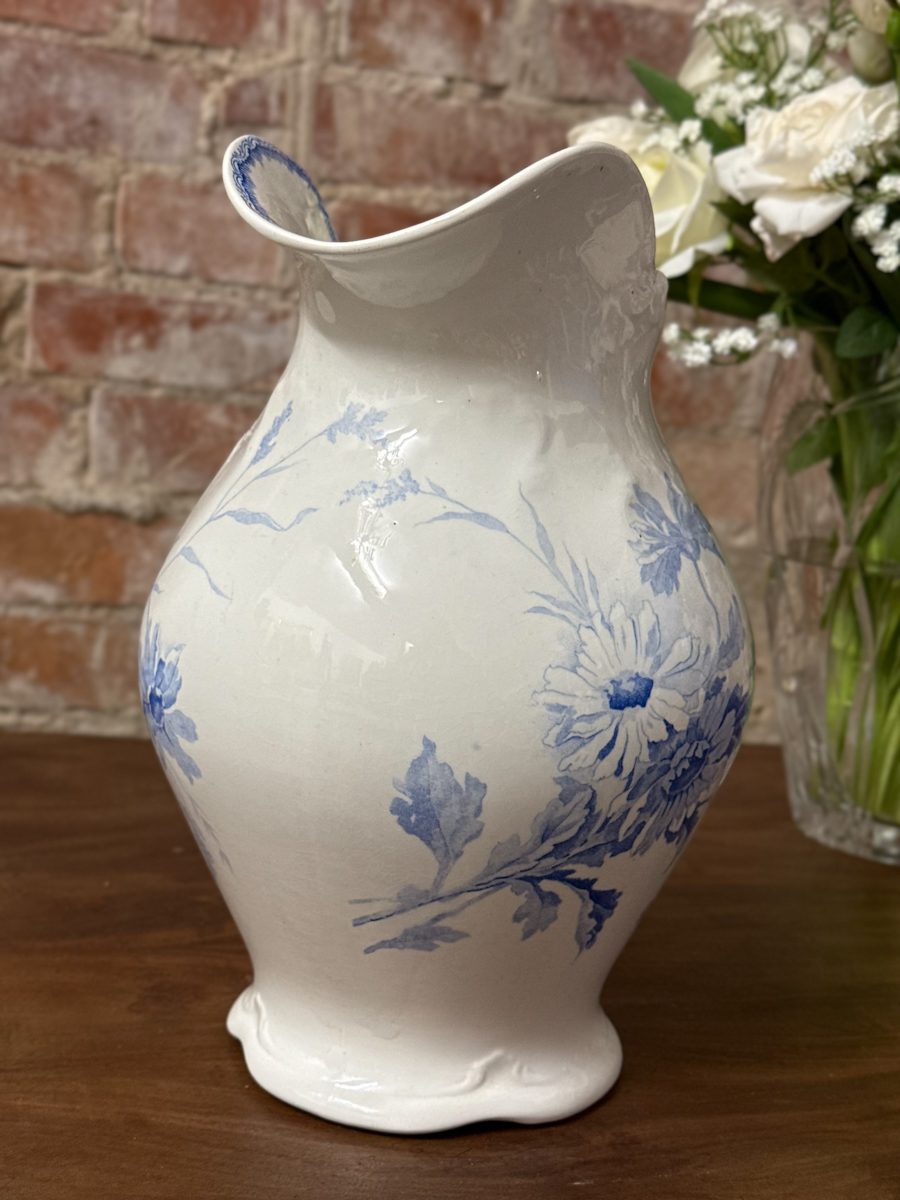
Antique Ceramic Water Pitcher “Margot” — Société Céramique, Maastricht, Netherlands A large and elegant ceramic water pitcher decorated in the classic blue-and-white floral style. The body has a generous baluster form with a wide, scalloped rim, an elegantly curved spout,… 140,00 €
You’re now subscribed to price tracking for this product. We’ll notify you if the price drops. 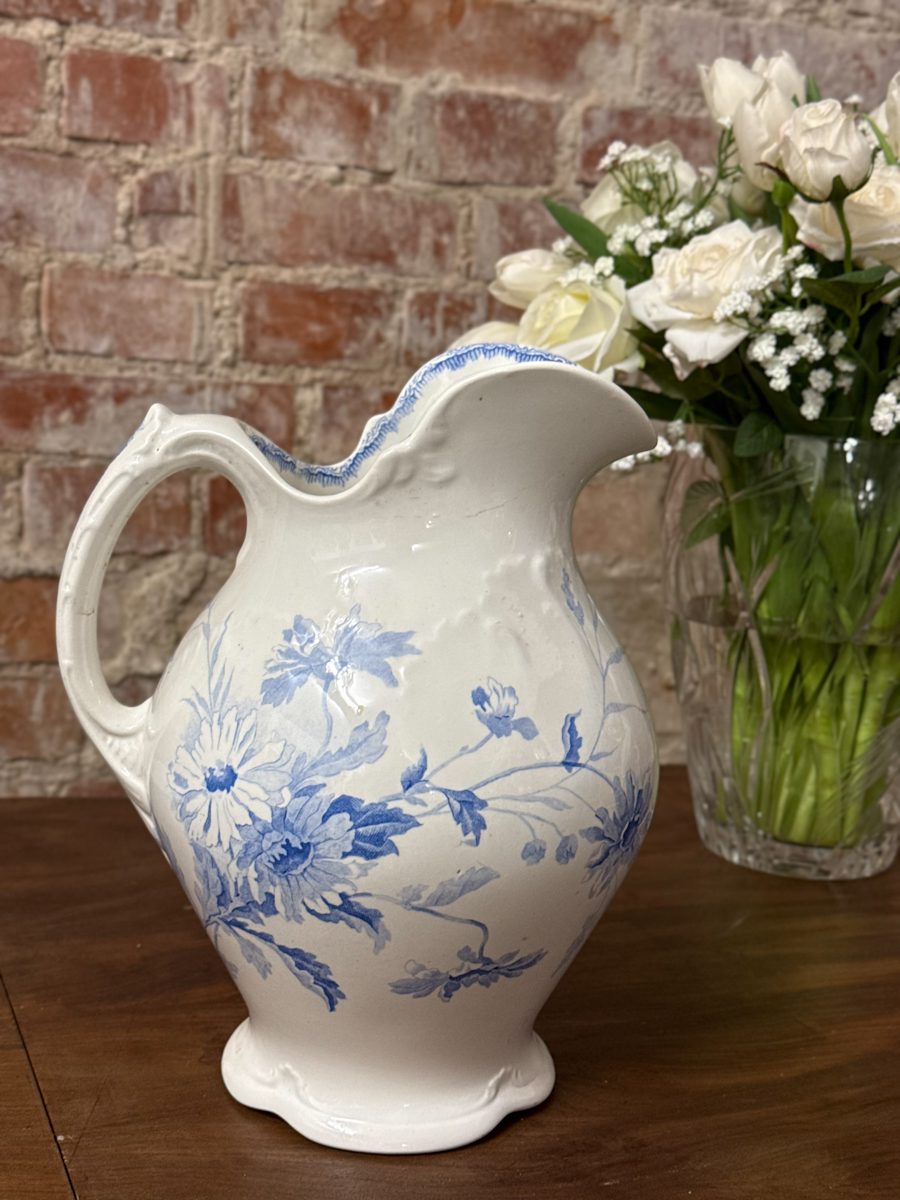
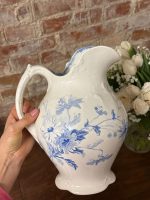
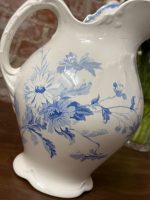
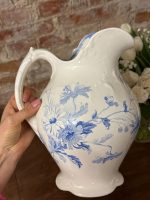
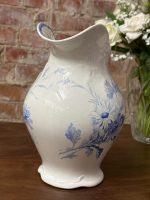
White pitcher with blue floral motifs (6246)
Height 31 cm Width 22 cm
Description
Height 31cm, width ~22cm.
Antique Ceramic Water Pitcher “Margot” — Société Céramique, Maastricht, Netherlands
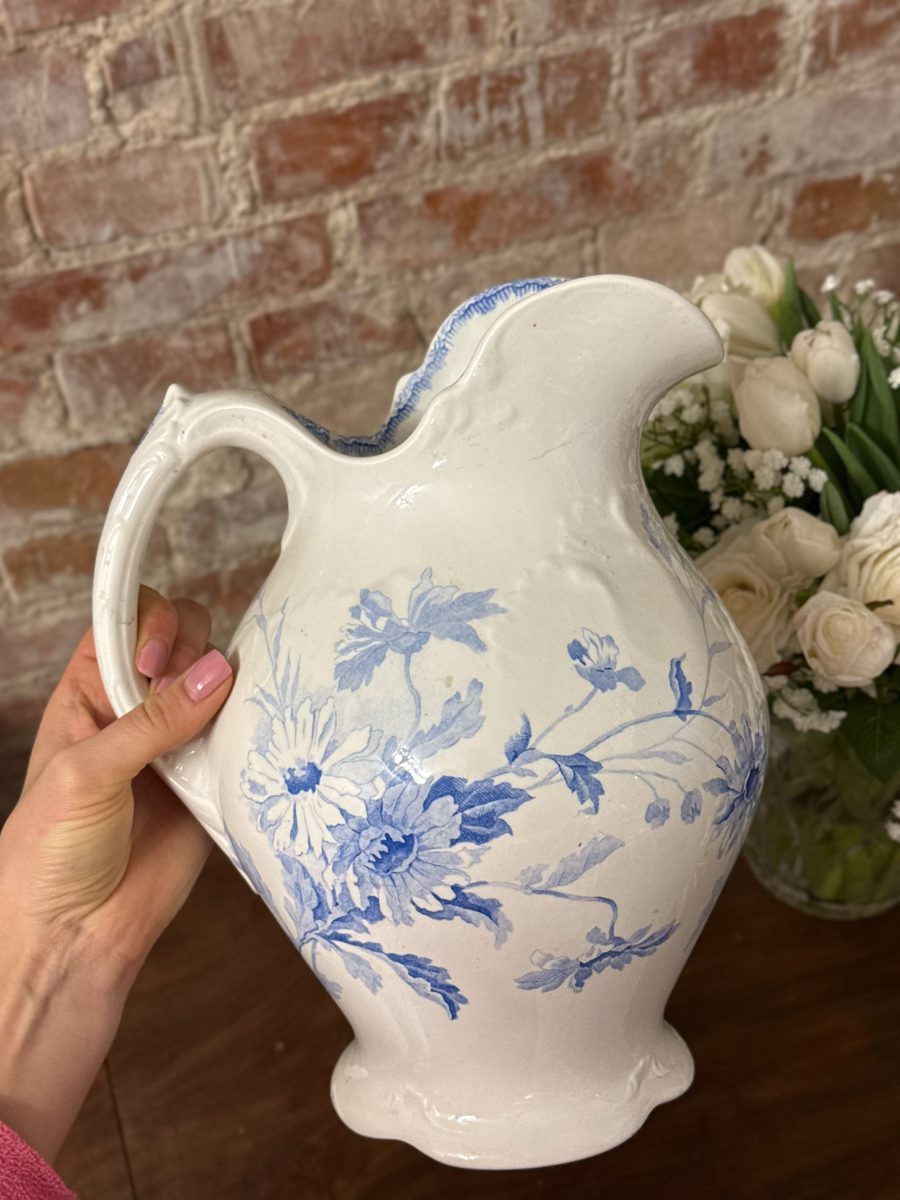
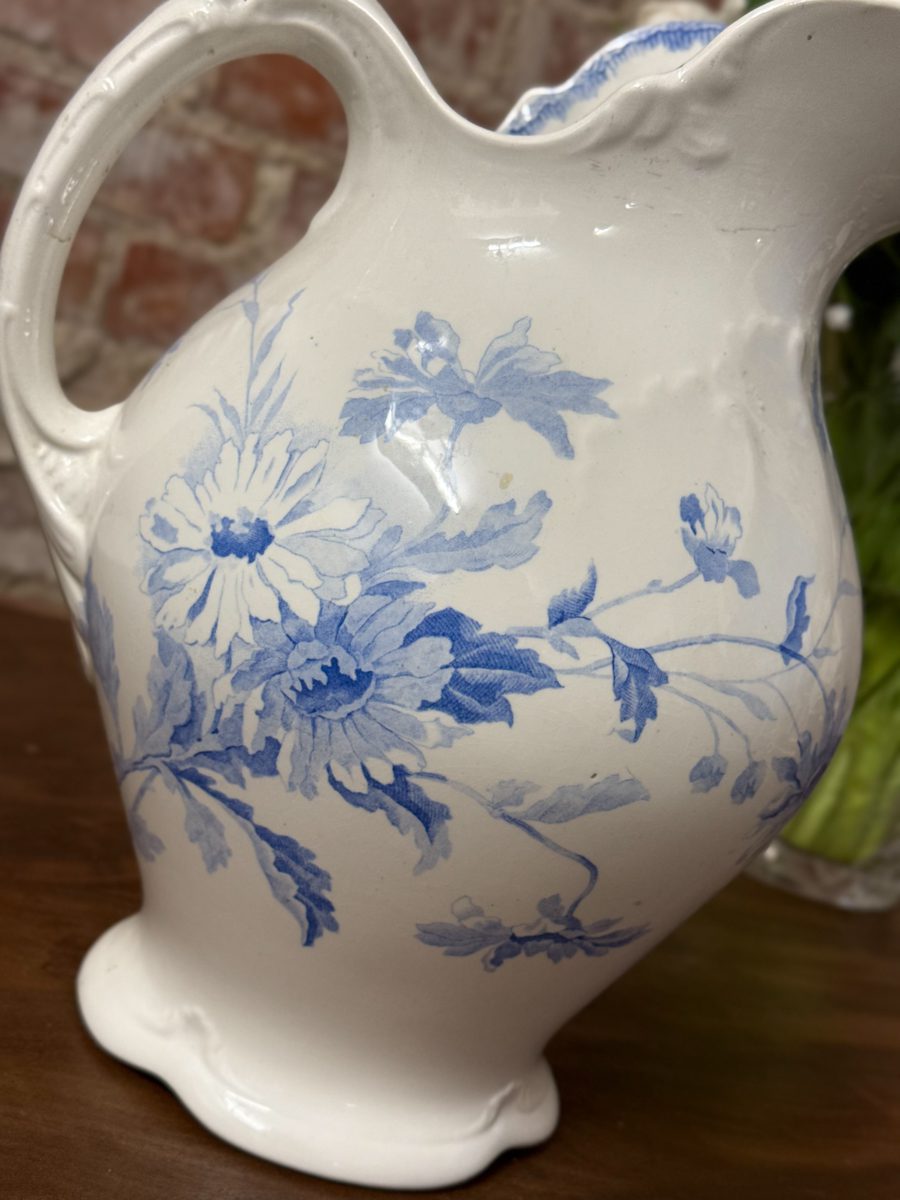
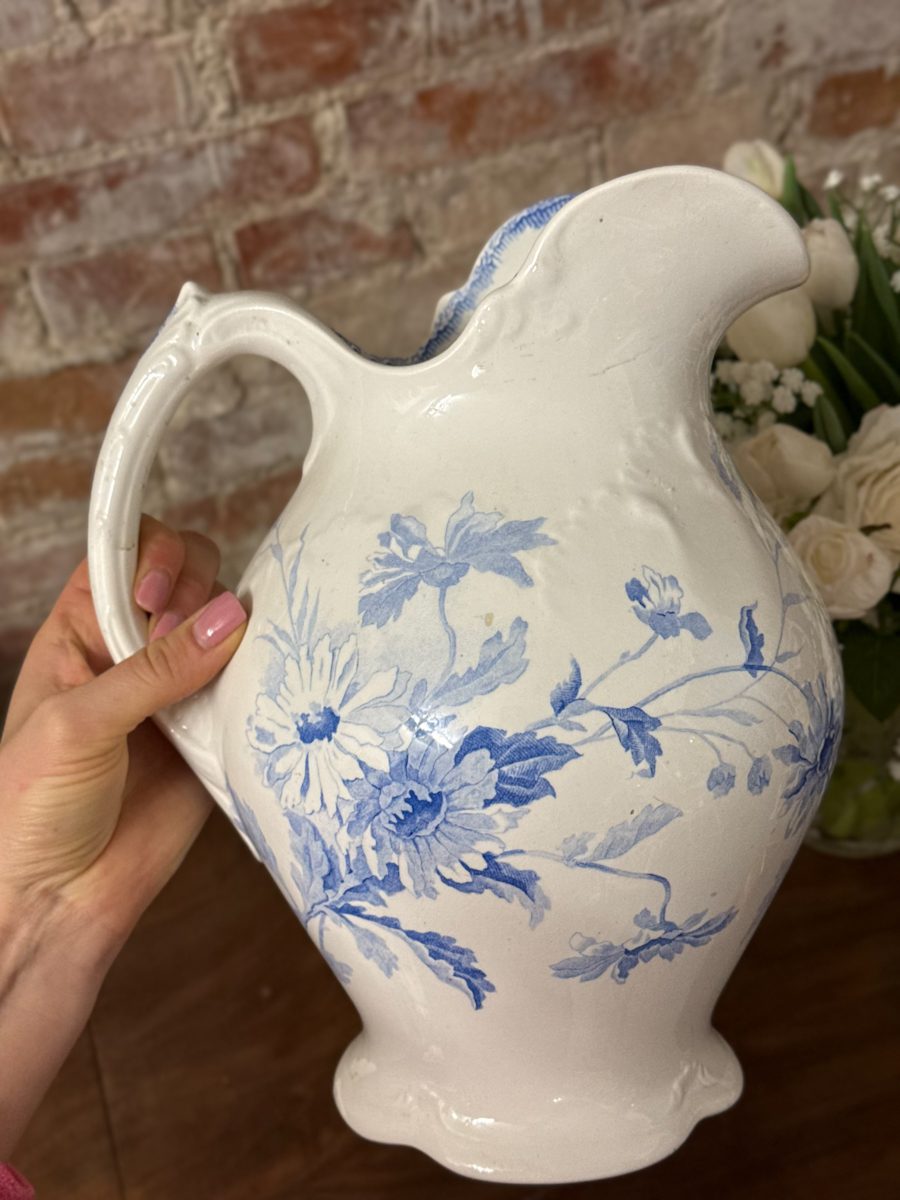
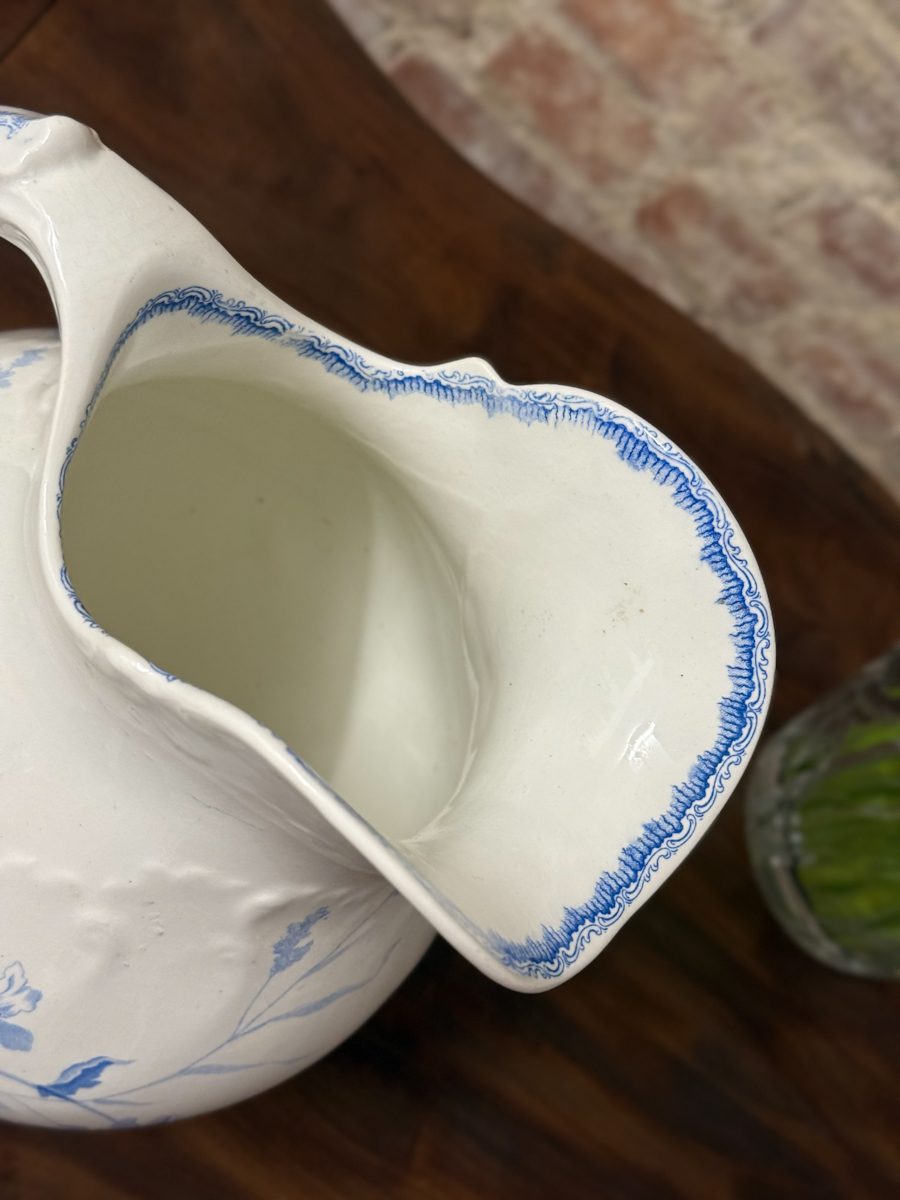
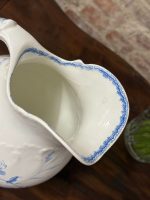
A large and elegant ceramic water pitcher decorated in the classic blue-and-white floral style. The body has a generous baluster form with a wide, scalloped rim, an elegantly curved spout, and a scrolled handle. The surface is decorated using the transfer-printing technique with the “Margot” pattern — open chrysanthemums, buds, and trailing foliage rendered in soft blue on a white ground, giving the piece a light and airy character.
Artistic Style and Period
The pitcher was made in the late Victorian style, typical of the late 19th to early 20th century (approximately 1880–1910). Prior to 1870, transfer decorations were executed in a single colour — black, blue, red, or violet — while multicoloured transfers dominated the period from 1870 through 1900. The monochromatic blue decoration on this piece points to a date of around 1870–1890. The naturalistic floral motifs on ironstone earthenware were a hallmark of both British and continental European domestic ceramics of the era. WorthPoint
Maker’s Mark and Manufacturer History
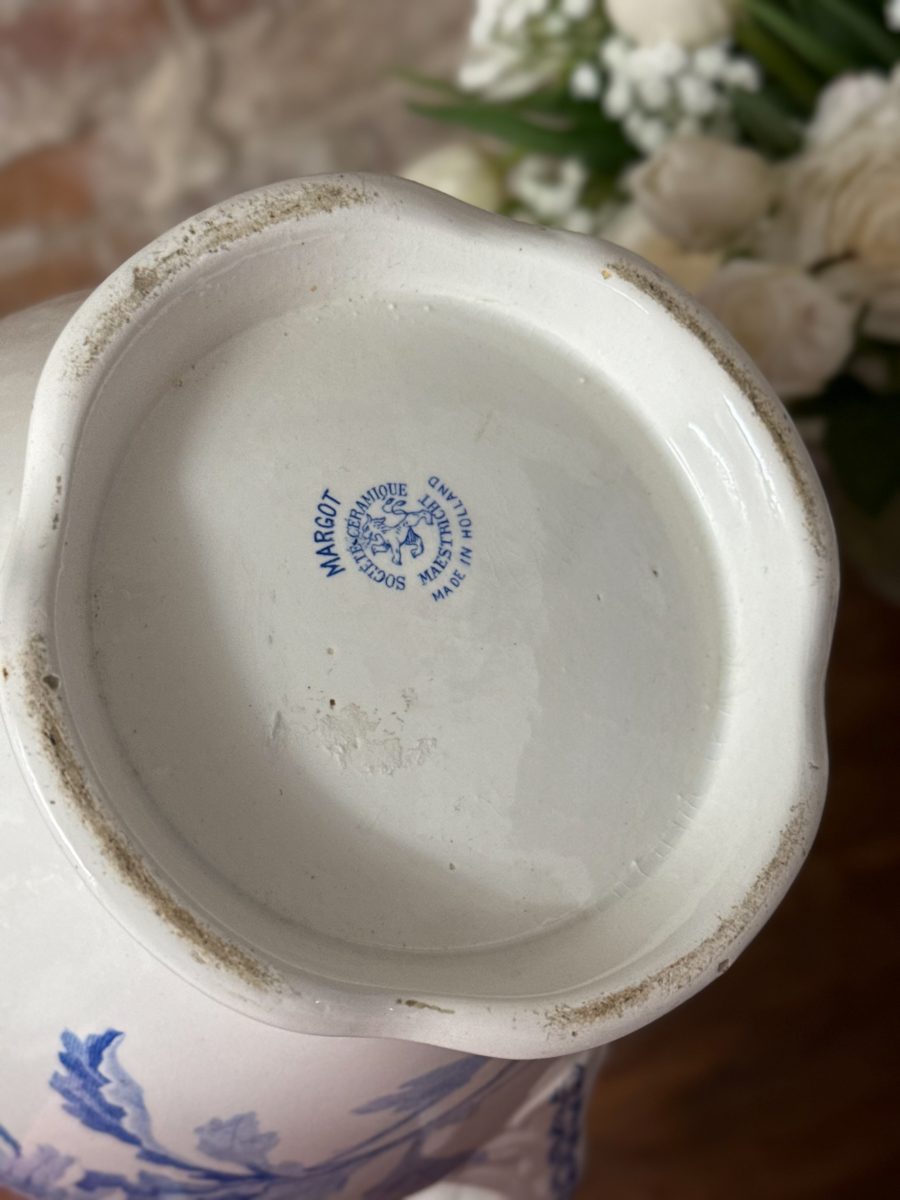
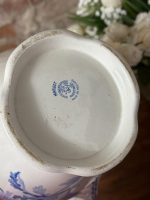
The underside bears a printed blue mark featuring a prancing lion within a circular inscription reading “SOCIÉTÉ CÉRAMIQUE / MAESTRICHT / MADE IN HOLLAND,” with the pattern name “MARGOT” printed above.
The entrepreneurs Winand Nicolaas Clermont and Charles Chainaye founded a pottery in 1851 in the Maastricht neighbourhood of Wijck. Their company was taken over in 1859 by Belgian engineer Guillaume Lambert and transformed into a limited partnership. Four years later it became a limited liability company that became generally known as Société Céramique. Under the directorate of Victor Jaunez (1863–1913), engineer P.J. Lengersdorff (1902–1915), and Edgar Michel (1915–1954), Société Céramique flourished and became the main competitor of Petrus Regout’s firm, which was renamed Sphinx in 1899. museum-digital:land
Société Céramique produced sturdy and high-quality domestic ceramics combined with artistic design. Around 1900, the products of Société Céramique rivalled those of Sphinx in both price and quality. In the twentieth century, the company shifted its focus increasingly towards sanitary ware production, and in 1958 it unexpectedly merged with its Maastricht competitor Sphinx. Today, the former factory site in the Céramique district of Maastricht is a cultural quarter, with the Centre Céramique — a library and cultural centre — named in the company’s honour. Frey Antiquesmuseum-digital:land
Condition
The pitcher is in good overall condition considering its age. Signs of age are present, including minor discolouration of the glaze, small marks on the base, and light surface spotting. No chips or cracks are visible. The condition of the item is fully reflected in the photographs.
In
Antique Ceramic Water Pitcher “Margot” — Société Céramique, Maastricht, Netherlands
Dimensions: Height 31 cm, Width ~22 cm
A large and elegant ceramic water pitcher decorated in the classic blue-and-white floral style. The body has a generous baluster form with a wide, scalloped rim, an elegantly curved spout, and a scrolled handle. The surface is decorated using the transfer-printing technique with the “Margot” pattern — open chrysanthemums, buds, and trailing foliage rendered in soft blue on a white ground, giving the piece a light and airy character.
Artistic Style and Period
The pitcher was made in the late Victorian style, typical of the late 19th to early 20th century (approximately 1880–1910). Prior to 1870, transfer decorations were executed in a single colour — black, blue, red, or violet — while multicoloured transfers dominated the period from 1870 through 1900. The monochromatic blue decoration on this piece points to a date of around 1870–1890. The naturalistic floral motifs on ironstone earthenware were a hallmark of both British and continental European domestic ceramics of the era. WorthPoint
Maker’s Mark and Manufacturer History
The underside bears a printed blue mark featuring a prancing lion within a circular inscription reading “SOCIÉTÉ CÉRAMIQUE / MAESTRICHT / MADE IN HOLLAND,” with the pattern name “MARGOT” printed above.
The entrepreneurs Winand Nicolaas Clermont and Charles Chainaye founded a pottery in 1851 in the Maastricht neighbourhood of Wijck. Their company was taken over in 1859 by Belgian engineer Guillaume Lambert and transformed into a limited partnership. Four years later it became a limited liability company that became generally known as Société Céramique. Under the directorate of Victor Jaunez (1863–1913), engineer P.J. Lengersdorff (1902–1915), and Edgar Michel (1915–1954), Société Céramique flourished and became the main competitor of Petrus Regout’s firm, which was renamed Sphinx in 1899. museum-digital:land
Société Céramique produced sturdy and high-quality domestic ceramics combined with artistic design. Around 1900, the products of Société Céramique rivalled those of Sphinx in both price and quality. In the twentieth century, the company shifted its focus increasingly towards sanitary ware production, and in 1958 it unexpectedly merged with its Maastricht competitor Sphinx. Today, the former factory site in the Céramique district of Maastricht is a cultural quarter, with the Centre Céramique — a library and cultural centre — named in the company’s honour. Frey Antiquesmuseum-digital:land
Condition
The pitcher is in good overall condition considering its age. Signs of age are present, including minor discolouration of the glaze, small marks on the base, and light surface spotting. No chips or cracks are visible. The condition of the item is fully reflected in the photographs.
Related Products
No account yet?
Create an Account