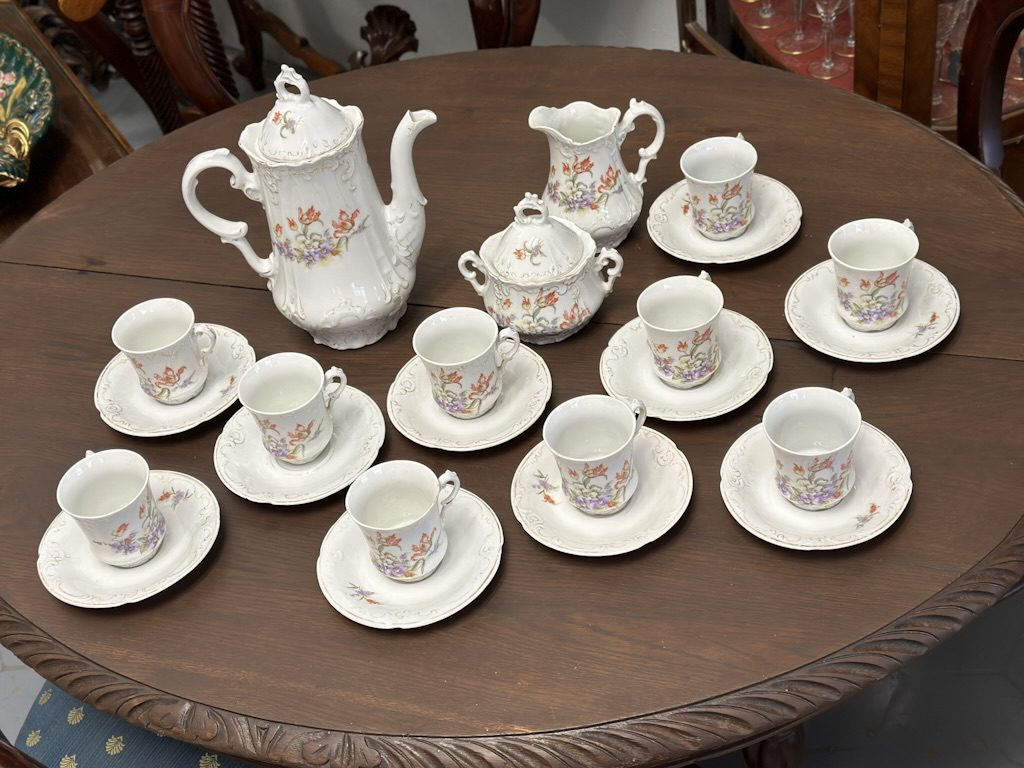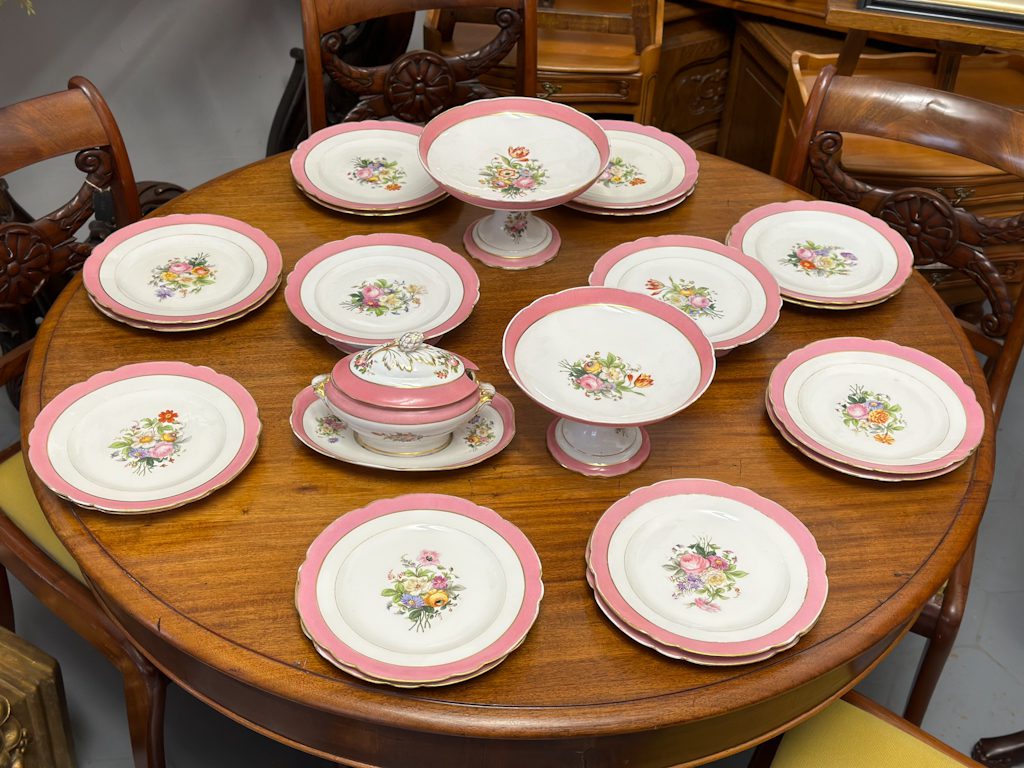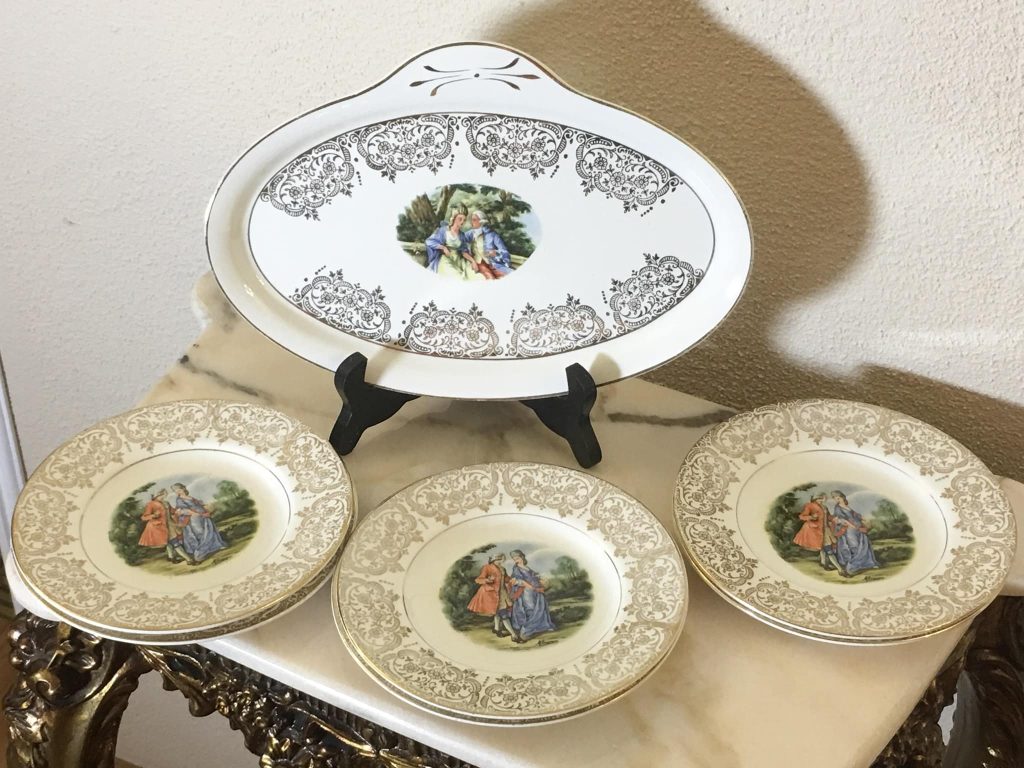
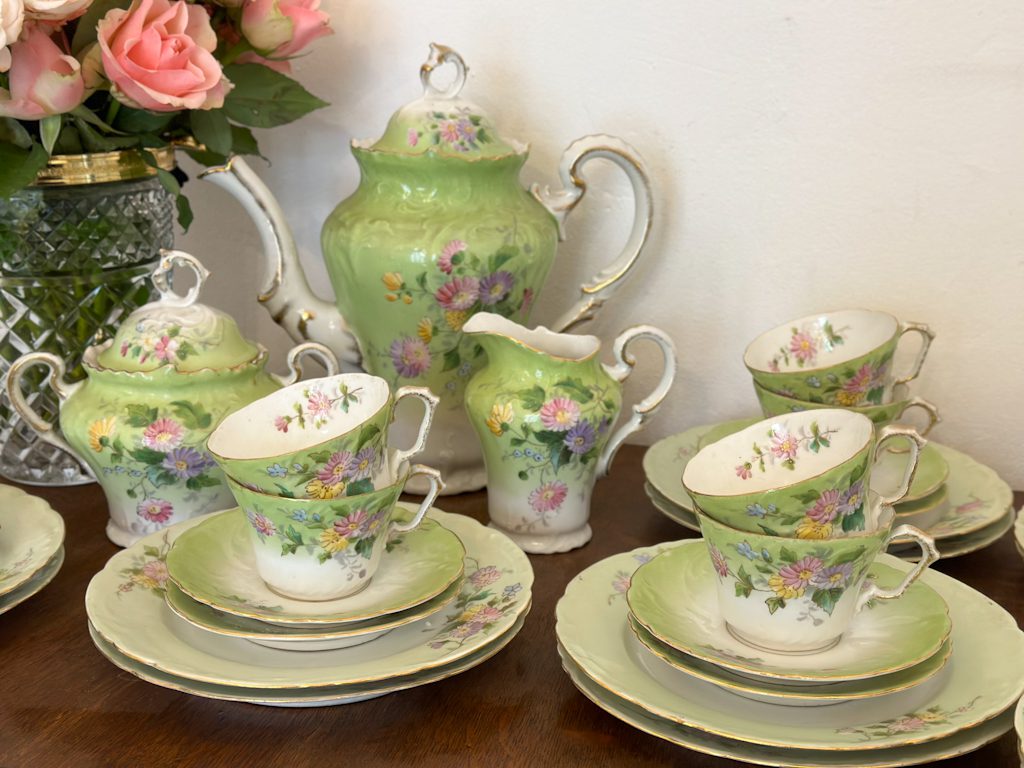
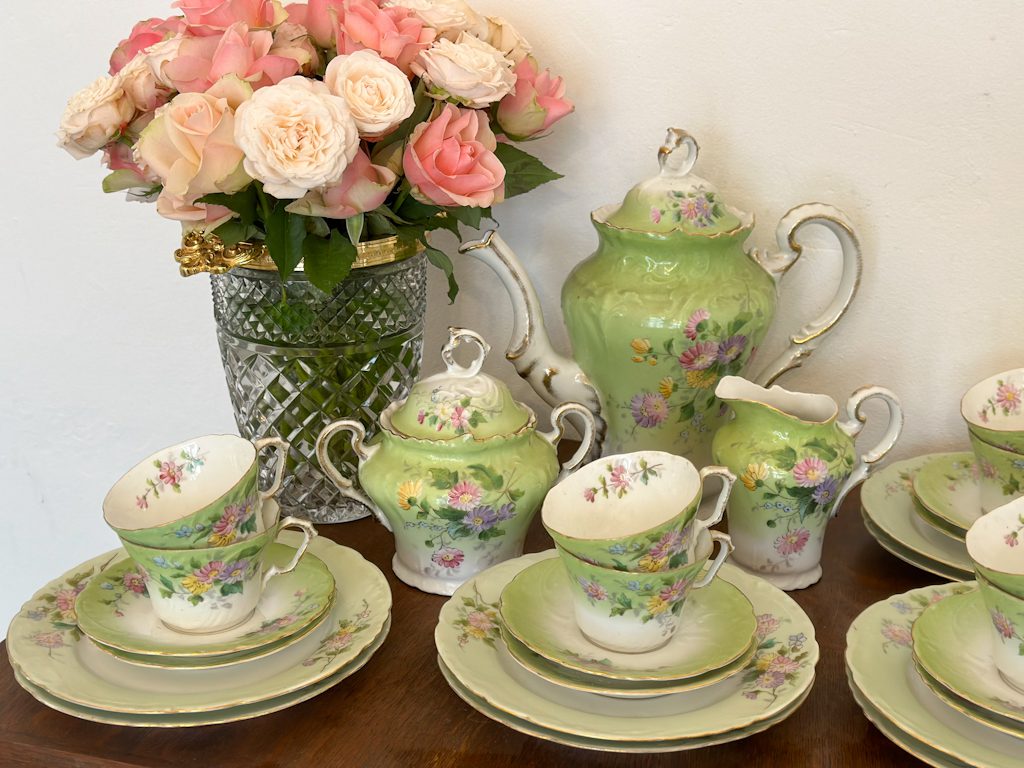
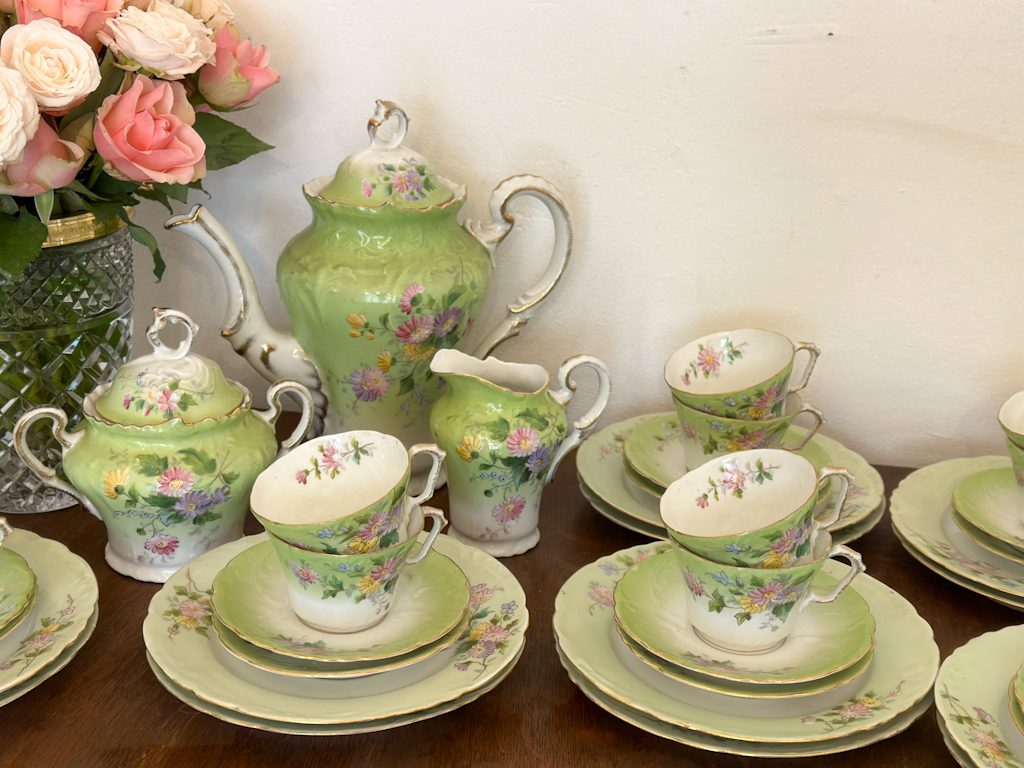
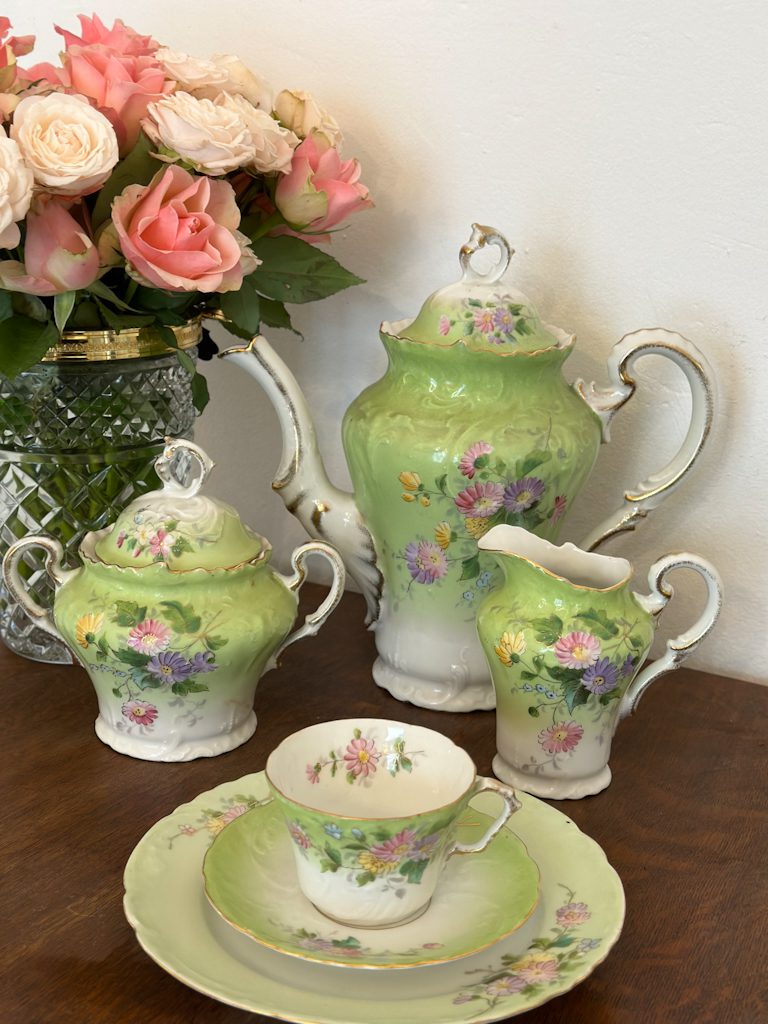
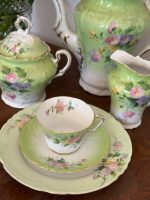
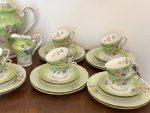
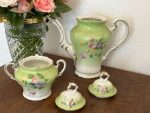
An exquisite, hand-painted porcelain tea and coffee service for 12 persons, designed in the workshops of Thuringian or Bohemian masters in the late 19th century. A luxurious flow of light green and white, delicate floral motifs, and gilding accents that served as inspiration for the Kuznetsov manufactory. (4562) 470,00 €
You’re now subscribed to price tracking for this product. We’ll notify you if the price drops. 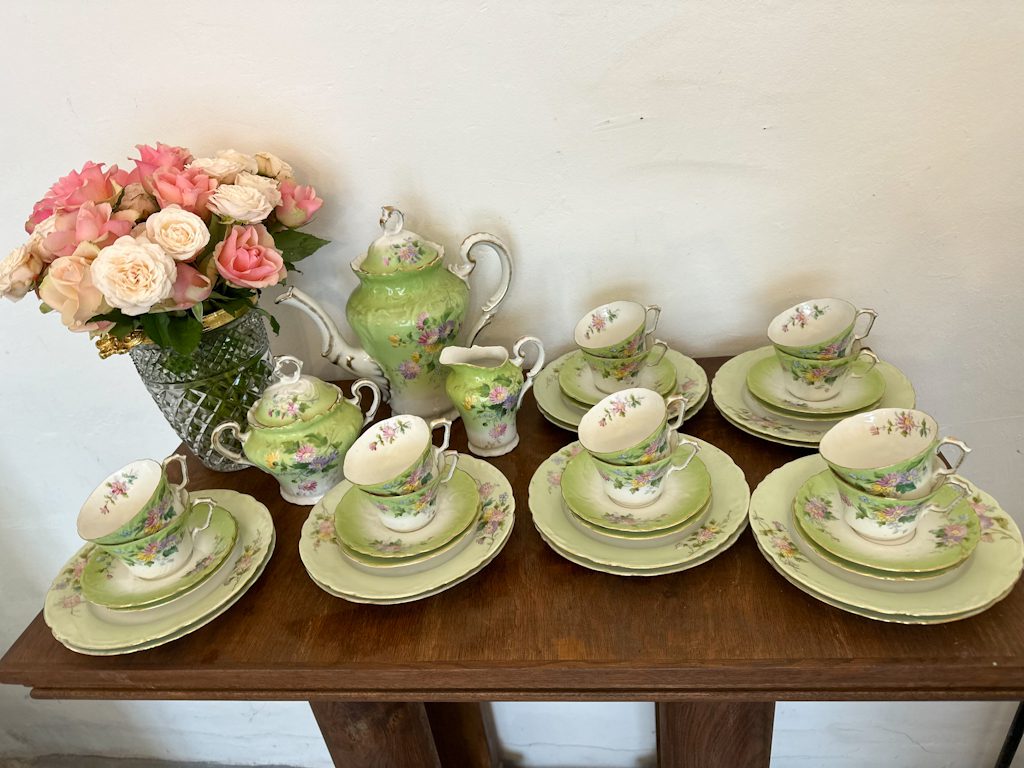
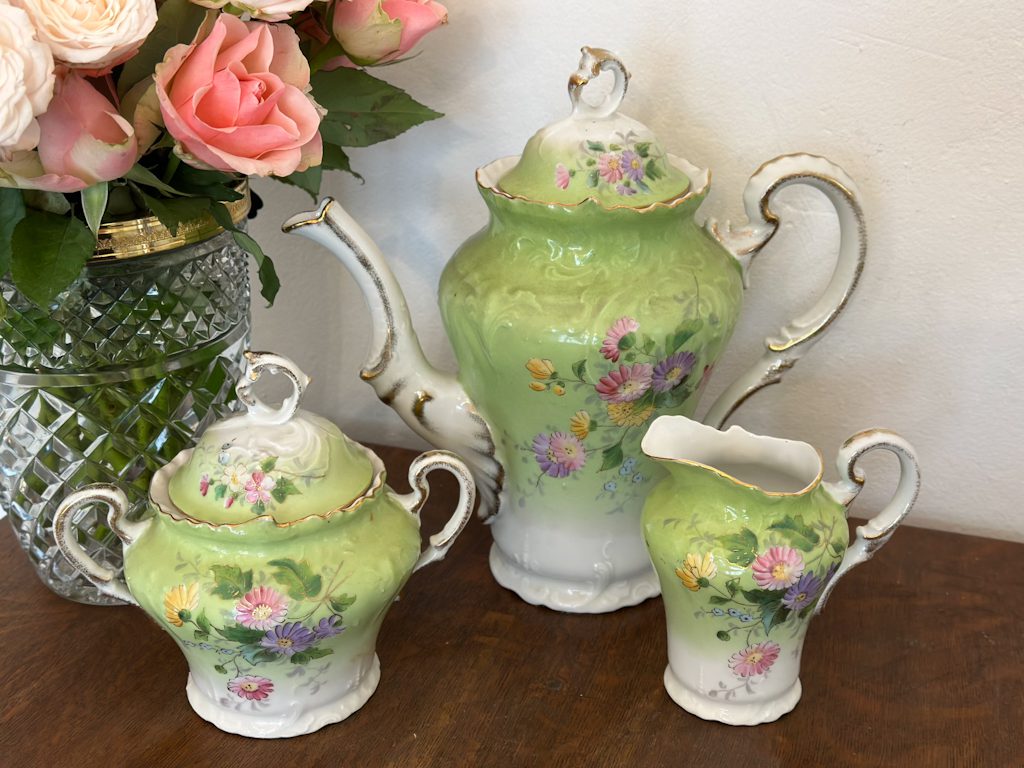
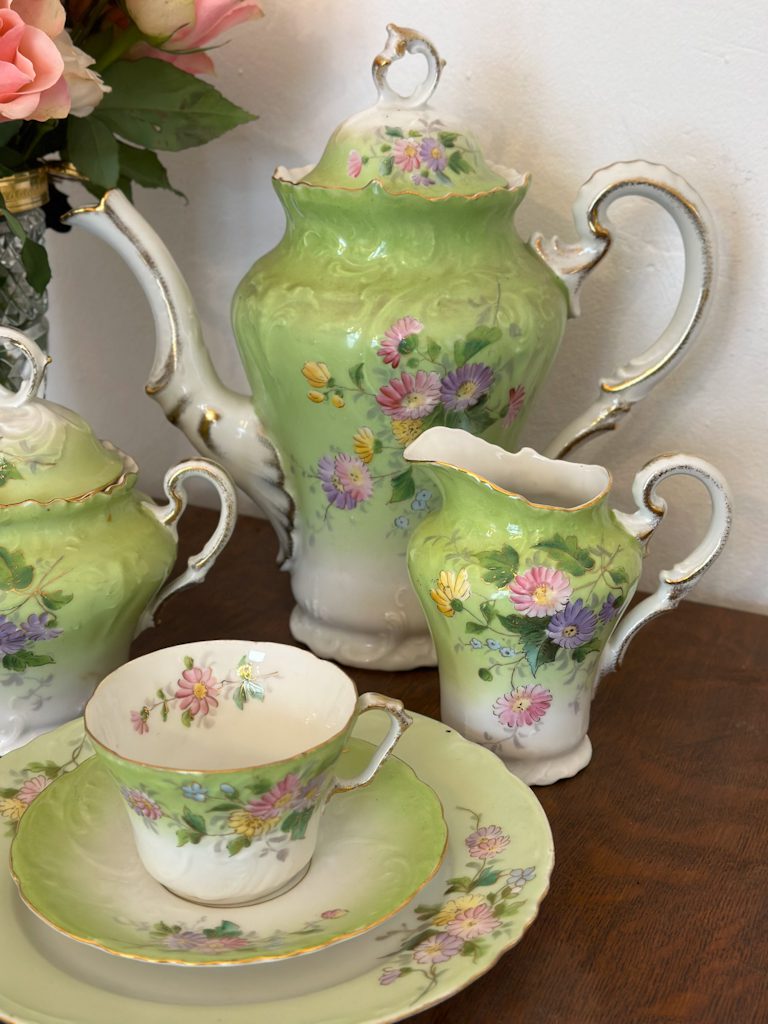
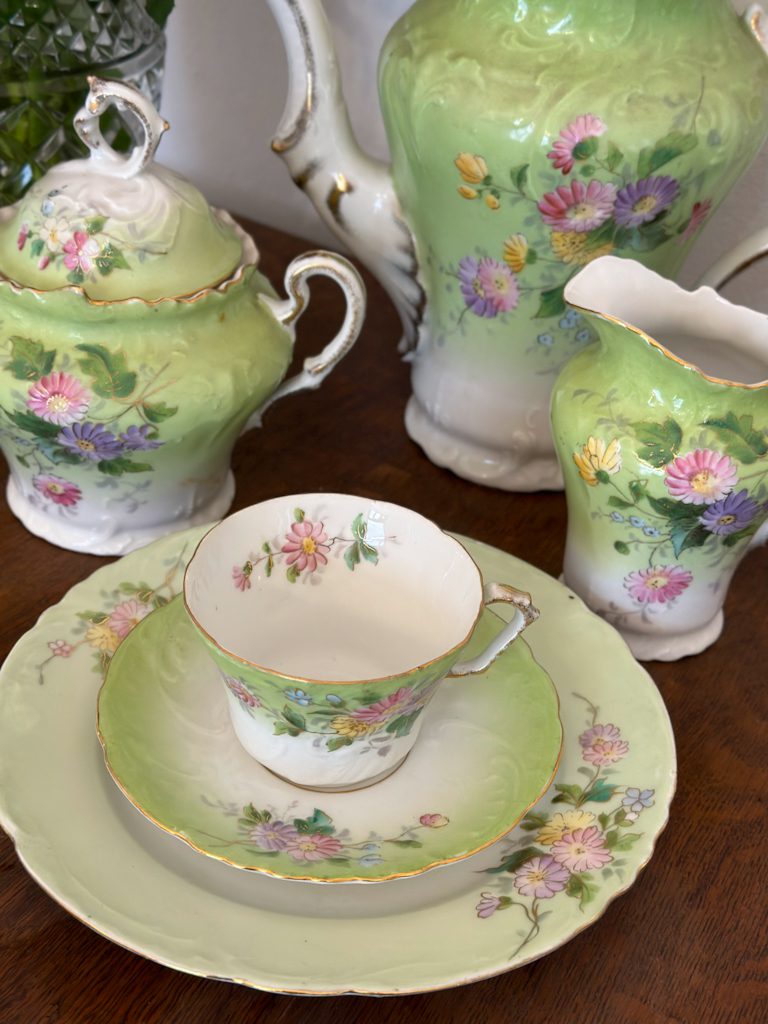
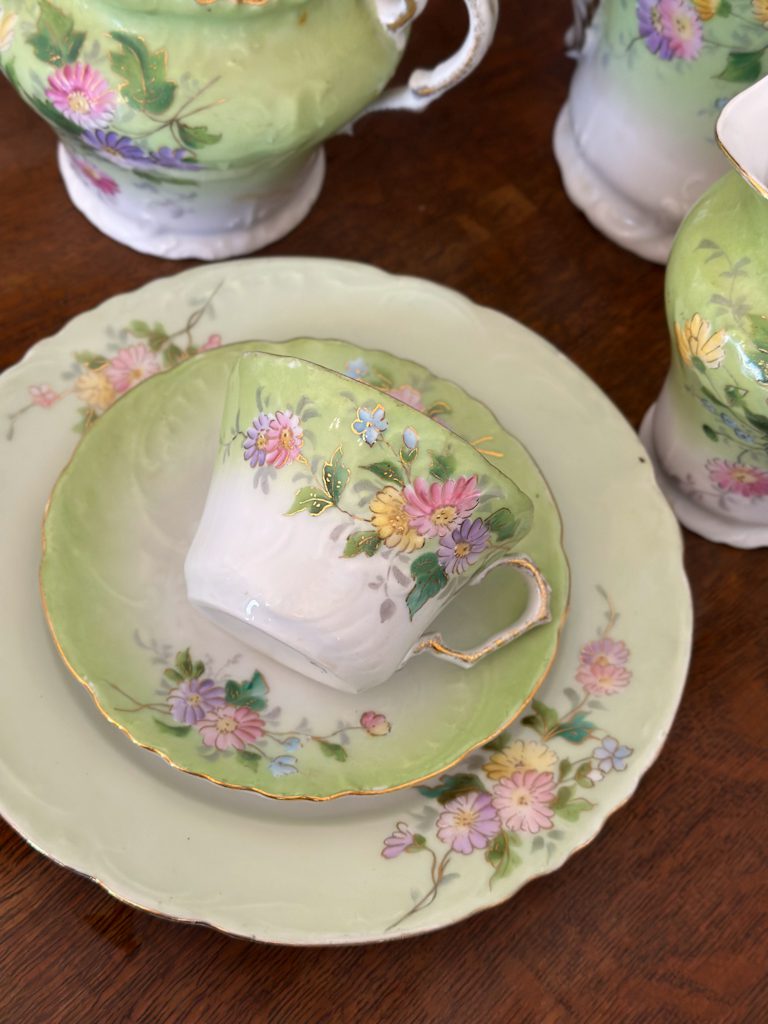
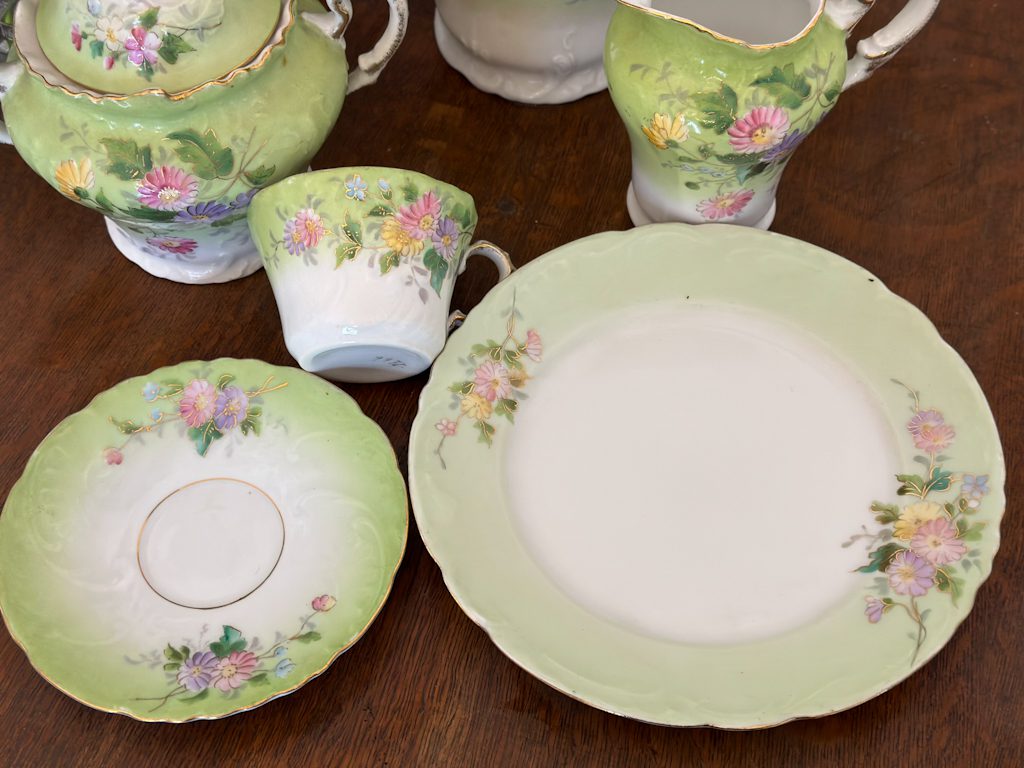
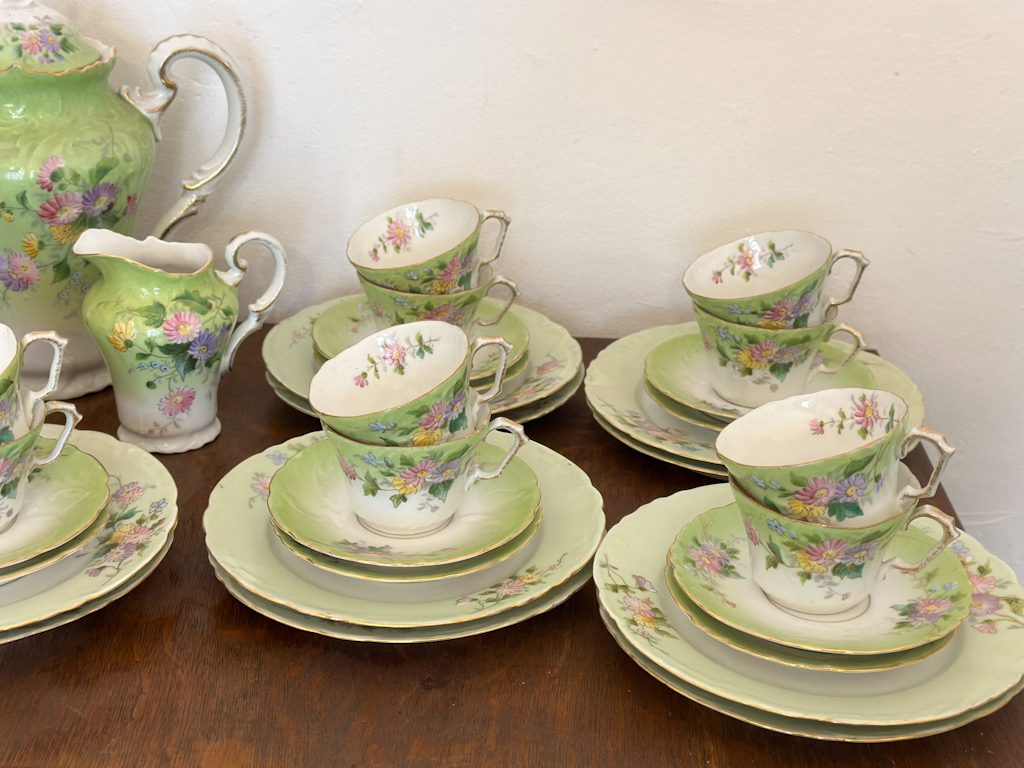
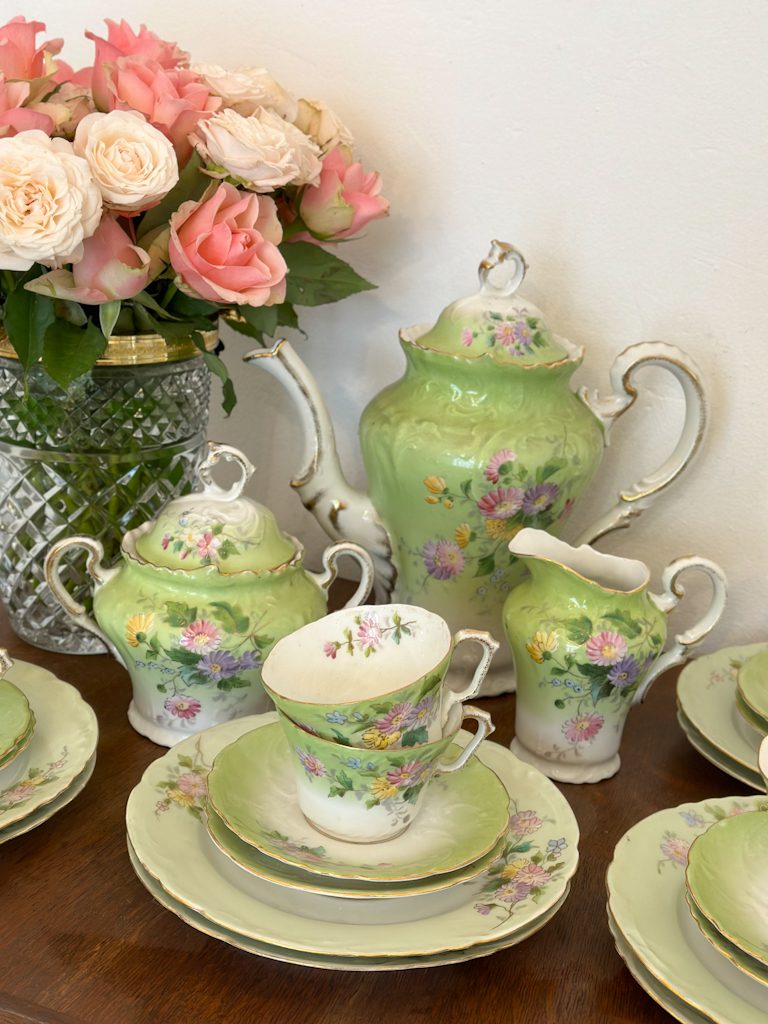
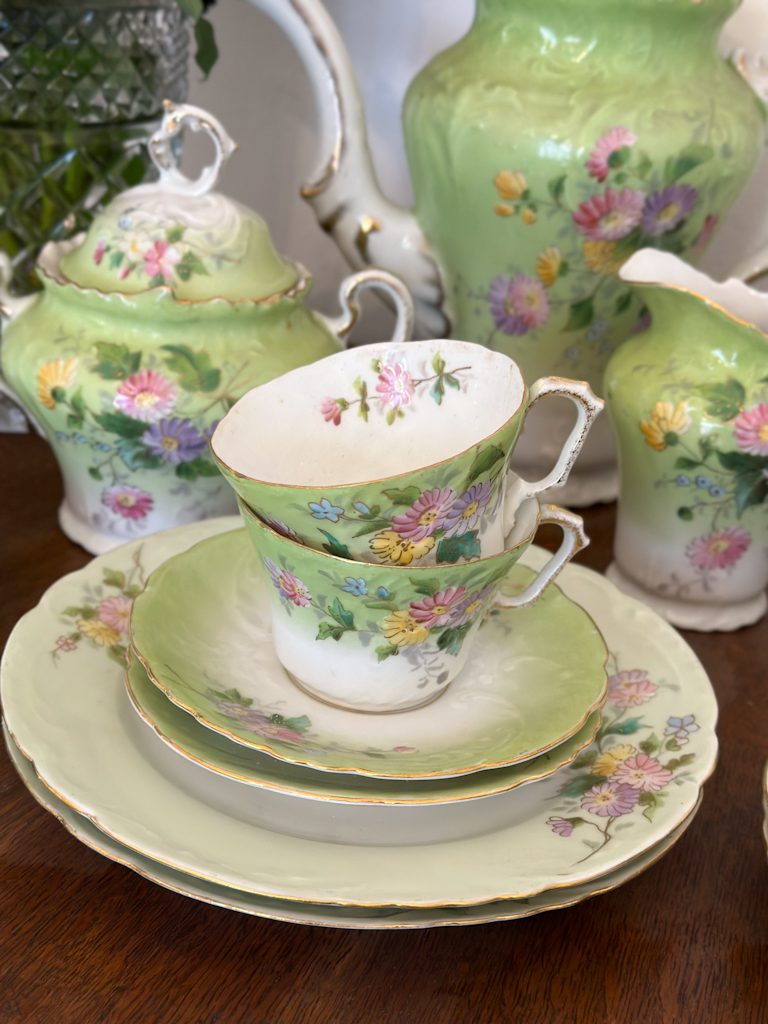
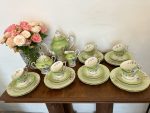
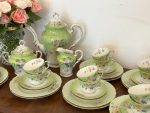
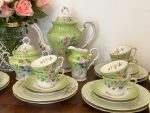
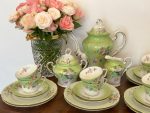
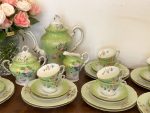
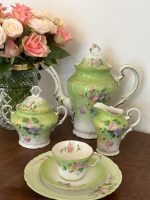
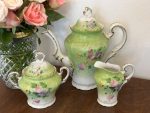
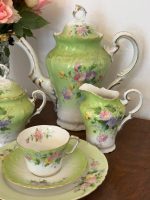
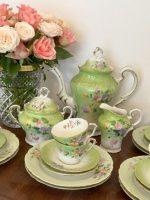
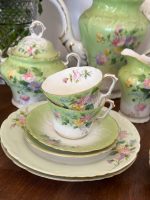
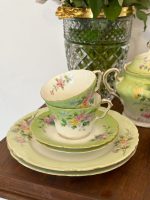
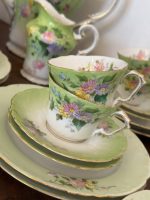
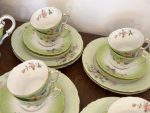
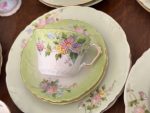
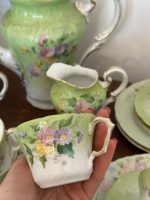
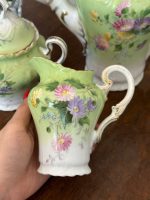
Porcelain Tea and Coffee Service for 12 Persons — Historism Style (4562)
Height 23 cm Width 8 cm Color GoldLight greenPink
Description
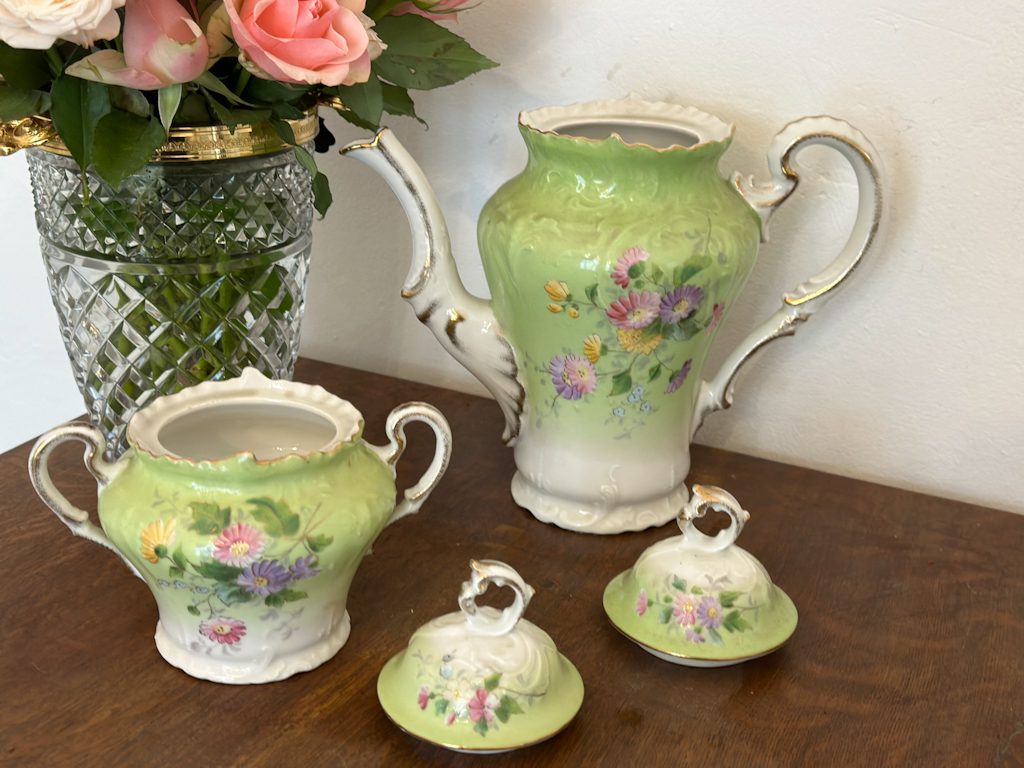
Dimensions, approximately: Coffee/tea pot height — 23 cm Sugar bowl height — 14 cm Milk jug height — 13 cm Cup height — 6 cm Cup top diameter — 8 cm Saucer diameter — 14 cm Dessert plate diameter — 17.5 cm
Porcelain Tea and Coffee Service for 12 Persons — Historism Style
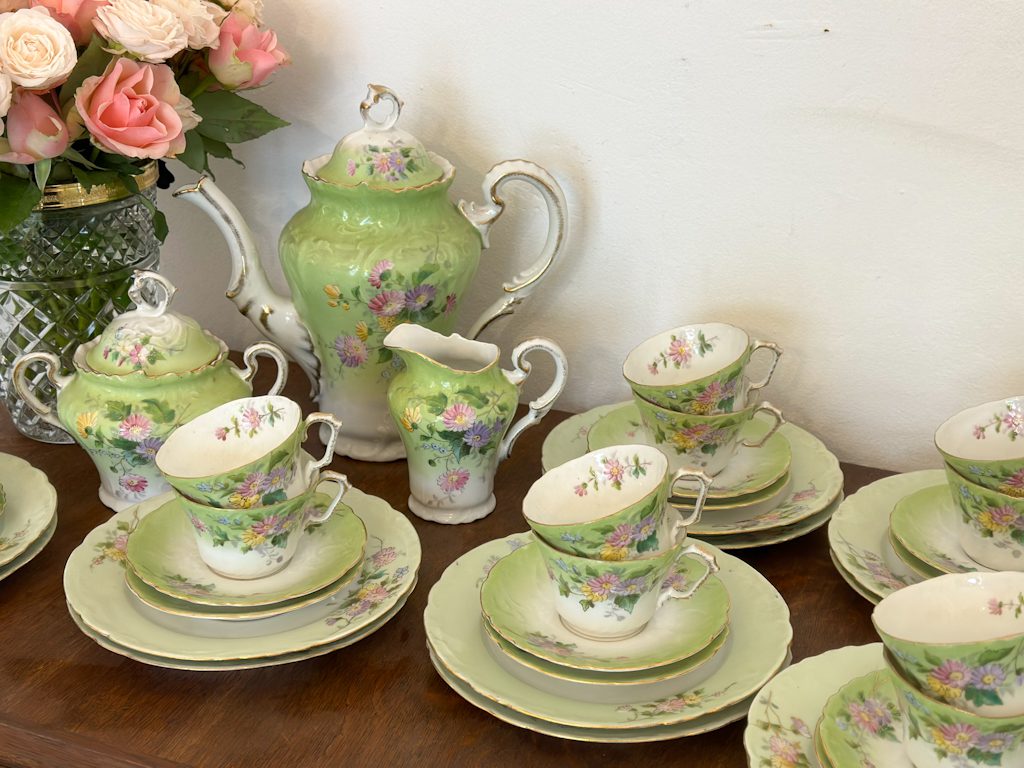
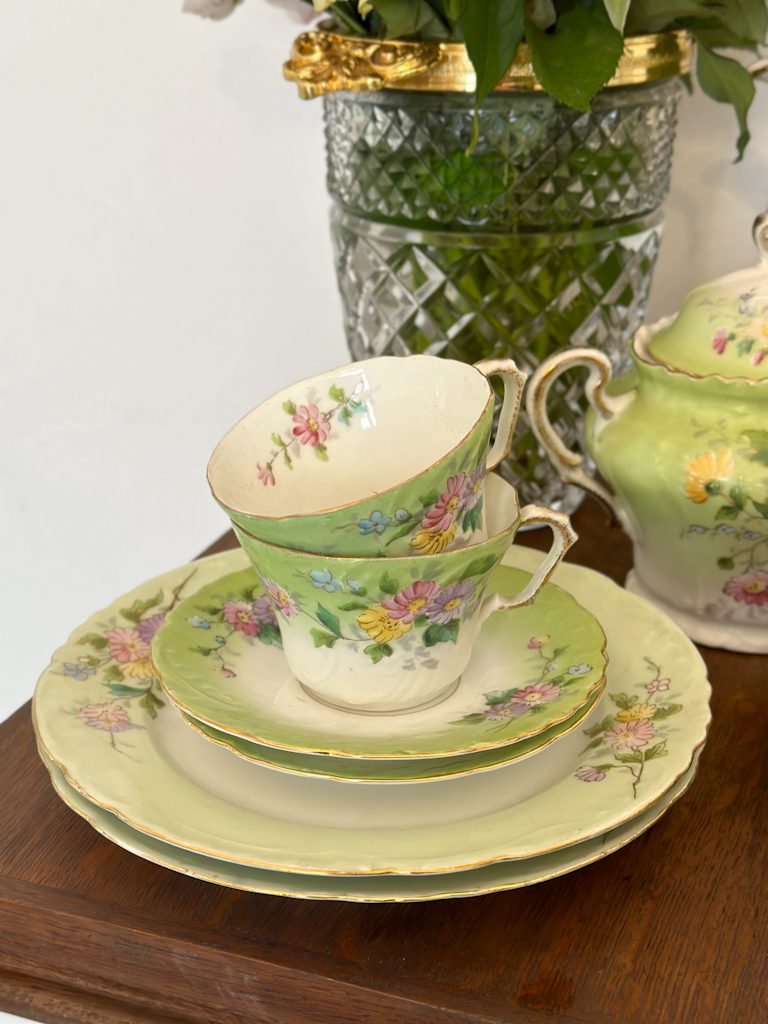
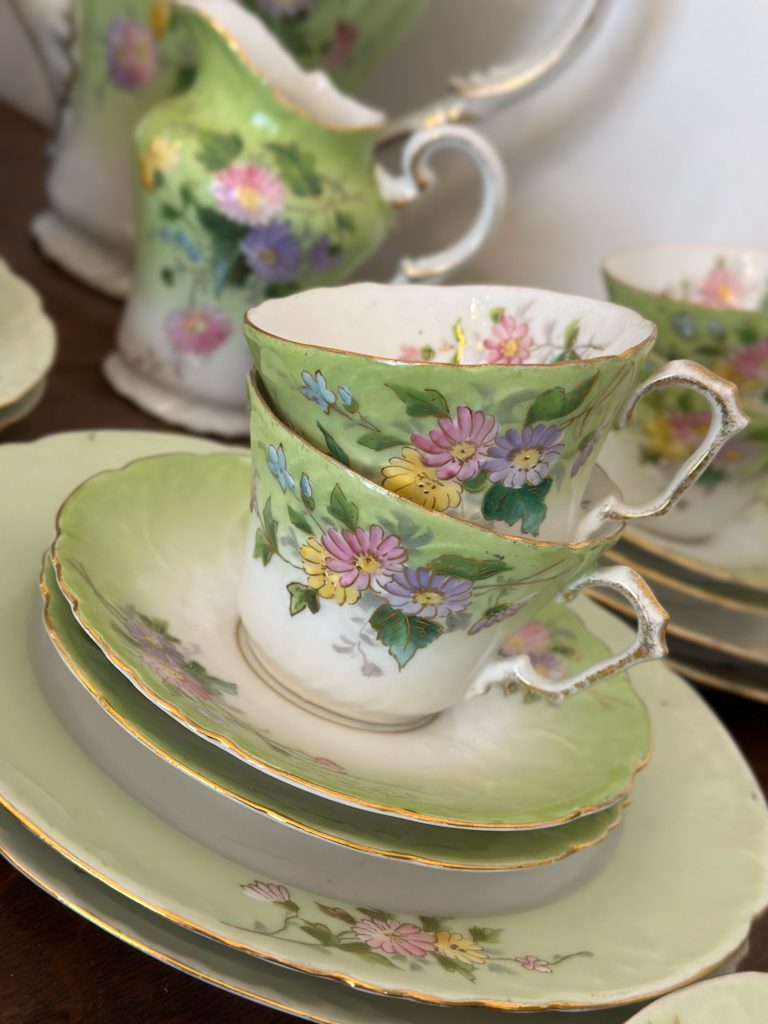
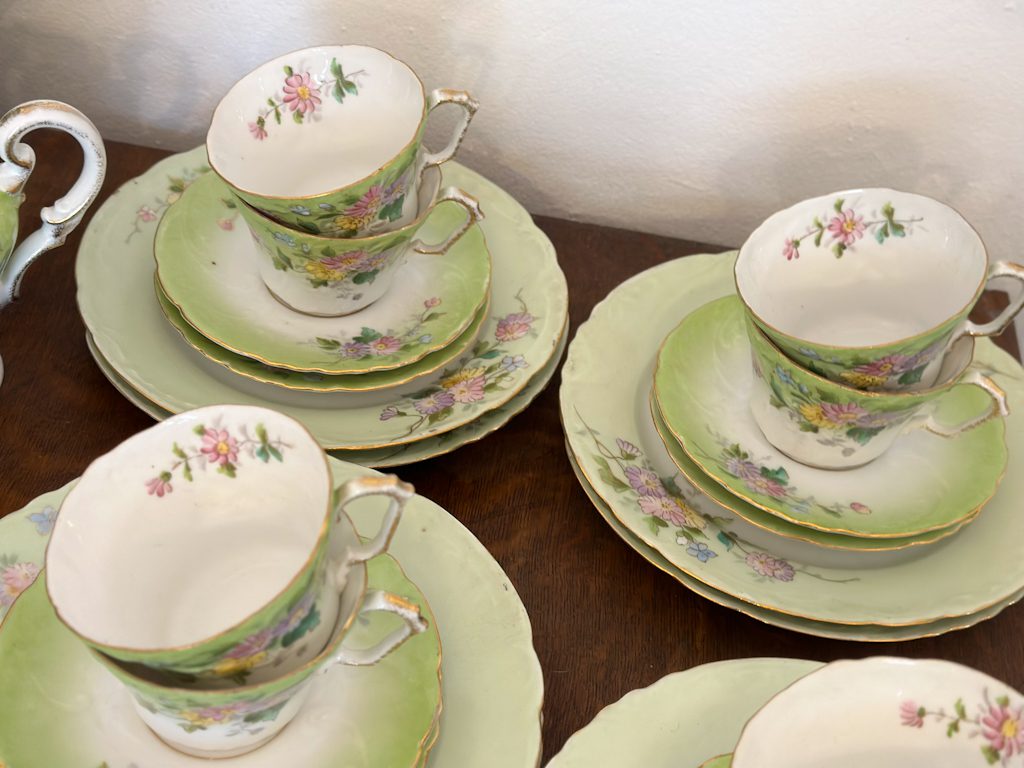
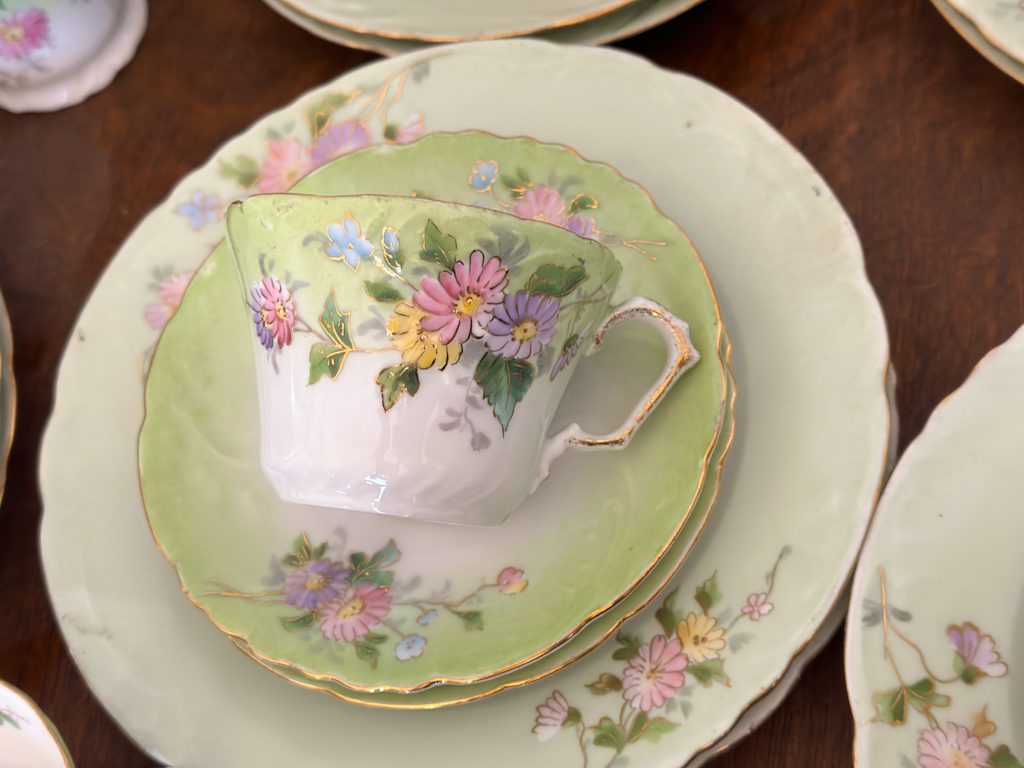
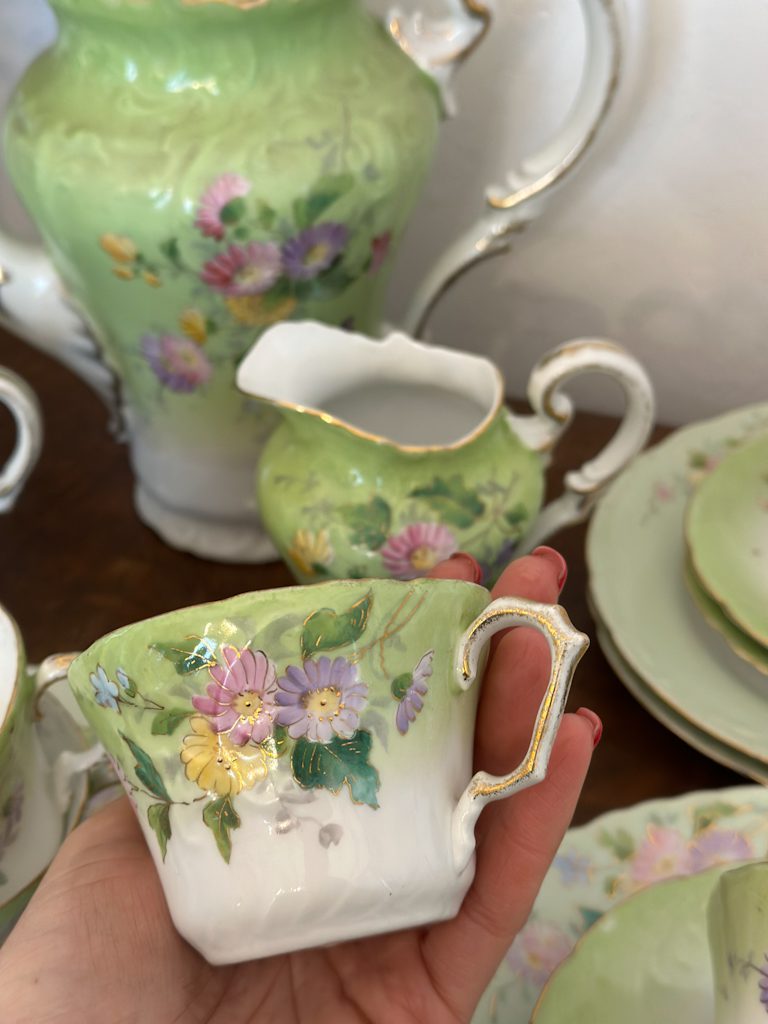
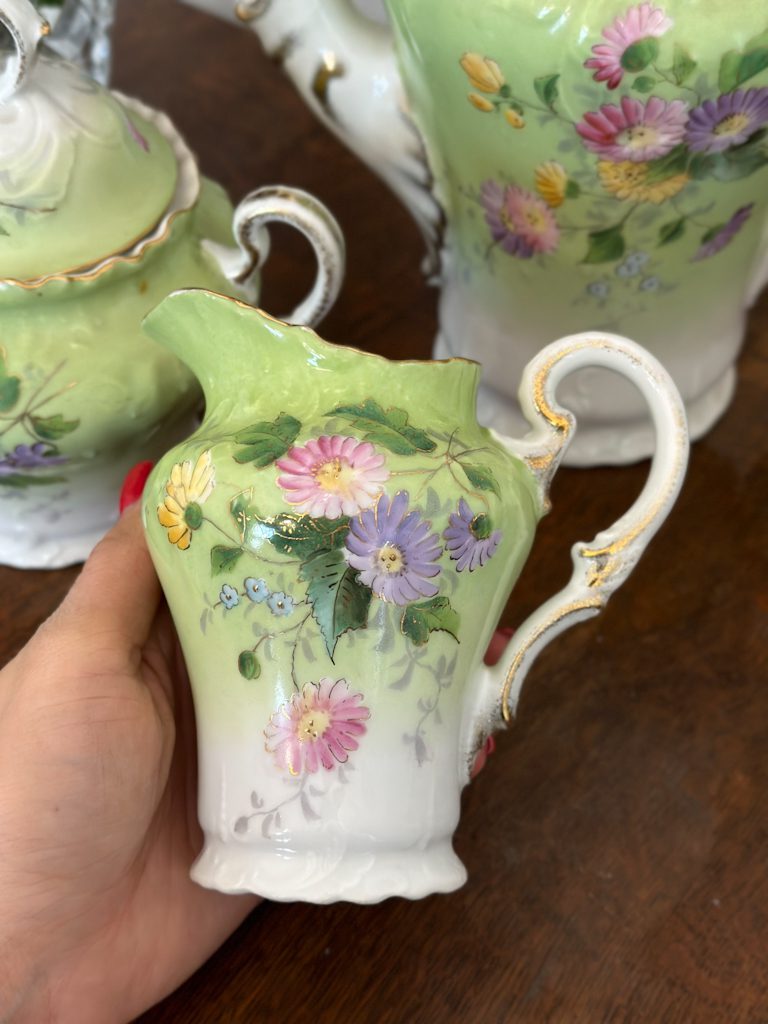
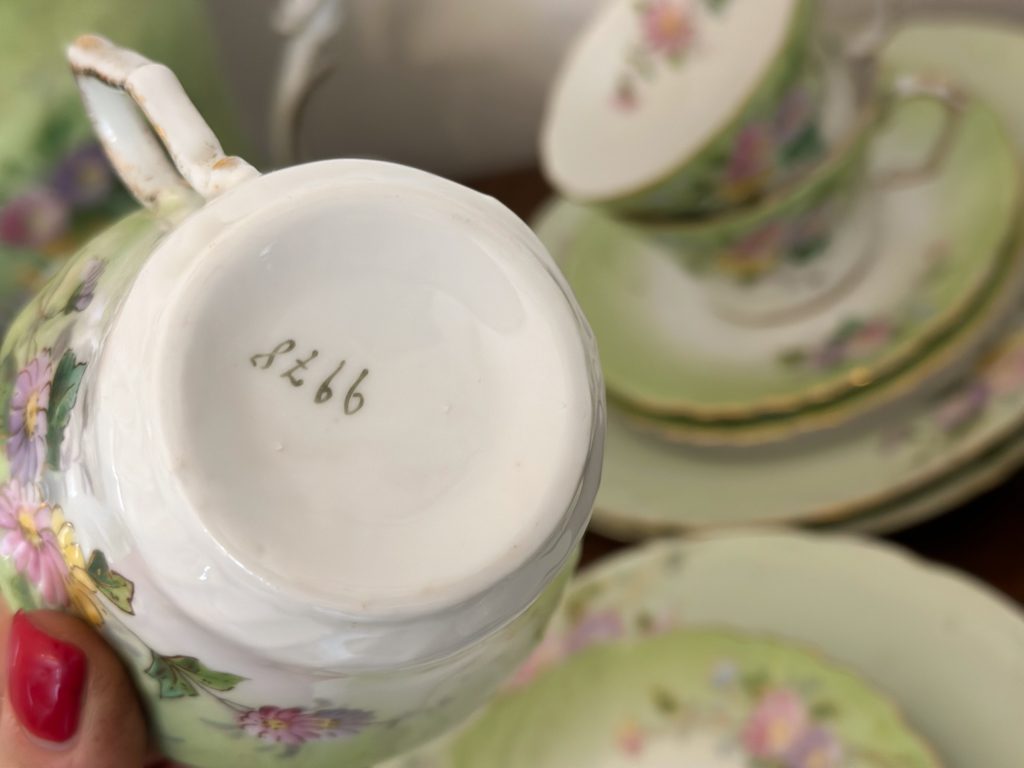
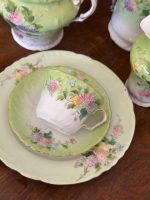
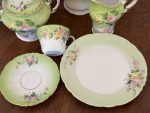
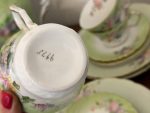
This exquisite antique porcelain tea set is a brilliant handiwork of Central European masters (Thuringian or Austro-Hungarian Bohemian region) from the second half of the 19th century. It has been preserved in a complete, rare 12-person set, totaling 39 pieces: a large tea/coffee pot, a sugar bowl, a milk jug, as well as cups, saucers, and dessert plates. The artistic composition of the item — the wavy, embossed silhouettes, plastic cast handles, and the soft, flowing light green color gradient combined with delicate country floral motifs — clearly demonstrates the highest design and technological school that directly inspired the most famous manufactories of the Empire, including Kuznetsov and the Kornilov brothers’ manufactories, in their development. The bottom of the dishes is adorned with hand-painted decor numbers and authentic relief marks, confirming the meticulous approach of the manufactory and the artist to each element.
Craftsmanship & Period Dated to the late 19th century, approximately 1880–1890, which in European applied arts corresponds to the late Historism period with its characteristic plasticity of forms and aesthetics of color transitions.
Maker / Signature / Mark The base of the dishes features a hand-written model/decor number 9978, as well as a delicate, embossed porcelain mass mark. Based on stylistic features and execution nuances, the work is attributed to leading Thuringian (e.g., Sitzendorf, Conta & Boehme) or Bohemian manufactories, whose examples were used as a benchmark by the best porcelain masters of the Empire for creating their forms.
Rarity & Significance The main value of this service is its complete preservation for 12 persons. Historical porcelain sets were often divided or partially broken over time, making a three-piece dish ensemble (cup, saucer, and dessert plate) for such a large number of people a rare and collectible find that carries the untouched cultural and everyday aesthetics of its era.
Application & Interior Use The service is ideal for luxurious gatherings, serving a classic tea or coffee ceremony, and also serves as an expressive interior accent in display cabinets and sideboards. It perfectly complements historical interiors and serves as a valuable conversation piece that connects the threads of European and Tsarist porcelain art history.
Condition Excellent antique condition. The porcelain is free of cracks and signs of restoration; the floral paintings and gilding accents have retained their original brilliance and clarity. The condition of the item is fully reflected in the photographs.
Victorian snapshot: Sergei Witte, then still the head of the Empire’s railway department, sits at his massive desk, where a porcelain cup of steaming tea, freshly brought from Riga, is placed next to plans for expanding the Liepāja-Romny railway line. Silence reigns in the room, broken only by the scratching of a quill and the distant, hazy signal of a port steamer. His fingers pause for a moment on the thin, wavy handle of the dish, feeling the smooth, cool material and examining the delicate country floral painting against the greenish gradient background. This European masterpiece, whose forms and color transitions so closely resemble the efforts of the empire’s domestic manufactories, brings an unexpected breath of elegance into the study. A delicate aroma fills the room, and morning light streams through the window, causing the gilded rim of the dish to quietly shimmer, momentarily distracting the statesman’s thoughts from the economic scale of the empire’s railway network.