ENGLISH BLOCK Antiquarian Wooden Side Table with Sunburst Marquetry Drawer — Louis XV Style This exceptional late 19th-century French style two-tier table (guéridon) is a definitive statement of refined period luxury, featuring an integrated drawer and exquisite metal appliques (antique… 480,00 €
You’re now subscribed to price tracking for this product. We’ll notify you if the price drops. 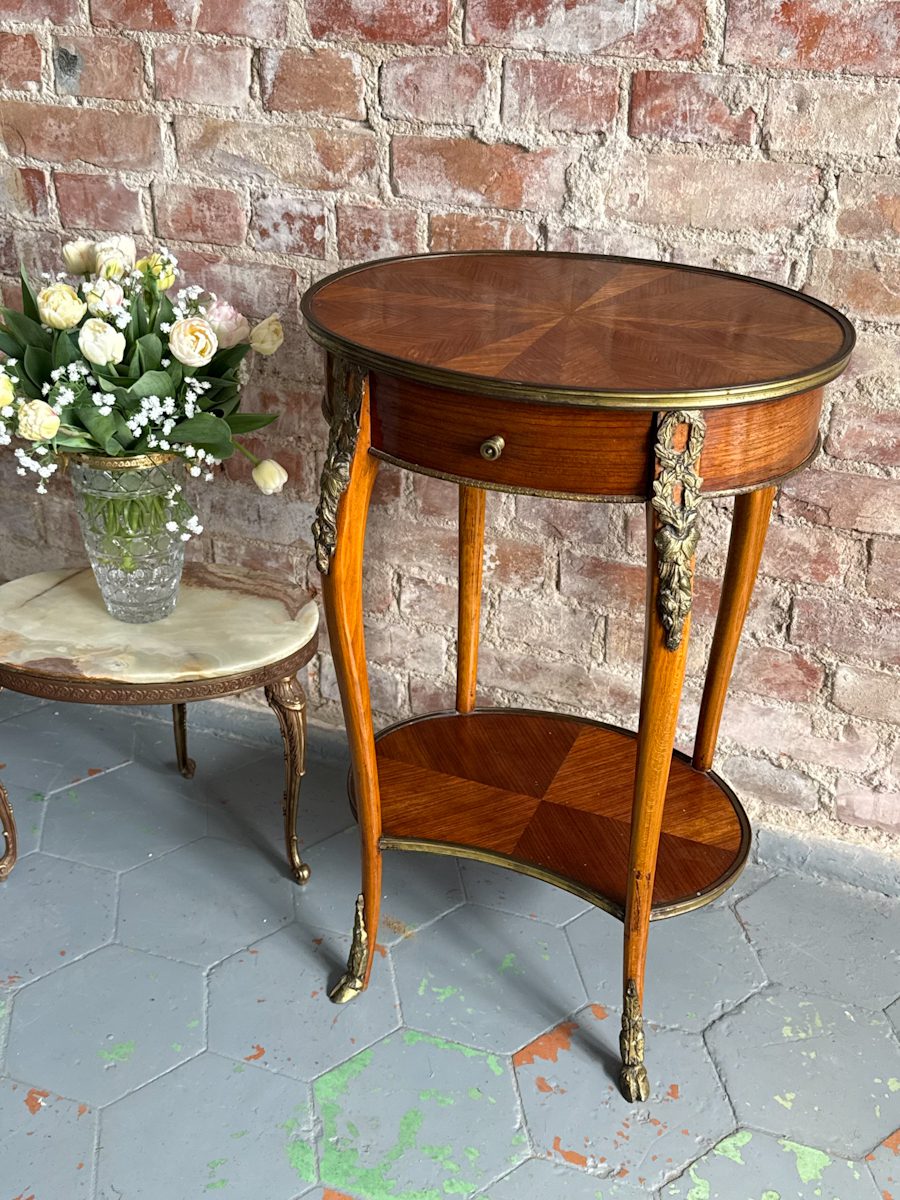

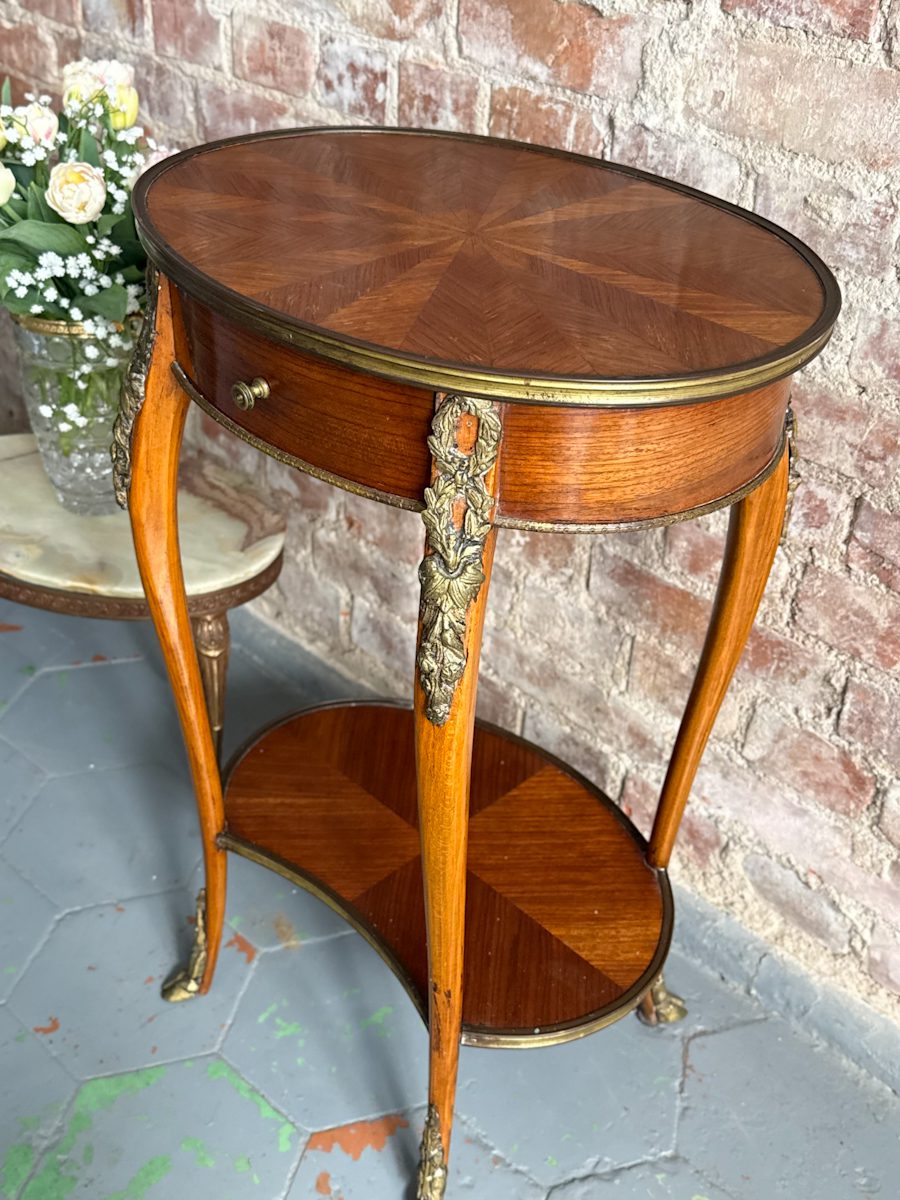









Antique wooden side table with drawer and bronze details — Louis XV style (6485)
Height 73.5 cm Width 48.5 cm
Description
Dimensions: Height — 73.5 cm Width — 48.5 cm Depth — 37 cm The price is for 1 pc.
Exclusive antique wooden table with drawer and bronze fittings
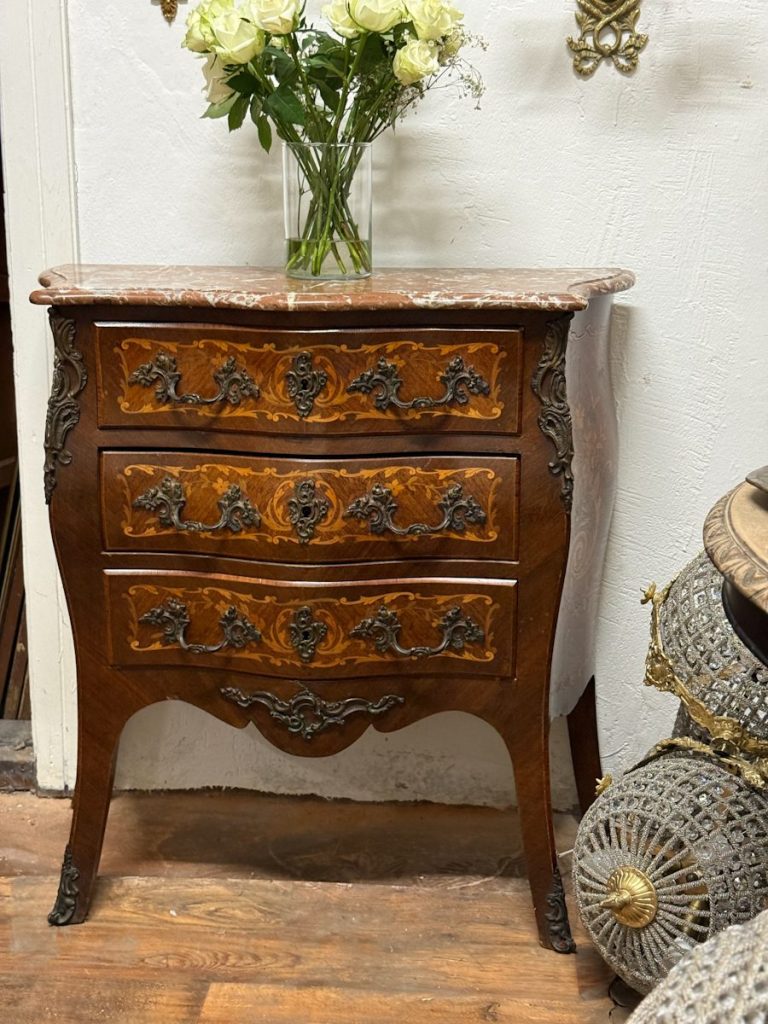
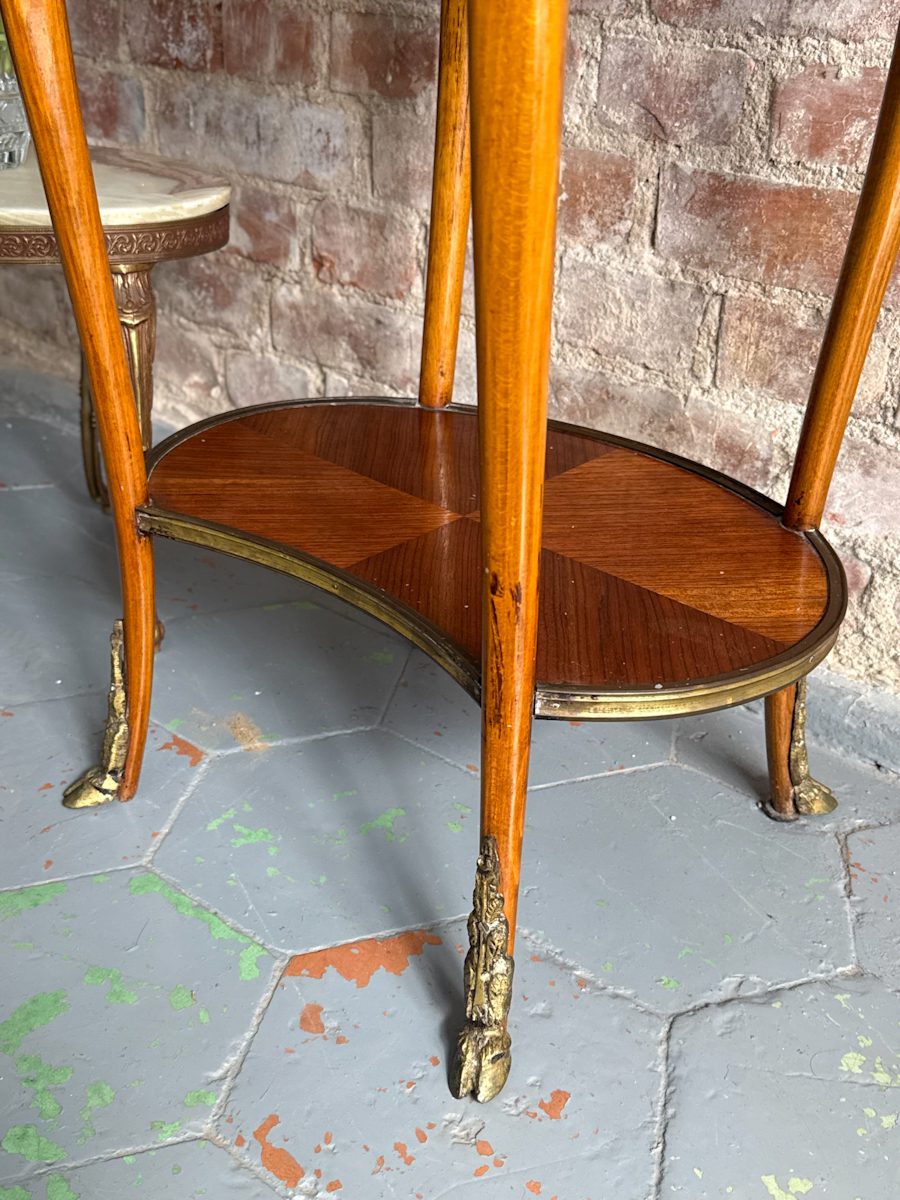
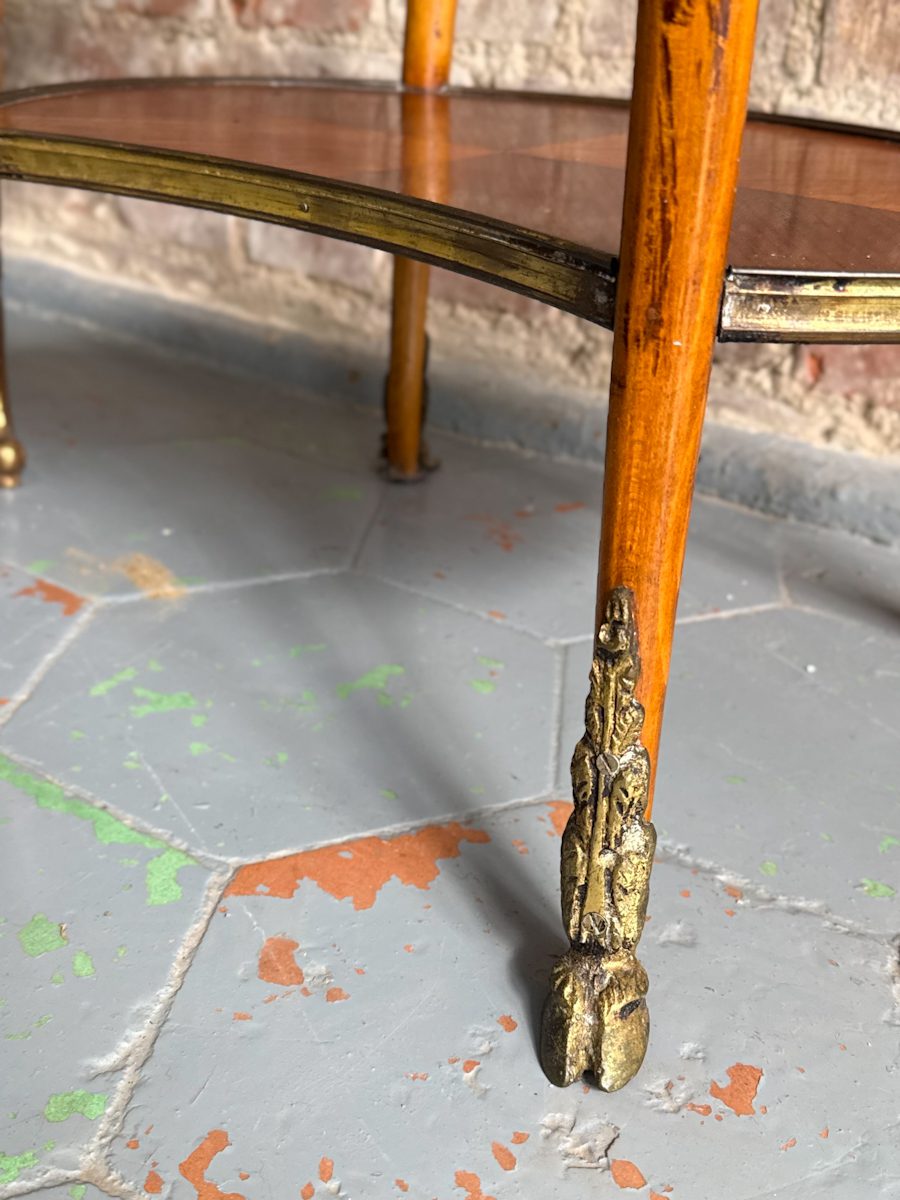
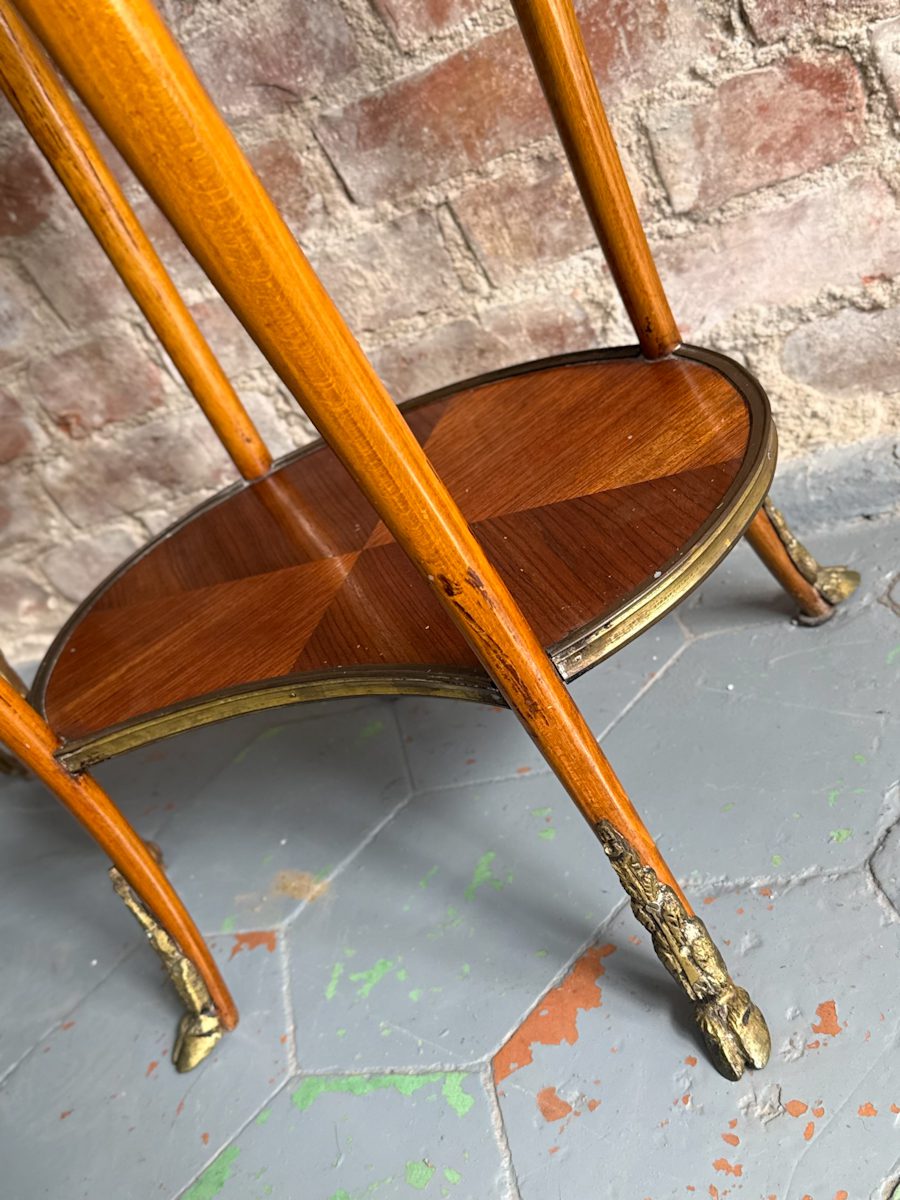
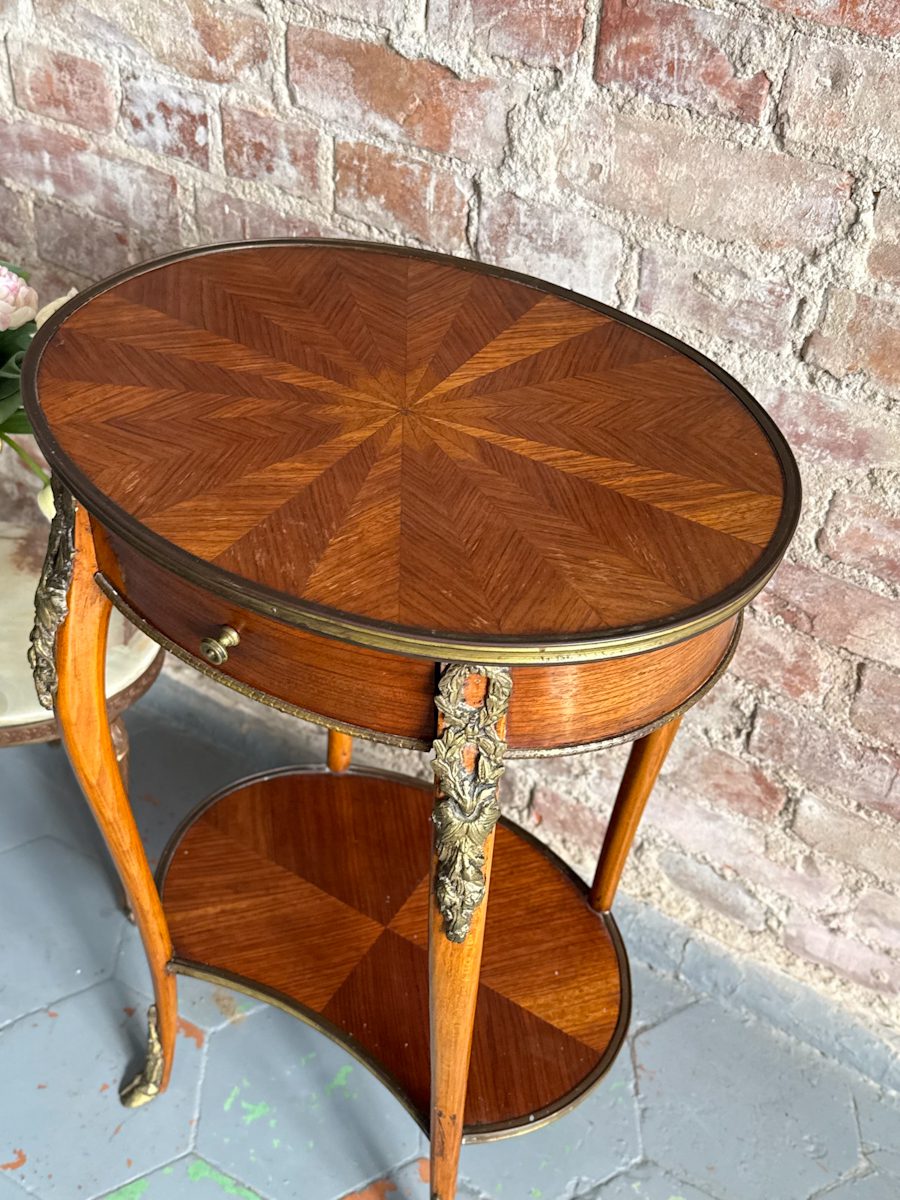
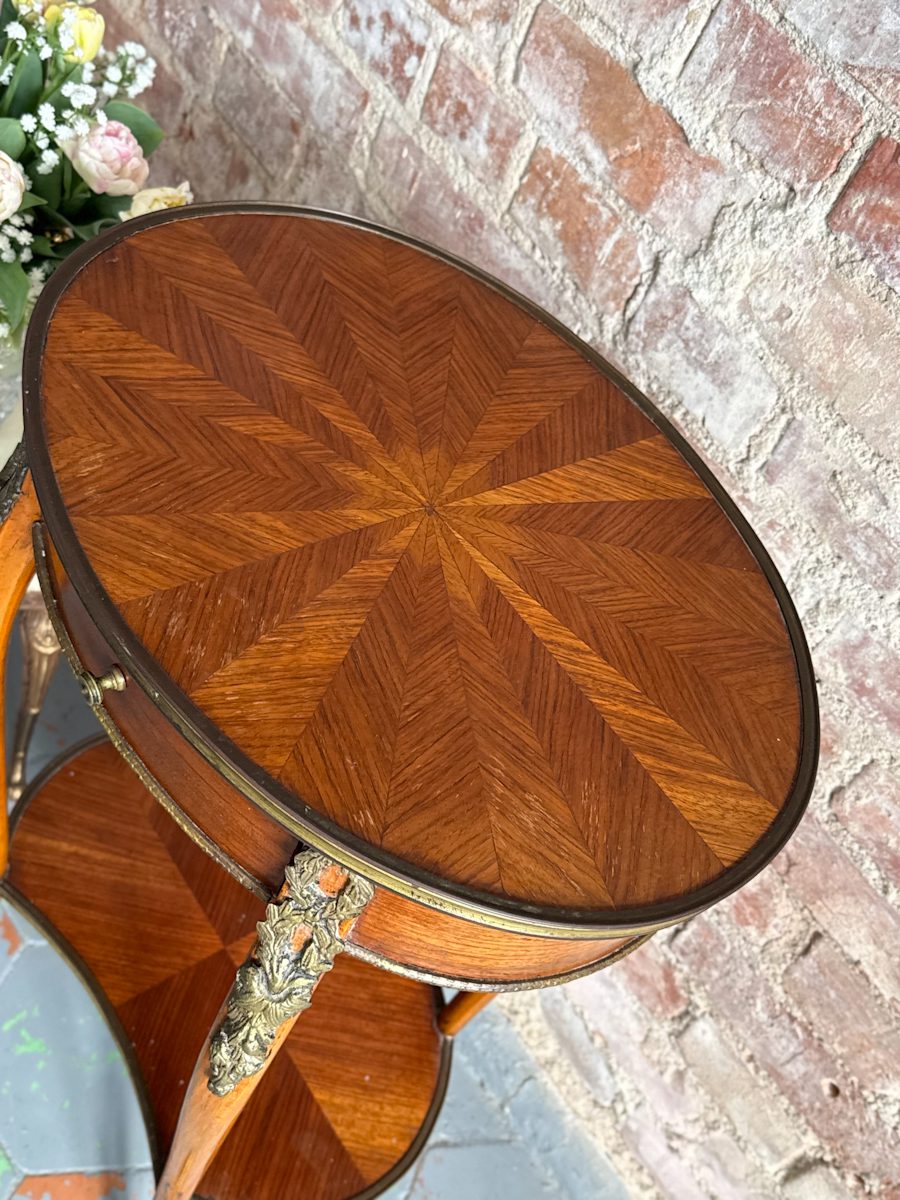
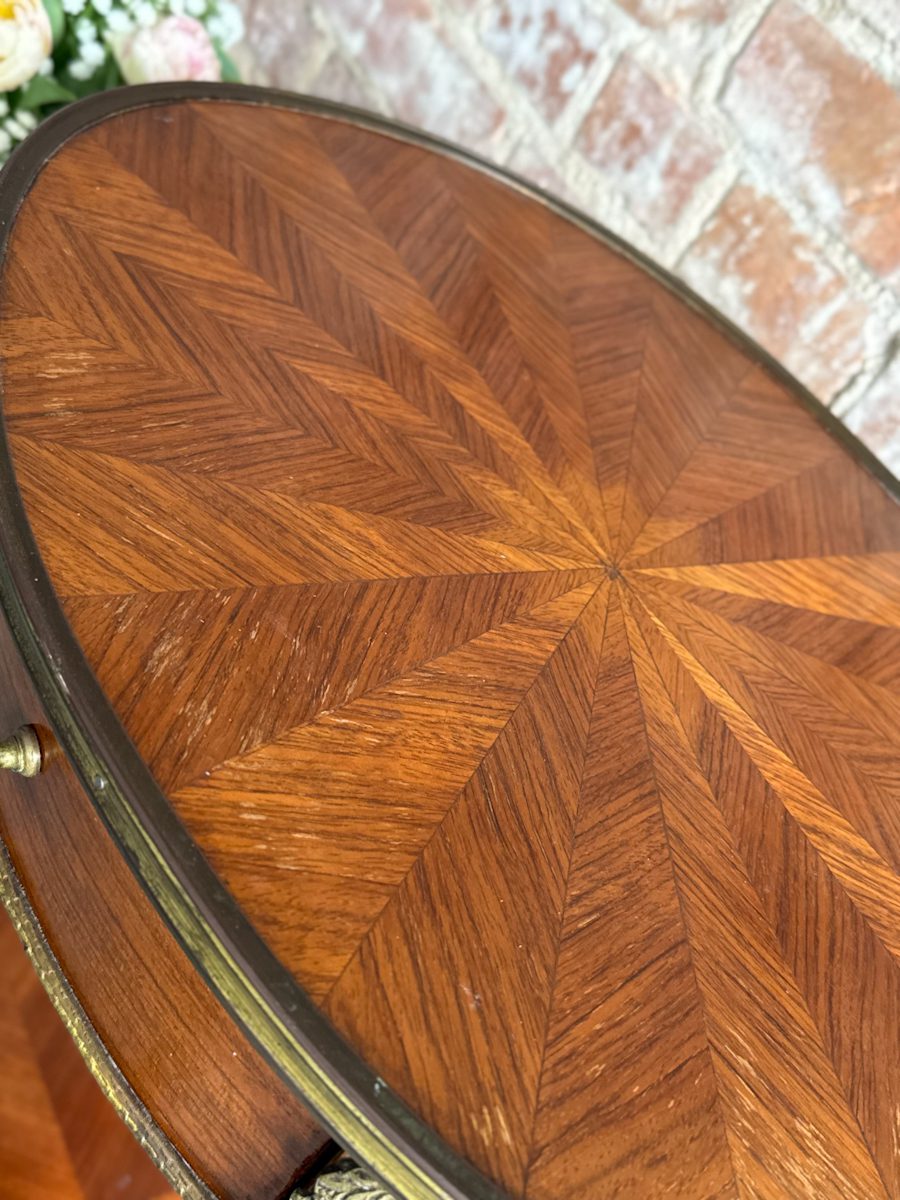
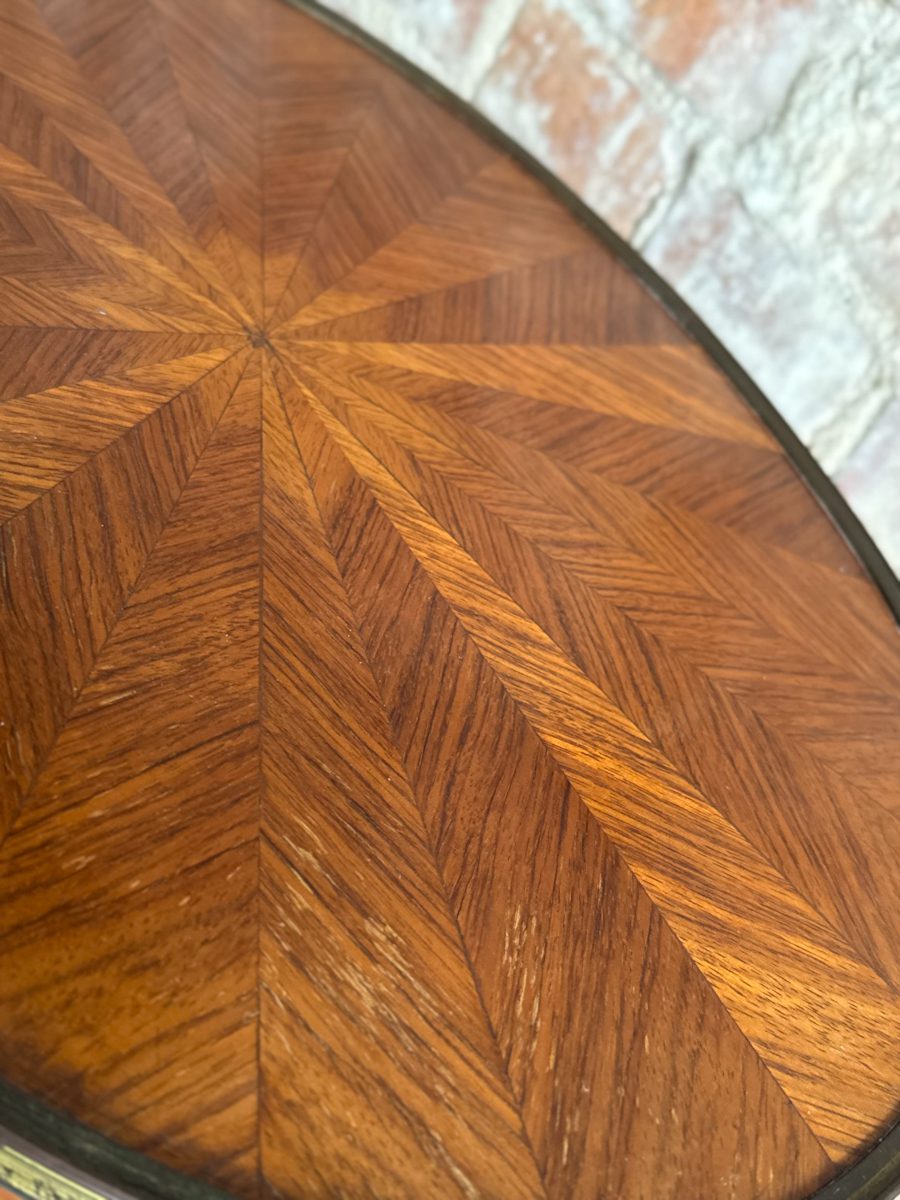
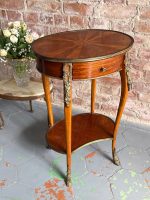
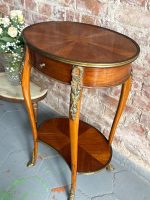
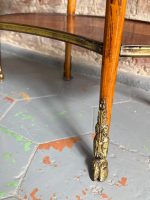
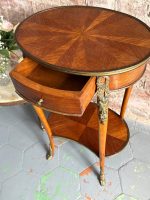
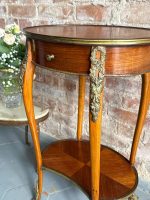
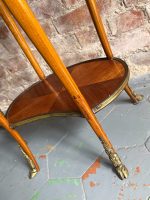
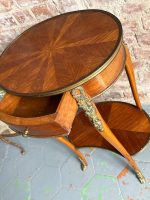
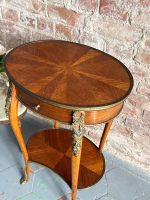
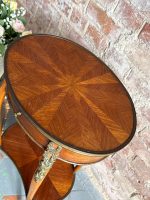
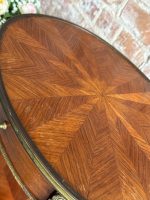
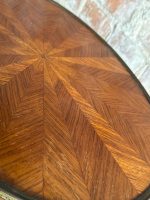
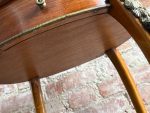
An elegant, slender, and medium-sized two-tiered table (guéridon), crafted in the magnificent Louis XV style (Rococo) aesthetic (antique table with drawer). The item is made of high-quality wood, with surfaces covered in masterfully executed, filigree inlay work and furniture veneer art. The upper oval surface is adorned with a magnificent, symmetrical “sunburst” or sundial motif, made from segments of rosewood or walnut with a distinct texture, surrounded by a fine brass or bronze border. Seamlessly integrated into the table’s edge is one functional drawer with a small, turned bronze handle. The tops of the table legs are embellished with exquisite cast bronze mascarons with natural and floral ornaments, while the bottoms of the legs terminate in expressive, massive bronze fittings in the form of goat feet (pied de biche), characteristic of the Second Empire and Historicism period. The lower shelf is kidney-shaped/oval, providing additional stability to the structure and maintaining a harmonious placement of the inlay motifs. Production period late 19th century, approx. 1880–1890. France.
Manufacturer / signature / stamp: The item is a masterpiece from Parisian furniture workshops, where interpretations of the Louis XV and Louis XVI styles and eclectic combinations flourished in the second half of the 19th century for the needs of upper-class salons. Specific master signatures on internal constructions have not been preserved.
Rarity and significance: Small, elegant tables like this, or flower stands/pedestals, served as exquisite interior accessories in wealthy homes, boudoirs, or reception salons. A special value for this specimen is attributed to the flawless execution of the inlay work on both surfaces and the relatively rare bronze fittings with mythological motifs in the form of goat feet, which give the casting a distinct plasticity and character.
Use: The table is perfectly suited as a decorative side table, a living room or bedroom element next to a chair or bed. It can be used as a small coffee or tea table, a pedestal for an exquisite flower vase, an antique mantel clock, or a jewelry box, while the drawer can be used for storing small personal belongings.
Condition: In very good and authentic antique condition. The wooden structure is stable and solid, the inlay veneer is intact and has retained its gloss and depth. The bronze details have a pleasant, natural historical patina without significant damage. The drawer operates easily and smoothly. The condition of the item is fully reflected in the photographs.
Louis XV moment: Jules de Goncourt slowly sat down by the high window of his Parisian home, watching the afternoon sun illuminate the room. His fingers lightly touched the tabletop, feeling the warm and flawless smoothness of the inlay wood segments, shining under the varnish like sunbeams. The fine bronze border glittered in the warm light, and his gaze inevitably stopped at the bottom of the legs, where the masterfully cast goat feet seemed ready for immediate, mythical movement on the old parquet floor. The quiet, rhythmic ticking from the mechanism merged with the nocturnal rustling of the garden in the distance, and each new diary page placed in the drawer transformed the moment into an immortal testimony of the era.