Antique French Art Nouveau “Terre de Fer” Faience Pitcher “Bleuets” (Cornflowers) – K&G Lunéville, circa 1900 100,00 €
You’re now subscribed to price tracking for this product. We’ll notify you if the price drops. 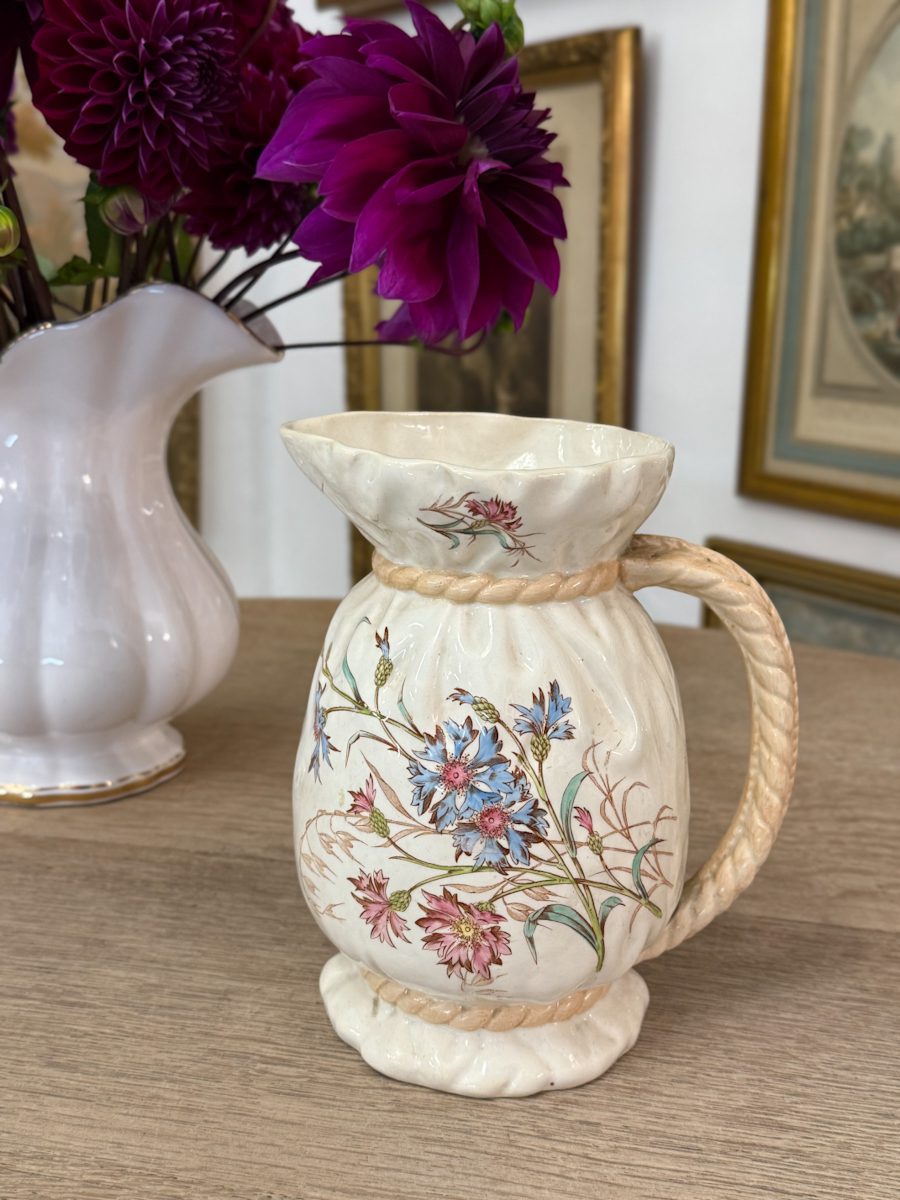
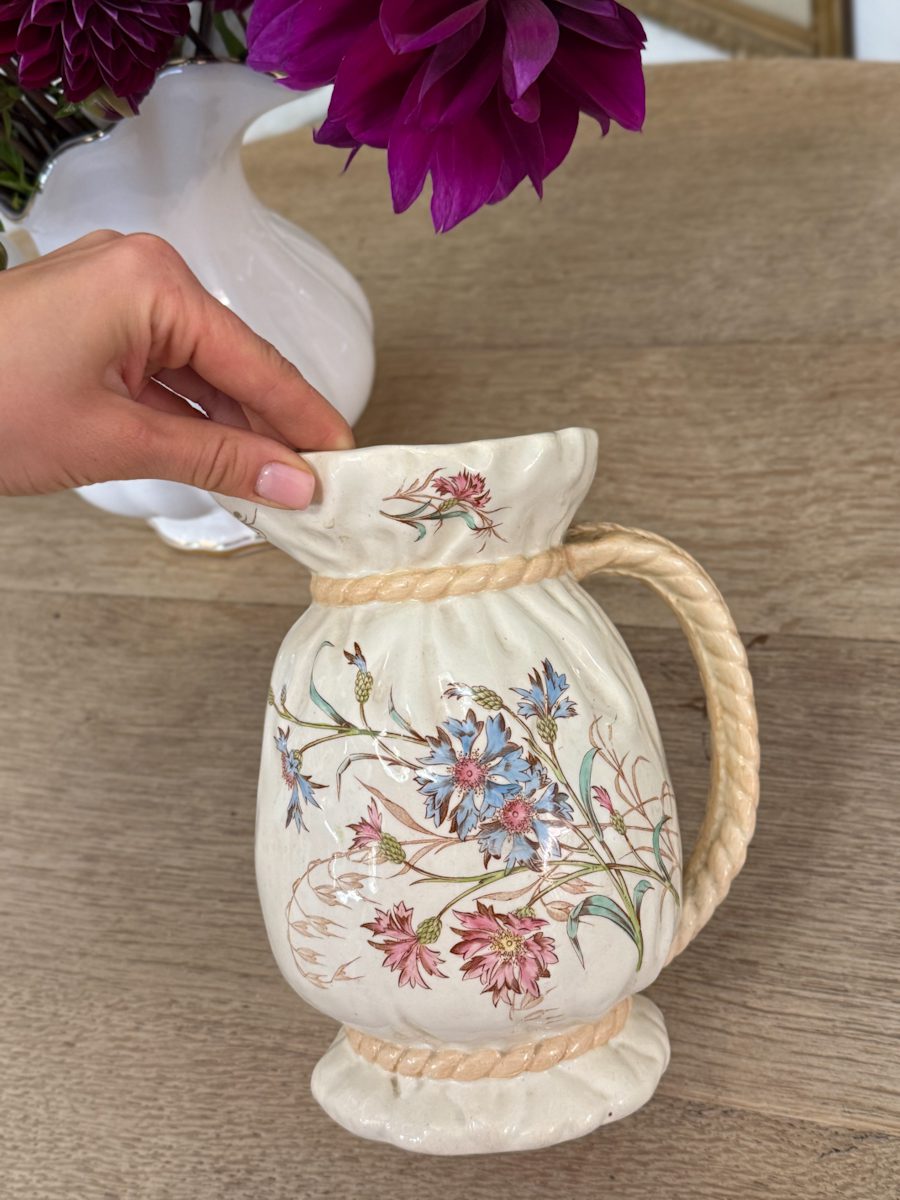
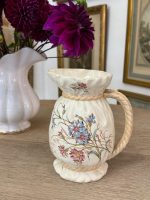
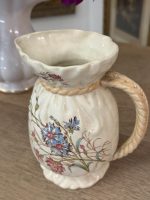

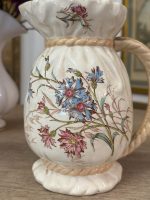
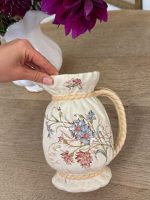
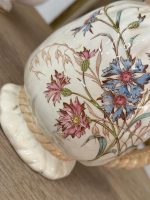
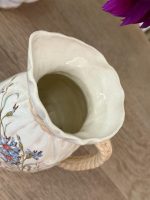
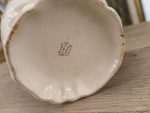
Antique Art Nouveau “Terre de Fer” Faience Pitcher “Bleuets” (Cornflowers) — K&G Lunéville (France), circa 1900 (6031)
Height 22 cm Width 17.5 cm Color CreamPinkRoseBlue
Description
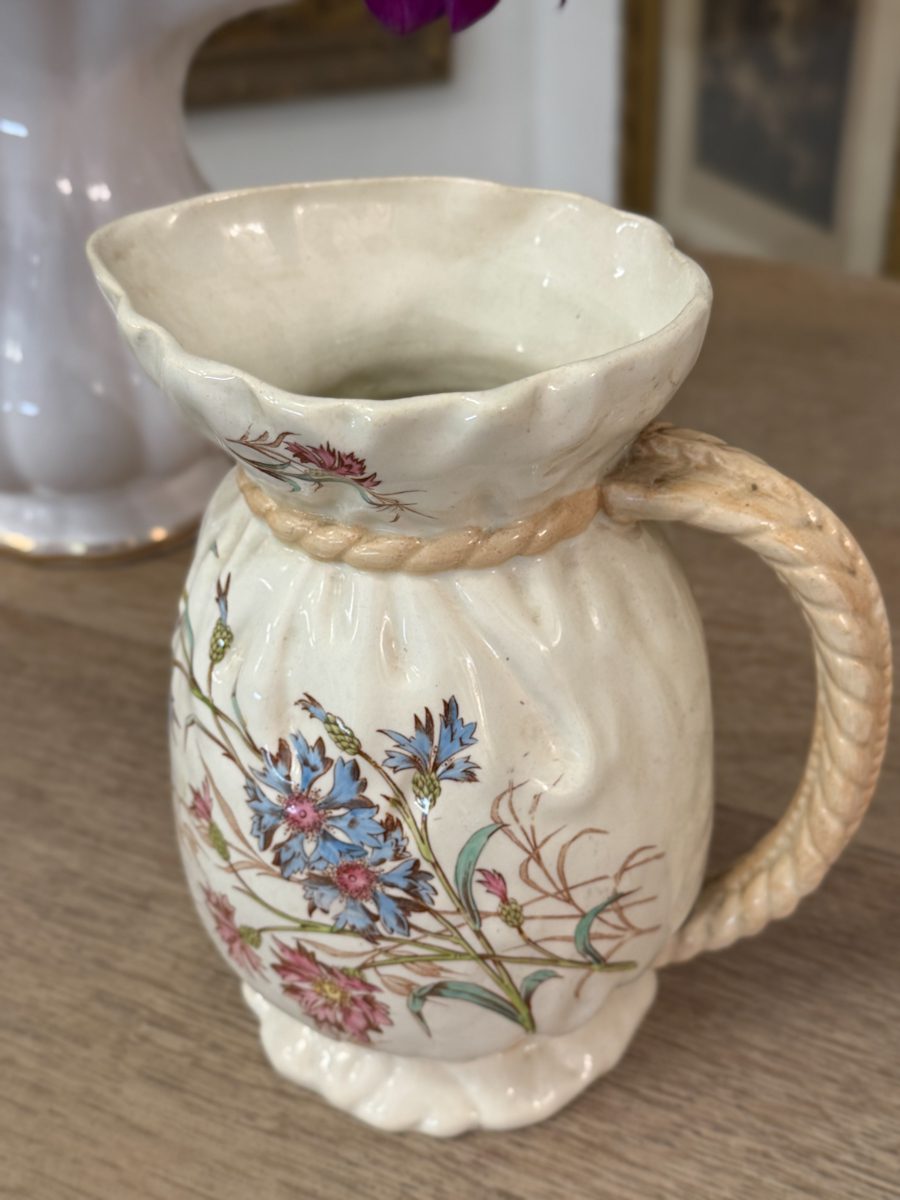
Antique French Art Nouveau “Terre de Fer” Faience Pitcher “Bleuets” (Cornflowers) – K&G Lunéville, circa 1900
- Item: A highly decorative, prestigious antique French art pottery ewer/pitcher of exceptional organic form and superior material quality.
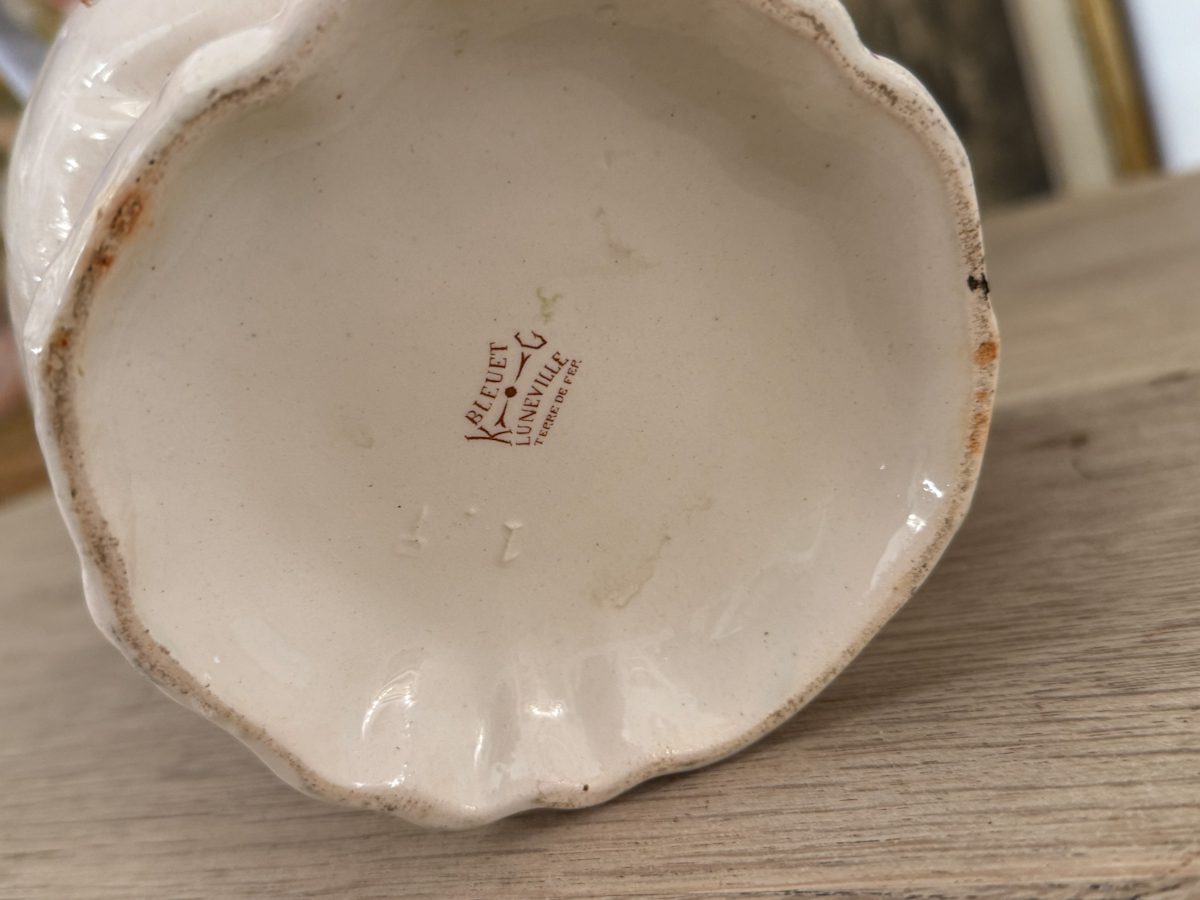
- About the Manufacturer & “Terre de Fer” Designation: Manufactured by Keller & Guérin (K&G) in Lunéville, France (established in 1730), one of France’s elite historic ceramic factories.The stamp “Terre de Fer” (literally “Ironstone”) on the base represents a highly sought-after, premium class of French earthenware introduced in the late 19th century. By incorporating kaolin and ironstone clay into the paste, manufacturers achieved a much whiter, thinner, and significantly more durable body than standard earthenware. “Terre de Fer” items were historically more expensive and remain highly prized by collectors of antique French tableware today.
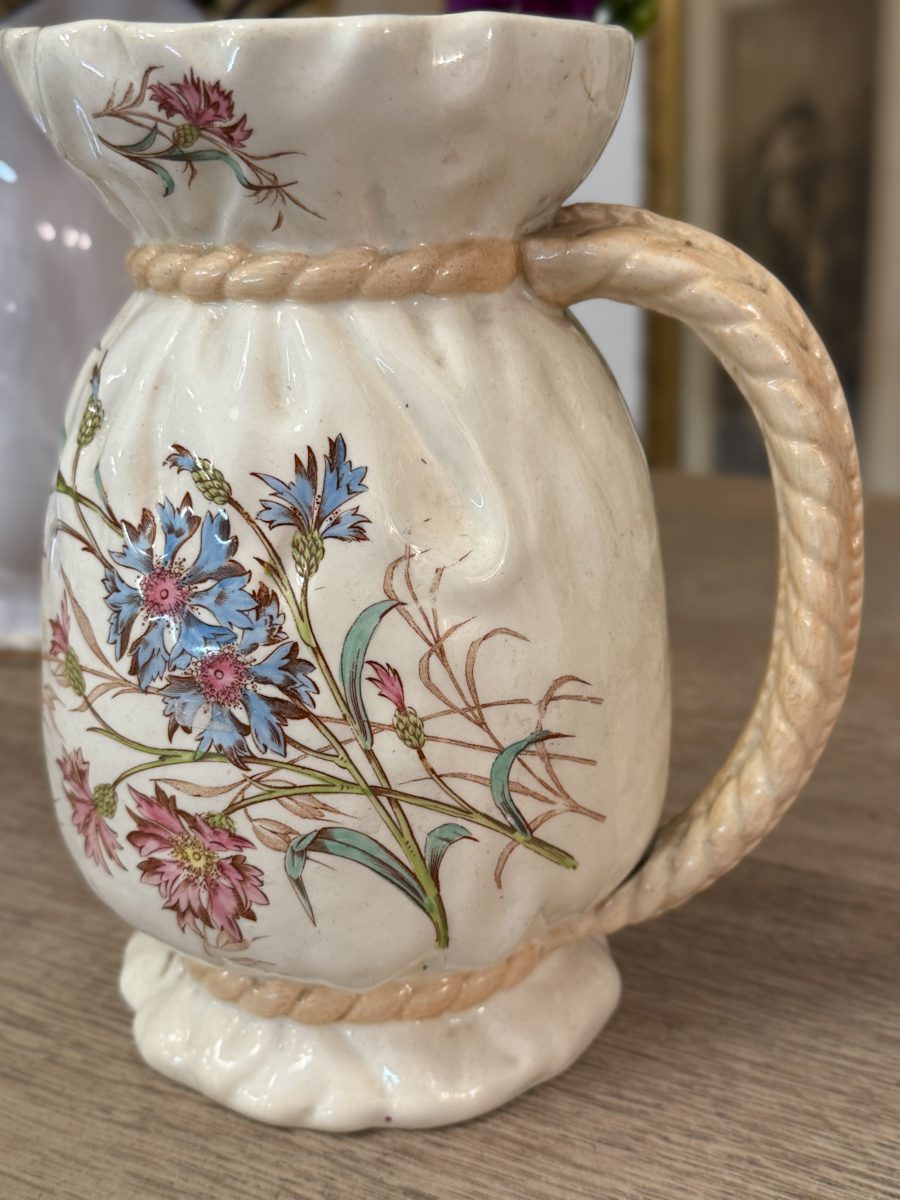
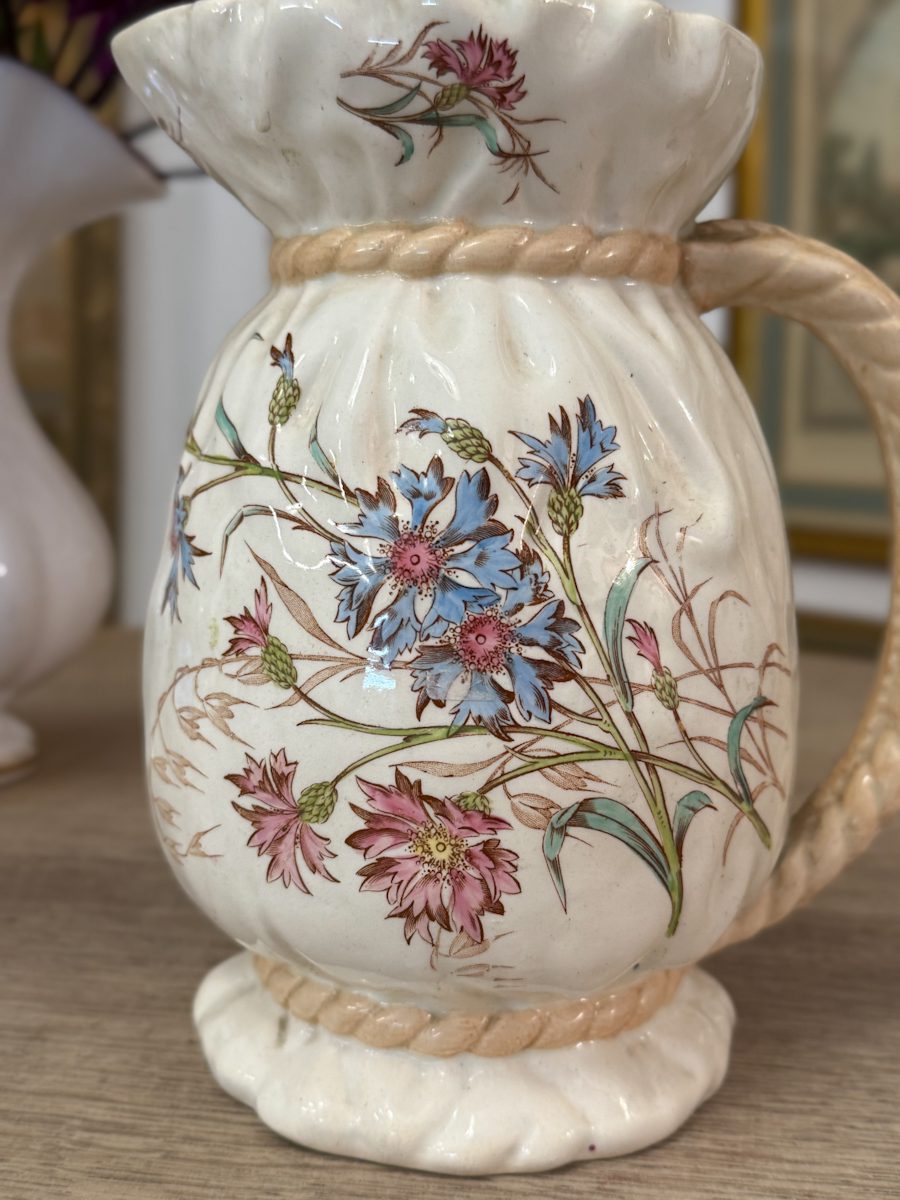
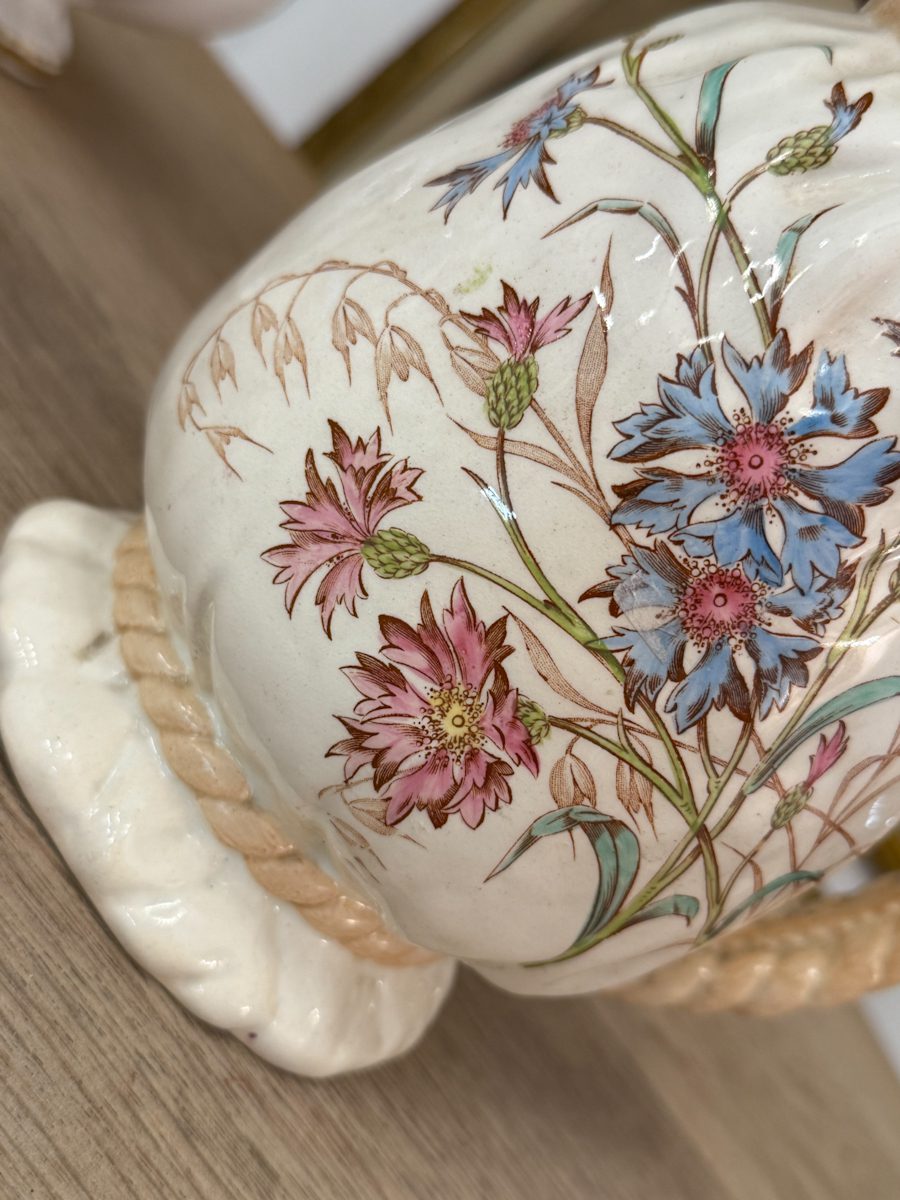
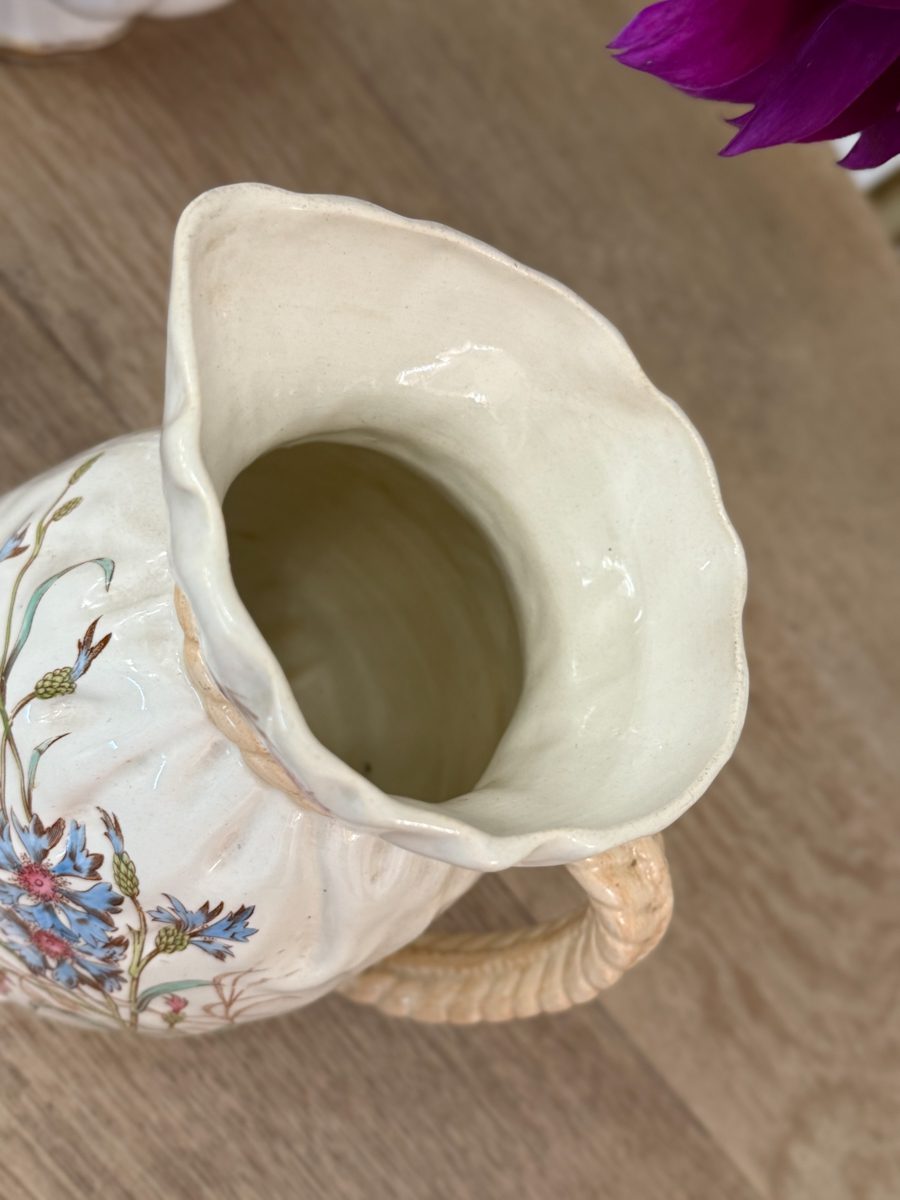
- Design & Pattern: Features the iconic and romantically nostalgic “Bleuets” (cornflowers) Art Nouveau botanical pattern, depicting stylized, vibrant blue cornflowers and soft green foliage over a warm cream body. Designed with an elegant, flowing organic handle and a flared scalloped spout typical of the era’s avant-garde style.
- Period: Art Nouveau / Belle Époque, circa 1900.
- Markings: Fully stamped on the reverse with the green underglaze factory mark “K&G LUNEVILLE / FRANCE / BLEUETS / TERRE DE FER”, along with an impressed model shape number on the base.
- Dimensions:
- Height: 22 cm
- Width: 17.5 cm (including the handle)
- Condition: Excellent antique condition. Thanks to the durable “Terre de Fer” composition, the body is structurally flawless with no chips, cracks, hairline fractures, or restorations. The glaze remains bright and lustrous, displaying a very fine, natural age crazing that highlights its genuine historic character.