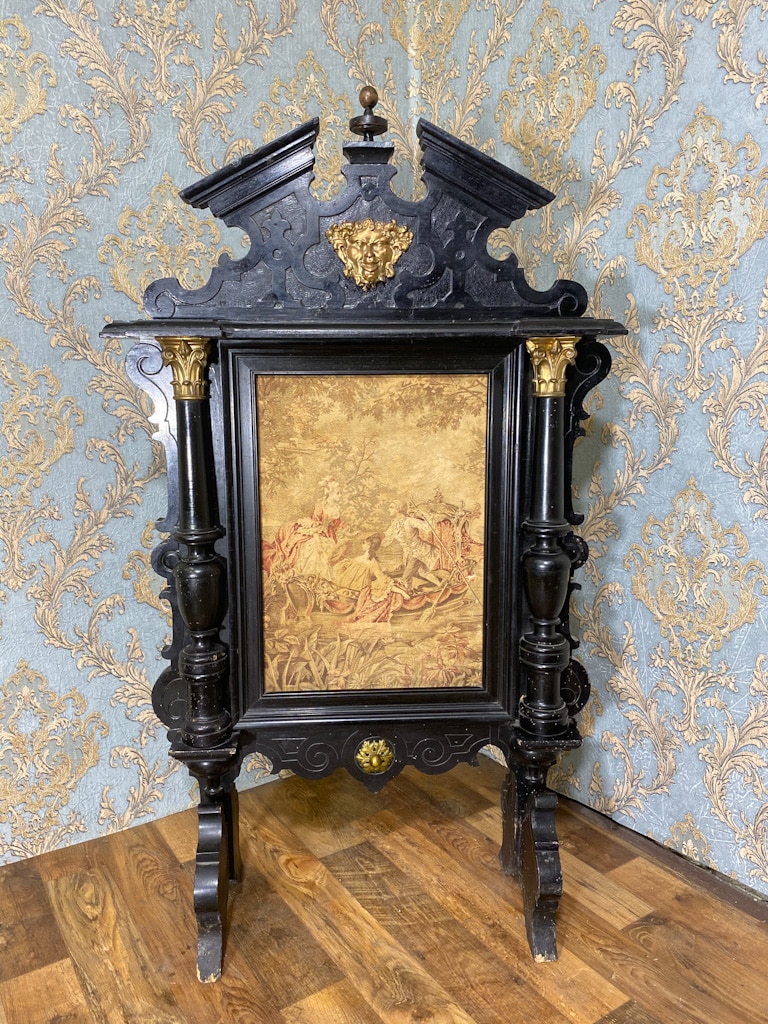
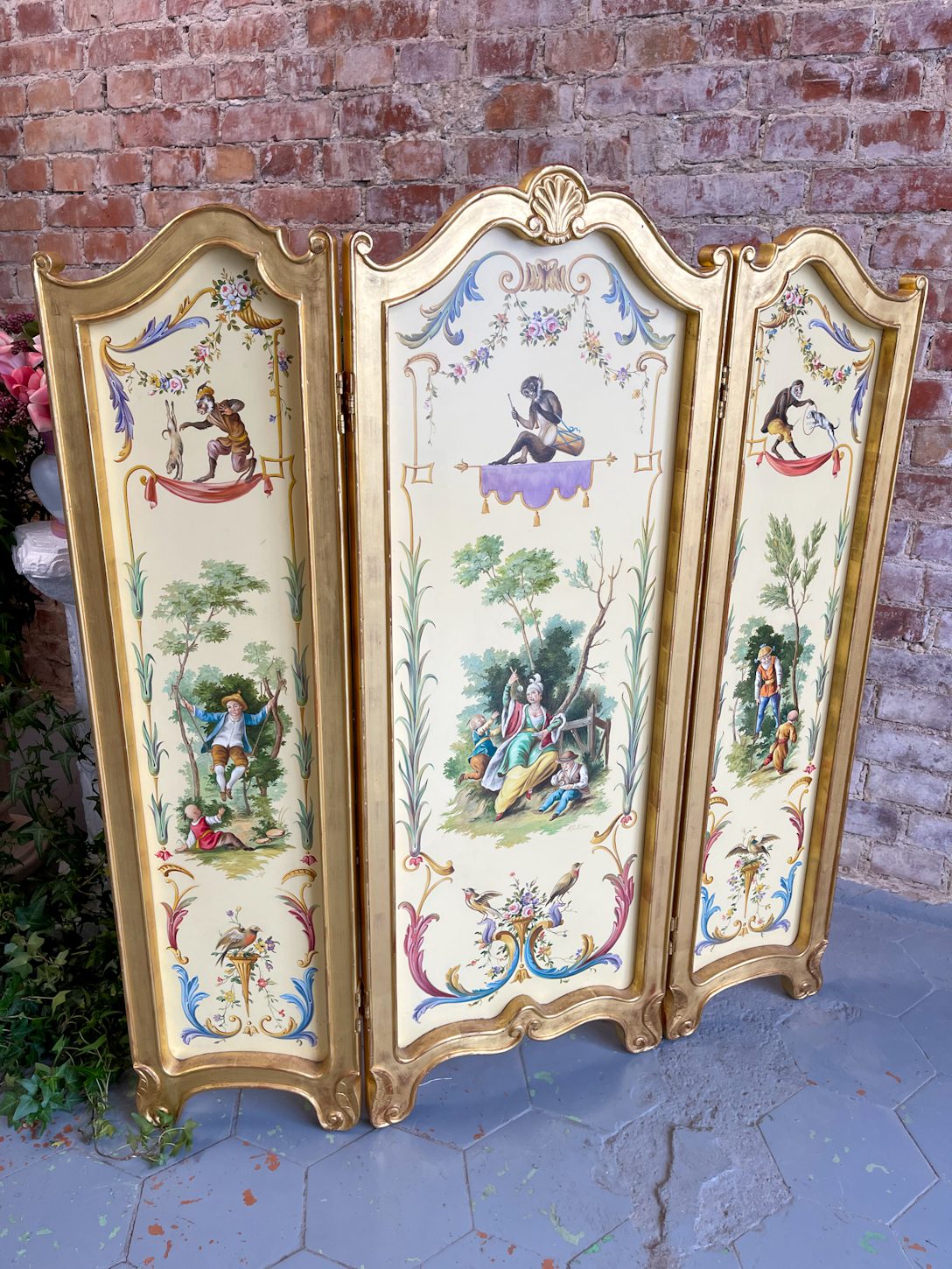
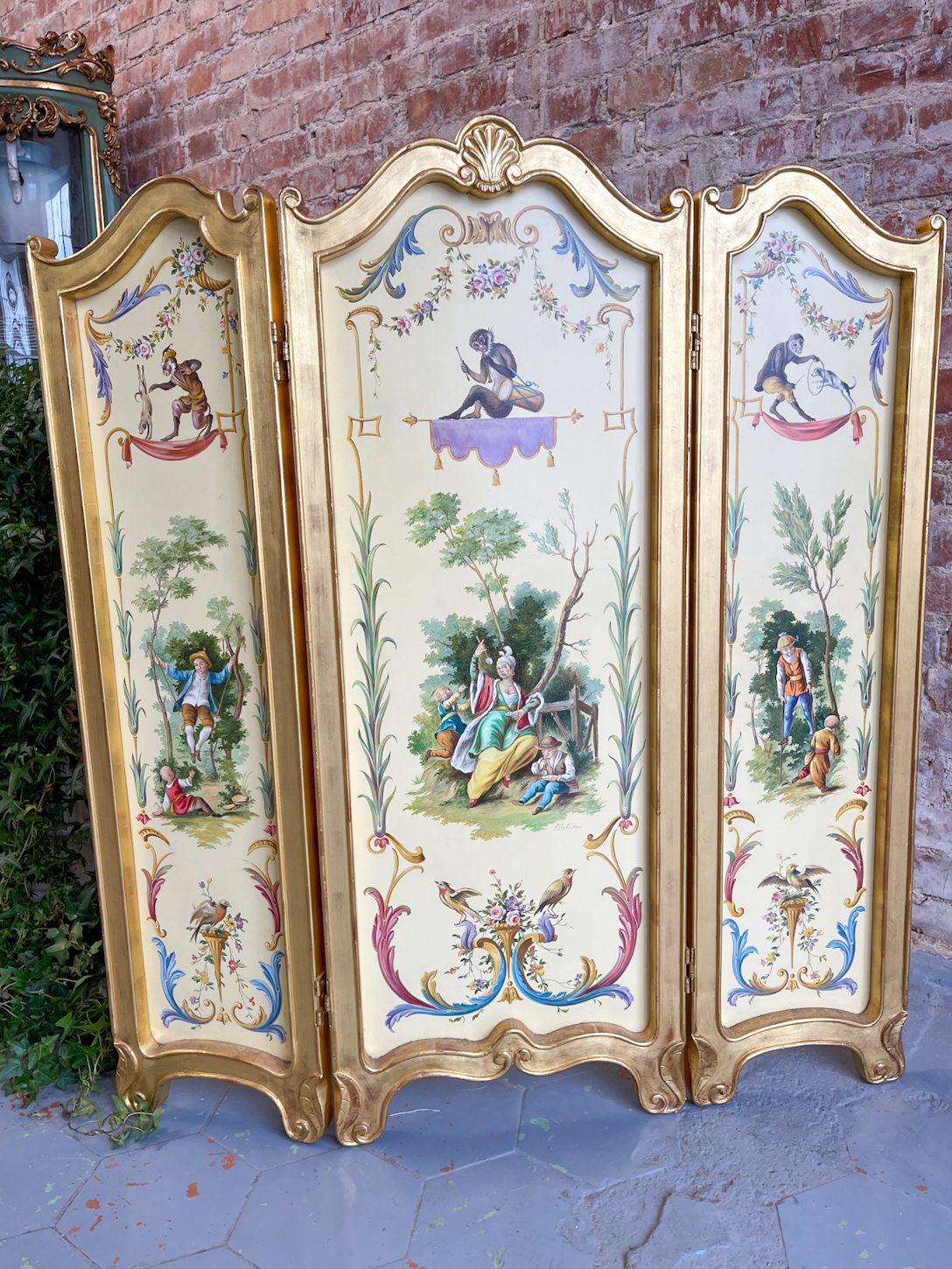
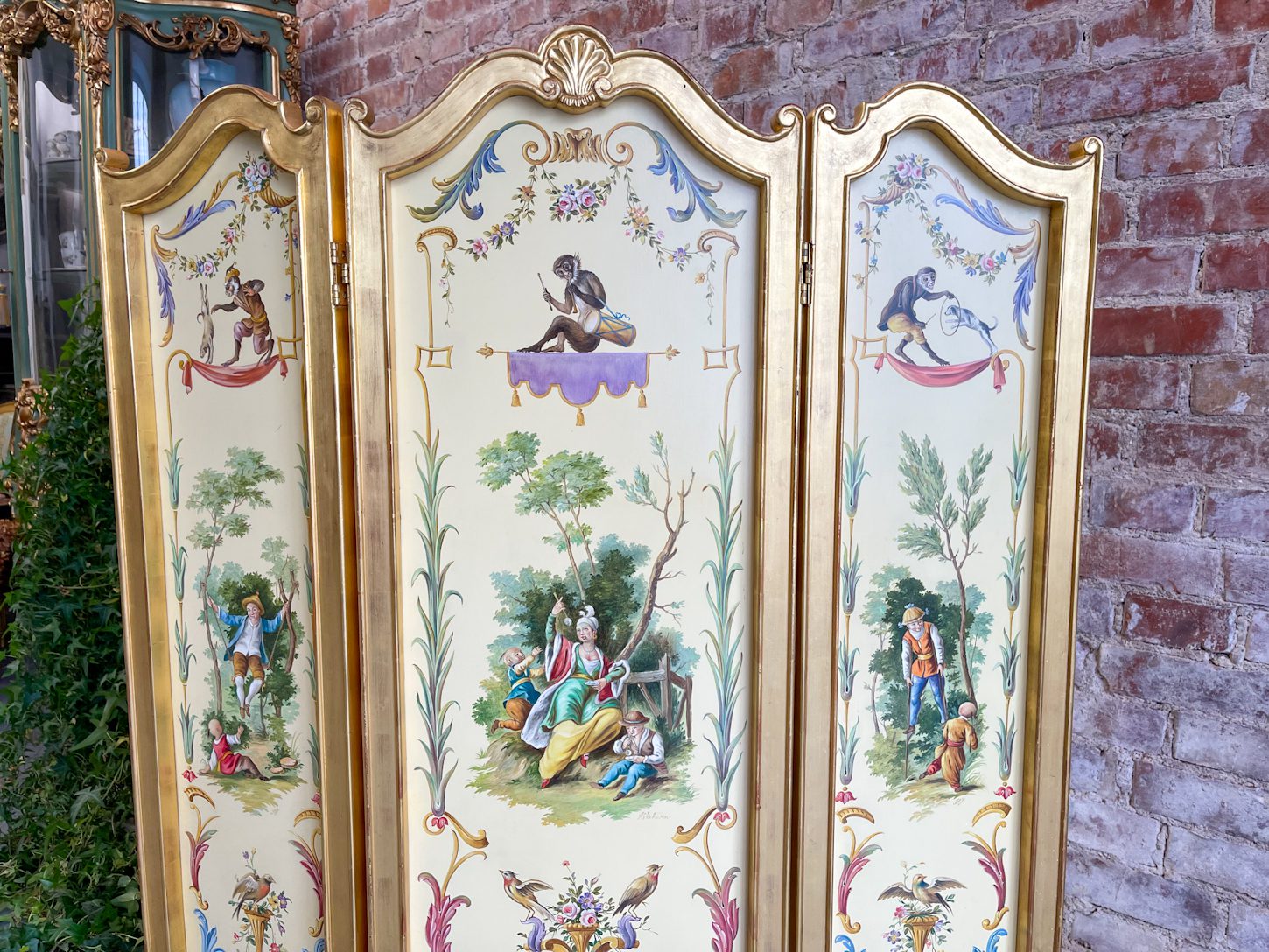
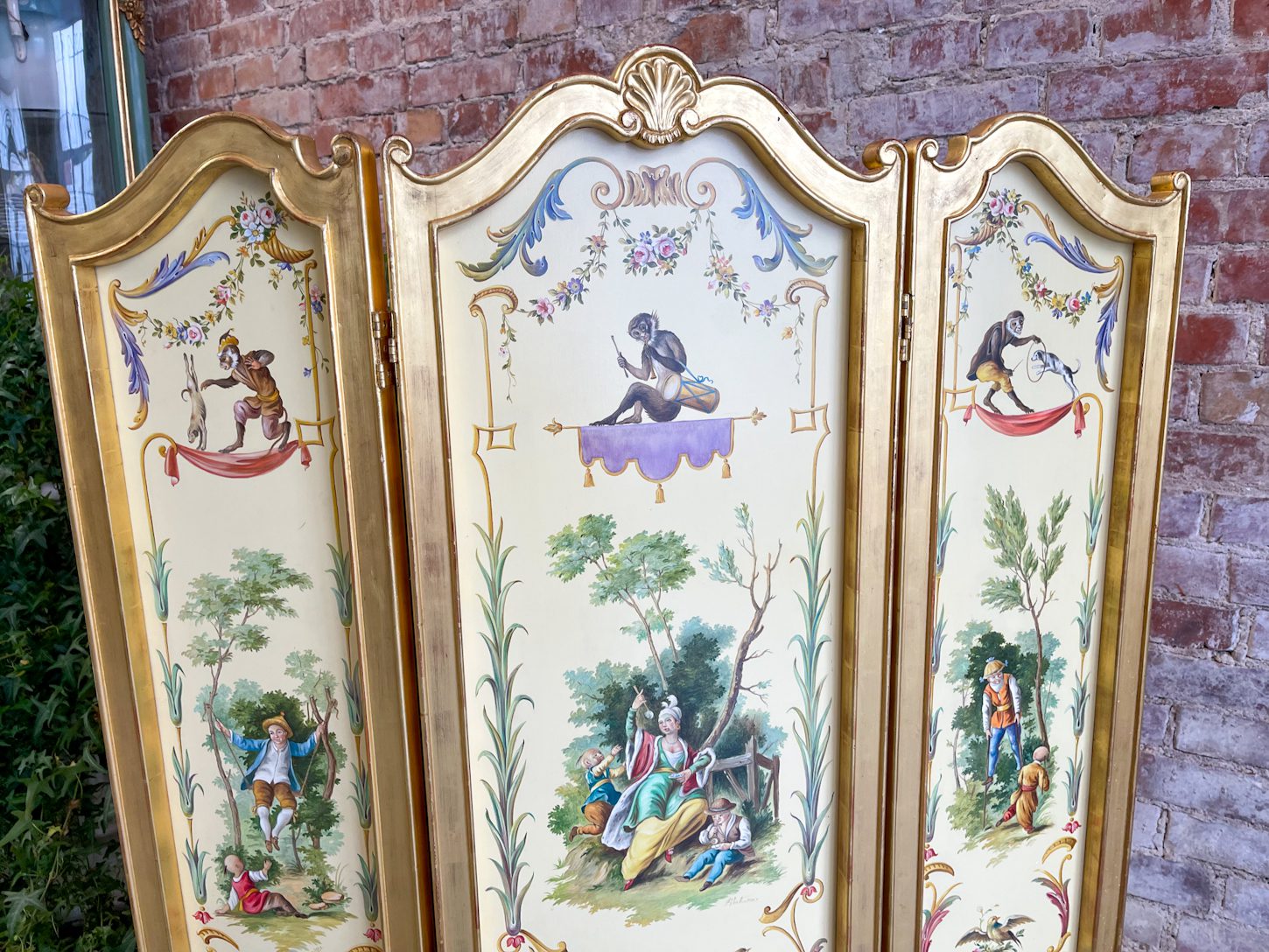
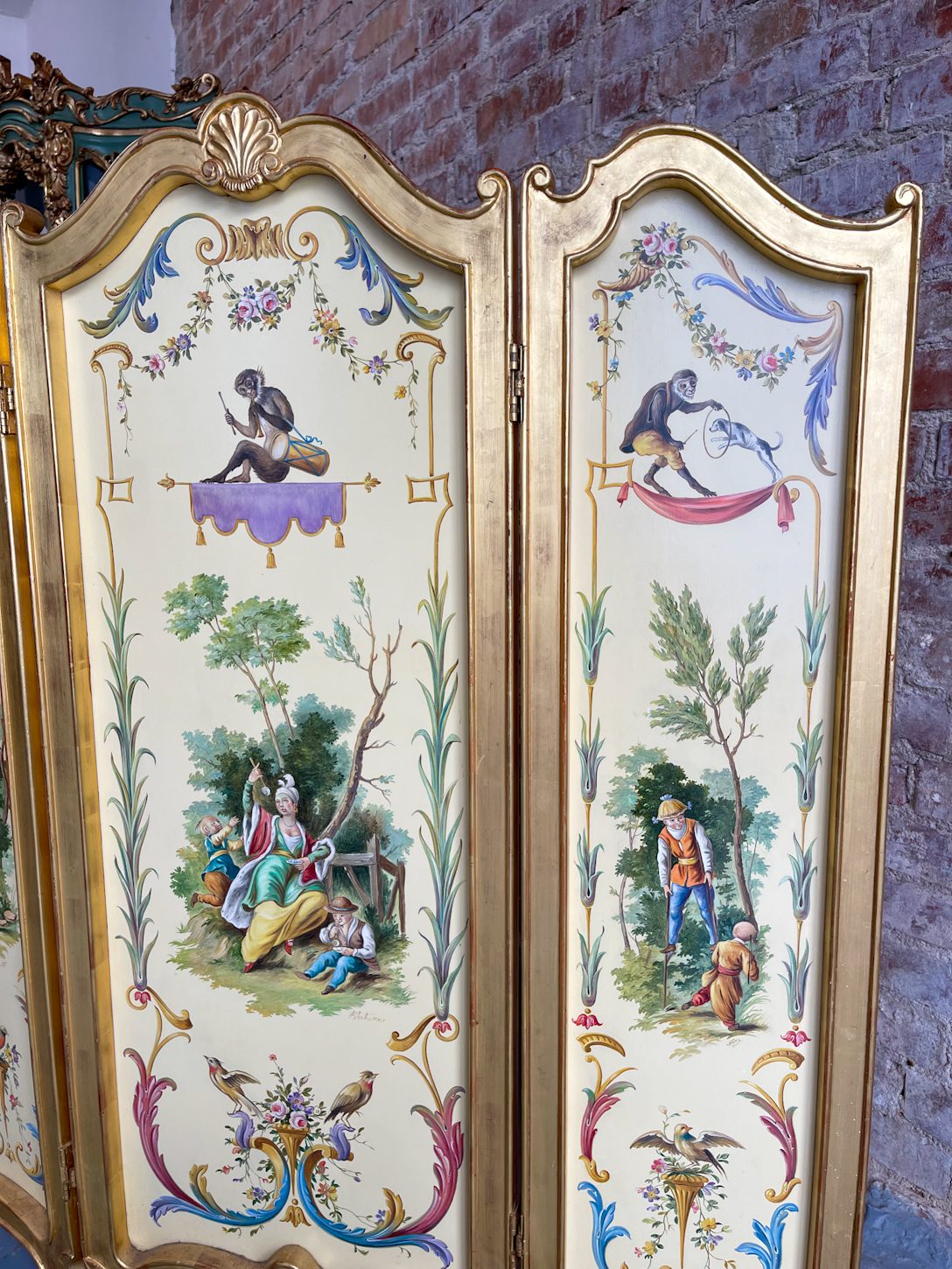
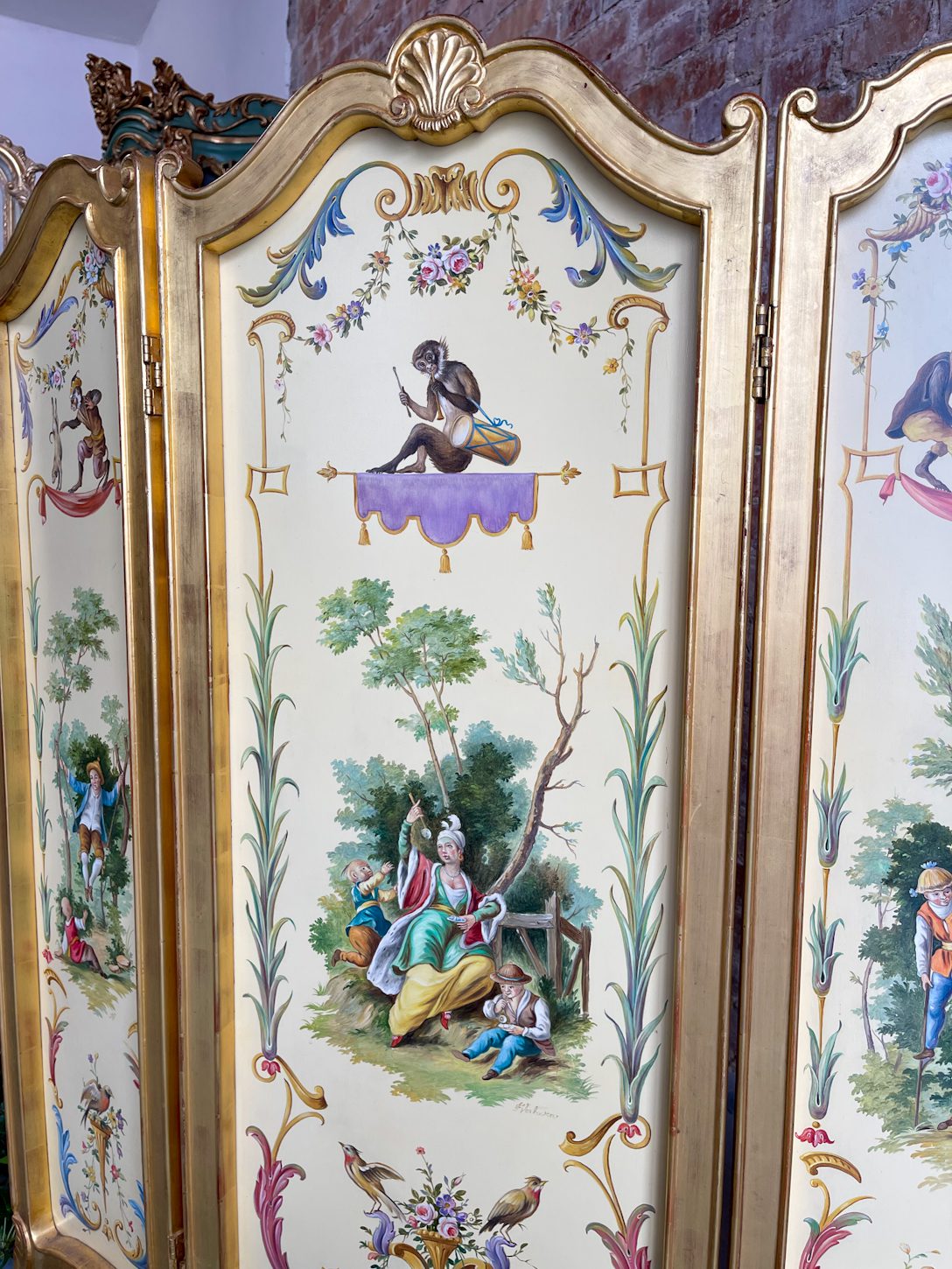
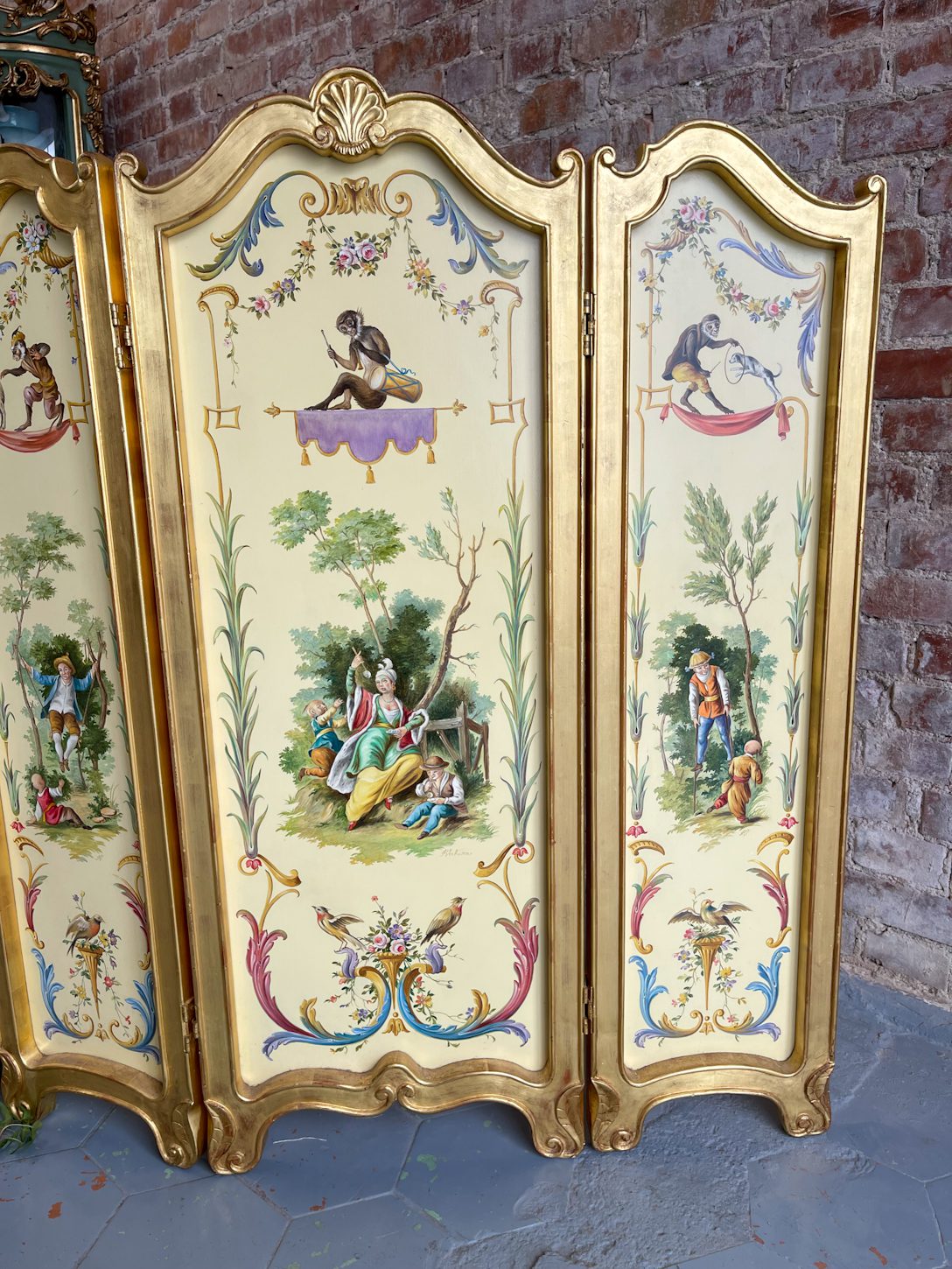
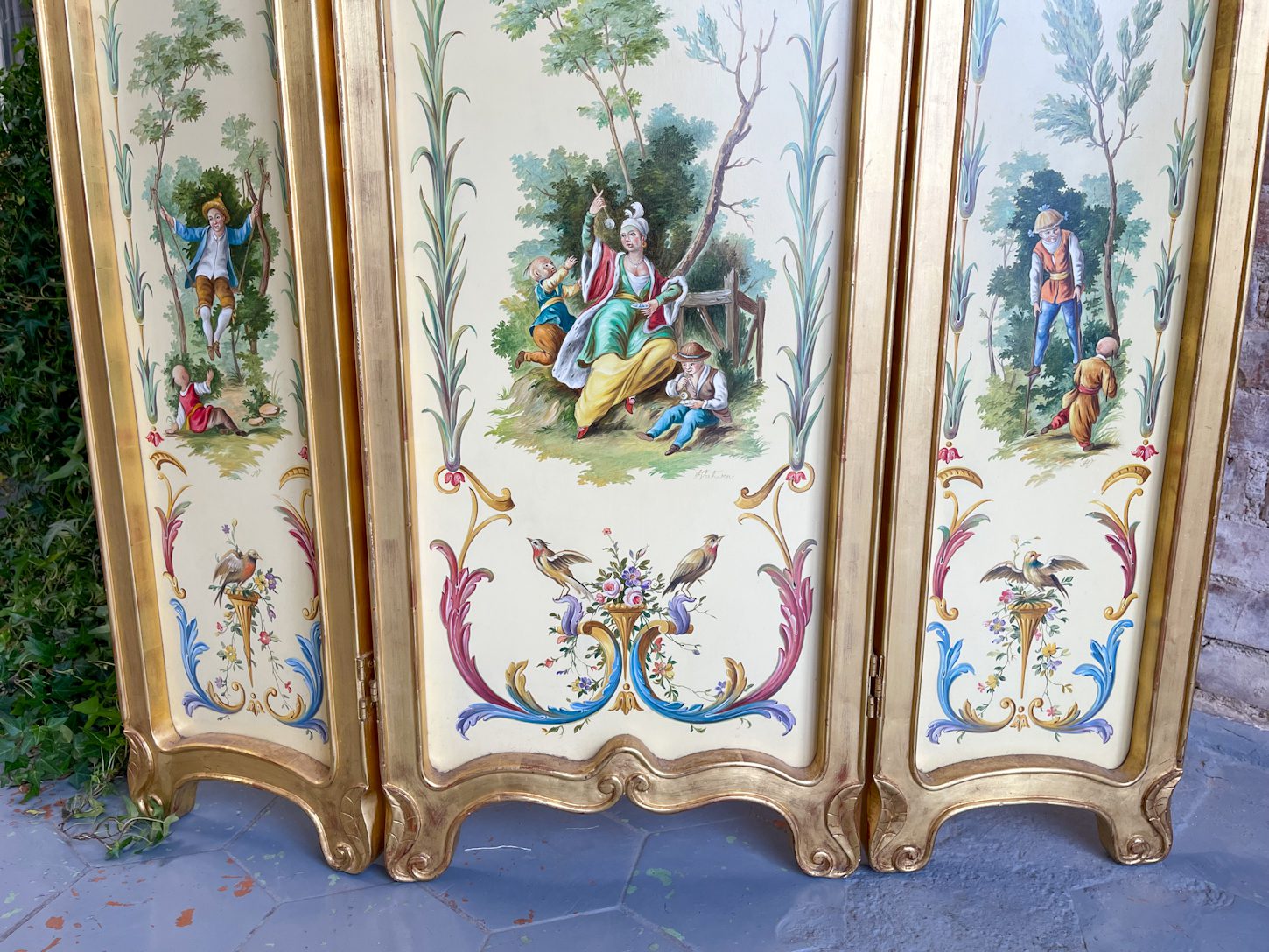
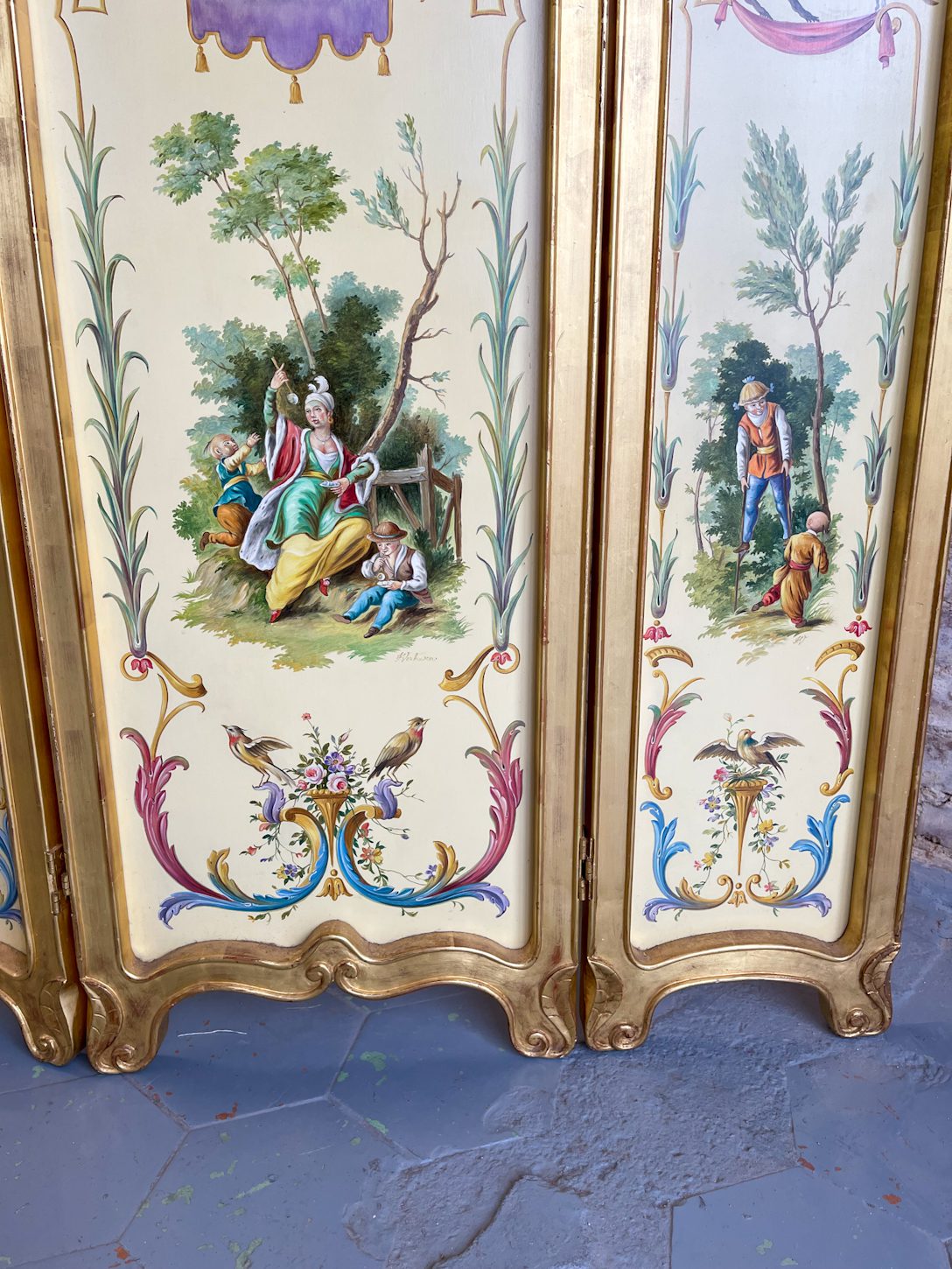
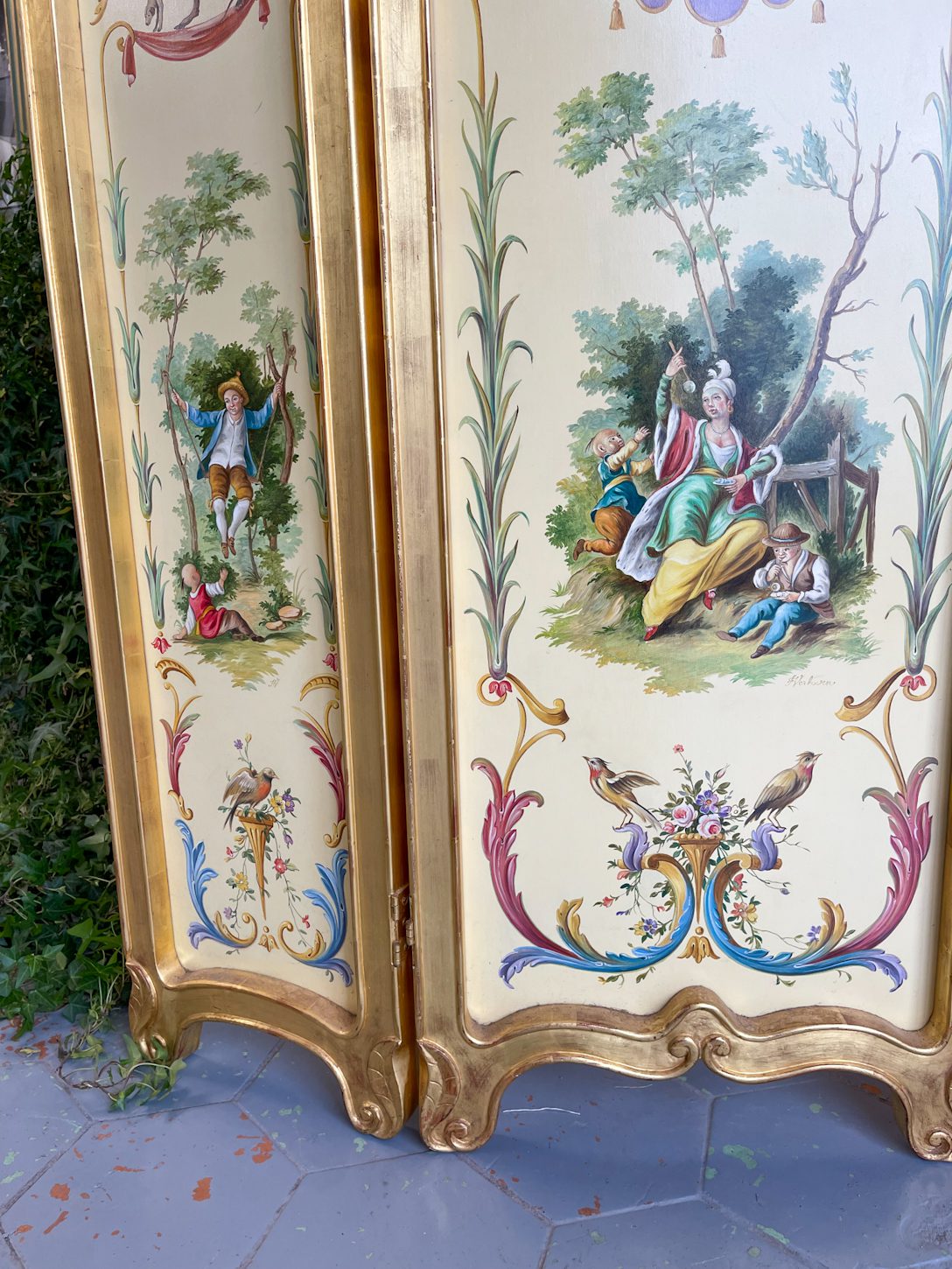
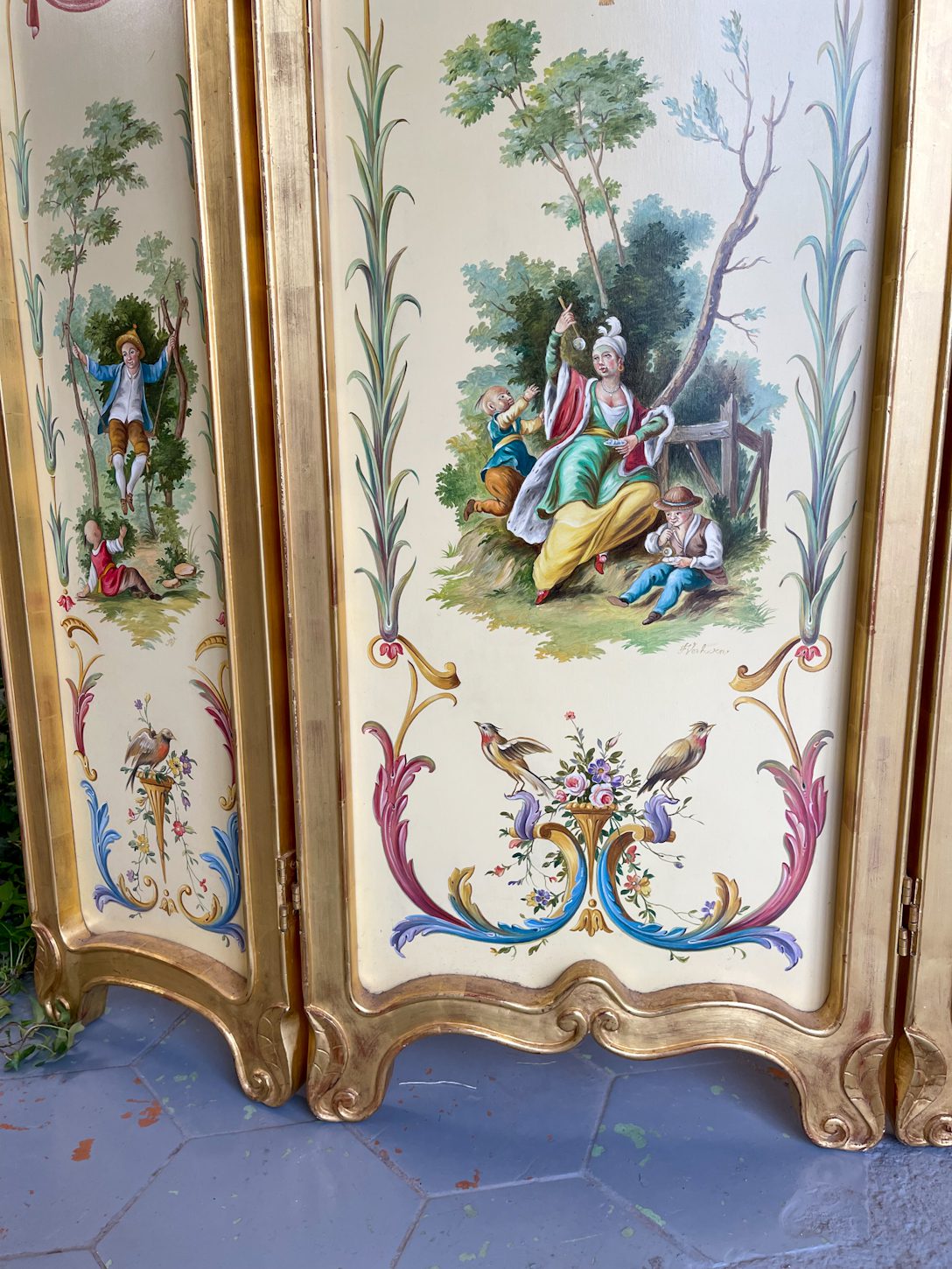
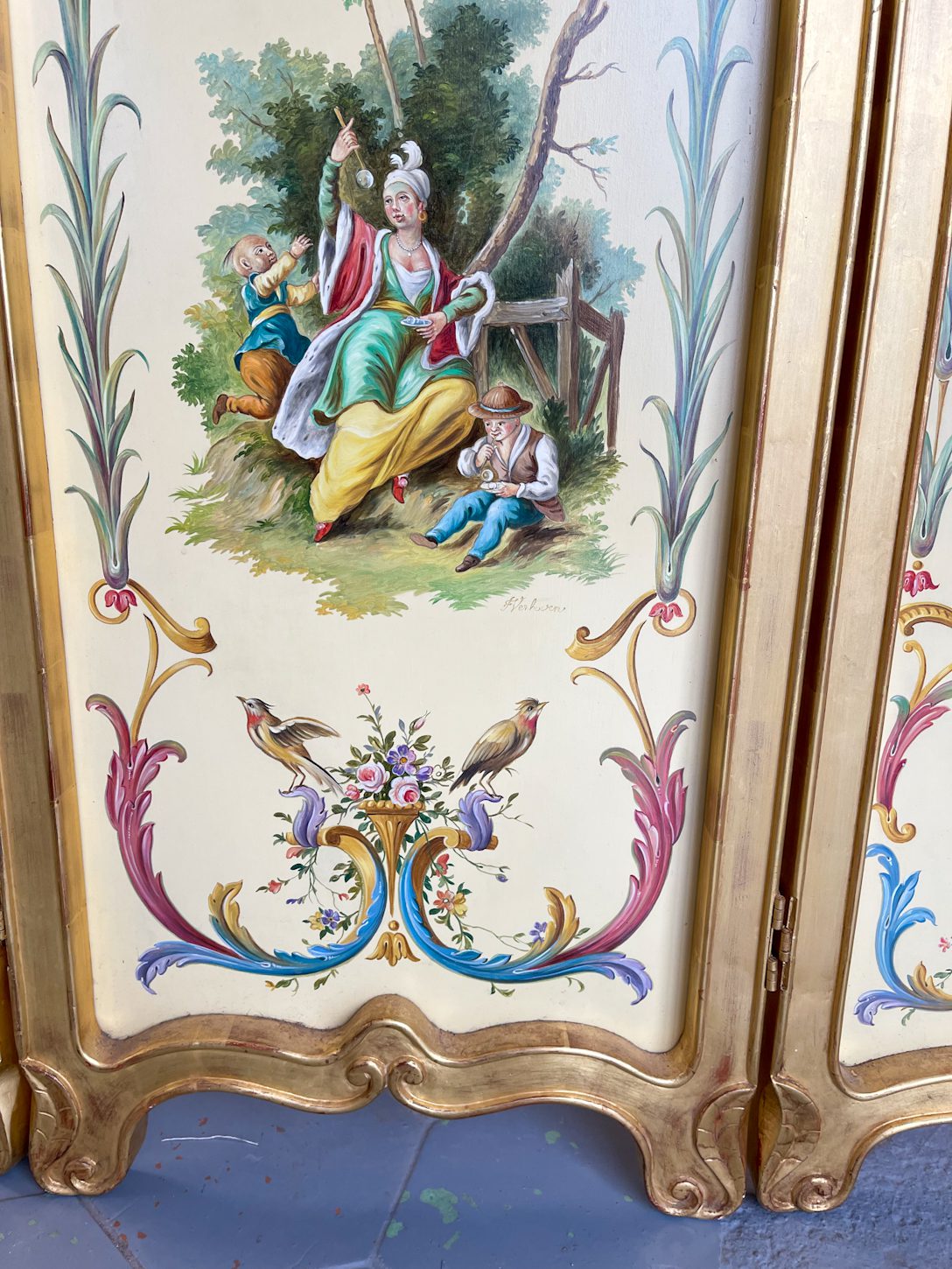
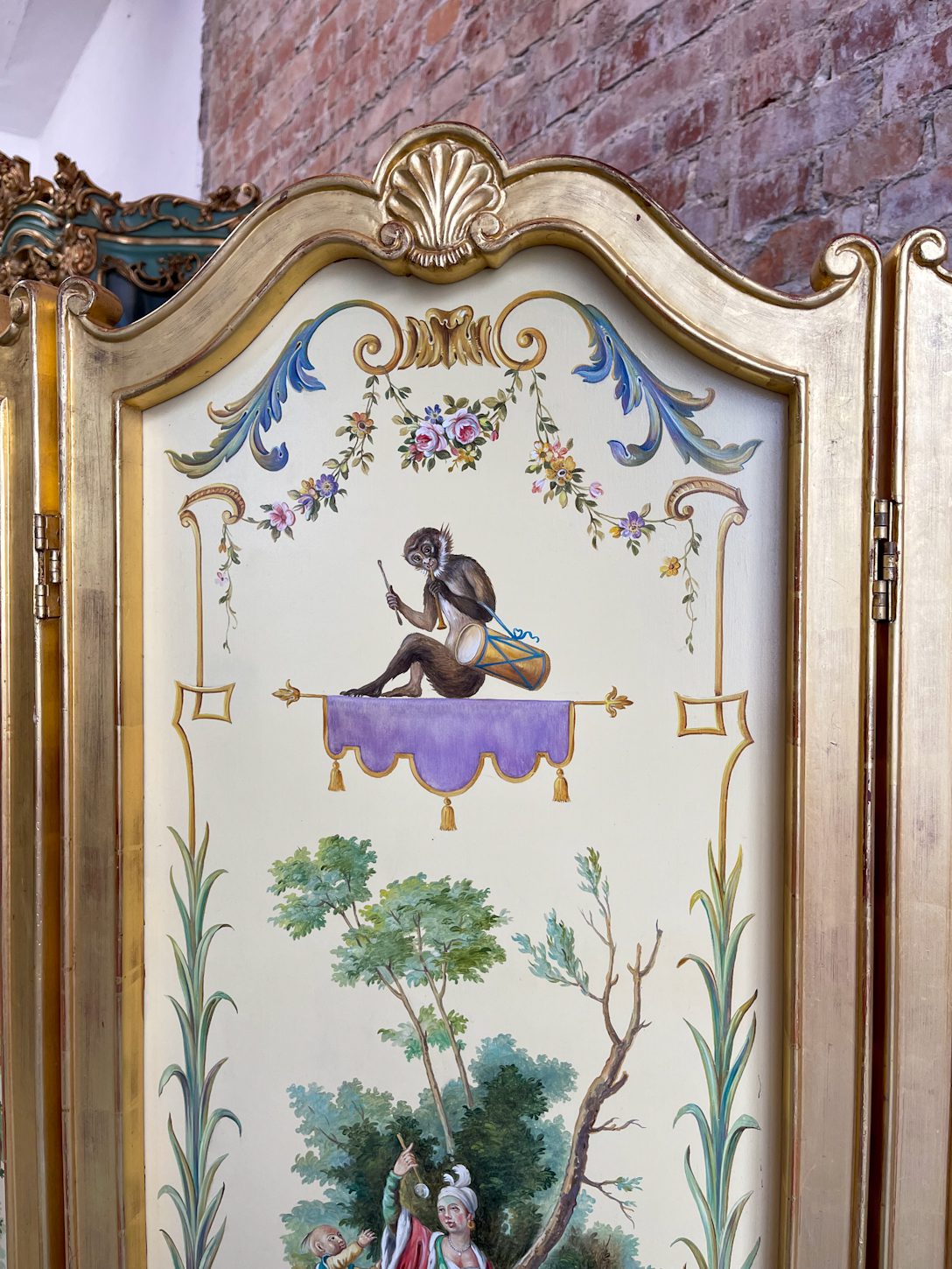
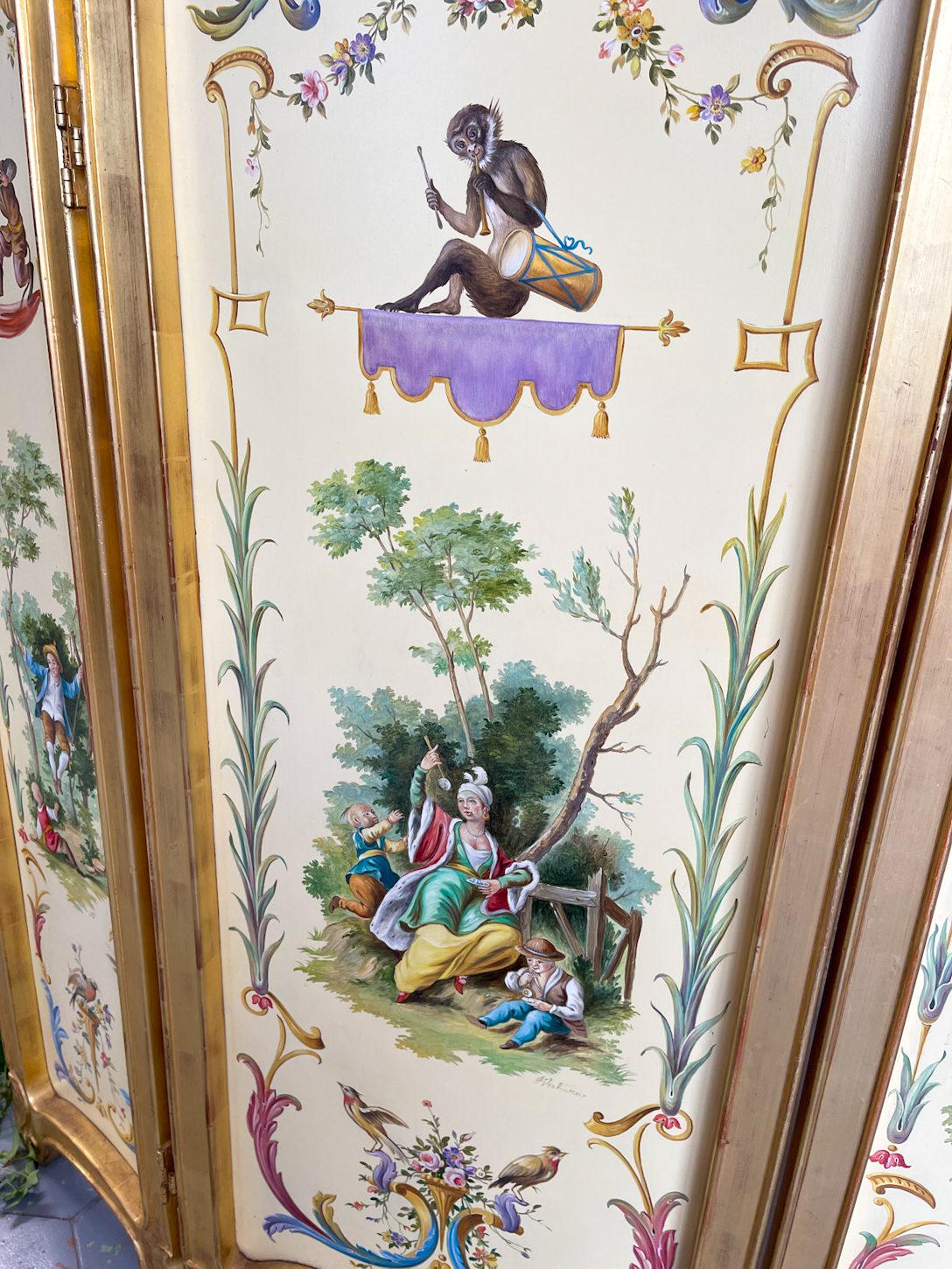
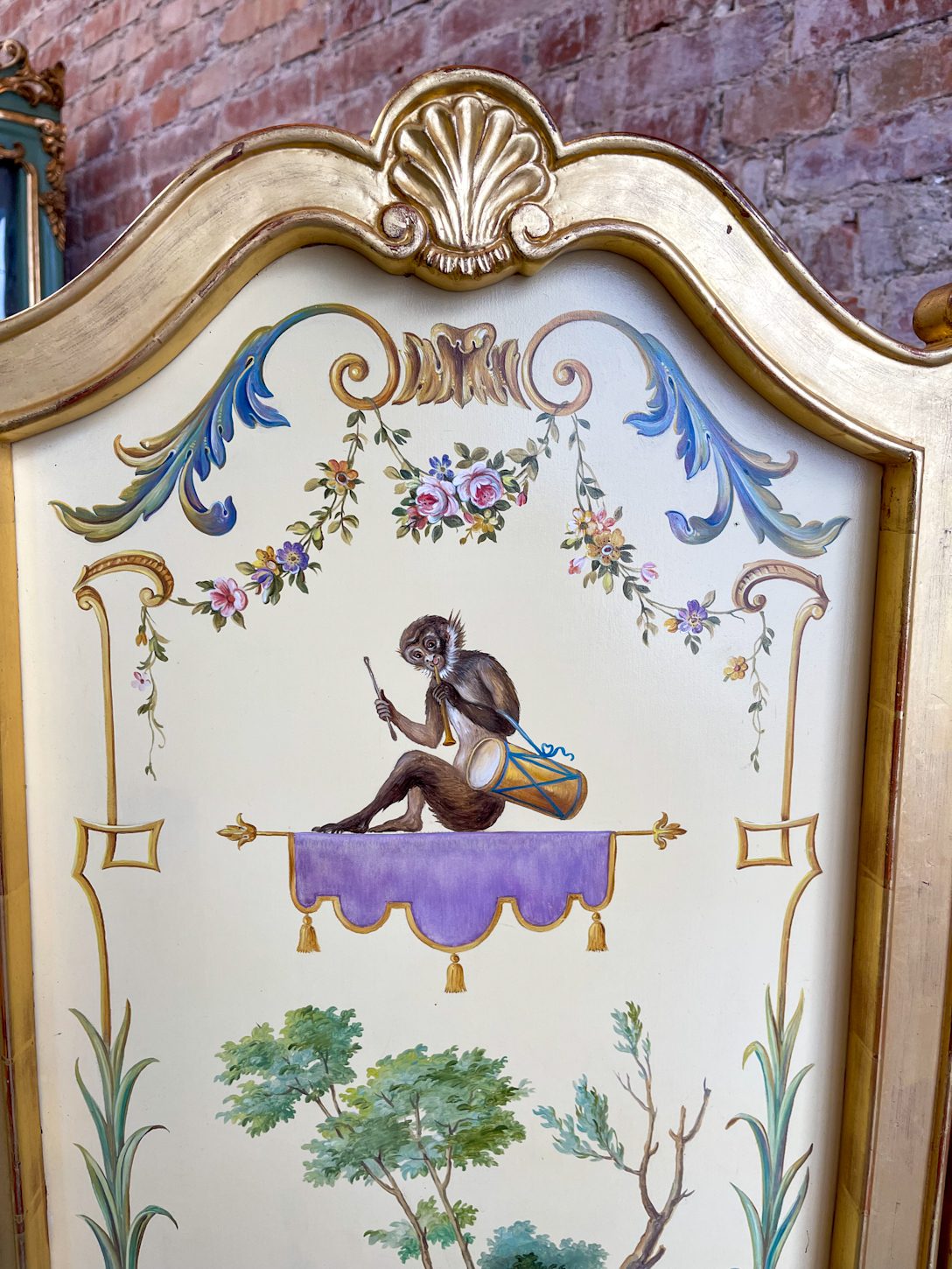
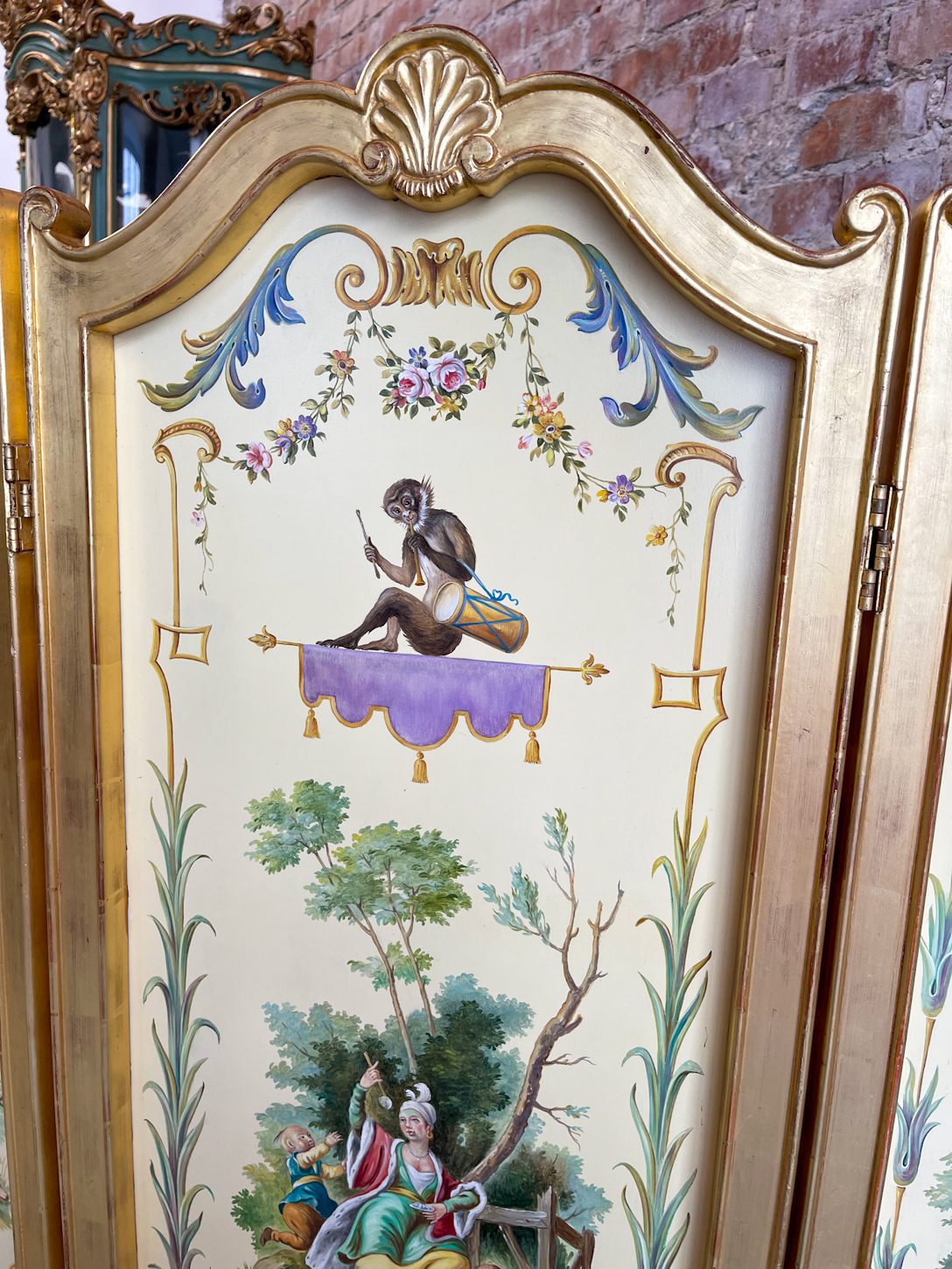
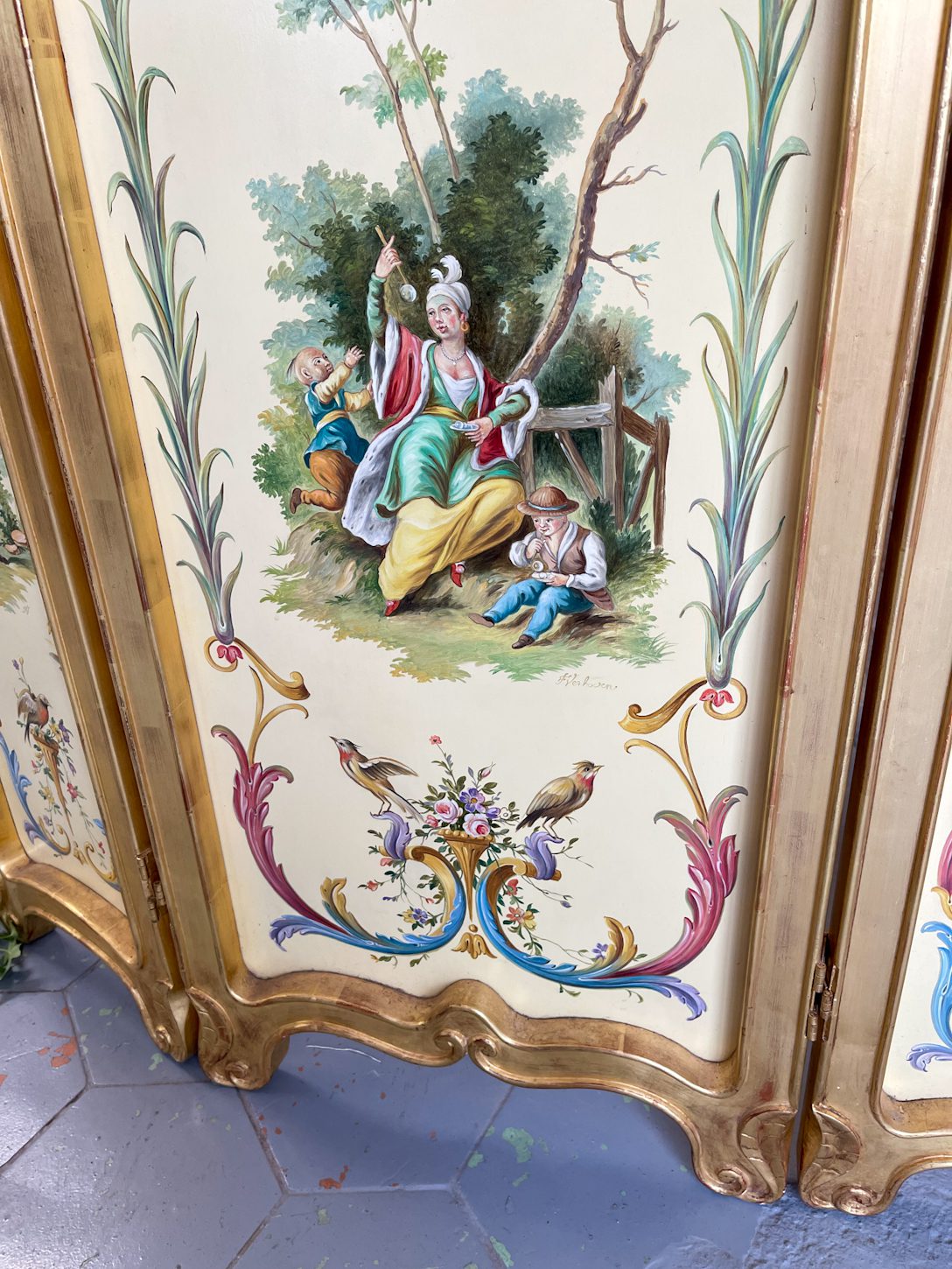
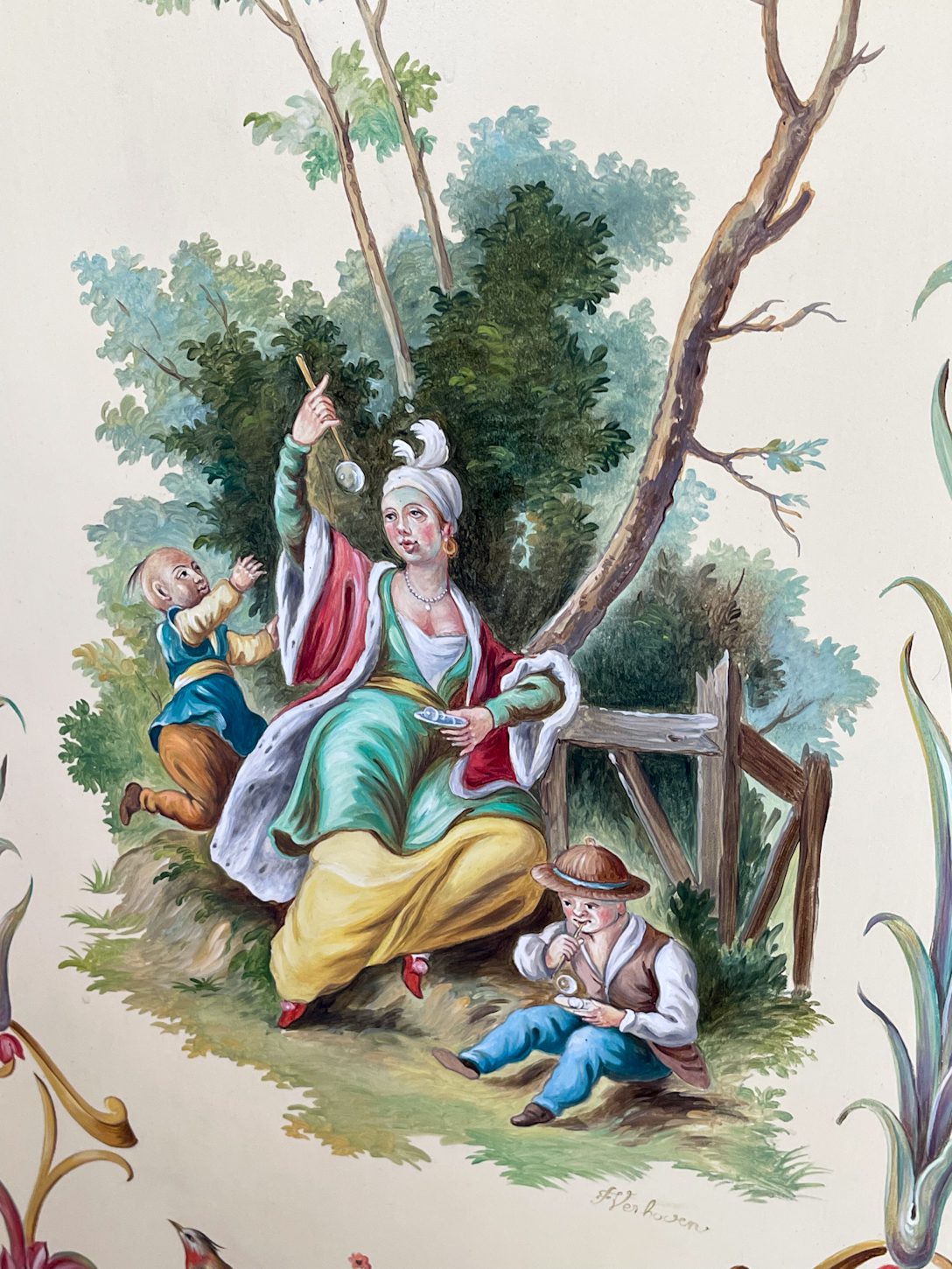
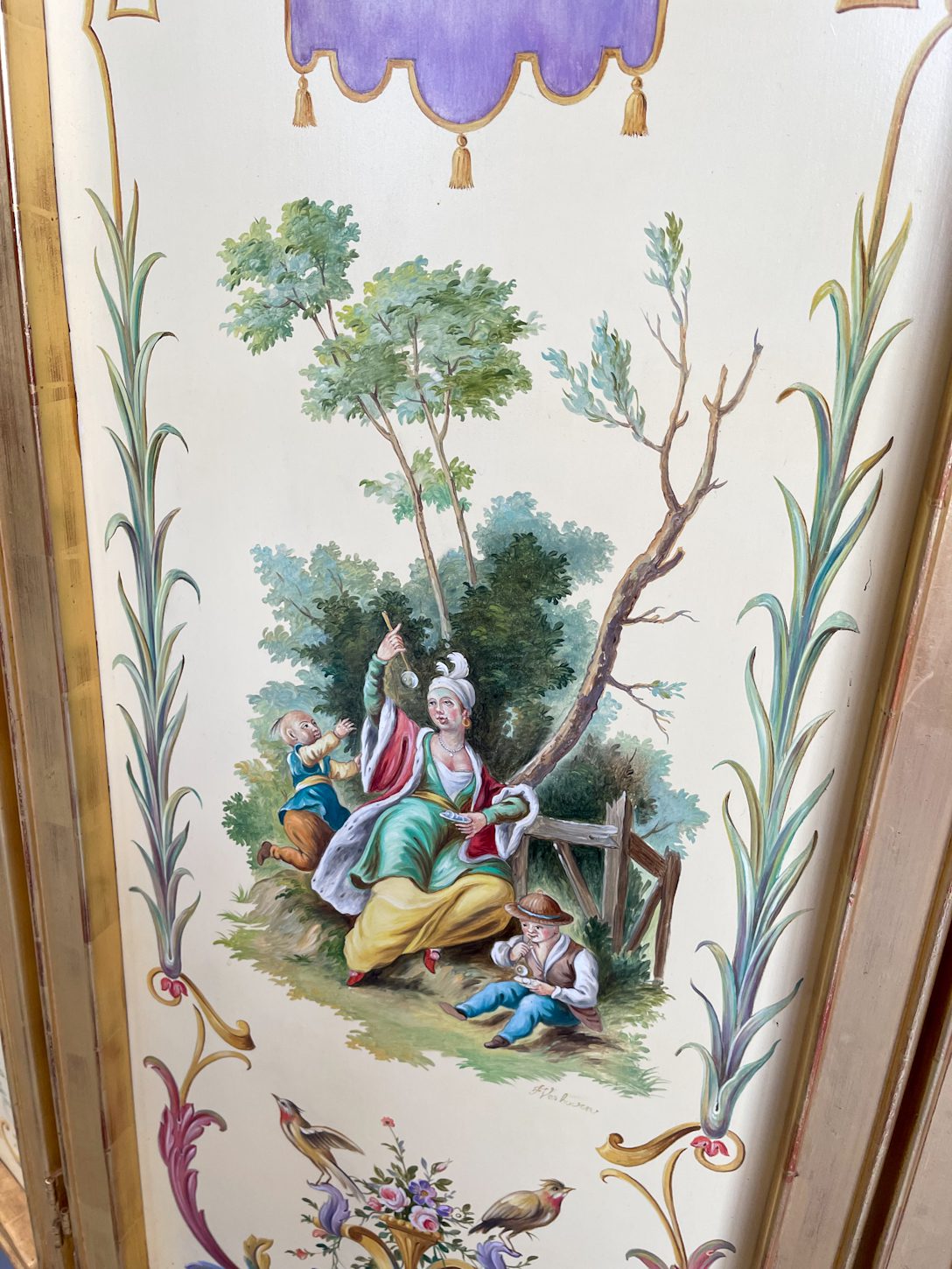
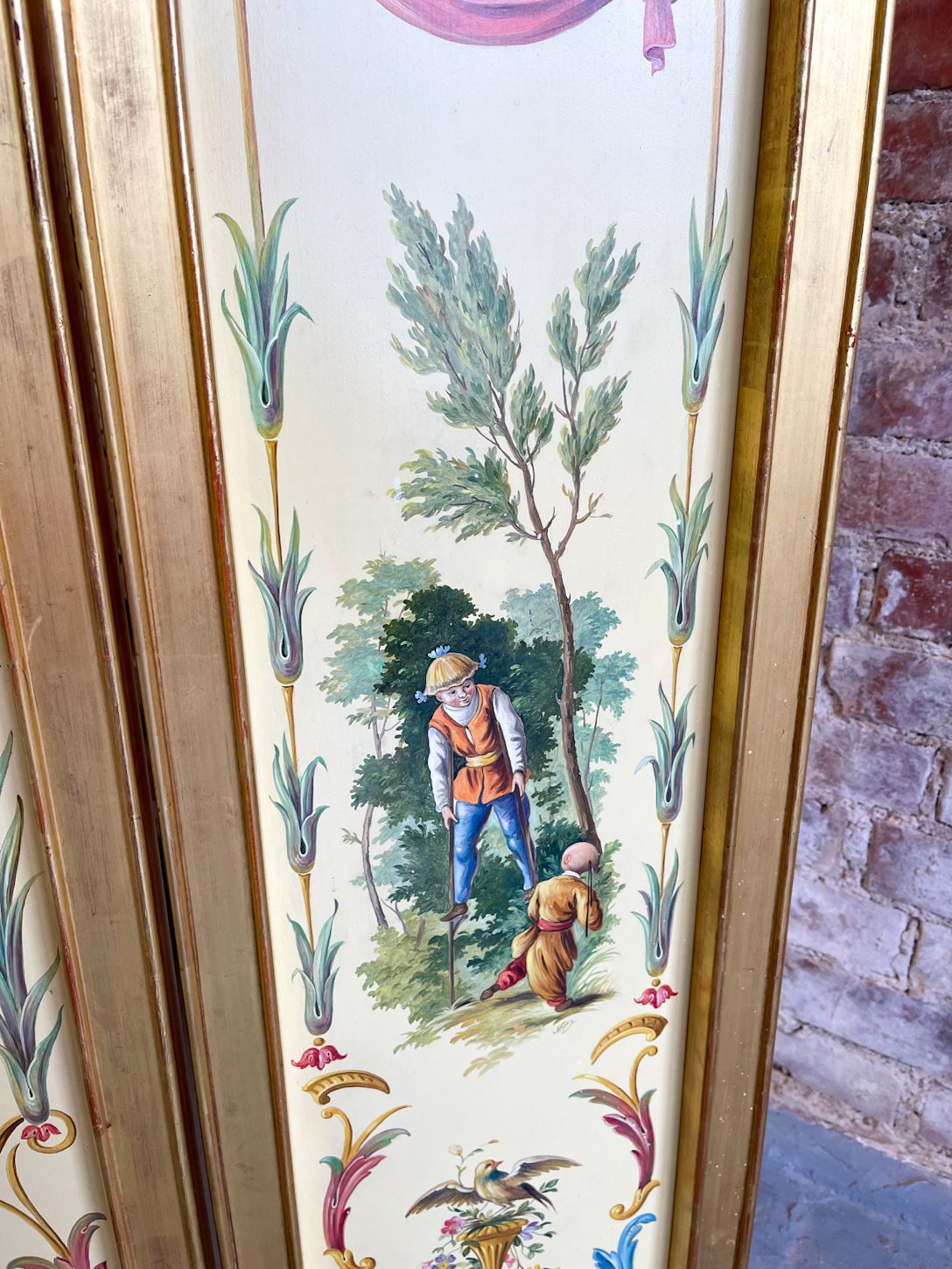
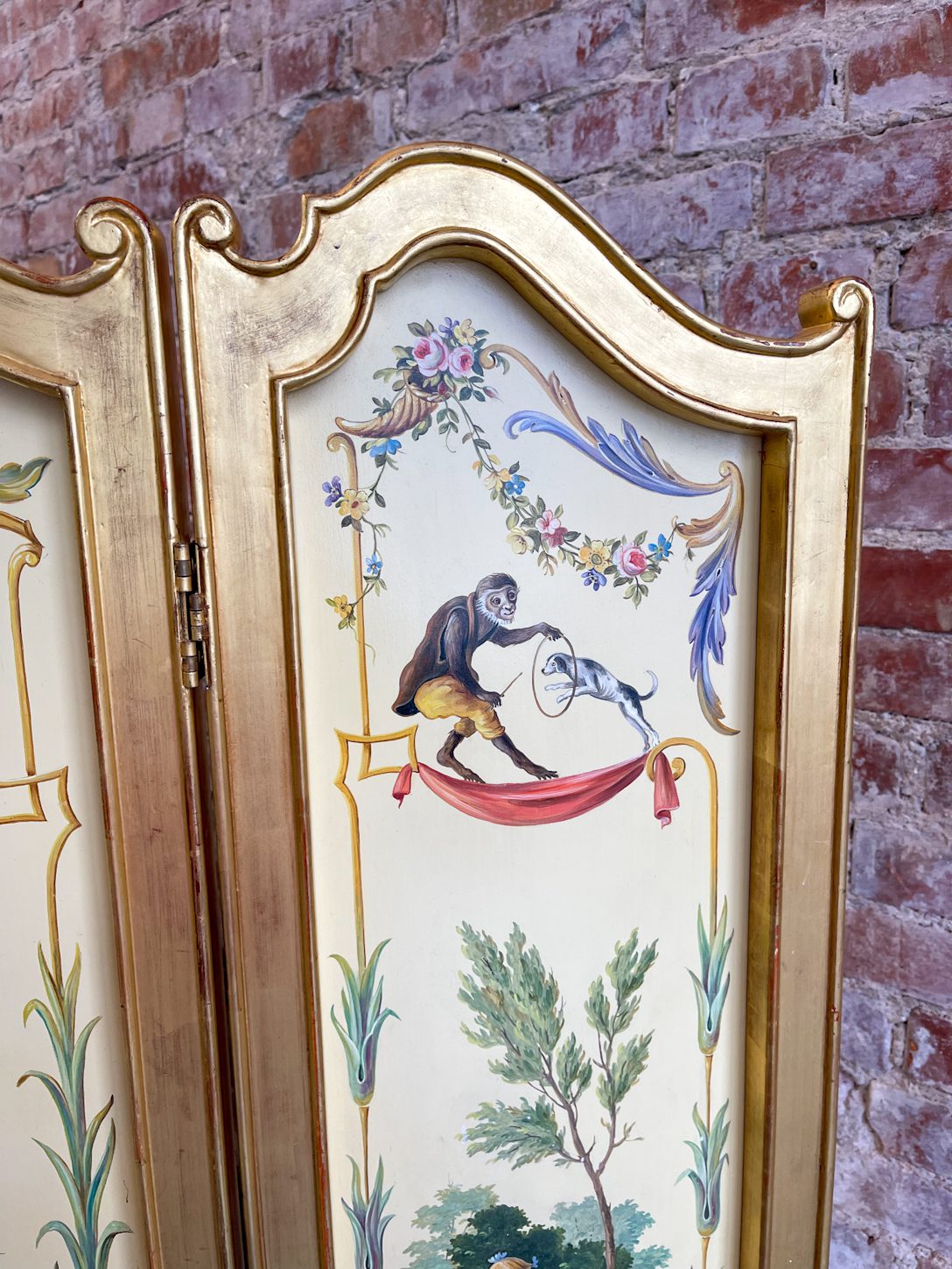
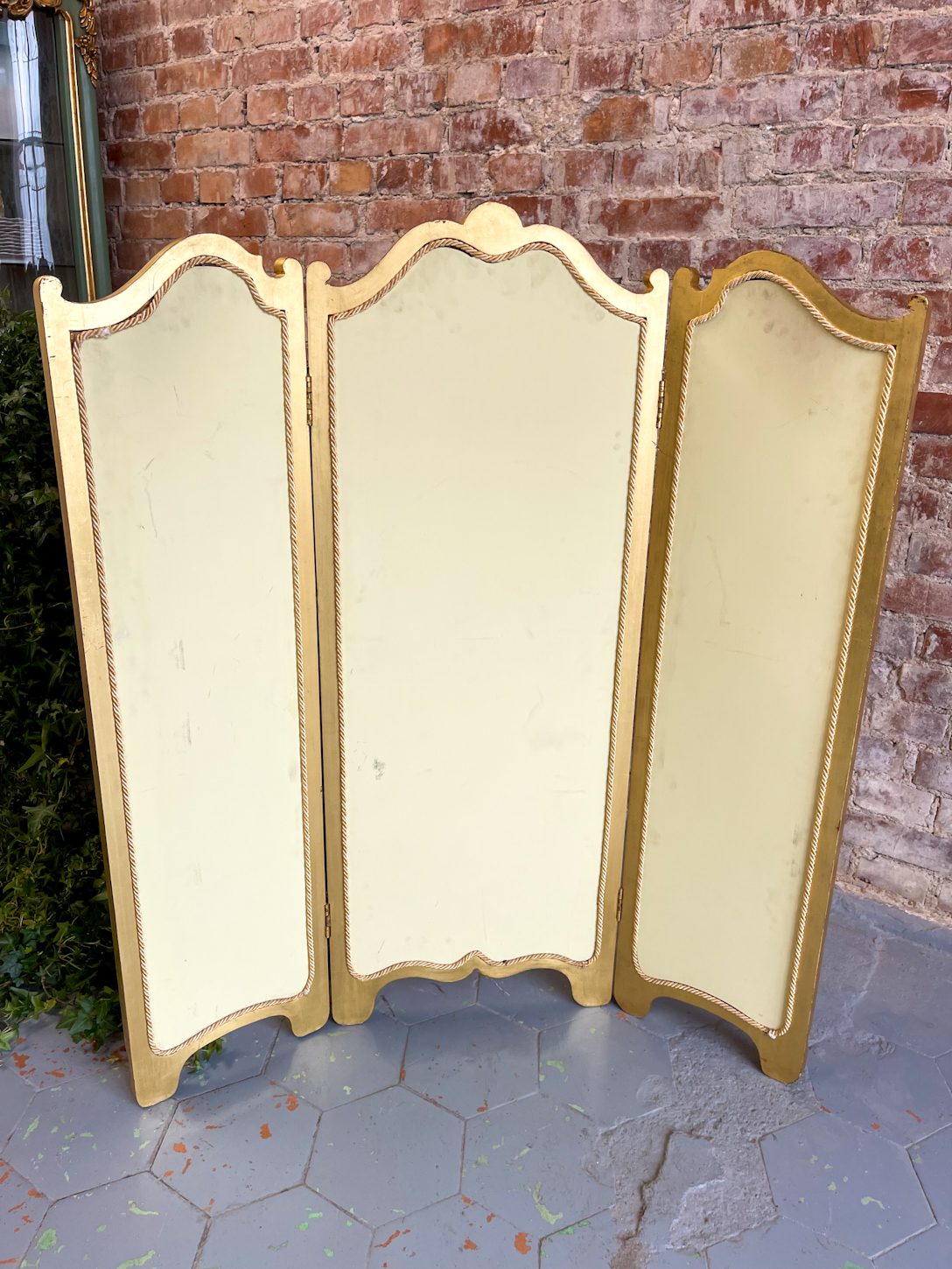
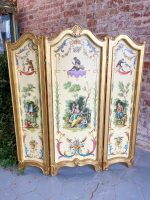
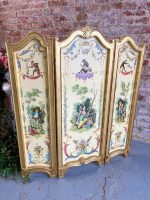
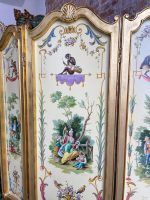
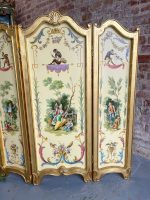
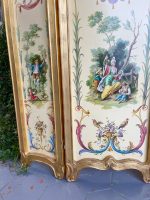
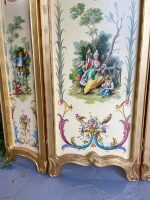
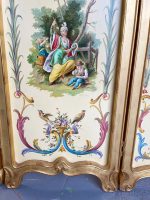
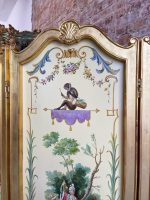
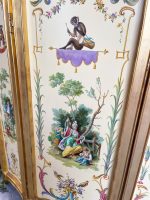
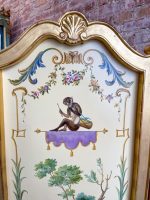
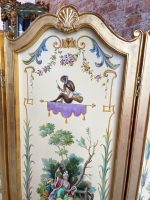
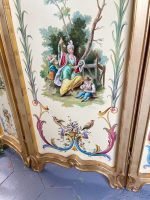
Antique three-panel folding screen—Chinoiserie and Singerie painted wood. This late 19th-century piece features charming hand-painted scenes of monkeys and exotic figures, signed by H. Verhaegen. A rare and decorative accent for any interior. 650,00 €
You’re now subscribed to price tracking for this product. We’ll notify you if the price drops. 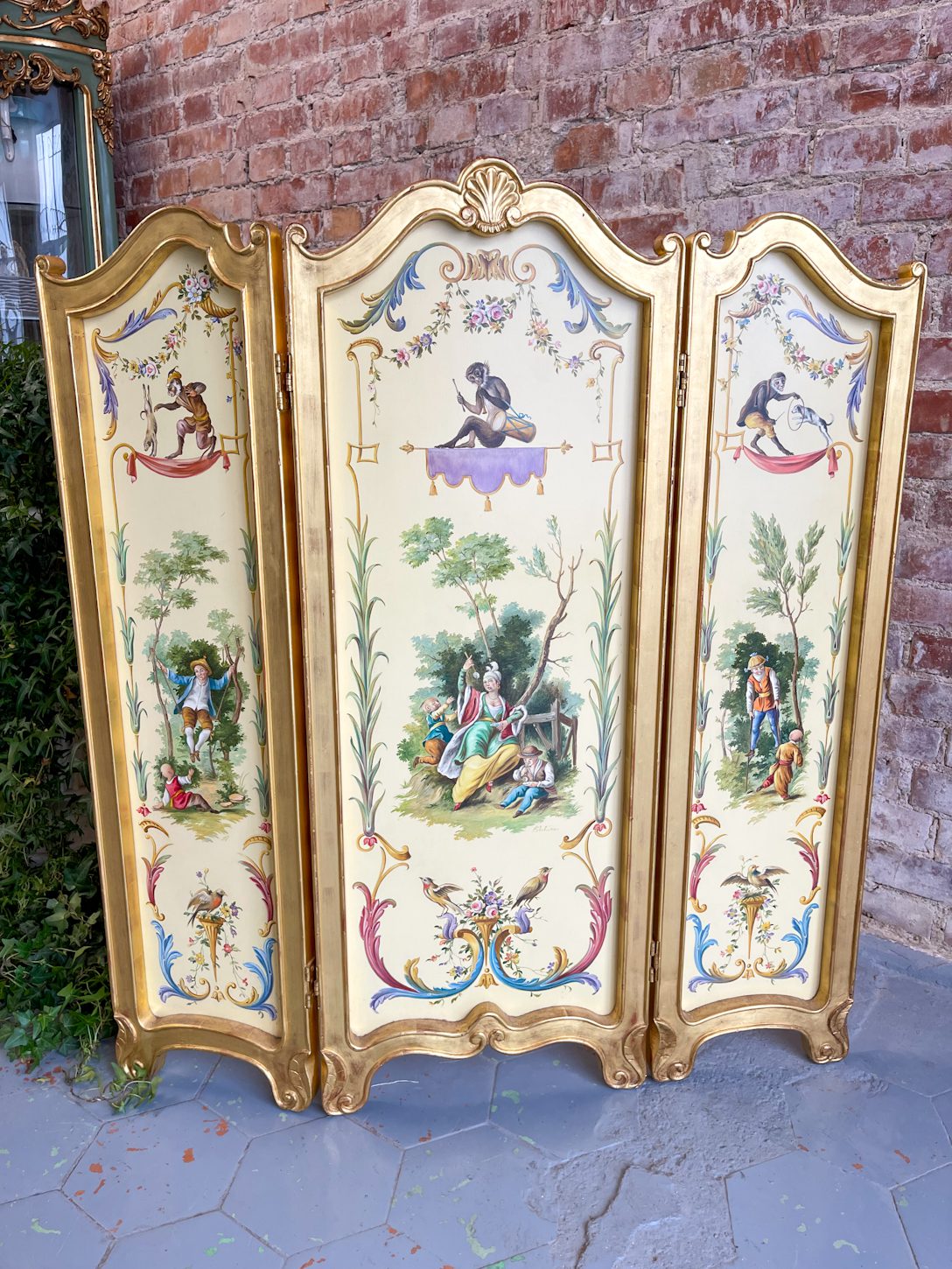
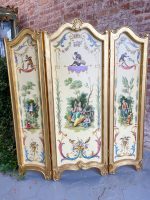
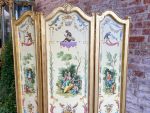
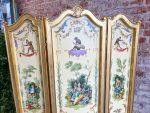
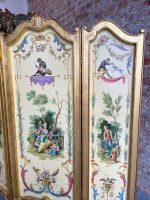

Antikk tresidig treskjerm med Chinoiserie og Singerie-malerier (3230)
Farge BronzeCreamMahogany

Beskrivelse
BLOCK Dimensions: Length (fully opened) — 106.5 cm Height — 121 cm
Antiquarian Gilded Three-Panel Folding Screen with Chinoiserie & Singerie Panels
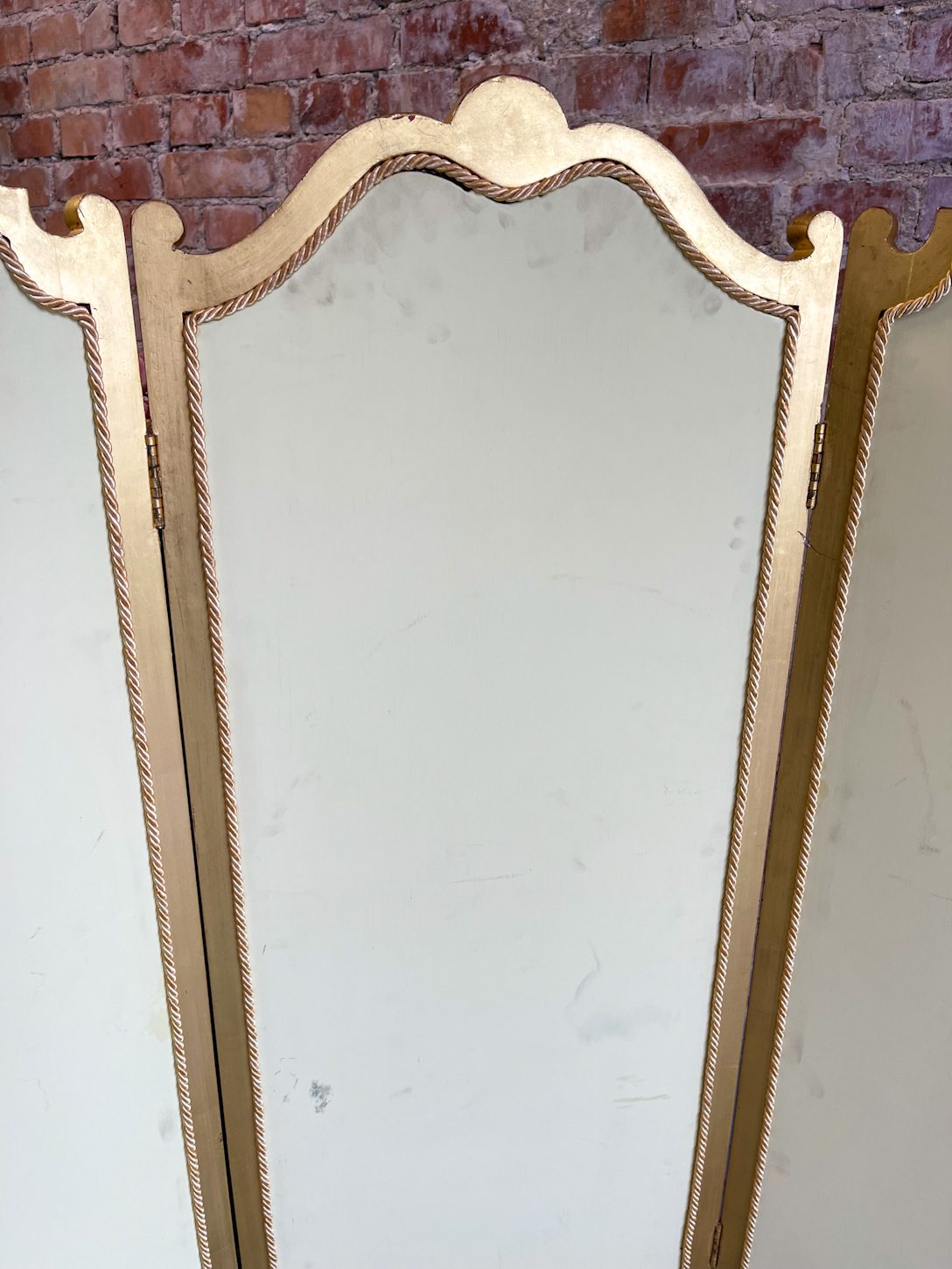
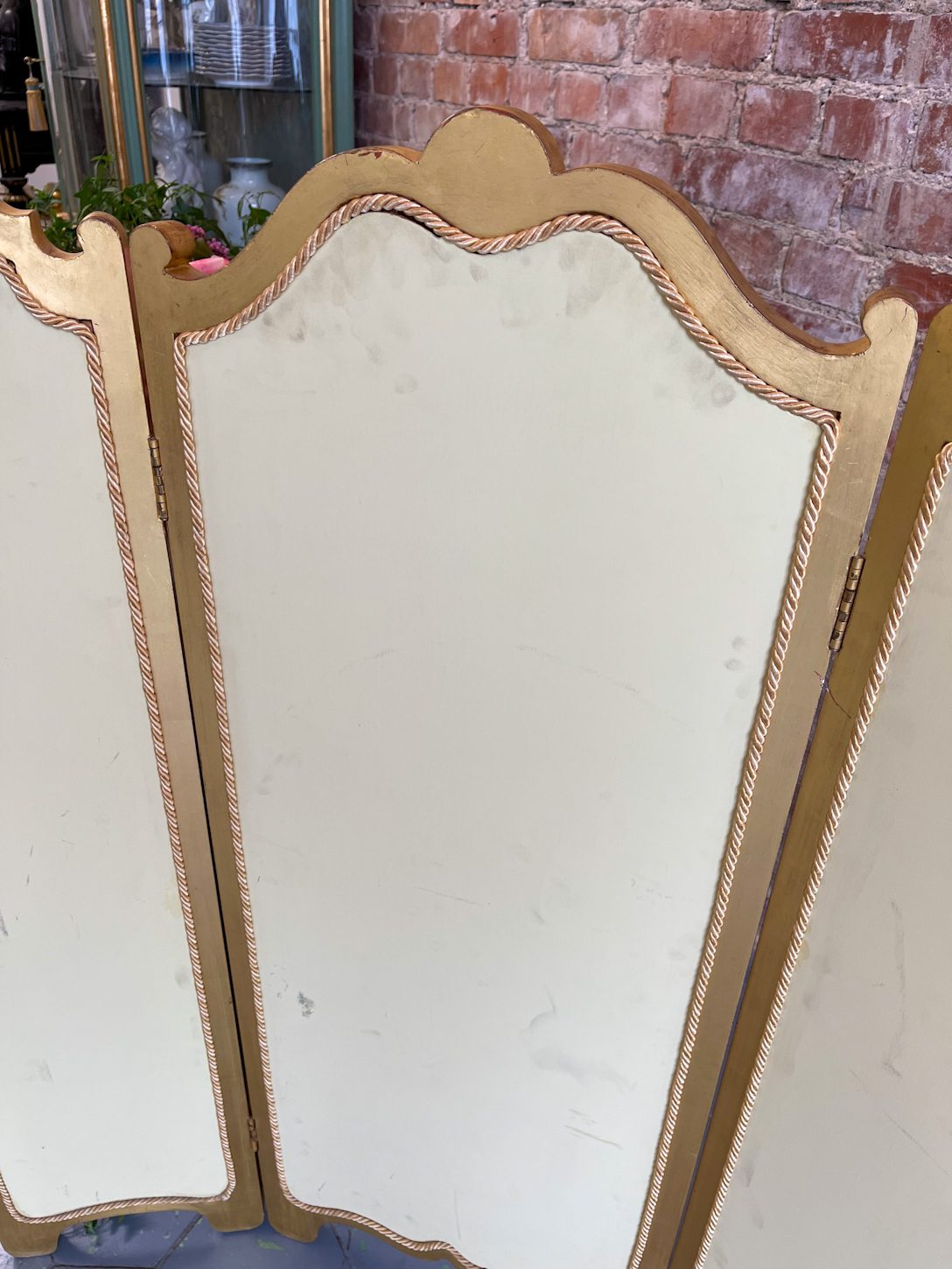
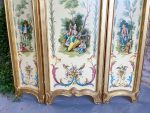
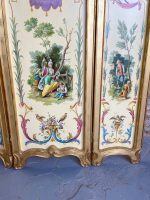
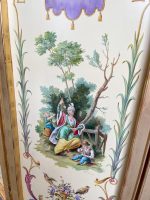
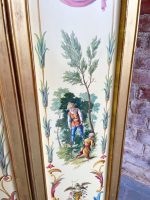
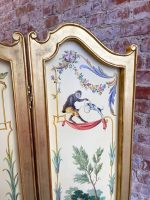
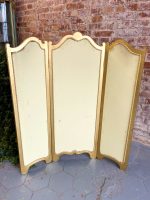
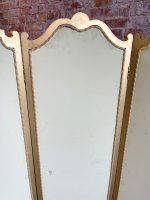
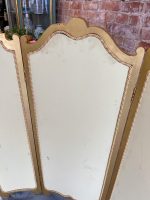
This exceptional late 19th-century European folding screen is a definitive statement of period luxury, showcasing a rare, beautifully proportioned three-panel room divider (antique chinoiserie singerie painted wooden folding screen). The elegant wooden frame is masterfully profiled, finished in a warm gold leaf application, and crowned at the center with a highly detailed Rococo shell (rocaille) and acanthus leaf crest. The main distinction of this folding screen lies in its pristine hand-painted canvas panels set against a soft cream ground. The scenes display a whimsical and historically accurate interpretation of 18th-century courtly decoration, seamlessly combining two legendary decorative arts genres: Singerie (featuring monkeys in fine historical attire playing drums on cushions and training lapdogs) and Chinoiserie (exotic Eastern figures blowing soap bubbles in pastoral settings). The lower borders are enriched with overflowing flower baskets, floral swags, and colorful birds. The painting is hand-signed by the artist «H. Verhaegen» on the lower right of the central panel. The reverse side is neatly upholstered in a neutral light-toned fabric finished with a decorative braided cord. Period Style snapshot: On a humid afternoon, as the heavy drops of an Indian monsoon rain began to beat rhythmically against the glass of the colonial bungalow veranda, a hazy, warm peace filled the room. The writer Rudyard Kipling (Rudyard Kipling) sat at his heavy mahogany writing desk, quietly and intently humming an old military march, tapping the tip of his pen against the bronze inkwell. In the corner, shielding the oil lamp’s flame from the draft, stood the small wooden screen — its gilded frame shimmering in a warm tone, while the hand-painted monkeys and Eastern figures blew soap bubbles, creating a whimsical, fairy-tale contrast to the tropical landscape outside. This capricious piece of Rococo art instantly transformed a sultry working hour into a complete, inspiring, and noble ritual of beauty.
Relaterte produkter