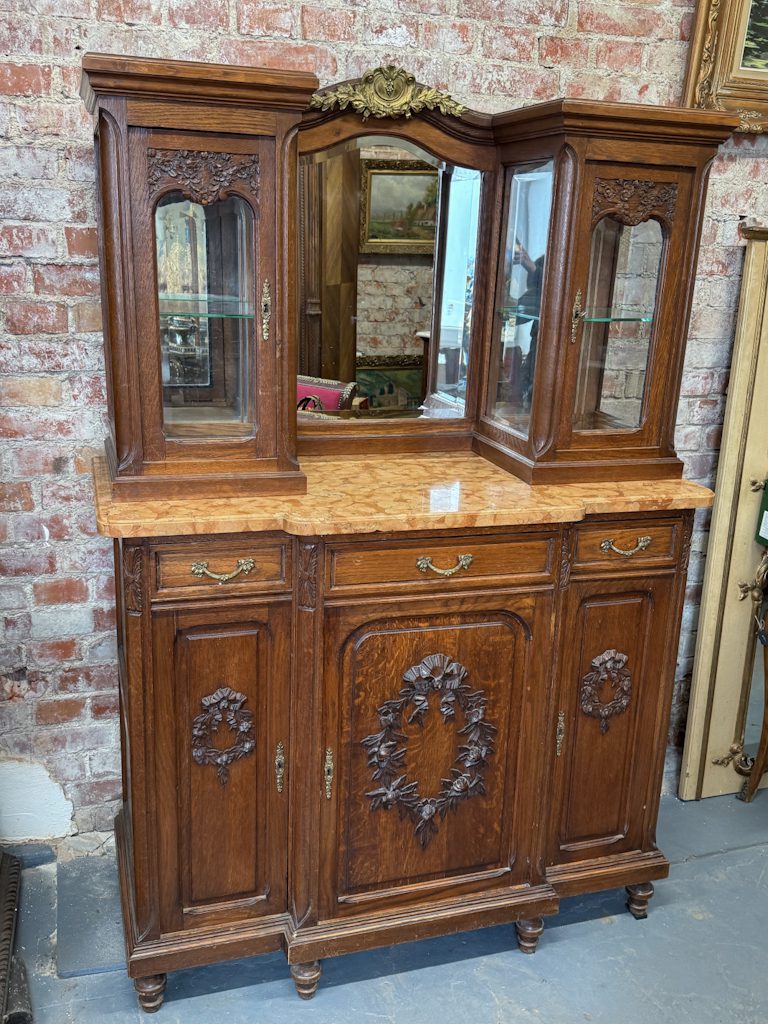
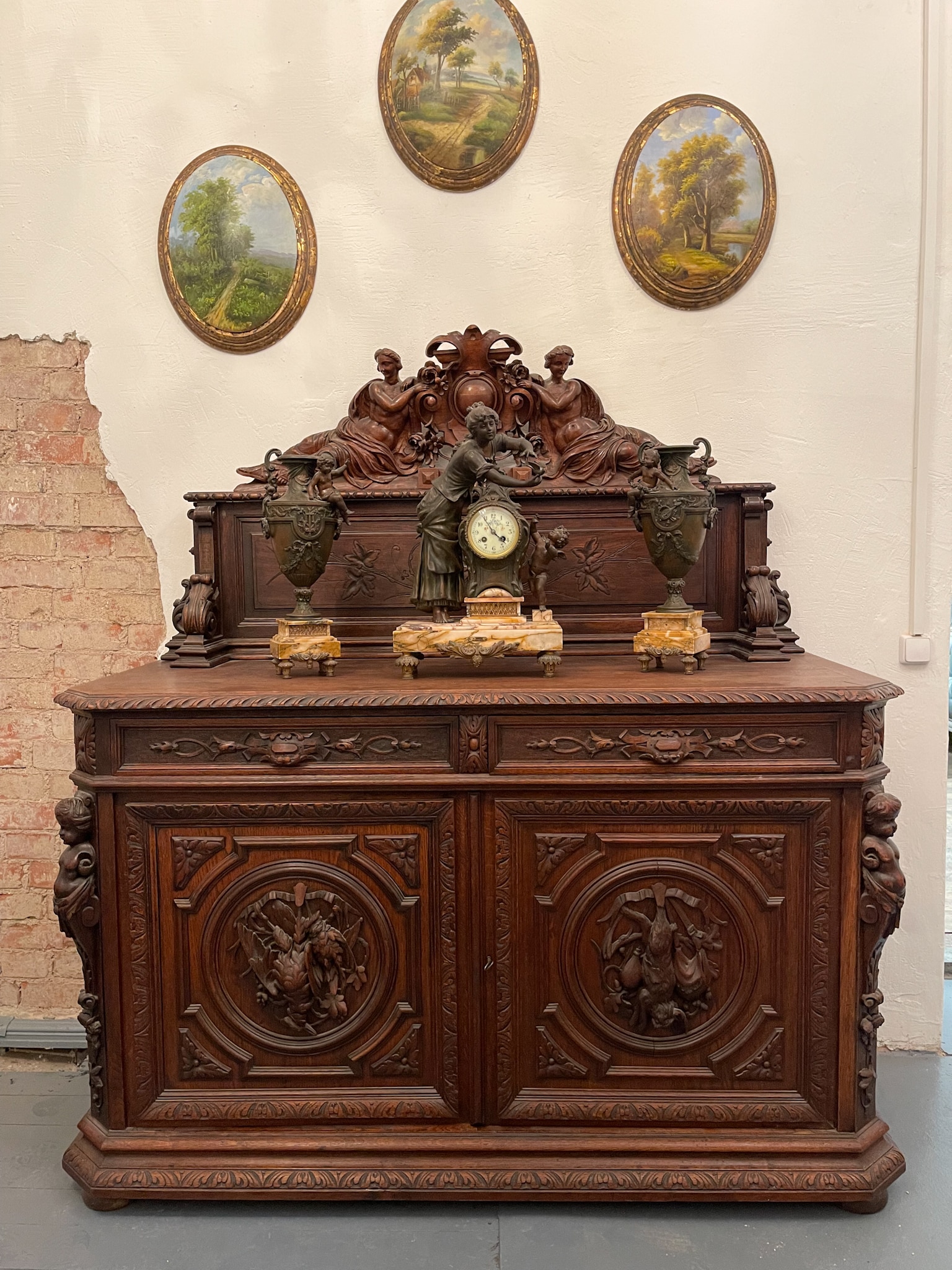
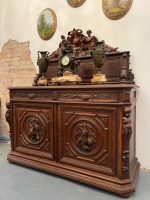
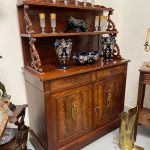
Monumental Oak Buffet — Neo-Renaissance, Belgium, 19th Century. This impressive piece features intricate carvings of female figures, angels, and animals, showcasing exceptional craftsmanship. A true statement piece for any grand dining room or hall. 2 900,00 €
You’re now subscribed to price tracking for this product. We’ll notify you if the price drops. 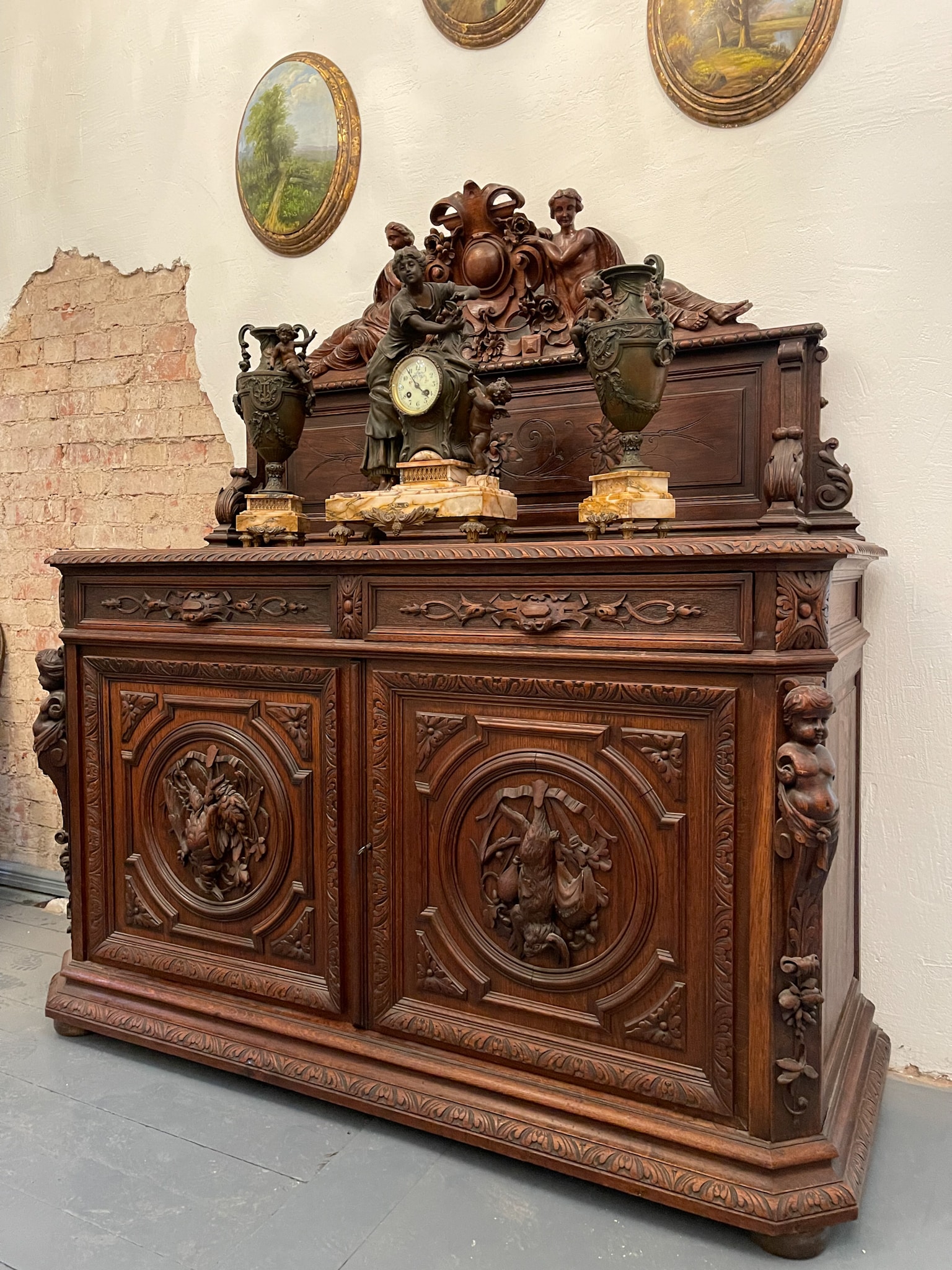
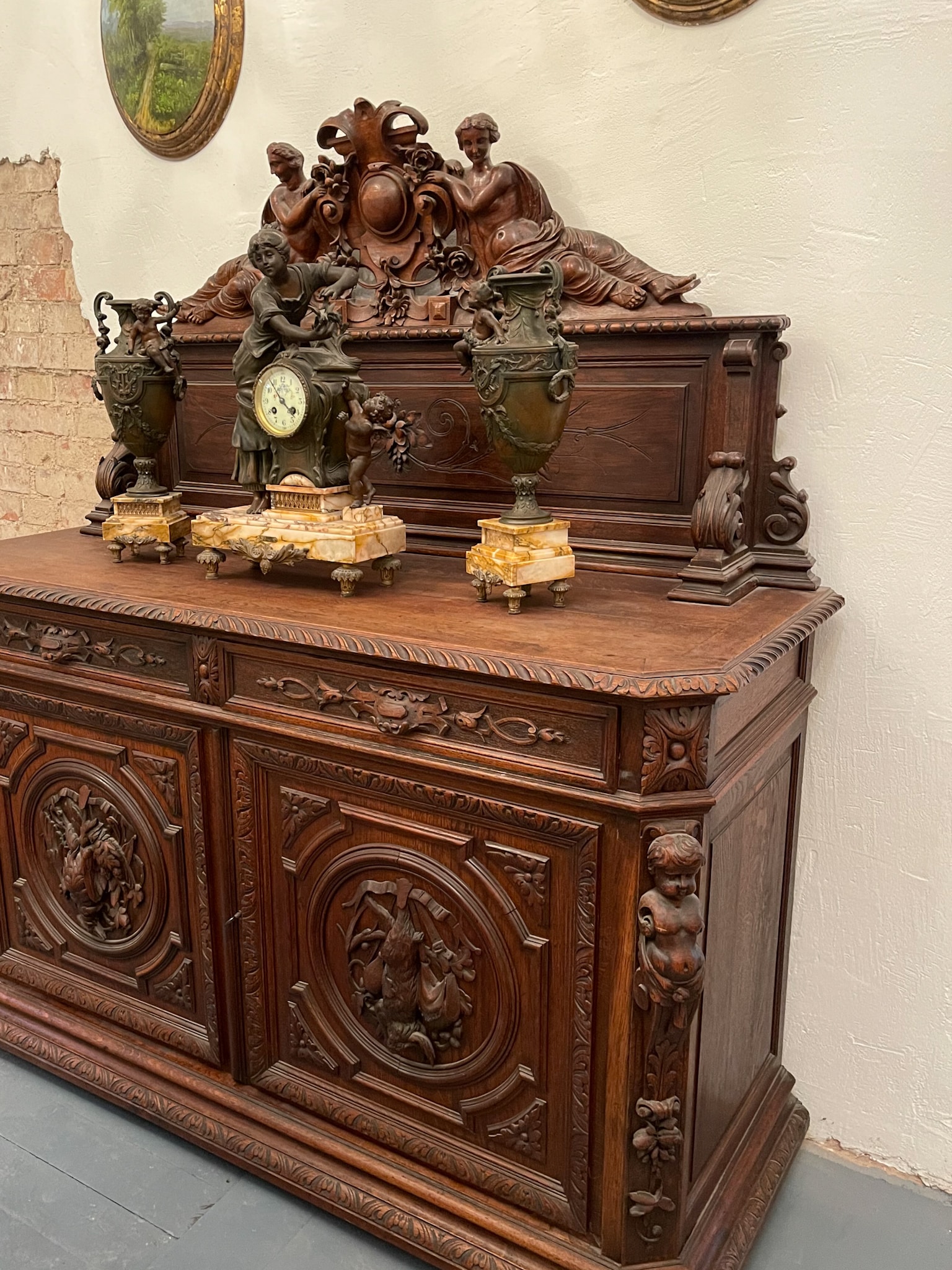
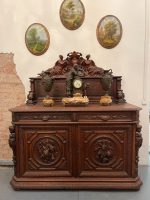
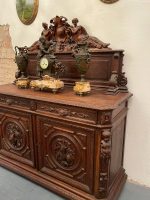
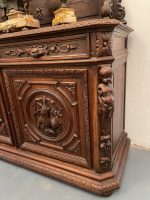
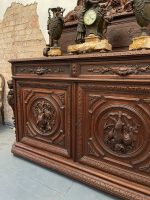
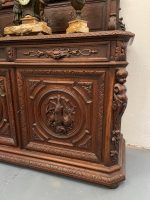
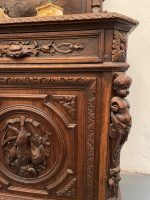
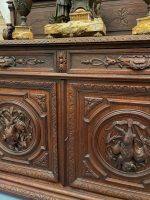
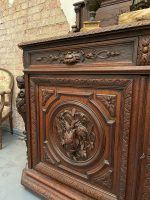
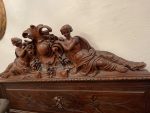
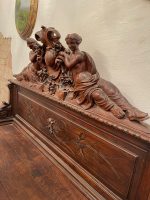
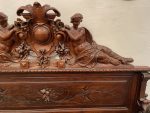
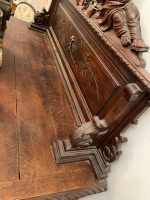
Monumental Oak Sideboard with Figural Carvings – Female Figures, Angels, Animals—Neo-Renaissance, Belgium, 19th Century
Height 175 cm Width 160 cm Color BronzeNaturalOak
Description
DESCRIPTION IN
DIMENSIONS
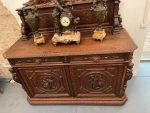
Height: 175 cm × Width: 160 cm × Depth: 60 cm. Weight: extremely heavy (solid oak).
Monumental Oak Buffet-Credenza with Figural Carvings — Neo-Renaissance / Historicism, France or Belgium, approximately 1870–1890
PERIOD, ARTISTIC STYLE, ERA
This monumental solid oak buffet-credenza is one of the most impressive surviving examples of Neo-Renaissance and Historicism era furniture in complete, unaltered form. Its height of 175 cm and sculptural richness make it a genuinely museum-quality piece, created through the collaboration of at least one master cabinetmaker and one carving artist on a single commission. The Neo-Renaissance style in the second half of the 19th century was not merely an artistic fashion but an affirmation of national and cultural identity — and it was exactly this type of buffet that adorned the dining rooms of hôtels particuliers in Paris, Brussels and Antwerp.
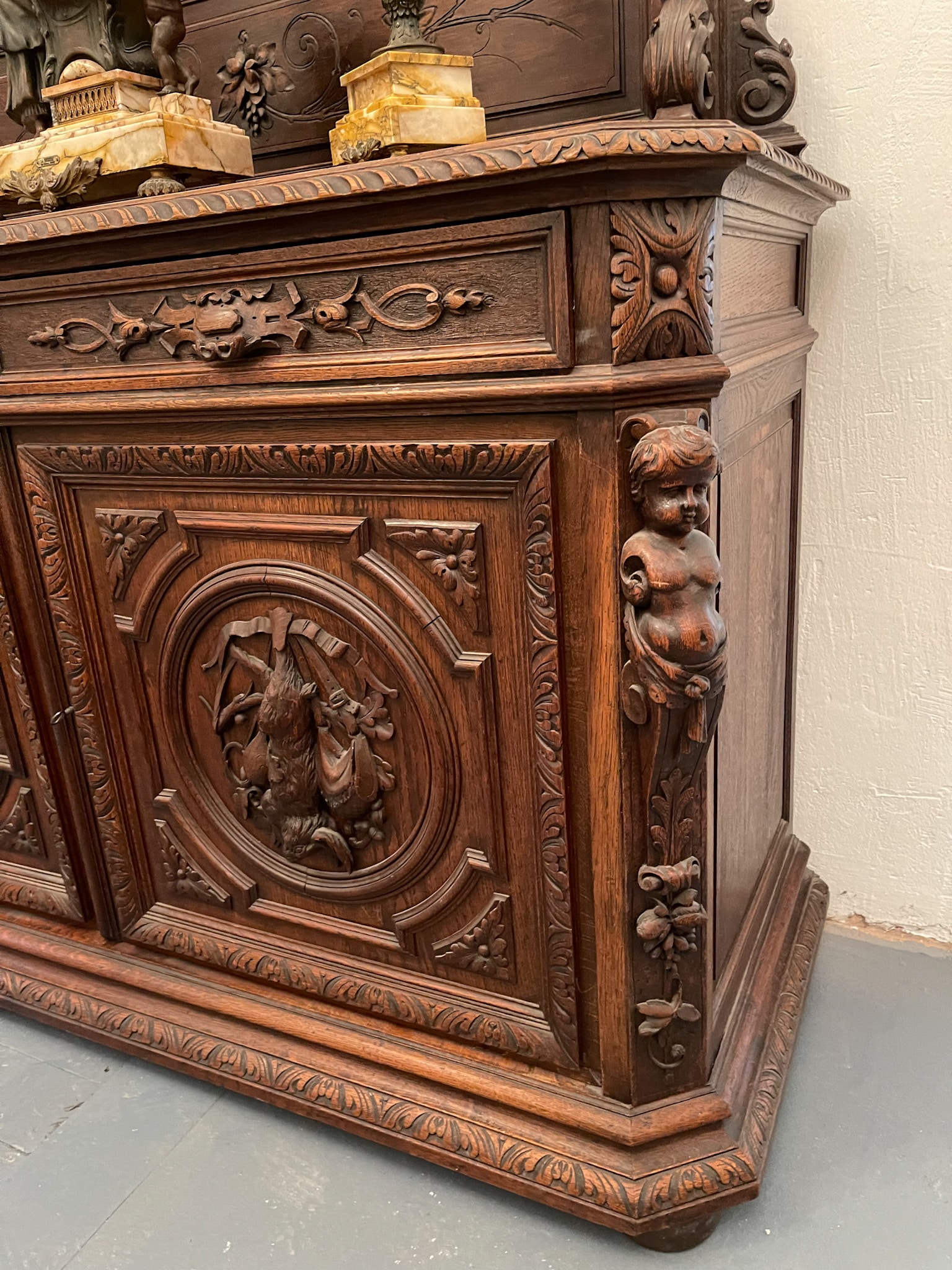
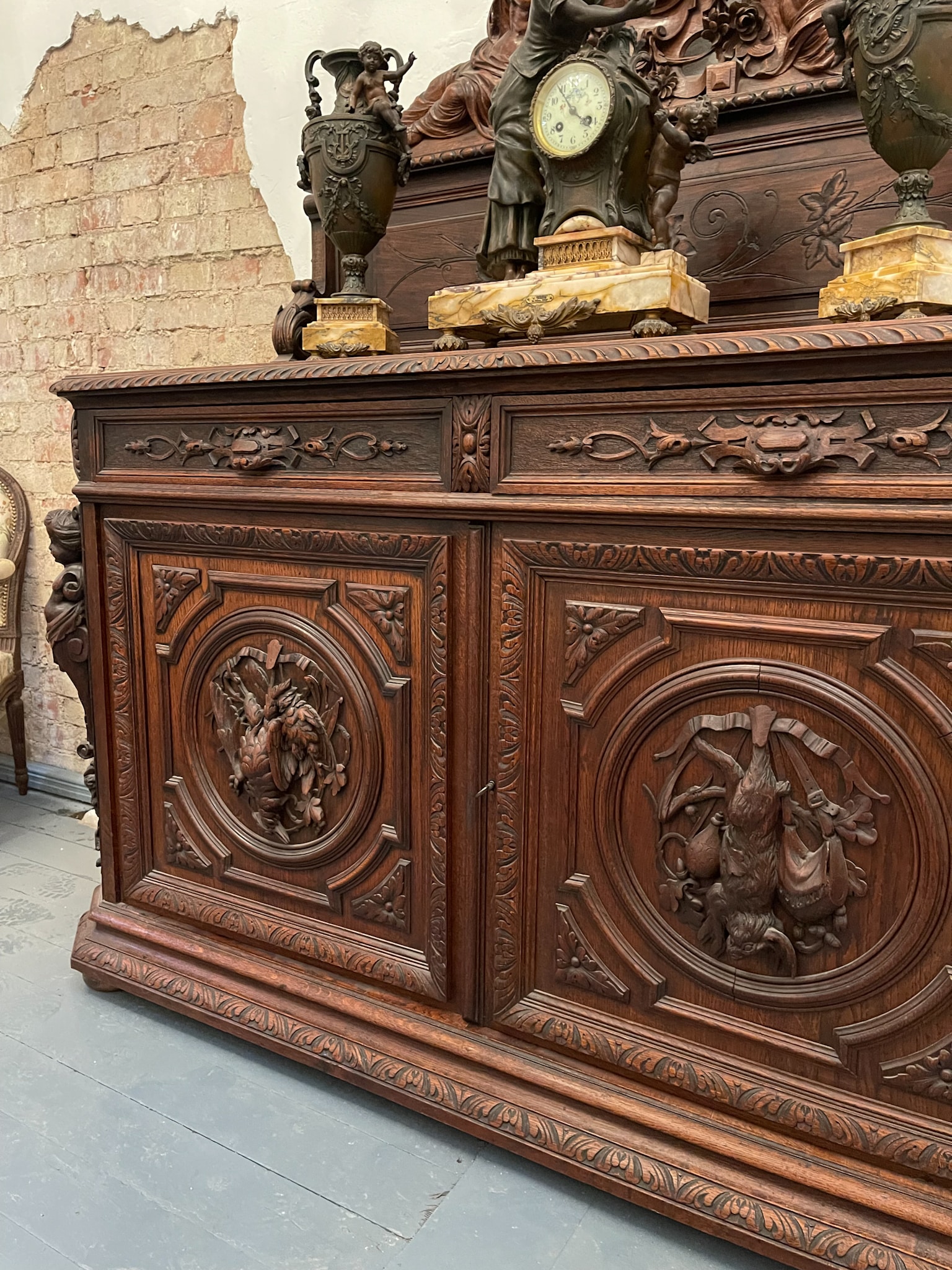
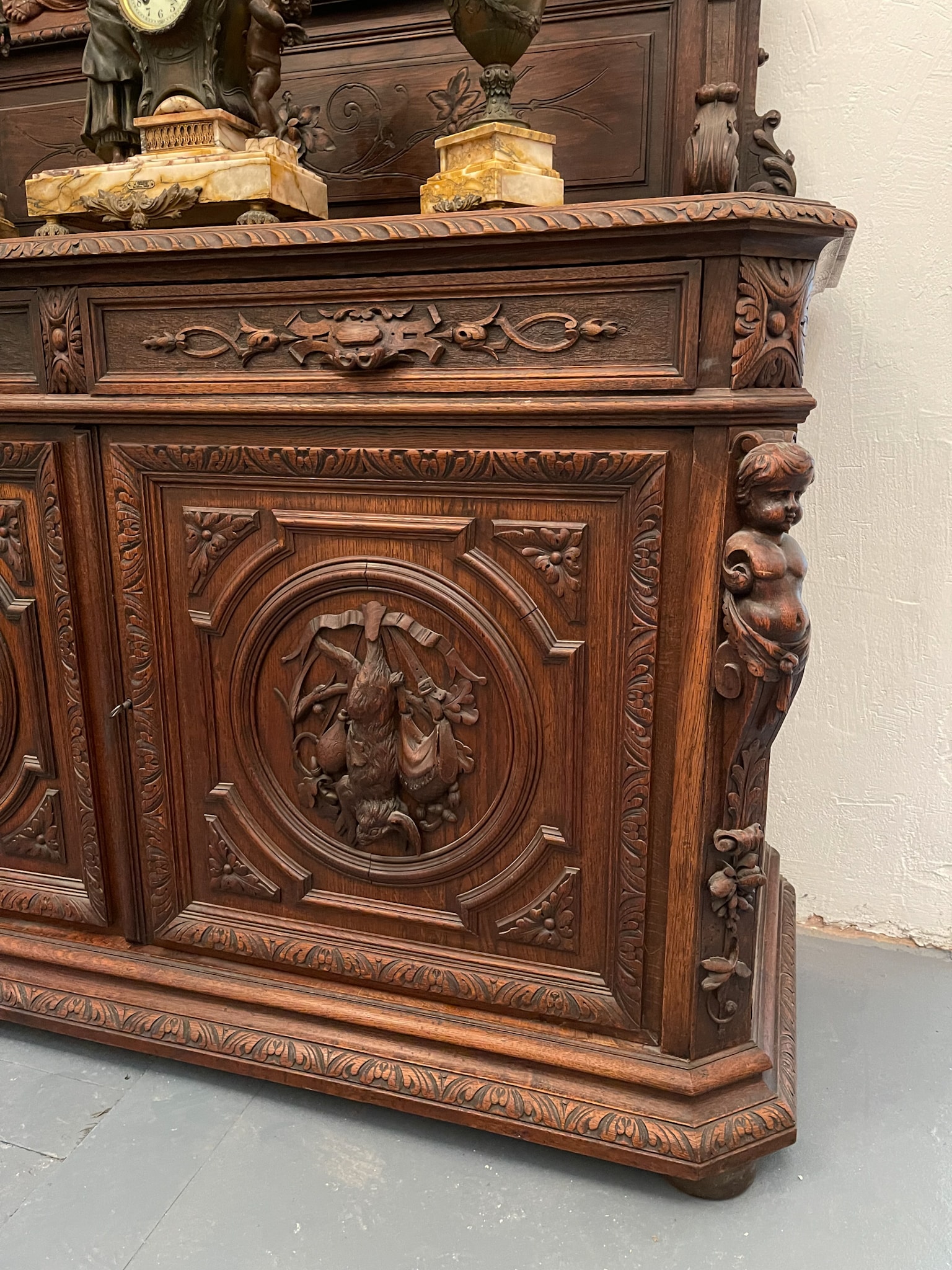
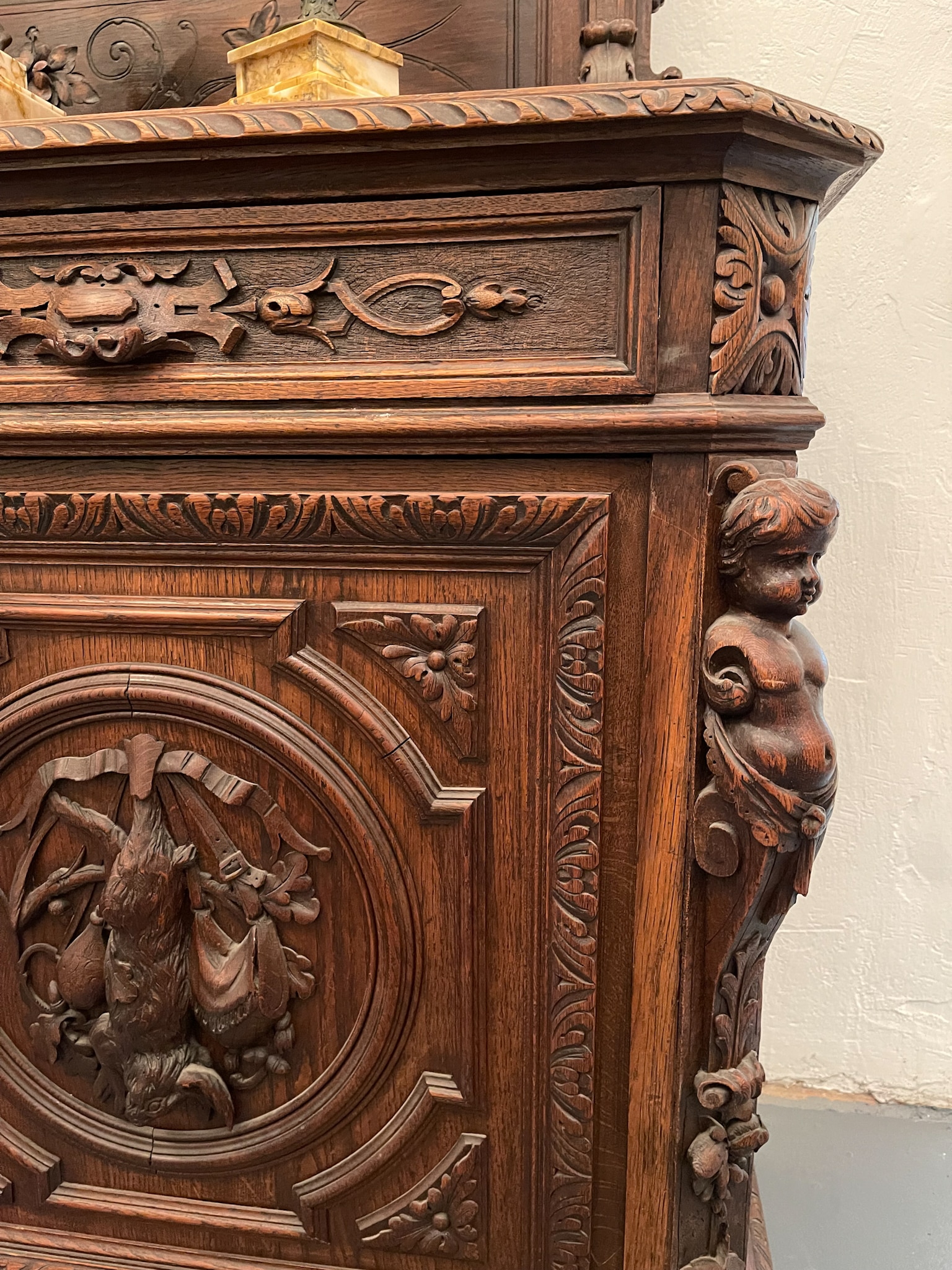
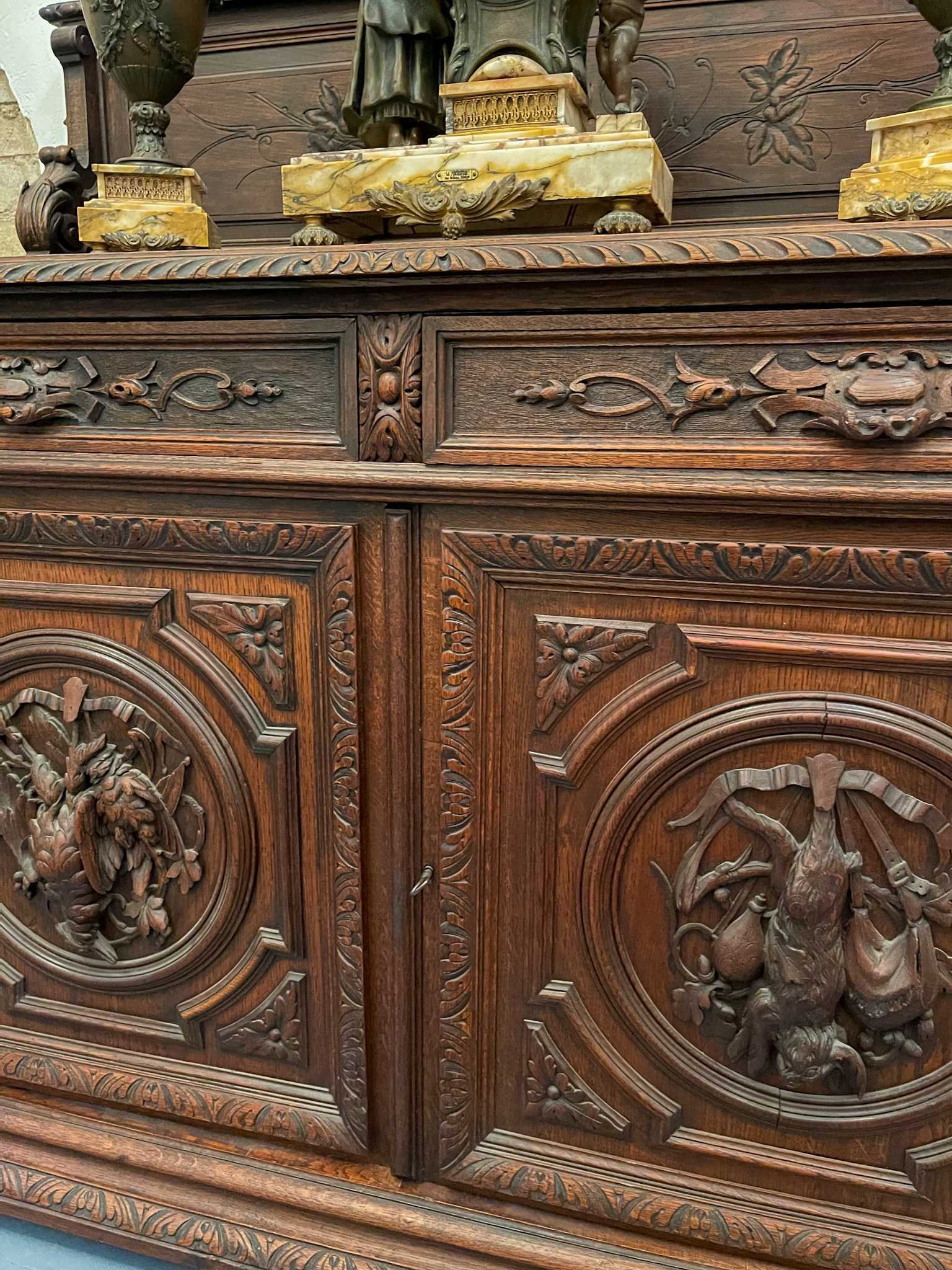
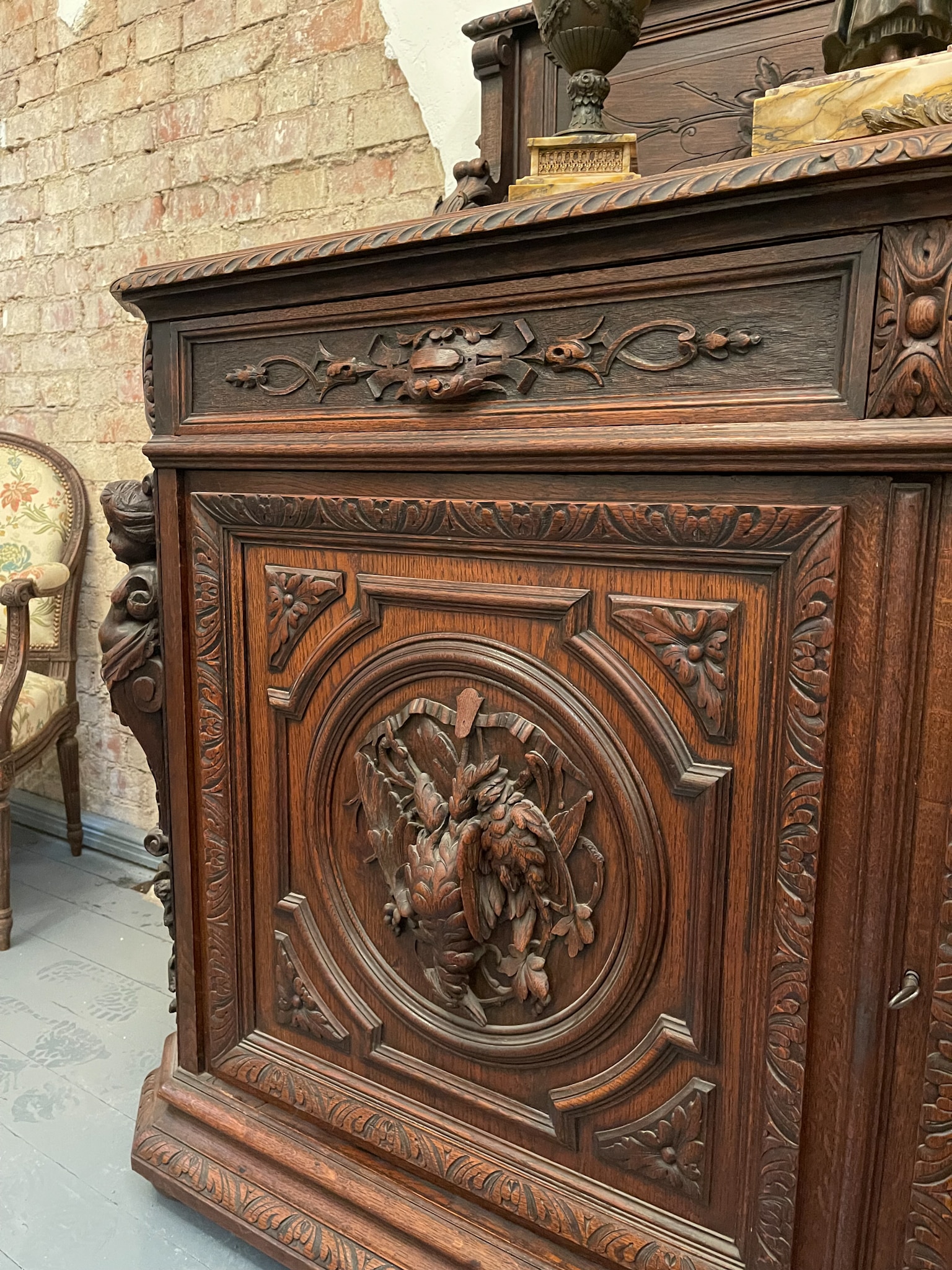
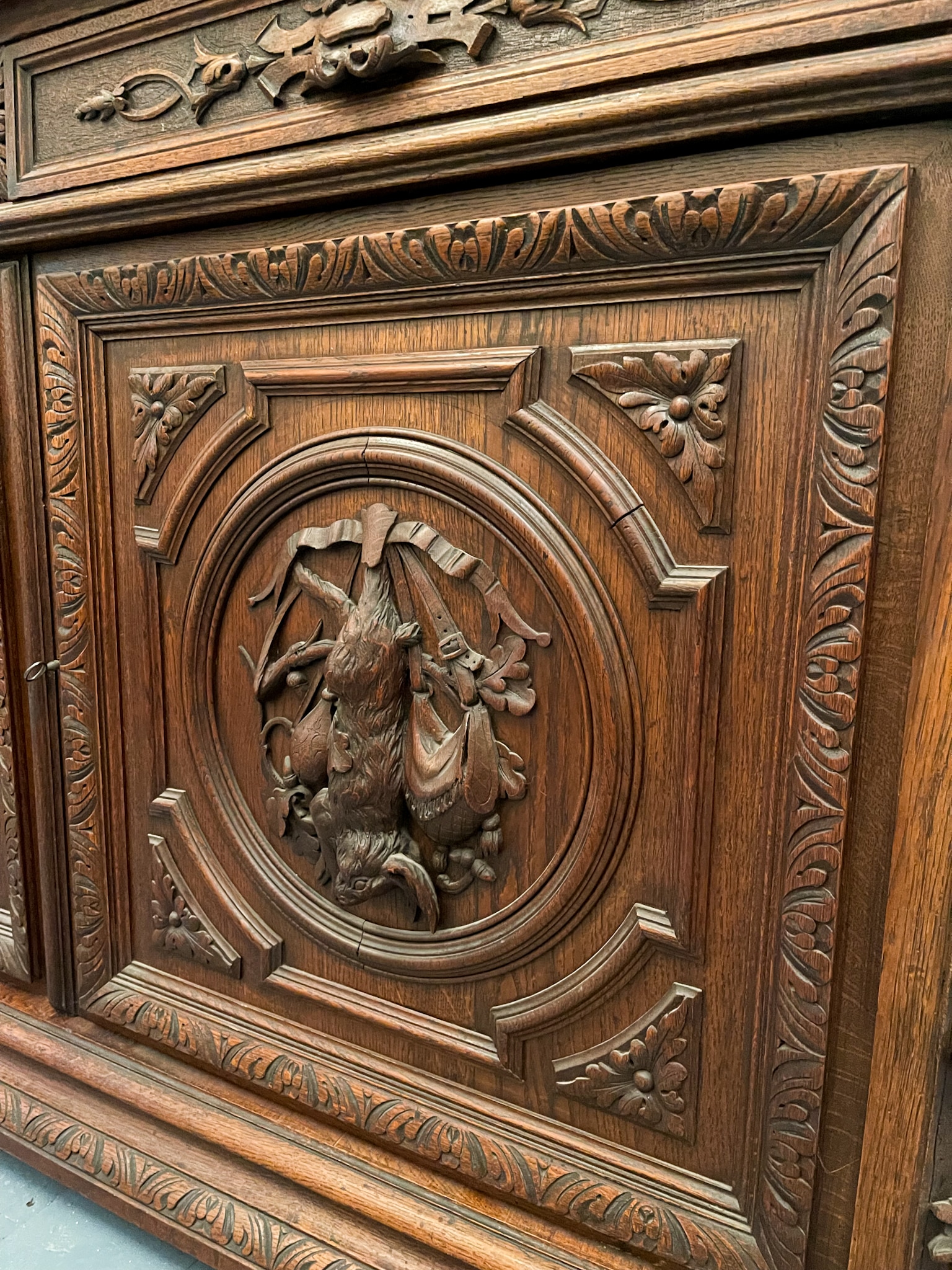
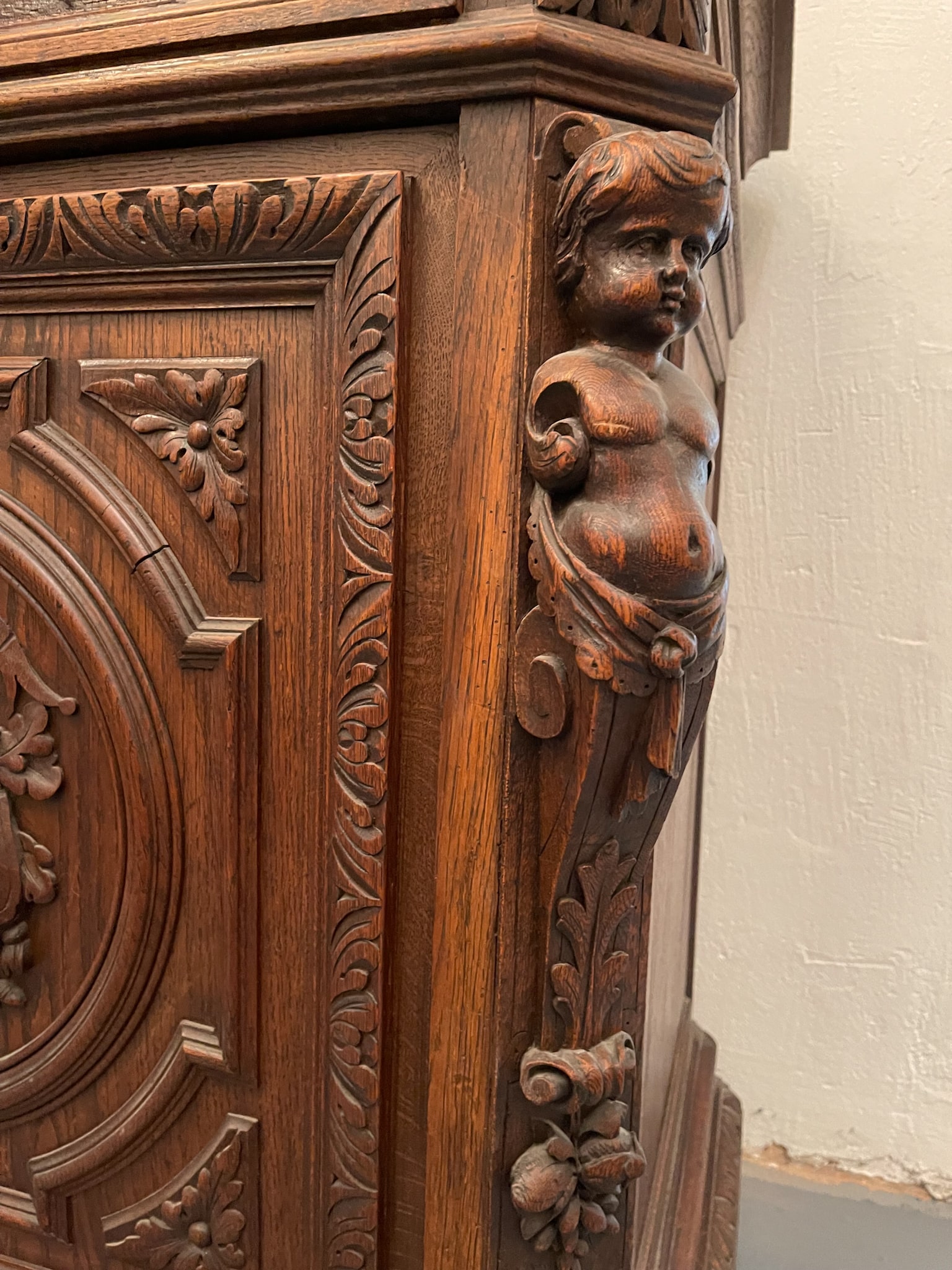
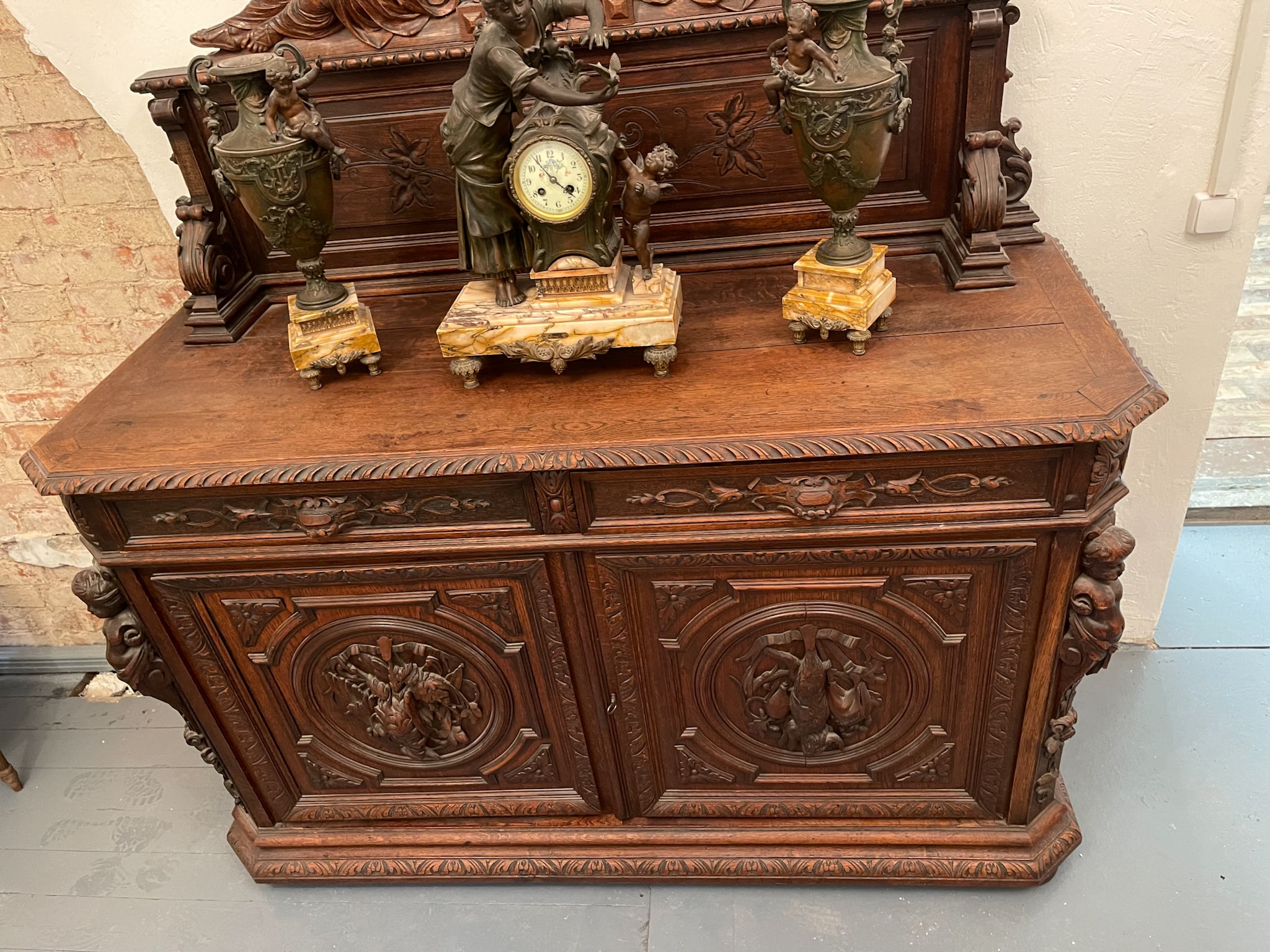
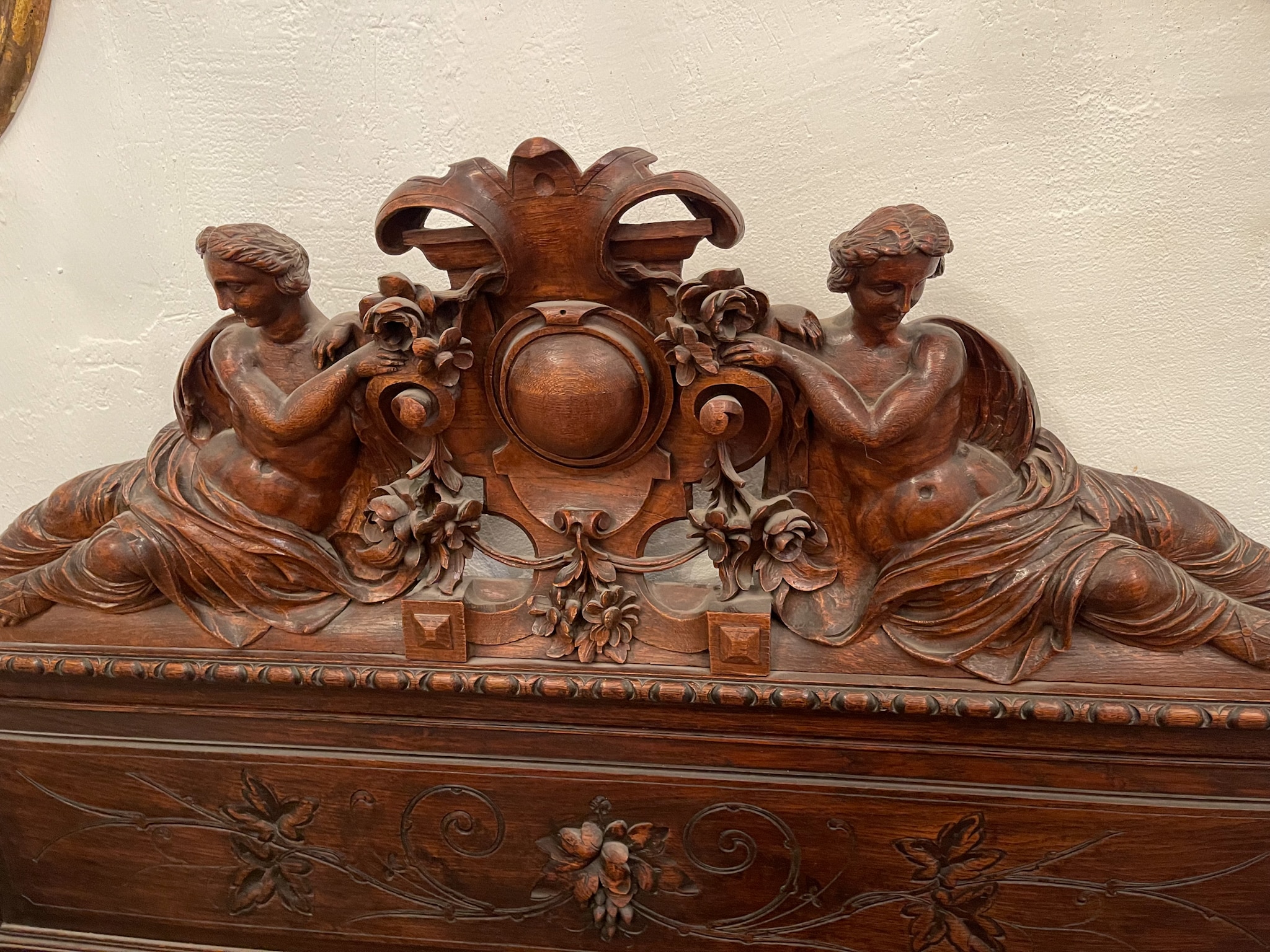
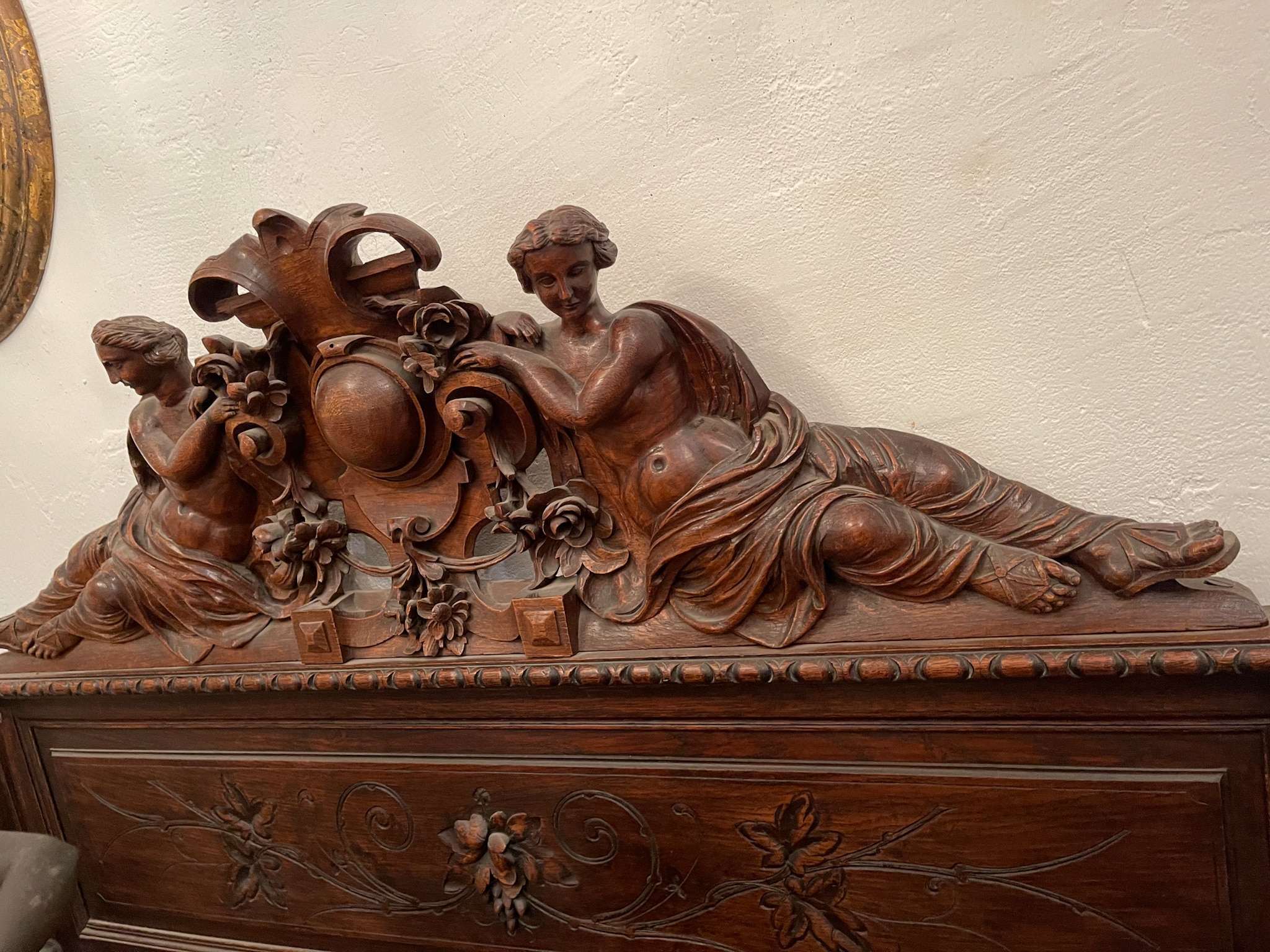
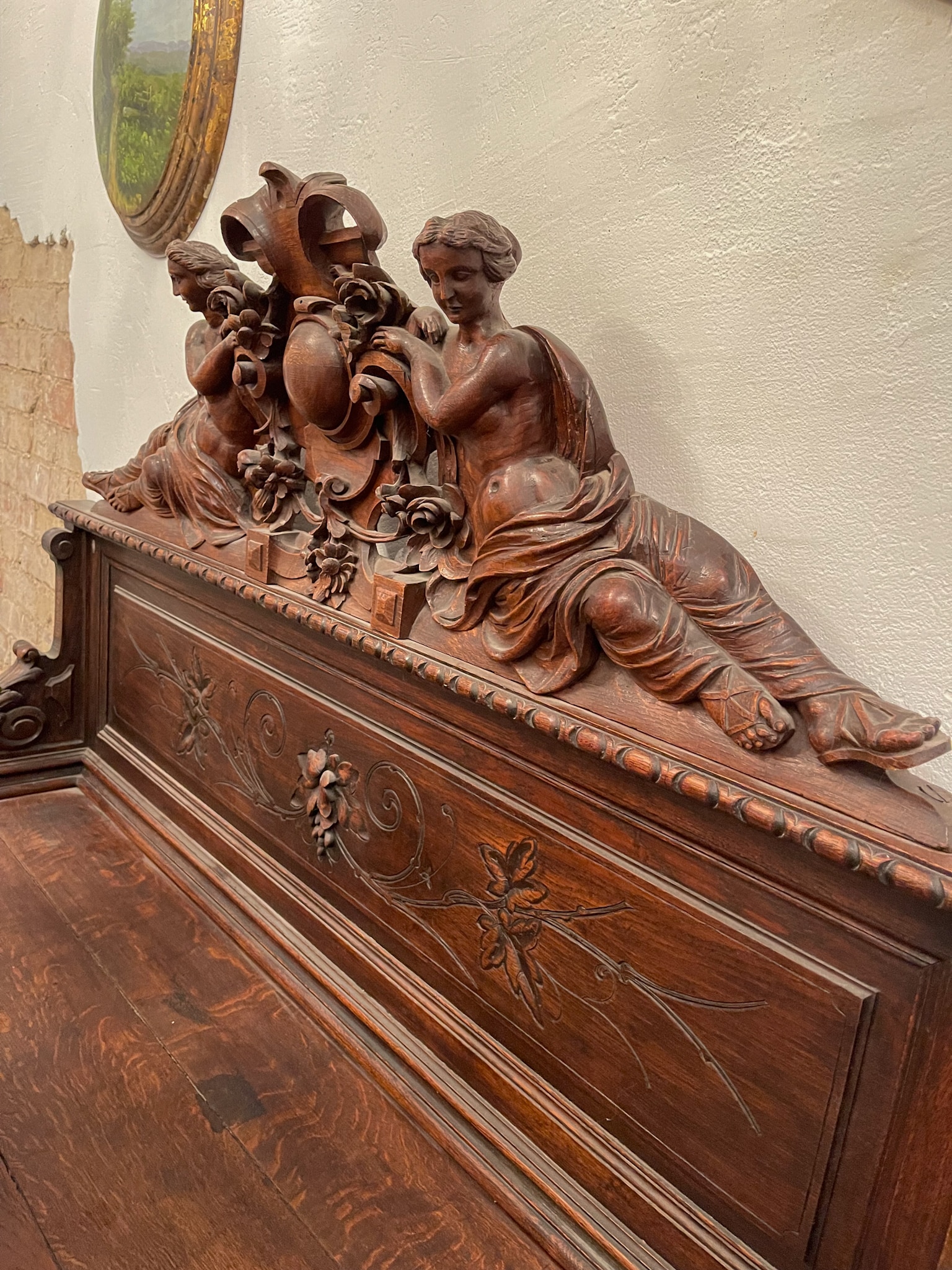
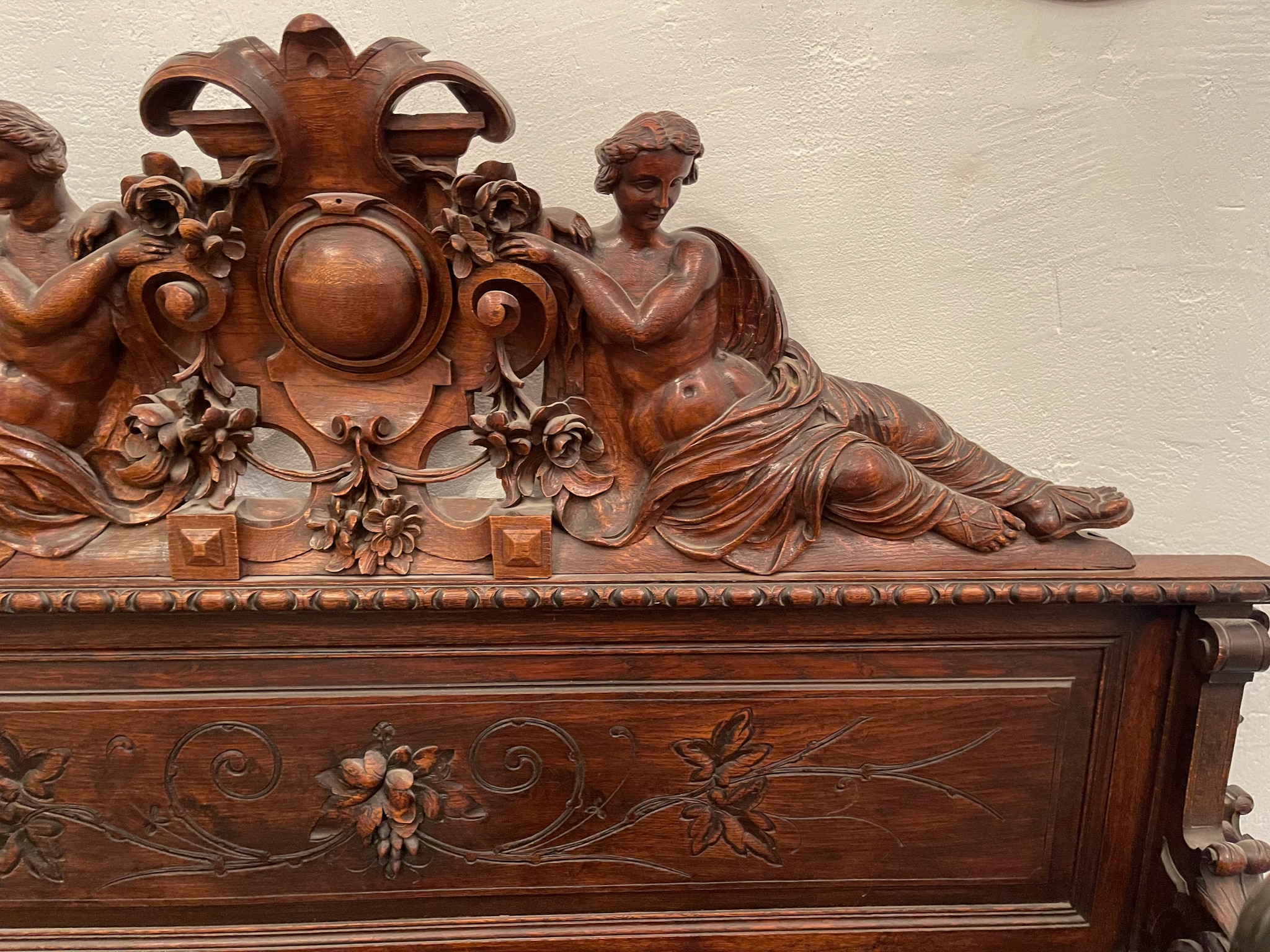
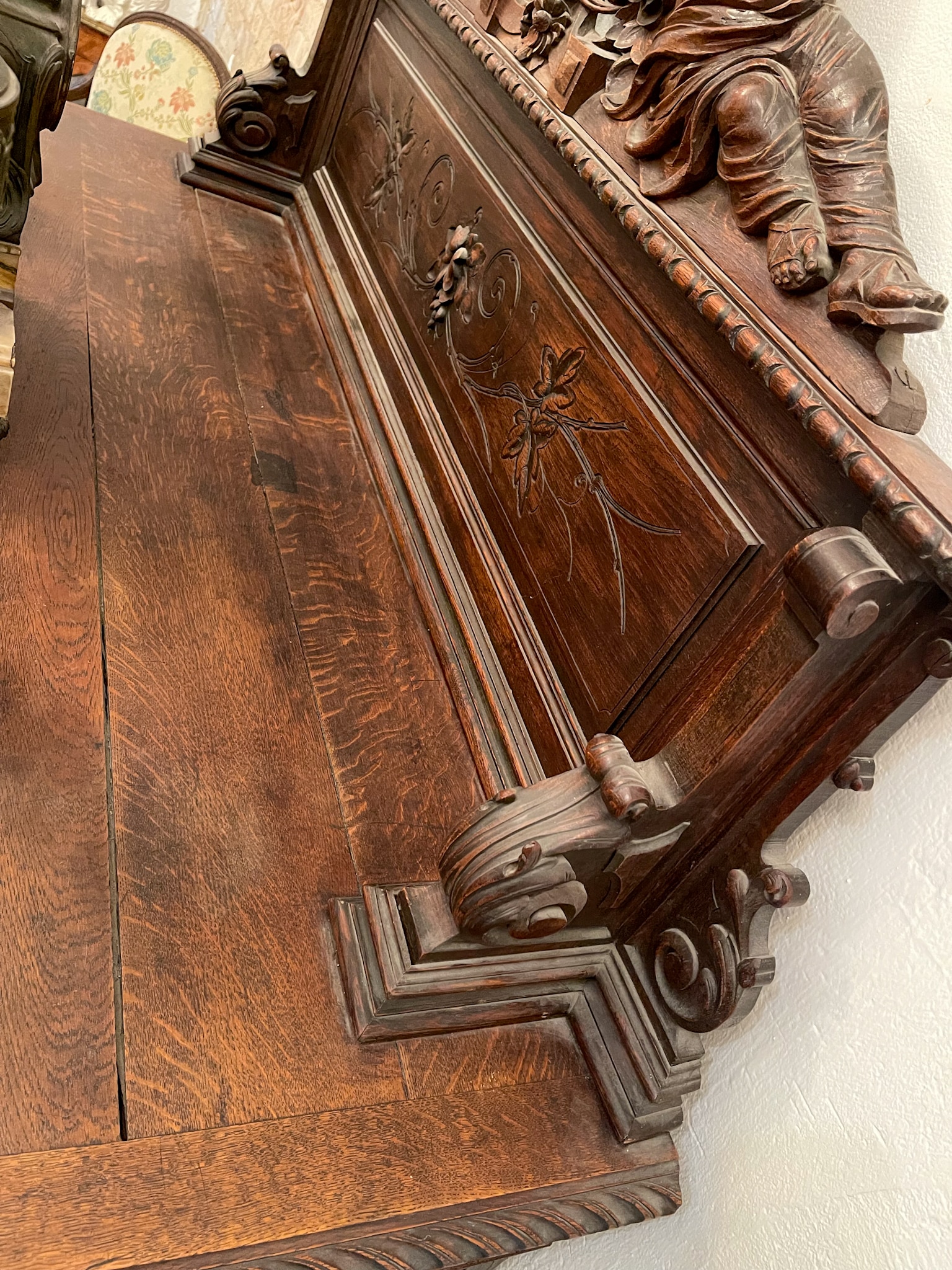
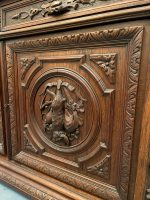
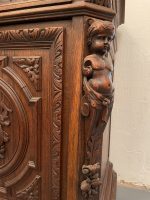
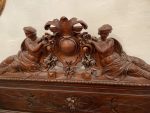
The figural programme of the piece is exceptionally rich. The upper fronton — two reclining female figures (cariatides) carved in oak with a central cartouche and cornucopia — is a direct reference to the Renaissance tradition of allegorical sculpture: personifications of Nature’s Abundance and the Arts. The corner termes — putti figures with flowers and fruit — align with the decorative iconography of the Louis XIV and Louis XV traditions. The central médaillons of the door panels — with a game composition of hanging birds, a hare and hunting accessories — are a classic element of the Henri II and Renaissance flamande style, revived in the 19th century by Neo-Renaissance masters. The upper drawer frieze with a floral and foliate rinceau scroll, a godrons moulding and an acanthus lower border complete the composition with architectural completeness.
The piece is dateable to approximately 1870–1890 and belongs fully to the Belle Époque — 1871 to 1914 — when the European bourgeoisie competed in luxury and the dining room buffet became the visual declaration of social standing.
Belle Époque snapshot: At the 1878 Paris Exposition Universelle, the furniture pavilion saw Belgian and Northern cabinetmakers exhibit exactly this type of buffet with figural frontons — and the jury awarded the highest distinctions to workshops from Liège and Antwerp. The critic Charles Blanc wrote in the Gazette des Beaux-Arts at the time that “the Flemish oak piece is the only one that withstands the test of time, because the wood itself lives within it, not merely the will of the cabinetmaker.” This buffet may well have been born at that very moment of triumph.
MAKER AND MANUFACTORY MARK
No visible maker’s mark is present. Based on the oak structure, the plasticity of the figural carvings and the refinement of the fronton composition, the piece originates from a high-class Belgian or Northern cabinetmaking workshop specialising in Neo-Renaissance representative furniture. The workshops of Liège, Antwerp and Brussels in the second half of the 19th century were Europe’s leading producers of sculptural furniture. The game médaillon composition on the doors — with hanging birds and a hare — is particularly characteristic of the Belgian buffet de chasse tradition, cultivated by firms such as Vanden Berghe-Pauvers in Ghent.
RARITY AND SIGNIFICANCE
A monumental buffet-credenza with a complete figural fronton — with two cariatide figures and a central cartouche — putti corner termes, game médaillons on the doors and an original drawer frieze of this scale and state of preservation is an exceptionally rare find. The majority of surviving Neo-Renaissance buffets either lack the fronton sculpture entirely or have damaged corner elements. The integrity of this piece across its entire height — from the lower acanthus border to the crowns of the upper figures — places it in the highest collection category.
USE IN INTERIOR, DESIGN AND PHOTOGRAPHY
This buffet-credenza was created as the central accent of a dining room, library or representative hall. Its height of 175 cm and width of 160 cm set the tone of any environment. It harmonises with Neo-Renaissance, Historicism, Second Empire, eclectic and grand manor interiors. The upper surface is ideal for displaying bronze sculptures, clocks and vases, as seen in the photographs with the bronze clock set. In interior photography — an unmistakable accent of a 19th-century European aristocratic dining room. In maximalist and dark academia interiors it is the culminating element.
GIFT AND PERSONALISATION
The artistic intensity and historical authenticity of this piece make it an outstanding acquisition for the highest-level collections, palace-style residences, restaurants and clubs with historical ambition. It expresses not only taste but a deep understanding of European cultural heritage. In astrological symbolism — Leo, Capricorn and Scorpio — personalities with a powerful, monumental aesthetic vision.
CONDITION
The piece is in very good overall condition considering its age and scale. The figural carvings — cariatides, putti, game médaillons — are sharp and detailed throughout their entire height. The upper surface drawer frieze carries a natural patina. The side and rear panels show the oak’s natural age tonality. The door hinges and locking mechanism are functional. No significant breaks or traces of restoration are apparent. The condition of the item is fully reflected in the photographs.
―――――――――――――――――――――