Exclusive and artistically detailed late 19th-century three-part wooden screen (antique chinoiserie singerie painted wooden folding screen) with ornate gilded frames and hand-painted panels in the playful French Rococo and monkey mania style (3230). 650,00 €
You’re now subscribed to price tracking for this product. We’ll notify you if the price drops. 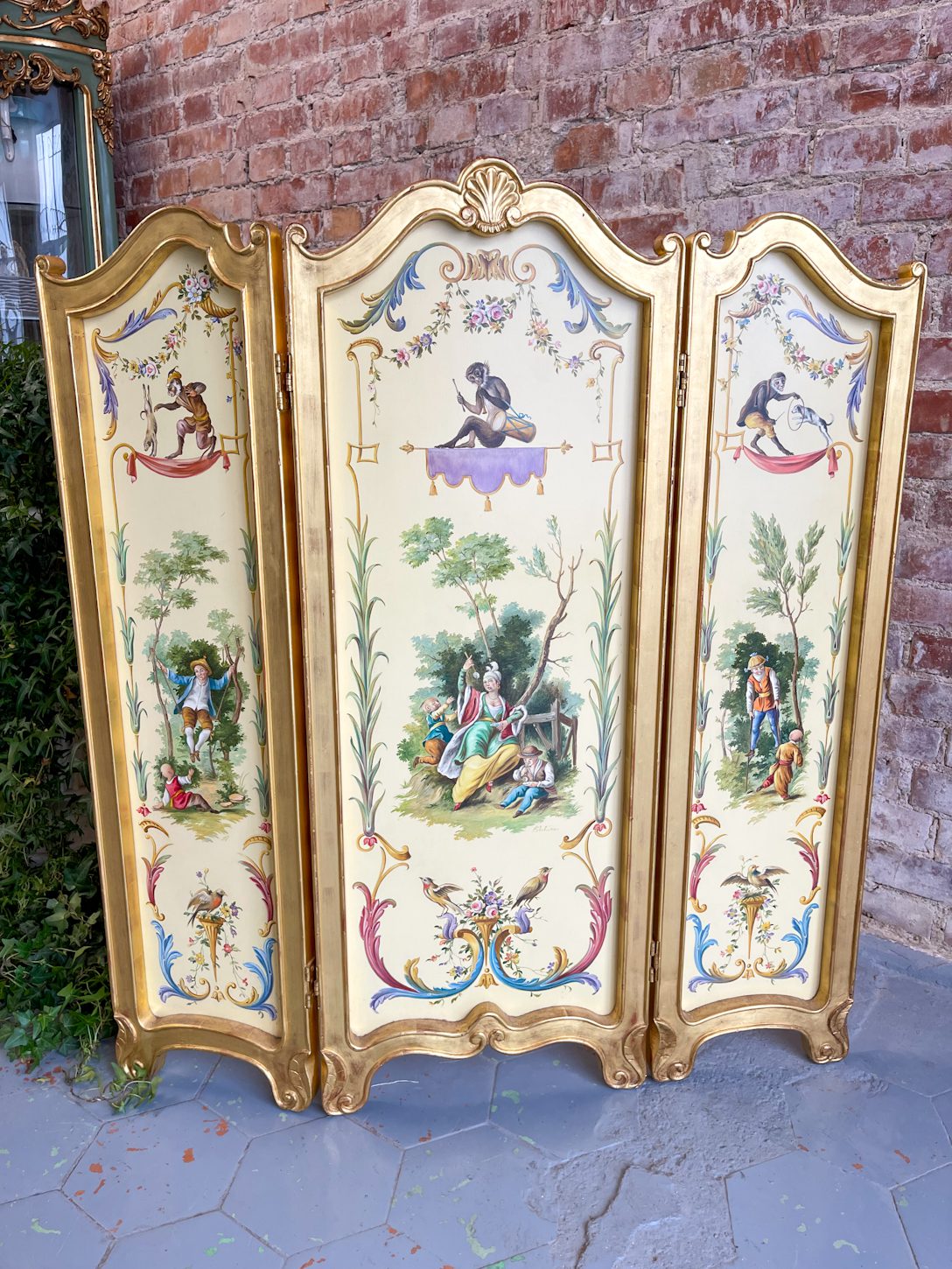
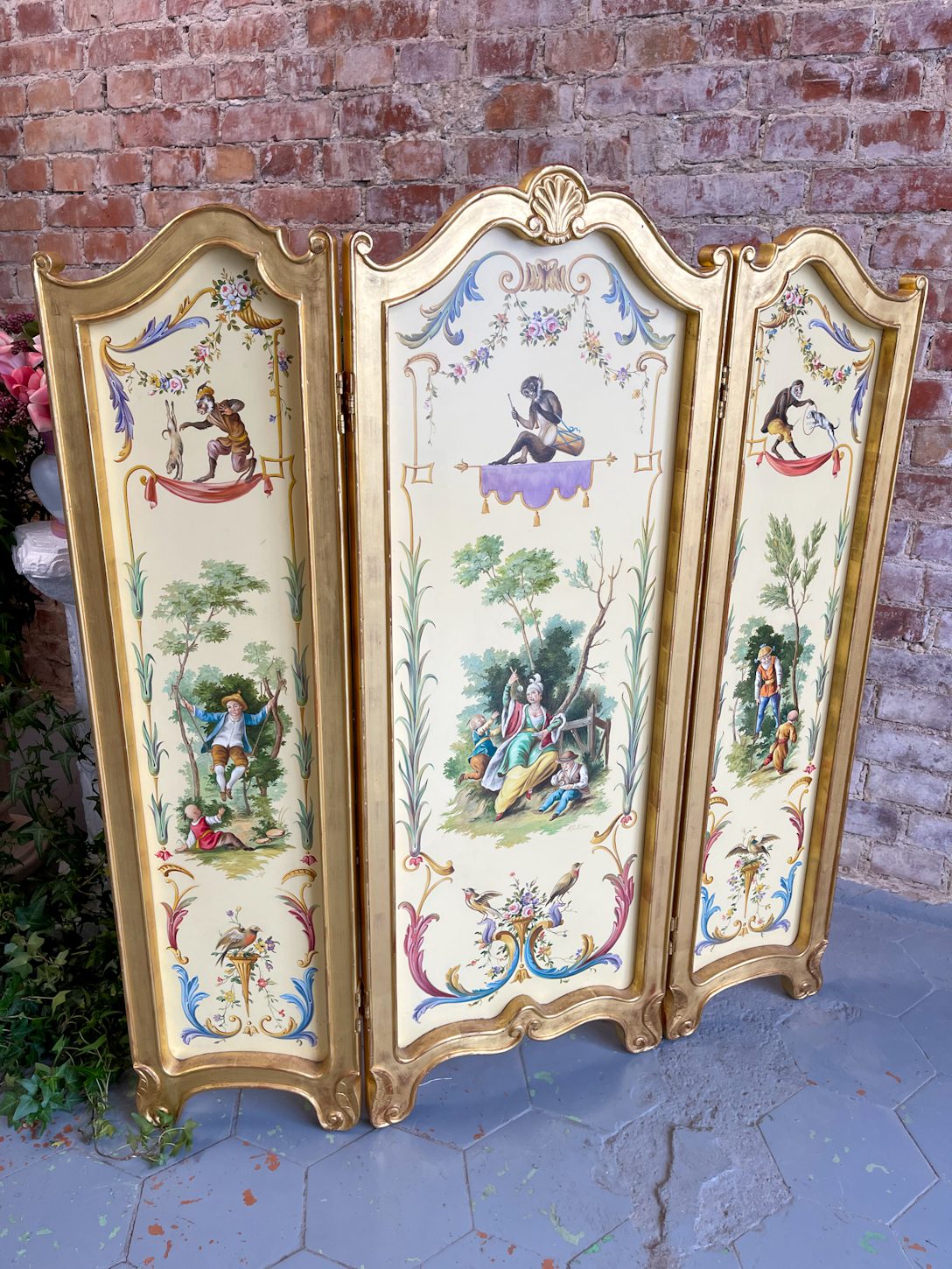
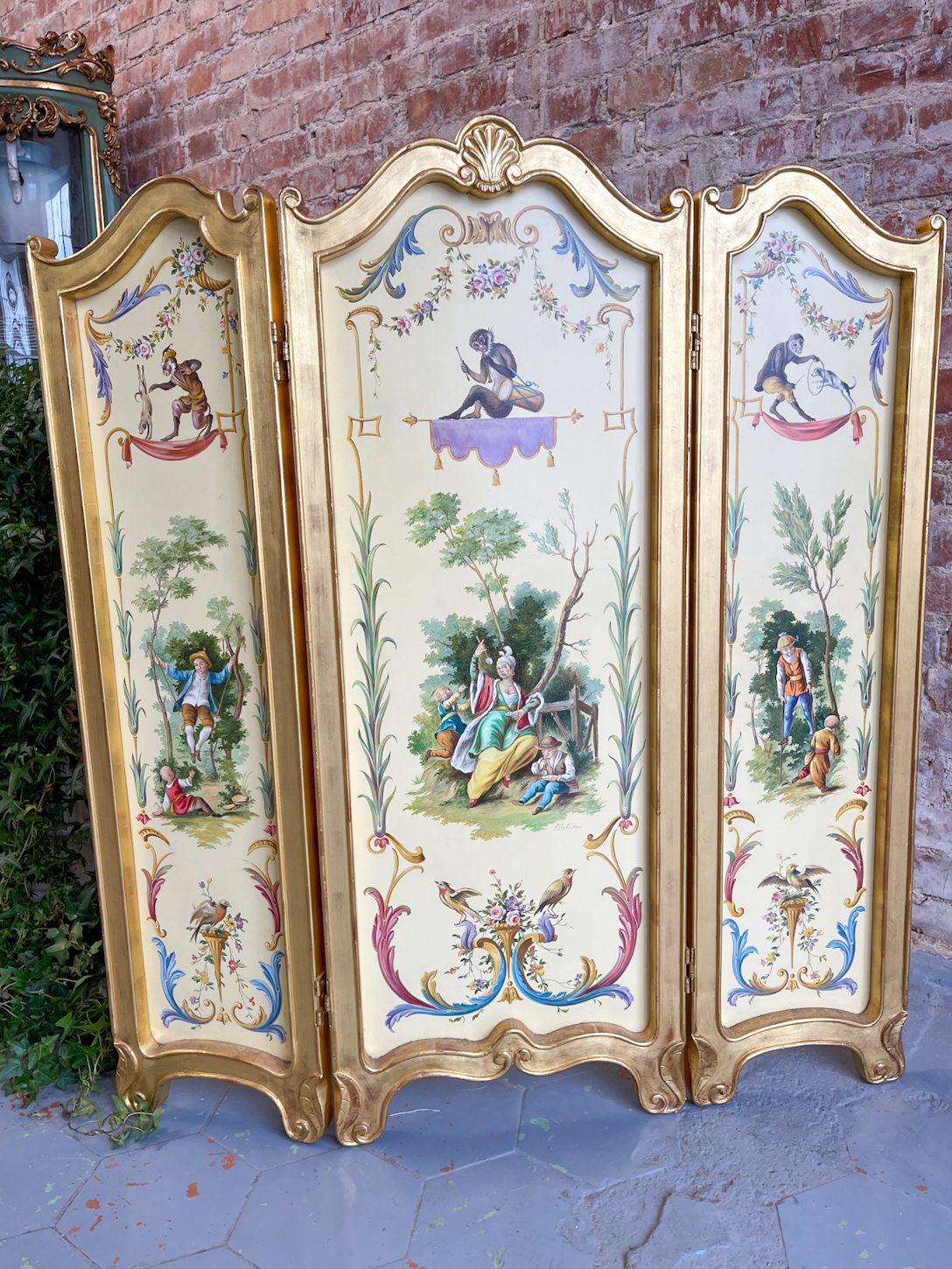
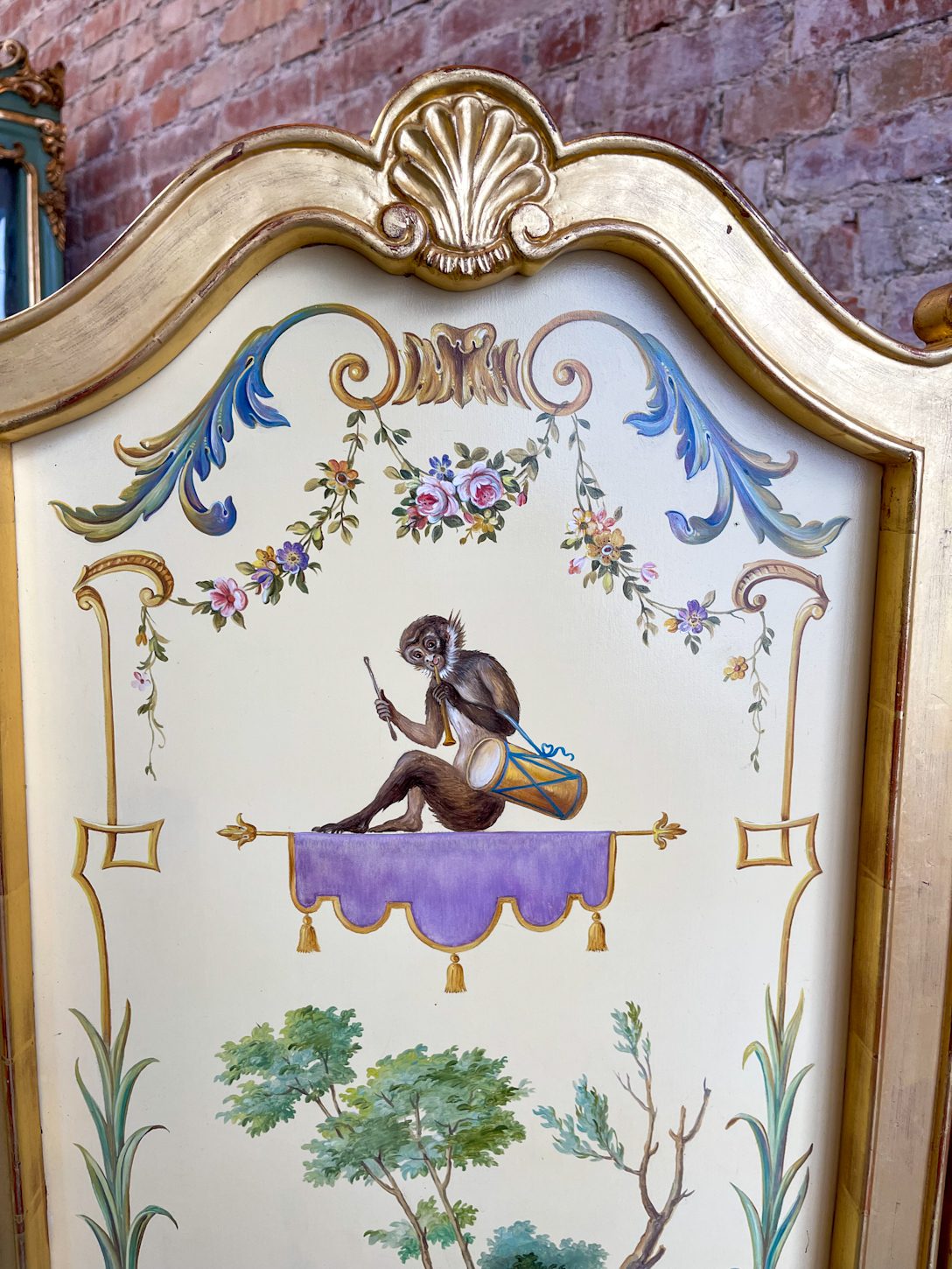
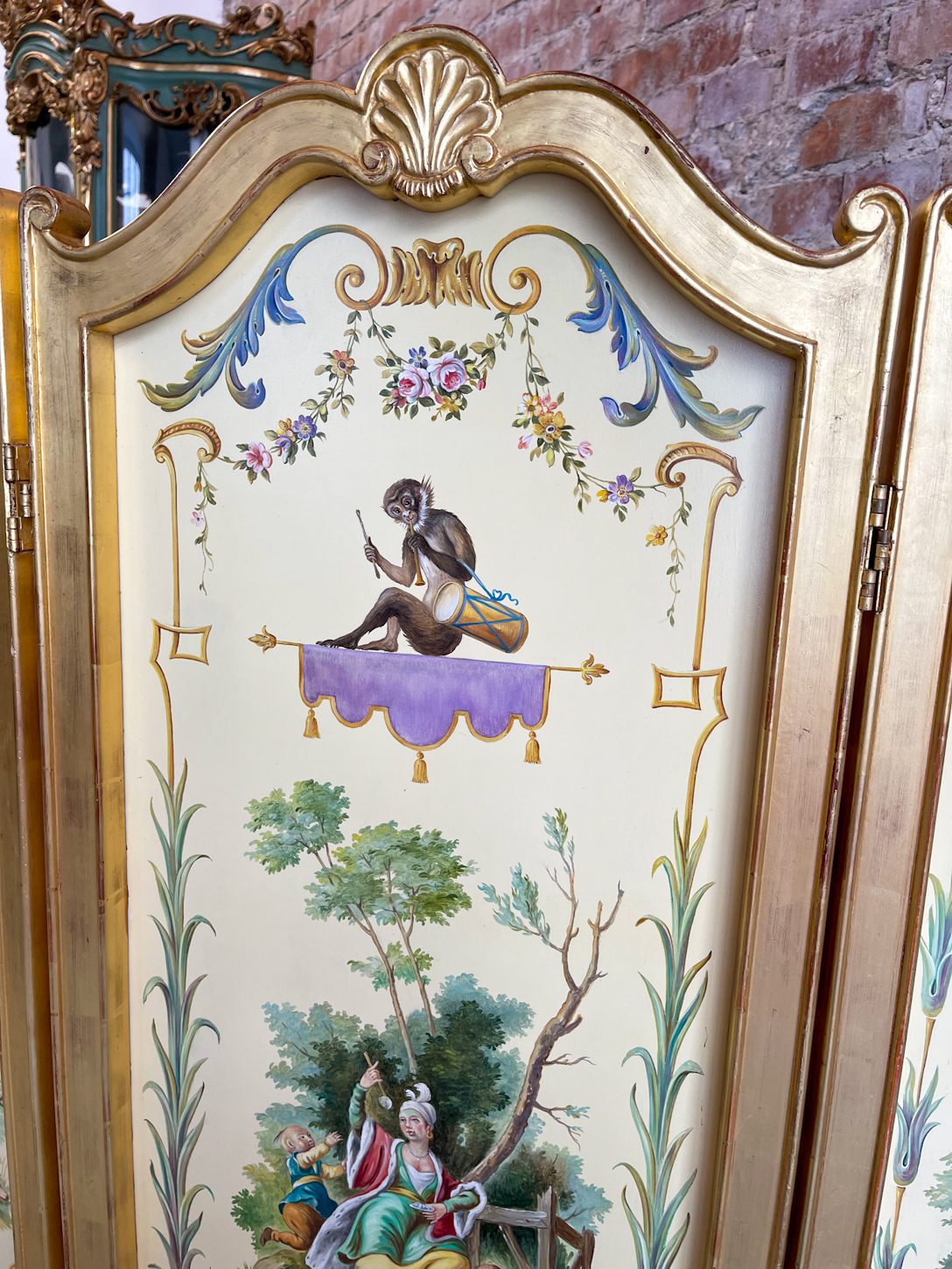
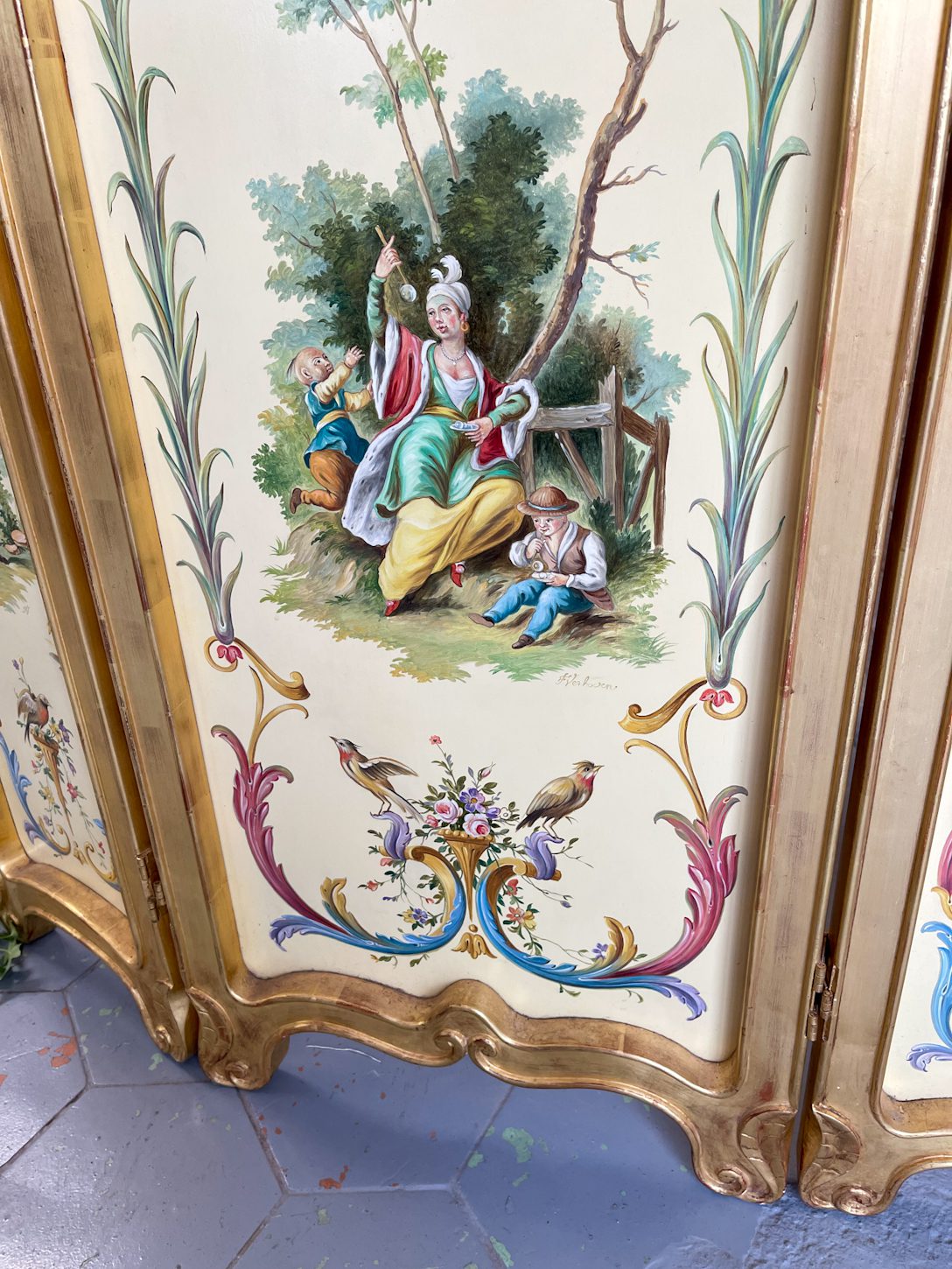
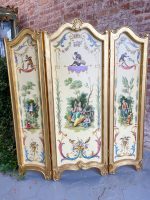
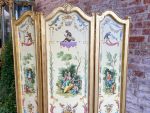
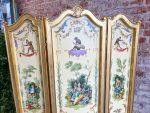
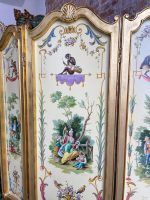
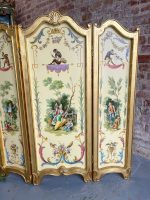
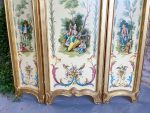
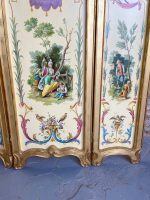
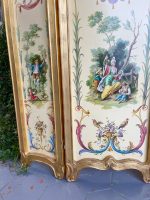
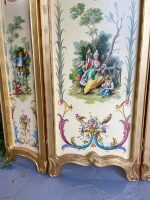
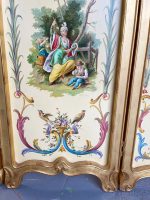
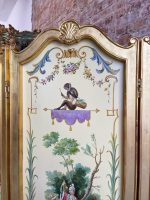
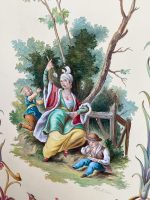
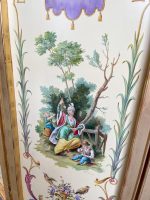
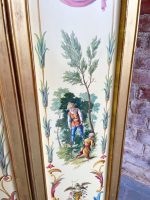
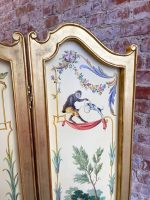
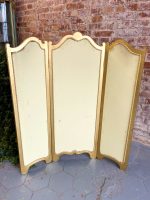
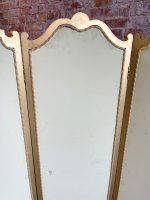
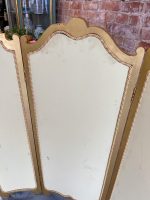
Antique three-part wooden screen with Chinoiserie and Singerie paintings
Height 121 cm Length 106.5 cm Color GoldCreamMulticolor

Description
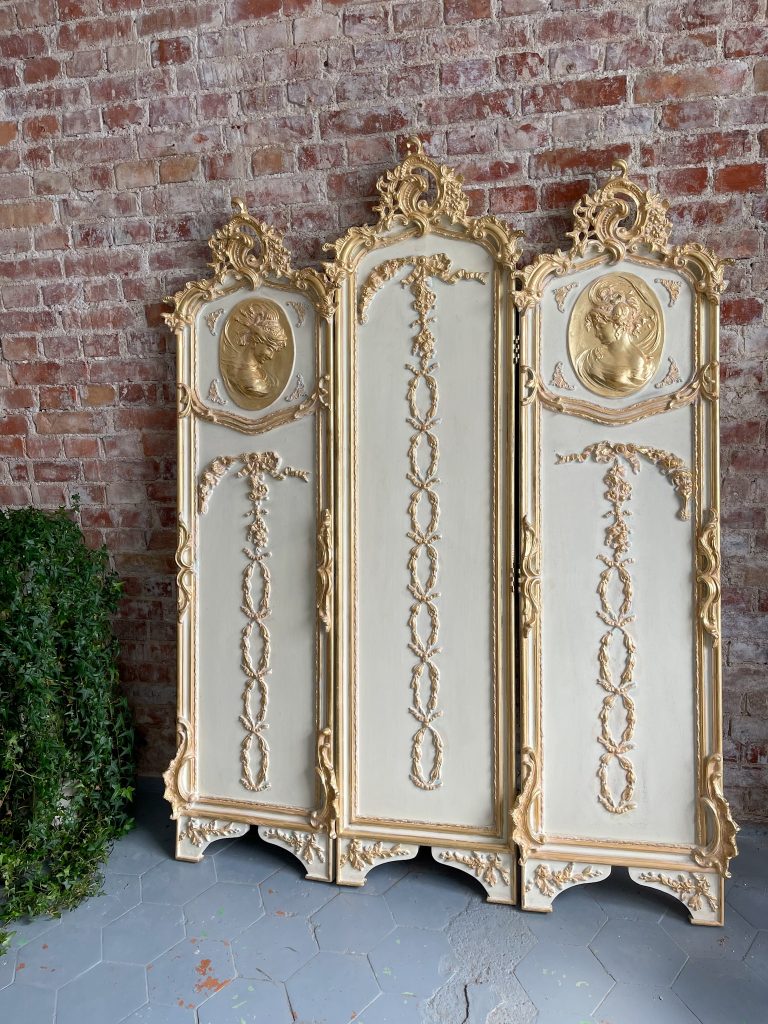
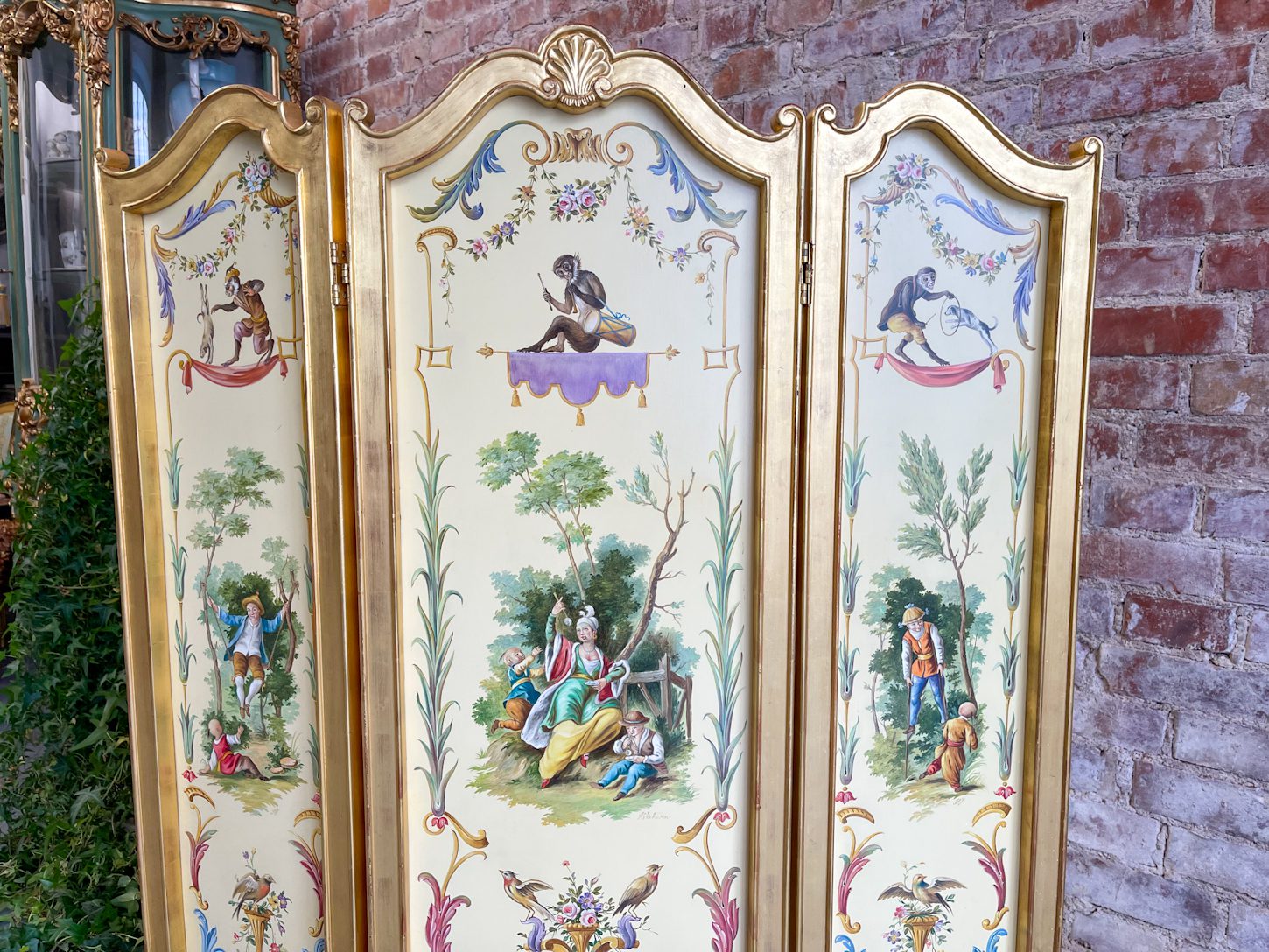
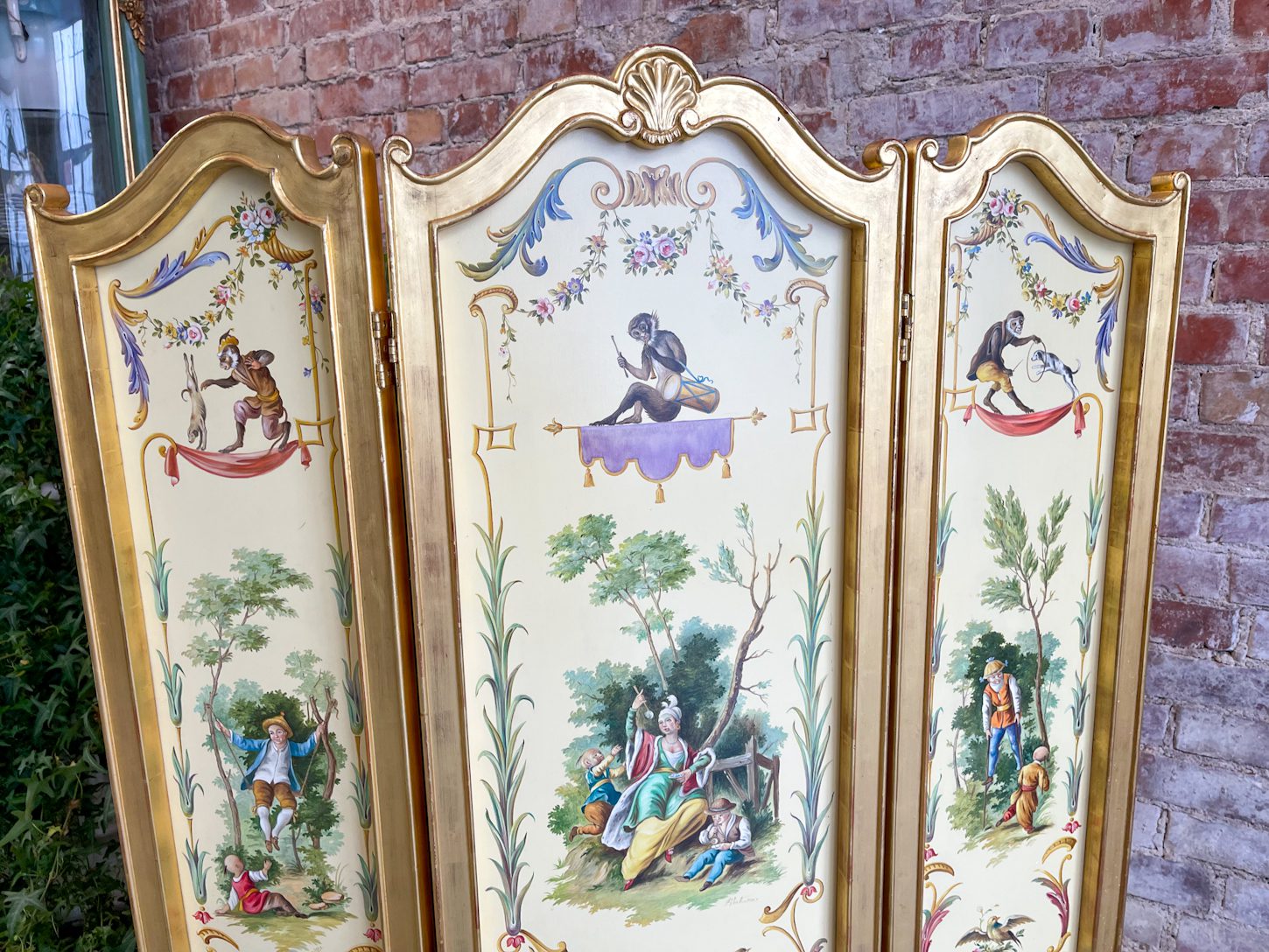
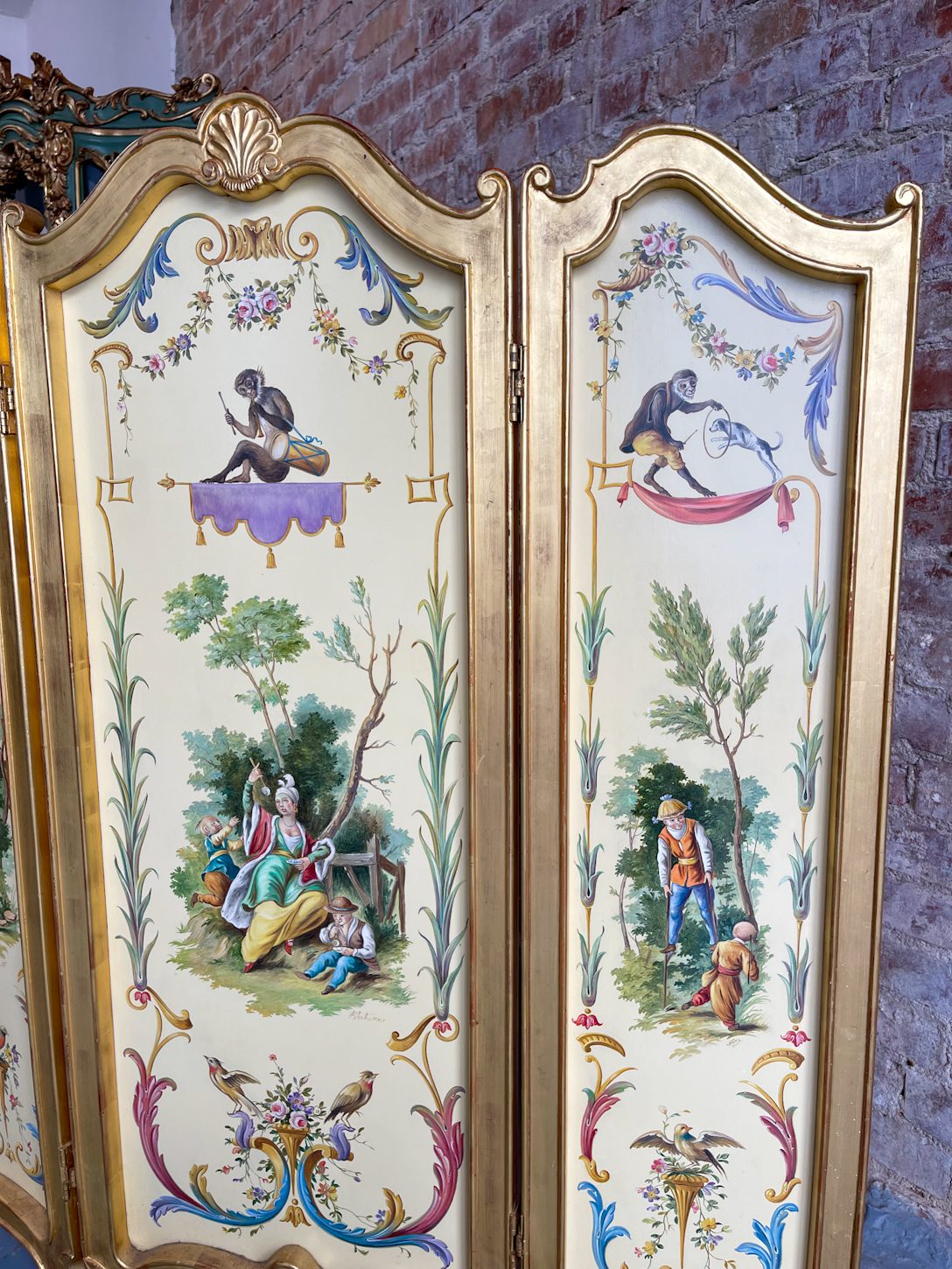
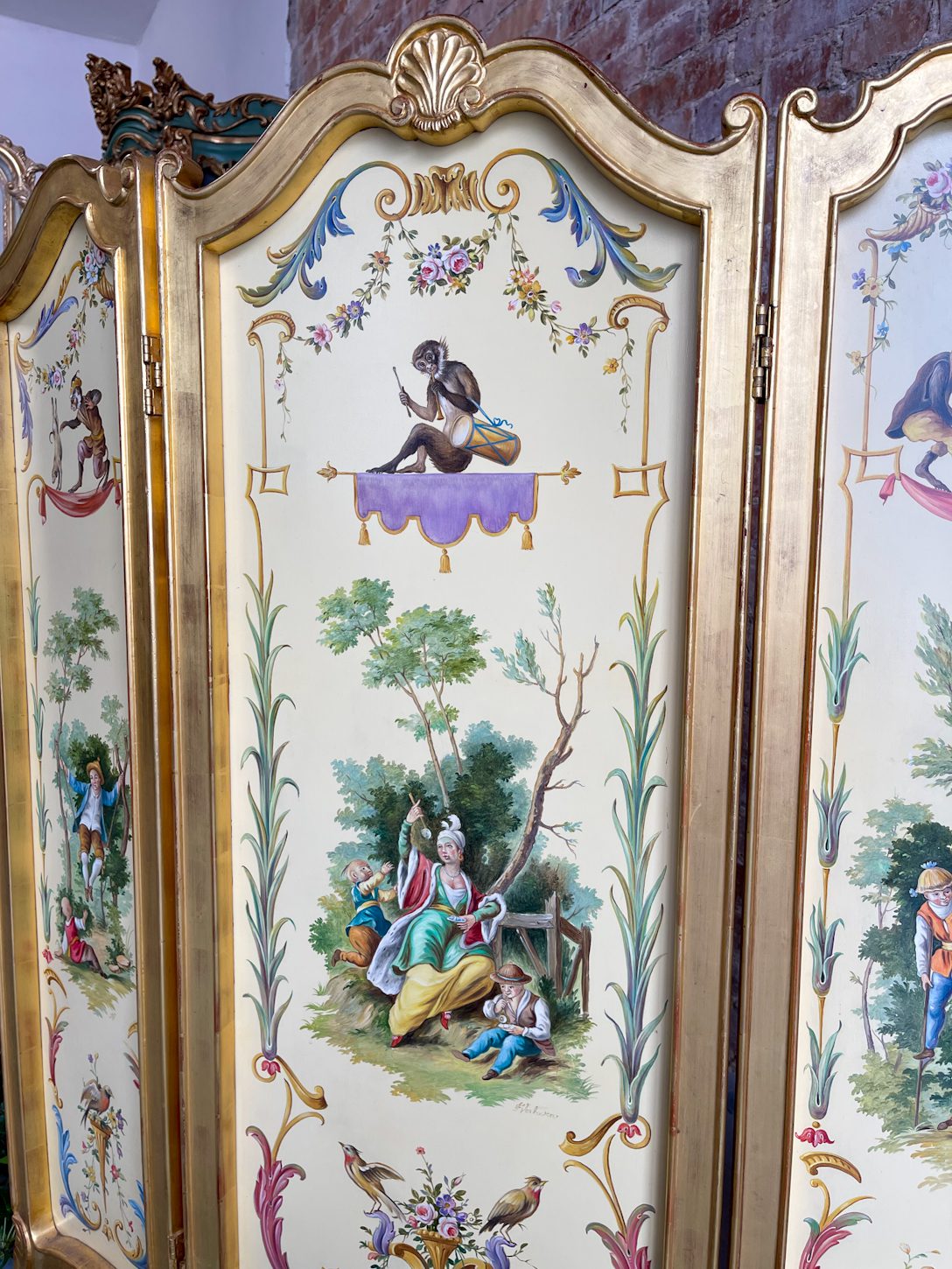
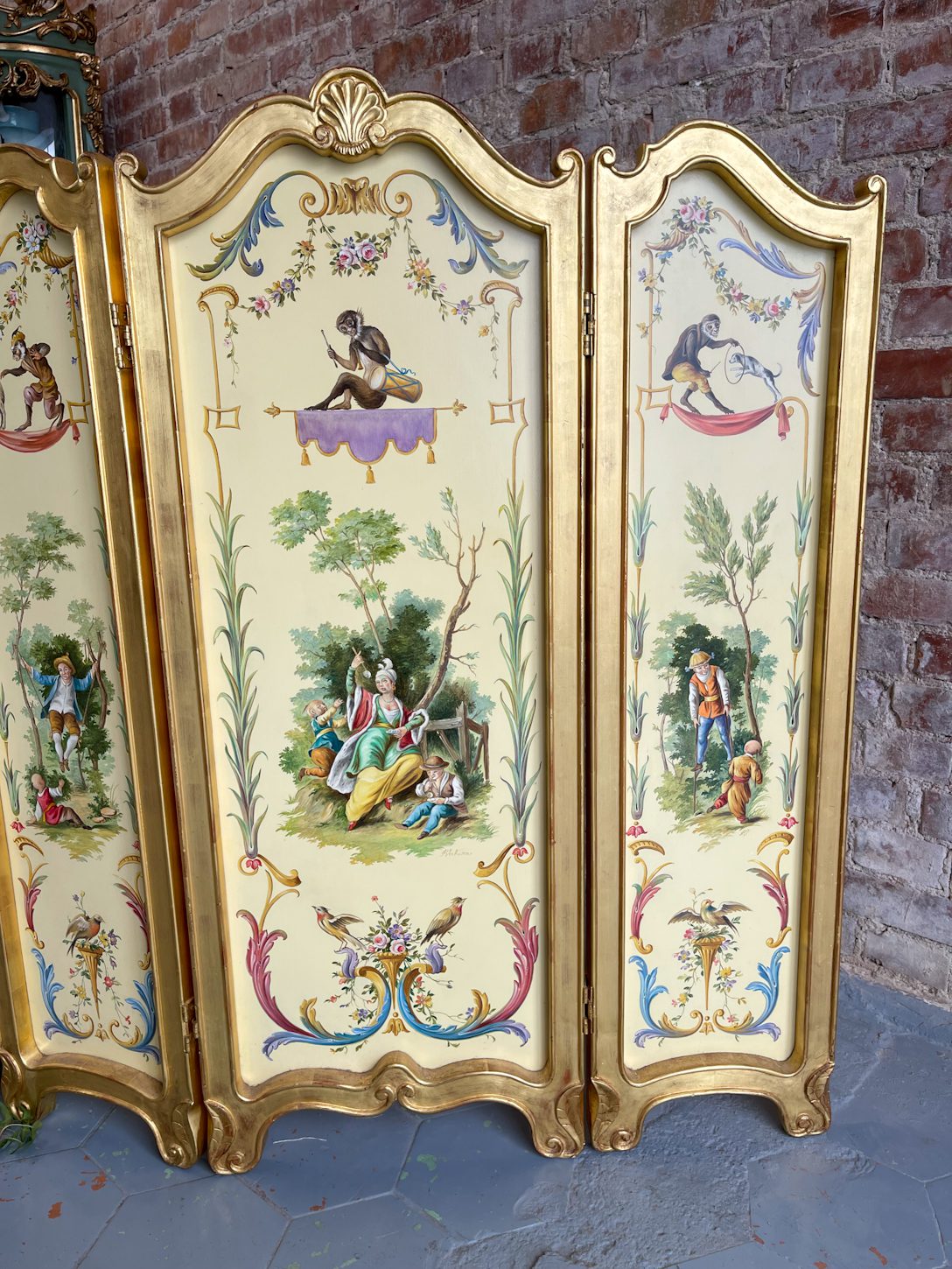
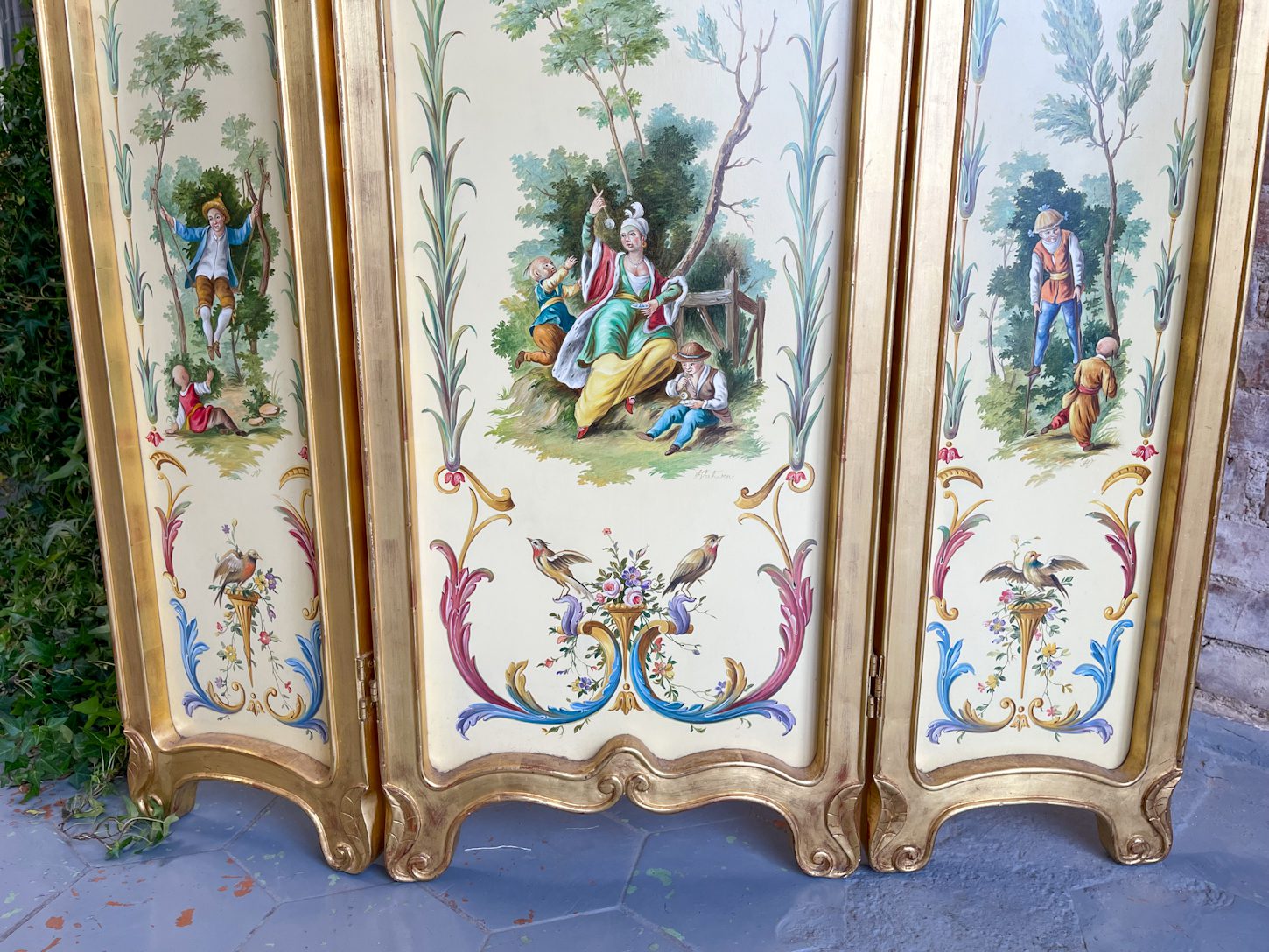
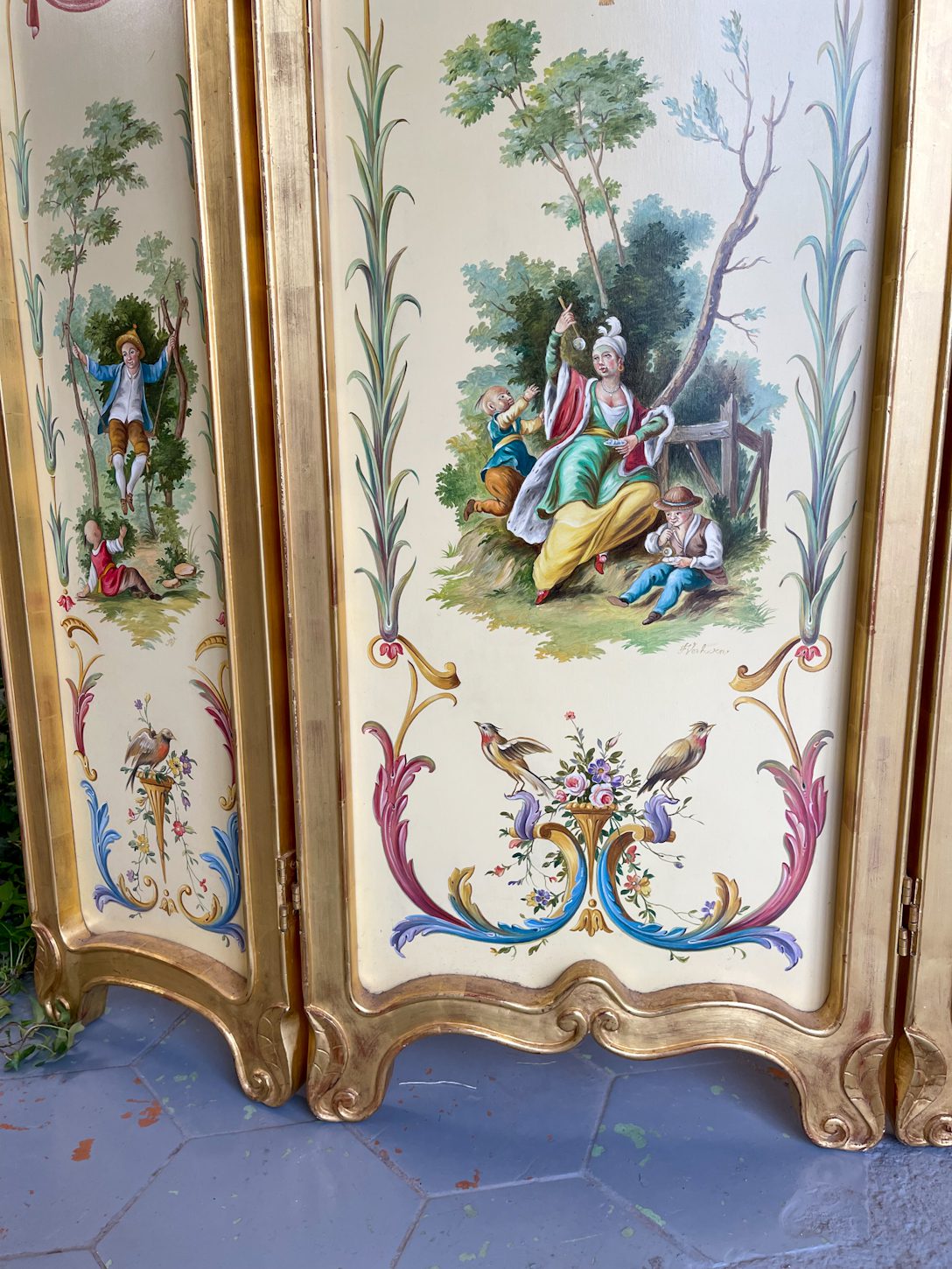
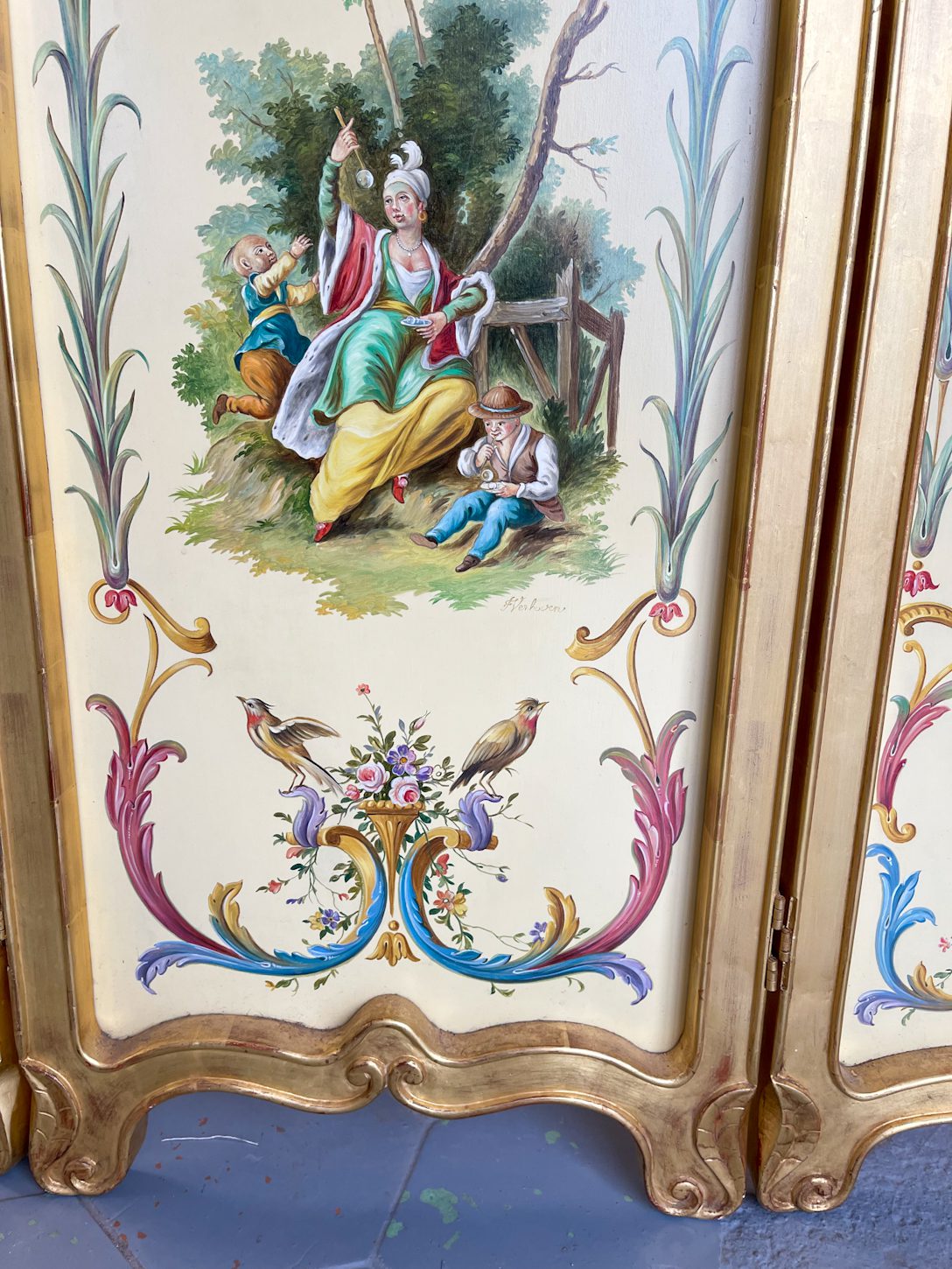
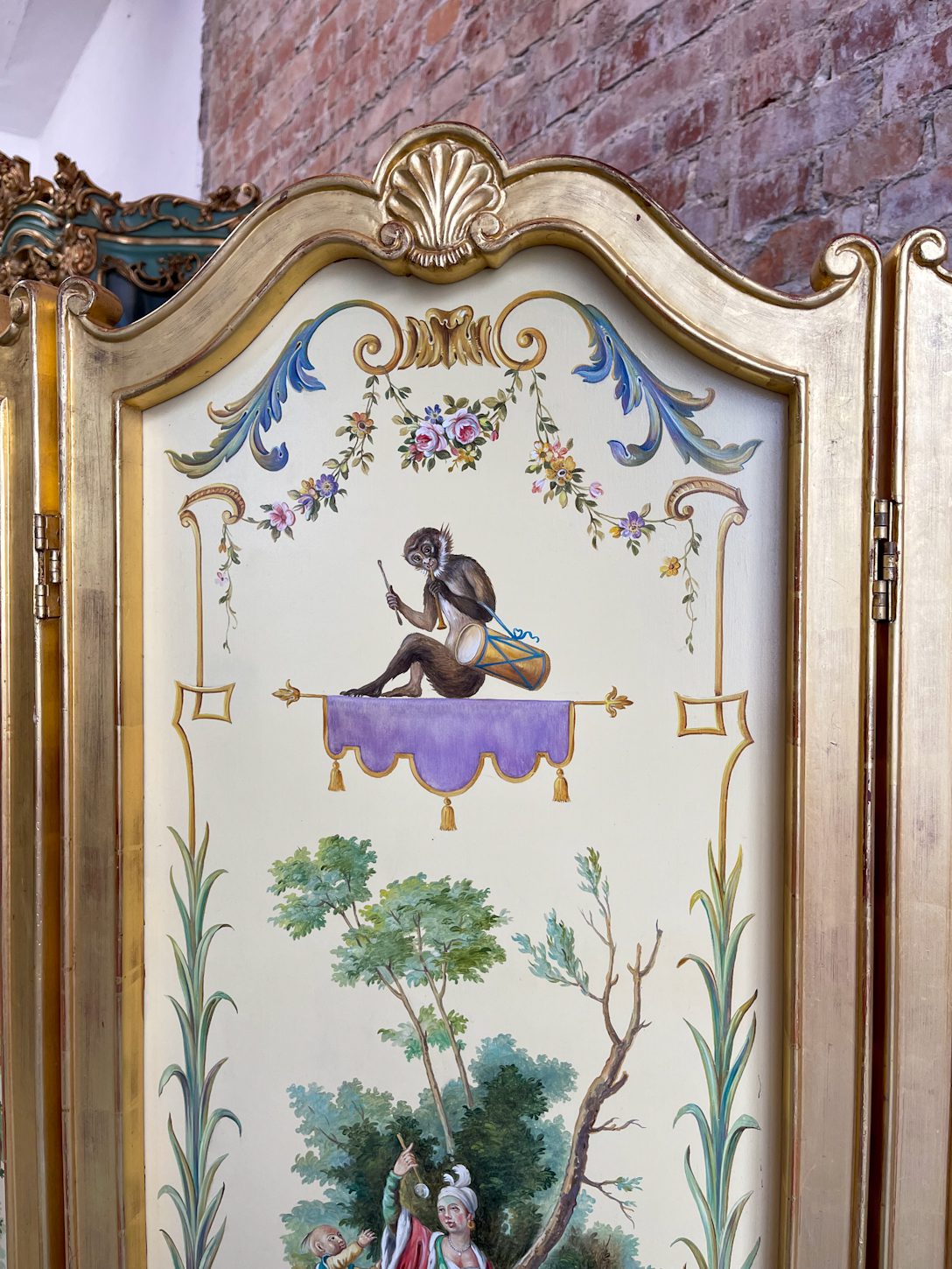
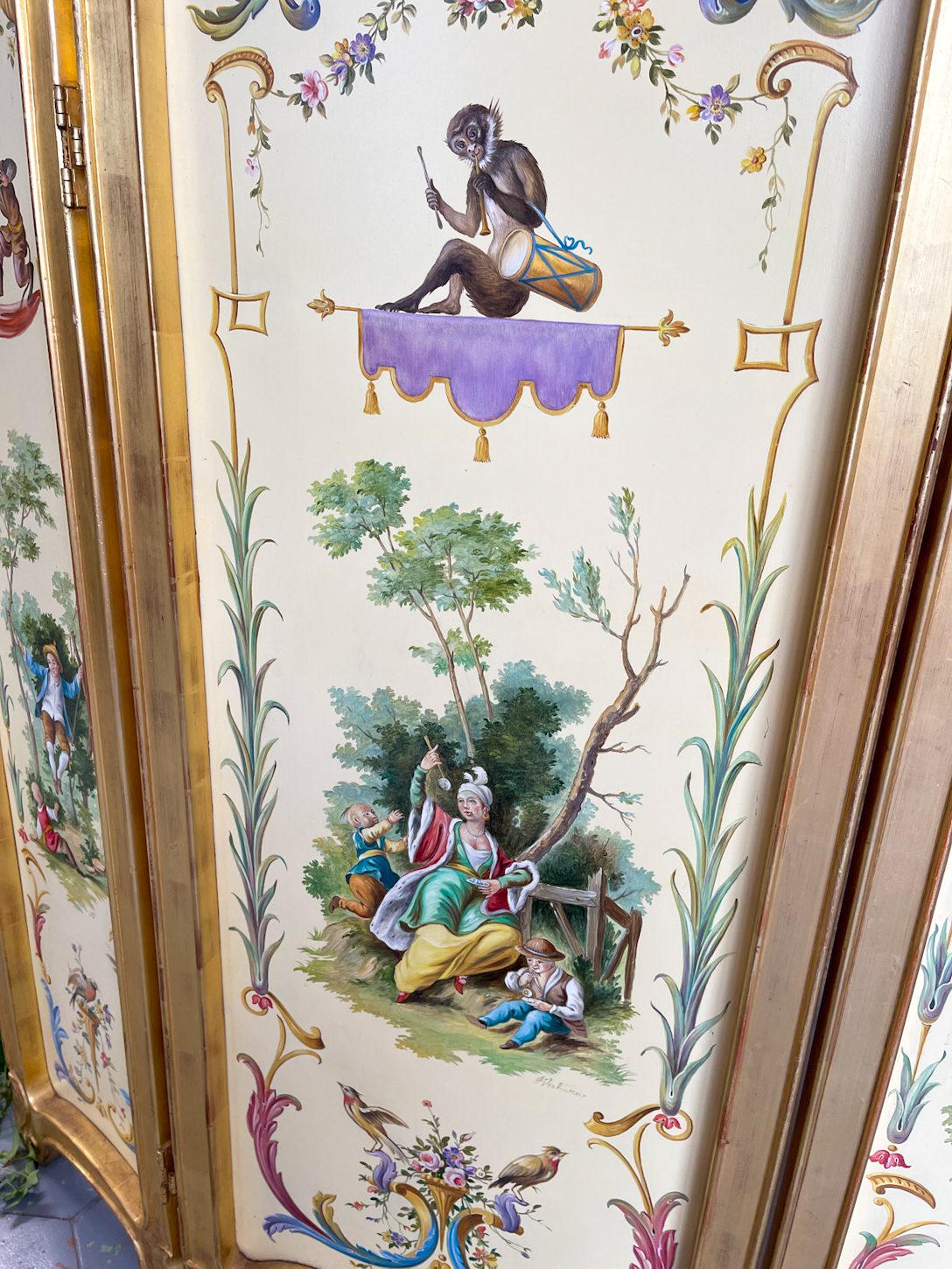
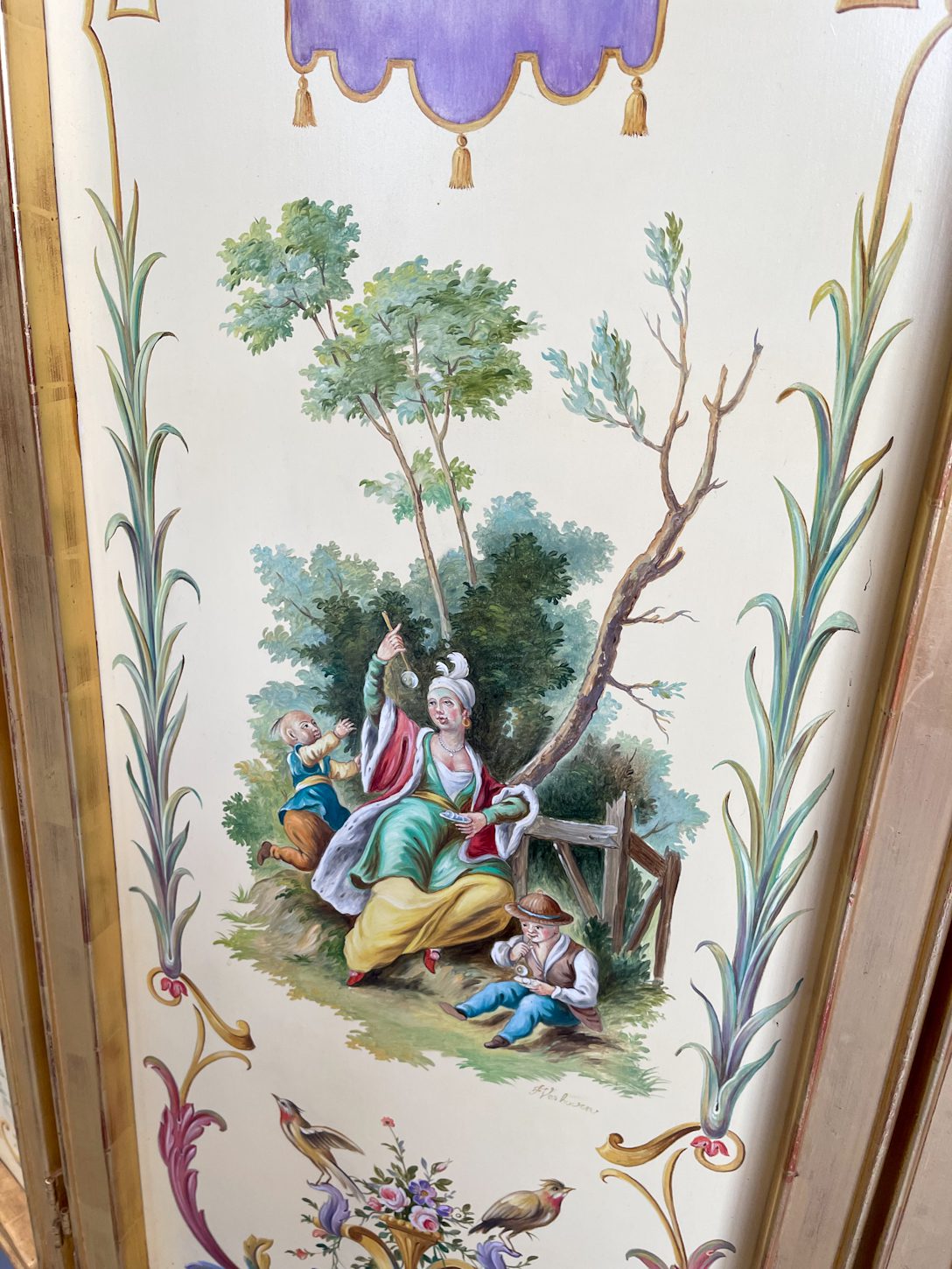
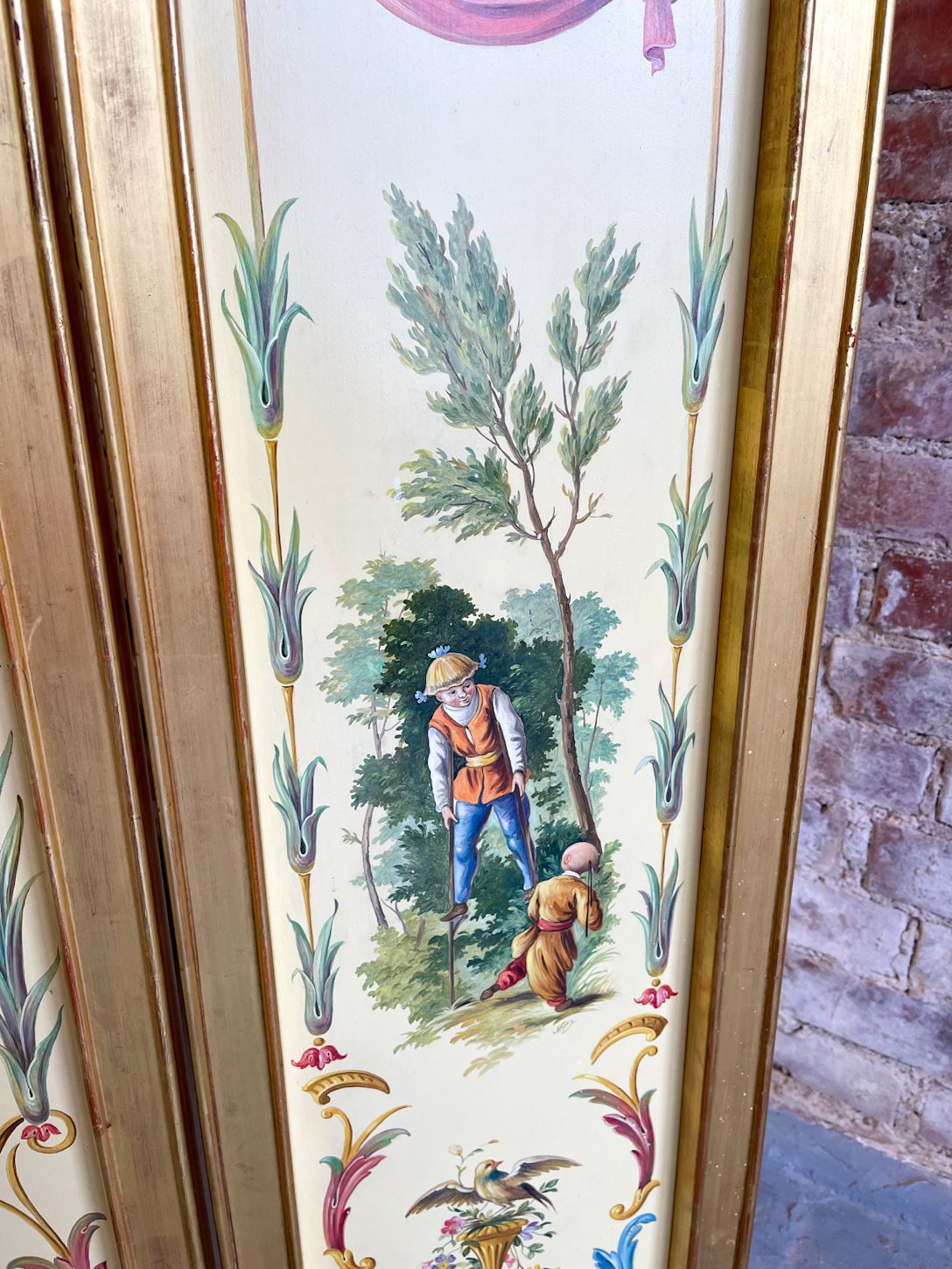
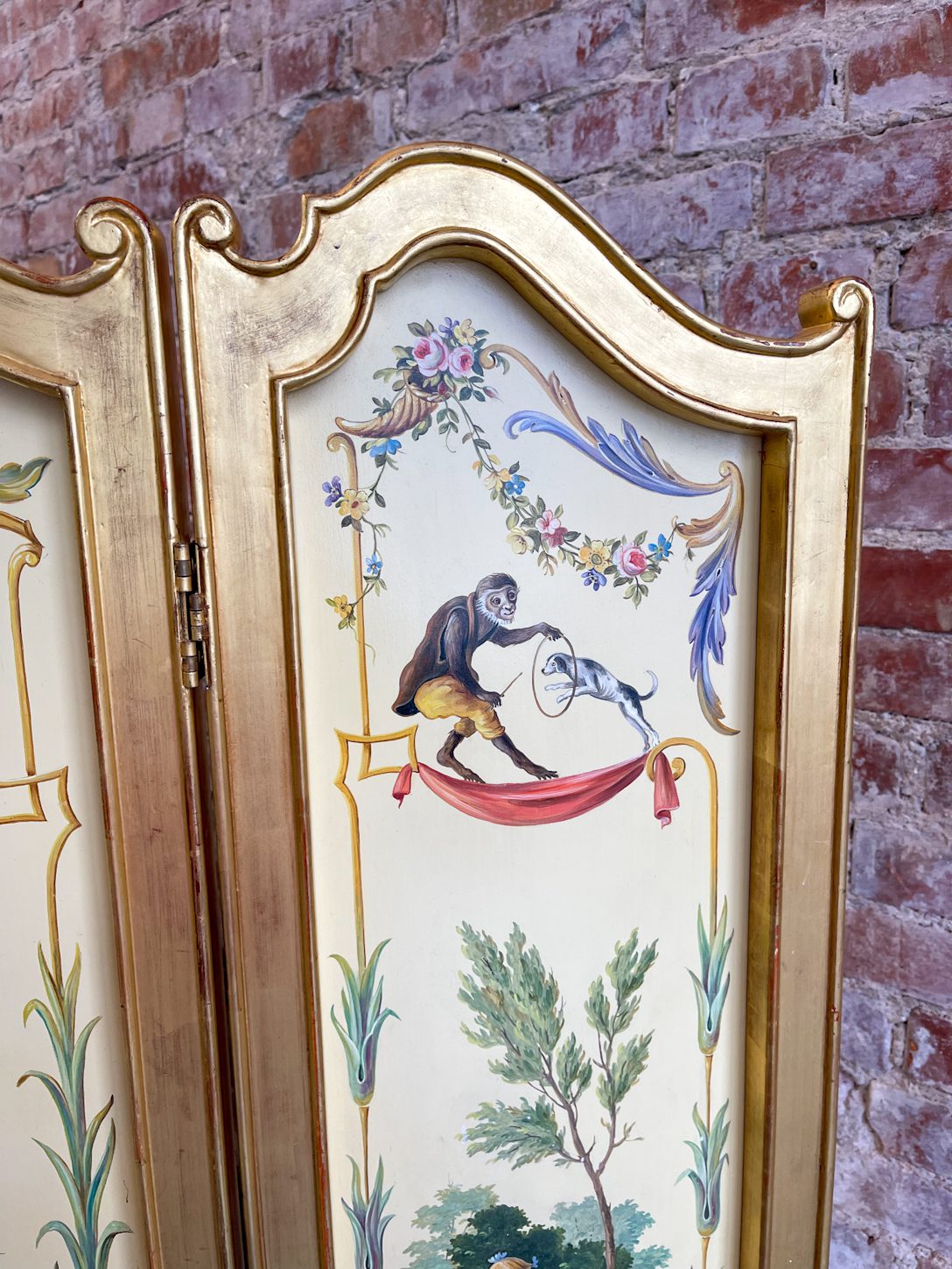
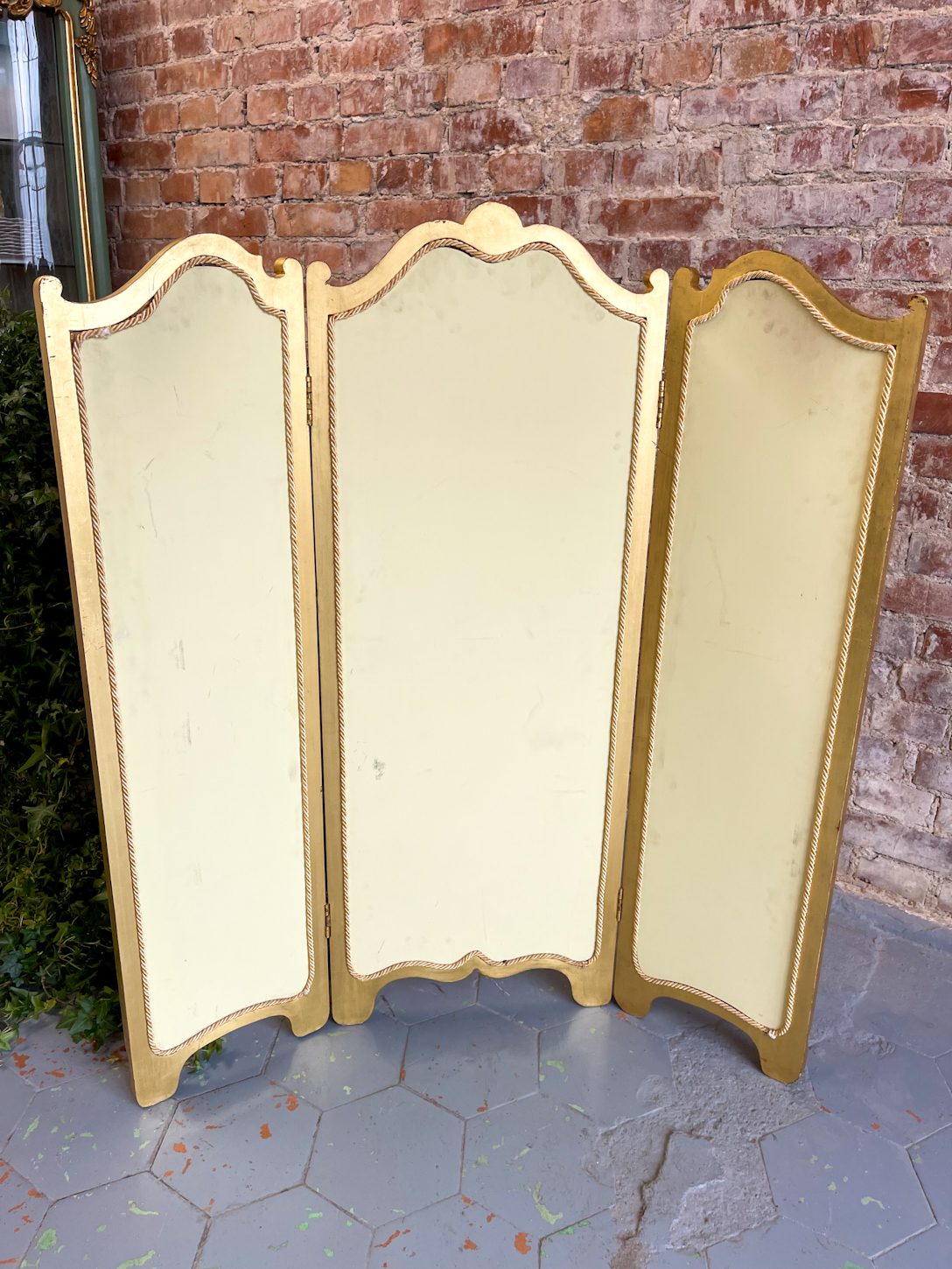
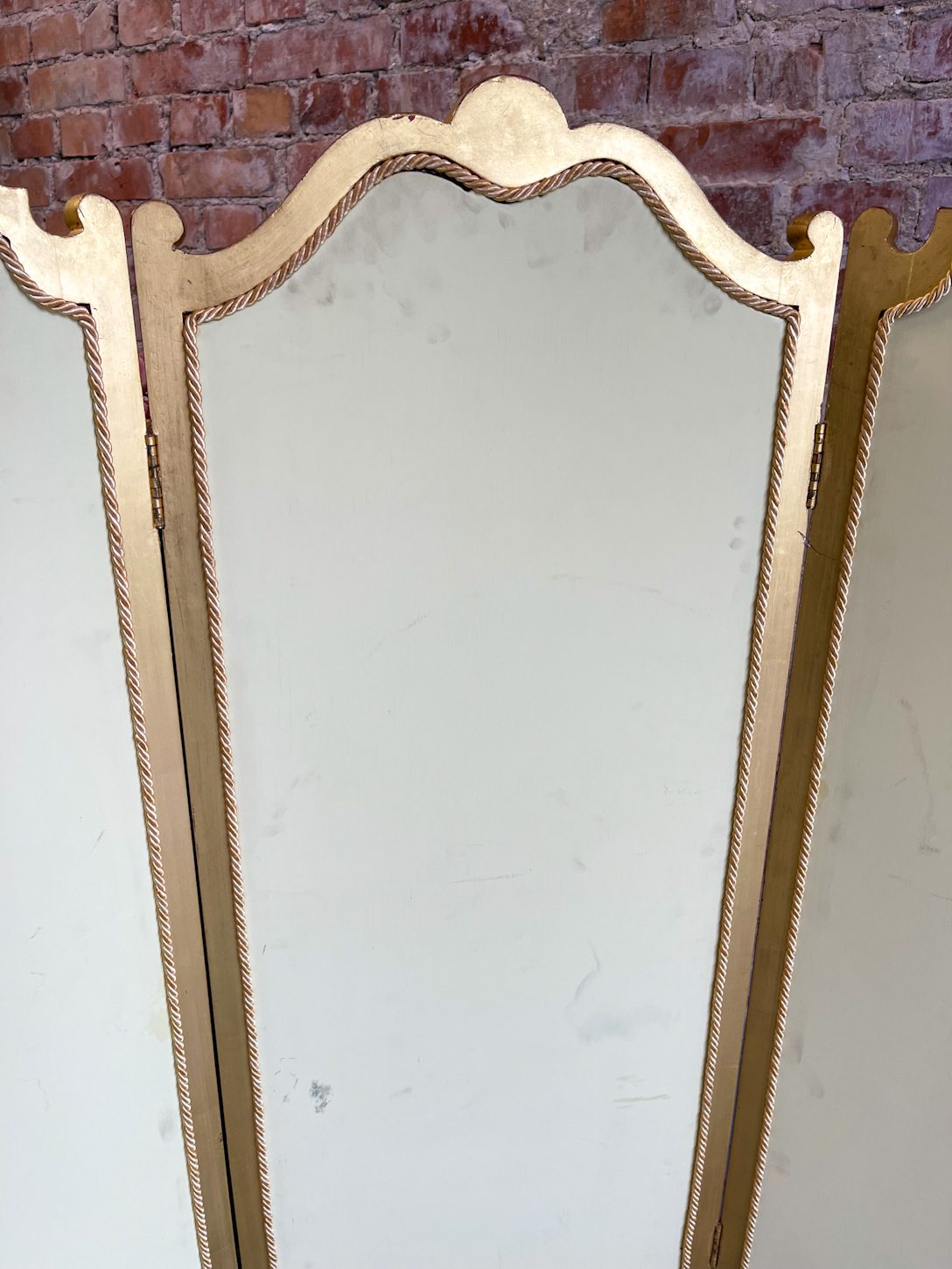
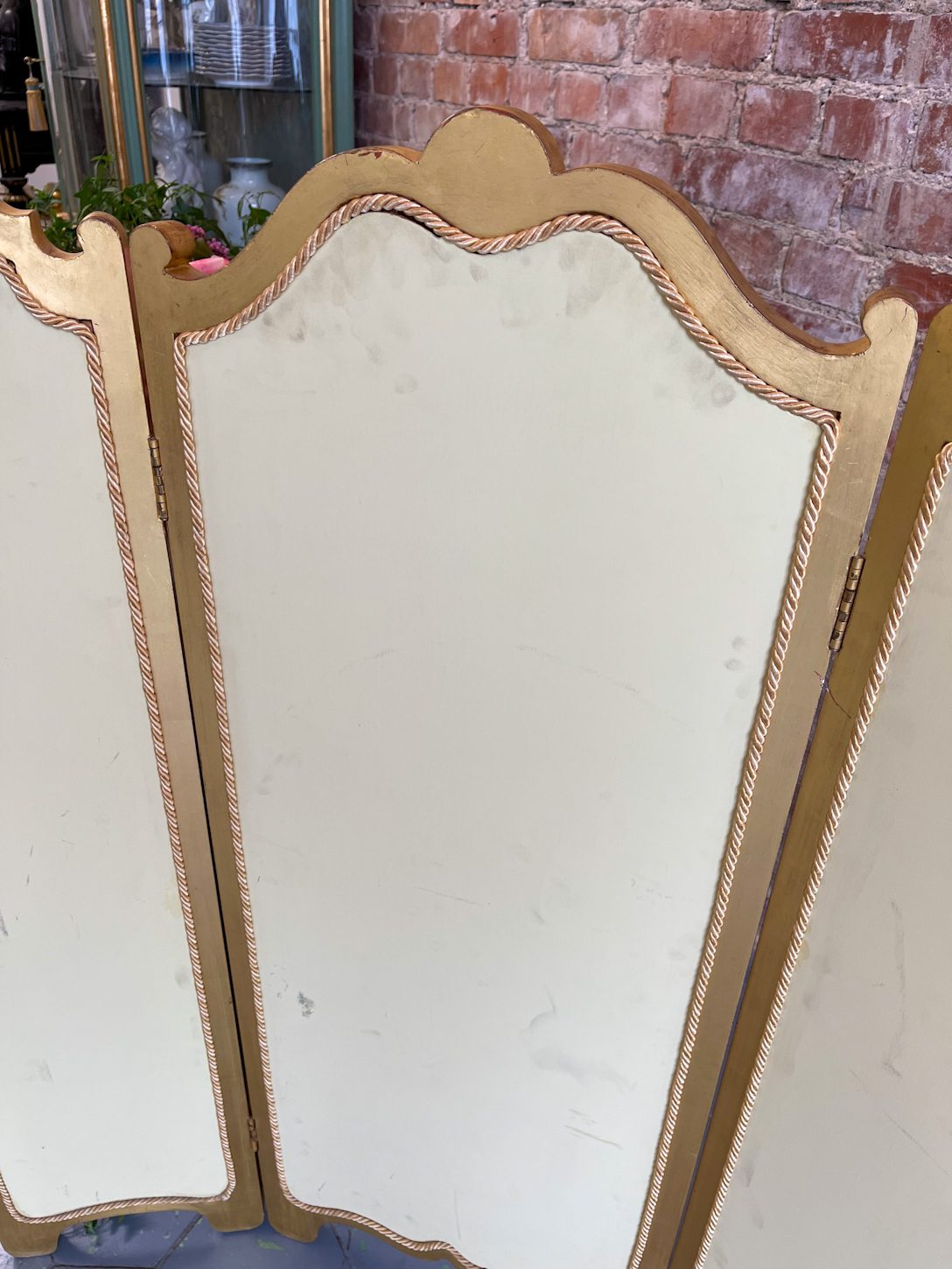
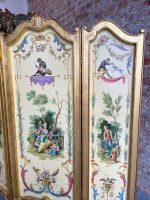
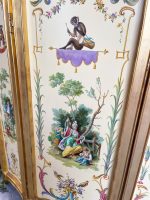
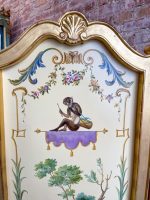
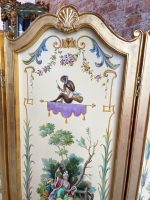
Dimensions: Length (when open) — 106.5 cm Height — 121 cm Antique three-part wooden screen with Chinoiserie and Singerie paintings Exquisite, medium-sized, and unusually elegant late 19th-century folding wooden screen or room divider (antique chinoiserie singerie painted wooden folding screen). The item’s construction consists of three movably connected wooden frames with a luxurious, wavy top line, covered in noble gold paint. The central frame is crowned with a relief rocaille and acanthus leaf motif. The screen’s main value lies in its excellently preserved, hand-painted panels on a light cream background, depicting whimsical and witty decorative art themes of the 18th-century court. The paintings combine two famous historical styles:
- Singerie (monkey mania) — the upper parts of the panels depict monkeys dressed in human clothes, engaged in human pastimes: one playing drums on a luxurious purple cushion, another training a small dog while holding a gymnastic ring.
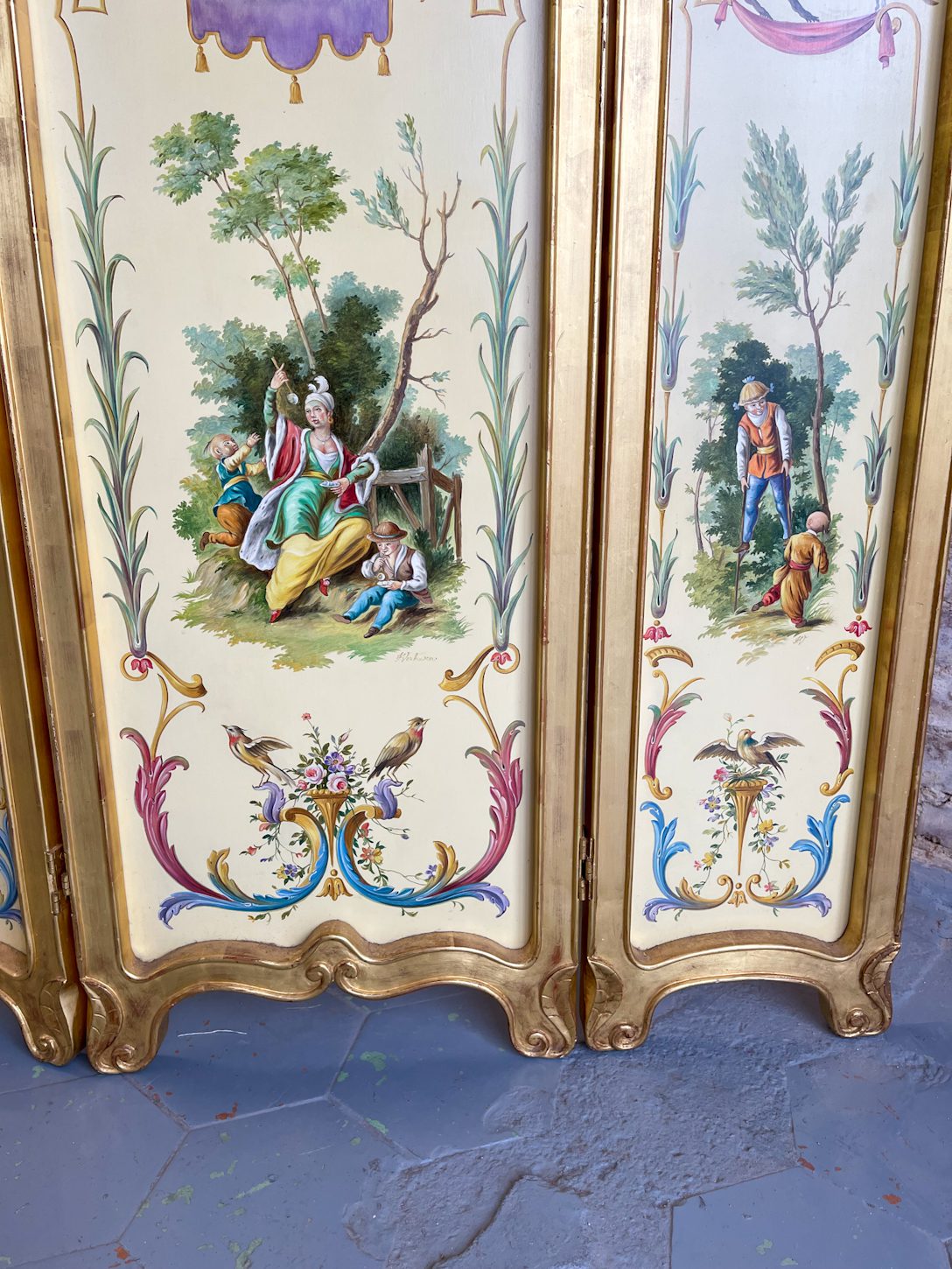
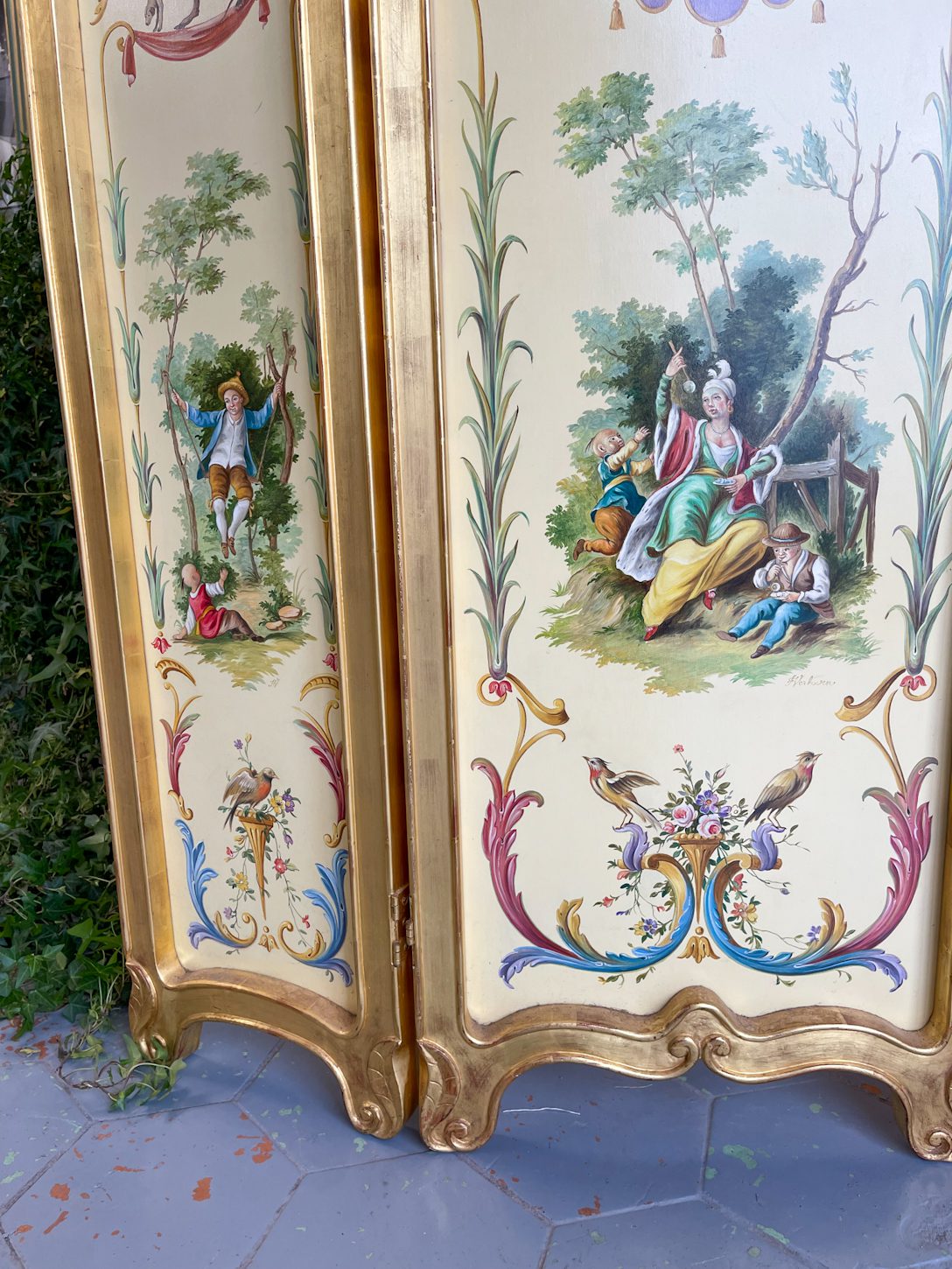
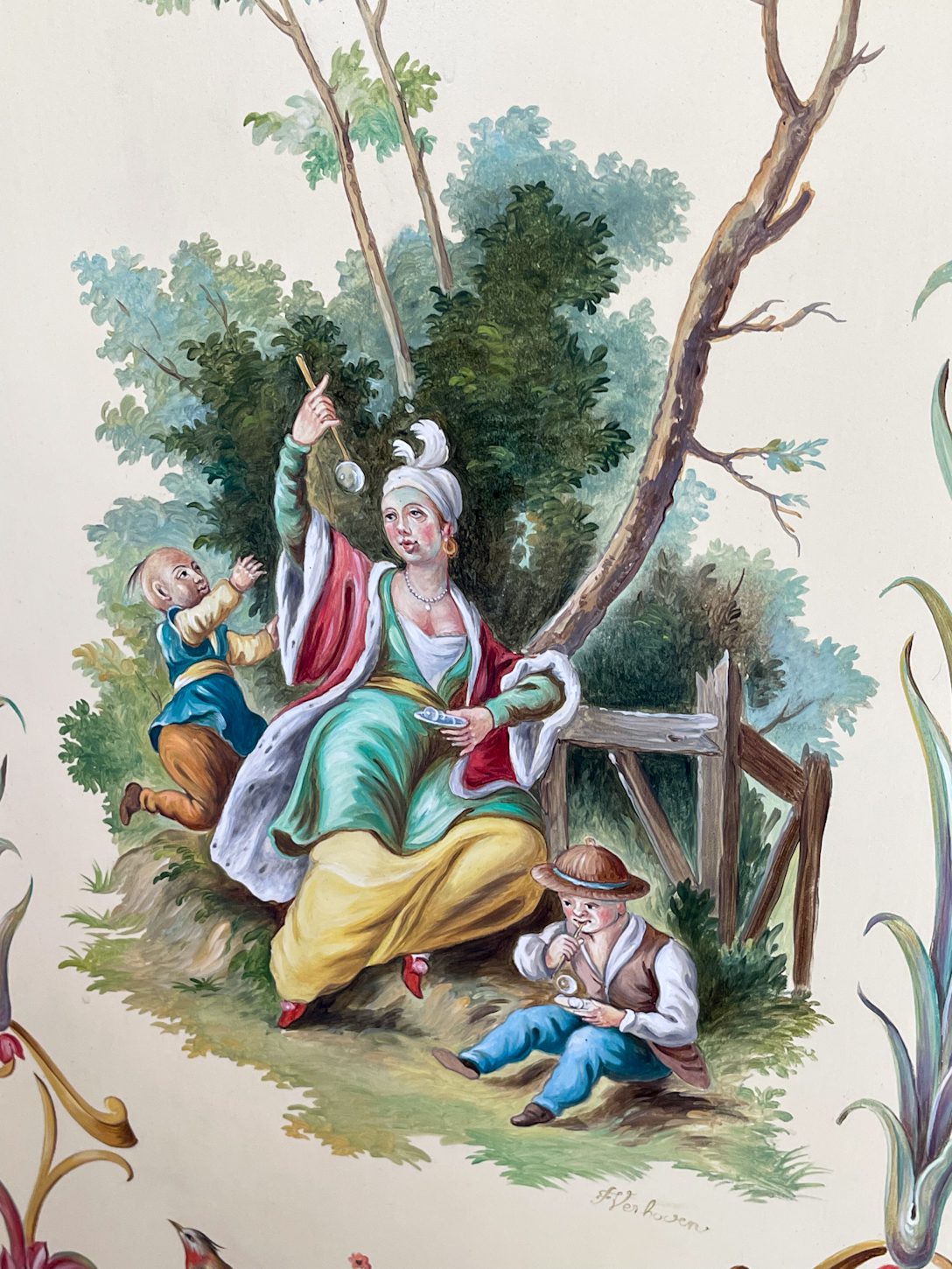
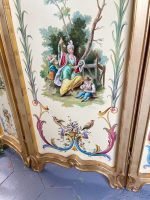
- Chinoiserie (fantasy of Chinese style) — the central squares depict playful, pastoral scenes with figures dressed in exotic Eastern attire against a natural background, blowing soap bubbles and swinging in trees.
The lower band is adorned with ornate flower baskets, garlands, and colorful birds. The bottom of the painting shows the master’s signature “H. Verhaegen”, indicating a high-level European decorative school work. The back is upholstered with neutral, light fabric and neatly trimmed with decorative twisted cord. Period of creation Late 19th century / early 20th century, approximately 1890–1910. Historicism / Neo-Rococo period, France or Belgium. Manufacturer / signature / stamp The work is an individual art commission, signed in the central part of the painting with “H. Verhaegen” (or “Verhasen”). Such exquisite interior items were created in the leading decorative art workshops of Brussels and Paris, inspired by originals from the Louis XV era. Rarity and significance Folding room and fireplace screens with fully preserved, undamaged, and so detailed hand paintings are a great rarity. Items in the Singerie genre are currently experiencing a huge renaissance and are especially in demand among collectors, as they embody exquisite humor and classic art aesthetics. Application The screen is fully functional and serves excellently for zoning space, creating a cozy corner in the bedroom, or as a decorative screen by the fireplace and desk. It is a powerful visual accent that adds an aristocratic breath of history and salon charm to any classic or eclectic interior. Condition In excellent antique condition. The wooden construction and brass hinges are completely firm and stable. The hand paintings on all three panels are unusually bright, clear, without cracks or loss of color. The gilded frame has a soft, natural, and noble historical patina, which only emphasizes the item’s authenticity. The back fabric is clean and intact. Cultural-historical snapshot: On a sultry afternoon, as the heavy drops of Indian monsoon rain began to rhythmically drum against the veranda windows of the colonial bungalow, a hazy, warm peace reigned in the room. The writer Rudyard Kipling sat at his heavy mahogany desk, quietly and intently humming an old army march rhythm and lightly tapping the edge of a bronze inkwell with the tip of his pen. In the corner of the room, guarding the light of the burning oil lamp from the draft, stood a small wooden screen — its gilded frame shimmered in a warm tone, while the hand-painted monkeys and Eastern figures blew soap bubbles, creating a strange, fairy-tale contrast with the surrounding tropical landscape. This whimsical Rococo artwork, which transformed wild nature into an elegant court jest, instantly turned the sweltering working hour into a noble, inspiring, and immortal ritual of time.
Related Products