Luxurious walnut plate rack vaisselier — Louis XV style, France, 19th c. (antique wall plate rack vaisselier) 650,00 €
You’re now subscribed to price tracking for this product. We’ll notify you if the price drops. 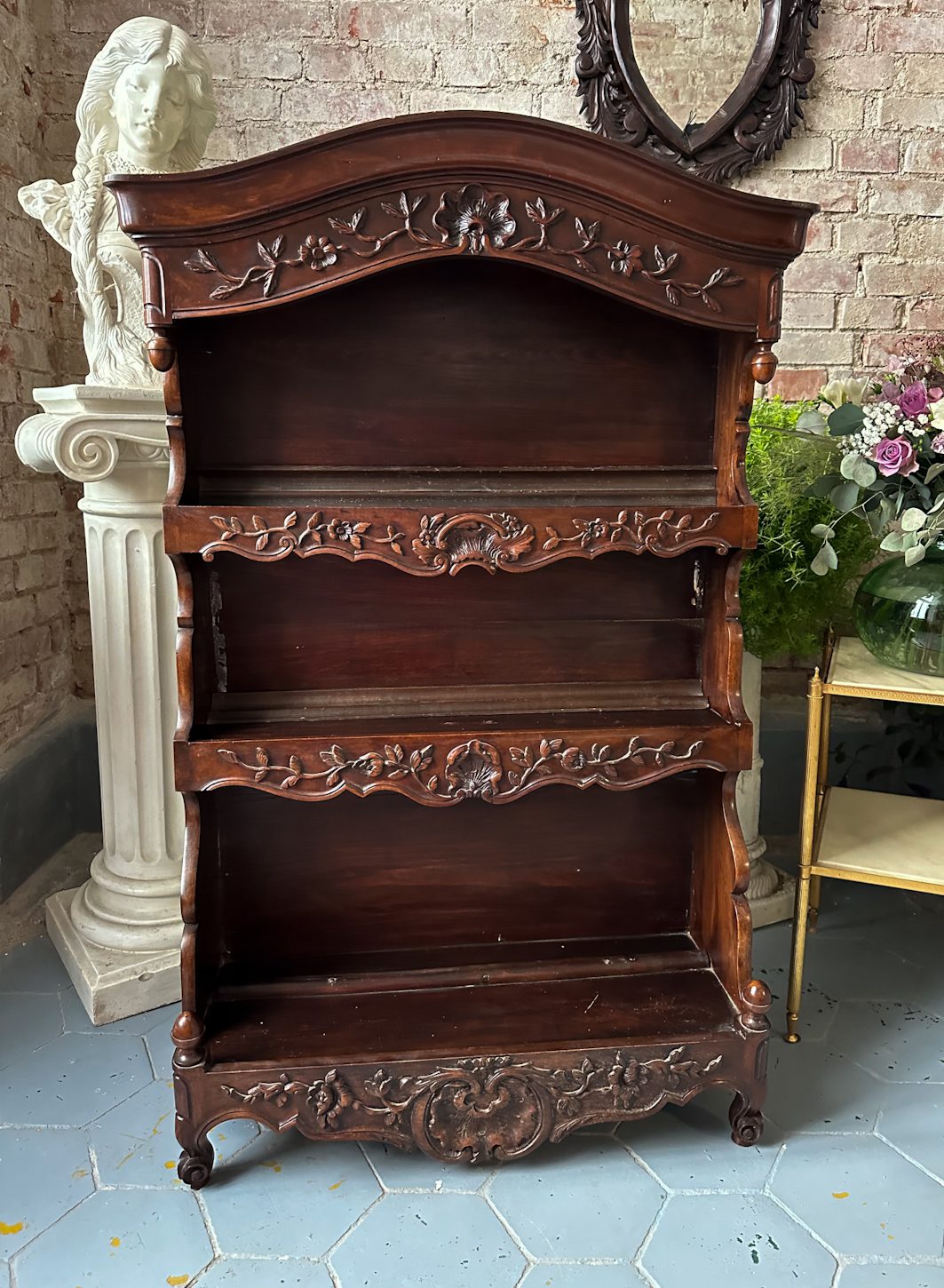
Luxurious French walnut plate rack vaisselier — Louis XV style, France, 19th c. (3688)
Height 127.5 cm Width 81 cm Color BrownWhiteDark brown
Description
Dimensions
Height: 127.5 cm
Width: 81 cm
Depth: 28.5 cm
Luxurious walnut plate rack vaisselier — Louis XV style, France, 19th c. (antique wall plate rack vaisselier)
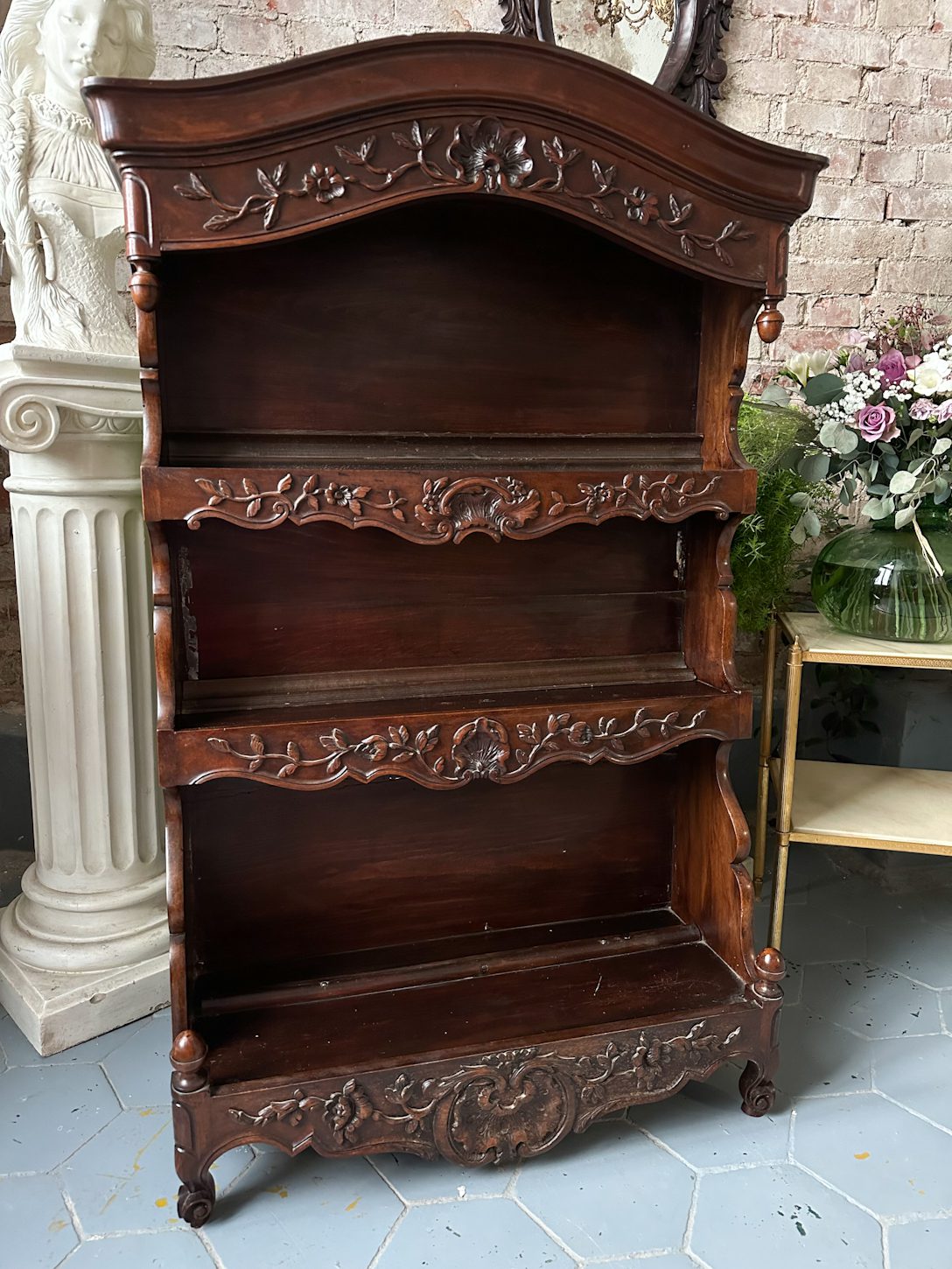
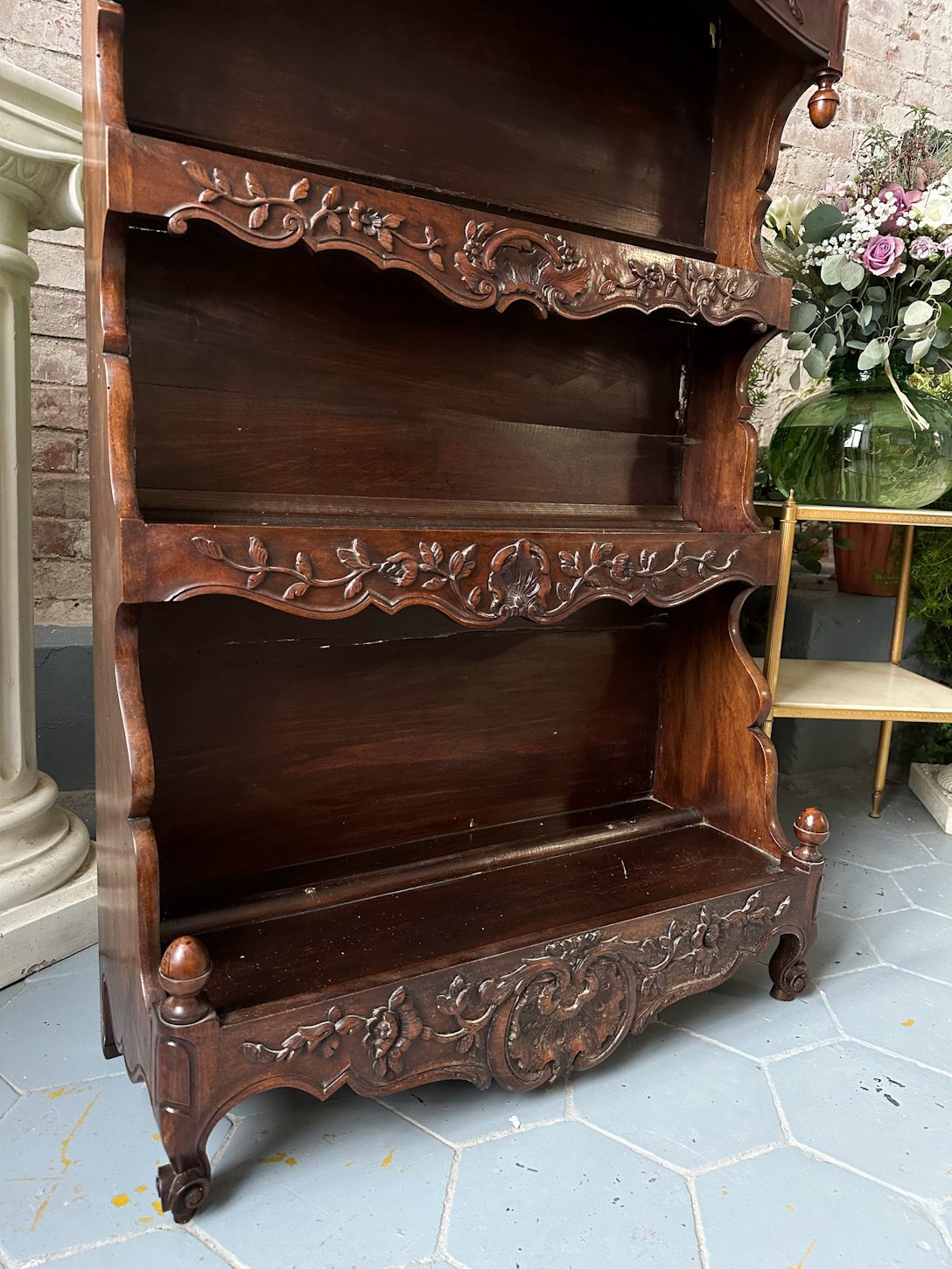
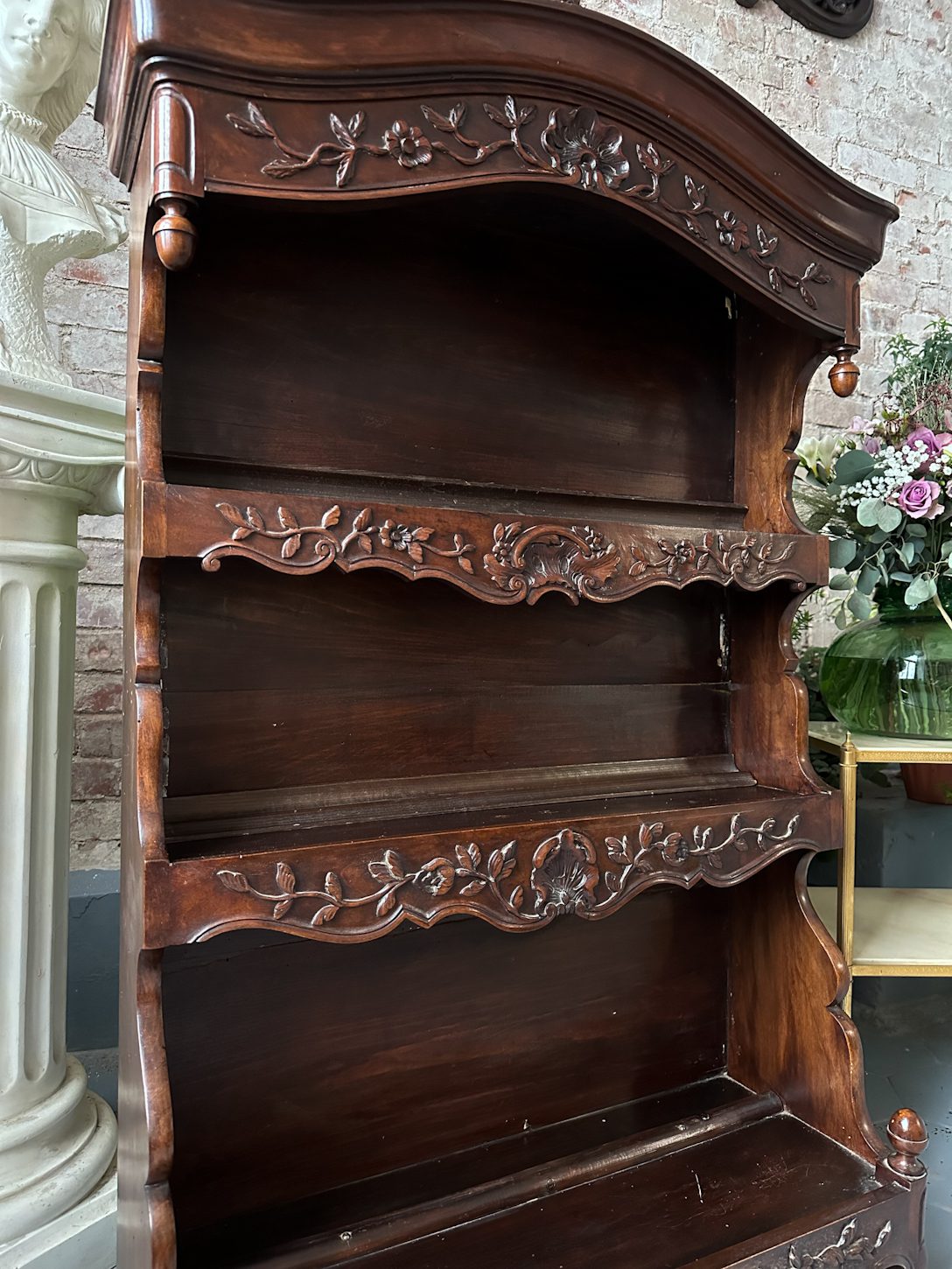
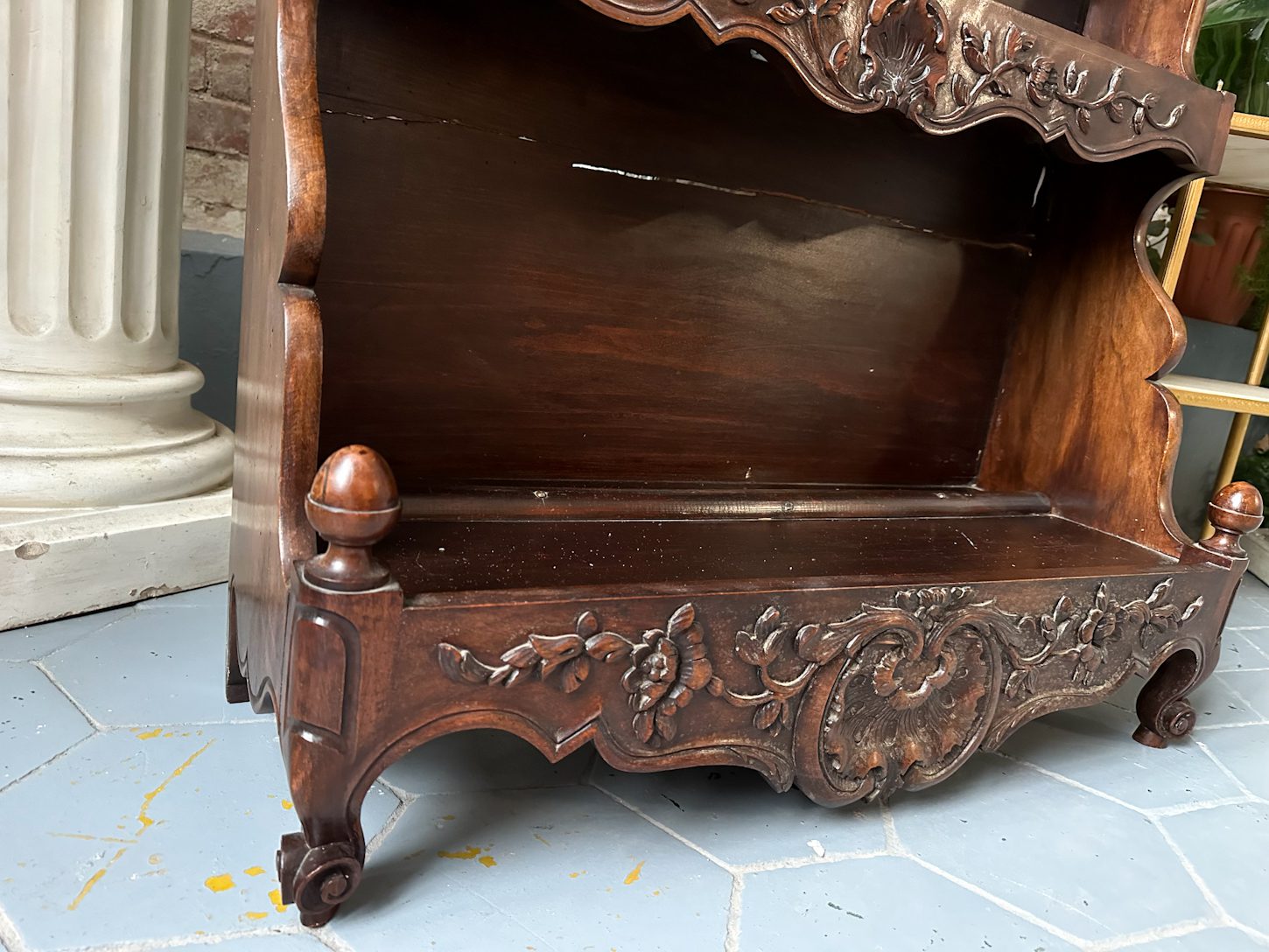
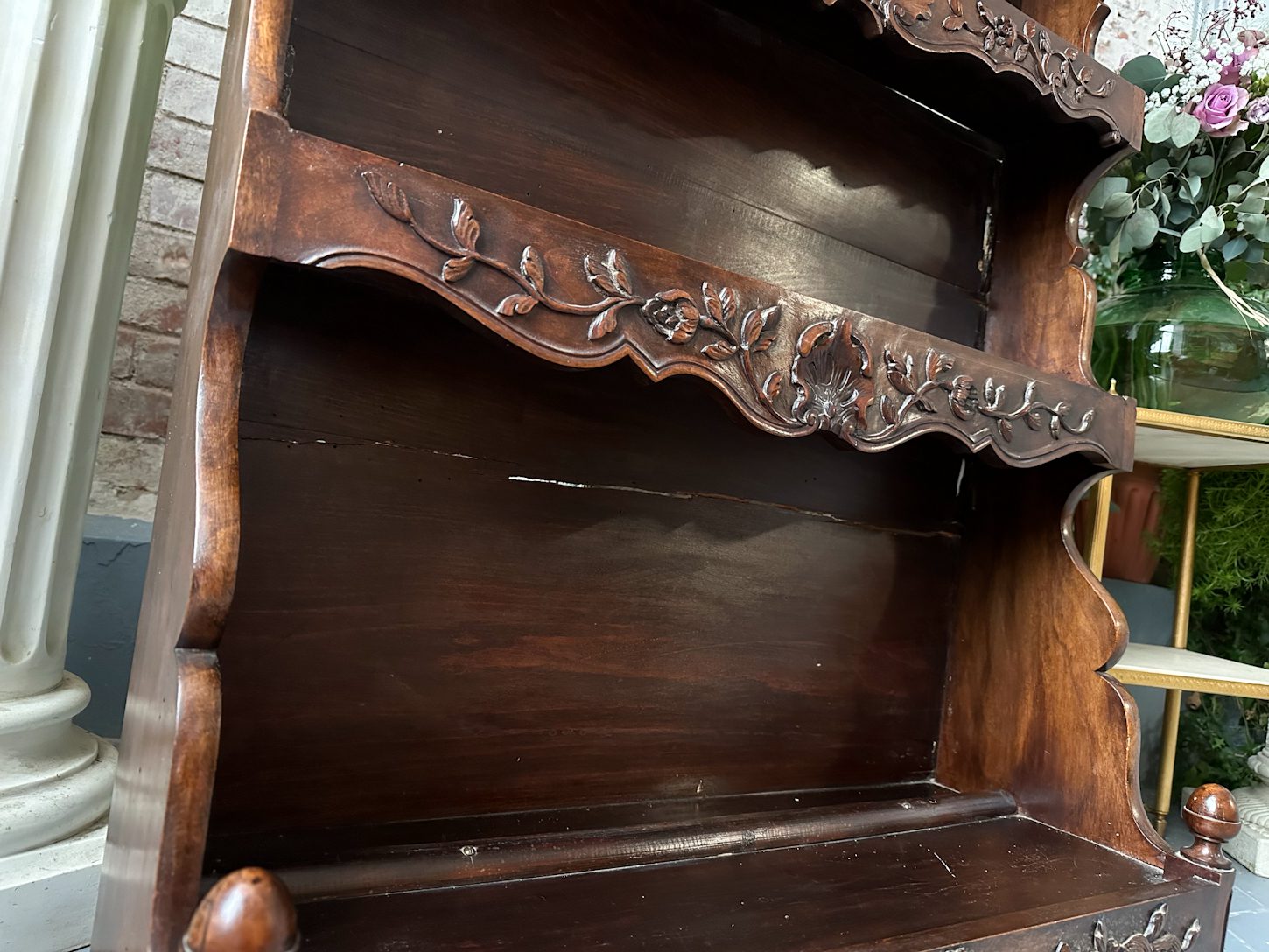
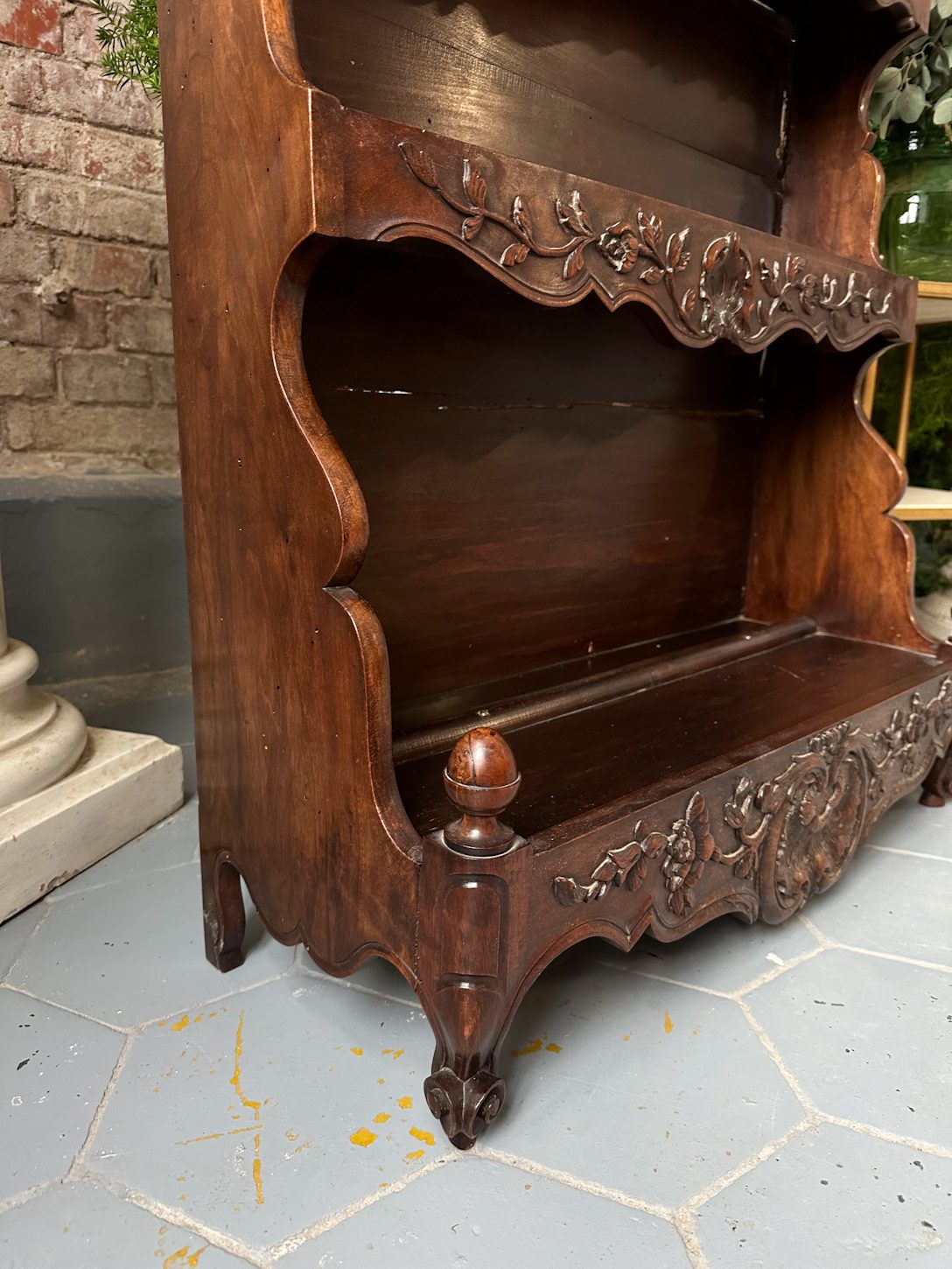
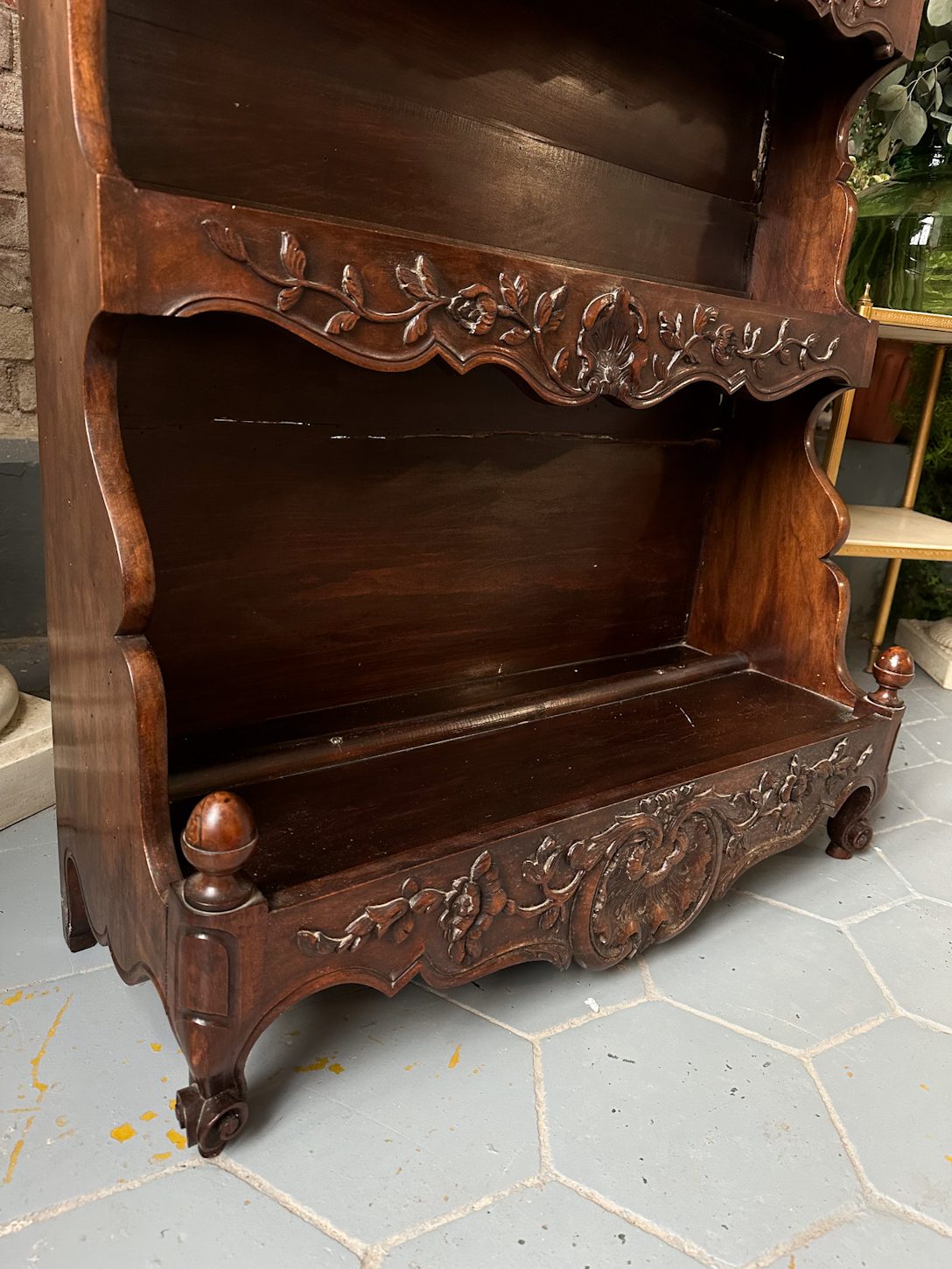
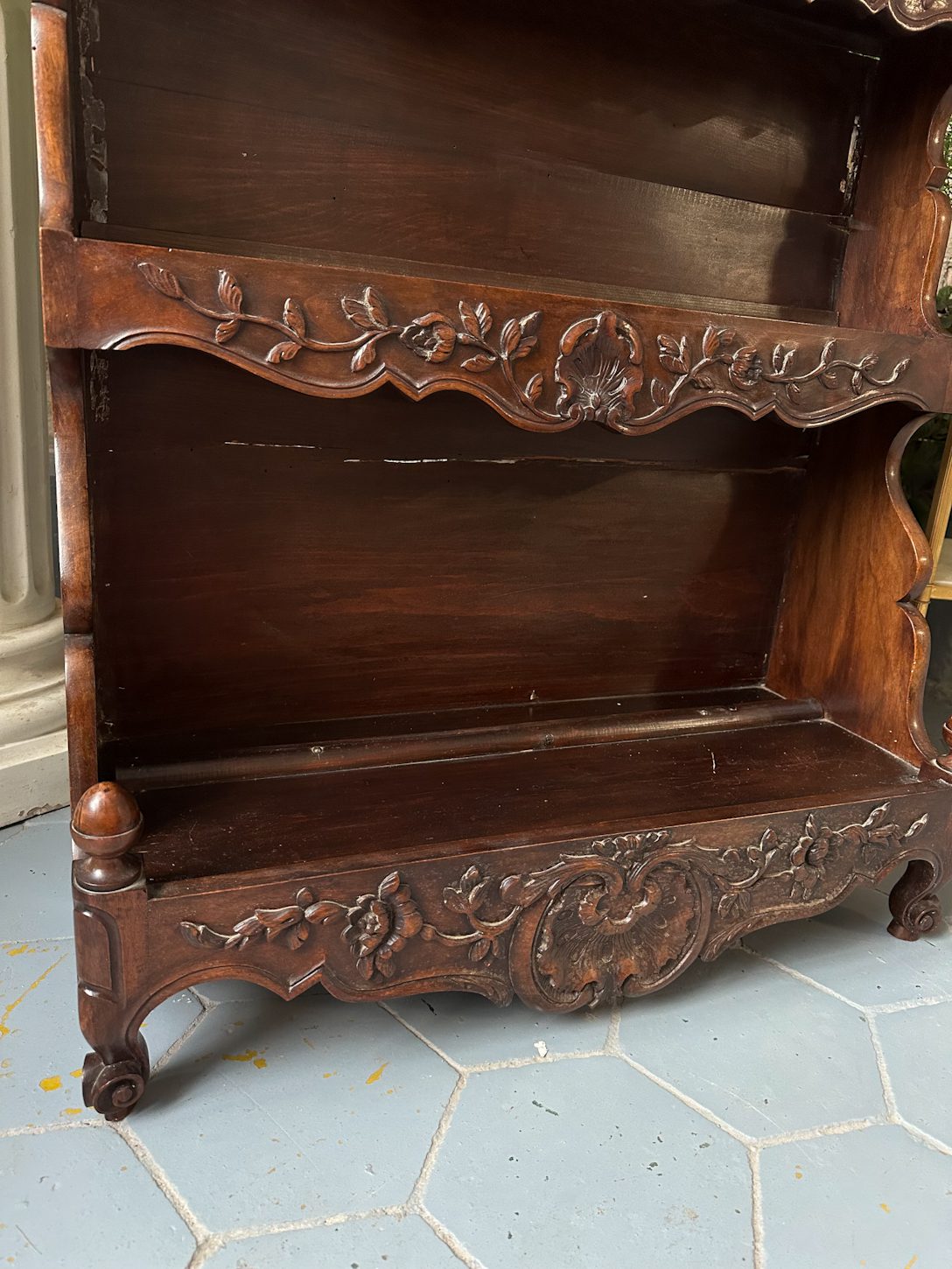
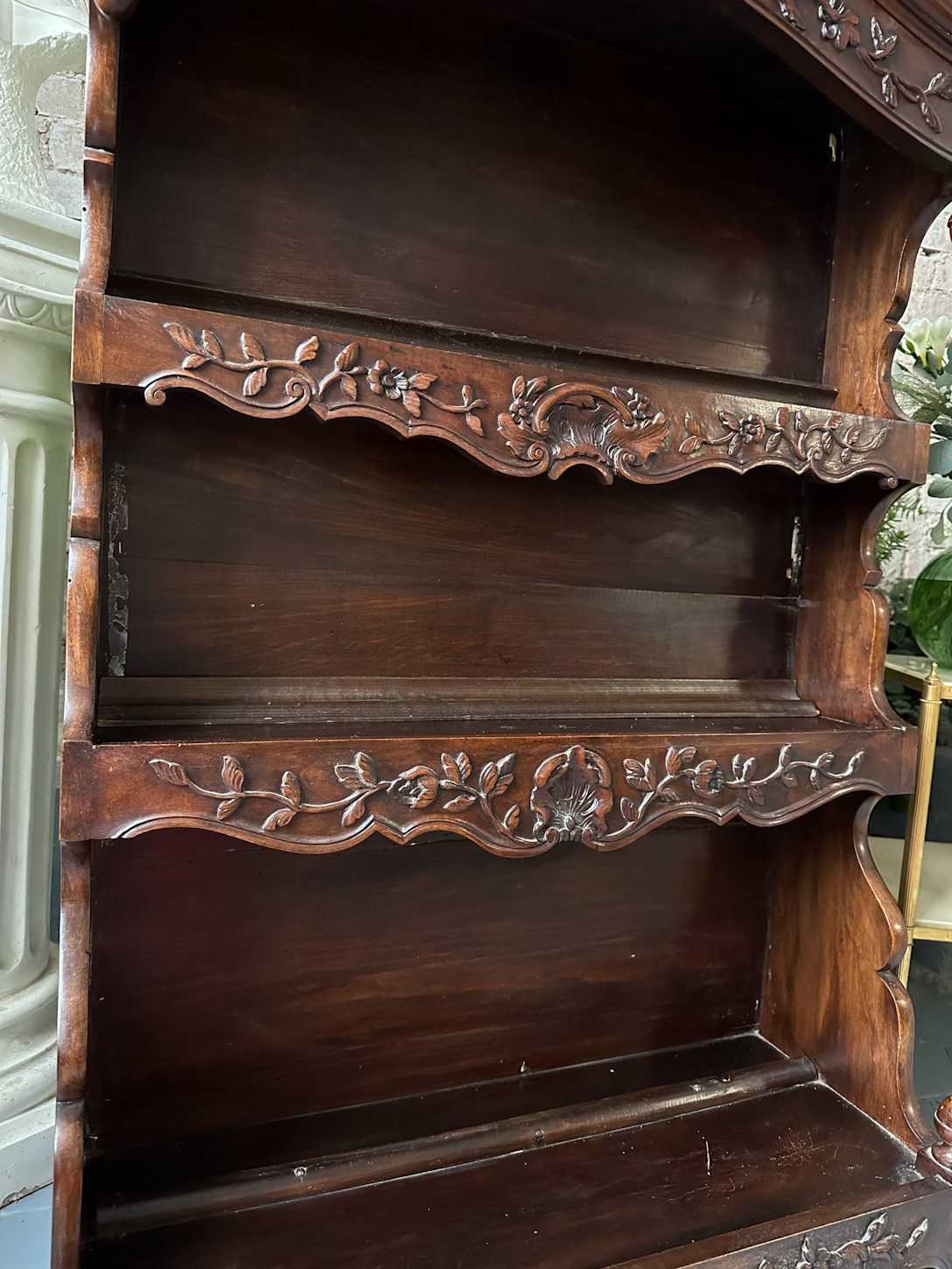
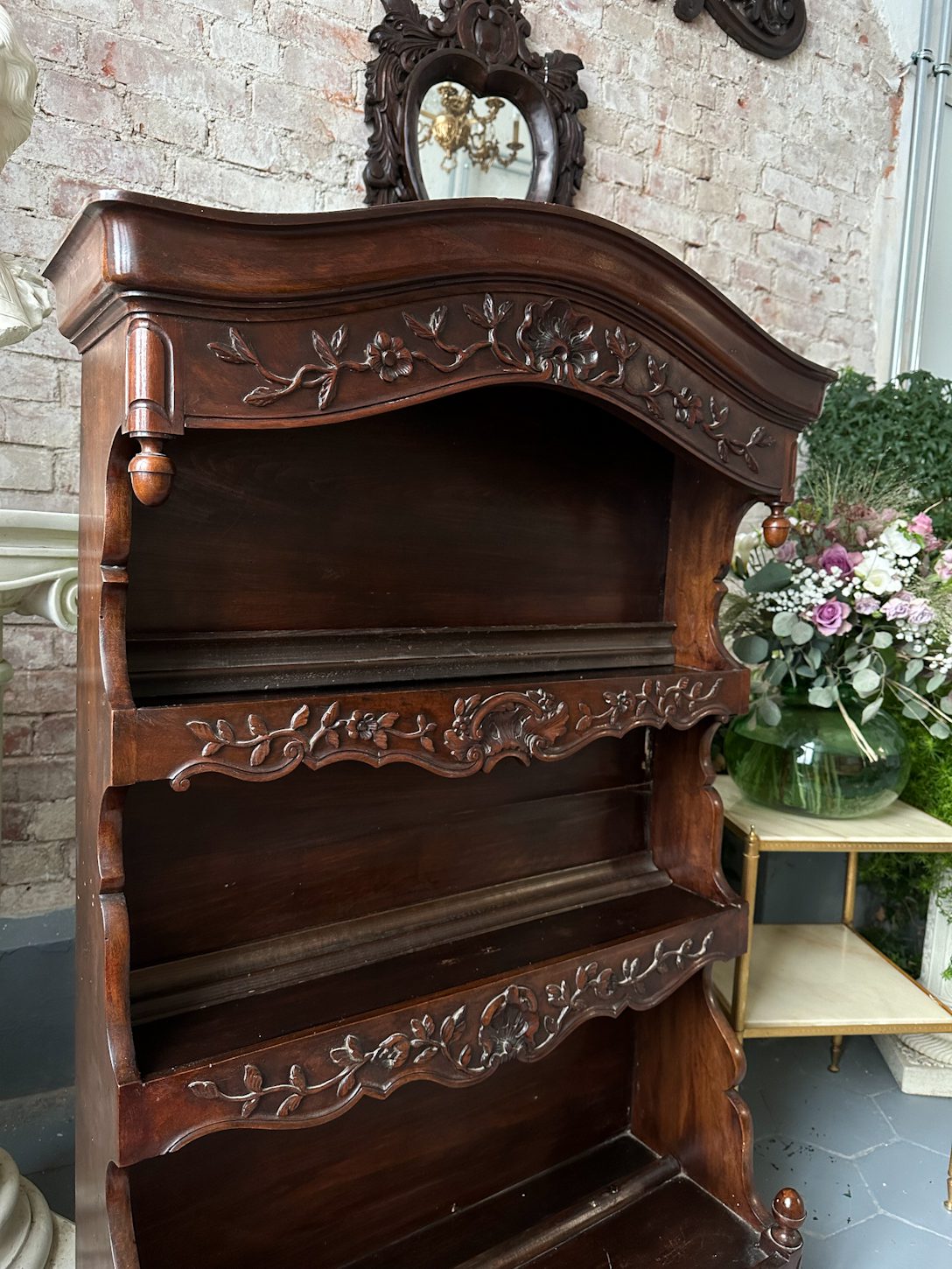
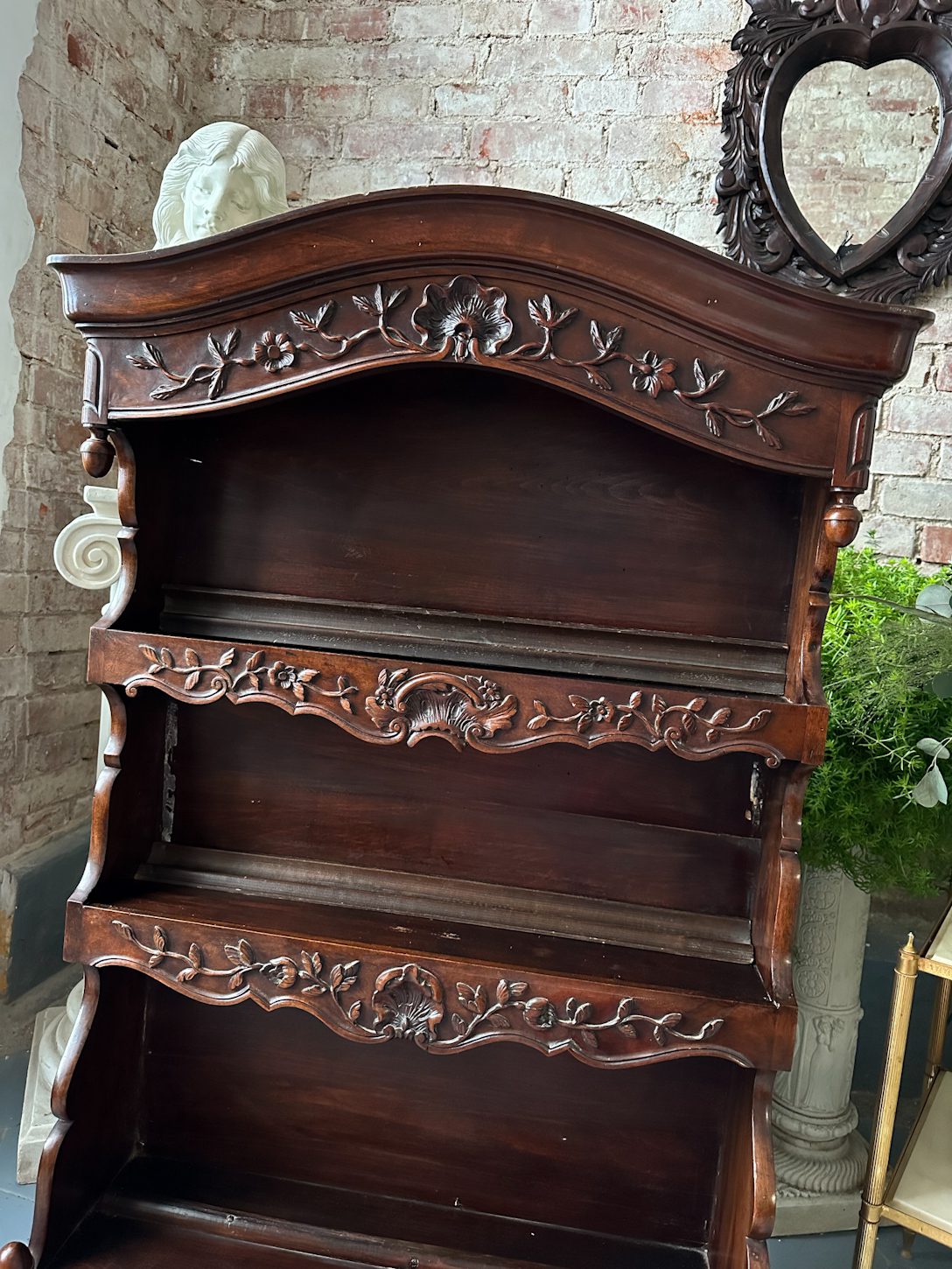
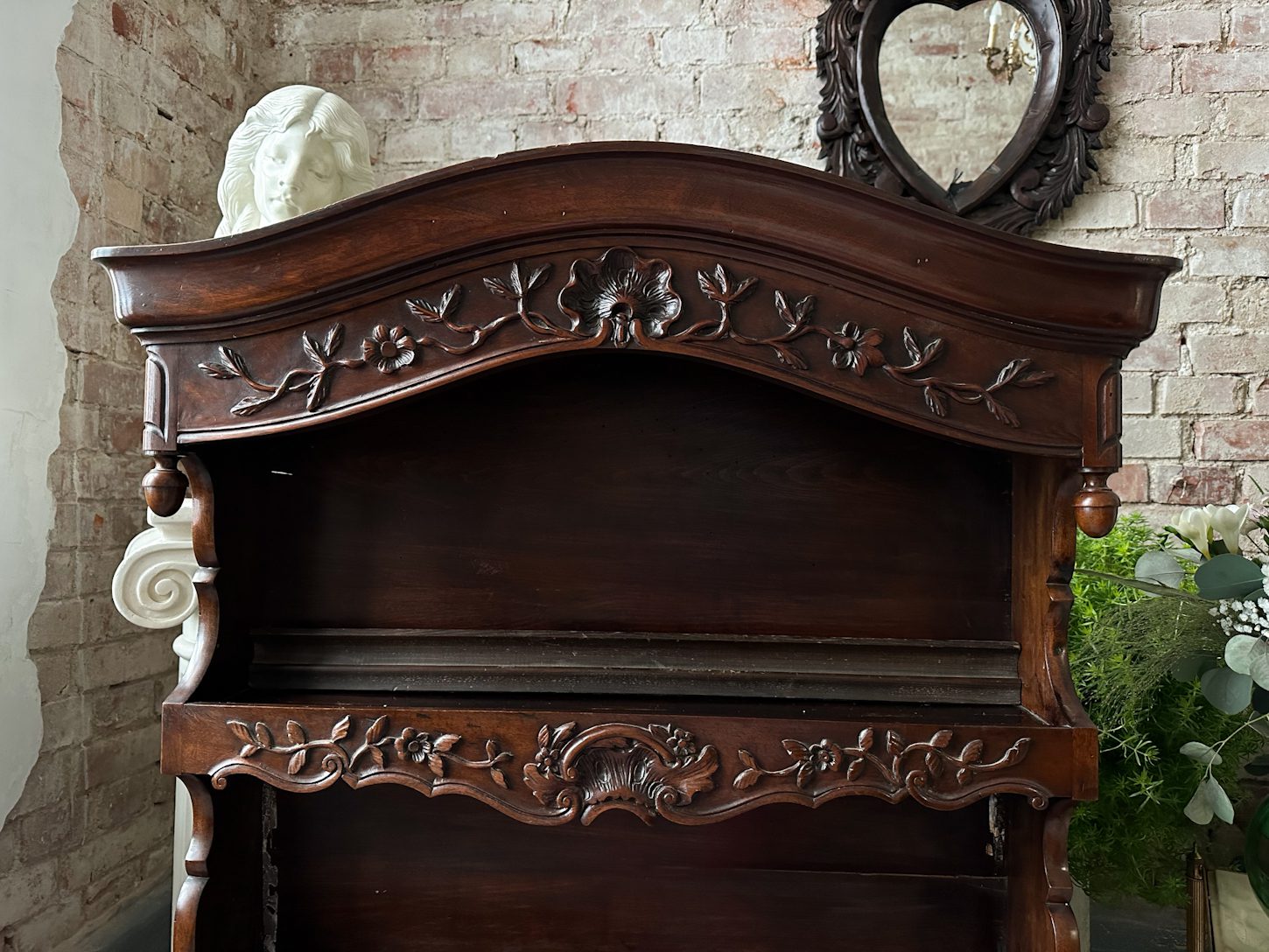
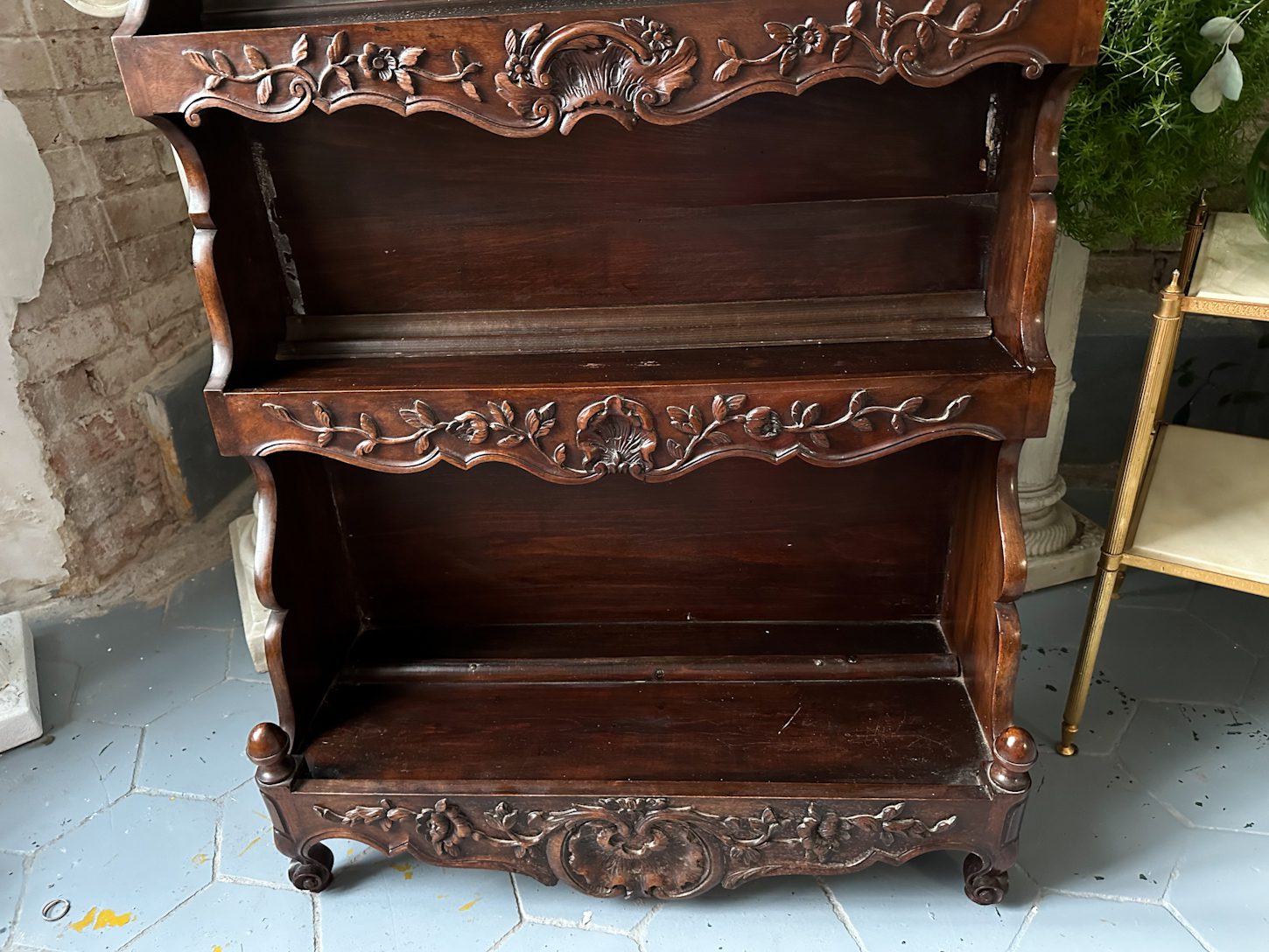
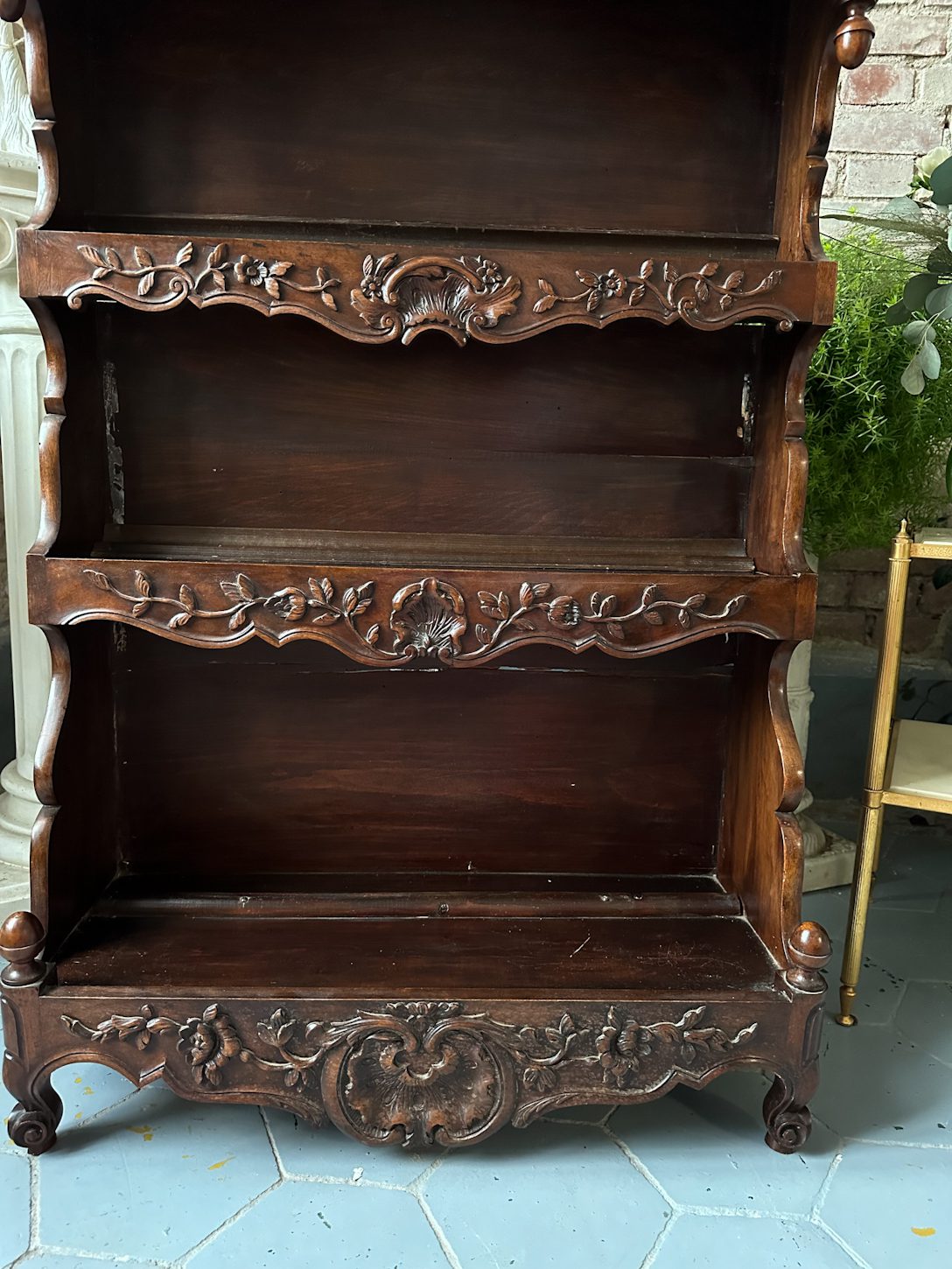
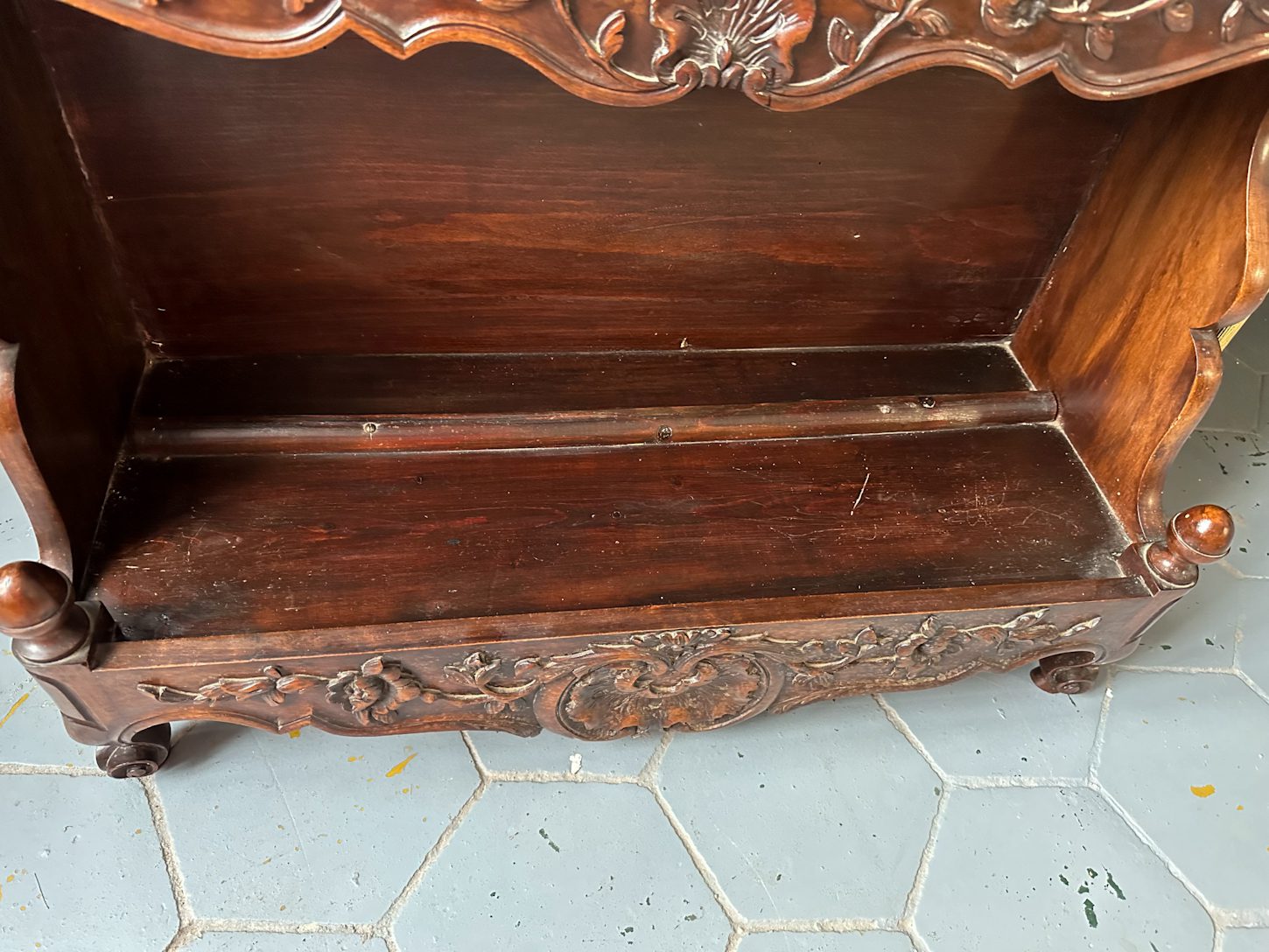
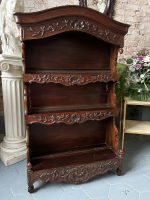
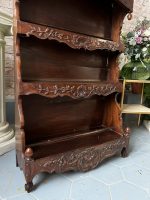
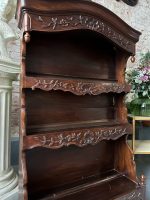
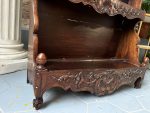
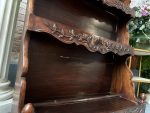
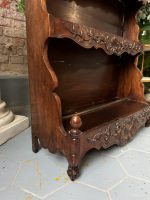
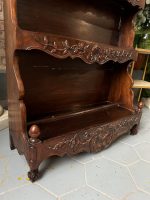
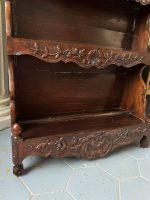
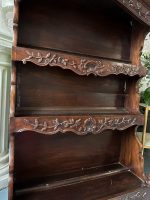
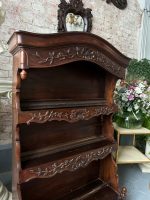
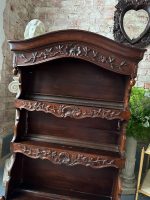
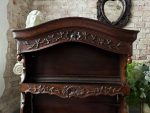
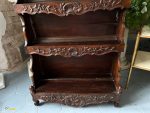
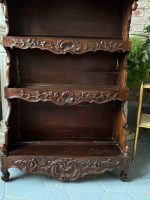
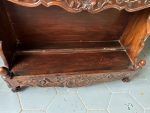
Traditional provincial aristocracy and 19th-century carpentry craftsmanship meet in this medium-sized walnut wood plate and dish rack, known in furniture culture as a vaisselier. The item’s design is an exquisite example of the Louis XV (Neo-Rococo) style — its silhouette is formed by flowing, curved lines and expressive plasticity. The high-quality, deep, and hand-carved floral patterns lend the furniture particular visual value. Magnificent floral and leaf garlands adorn the frame’s upper, arched cornice, both wavy intermediate shelf edges, and the decorative lower panel, which features a larger, relief plant motif medallion in its center. The shelves have historical grooves for the safe, vertical display of presentation plates and fine porcelain, and the structure itself is elegantly supported by four low, curved legs.
Period of manufacture
19th century. During this period, there was a huge demand in the provinces and later throughout European furniture design for interpretations of the classic Rococo style, made from noble and dense walnut wood, lending the space a cozy, yet distinctly representative and warm atmosphere.
Manufacturer / signature / hallmark
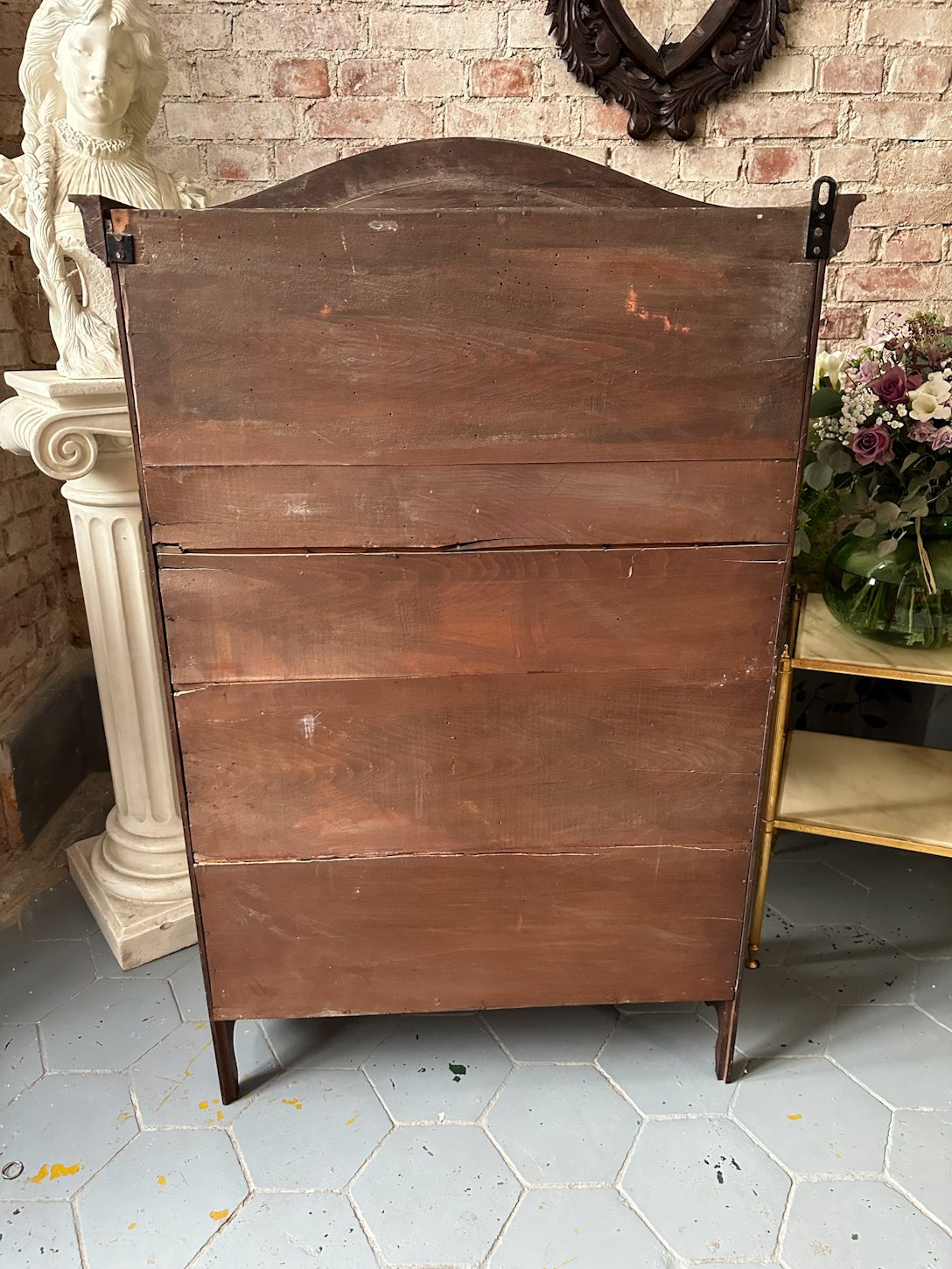
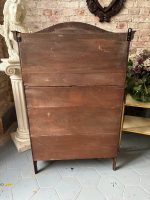
The rack is an authentic and skillful work of cabinetmakers. The fastenings of the back baseboards, the wooden peg joints, and the natural grain of the walnut wood itself indicate classic workshop techniques, where each detail and carving line was created using the skilled approach of a sculptor and chisels.
Rarity and significance
Open wall and console racks of this type are relatively rare in such compact dimensions, ideally suited for home interiors. Historically, large vaisselier cabinets occupied entire walls, whereas this specimen, with its 81 cm width, is easily integrated into a space. Its greatest value lies in the untouched and complete decorative carvings, which have not suffered damage and have retained all their original relief sharpness.
Application
The rack will become the main and most atmospheric accent in a dining room, living room, or spacious kitchen. It is ideally suited for displaying a collection of antique porcelain, silver dishes, or decorative plates, and will also serve as a standalone and obvious carrier of classical charm in a more modern interior.
Condition
The furniture is in excellent antique condition. The solid walnut construction is completely stable, firm, and fixed. The wood is sound, without signs of active pests or structural damage. The surface has retained its natural, warm, and deep tone with a pleasant satin sheen formed over time and patina in the relief recesses. The rack is equipped with original historical fasteners on the back for immediate wall mounting. The condition of the item is fully reflected in the photographs.
Snapshot of the era, First Rank Captain Alexander Kolchak: A quiet Sunday lunchtime peace reigns in the sunny dining room of the newly built, proud stone officers’ residence of the Libau War Port, complemented only by the distant clinking of thin tea porcelain cups and the heavy, rhythmic clang of steam hammers from the Tosmare shipyard docks, where work is in full swing. Standing by the window is the commander of the newly formed mine division, First Rank Captain Alexander Kolchak — a man whose stern character and the tempering of polar expeditions would later place him at the head of the entire White Guard resistance movement as the Supreme Admiral of Russia. Today, his sharp, concentrated gaze relaxes for a moment as he watches his wife meticulously arrange a walnut wood plate rack recently received in a shipment from Paris, its curved, flowing lines softly playing with the spring light rays.
The shelves are lined up with Old Paris porcelain plates in a neat, military precision, their hand-painted flowers literally merging with the vibrant floral carvings of the walnut body itself. Captain Kolchak smiles, lightly running his palm over the warm, smooth cornice of the furniture — this masterpiece of classical beauty, so starkly contrasting with the huge, smoky iron and steam industry just outside the window, brings an unshakable aura of European peace and elegance into his home before the impending historical storms. Outside the window, across the paved square, the first cavalry carriages slowly pass, but here, between two porcelain roses and one walnut ribbon knot, time completely stops for a moment.
Antique Walnut Plate Rack Vaisselier — Louis XV Style, France, 19th c. (antique wall plate rack vaisselier)
Traditional provincial aristocracy and 19th-century carpentry craftsmanship meet in this exquisite and representative medium-sized antique walnut wood plate and dish rack (vaisselier) in a magnificent Louis XV style retrospection. The furniture is adorned with deep, expressive, and hand-carved floral motifs — floral garlands on the frame’s cornice, wavy shelf edges, and a decorative lower frieze. The construction rests on plastic, curved legs.
Dimensions
Height: 127.5 cm
Width: 81 cm
Depth: 28.5 cm
Luxurious walnut plate rack vaisselier — Louis XV style, France, 19th c. (antique wall plate rack vaisselier)
Traditional provincial aristocracy and 19th-century carpentry craftsmanship meet in this medium-sized walnut wood plate and dish rack, known in furniture culture as a vaisselier. The item’s design is an exquisite example of the Louis XV (Neo-Rococo) style — its silhouette is formed by flowing, curved lines and expressive plasticity. The high-quality, deep, and hand-carved floral patterns lend the furniture particular visual value. Magnificent floral and leaf garlands adorn the frame’s upper, arched cornice, both wavy intermediate shelf edges, and the decorative lower panel, which features a larger, relief plant motif medallion in its center. The shelves have historical grooves for the safe, vertical display of presentation plates and fine porcelain, and the structure itself is elegantly supported by four low, curved legs.
Period of manufacture
19th century. During this period, there was a huge demand in the provinces and later throughout European furniture design for interpretations of the classic Rococo style, made from noble and dense walnut wood, lending the space a cozy, yet distinctly representative and warm atmosphere.
Manufacturer / signature / hallmark
The rack is an authentic and skillful work of cabinetmakers. The fastenings of the back baseboards, the wooden peg joints, and the natural grain of the walnut wood itself indicate classic workshop techniques, where each detail and carving line was created using the skilled approach of a sculptor and chisels.
Rarity and significance
Open wall and console racks of this type are relatively rare in such compact dimensions, ideally suited for home interiors. Historically, large vaisselier cabinets occupied entire walls, whereas this specimen, with its 81 cm width, is easily integrated into a space. Its greatest value lies in the untouched and complete decorative carvings, which have not suffered damage and have retained all their original relief sharpness.
Application
The rack will become the main and most atmospheric accent in a dining room, living room, or spacious kitchen. It is ideally suited for displaying a collection of antique porcelain, silver dishes, or decorative plates, and will also serve as a standalone and obvious carrier of classical charm in a more modern interior.
Condition
The furniture is in excellent antique condition. The solid walnut construction is completely stable, firm, and fixed. The wood is sound, without signs of active pests or structural damage. The surface has retained its natural, warm, and deep tone with a pleasant satin sheen formed over time and patina in the relief recesses. The rack is equipped with original historical fasteners on the back for immediate wall mounting. The condition of the item is fully reflected in the photographs.
Snapshot of the era, First Rank Captain Alexander Kolchak: A quiet Sunday lunchtime peace reigns in the sunny dining room of the newly built, proud stone officers’ residence of the Libau War Port, complemented only by the distant clinking of thin tea porcelain cups and the heavy, rhythmic clang of steam hammers from the Tosmare shipyard docks, where work is in full swing. Standing by the window is the commander of the newly formed mine division, First Rank Captain Alexander Kolchak — a man whose stern character and the tempering of polar expeditions would later place him at the head of the entire White Guard resistance movement as the Supreme Admiral of Russia. Today, his sharp, concentrated gaze relaxes for a moment as he watches his wife meticulously arrange a walnut wood plate rack recently received in a shipment from Paris, its curved, flowing lines softly playing with the spring light rays.
The shelves are lined up with Old Paris porcelain plates in a neat, military precision, their hand-painted flowers literally merging with the vibrant floral carvings of the walnut body itself. Captain Kolchak smiles, lightly running his palm over the warm, smooth cornice of the furniture — this masterpiece of classical beauty, so starkly contrasting with the huge, smoky iron and steam industry just outside the window, brings an unshakable aura of European peace and elegance into his home before the impending historical storms. Outside the window, across the paved square, the first cavalry carriages slowly pass, but here, between two porcelain roses and one walnut ribbon knot, time completely stops for a moment.