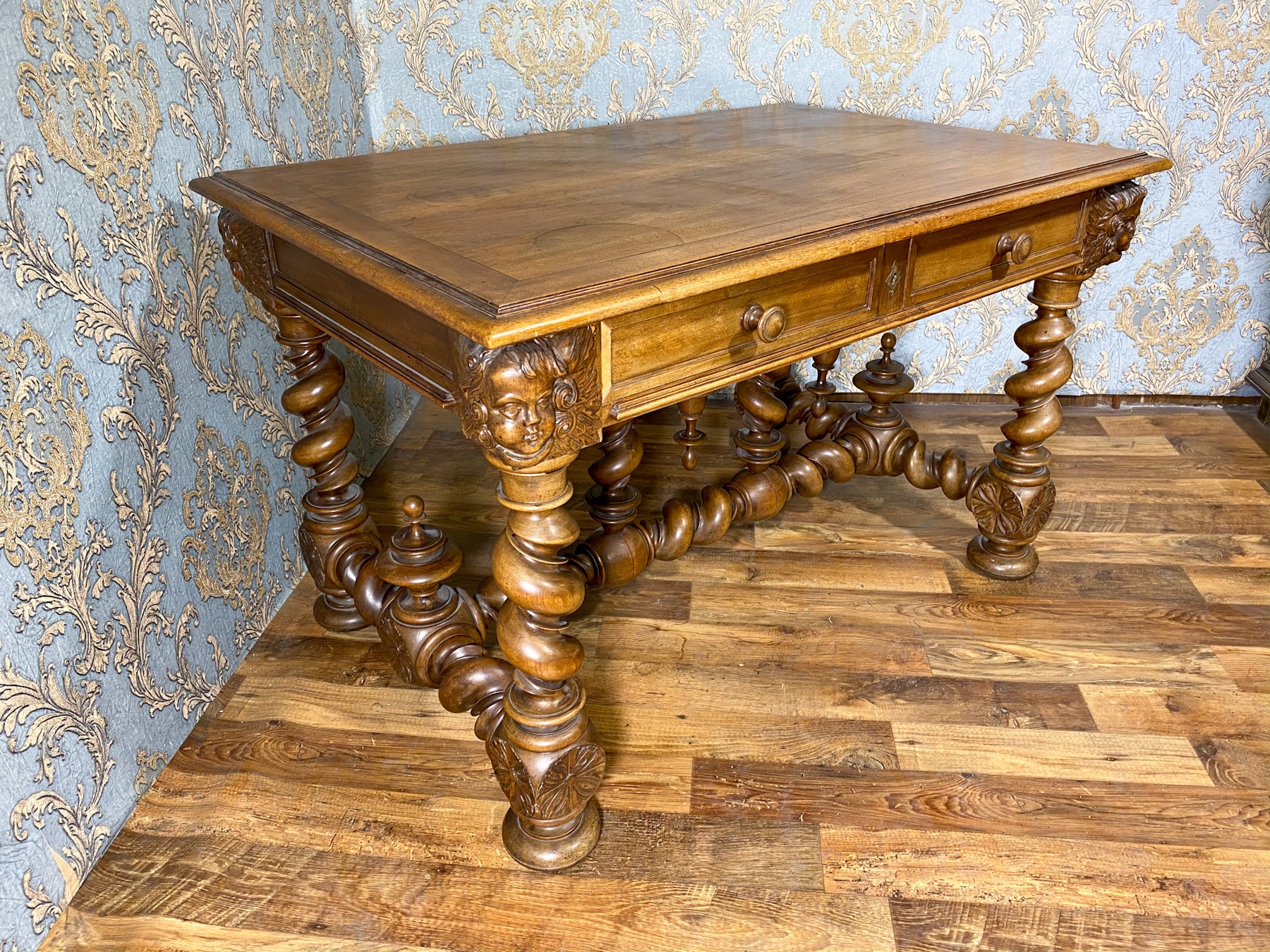
Walnut Writing Table — Baroque / Louis XIV Style, France or Belgium, circa 1860–1890. This exceptional piece features massive barley twist legs and hand-carved cherub heads, showcasing masterful Historicist craftsmanship. A rare and striking statement piece for any discerning interior. 2 200,00 €
You’re now subscribed to price tracking for this product. We’ll notify you if the price drops. 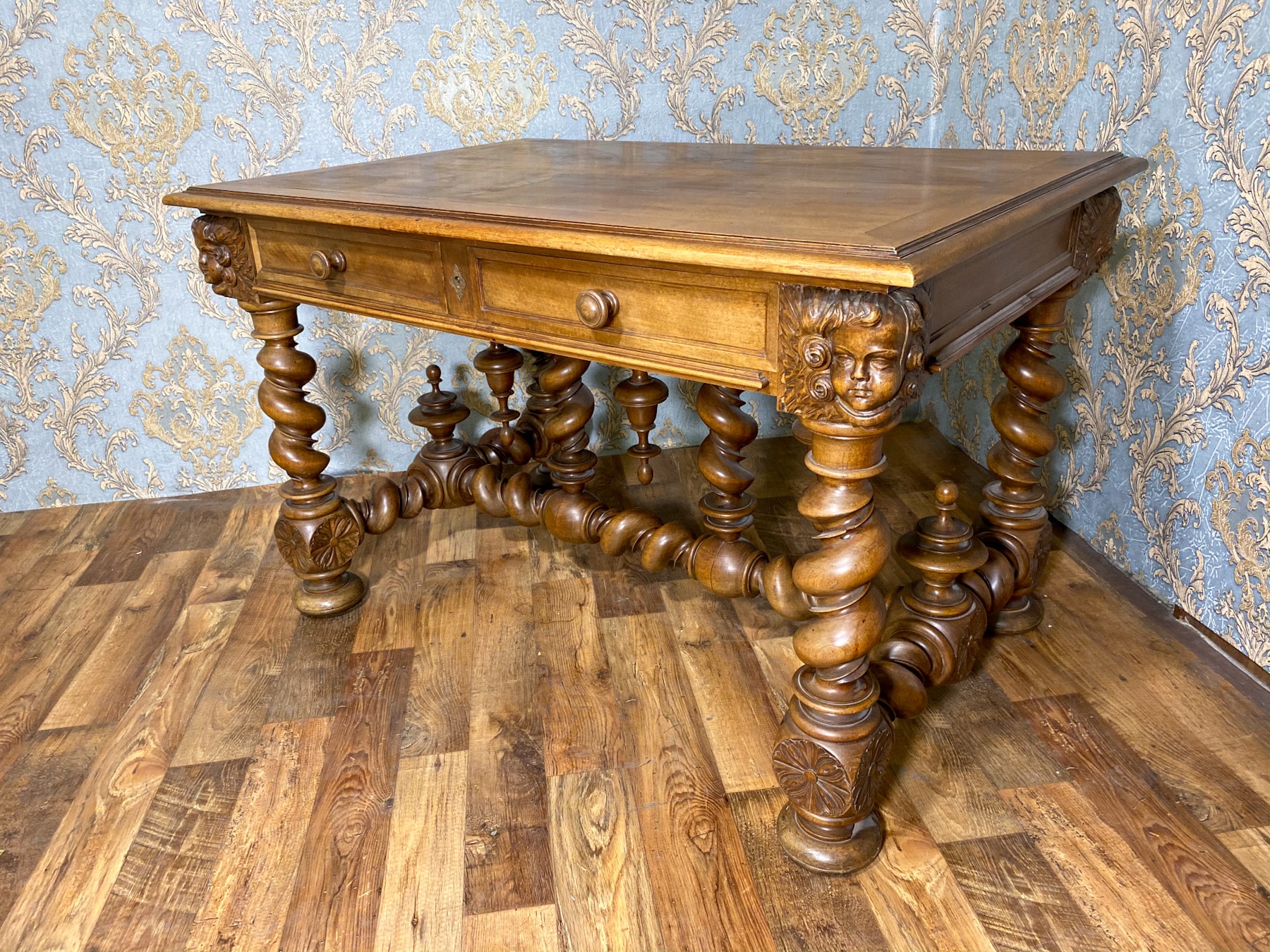
Oak Writing Desk — Baroque Style / Louis XIV, France or Belgium, c. 1860–1890 (552)
Height 75 cm Length 120 cm Width 80 cm
Description
Augstums 75 cm × Garums 120 cm × Platums 80 cm
Writing Table — Baroque / Louis XIV Style, France or Belgium, circa 1860–1890 (552)
Baroque / Louis XIV style. France or Belgium. Circa 1860–1890.
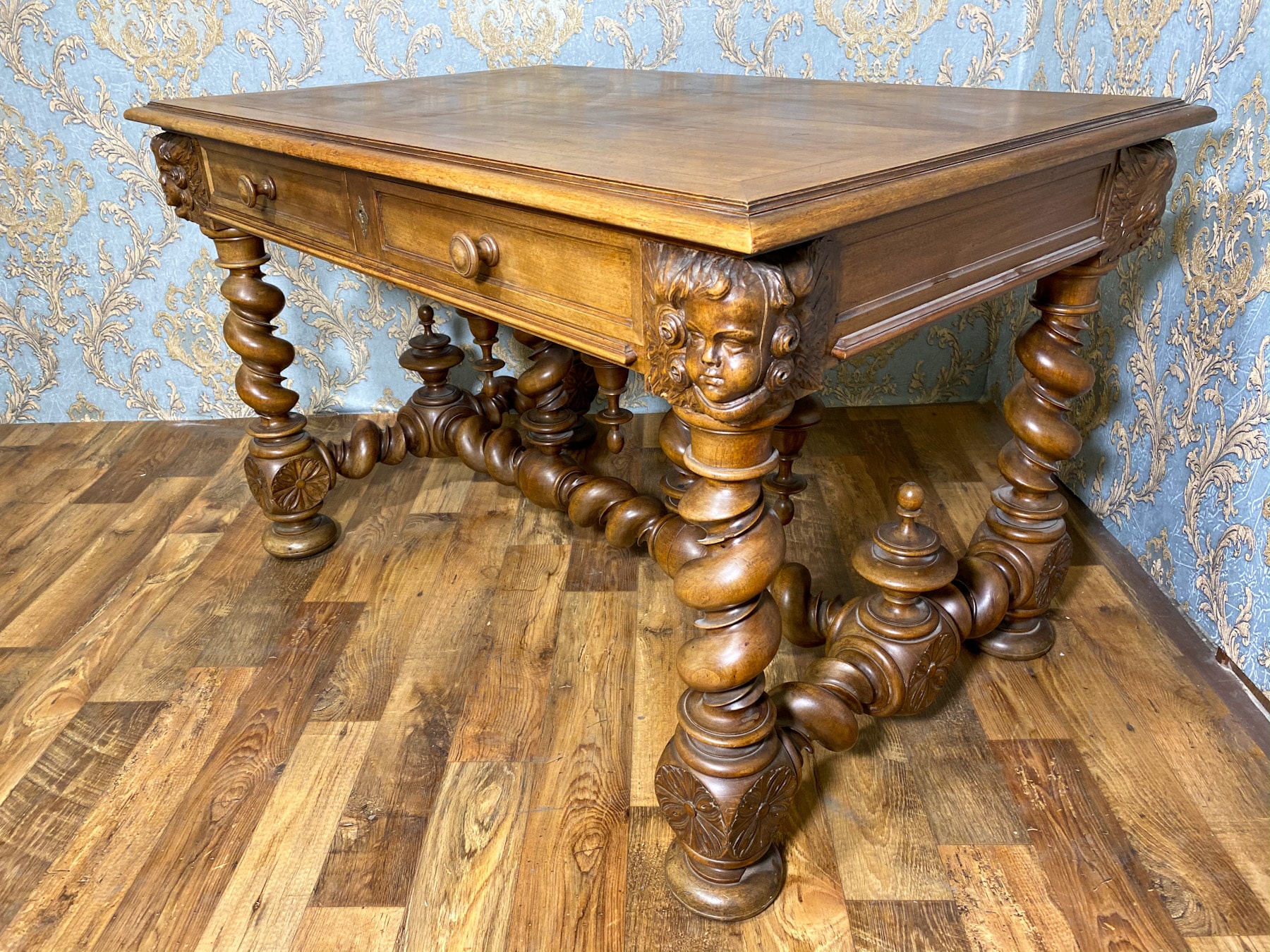
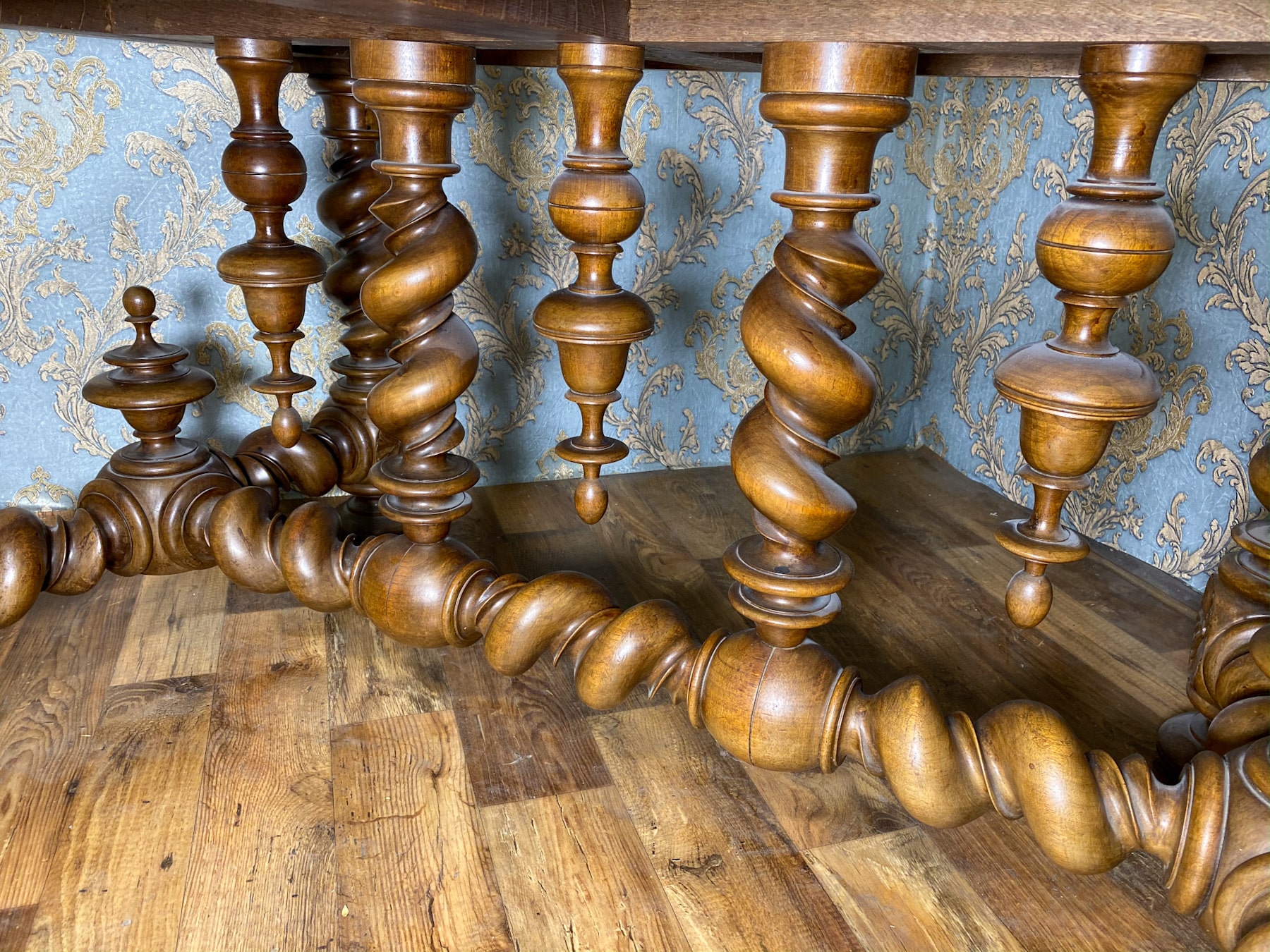
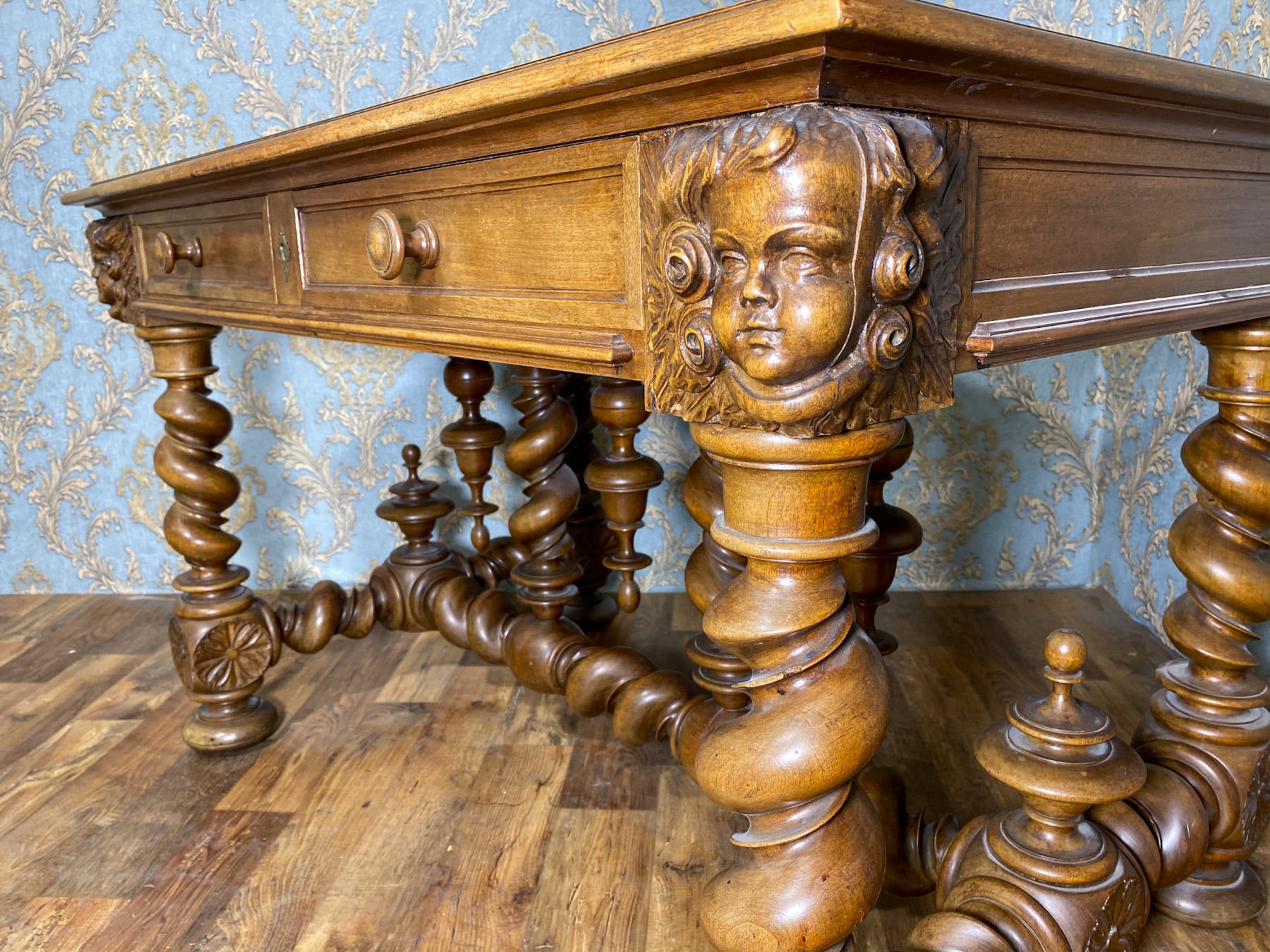
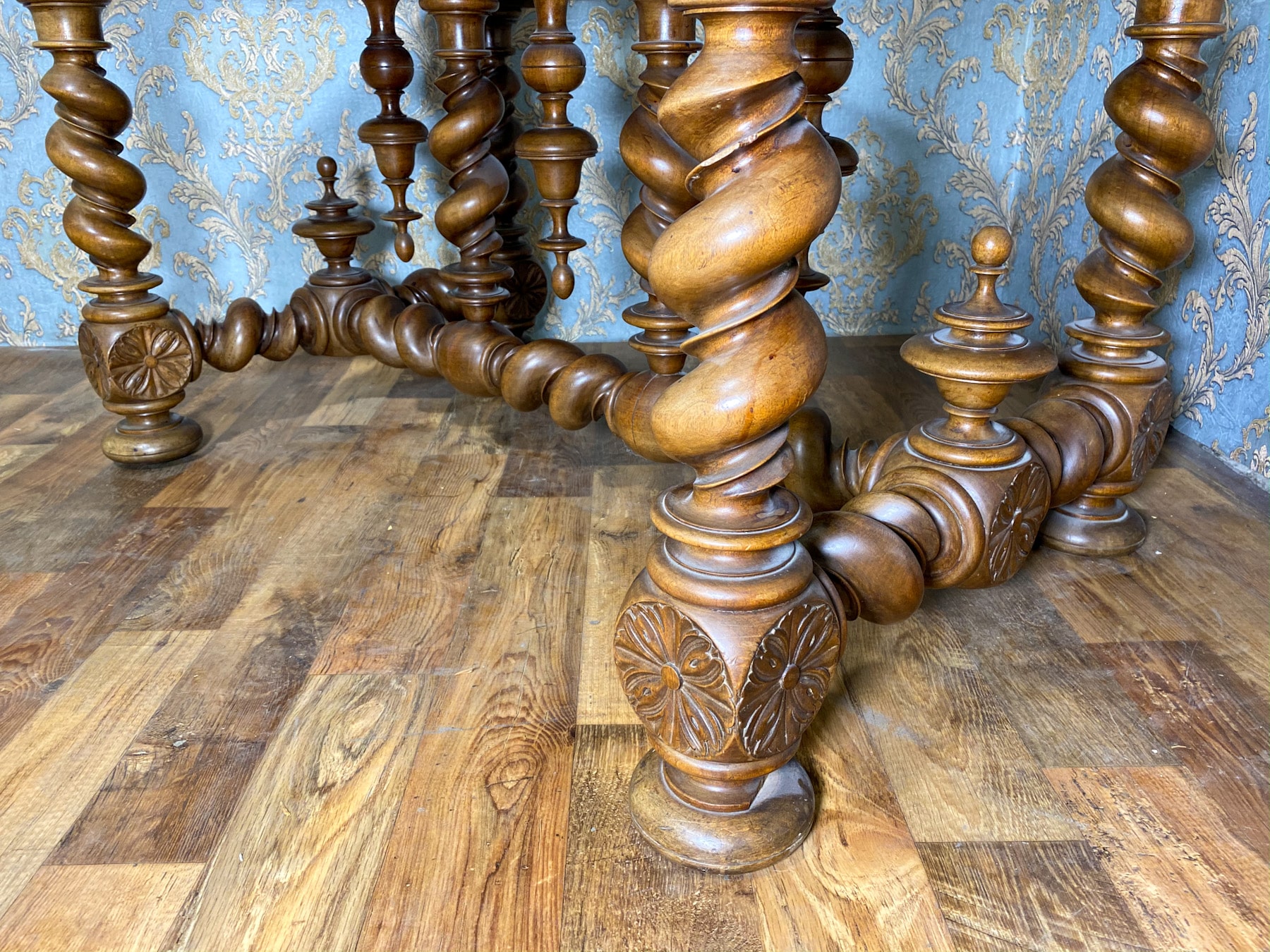
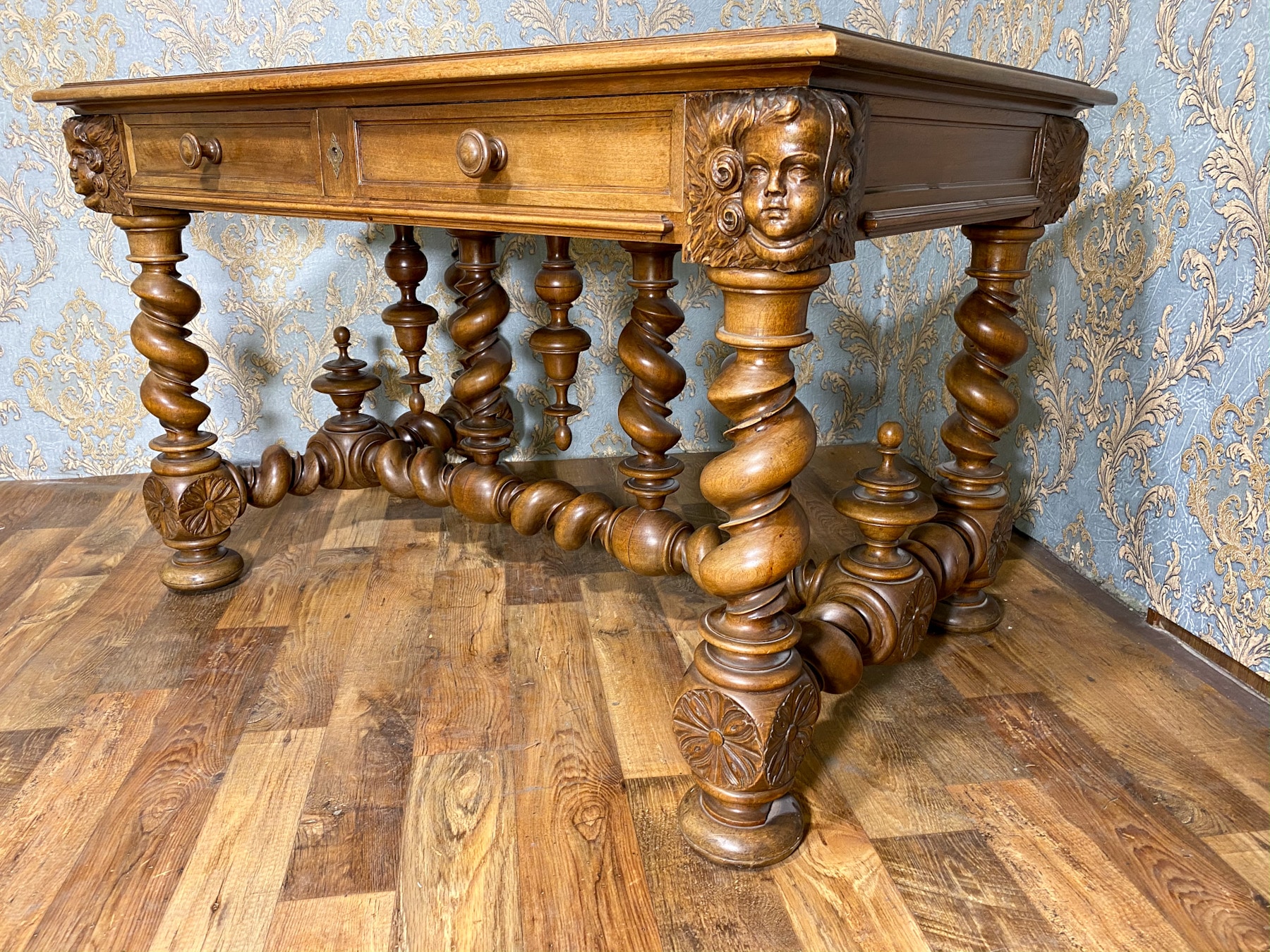
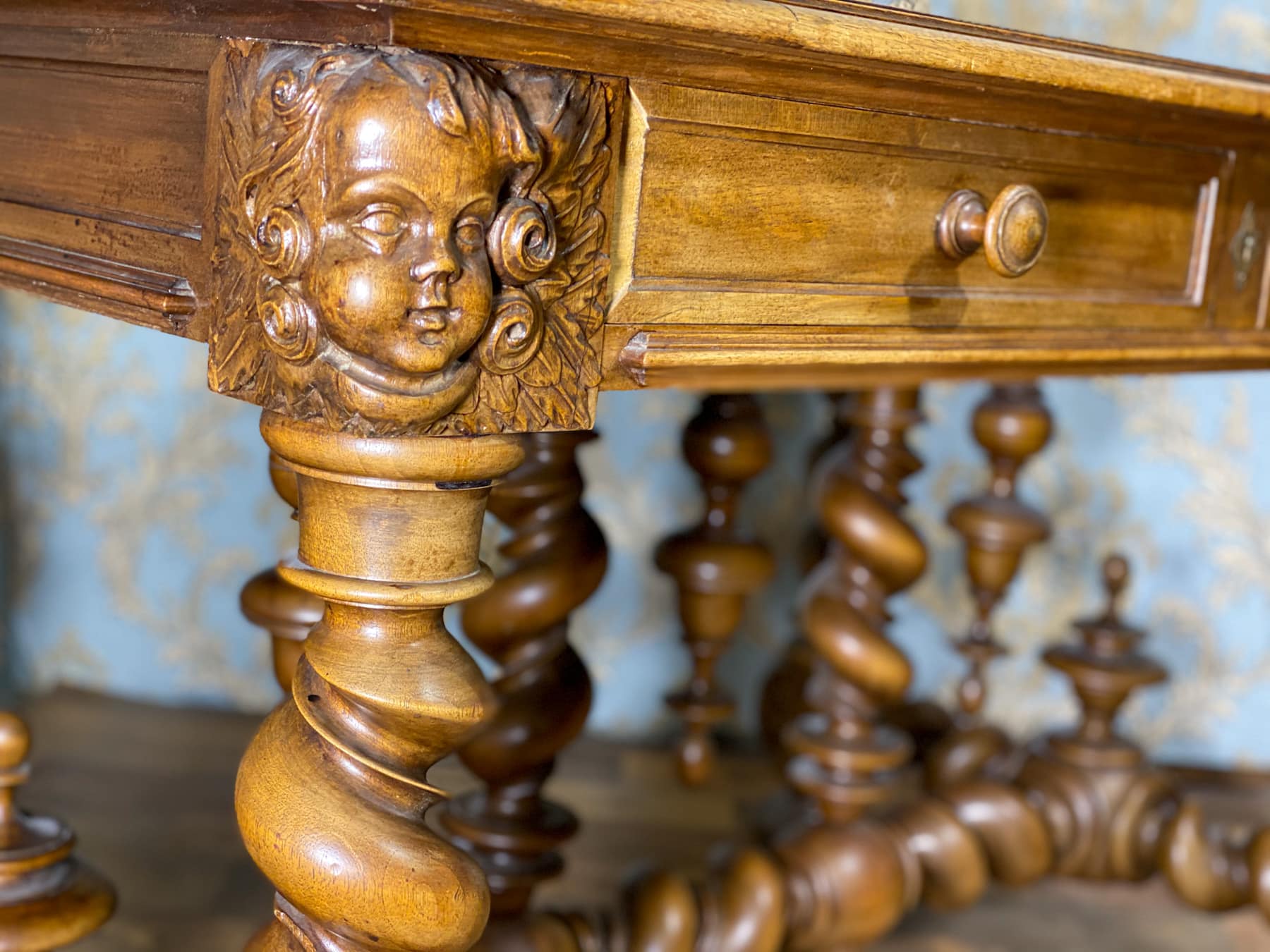
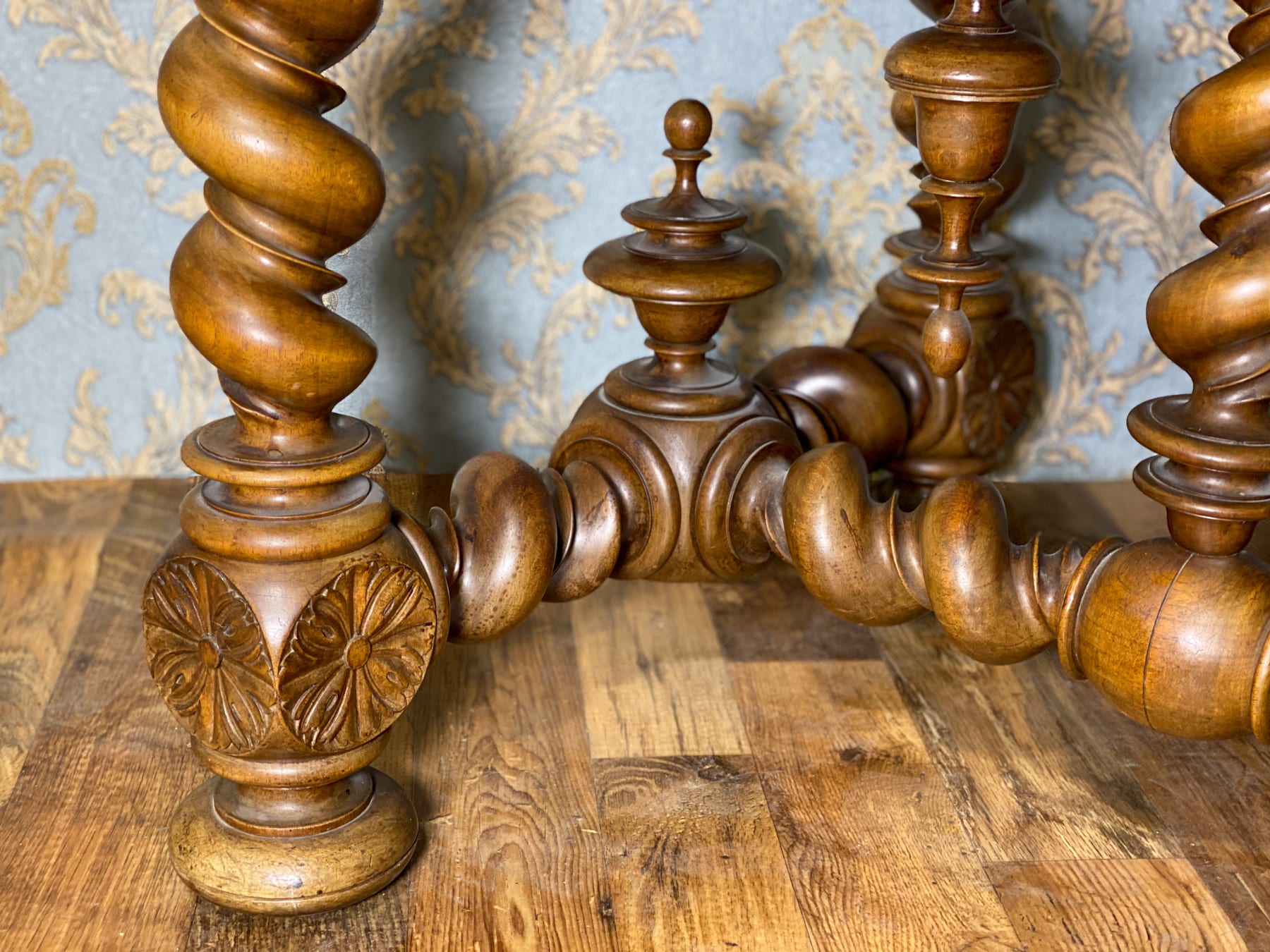
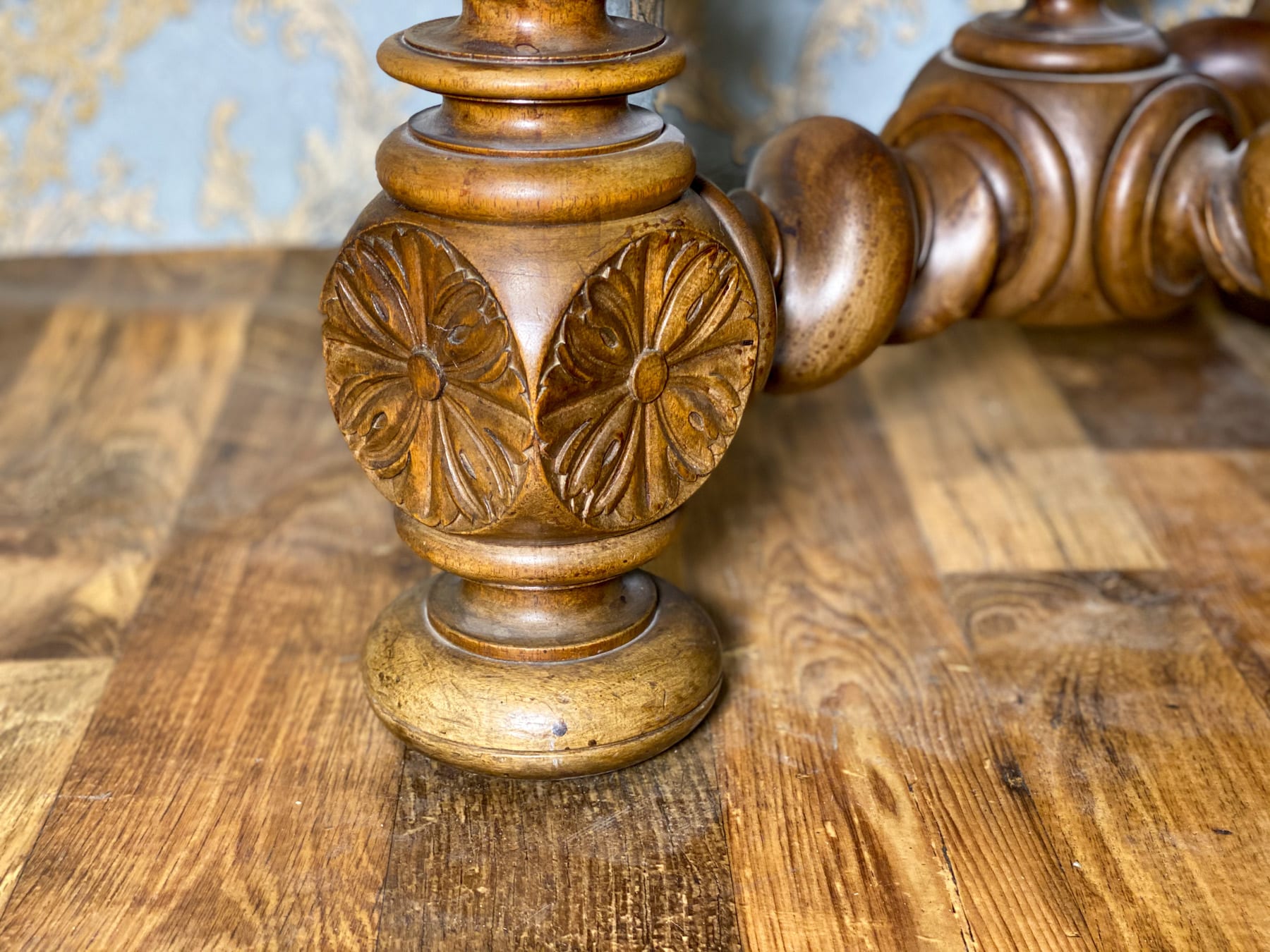
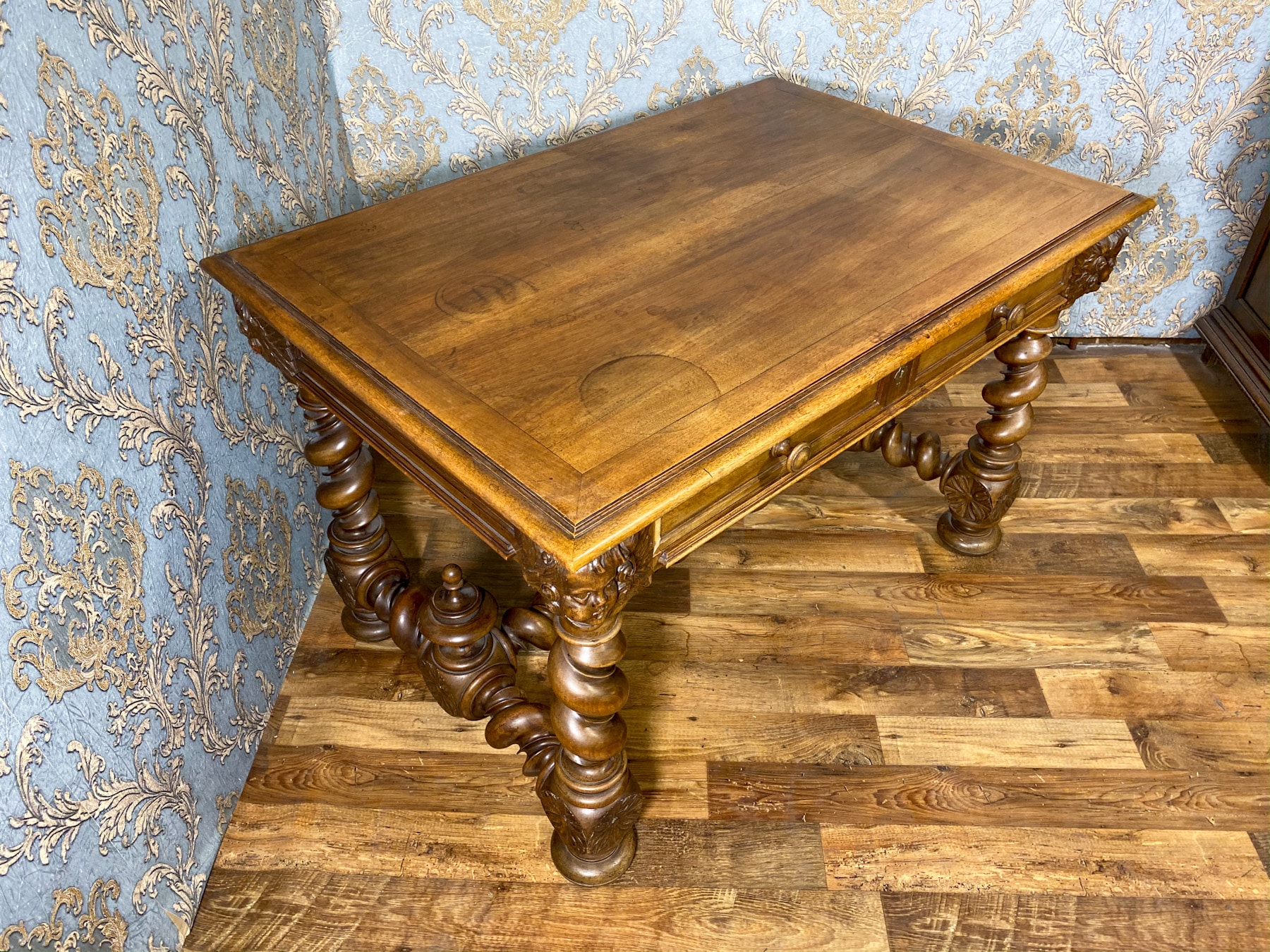
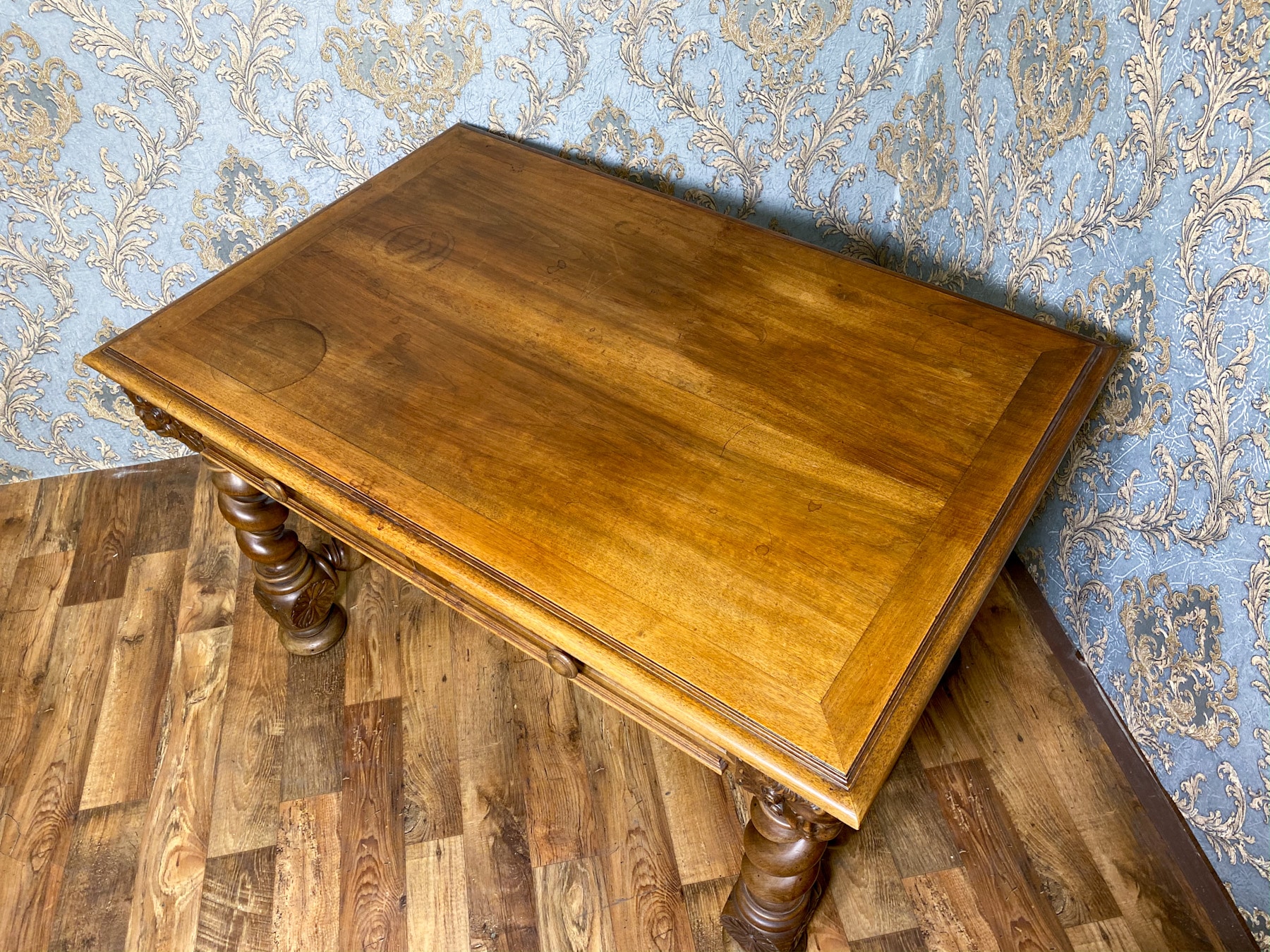
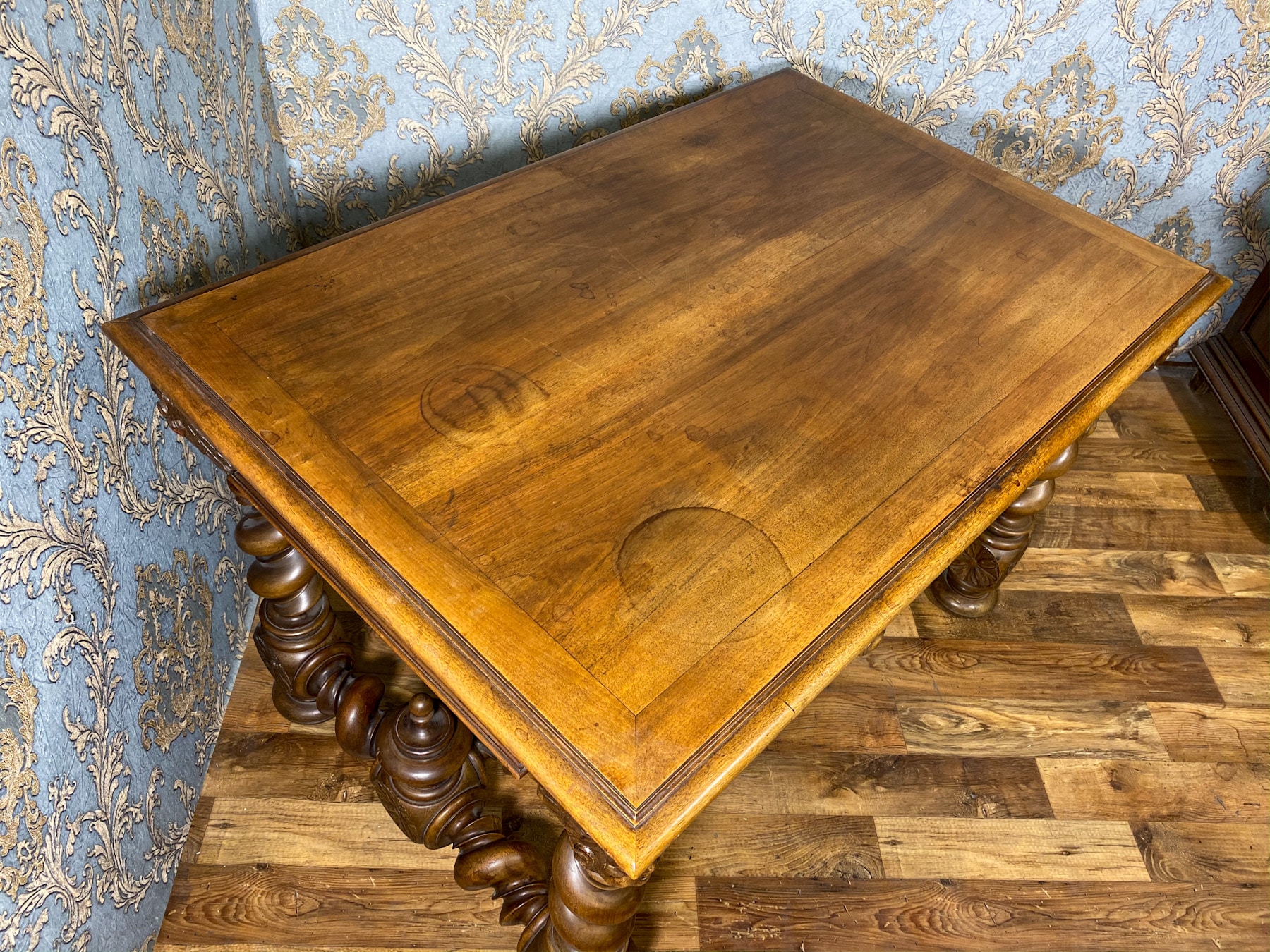
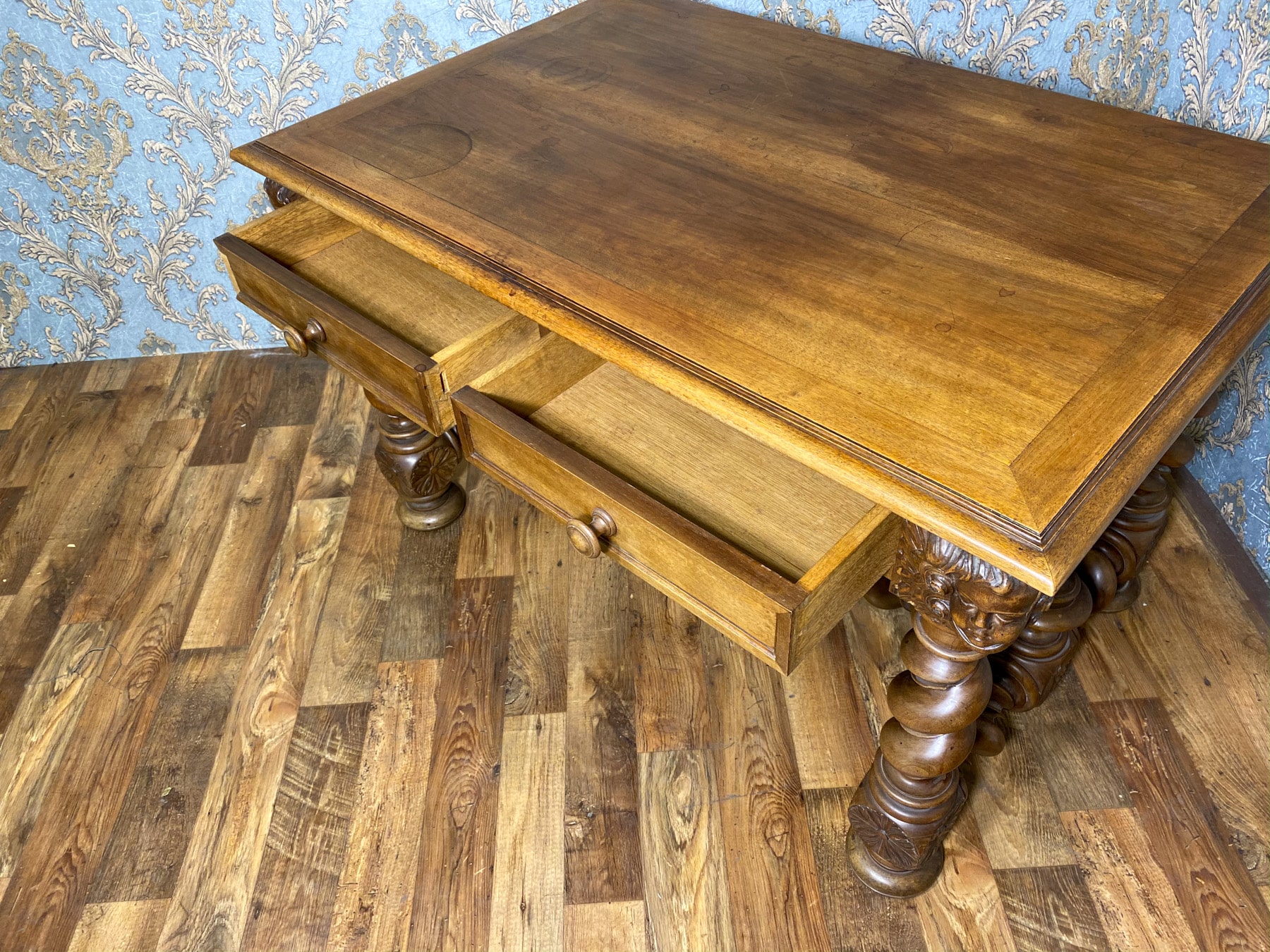
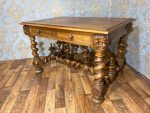
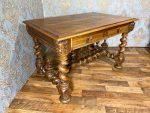
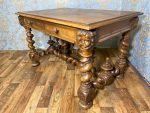
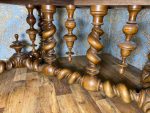
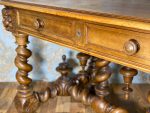
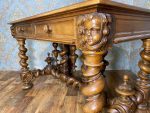
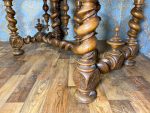
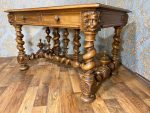
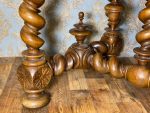
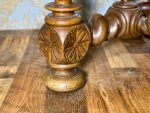
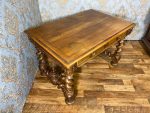
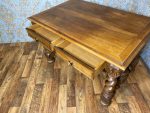
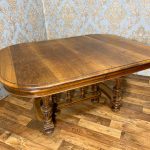
A refined walnut writing table with an exceptionally rich sculptural programme — one of the most expressive examples of Historicist menuiserie, reinterpreting the monumental spirit of Baroque / Louis XIV with a free and assured hand. Four massive barley twist legs — spiralling turned columns — are each cut from a single piece of solid walnut and terminate in broad turned ball bases resting on small rosette elements. The legs are united by a low entretoise stretcher — also in barley twist form — with a central turned element at the crossing point. The overall effect is almost architectural: the table reads as a small temple held aloft by four twisted pillars.
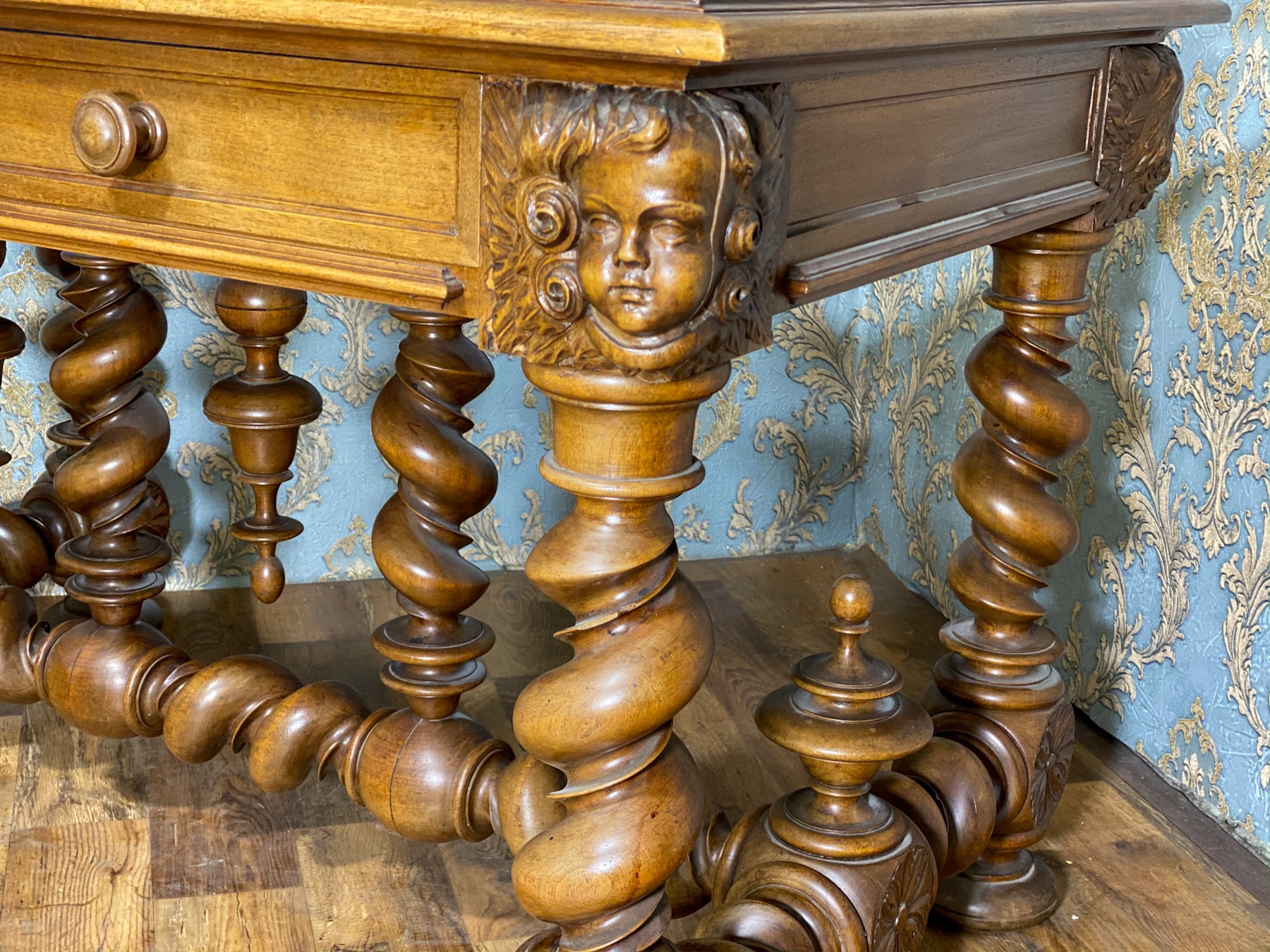
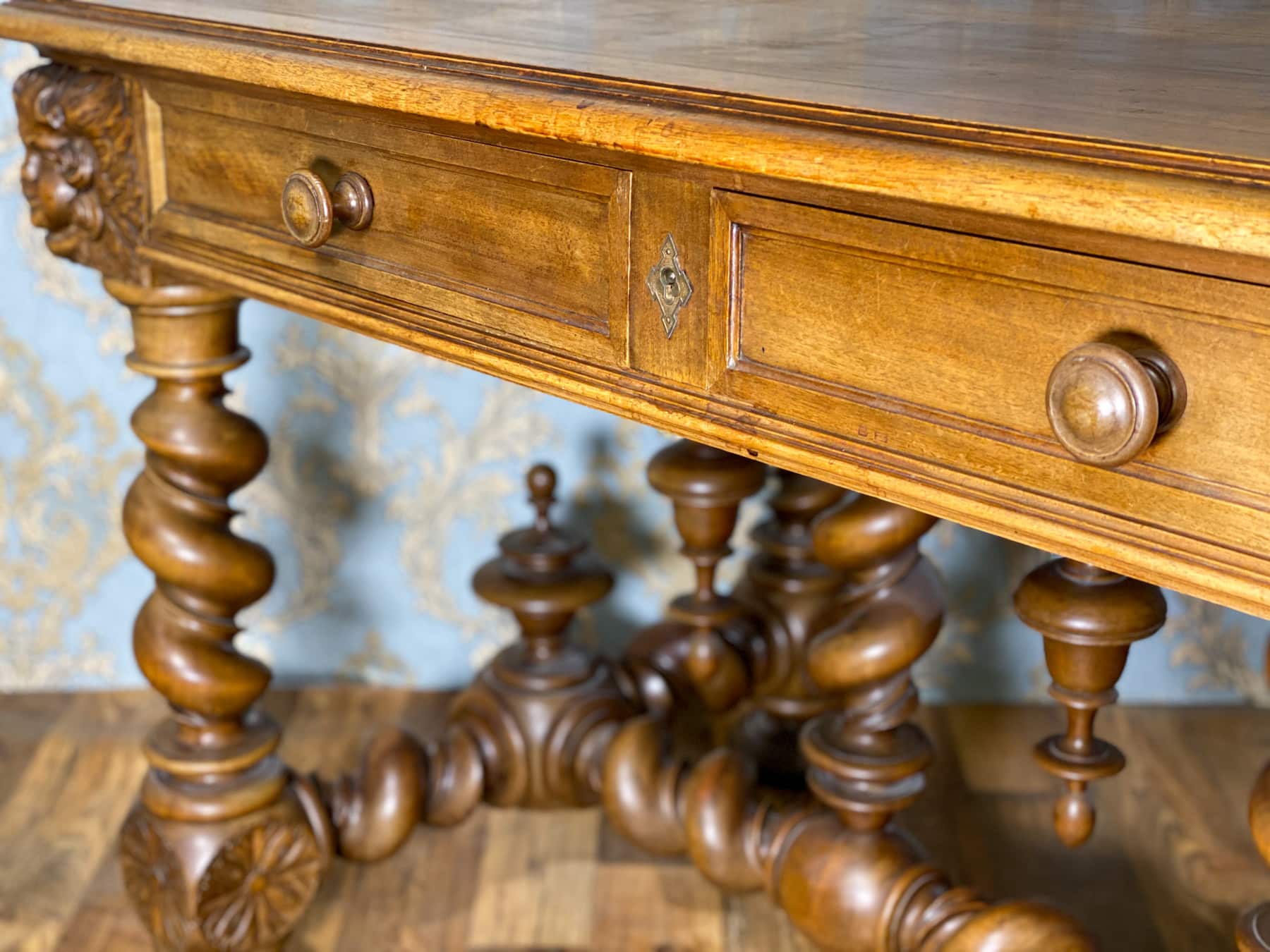
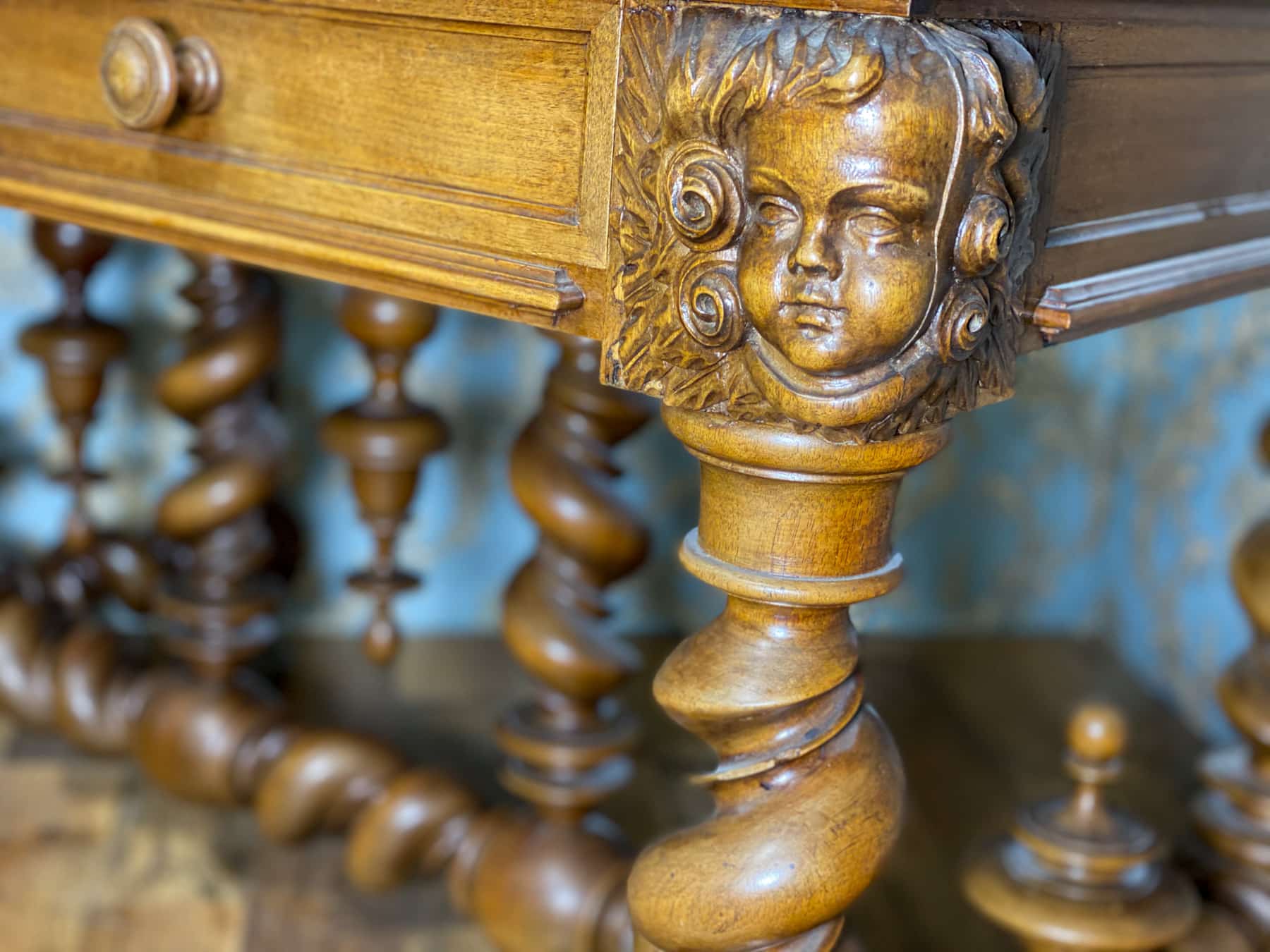
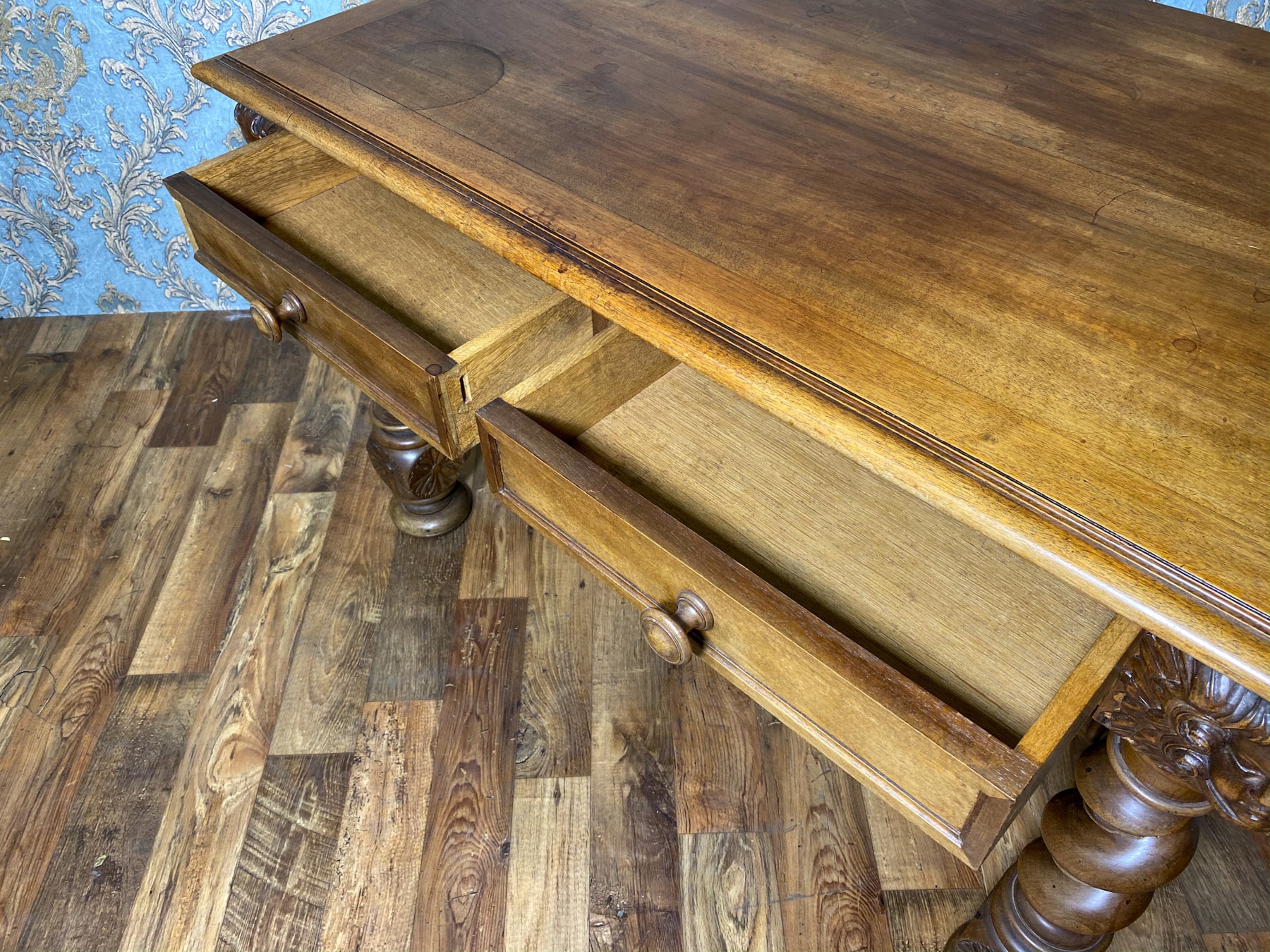
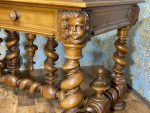
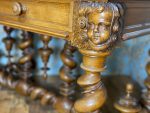
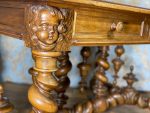
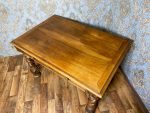
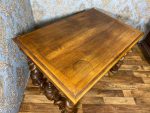
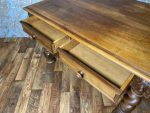
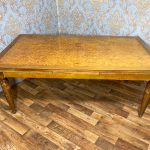
The frieze carries two drawers with round wooden knobs and a bronze keyhole escutcheon. At each corner, precisely where the frieze meets the legs — four hand-carved angel (putti) heads with curling hair, half-closed eyes, and delicate facial expression. Each head is individual — not a production piece but a cabinetmaker’s personal work. The top is solid walnut with a beautiful natural grain, deepened by aged patina.
Baroque era snapshot: Brussels, winter of 1887. The artist Félicien Rops (Félicien Rops) sat down at his table late in the evening. The candlelight fell across a corner — and one of the angels in the shadow seemed to have turned. Rops did not notice. Or perhaps he did, but never wrote of it.
Maker and marks. No maker’s mark is visible in the photographs. The precision of the barley twist turning, the depth of the putti head carving, and the quality of the walnut timber point to a high-class Belgian or French cabinetmaking atelier working at the height of the Historicist period. Tables of this type with putti heads were produced for an exclusive market — collectors, aristocrats, and the highest haute bourgeoisie households.
Rarity and significance. Writing tables with barley twist legs and hand-carved putti heads at the corners are exceptionally rare on the antiques market. The putti motif combined with barley twist is the most iconic compositional element of the Baroque and Louis XIV traditions — and here it is executed with sculptural conviction.
Interior and photographic use. The table suits a Baroque, Neo-Renaissance, or eclectic interior — as a writing desk in a study or as a centrepiece in a drawing room or library. Its visual complexity makes it an outstanding prop for fashion, jewellery, and art photography. Very heavy — at least two people required for transport.
Condition. Solid walnut in good overall condition with natural aged patina. Barley twist legs intact. Putti heads show detailed carving without significant damage. Drawers function. The condition of the item is fully reflected in the photographs.
Höhe 75 cm × Länge 120 cm × Breite 80 cm
Table de travail — Style Baroque / Louis XIV, France ou Belgique, vers 1860–1890 (552)
Style Baroque / Louis XIV. France ou Belgique. Vers 1860–1890.
Une raffinée table de travail en noyer massif avec un programme sculptural exceptionnellement riche — l’un des exemples les plus expressifs de menuiserie historiciste, réinterprétant l’esprit monumental du Baroque / Louis XIV avec une main libre et assurée. Quatre pieds massifs barley twist — colonnes torsadées tournées — sont chacun taillés dans une seule pièce de noyer massif et se terminent par de larges bases sphériques tournées reposant sur de petits éléments en rosette. Les pieds sont reliés par une basse entretoise — également en forme de barley twist — avec un élément tourné central au point de croisement.
La frise porte deux tiroirs avec des boutons en bois ronds et une entrée de serrure en bronze. À chaque coin, précisément là où la frise rencontre les pieds — quatre têtes d’anges (putti) sculptées à la main avec des cheveux bouclés, des yeux mi-clos et une expression faciale délicate. Chaque tête est individuelle — non pas une pièce de série mais le travail personnel d’un ébéniste.
Instantané de l’époque Baroque : Bruxelles, hiver 1887. L’artiste Félicien Rops (Félicien Rops) s’assit à sa table tard le soir. La lumière de la bougie tomba sur un coin — et l’un des anges dans l’ombre sembla s’être retourné. Rops ne le remarqua pas. Ou peut-être que si, mais il n’en écrivit jamais.
Fabricant et marques. Aucun poinçon visible. La précision du tournage barley twist, la profondeur de la sculpture des têtes putti et la qualité du noyer indiquent un atelier belge ou français de premier rang de la haute période Historiciste.
Rareté et importance. Les tables de travail avec pieds barley twist et têtes putti sculptées à la main aux coins sont exceptionnellement rares sur le marché des antiquités.
Utilisation en décoration et photographie. La table convient à un intérieur baroque, néo-renaissance ou éclectique. Très lourde — au moins deux personnes nécessaires pour le transport.
État. Noyer massif en bon état général avec patine naturelle. Pieds barley twist intacts. Têtes putti sans dommages significatifs. Tiroirs fonctionnels. L’état de la pièce est entièrement reflété dans les photographies.