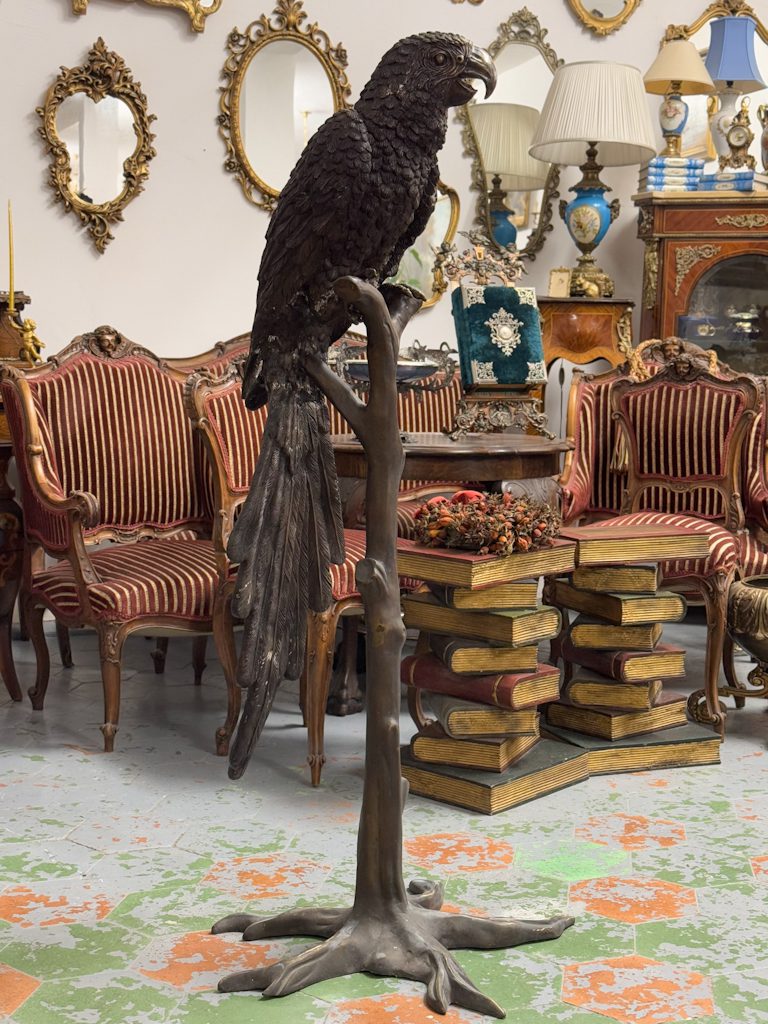
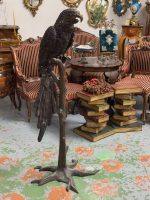
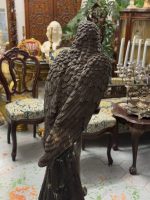
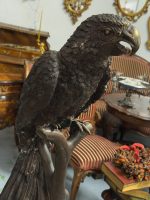
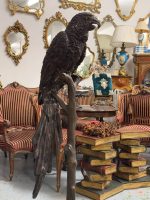
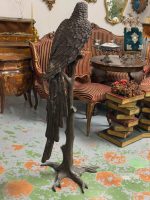
DESCRIPTION IN Life-Size Bronze Parrot Sculpture on Branch Base — Animalier Tradition, France / Europe, mid-to-late 20th century after 19th century models. ――――――――――――――――――――― 📐 DIMENSIONS Height 131 cm × base width 59 cm × bird width 26 cm. Material: cast… 3 300,00 €
You’re now subscribed to price tracking for this product. We’ll notify you if the price drops. 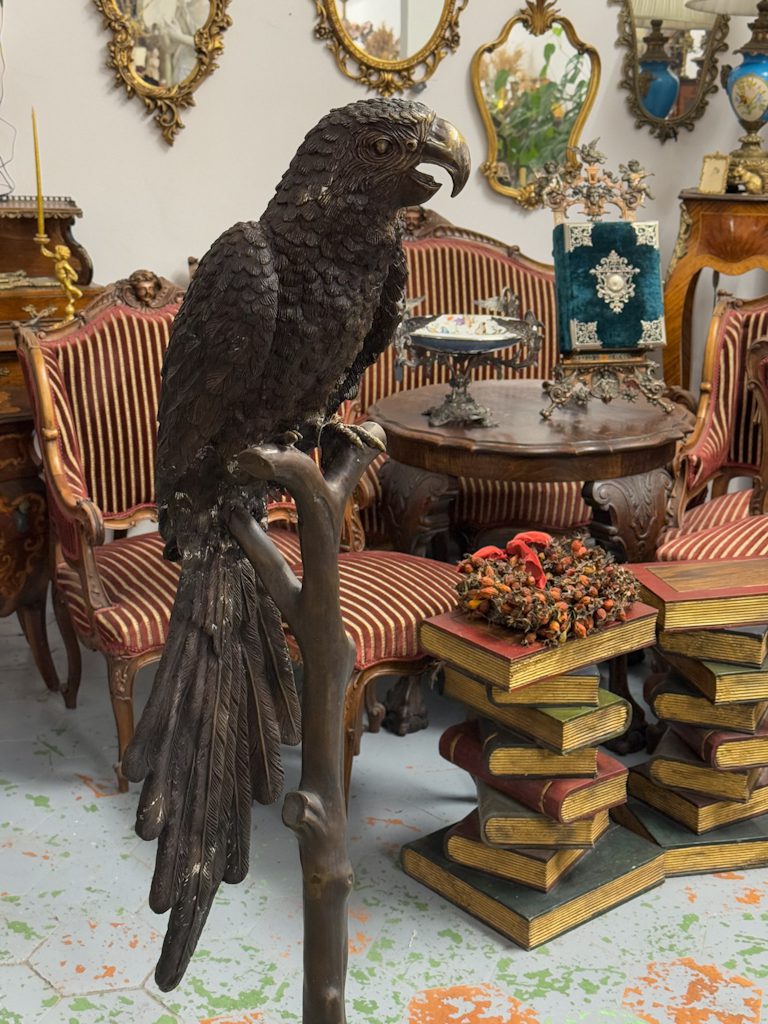
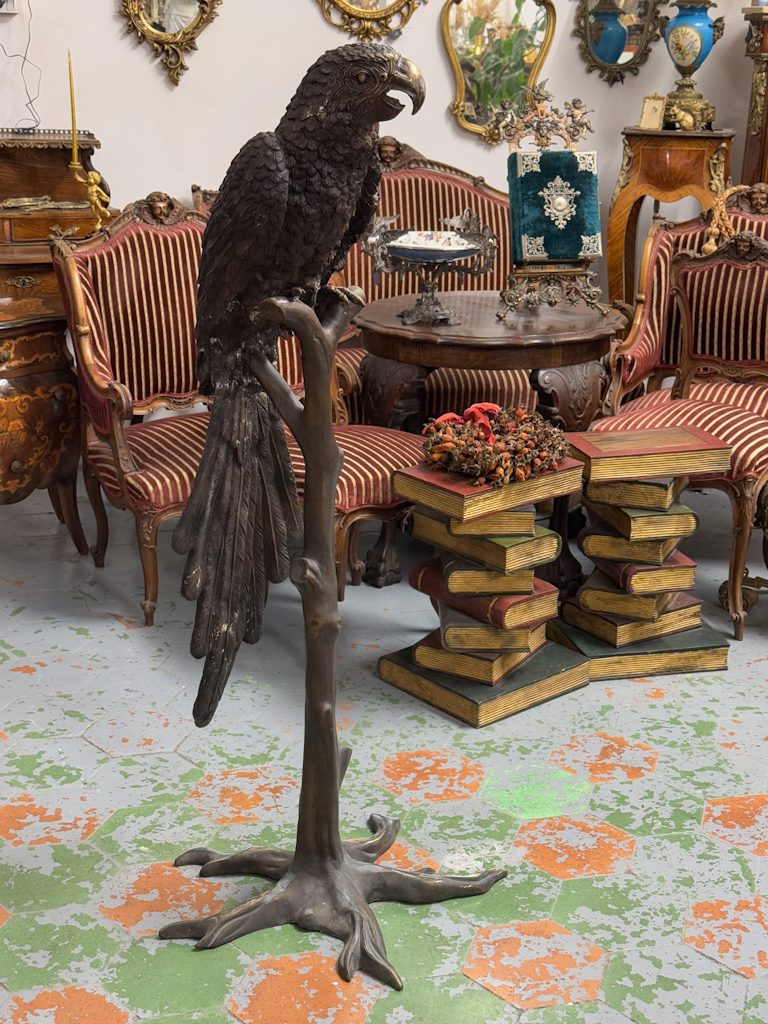








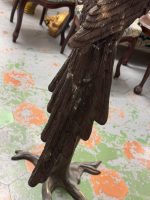
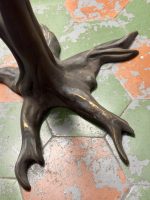
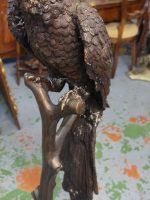
Life-size bronze parrot sculpture on branch base – Animalier tradition, France/Europe, mid-late 20th C
Height 131 cm Width 26 cm, 59 cm Color GoldNaturalDark brown
Description
DESCRIPTION IN
Life-Size Bronze Parrot Sculpture on Branch Base — Animalier Tradition, France / Europe, mid-to-late 20th century after 19th century models.
―――――――――――――――――――――
📐 DIMENSIONS
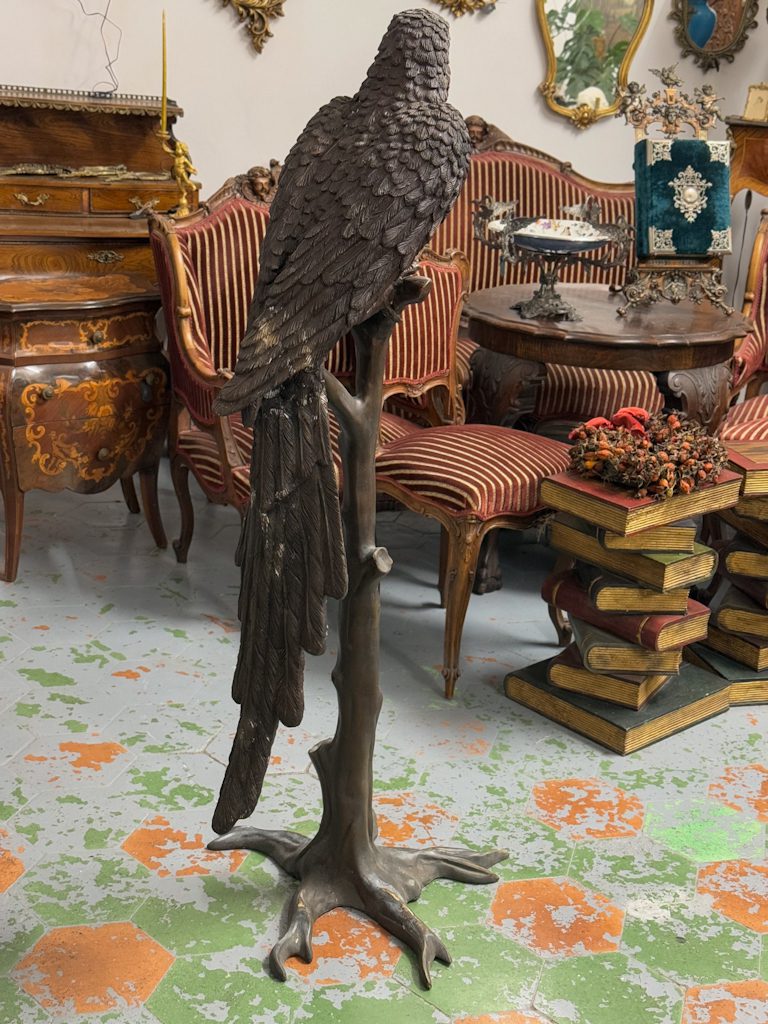
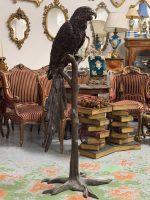
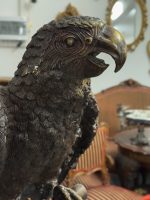
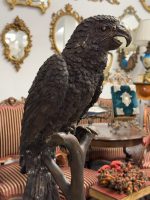
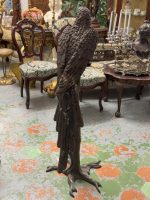
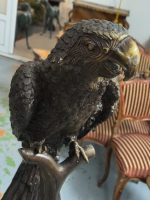
Height 131 cm × base width 59 cm × bird width 26 cm. Material: cast bronze with a deep brown patina and golden highlights on the beak and the raised surfaces of the plumage. Weight: considerably heavy — a solid casting.
―――――――――――――――――――――
🏛️ PERIOD, ARTISTIC STYLE, AND HISTORICAL CONTEXT
This sculpture belongs to one of the proudest traditions in European decorative bronze — the Animalier school, which flourished in France from the mid-19th century and continued throughout the Belle Époque and into the 20th century. The term animalier designated sculptors who specialised in the portrayal of animals with extraordinary naturalistic precision — every feather, every curve of muscle, every impulse of a glance was to be captured in bronze so that the viewer could sense the presence of a living creature.
At the Paris Salon exhibitions of the 19th century, animalier sculptors — of whom the most celebrated was Antoine-Louis Barye, who kept living animals in the storerooms of the Louvre in order to draw them from life — enjoyed enormous popularity. Exotic birds, and parrots in particular, were a favourite motif, symbolising both the exoticism of the age of exploration and the luxury of aristocratic and bourgeois households — live parrots had been a status symbol in the highest European society since the 17th century.
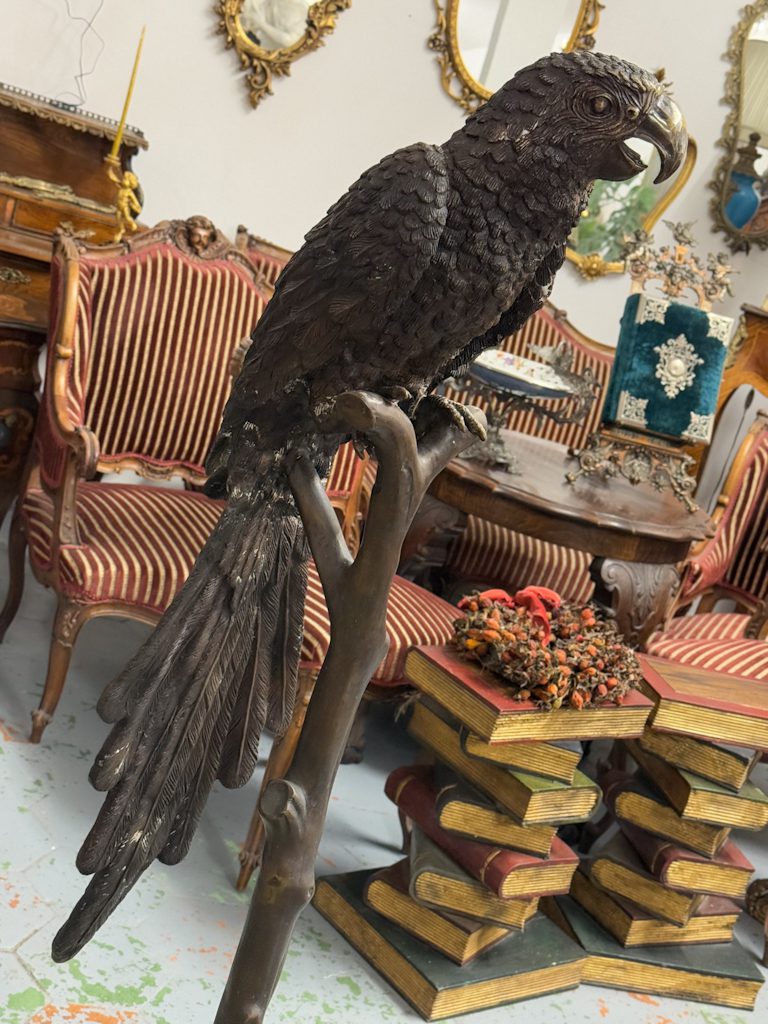
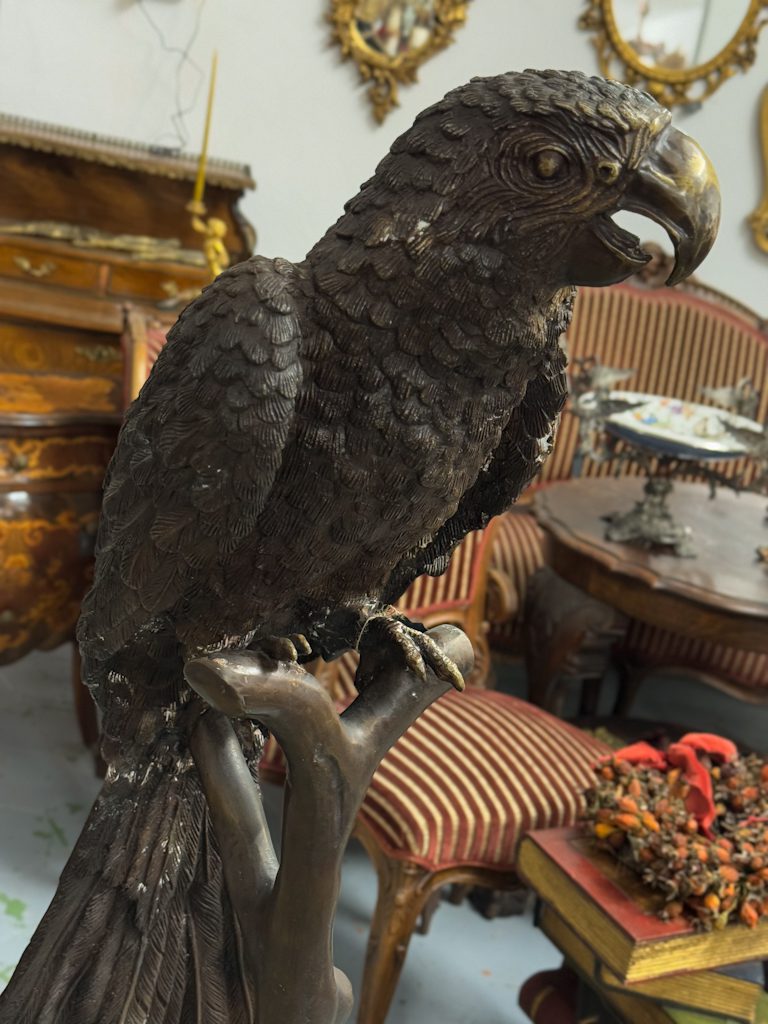
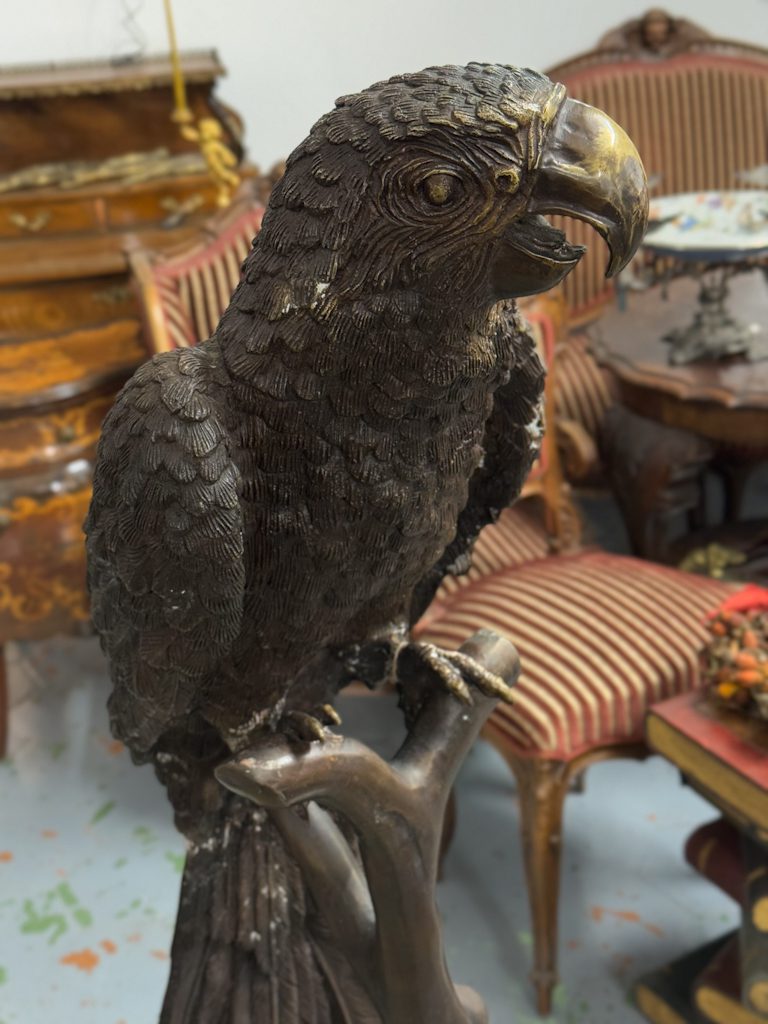
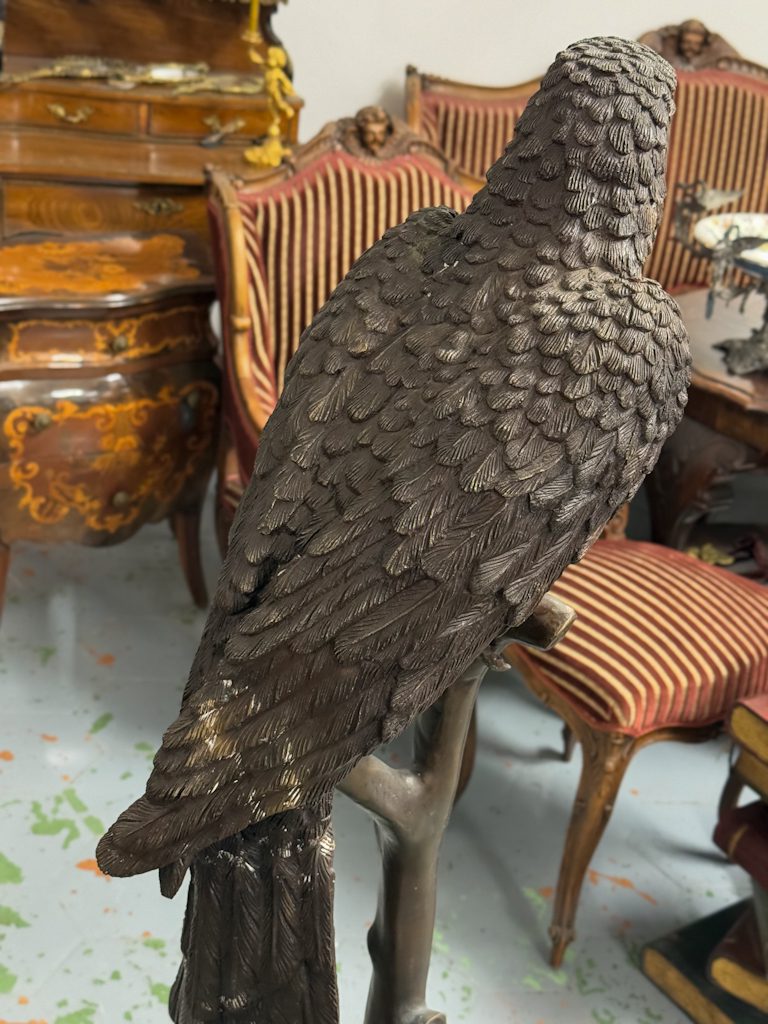
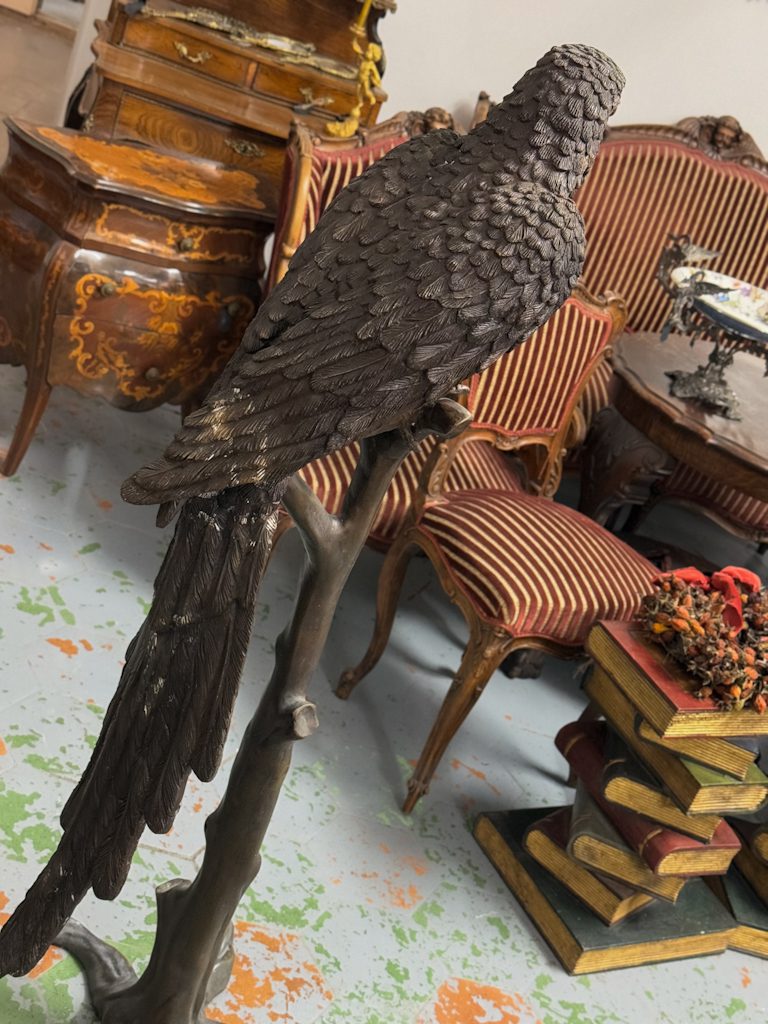
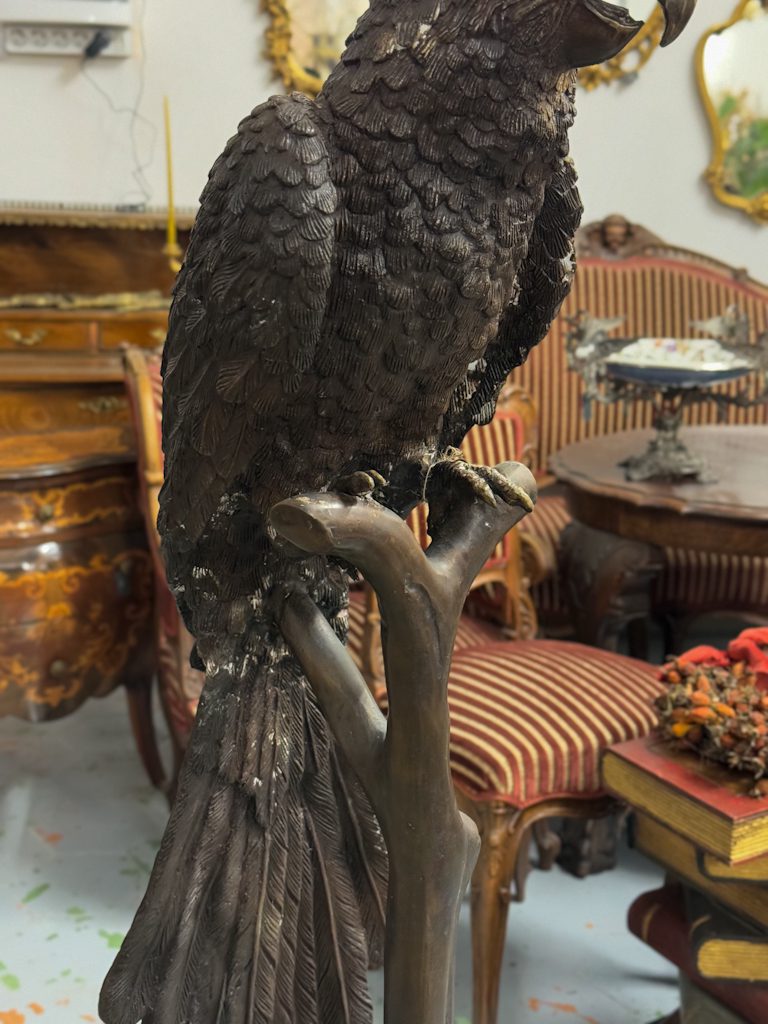
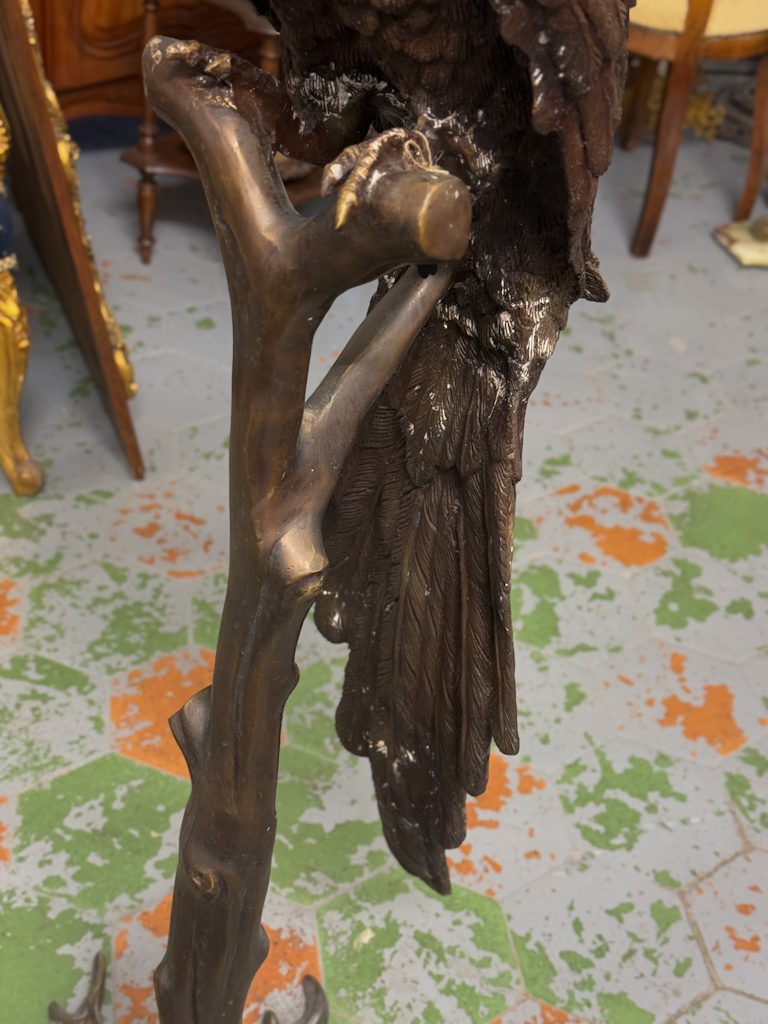
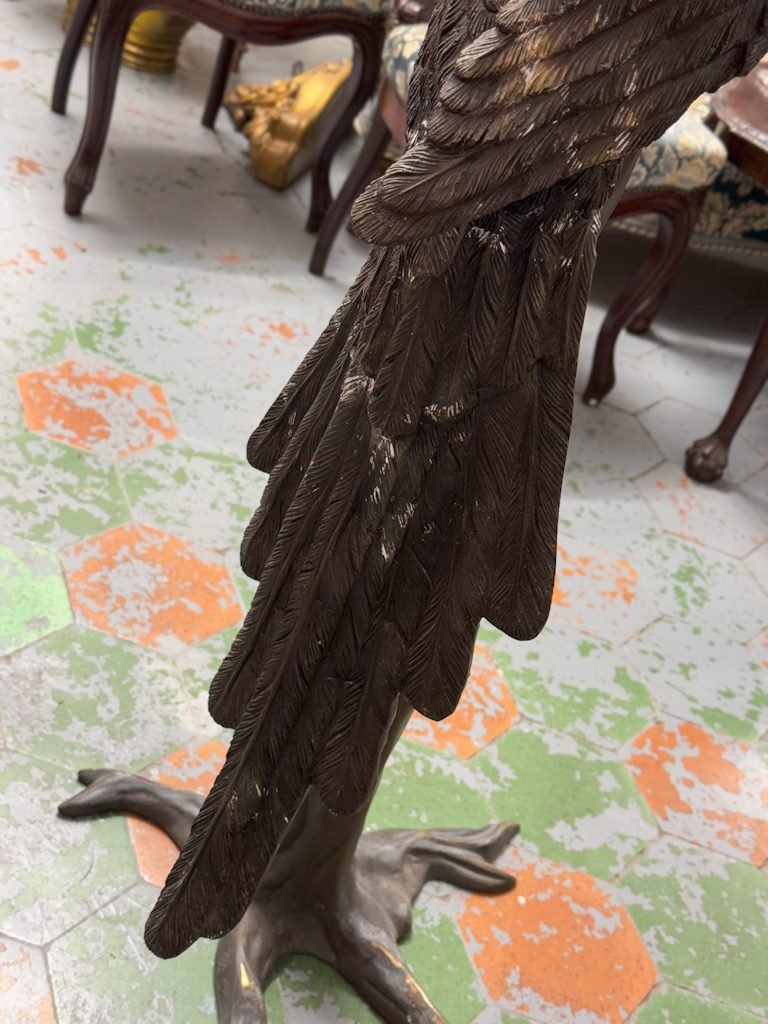
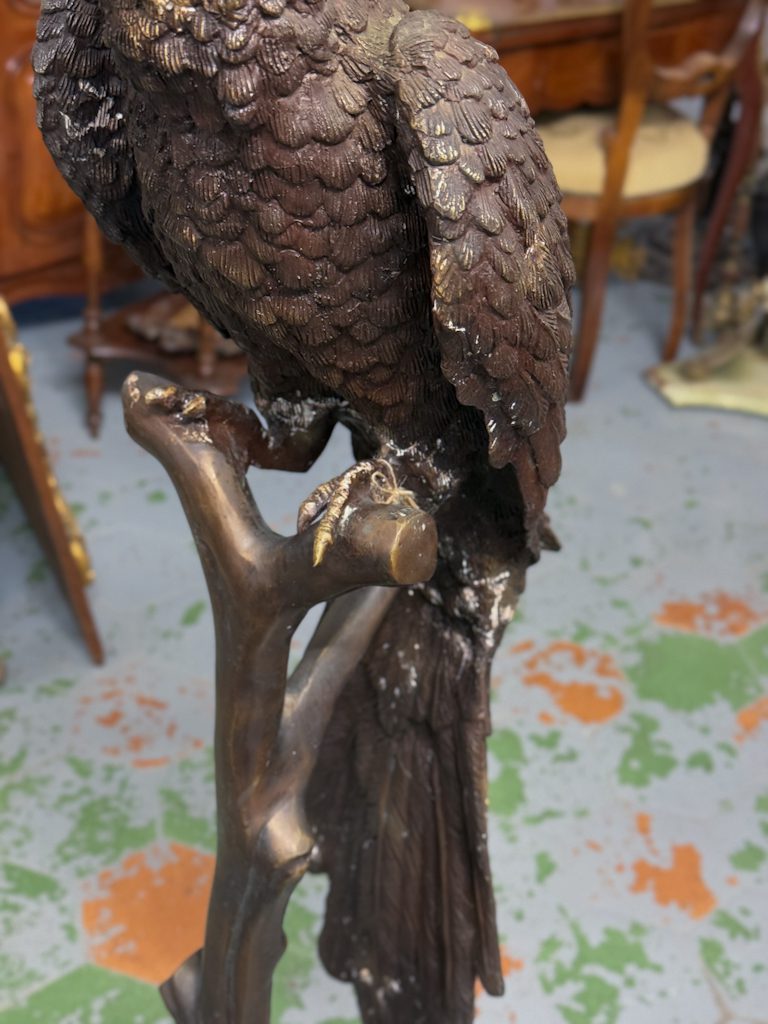
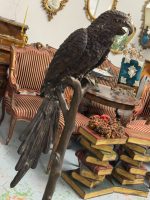
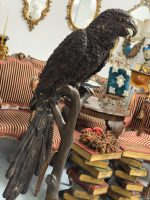
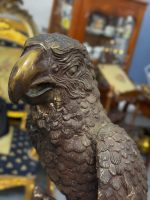
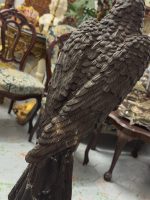
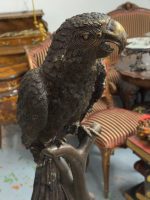
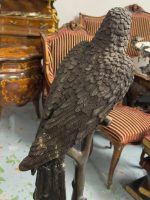
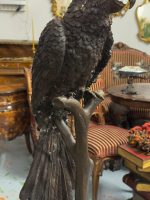
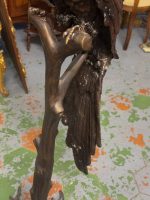
The high naturalistic quality of this sculpture — the individual modelling of each feather, the smooth polish of the sharp beak in contrast with the rougher texture of the plumage, the sense of mass and weight in the body — attests to a seriously artistic casting that faithfully followed the finest animalier traditions.
―――――――――――――――――――――
⚜️ MAKER’S MARK AND TRADITION
No specific maker’s mark or foundry signature is visible on the sculpture. This is characteristic of large representational bronze castings produced to commission or by high-quality foundries, where the quality of the work was itself a sufficient guarantee.
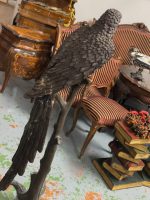
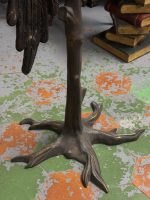
The production of large-scale, naturalistically precise exotic bird sculptures in bronze was concentrated primarily in Parisian foundries, as well as in the bronze workshops of Italy — particularly Florence and Milan — which from the second half of the 19th century through the mid-20th century regularly produced representative pieces of this kind for aristocratic and bourgeois interiors. The branch-base solution — in which the trunk grows organically from rooted branches, forming a stable yet visually light support — is characteristic of precisely this high-quality bronze casting tradition, in which structural engineering and artistic composition were united.
The two-tone patina — deep dark brown on the plumage and a warmer, almost golden tone on the beak and select feather tips — indicates a deliberate two-tone patination process characteristic of high-quality European bronze foundries, lending the sculpture additional visual vitality.
―――――――――――――――――――――
💎 RARITY AND SIGNIFICANCE
Life-size bronze parrot sculptures with this depth of feather detail and a height exceeding 120 cm are exceptionally rare on the antiques market. The majority of bronze bird sculptures are in cabinet format — 20 to 50 cm — and pieces of this scale appear principally at prestigious international auction houses or in the finest galleries.
Demand for large-format animalier bronze sculptures is stable and growing in both European and international markets — particularly from collectors and interior architects working on prestigious commissions.
―――――――――――――――――――――
🕯️ USE IN INTERIOR DESIGN AND PHOTOGRAPHY
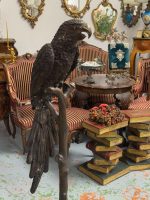
This sculpture was made to dominate a room. In entrance halls, large salons, libraries, and reception spaces it functions as a self-sufficient work of art that immediately establishes the character and cultural-historical atmosphere of the space. In classical and eclectic interiors it is presented on the floor or on a low plinth; in a modern loft or industrial setting — against a white wall or on a concrete floor — it creates a powerful, theatrical contrast.
In an outdoor or garden context, bronze is a durable material that develops a natural green patina over time — large-format birds of this kind frequently adorn elegant gardens and terraces, recalling the great tradition of European park sculpture. For photographers and stylists, the silhouette of the parrot, the flowing surface of the plumage, and the monumental height offer an extraordinarily expressive and photogenic subject.
―――――――――――――――――――――
🔍 CONDITION
The sculpture is in overall good and decoratively representative condition. The bronze patina is uniform and deep, with golden highlights on the beak and feather tips. Small white deposits are visible on the chest and several other areas — likely lime or water residue from storage — which are easily removable with a professional bronze cleaning product. The feather modelling is fully intact throughout the sculpture. The branch base construction is stable, with no breaks. The overall impression is of a massive, substantial, commanding piece with outstanding detail.
The condition of the piece is fully represented in the photographs.