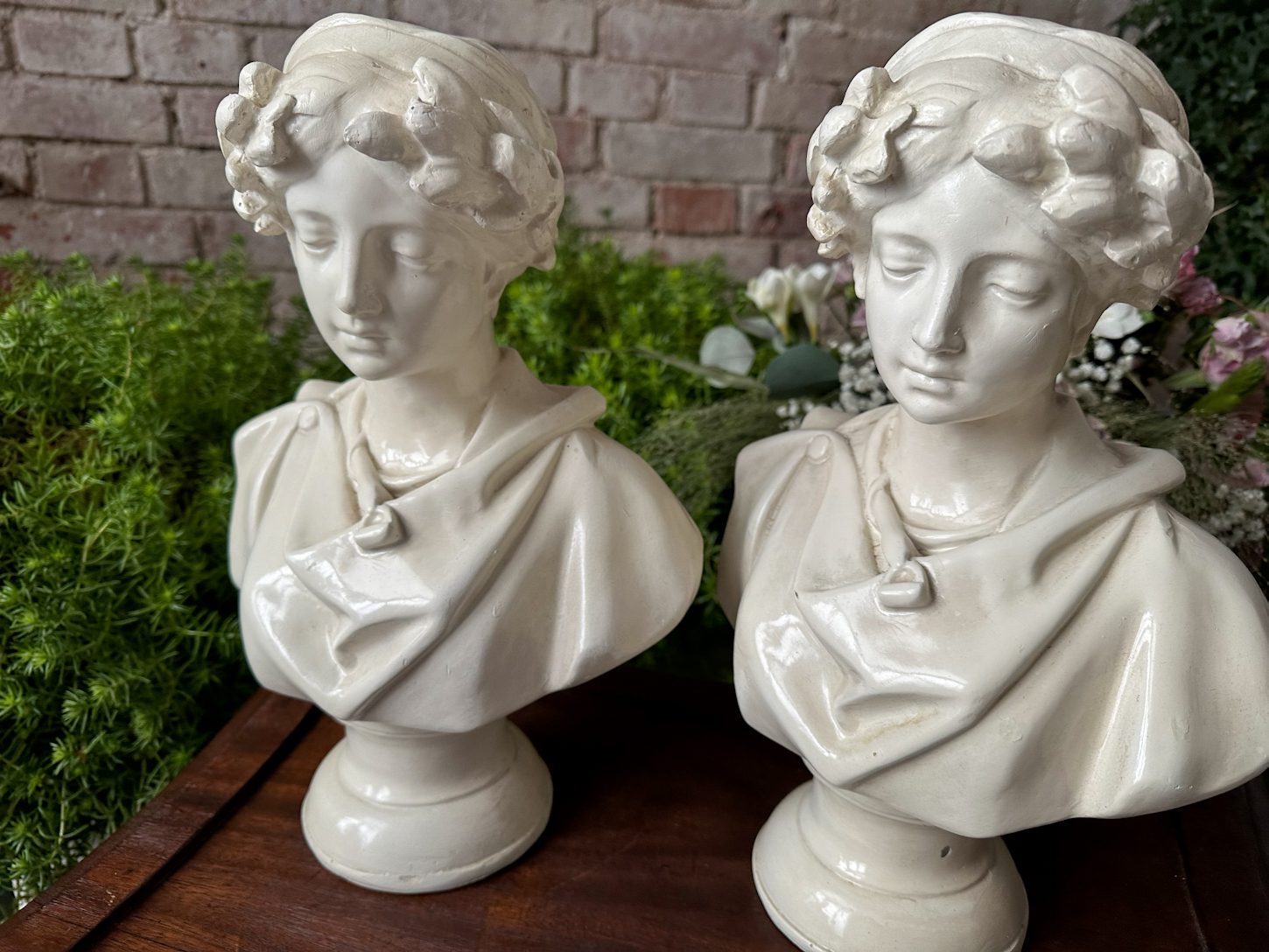
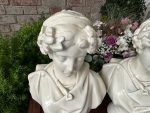
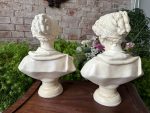
Pair of young women’s busts — Historicism / Art Nouveau transition, Europe, circa 1890–1910. The price is for both busts, capturing a transitional period between Historicism and Art Nouveau styles. 280,00 €
You’re now subscribed to price tracking for this product. We’ll notify you if the price drops. 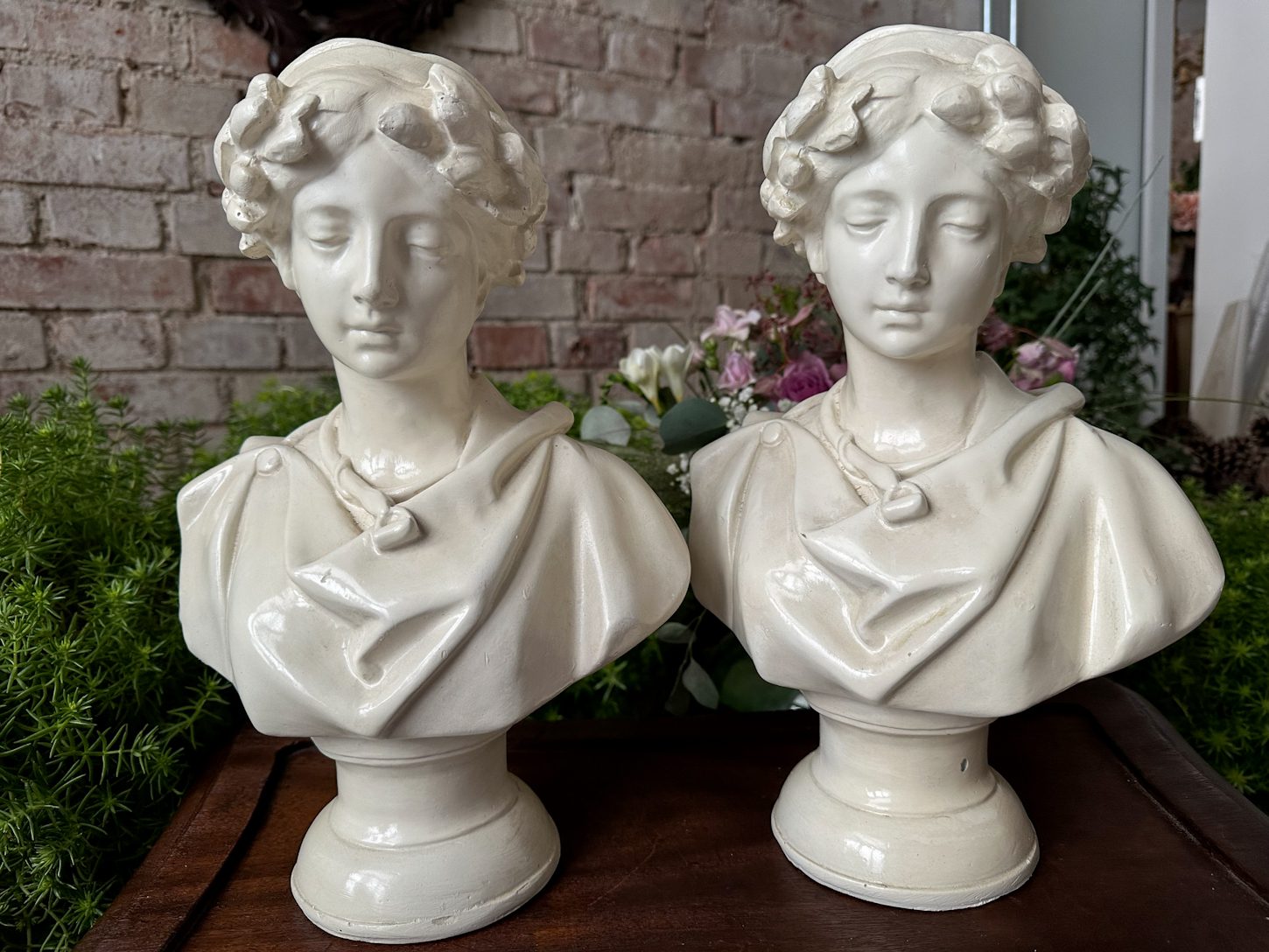
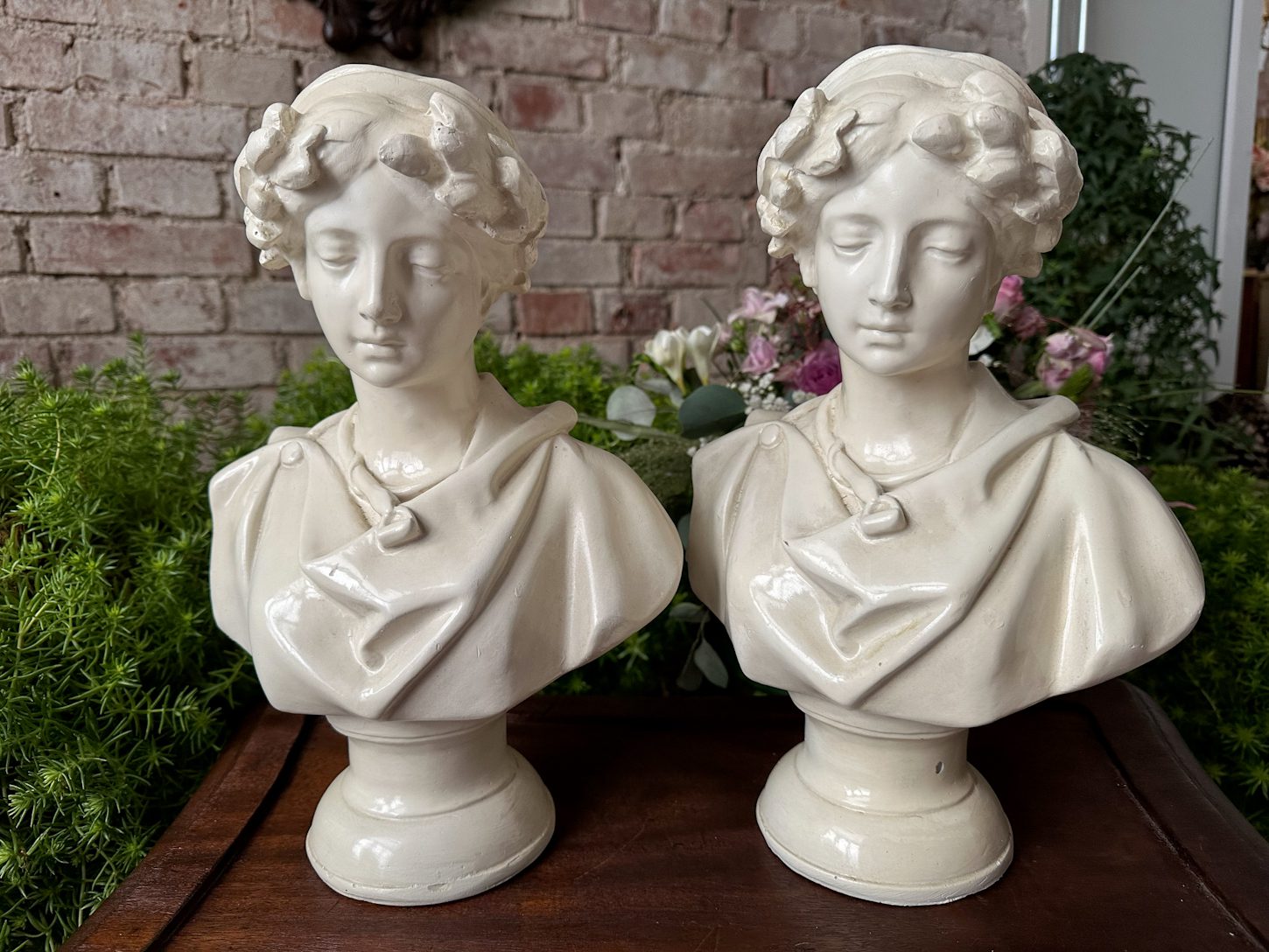
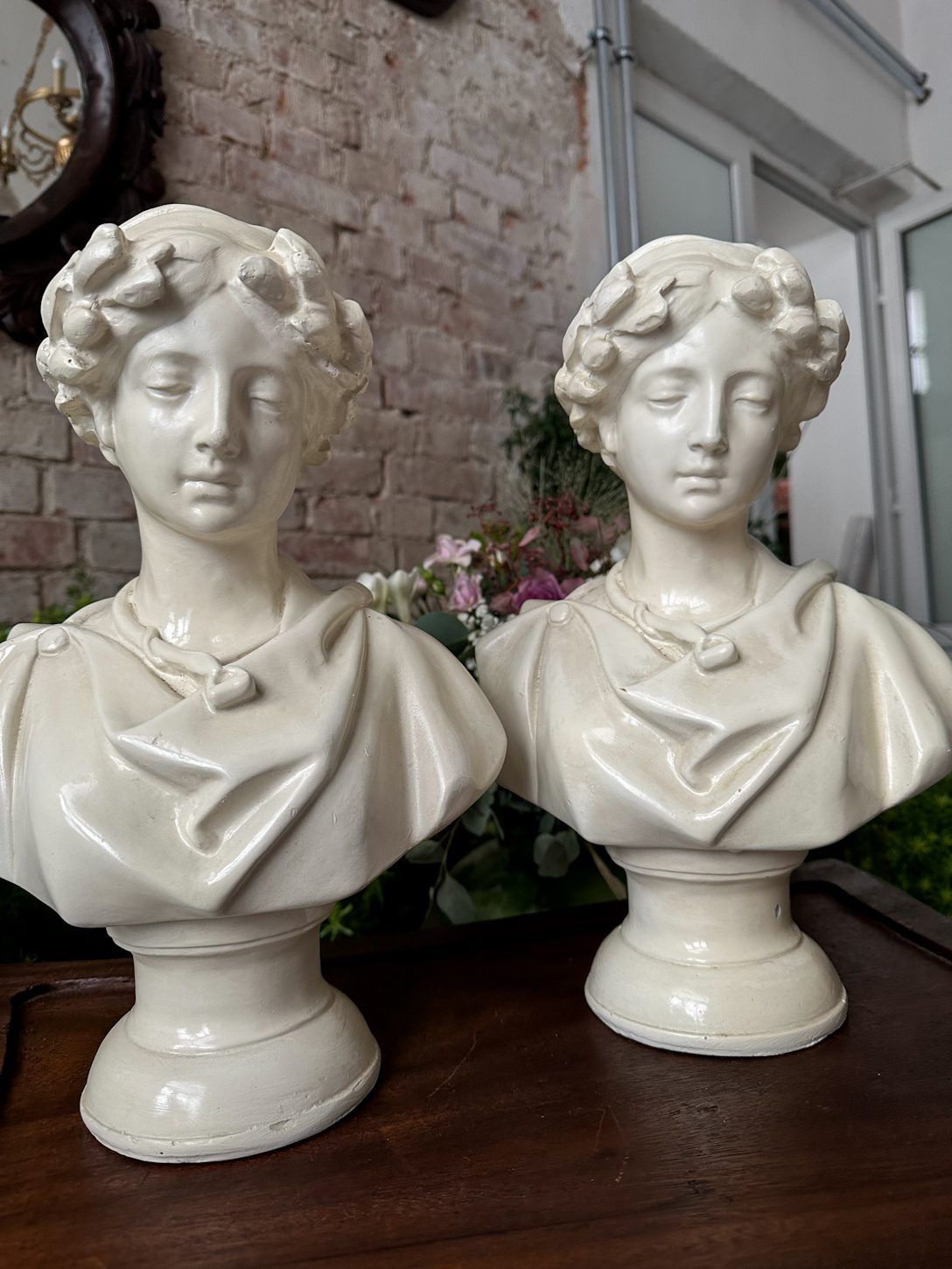
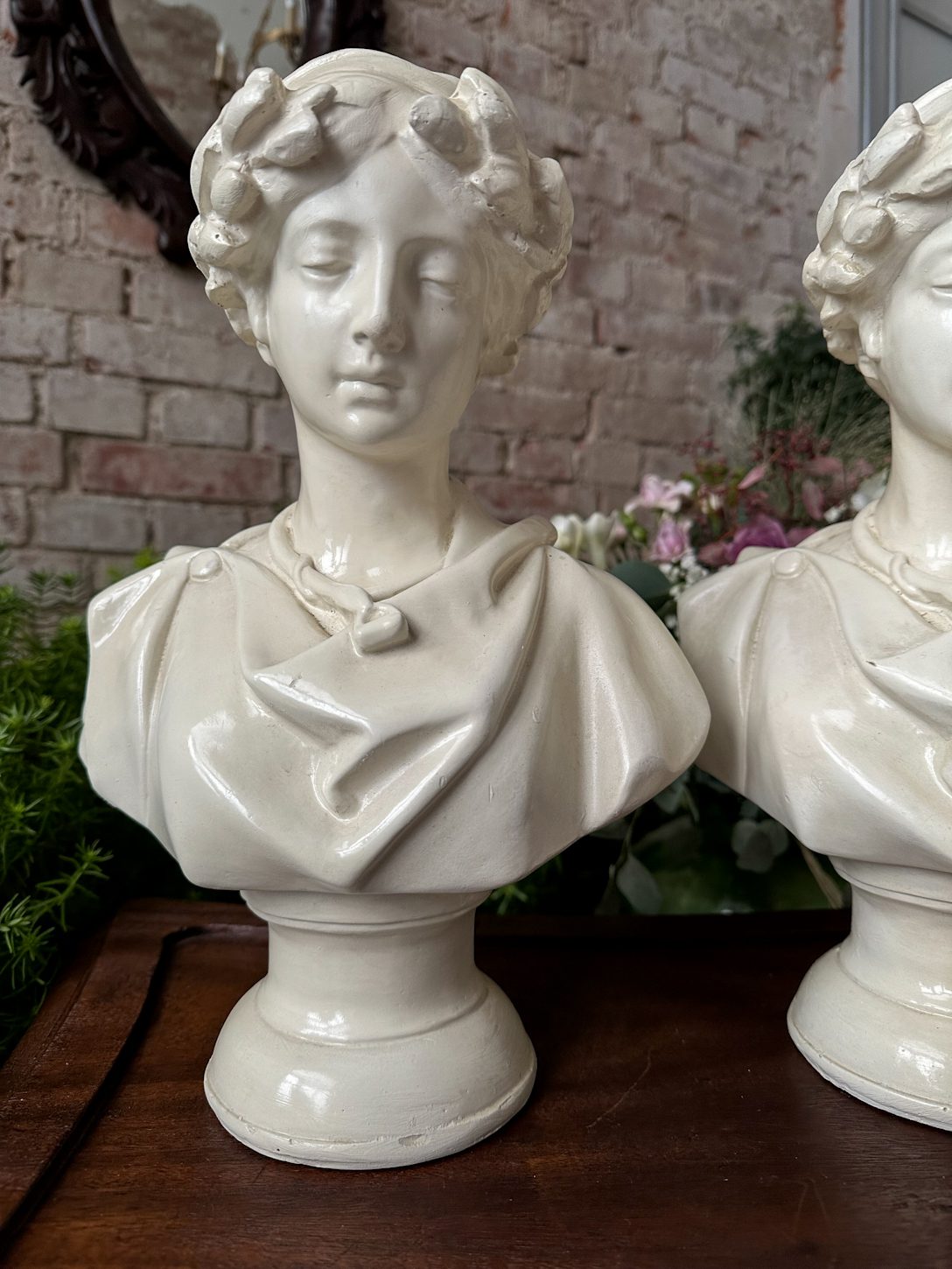
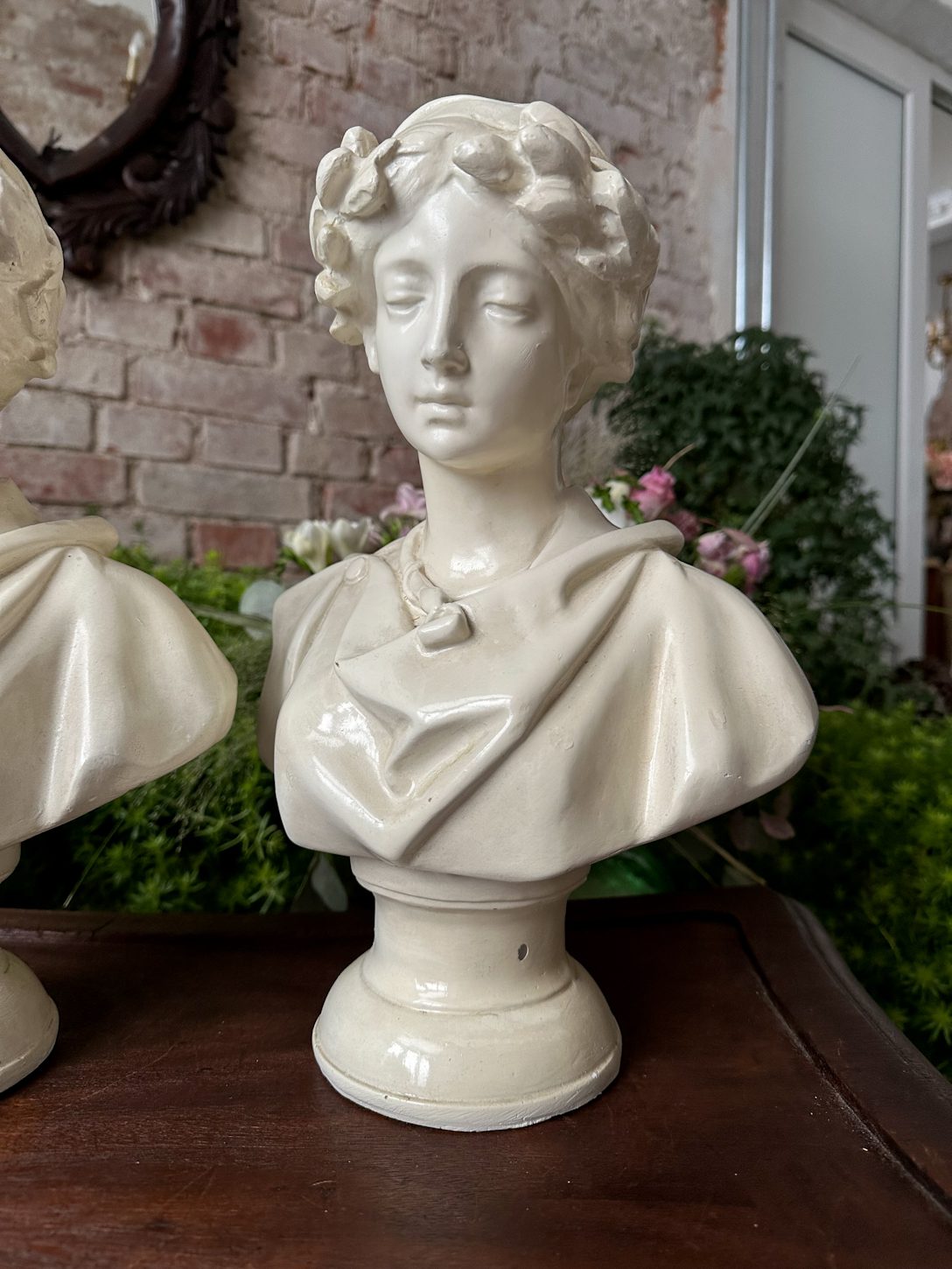
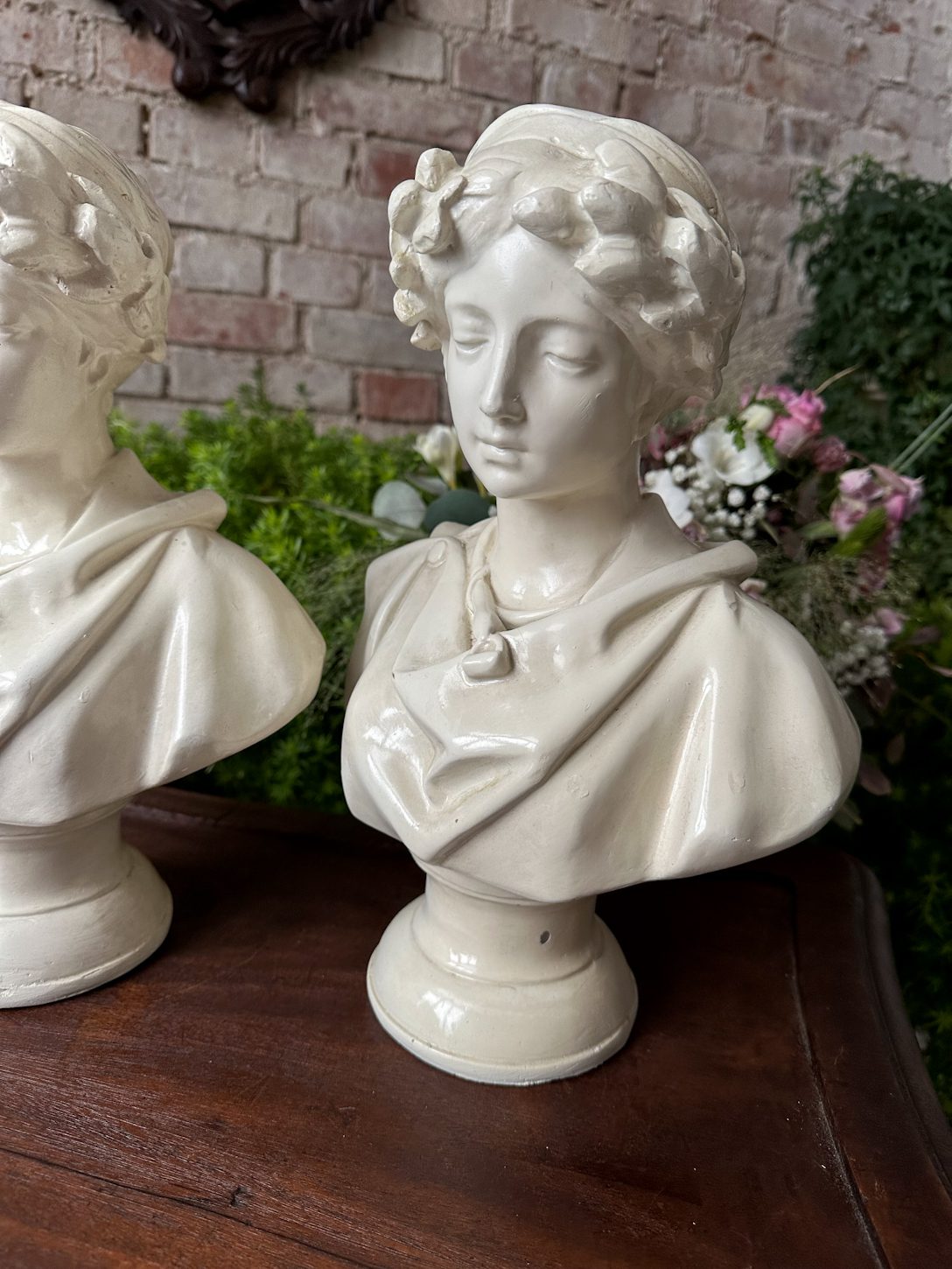
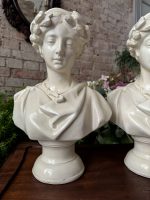
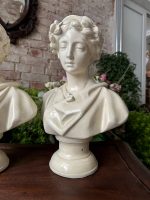
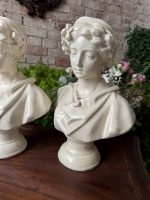
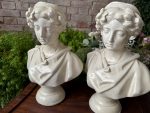
Young Women Busts — Pair — Historicism / Art Nouveau/Jugendstil Transition, Europe, c
Height 35 cm Width 25 cm Color WhiteNaturalBlack
Description
DESCRIPTION IN
Pair of Female Busts — Historicism / Art Nouveau Transition, Europe, circa 1890–1910. Price listed for both pieces
―――――――――――――――――――――
📐 DIMENSIONS Height: 35 cm each. Width: 25 cm each. Material: fine-grain artist’s plaster with a glazed cream-white surface finish. Hollow interior — characteristic of the plaster and ceramic bust manufacturing tradition. Sold as a pair — price listed for both together.
―――――――――――――――――――――
🏛️ PERIOD, ARTISTIC STYLE AND HISTORICAL CONTEXT
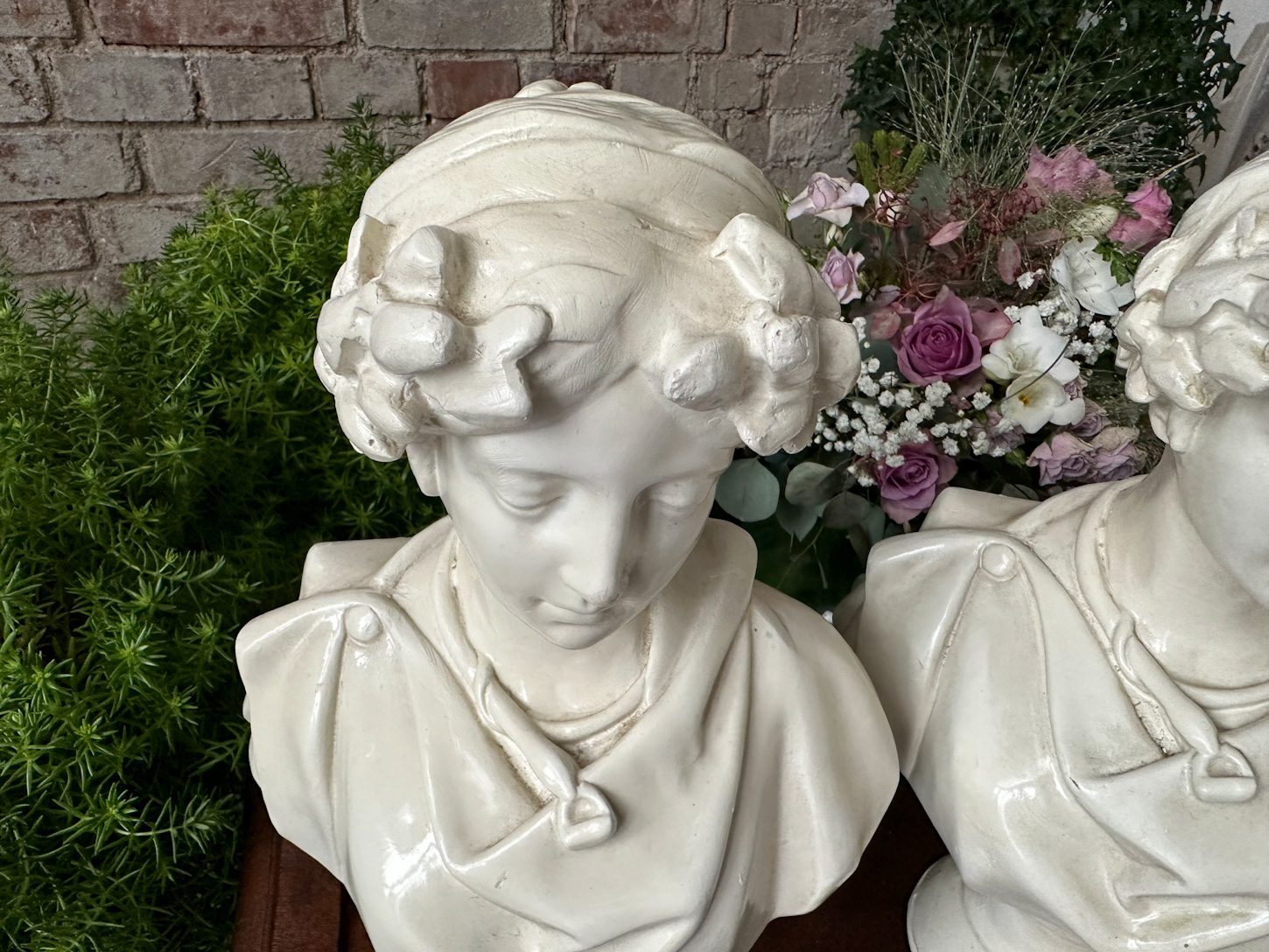
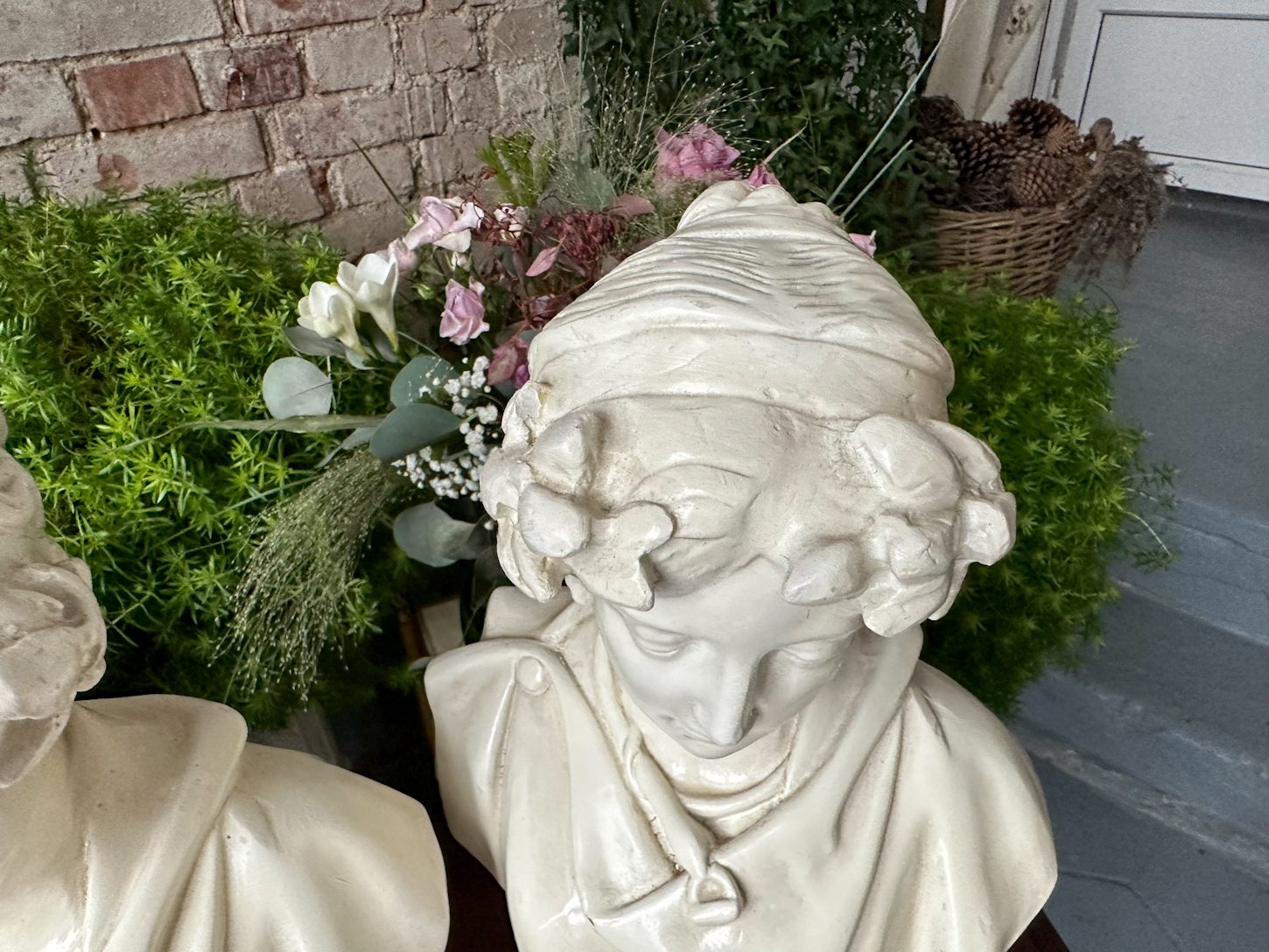
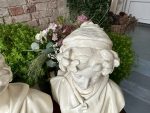
These busts belong to that fertile transitional moment when Historicism still held its proportions — the idealised face with downcast eyes, the classically arranged garment with its mantle fold — while Art Nouveau already brought a new ornamental language: living, organically intertwined hair decorated with flowers, evoking not the smooth classical coiffure but a spring wreath or the headdress of a woodland spirit. Both aesthetics coexist here in a beautiful balance — the face and dress speak the language of Historicism, while the hair sculpture already belongs to the new age. Such a fusion was characteristic of European academic ceramic and plaster production precisely between 1890 and 1910, when industrial workshops sought to satisfy the simultaneous demands of two aesthetics in the bourgeois market. The glazed cream-white surface with a slight pearlescent sheen is characteristic of the and Belgian ceramic bust tradition, produced from glazed faience or plaster composite.
―――――――――――――――――――――
⚜️ MAKER AND MARKS
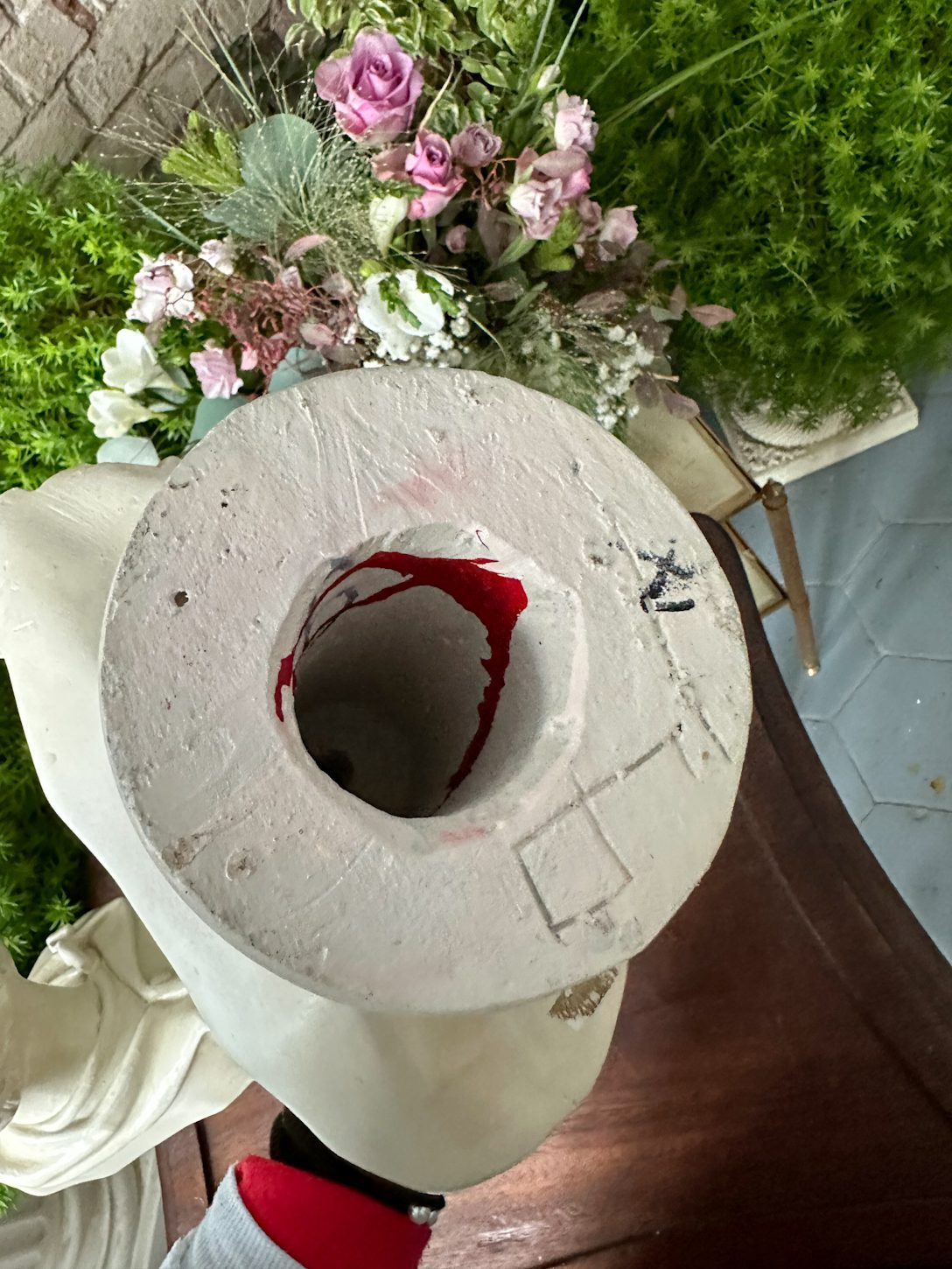
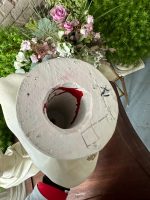
The underside of the base shows a hollow opening with markings visible in the photographs — a red paint trace and a black mark, which may be a partially preserved inventory or maker’s designation. The glazed surface and hollow base with relief boundary rings indicate organised ceramic or plaster manufactory production. Stylistically, these busts correspond most closely to or Belgian contemporary ceramic producers who, around 1890–1910, supplied the European bourgeois market with salon-format bust sculptures. Belgium at the time was home to several significant ceramic and plaster factories — among them establishments from the Liège and Brussels regions — which exported this type of product across all of Europe, including to the Empire, the Baltic region, and Scandinavia.
―――――――――――――――――――――
💎 RARITY AND SIGNIFICANCE
A fully preserved matching pair of identical busts is considerably rarer than a single example — the majority of such pairs have been separated, sold individually, or damaged over the course of a century. The pair format is itself a collectible value: two identically conceived, simultaneously produced sculptures form a compositional whole that, in an interior context, functions as a complete and self-contained artistic unit. The glazed cream-white surface with its pearlescent sheen gives these busts the visual quality of fine ceramics, setting them apart from ordinary matte plaster reproductions. Historicism / Art Nouveau transitional period bust pairs with this surface treatment are sought-after objects among interior collectors and salon-style decorators.
―――――――――――――――――――――
🕯️ USE IN INTERIOR, DESIGN AND PHOTOGRAPHY
A pair of busts in an interior composition functions as a symmetrical and complete artistic statement — ideally placed symmetrically on a mantelpiece, commode, bookcase, or console table on either side of a central decorative element. The identical size and harmoniously matched expressions create calm and rhythm in a space. They work equally in a classical salon and in the context of modern Scottish or Scandinavian interiors — the cream-white glazed surface is a universal tone that pairs with both dark wood and white walls. Photographers and set designers use bust pairs of this type in fashion, wedding, and slow living styling — their downcast eyes and inwardly contemplative expressions create a sense of mystical inner life in photographs.
―――――――――――――――――――――
🎁 GIFT AND PERSONALISATION
A pair of busts is an outstanding gift format for weddings, wedding anniversaries, or housewarming celebrations — two identically harmonious faces speak symbolically of a couple’s unity and beauty. They are also fitting as a corporate gift for businesses in the arts, culture, or beauty industries whose brand identity draws on the language of classical beauty aesthetics.
―――――――――――――――――――――
🔍 CONDITION
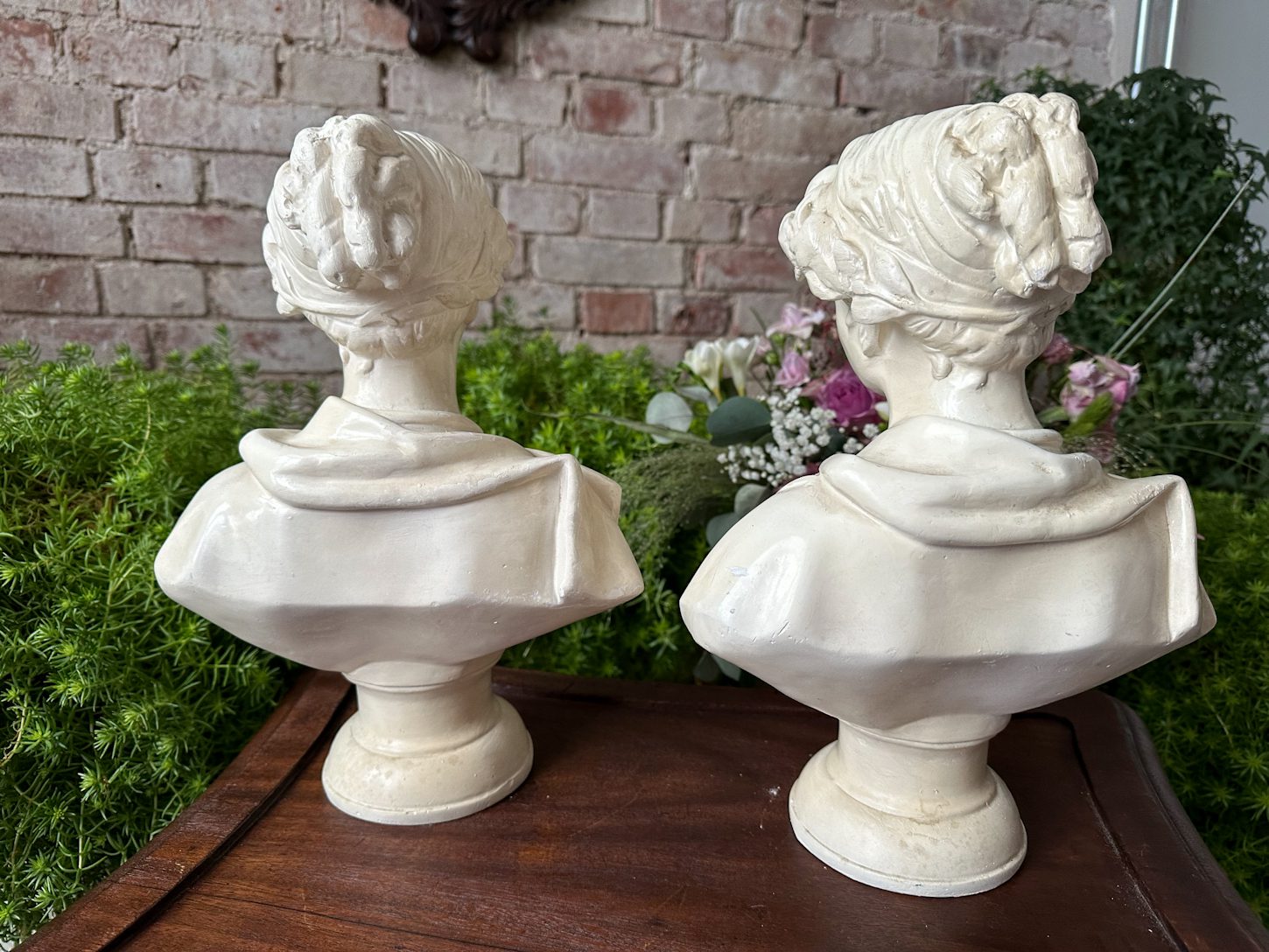
Both busts are in overall good condition with preserved glazed surfaces. Minor paint loss is visible on the rear of the hair area of one bust, revealing the natural plaster tone beneath the glaze — clearly visible in the photographs. Paint traces and marking residue are visible inside the hollow base — acquired during storage. Both busts are structurally stable, with no fractures on the visible surfaces. The condition of the pieces is fully reflected in the photographs.