Antik bordslampa med påfågel och grön sammetskupa — jugendstil och historicistisk eklektik (antik bordslampa) 250,00 €
You’re now subscribed to price tracking for this product. We’ll notify you if the price drops. 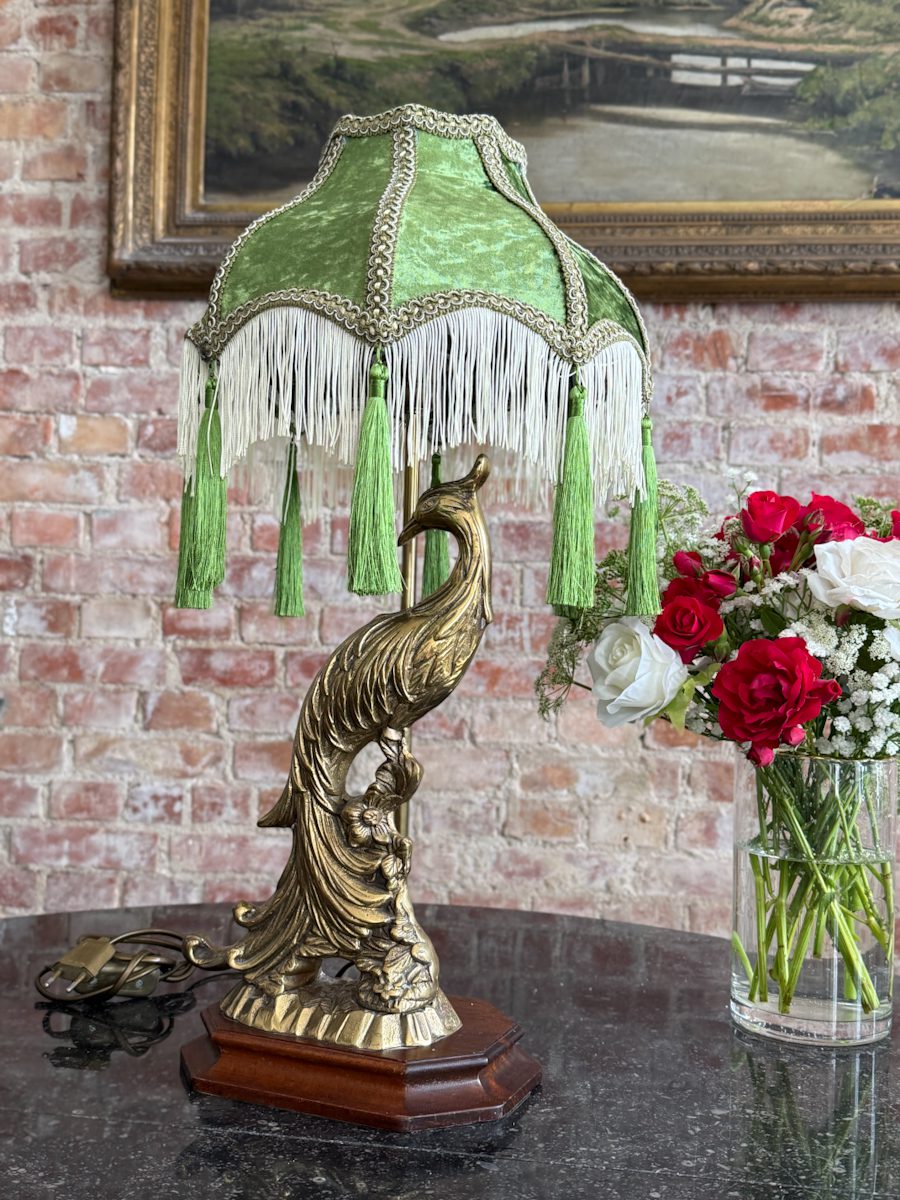


Antik skrivbordslampa med påfågel och grön sidensammetsskärm – jugend och historism i eklektik (6972)
Beskrivning
Antik bordslampa med påfågel och grön sammetskupa — jugendstil och historicistisk eklektik (antik bordslampa)
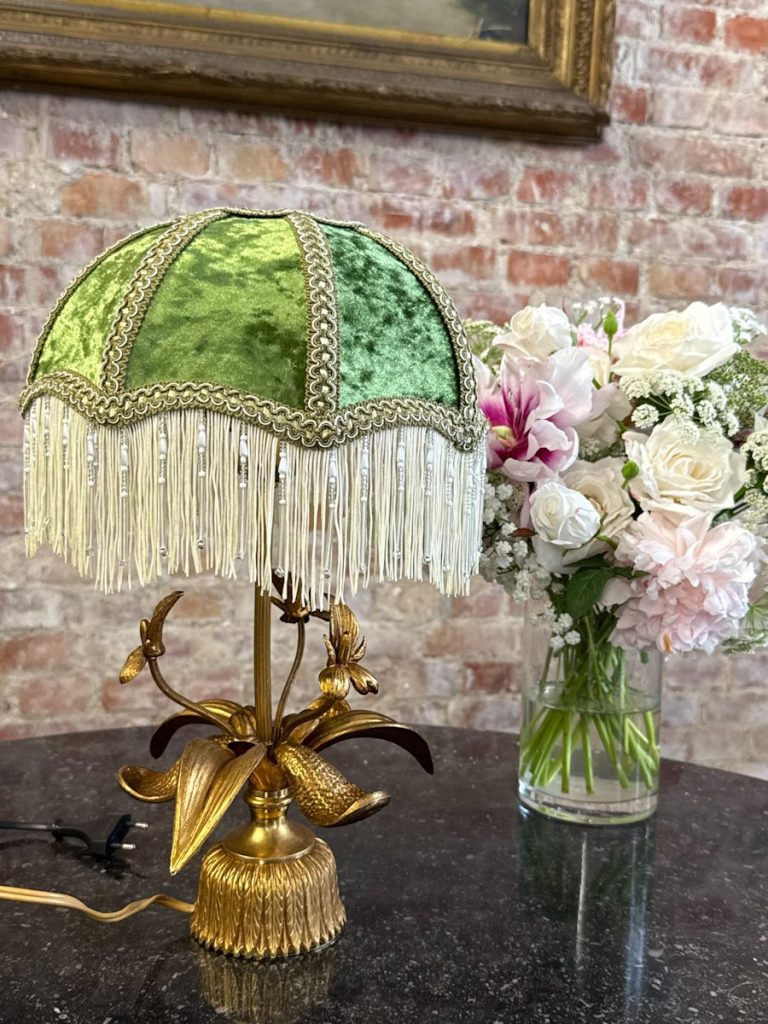
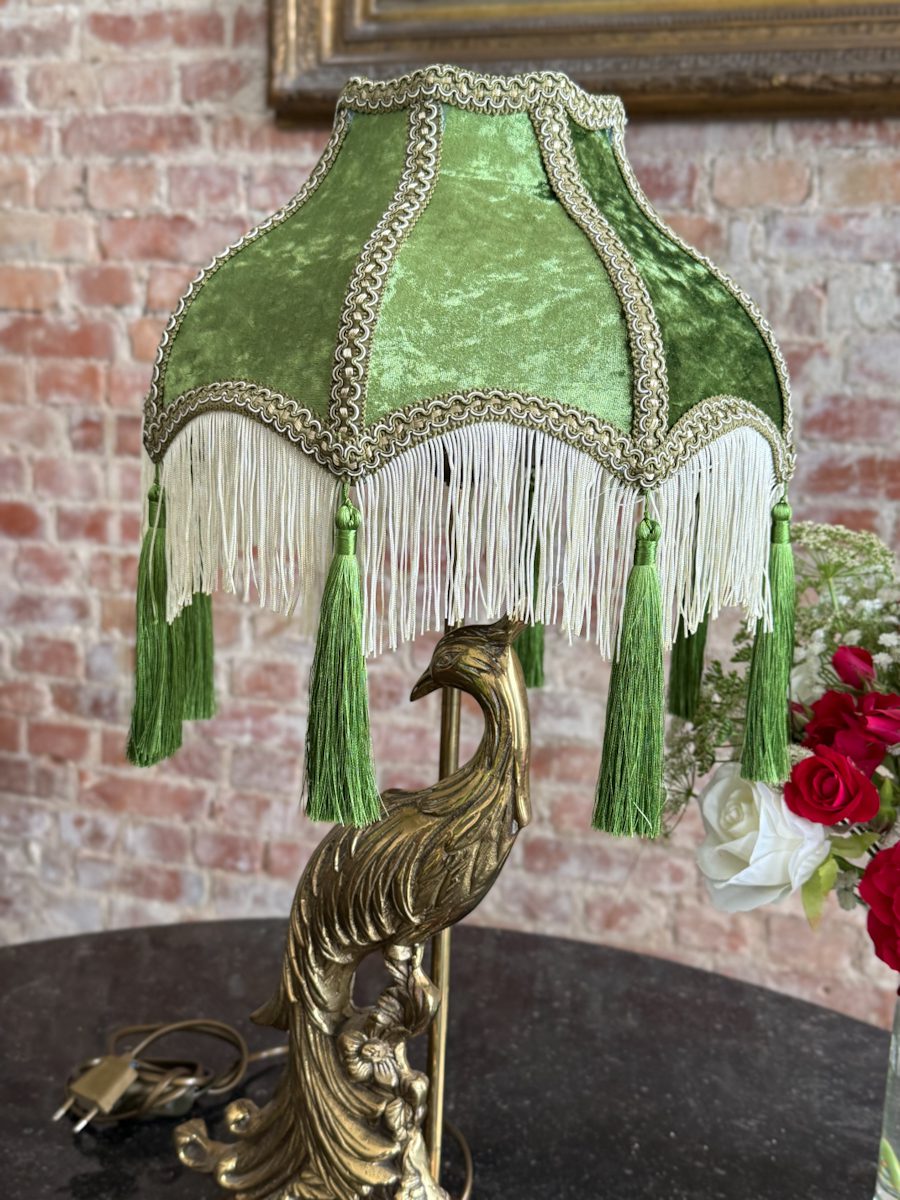
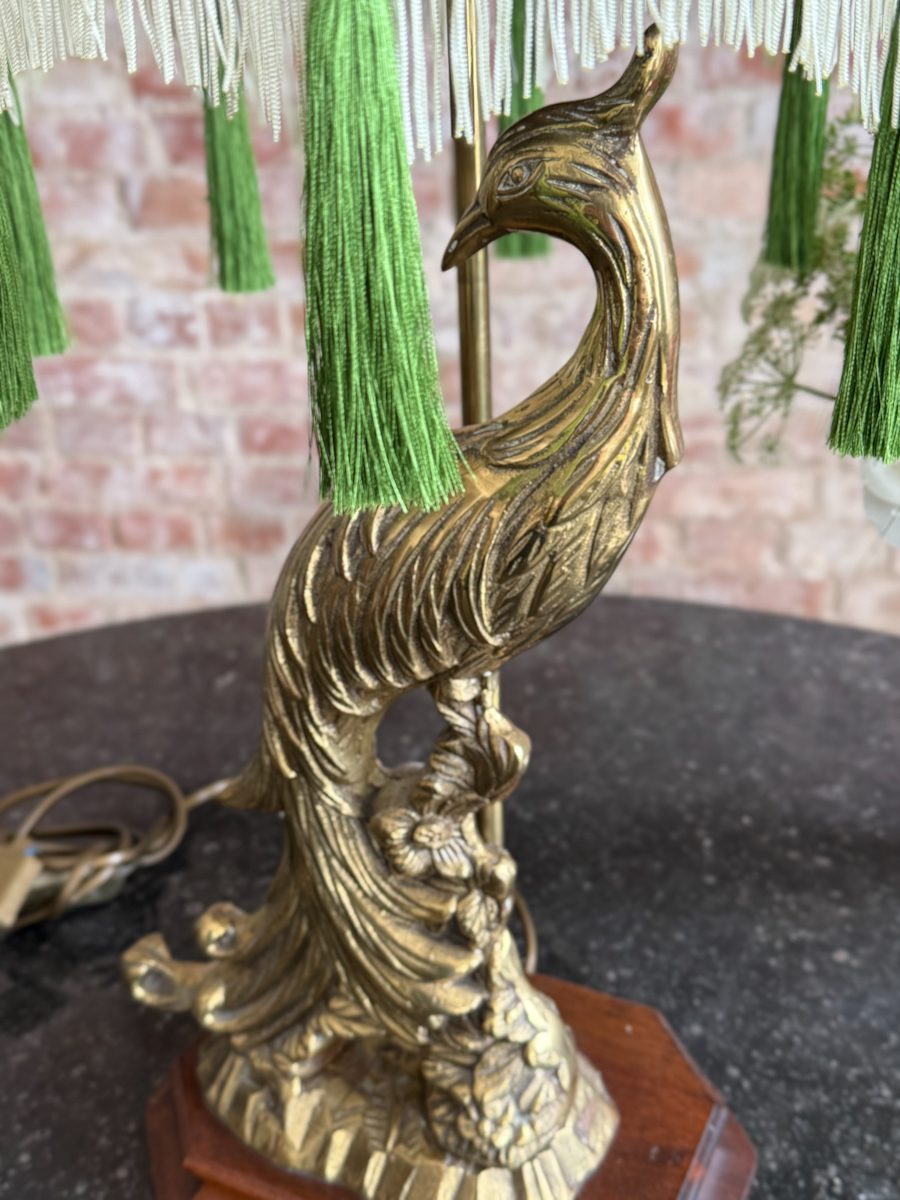
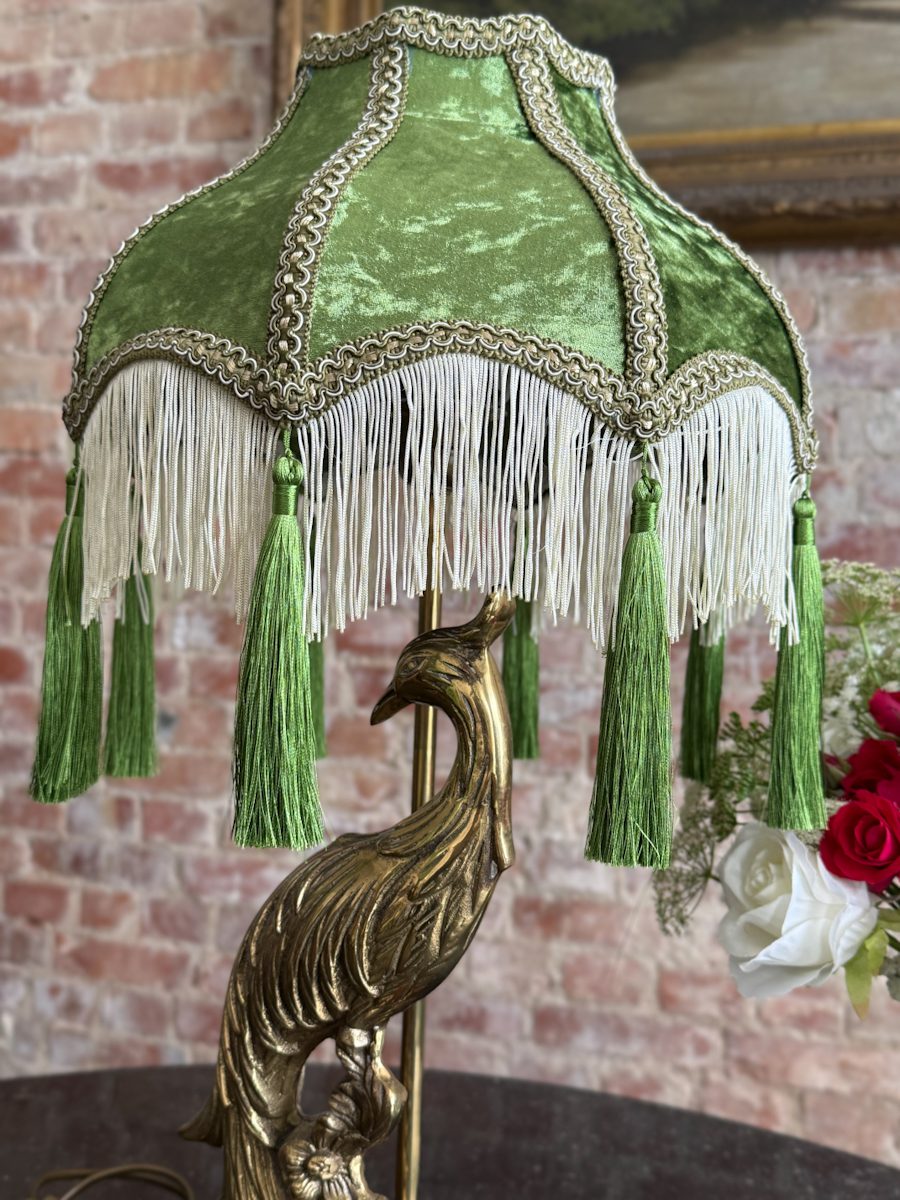
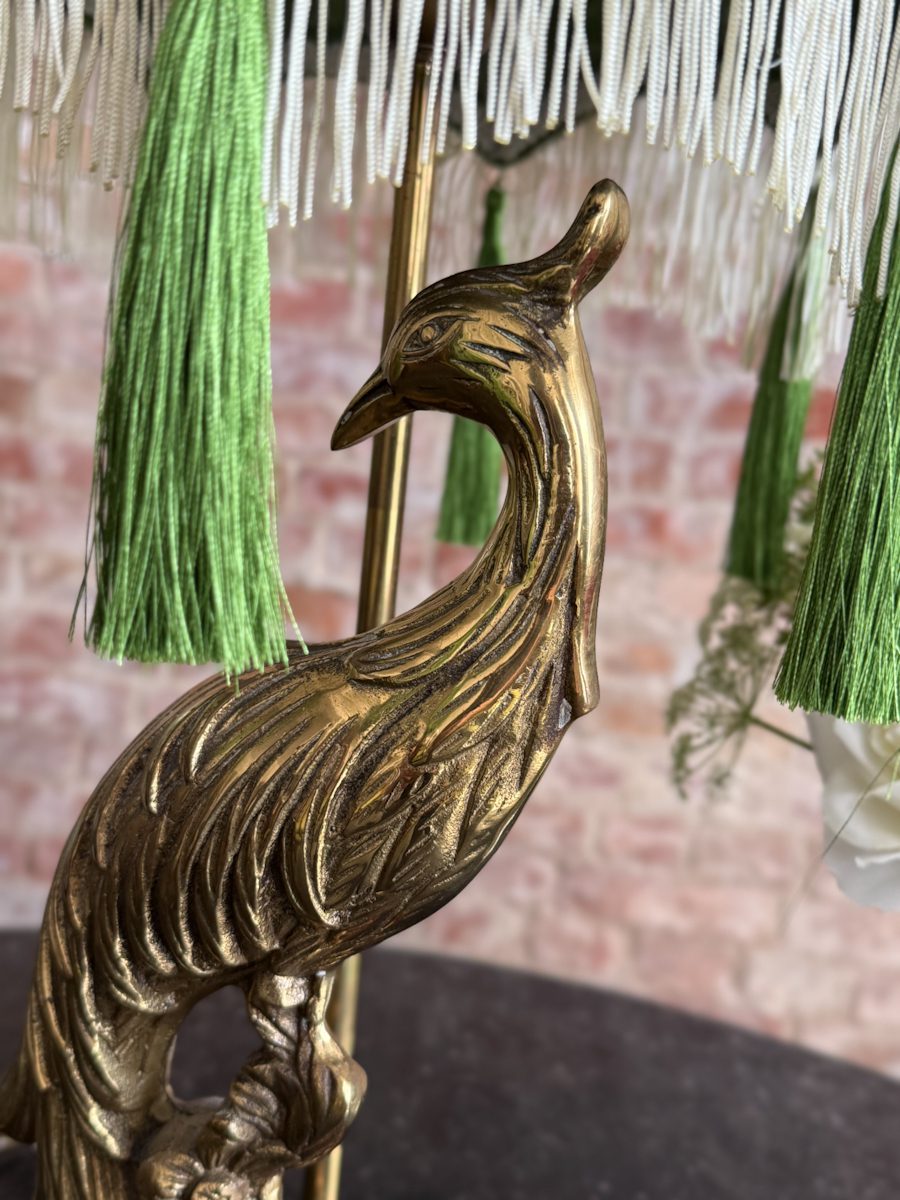
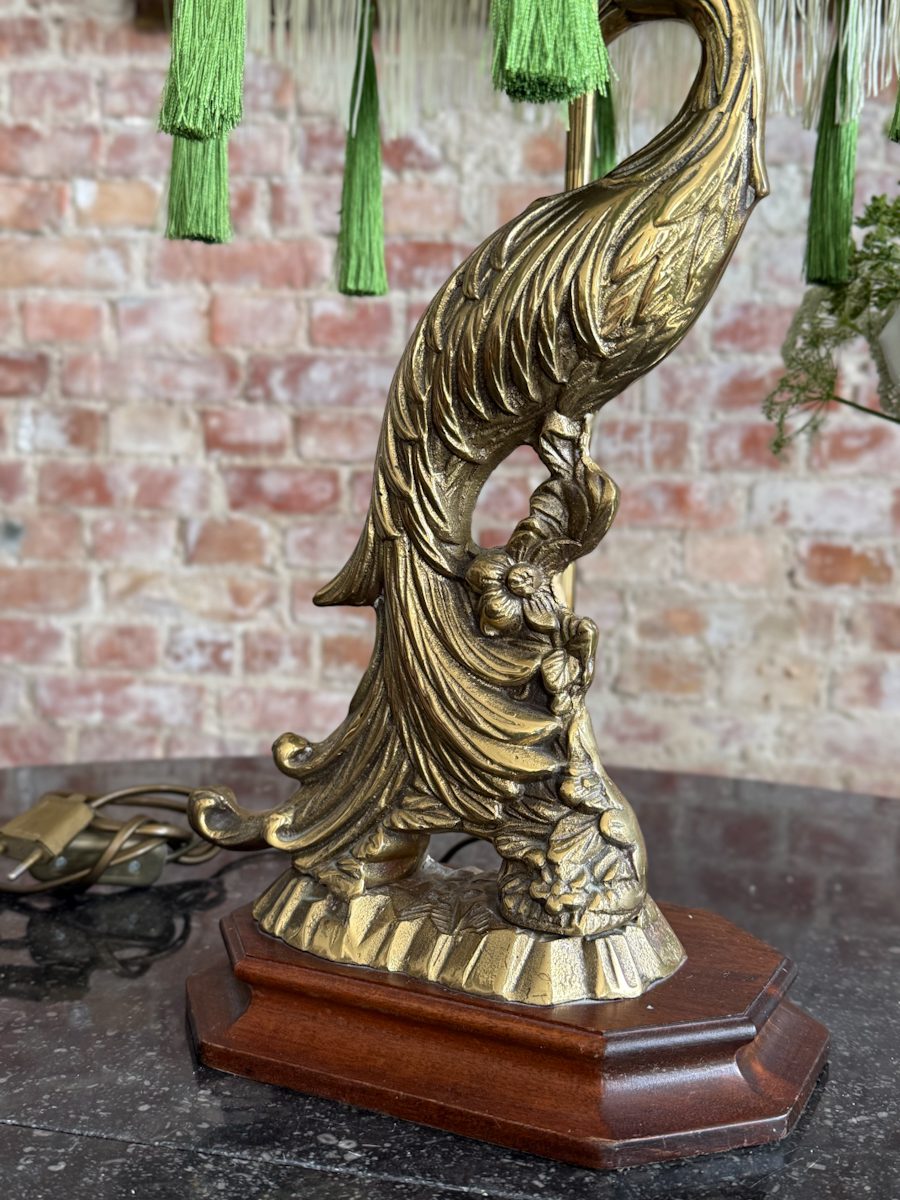
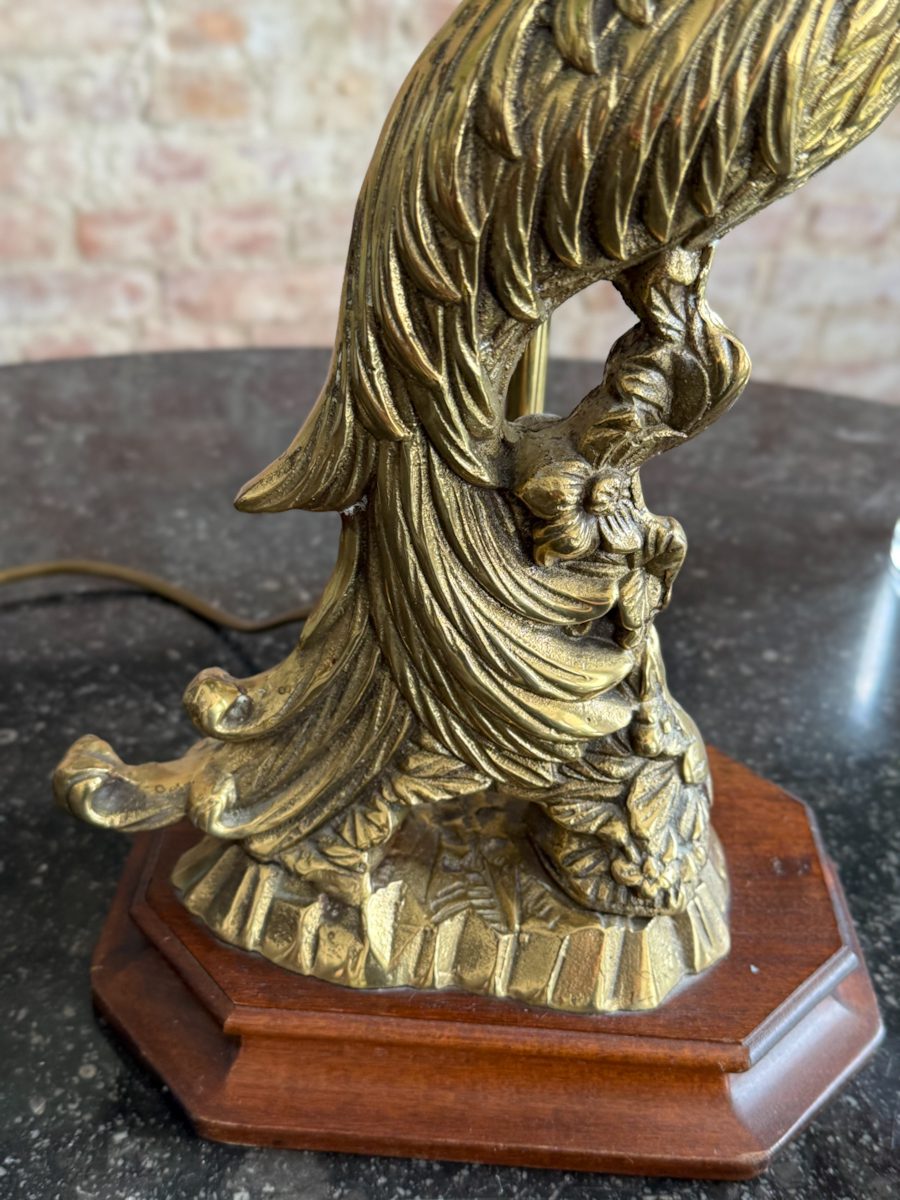
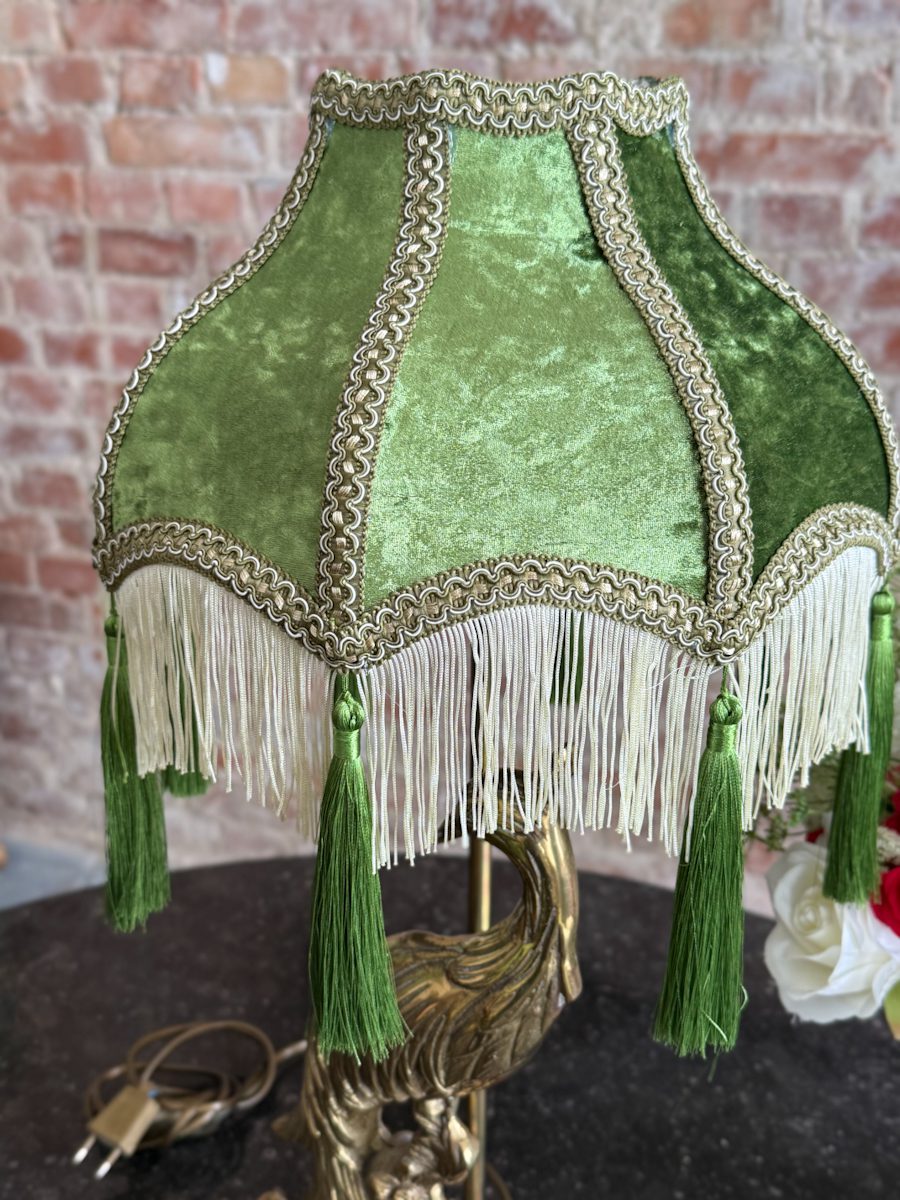
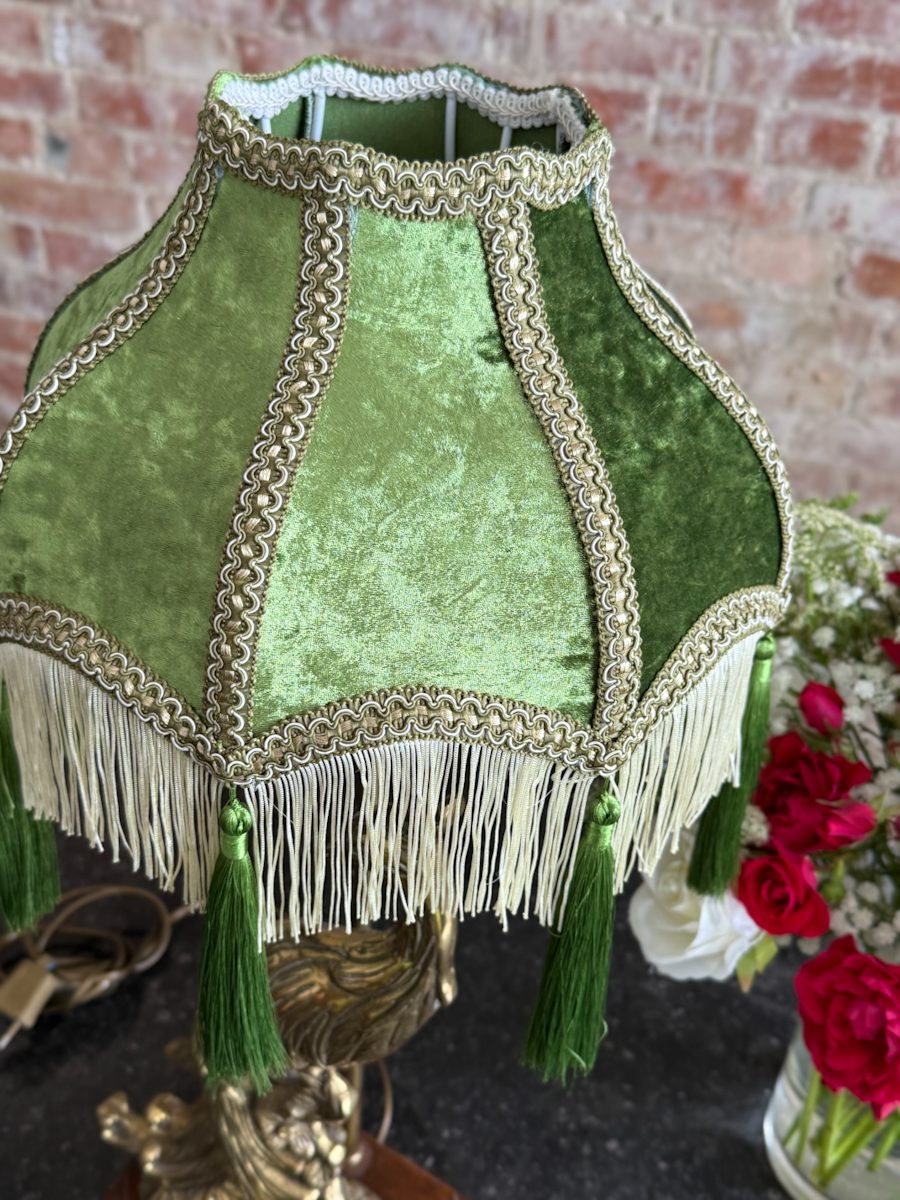
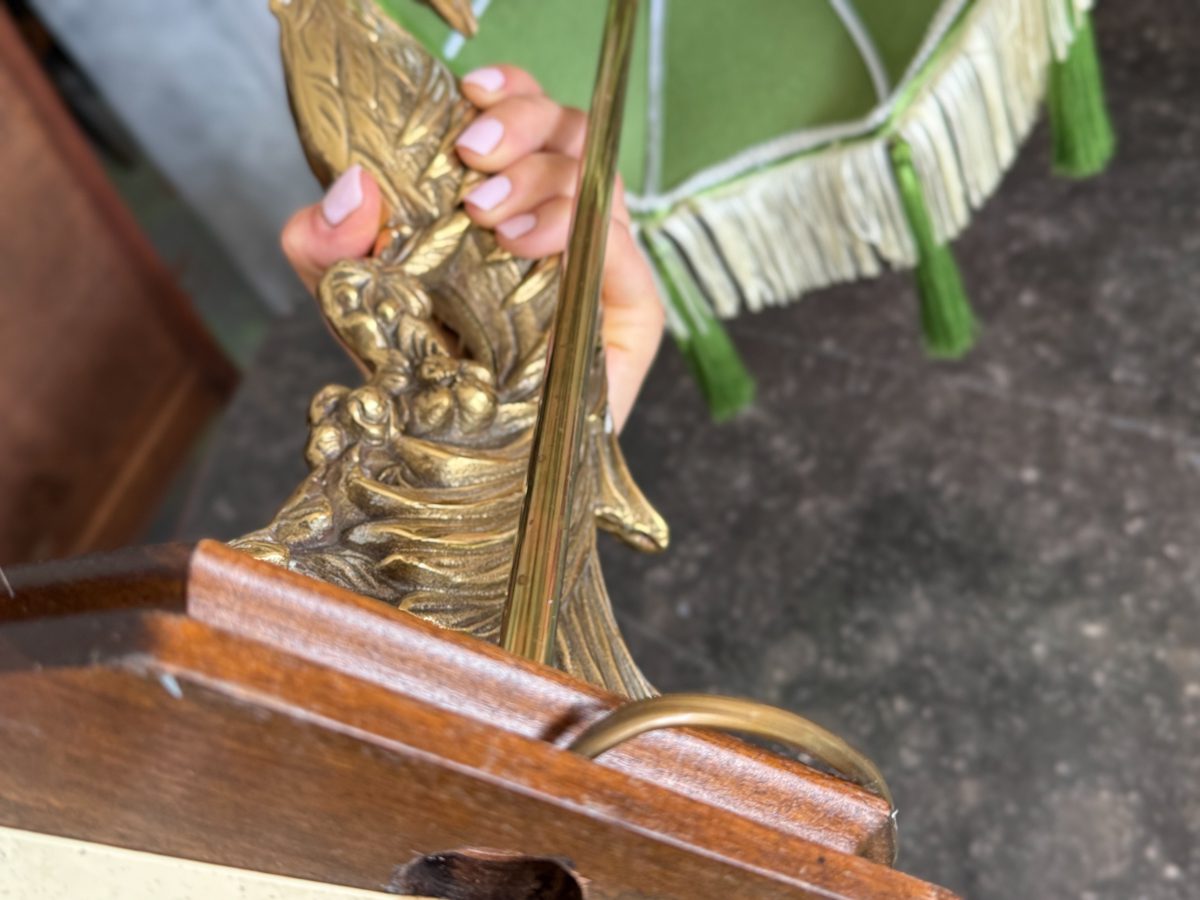
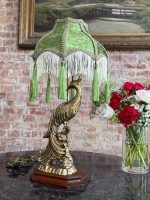
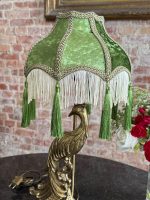
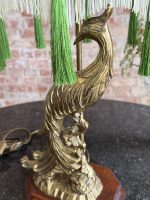
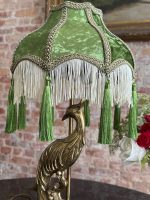
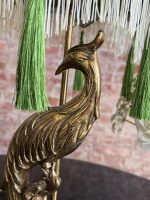
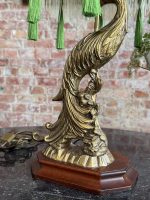
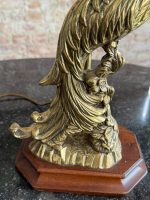
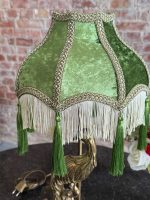
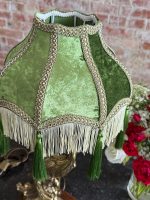
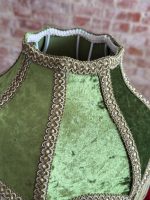
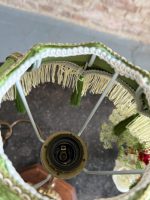
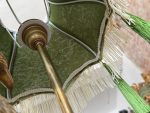
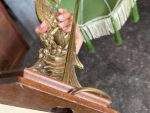
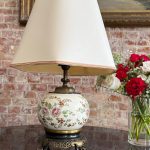
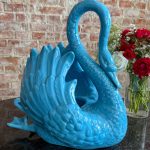
Konstnärlig förfining och uttrycksfull symbolik förenas i denna mellanstora bordslampa, som utstrålar 1900-talets tidiga europeiska salongsellegans. Lampans bas utgörs av en plastisk och detaljerad påfågelfigur som sitter på en blommande gren. Dess fjäderreliefer framhävs effektivt av en ädel mörk patina och bronsfinish. I europeisk konst har påfågeln historiskt varit en av de mest framstående budbärarna och symbolerna för jugendstilens estetik (Art Nouveau), som förkroppsligar naturlig grace och mystisk lockelse. I denna föremålsdesign är jugendstilens flytande linjer skickligt kombinerade med historicismens strikta former, och kompositionen kröns av en lyxig, veckad grön sammetskupa, dekorerad med långa, eleganta ljusa fransar och dekorativa tofsar.
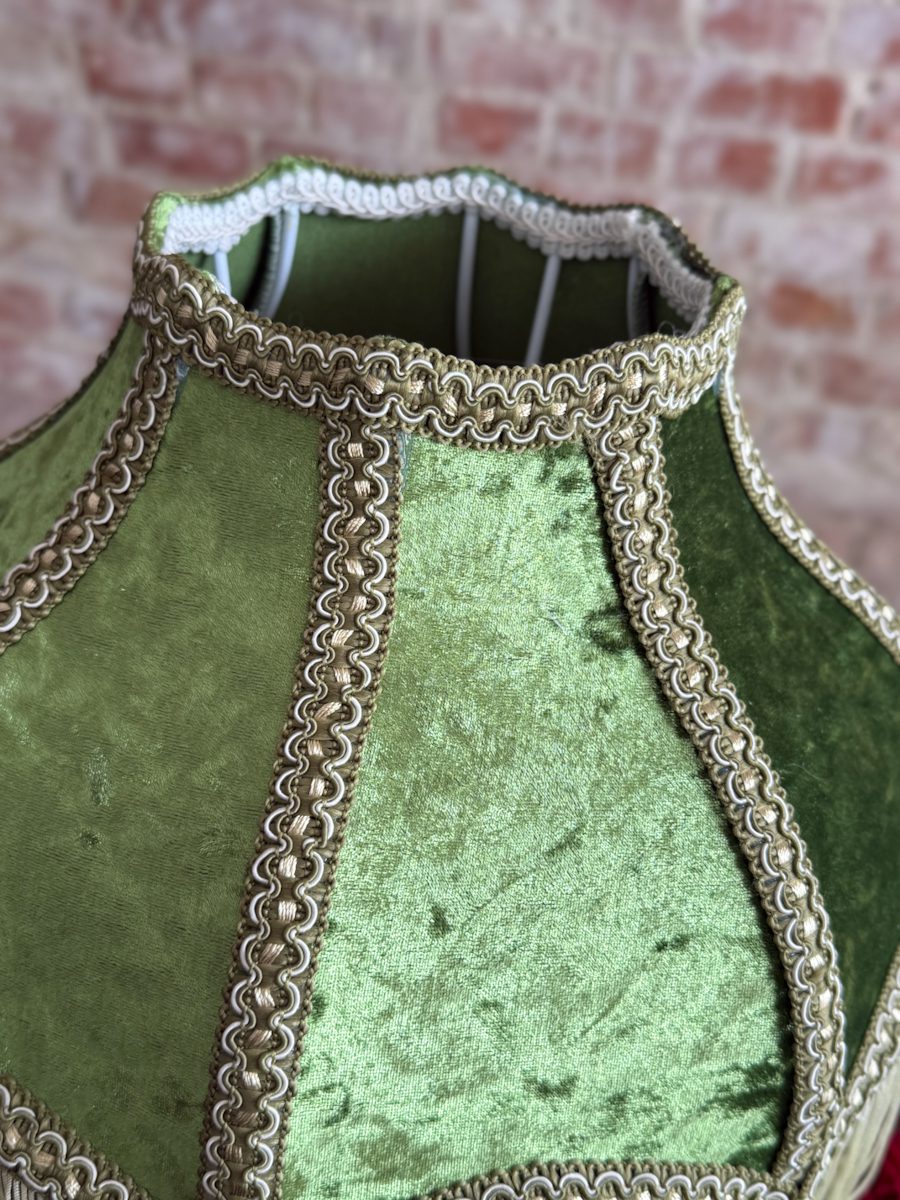
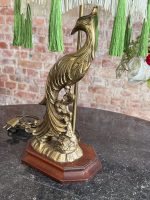
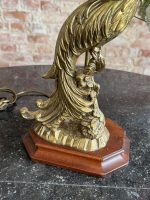
Föremålet skapades i mitten av 1900-talet, cirka 1950–1960. Föremålet tillverkades som en högkvalitativ stiliserad hyllning till 1900-talets europeiska dekorativa konsts stora traditioner. Mästerverkare från den tiden, som svar på intellektuellas intresse för retrostilar, återgick ofta till klassiska gjutningstekniker och monterade lampan på en massiv, profilerad träbas som ger perfekt stabilitet och kompositionell fulländning. Föremålet har ett högt inredningsvärde, eftersom sammetskupan och alla textil dekorativa element har bevarats till idag i perfekt skick, utan att förlora sin färgdjup.
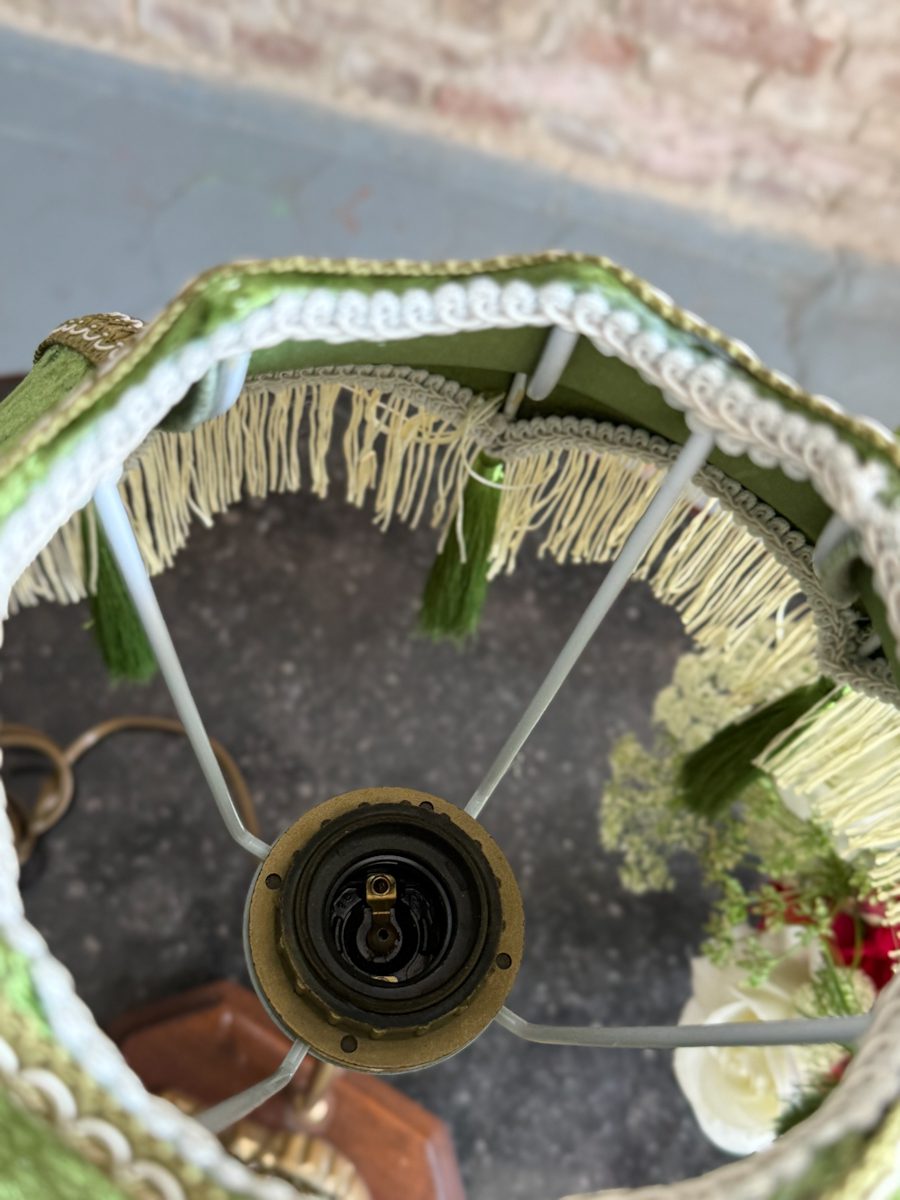
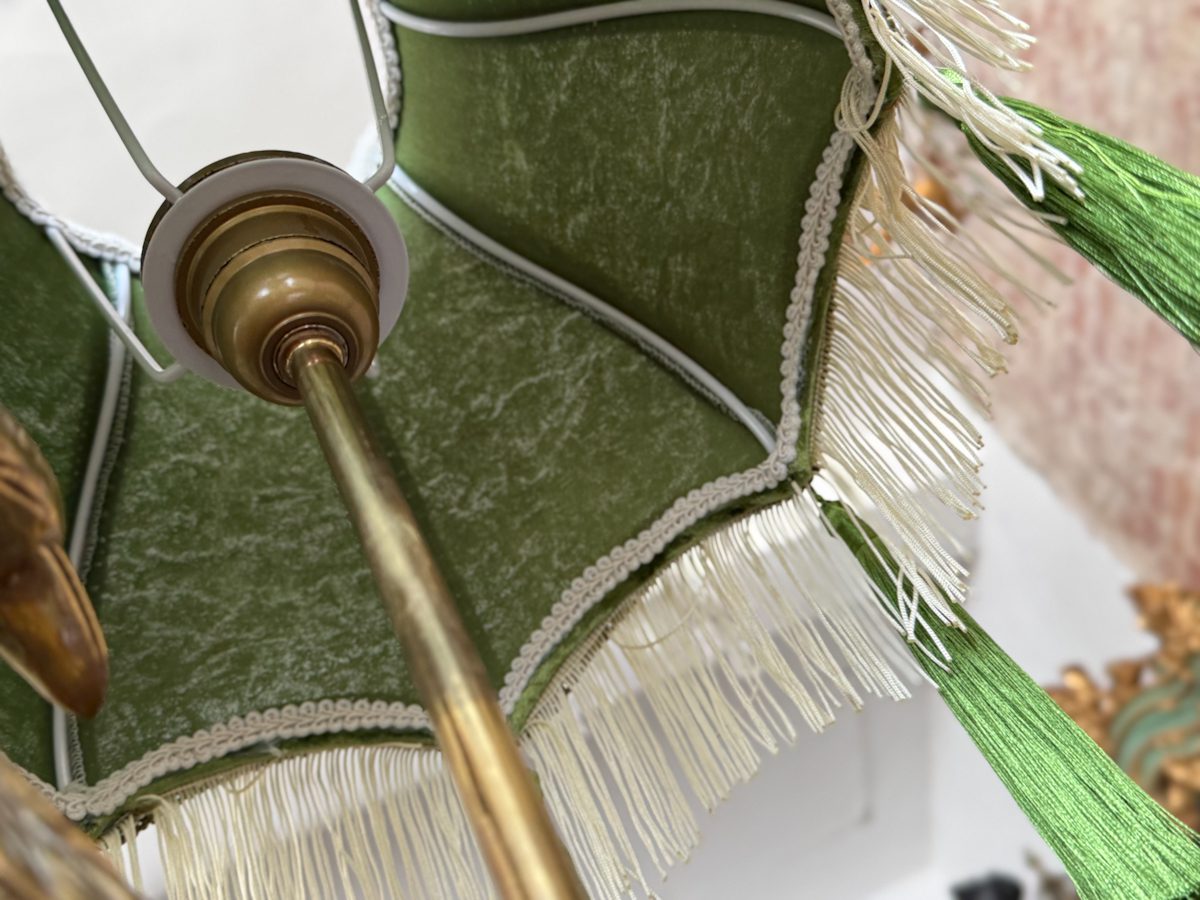
I en modern inredning blir denna lampa en sofistikerad och iögonfallande accent på ett skrivbord i trä, ett nattduksbord eller en konsol i vardagsrummet. När lampan är tänd sprider den ett mjukt ljus genom den gröna sammeten och fransgardinen, vilket omedelbart skapar en varm, intim och lätt mystisk atmosfär från svunna tider. Det elektriska systemet är fullständigt kontrollerat, fungerar felfritt (standard europeisk kontakt). Metall- och träbasen är utan defekter, tyget på skärmen är rent och sträckt. Föremålets skick återspeglas fullständigt i fotografierna.
Jugendstil-skildring, Fjodor Sjalyapin (Chaliapin): Teaterns kulisser efter en krävande operaföreställning sjunker ner i tysta, trötta halvtoner, men i huvudkonstnärens privata sminkloge vid det stora fönstret i ett gammalt hus i Jelgava råder fullständig stillhet. Vid spegeln, bland teaterkostymer och tunga historiska sammetskläder, vilar en mystisk silhuett tyst på bordskanten, vars mörka fjädrars relief naturligt bryter det sista kvällsljuset. Operasångarens hand rör långsamt vid den kalla, patinerade gjutningen och känner metallinjernas styrka, som så levande och stolt sträcker sig uppåt mot den effektfulla gröna skärmen, från vilken långa, ljusa fransar flödar. Rummet doftar sött av sminkpuder, rosor och nybryggt kaffe, medan lampans mjuka sken förvandlar väggarna till levande rörliga skuggor och ger konstnären en lugn stund innan han framträder inför Liepajas entusiastiska publik.
-
Samtidigt, alldeles i närheten, vajar gamla fiskebåtar i vågorna i Rigas alltid dimmiga hamn, och i föreläsningssalarna vid universitetet i Tartu studerar professorer redan nya trender inom natur- och konstfilosofi. Medan tjänstemän i de administrativa centra i Vilnius och Kaunas ordnar historiska dokument, och i de avlägsna sydliga metropolerna Odessa och Tbilisi kokar ett stormigt nattliv, här, i hjärtat av Kurlands guvernement, tycks all världens skönhet och oro för ett ögonblick stanna upp kring en enda förgylld fågelfigur och en grön sammetsljuskrona.*
Antique Desk Lamp with Peacock and Green Velvet Fringed Shade — Eclectic Art Nouveau & Historicist Style (antique desk lamp)
Artistic refinement and expressive symbolism converge in this medium-sized table lamp, radiating the cozy salon elegance of the mid-20th century. The base of the lamp is formed by a fluid and finely detailed figure of a peacock perched on a blossoming branch, its embossed feather patterns accentuated by a rich dark patina and a bronzed finish. In European decorative arts, the peacock was historically celebrated as one of the preeminent symbols and harbingers of the Art Nouveau movement, embodying natural grace, beauty, and mystical allure. In this particular piece, the flowing lines and organic motifs of Art Nouveau are masterfully blended with the structured forms of Historicism, crowned by a luxurious pleated green silk-velvet lampshade decorated with long, elegant cream fringes and ornamental tassels.
The piece was manufactured in the mid-20th century, circa 1950–1960. It was crafted as a premium retrospective stylistic revival, honoring the finest European decorative art traditions of the turn of the 1900s. Artisans of this era, responding to a renewed appreciation for retro styles among the intellectual elite, frequently returned to classic bronzing and metal-casting techniques, mounting the sculpture on a substantial, profiled hardwood base to ensure absolute stability and aesthetic completeness. The lamp is a significant interior statement piece, primarily because the velvet lampshade and all textile trims (fringes and tassels) have survived completely intact, maintaining their original tonal depth and velvety texture.
In a contemporary setting, this lamp will serve as a sophisticated centerpiece on a wooden writing desk, a bedroom nightstand, or a living room console. When lit, the lamp filters a warm, diffused, and ambient glow through the rich green velvet and fringed perimeter, instantly creating a romantic and atmospheric mood reminiscent of bygone eras. The electrical system is fully tested and in perfect working order (fitted with a standard Euro plug). The metal and wooden components remain free of structural damage, showing a gentle, noble patina. The fabric shade is pristine, free of staining, with all tassels fully present. The condition of the item is fully reflected in the photos.
Art Nouveau and Historicist era snapshot, Fyodor Chaliapin (Chaliapin): The backstage world after a demanding opera performance hums in quiet, exhausted half-tones, but inside the principal artist’s private dressing room by the large window of an old Mītava house, a calm, warm peace resides. By the mirror, amidst theatrical costumes and heavy historical velvet robes, a mysterious silhouette rests silently on the edge of the table, the relief of its dark tail feathers naturally catching the final evening light. The opera singer’s palm slowly rests upon the cool, patinated casting, feeling the strength of the metal lines that stretch so vividly and proudly upward toward the striking green fabric shade, from which long, elegant cream fringes cascade. The room smells faintly of stage powder, roses, and freshly brewed coffee, while the lamp’s soft illumination transforms the walls into living, dancing shadows, offering the artist a moment of sanctuary before meeting his adoring public in the city of Libava.
At the very same time, just nearby, old fishing vessels rock gently in the waves of the always misty harbor of Reval, and within the lecture halls of Dorpat University, scholars are already researching the new philosophies of nature and art. While in the administrative centers of Vilna and Kovno, clerks organize historic documents, and in the distant southern metropolises of Odessa and Tiflis, the vibrant night life thrives, here, in the heart of the Courland Governorate, all the world’s beauty and restlessness seem for a moment gathered and stilled around a single bronzed avian form and its green velvet crown of light.