Эксклюзивный антикварный латунный парадный настольный набор — чернильница — это монументальное литье конца XIX века, дем 420,00 €
You’re now subscribed to price tracking for this product. We’ll notify you if the price drops. 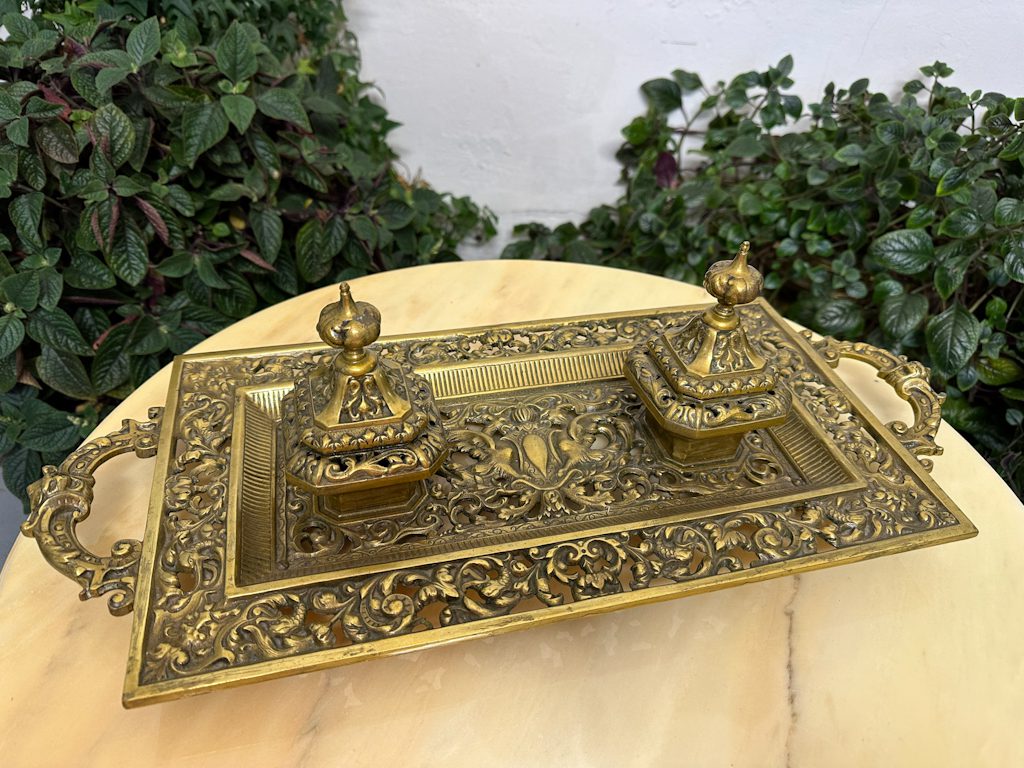
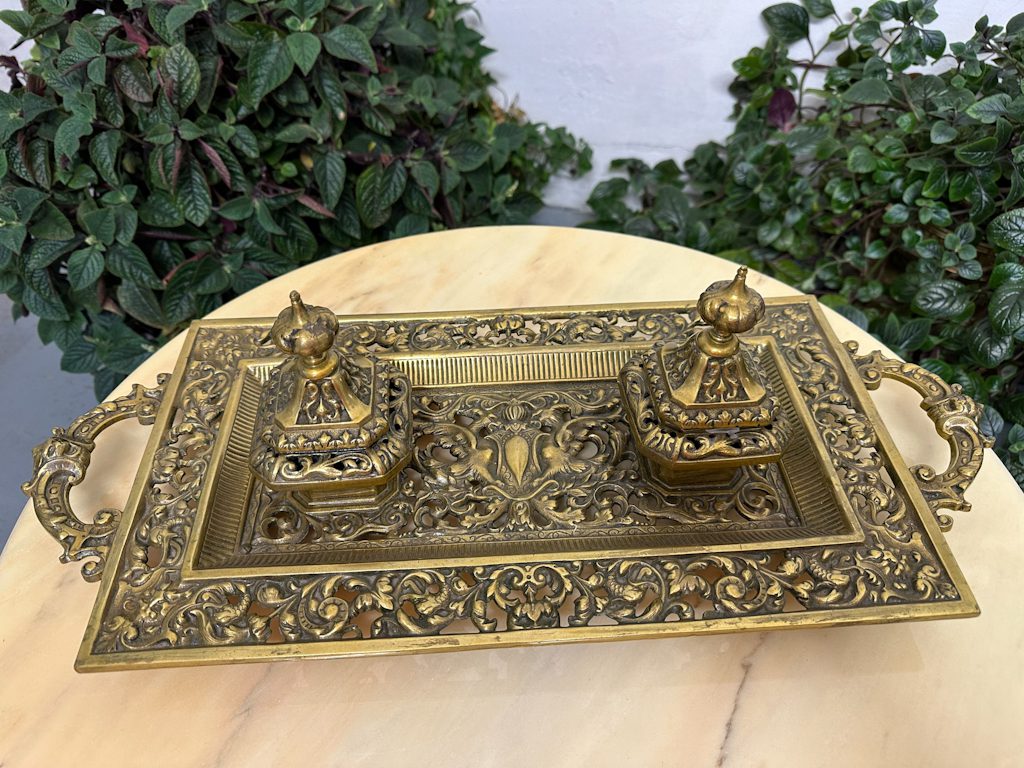
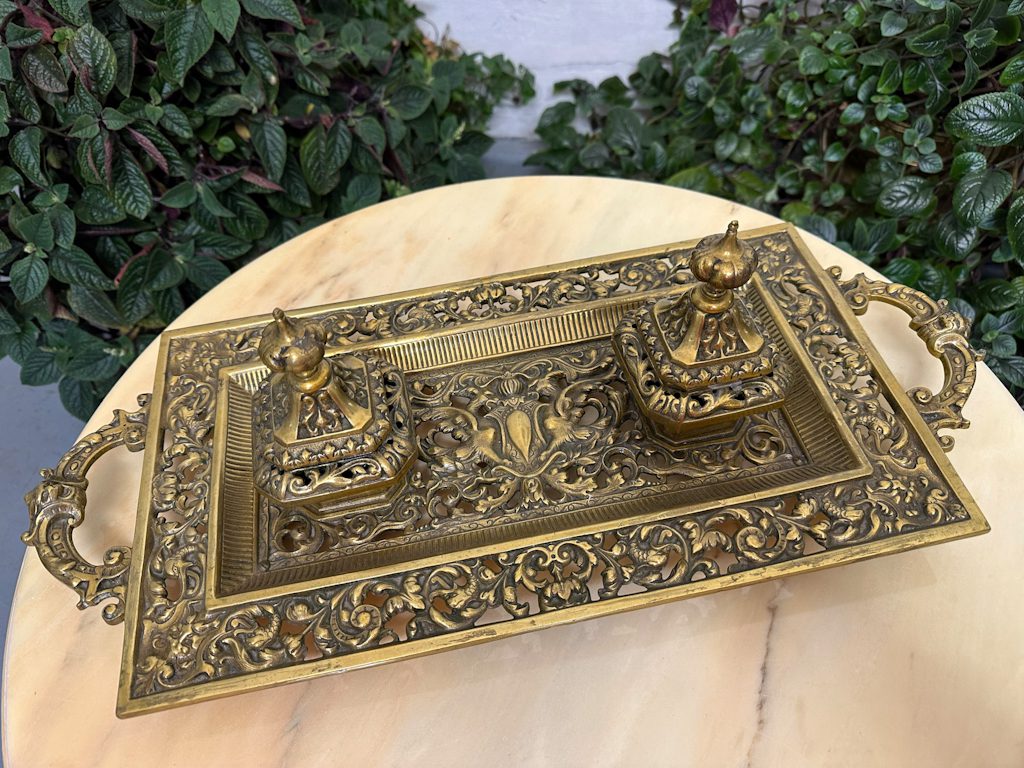
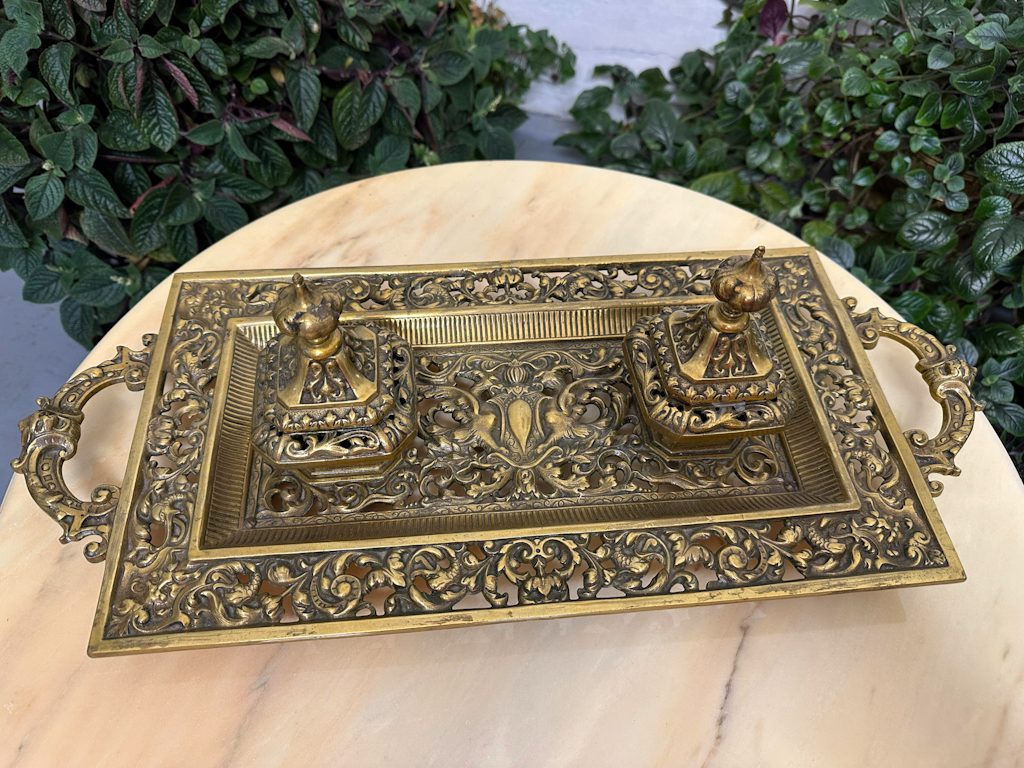
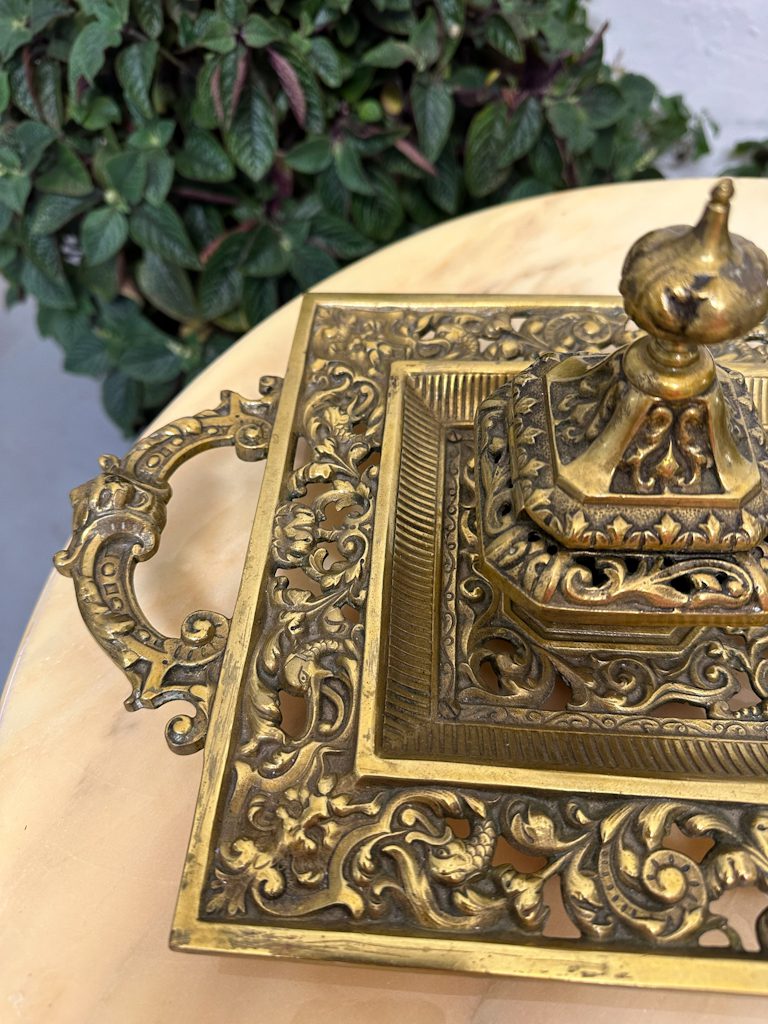
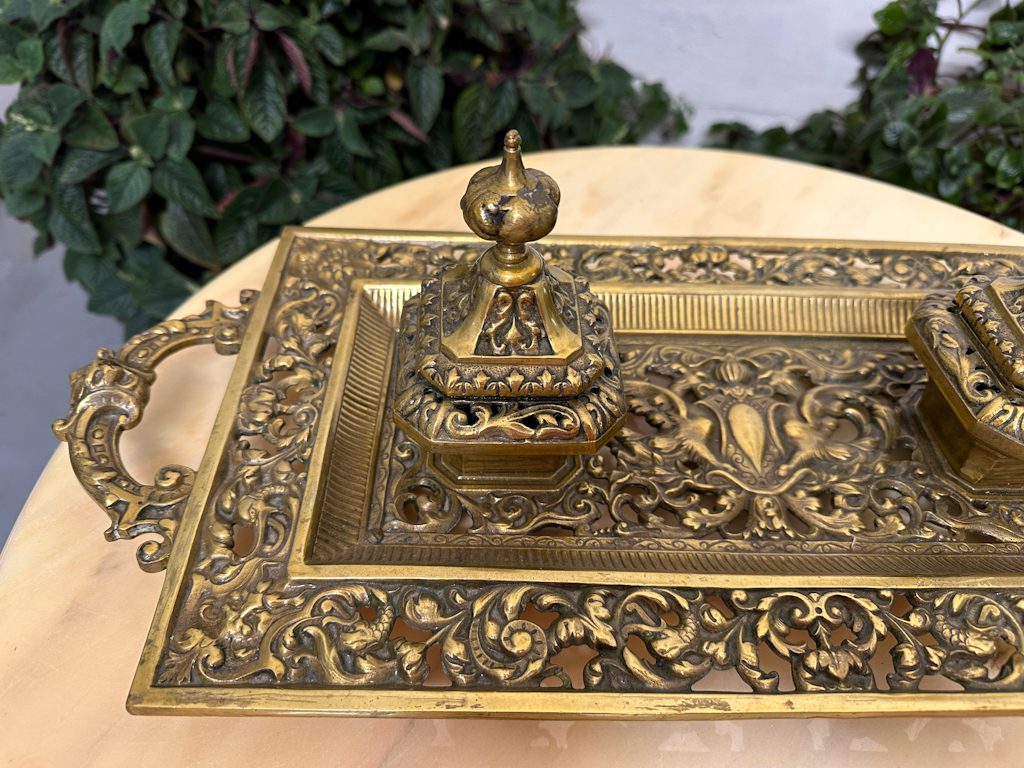
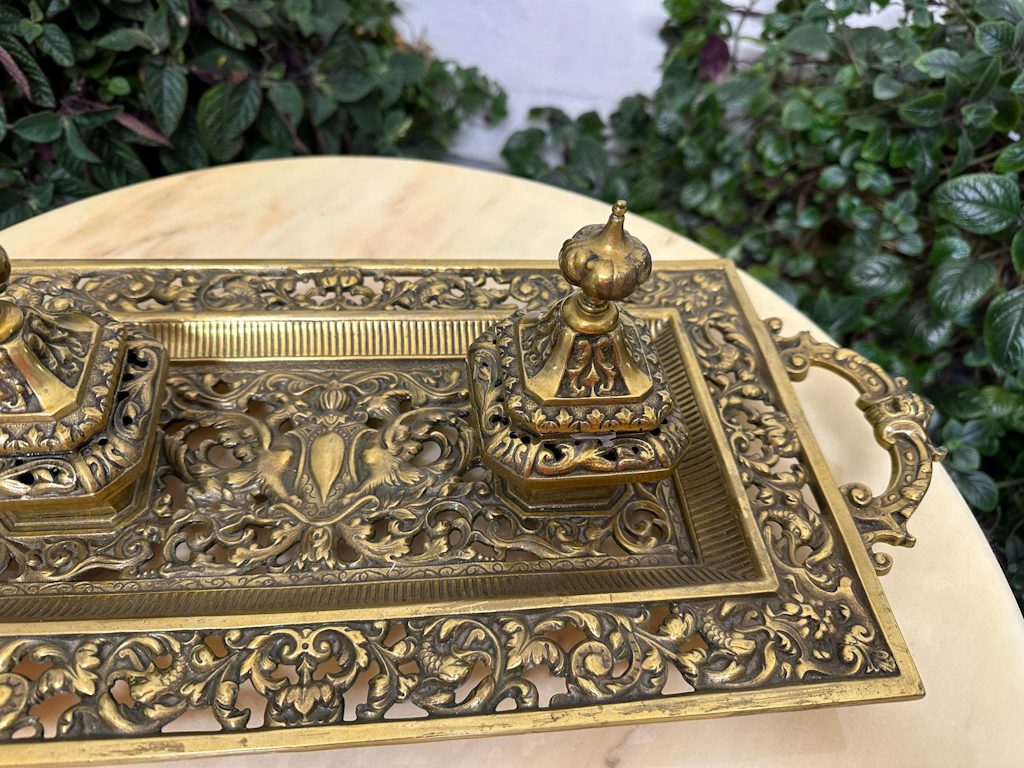
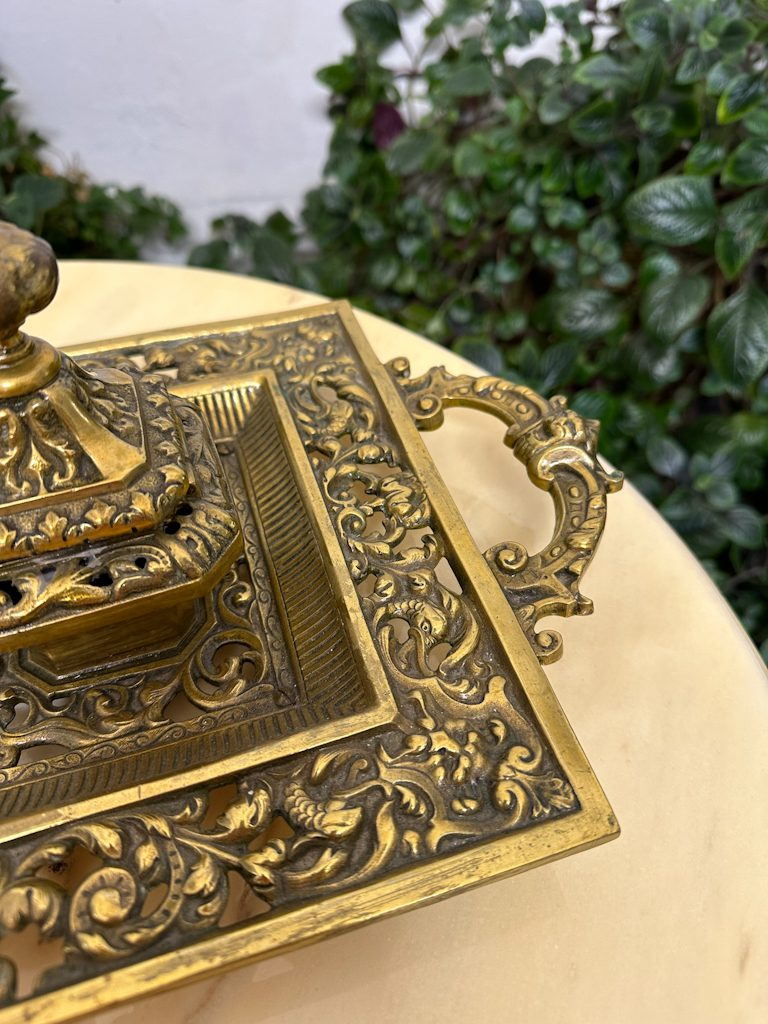
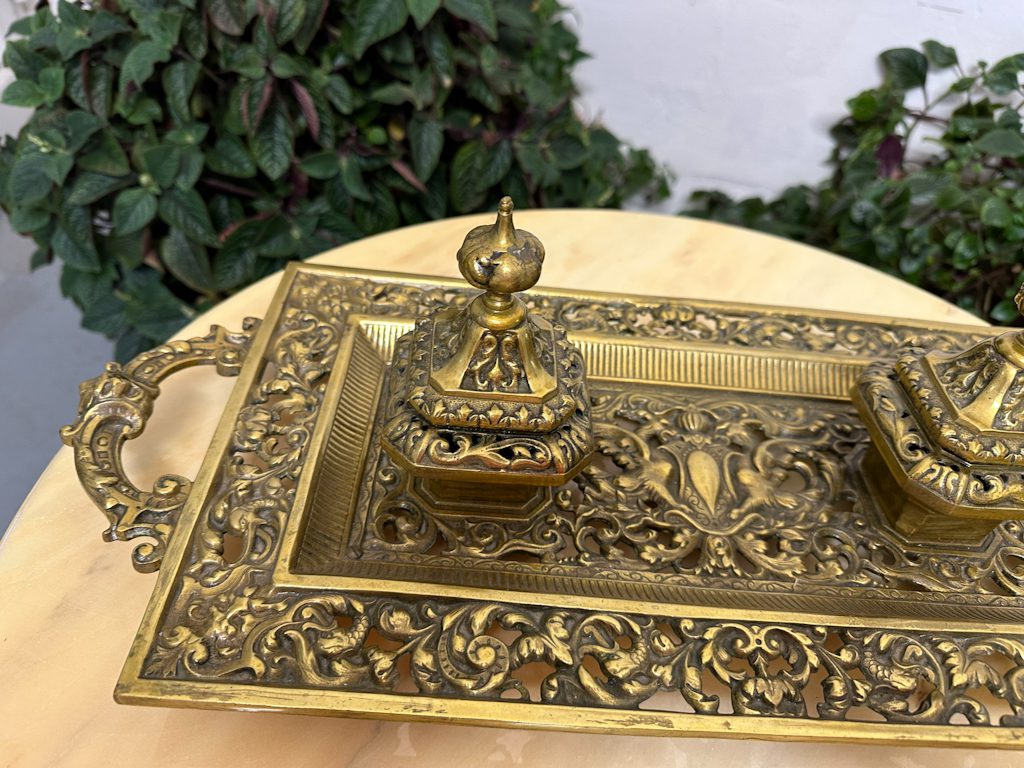
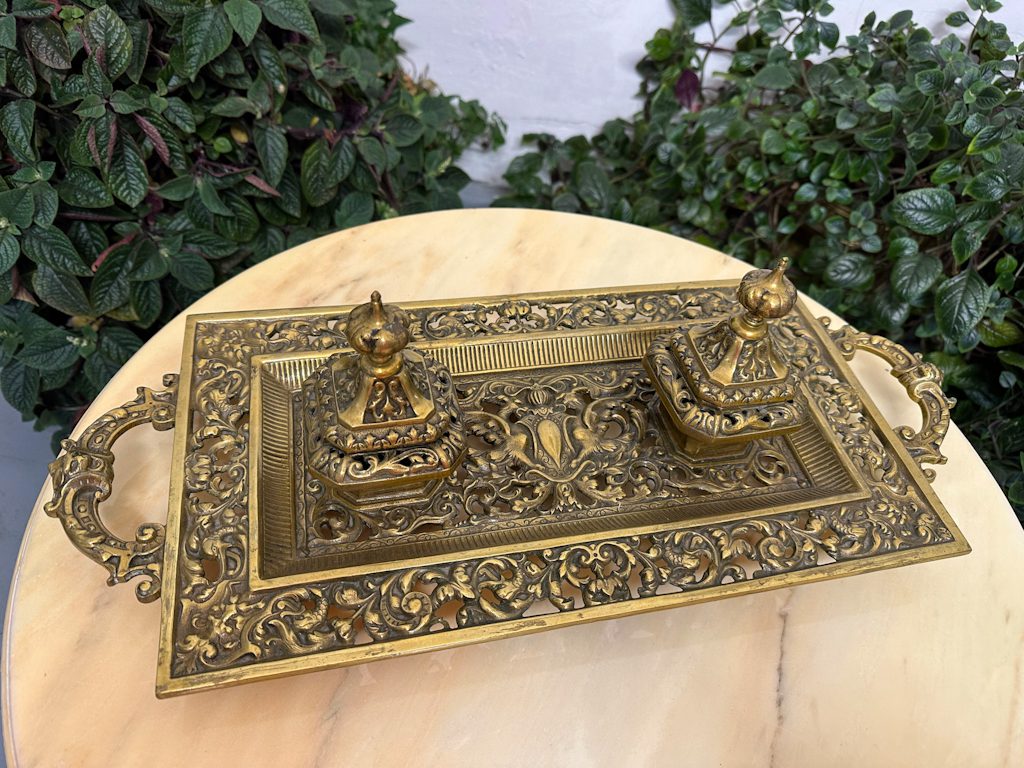
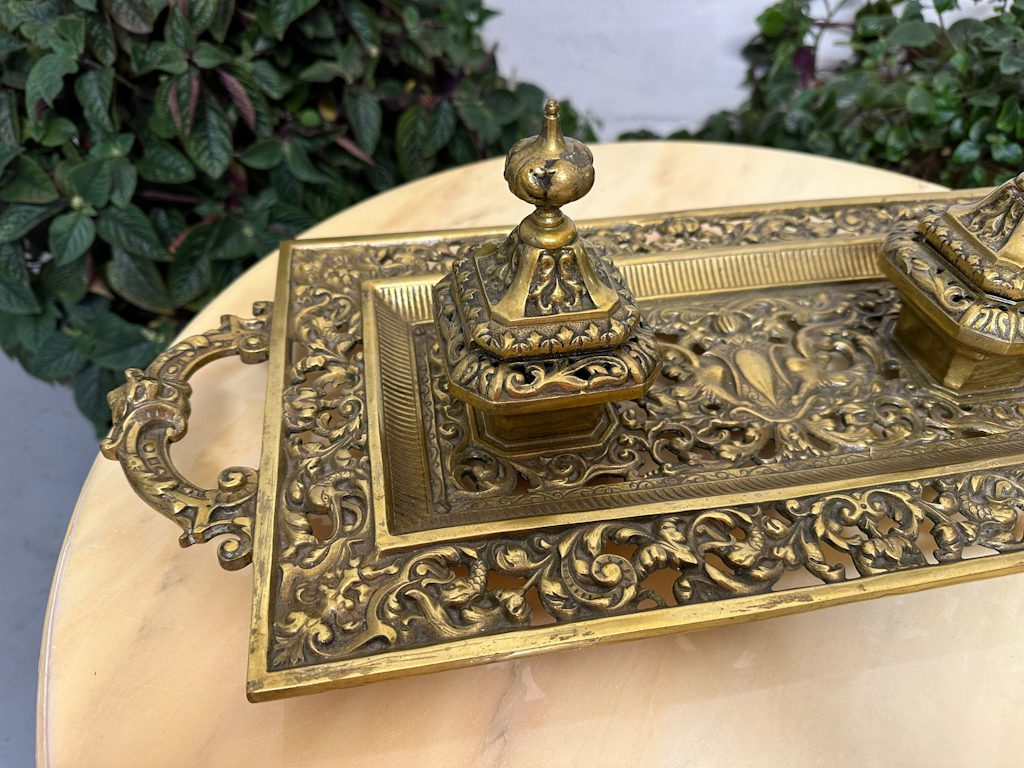
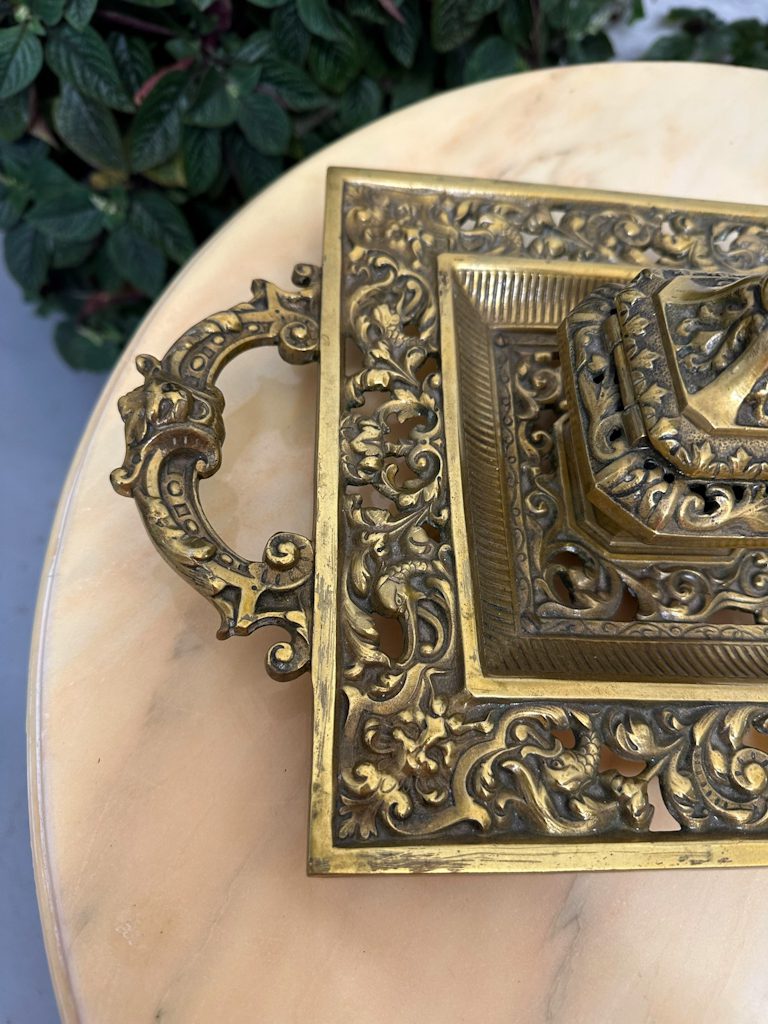
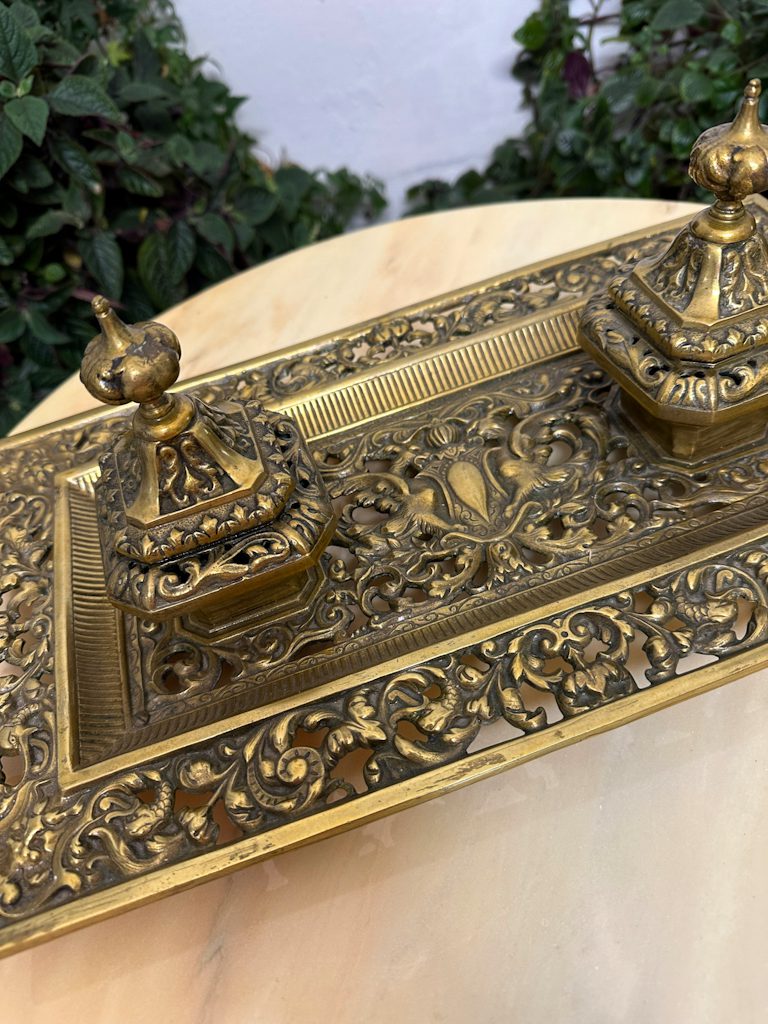
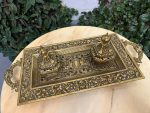
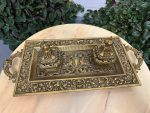
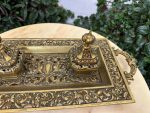
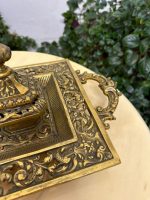
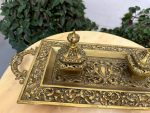

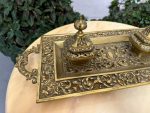

Ekskluzīvs liela izmēra antīks misiņa parādes galda komplekts — tintnīca (antique brass inkstand) (4410)
Длина 53.5 cm Ширина 24 cm
Описание
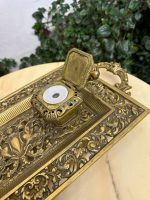
Антикварный латунный чернильный прибор с двумя чернильницами — стиль историзм (antique brass inkstand)
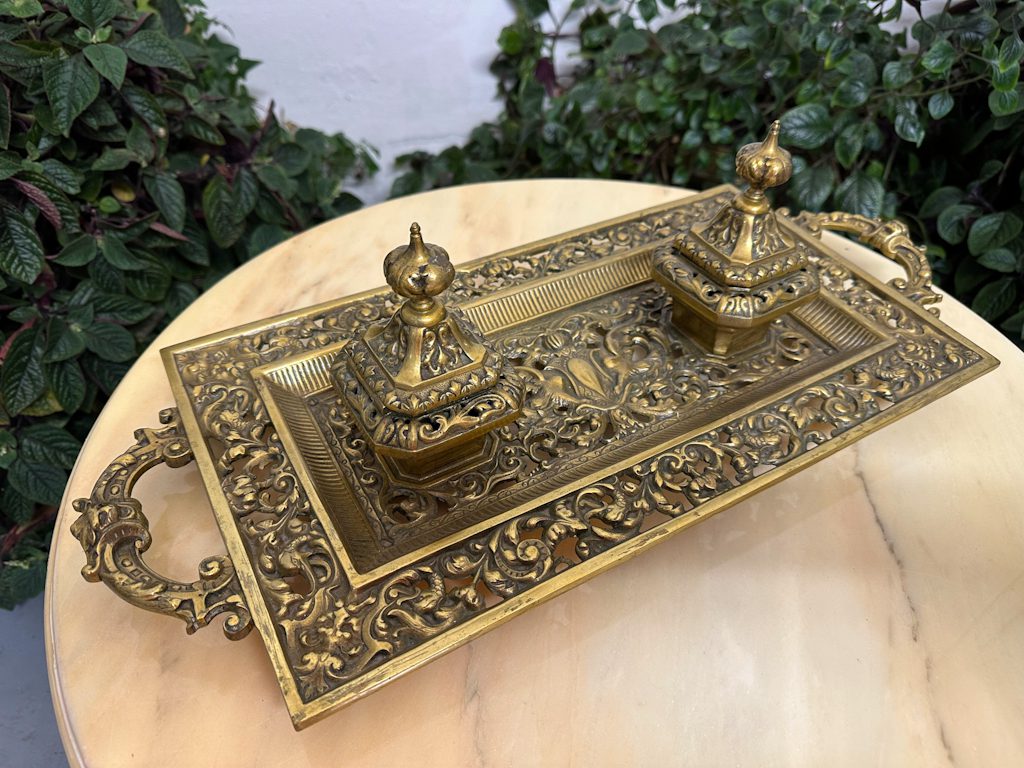
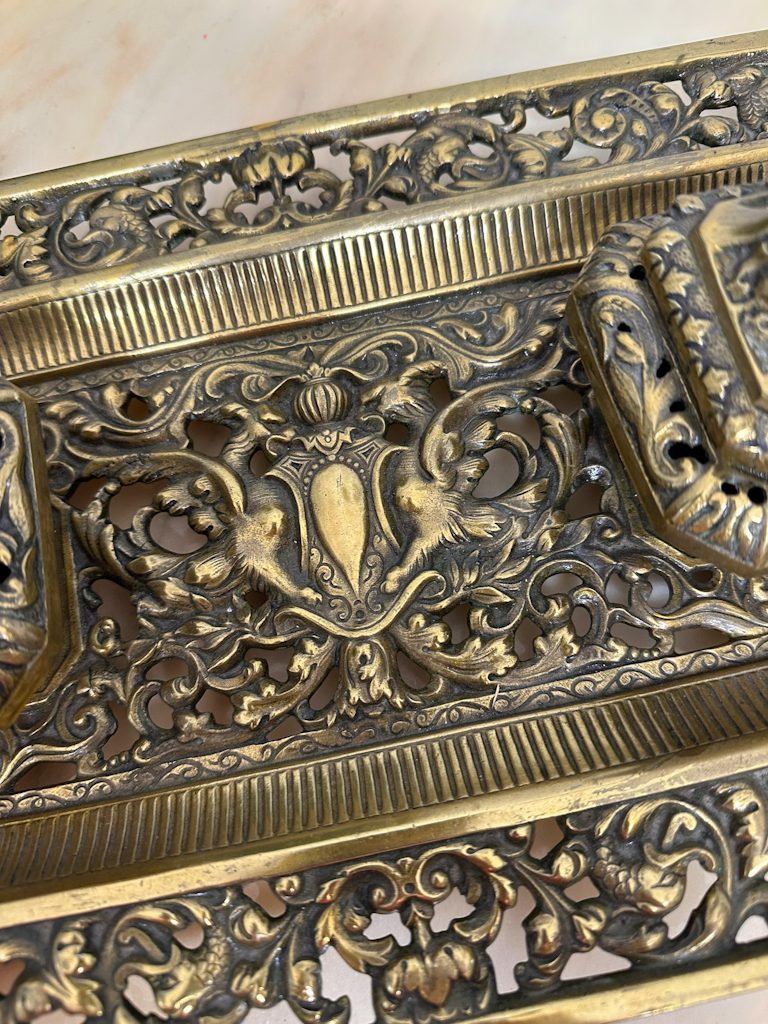
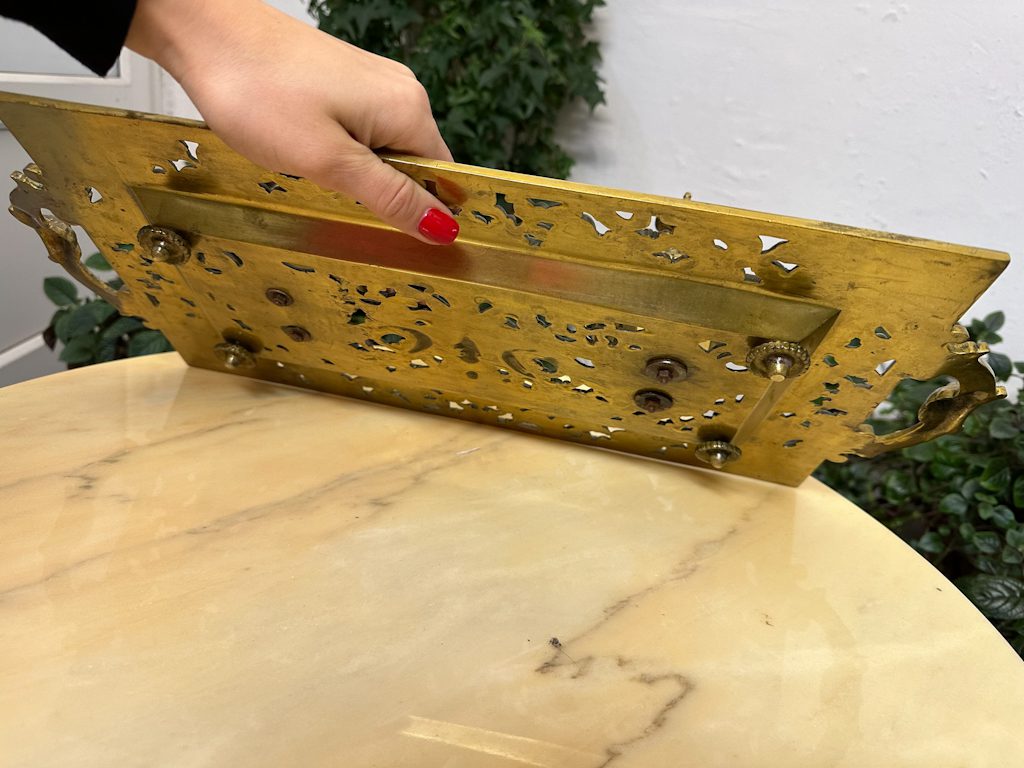
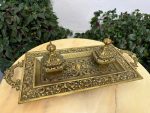
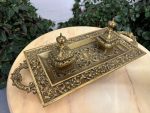
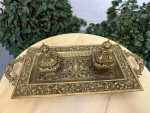
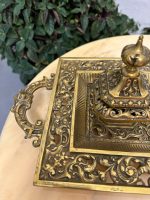
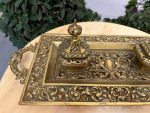
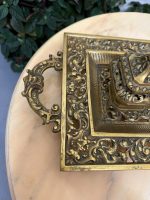
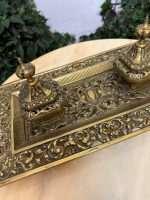
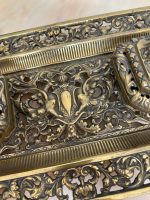
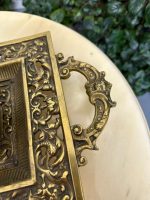
Монументальный размах металлического литья позднего историзма и высокое кабинетное изящество соединились в этом монументальном, необычайно тяжелом позолоченном чернильном приборе. Благодаря своим внушительным размерам этот предмет предназначался исключительно для рабочих столов высших чинов, крупных промышленников или выдающихся архитекторов эпохи. Визуальный образ прибора формирует богатый необарочный орнамент: массивное основание и крышки двух симметричных чернильниц украшены ажурным сквозным плетением листьев аканта. В самом центре композиции расположен геральдический щит в окружении крылатых существ, подчеркивающий парадный статус вещи.
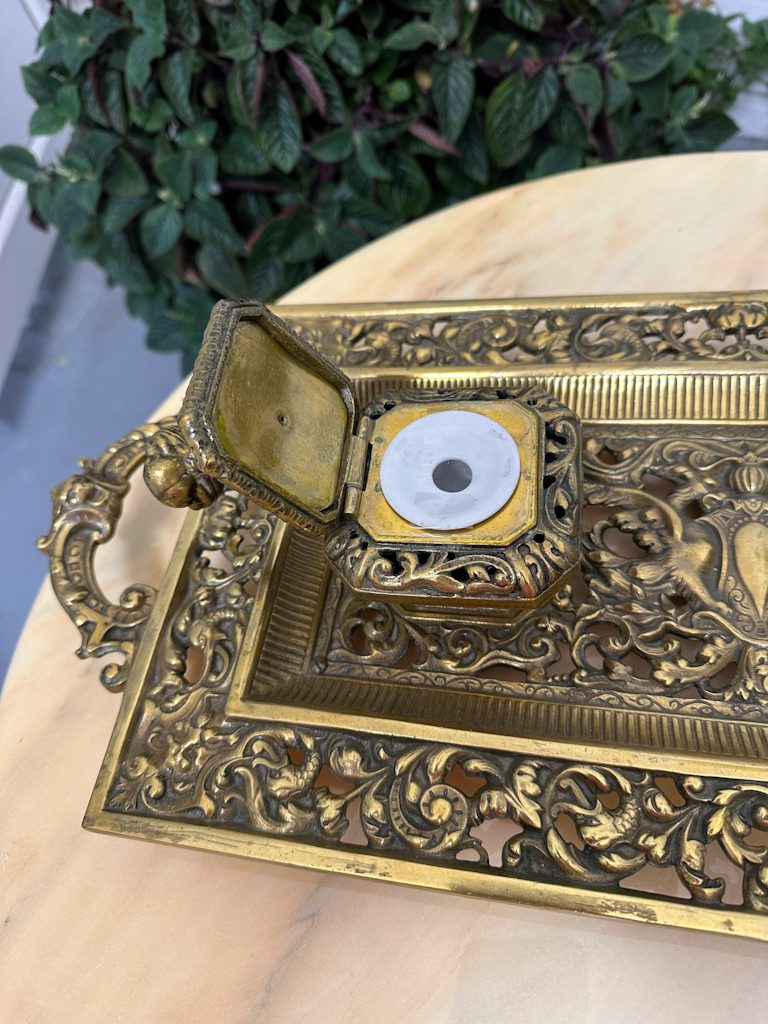
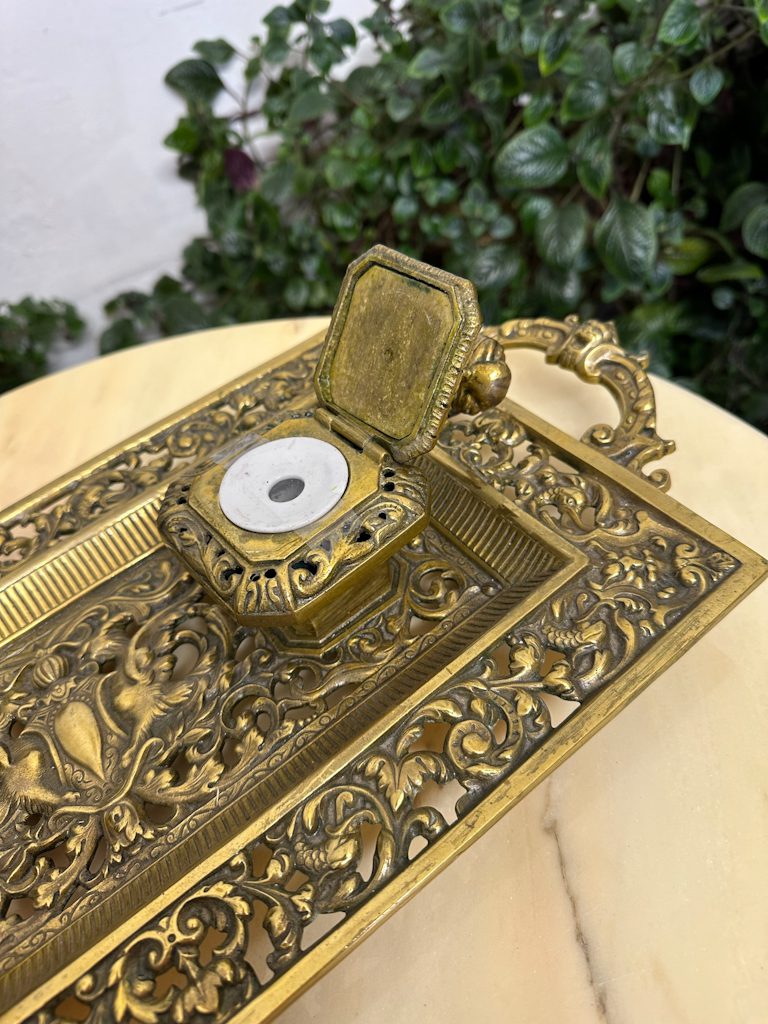
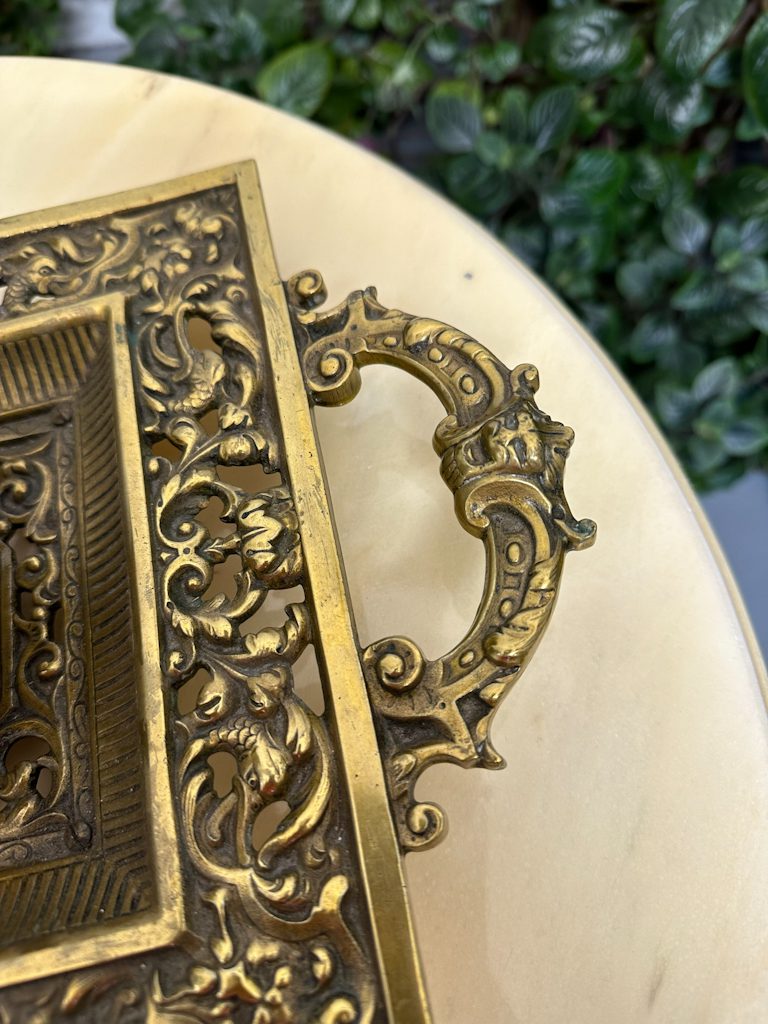
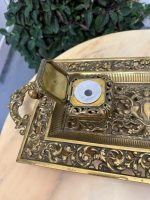
Прибор был создан в последней четверти XIX века, примерно в 1880–1895 годах, когда в бурно развивающихся губернских центрах — Риге и Либаве — процветал спрос на представительские элементы интерьера. Главная ценность данного экземпляра заключается в его безупречной, стопроцентной комплектности: механизм массивных откидных крышек работает четко, литые боковые ручки целы, а внутри чернильниц полностью сохранились оригинальные белые керамические вкладыши для чернил, что является большой редкостью. Металл сохранил благородную патину с глубокими тенями в рельефе. Этот прибор станет главной доминантой любого классического кабинета или библиотеки. Состояние вещи полностью отражено на фотографиях.
Зарисовка эпохи, главный городской архитектор Макс Пауль Берчи (Bertschy): В просторном рабочем кабинете главного архитектора Либавы Берчи царит поздняя вечерняя тишина, нарушаемая лишь шелестом папок и тихим гулом газовых рожков. За большим столом из темного дуба, заваленным чертежами фасадов нового городского театра, сидит сам мастер, внимательно перечитывая отчет для думы. Его взгляд на мгновение останавливается в центре стола, где среди книг и линеек величественно высится латунный чернильный прибор внушительных размеров, только что доставленный из Германии. Лучи заходящего солнца пробиваются сквозь высокое окно, освещая ажурные завитки аканта и заставляя ярко гореть геральдический щит между двумя чернильницами.
Берчи тихо улыбается, открывая тяжелую крышку, где в белом керамическом стаканчике темнеют свежие чернила, и аккуратно окунает в них свое стальное перо. Для него этот предмет — не просто канцелярская принадлежность, а настоящий символ европейской культуры и академического размаха. Он служит доказательством того, что здесь, в самом сердце Курляндской губернии, мастера создают новый, визионерский облик города, где даже чернильный прибор на столе обладает дворцовым величием. За окном вдоль канала сгущаются сумерки, а в кабинете время словно замерло вокруг этого благородного куска металла.
Antique Brass Inkstand Desk Set with Dual Inkwells — Grand Neo-Baroque Style (antique brass inkstand)
The imposing grandeur of late 19th-century stationary etiquette and monumental metal foundry craftsmanship converge in this exceptionally large and heavy solid brass inkstand. Owing to its massive proportions, a luxury desk set of this caliber was historically reserved exclusively for the expansive executive desks of high-ranking government officials, wealthy merchants, or prominent civic architects. The design language is rooted in the rich traditions of European Historicist (Neo-Baroque) design; the heavy perforated base and the twin symmetrical, square inkwells are completely adorned with intricate openwork acanthus foliage. Nestled directly at the structural heart of the composition, between the dual hinged inkwells, lies a magnificent heraldic shield flanked by winged mythical creatures, magnifying its representative, regal aesthetic.
Crafted during the final quarter of the 19th century, circa 1880–1895, this inkstand reflects the booming economic prosperity of the Baltic governorates, where the elite class of Riga and Libava demanded substantial desk accessories to affirm their social rank and global perspective. The ultimate significance of this specific offering lies in its complete original condition. While heavy functional bronzes typically suffered broken hinge mechanisms, lost handles, or replaced parts over generations of daily use, this museum-grade specimen remains entirely unaltered. Crucially, it retains both of its original white ceramic/glass ink liners intact. Exhibiting a beautiful aged patina left intentionally unpolished to preserve its rich historical depth, it is fully prepared to ground an executive desk or library table. The condition of the item is fully reflected in the photos.
Art Nouveau era snapshot, Architect Max Paul Bertschy (Bertschy): Inside the sprawling private studio of the chief city architect Bertschy, a late evening stillness prevails, softened only by the rustling of official document folders and the low, steady hiss of gas lamps. At a massive dark oak desk strewn with detailed facade blueprints for the new Libava theater, the master builder sits alone, reviewing his final report for the city council. His gaze wanders across the desk, resting on the monumental, extraordinarily heavy brass inkstand that has recently arrived from the continental casting masters. The final rays of the autumn sun filter through the tall windows, catching the elaborate openwork acanthus scrolls and casting sharp shadows across the central heraldic shield positioned between the dual inkwells.
Bertschy smiles quietly as he lifts the heavy hinged lid of the right well, where fresh dark ink rests inside the original white ceramic liner, and carefully dips his steel writing pen. To the architect, this magnificent set is far more than a simple writing utility; it stands as a true monument to European academic scale—living proof that here, in the coastal heart of the Courland governorate, visionaries do not build locally, but forge a grand continental face for their city where even a desktop bronze commands palace-worthy authority. Outside, evening falls over the city canal, while here in the studio, time stands still around a single masterpiece.