Бронзовый фонтан — фигура женщины с кувшином (femme à la cruche), неоклассицизм, около XX века Эта внушительная бронзовая фигура почти натурального роста изображает молодую женщину в античной драпировке, держащую кувшин — водоносицу или нимфу источника — стоящую на основании с… 3 800,00 €
You’re now subscribed to price tracking for this product. We’ll notify you if the price drops. 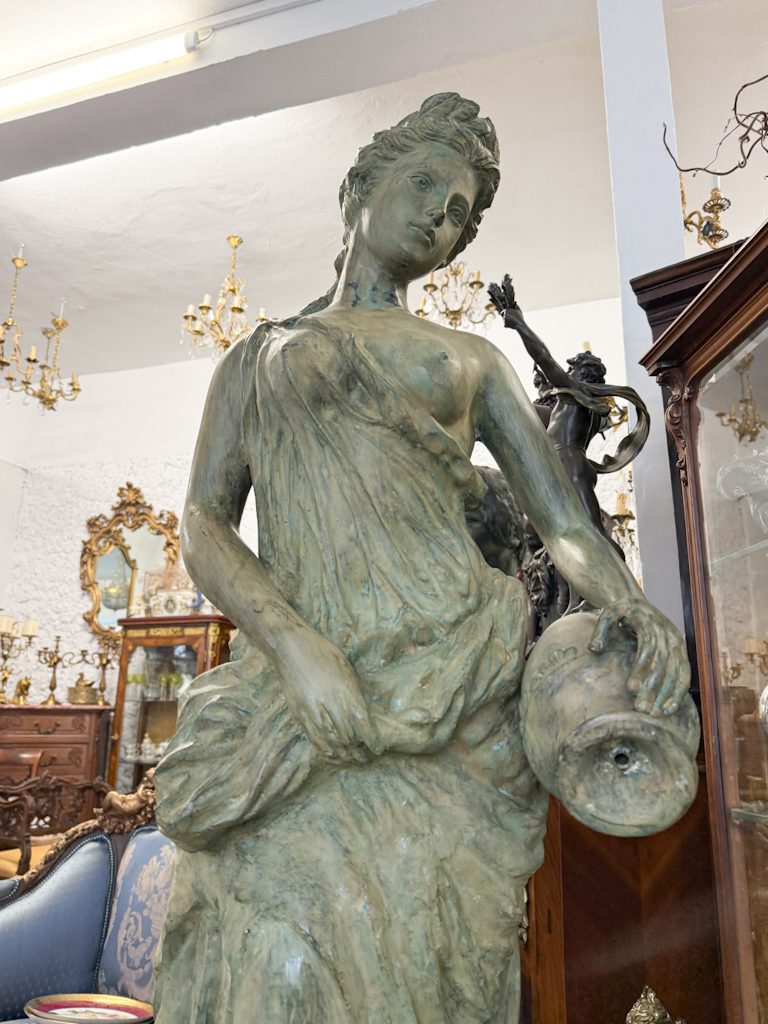
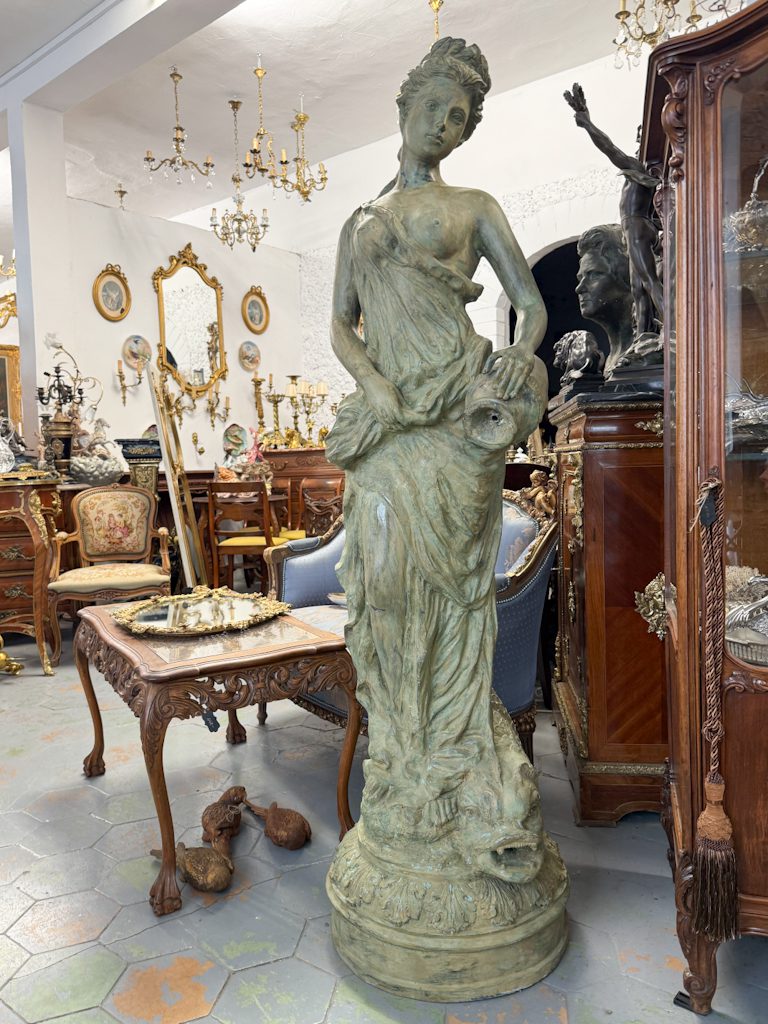
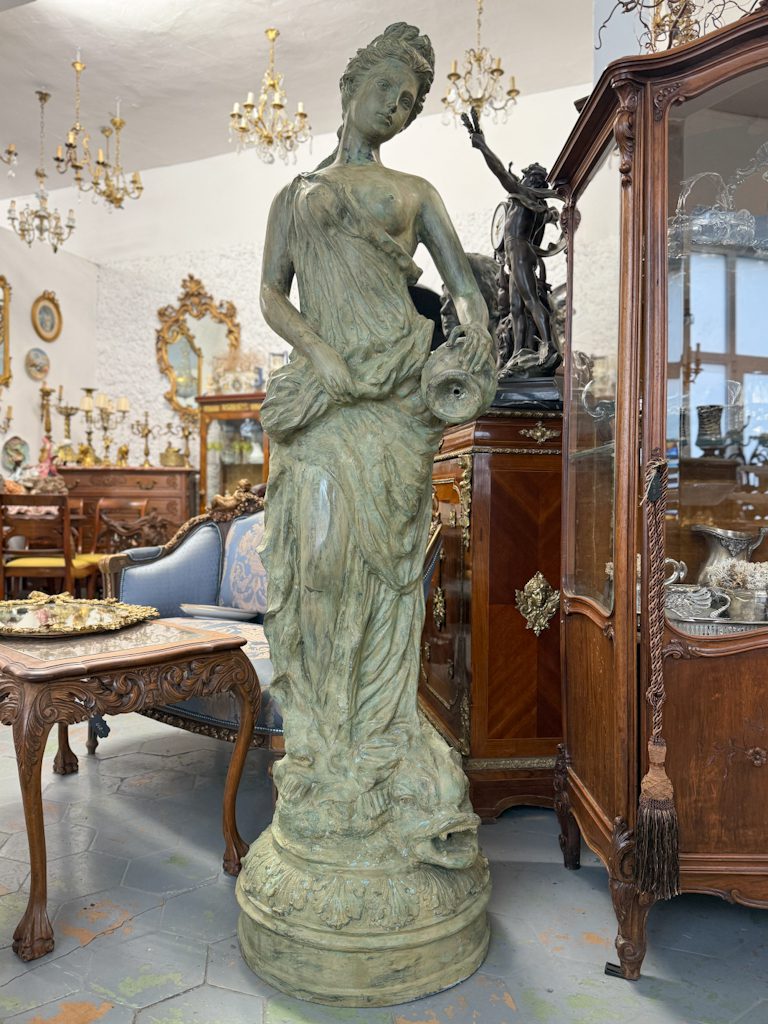
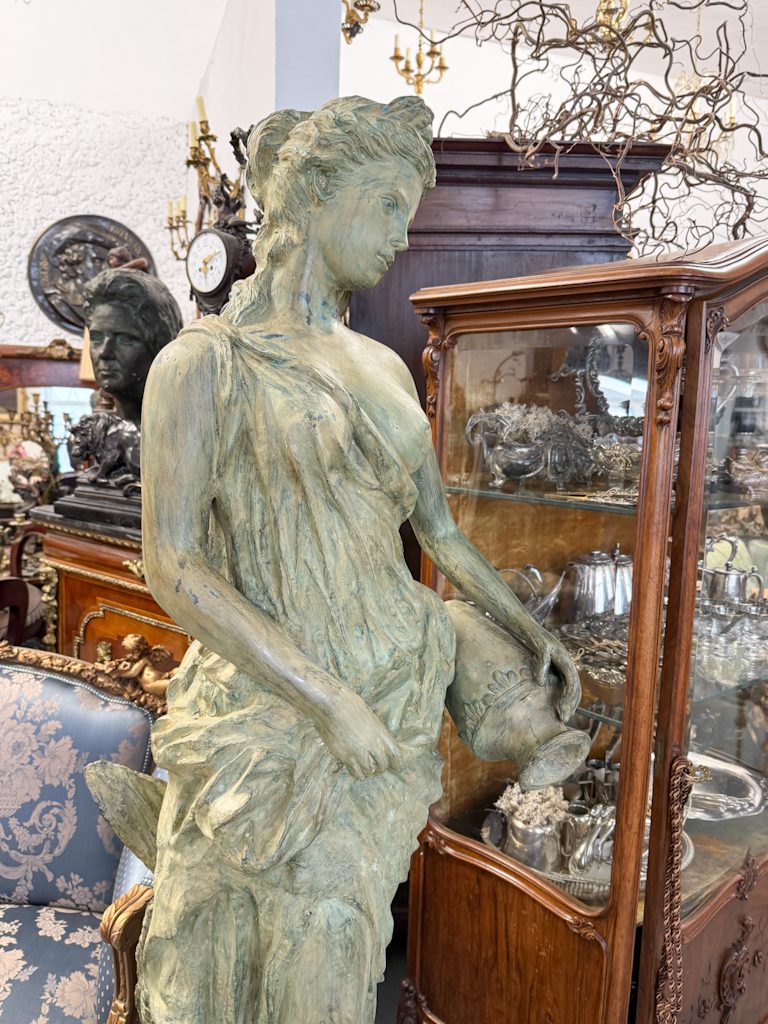
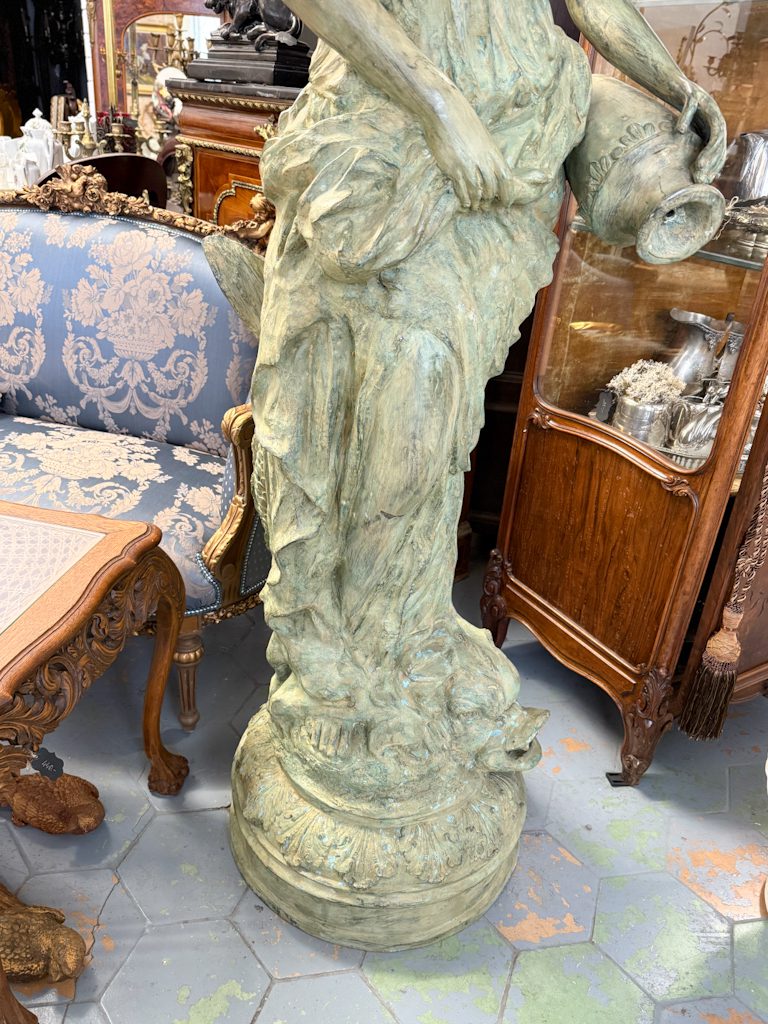
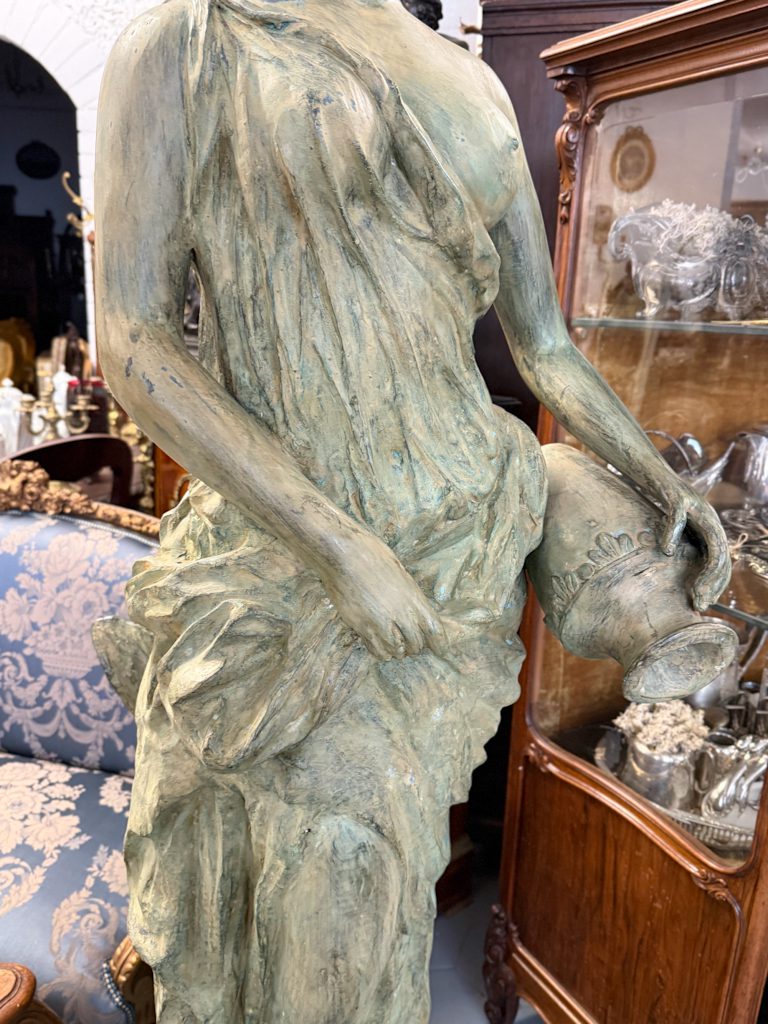
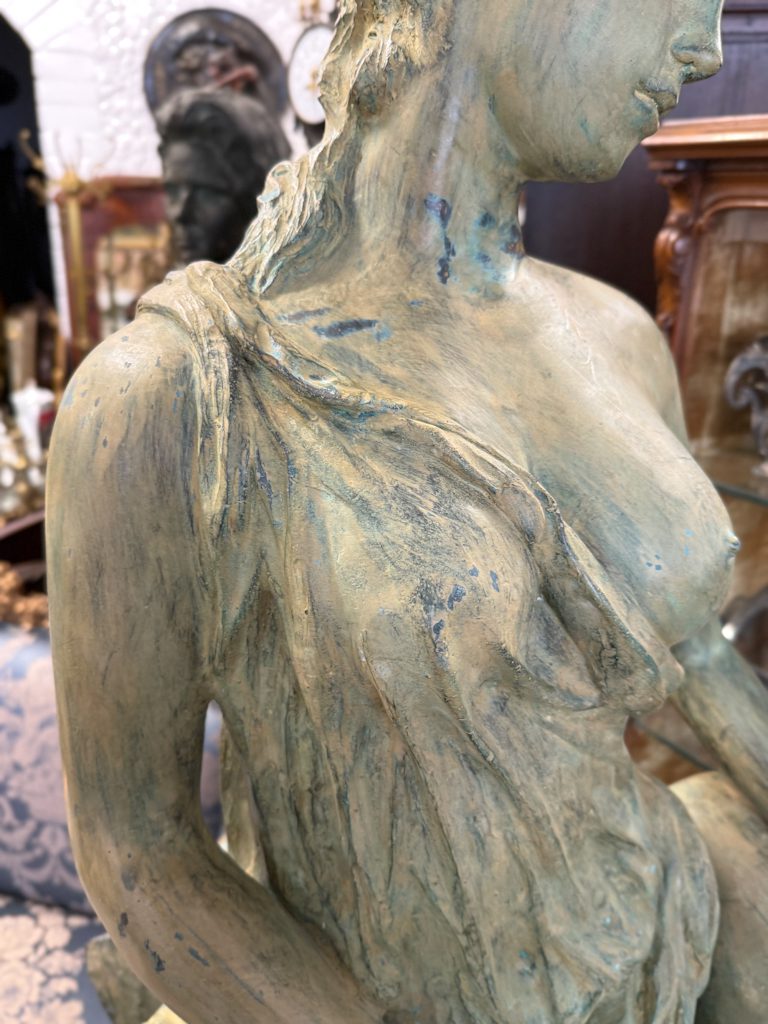
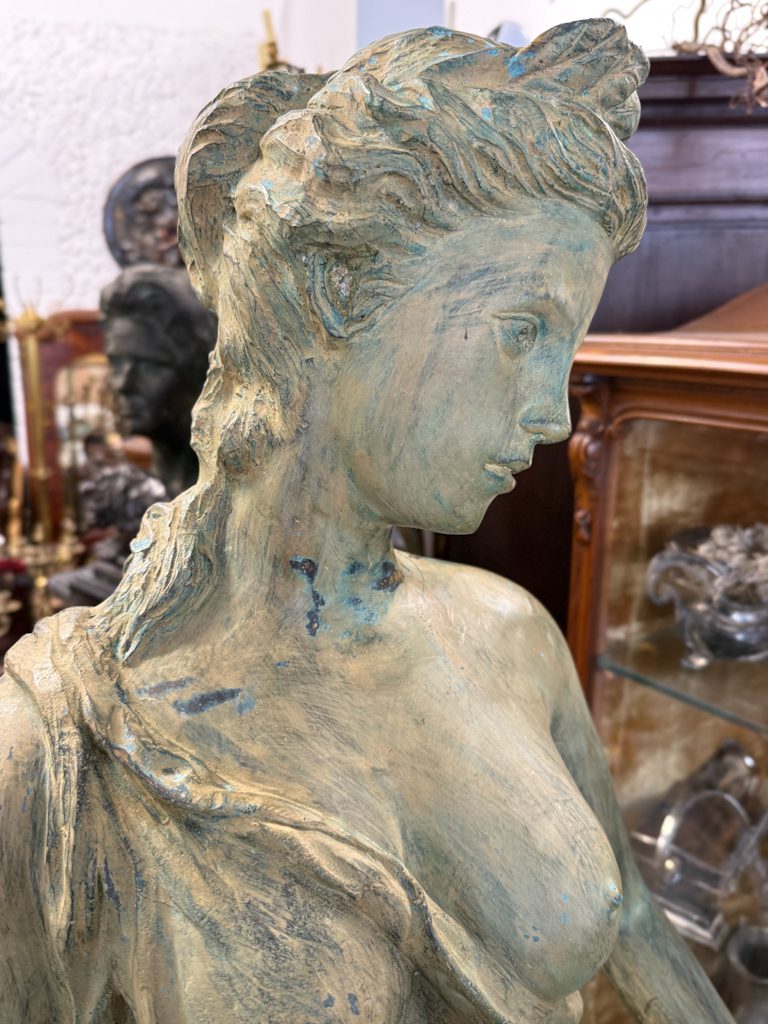
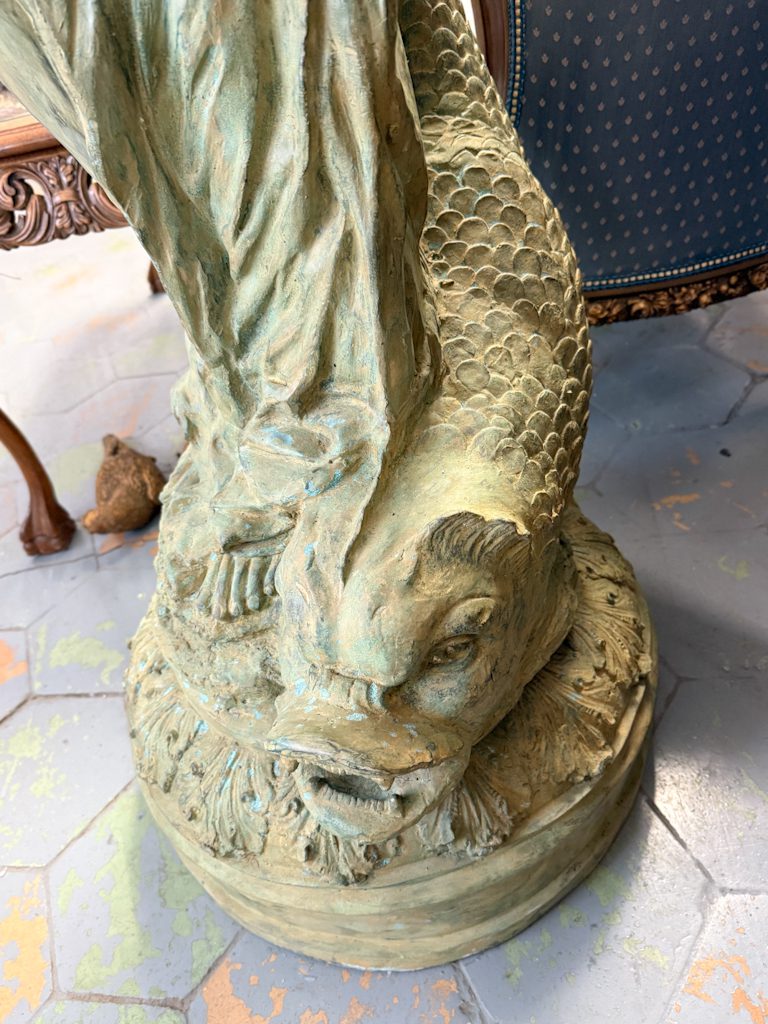
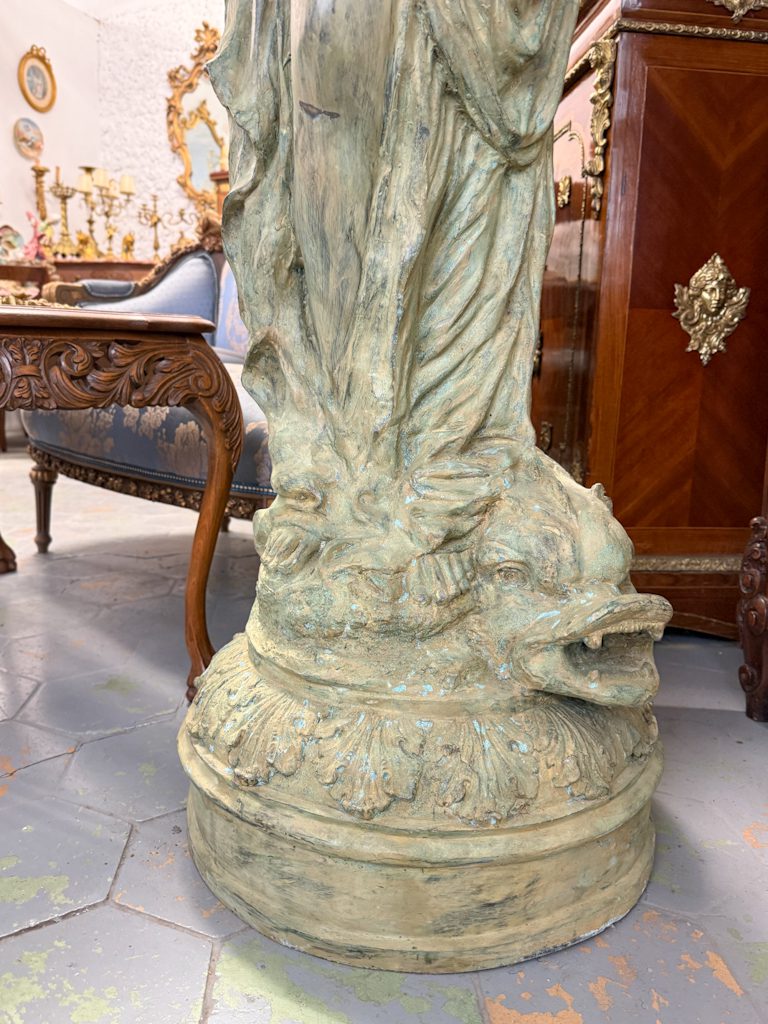
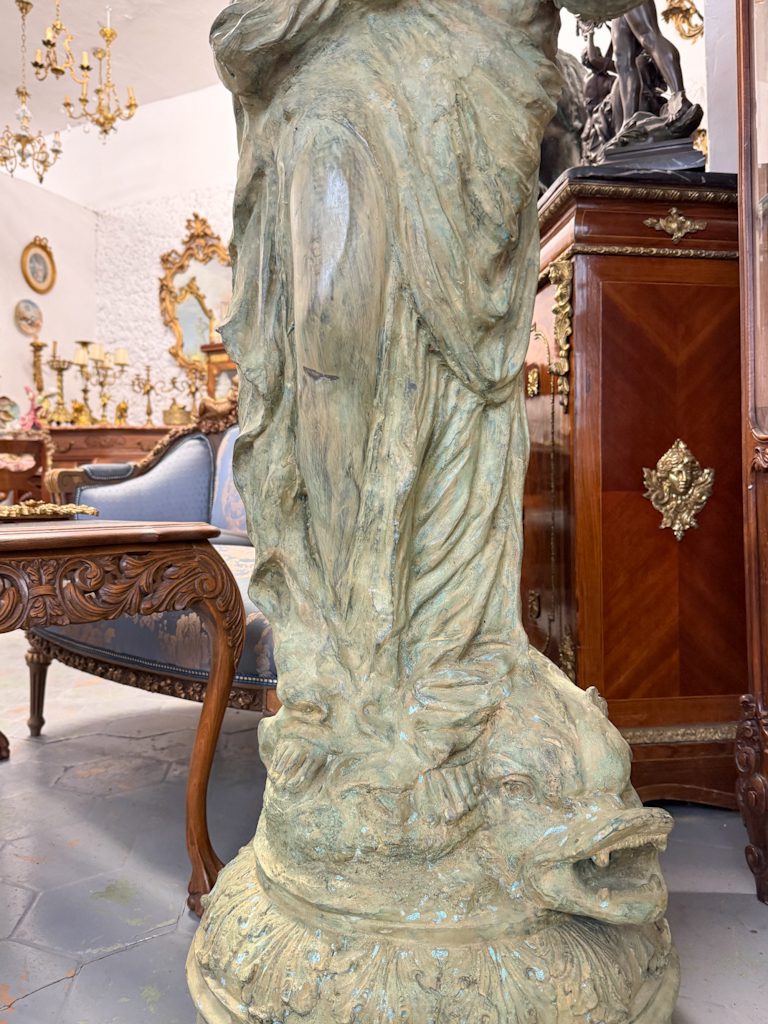
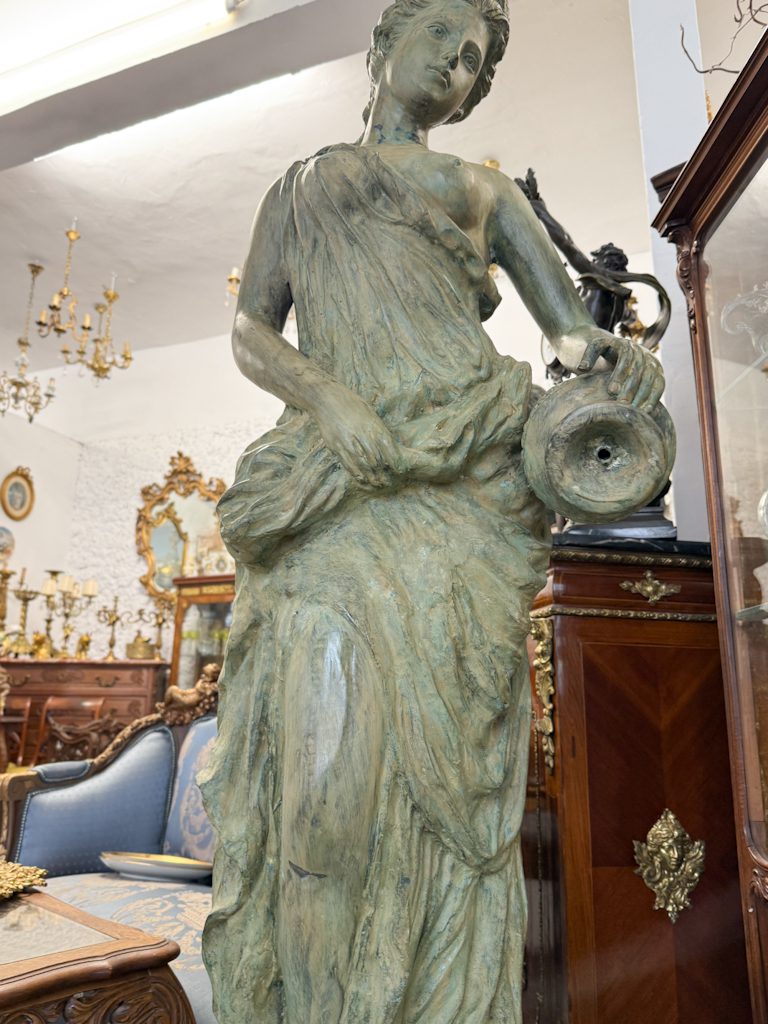
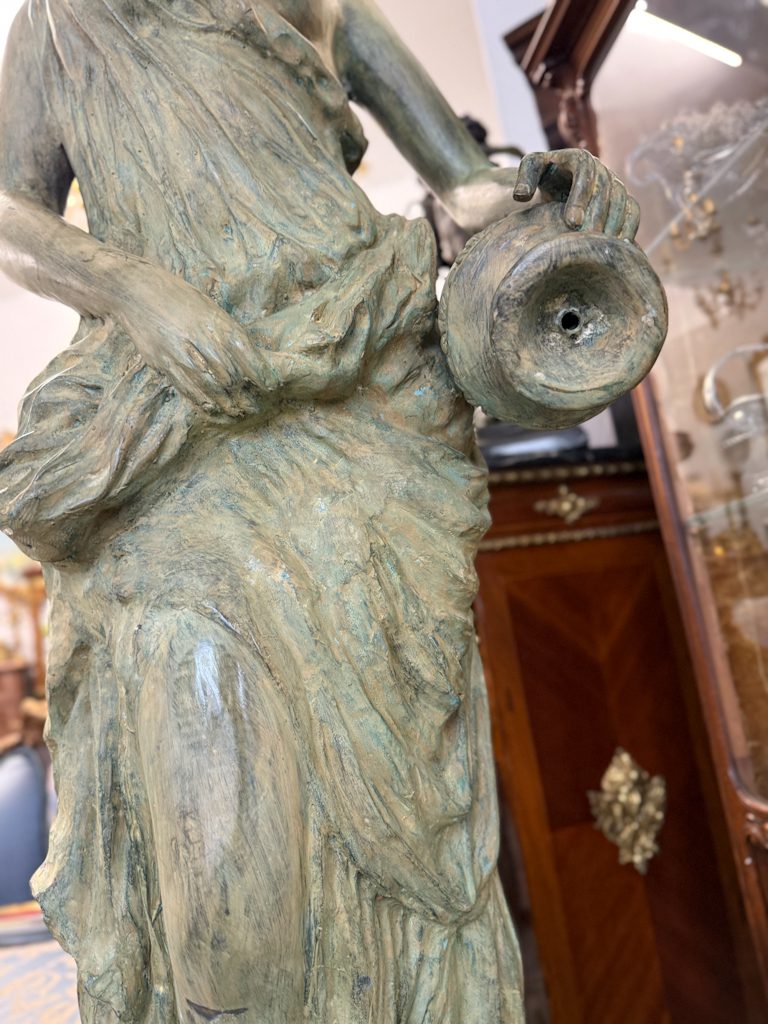
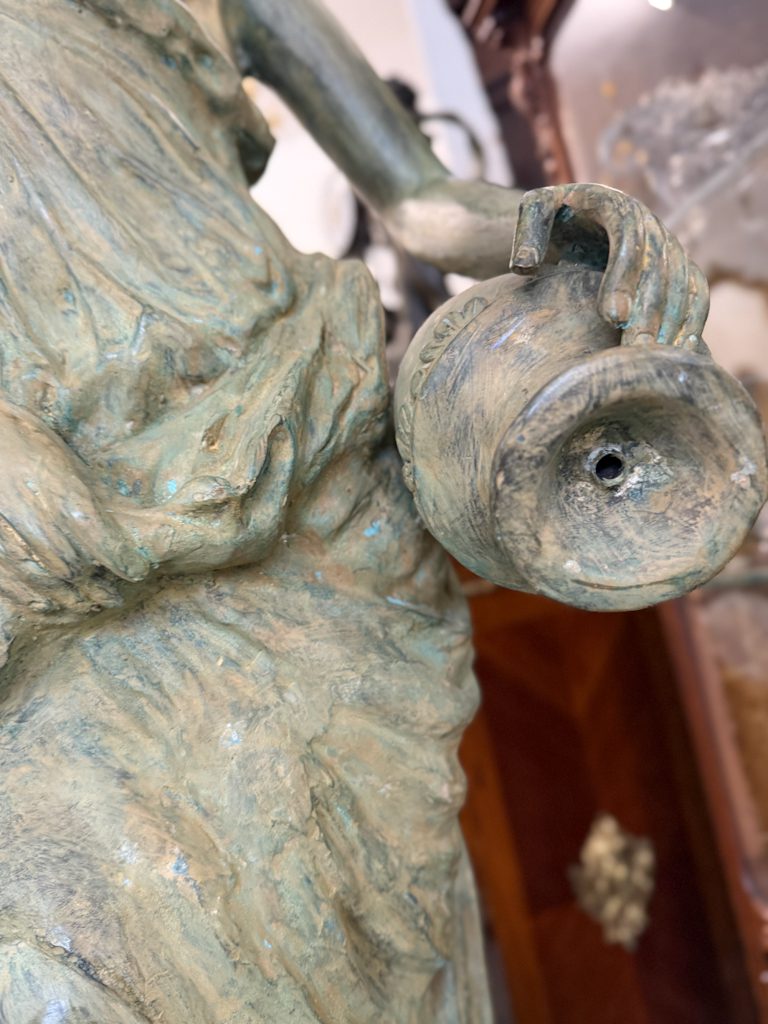
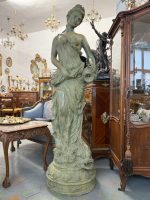
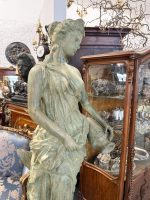
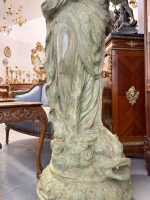
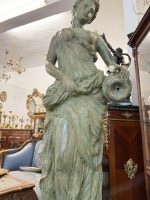
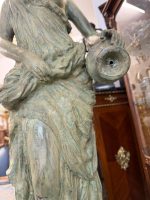
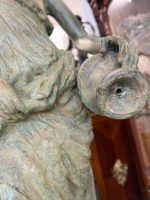
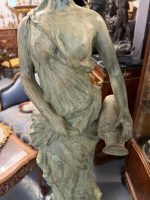
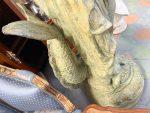
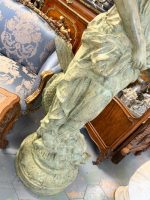
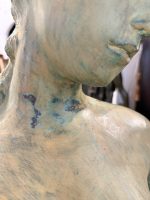
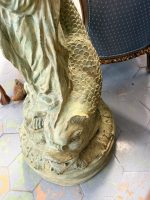

Бронзовая фигура-фонтан — женщина с кувшином, может использоваться как фигура в саду, интерьере или как фонтан, Неоклассицизм (5657)
Высота 172 cm Ширина 53 cm Цвет БронзовыйНатуральныйЗелёный

Описание
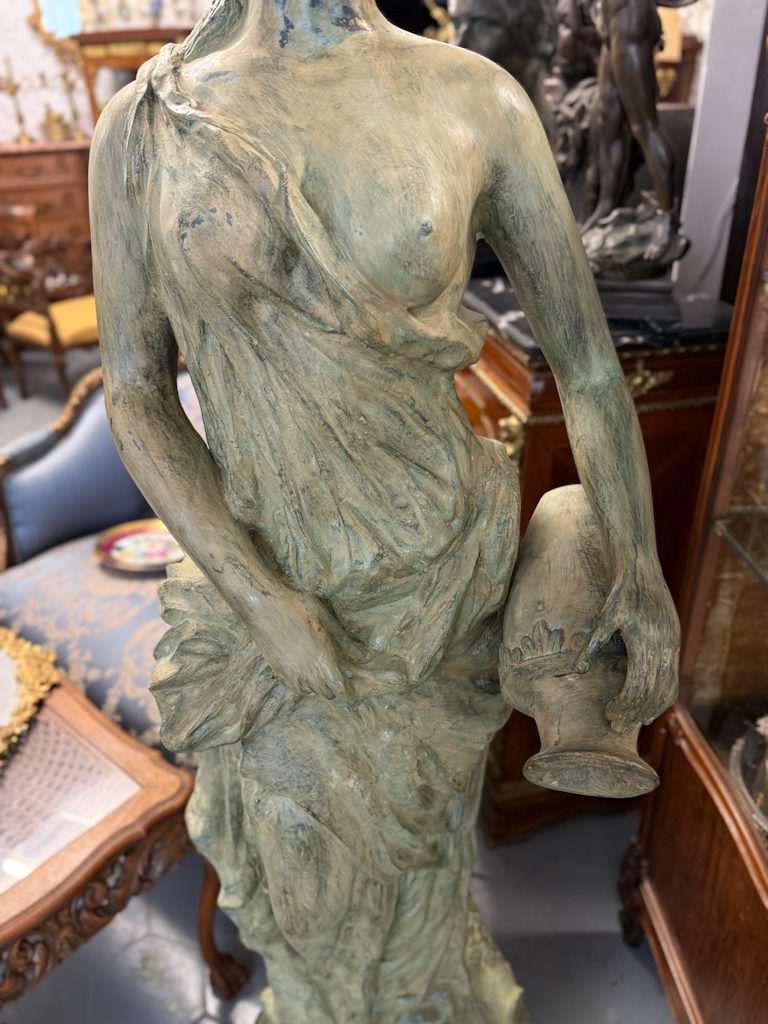
Бронзовый фонтан — фигура женщины с кувшином (femme à la cruche), неоклассицизм, около XX века
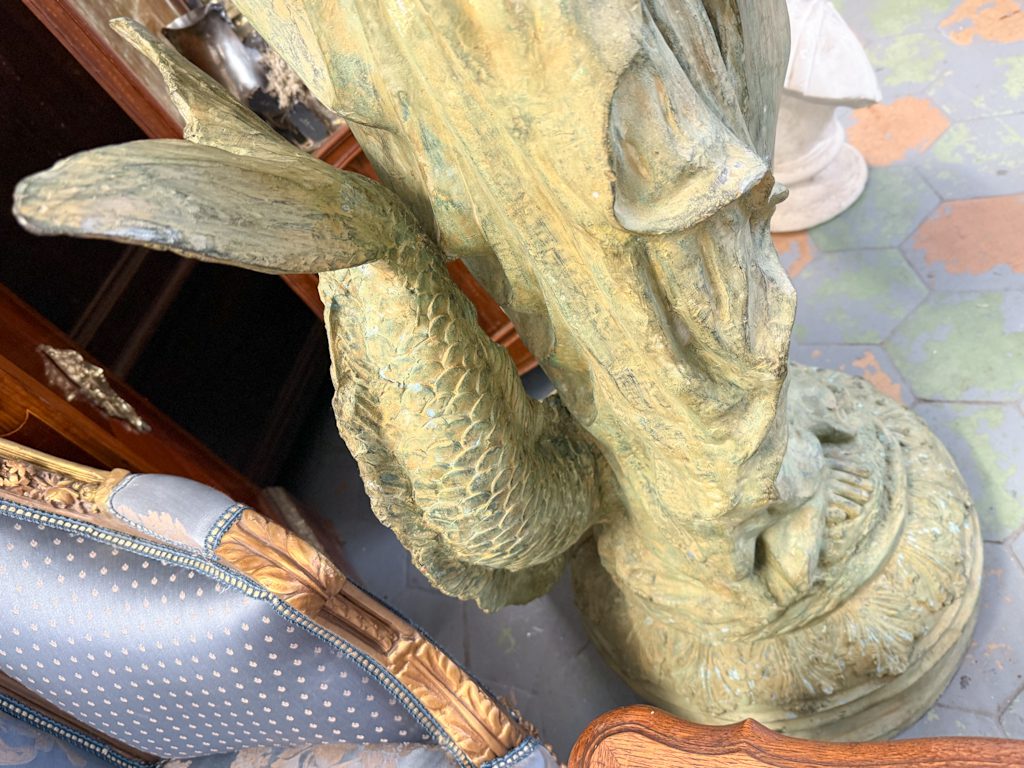
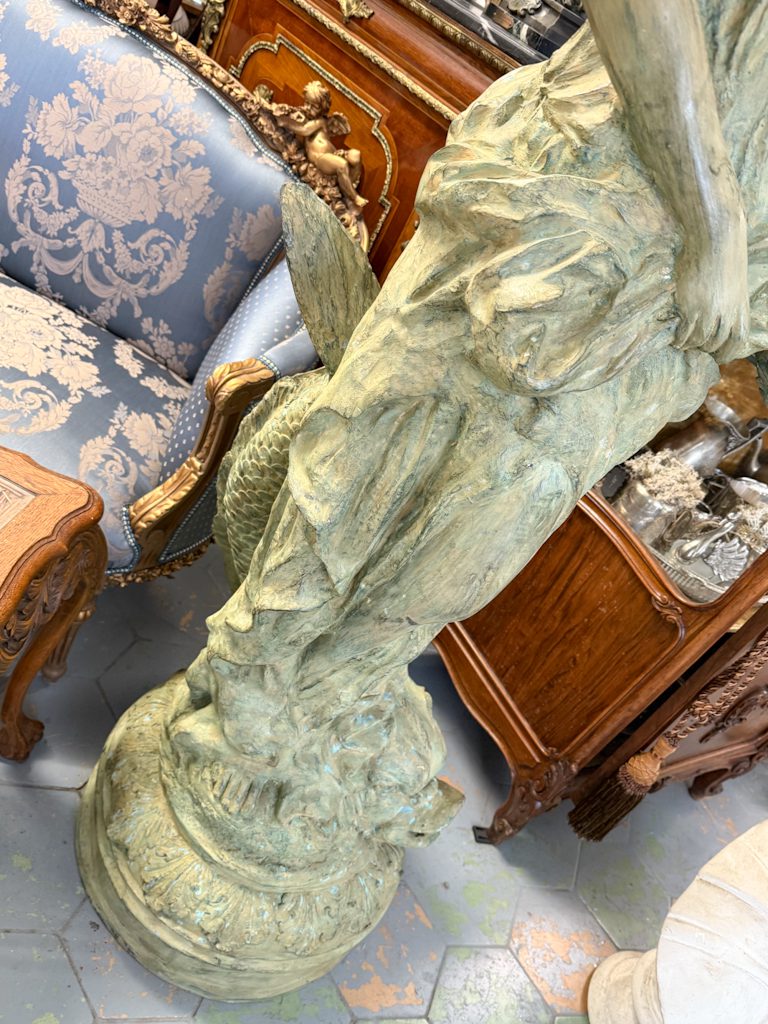
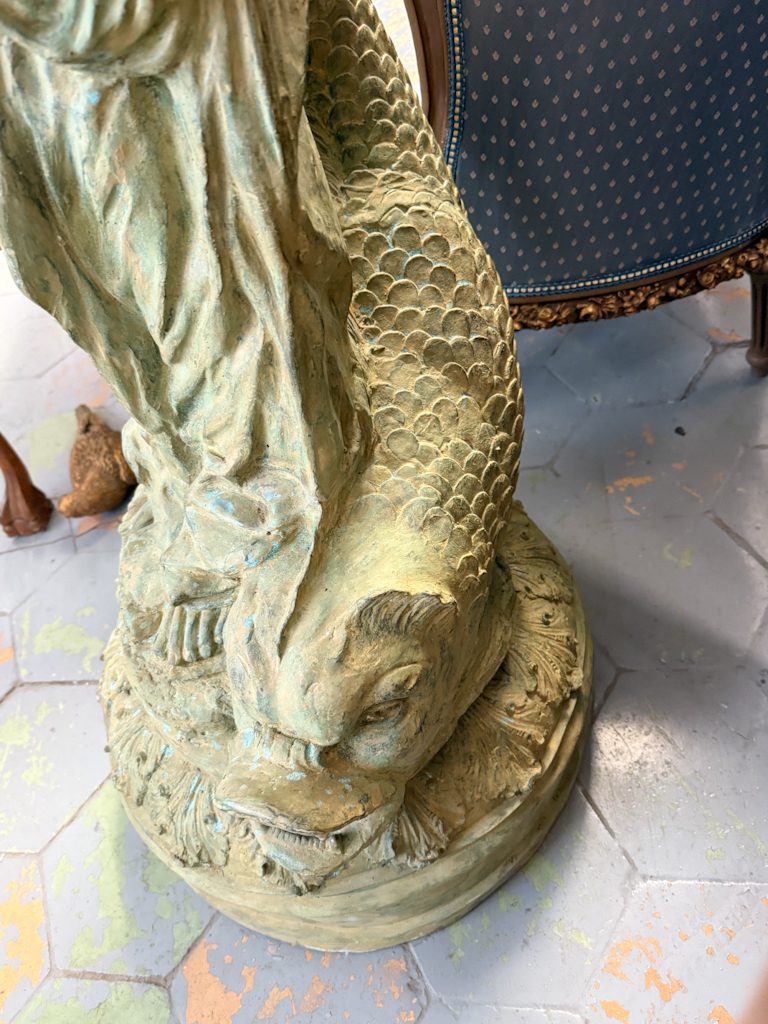
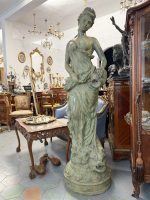
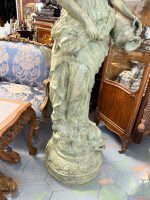
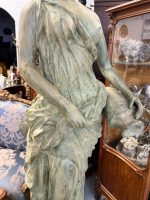
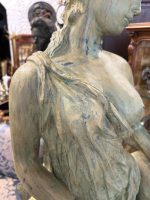
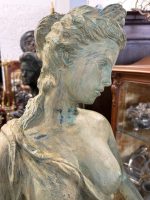
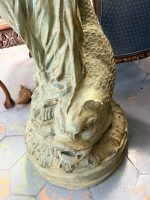
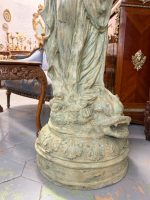
Эта внушительная бронзовая фигура почти натурального роста изображает молодую женщину в античной драпировке, держащую кувшин — водоносицу или нимфу источника — стоящую на основании с дельфином и листьями аканта. В кувшине и основании имеются отверстия для воды, поэтому фигура служит и скульптурой, и фонтаном. Работа принадлежит традиции неоклассицизма, черпающей из античной и садовой скульптуры эпохи Бель Эпок — женская фигура с урной или кувшином была одним из излюбленных мотивов в европейских парках, дворцах и буржуазных садах XIX–XX веков.
Снимок эпохи Бель Эпок: Огюст Роден (Auguste Rodin) остановился на повороте садовой дорожки в Мёдоне. Поздний послеполуденный свет падал на что-то зеленоватое среди деревьев — падение драпировки, склонённая шея, в ладони что-то округлое, из чего, казалось, вот-вот потечёт вода. Он знал, что это металл, и всё же на мгновение ждал движения. Тишина между ним и формой была полной. Потом ветер шевельнул листья, и мгновение прошло.
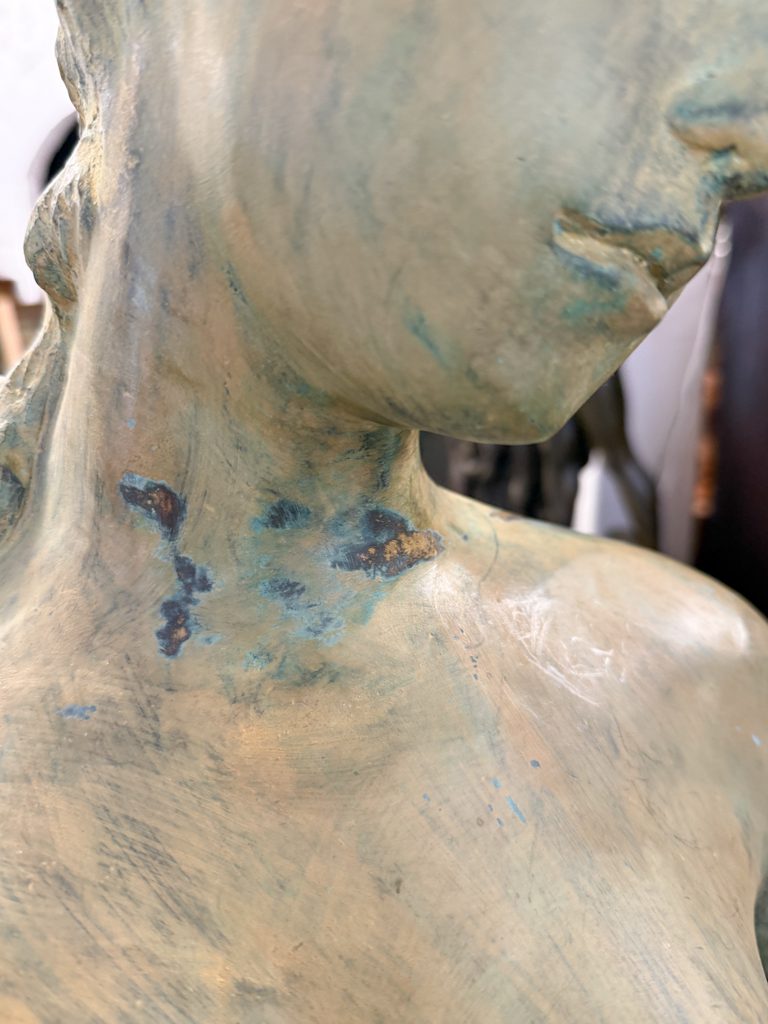
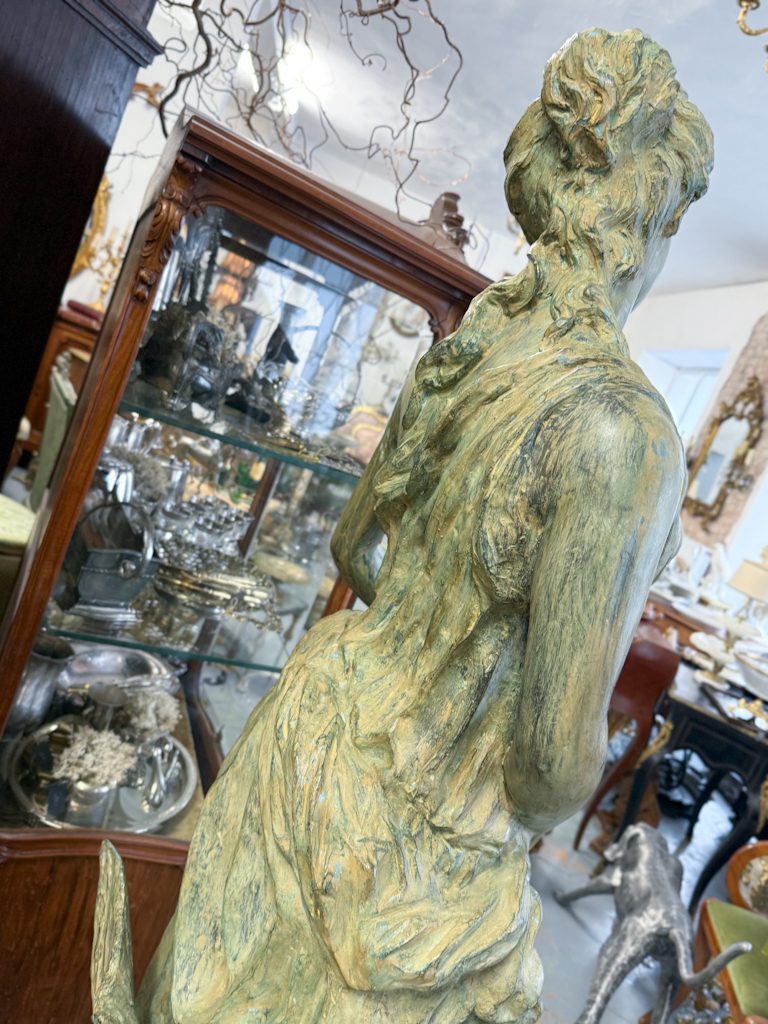
Клеймо мануфактуры или автора не идентифицировано. По материалу, масштабу и исполнению фигура соответствует традиции неоклассической декоративной бронзы. Фигура из бронзы, с естественно образовавшейся зелёной патиной вердигри. Она оборудована как фонтан — с отверстиями для воды в кувшине и основании. Бронзовые фигуры-фонтаны почти натурального роста редки и декоративно очень эффектны. Они сочетают монументальное присутствие, красоту античных образов и практическую функцию фонтана, подходящую как для сада, так и для представительного интерьера. Внушительный центральный акцент для сада, парка, зимнего сада, вестибюля отеля или просторного интерьера — как скульптура или действующий фонтан. Очень фотогеничный, монументальный объект. Превосходный, представительный подарок любителю сада, искусства и антиквариата или коллекционеру. Красивая зелёная патина вердигри, соответствующая возрасту бронзы и наружному/садовому использованию. На поверхности видны естественные вариации патины и следы атмосферного воздействия. Состояние предмета полностью отражено на фотографиях.
Bronze Fountain — Figure of a Woman with a Pitcher (femme à la cruche), Neoclassicism, c. 20th Century
This impressive, nearly life-size bronze fountain depicts a young woman in antique drapery holding a pitcher — a water-bearer or spring nymph — standing on a base with a dolphin and acanthus leaves. The pitcher and base have water openings, so the figure serves both as a sculpture and as a . The work belongs to the Neoclassical tradition, drawing on antique and Belle Époque garden sculpture, when the figure of a woman with an urn or pitcher was one of the most beloved motifs in European parks, châteaux and bourgeois gardens of the nineteenth and twentieth centuries.
Belle Époque snapshot: Auguste Rodin (Auguste Rodin) paused at a bend in the garden path at Meudon. Late afternoon light fell on something greenish among the trees — the fall of drapery, a bowed neck, something round in the palm from which water seemed about to flow. He knew it was metal, and yet for a moment he waited for movement. The silence between him and the form was complete. Then the wind stirred the leaves, and the moment was gone.
No manufacturer’s or artist’s mark is identified. By material, scale and execution the figure corresponds to the Neoclassical decorative bronze tradition; the figure is of bronze, with a naturally formed green verdigris patina, and this is fitted with water openings in the pitcher and base. Nearly life-size figures are rare and decoratively striking, combining monumental presence, the beauty of antique imagery and the practical function of a suited to both a garden and a representative interior. An impressive central accent for a garden, park, winter garden, hotel lobby or spacious interior — as a sculpture or a working fountain. A highly photogenic, monumental object. An outstanding, representative gift for a lover of gardens, art and antiques, or a collector. A beautiful green verdigris patina consistent with the age of the bronze and outdoor/garden use. Natural patina variations and traces of weathering are visible on the surface. The condition is fully reflected in the photographs.
Bronzebrunnen — Figur einer Frau mit Krug (femme à la cruche), Neoklassizismus, um das 20. Jahrhundert
Diese eindrucksvolle, nahezu lebensgroße Bronzefigur zeigt eine junge Frau in antiker Drapierung, die einen Krug hält — eine Wasserträgerin oder Quellnymphe — stehend auf einem Sockel mit Delfin und Akanthusblättern. Krug und Sockel haben Wasseröffnungen, sodass die Figur sowohl als Skulptur als auch als Brunnen dient. Das Werk gehört zur Tradition des Neoklassizismus, die aus der antiken und der Gartenskulptur der schöpft — die Figur einer Frau mit Urne oder Krug war eines der beliebtesten Motive in europäischen Parks, Schlössern und bürgerlichen Gärten des 19. und 20. Jahrhunderts.
Momentaufnahme der Belle-Époque-Zeit: Auguste Rodin (Auguste Rodin) hielt an einer Biegung des Gartenwegs in Meudon inne. Spätes Nachmittagslicht fiel auf etwas Grünliches zwischen den Bäumen — der Fall einer Drapierung, ein geneigter Hals, etwas Rundes in der Handfläche, aus dem gleich Wasser zu fließen schien. Er wusste, dass es Metall war, und wartete dennoch einen Augenblick auf Bewegung. Die Stille zwischen ihm und der Form war vollkommen. Dann bewegte der Wind die Blätter, und der Augenblick war vorbei.
Eine Manufaktur- oder Künstlermarke ist nicht identifiziert. Nach Material, Maßstab und Ausführung entspricht die Figur der neoklassizistischen dekorativen Bronzetradition. Die Figur ist aus Bronze, mit einer natürlich gebildeten grünen Verdigris-Patina. Sie ist als Brunnen ausgestattet — mit Wasseröffnungen in Krug und Sockel. Nahezu lebensgroße Bronzebrunnen-Figuren sind selten und dekorativ äußerst wirkungsvoll. Sie verbinden monumentale Präsenz, die Schönheit antiker Bildwelt und die praktische Funktion eines Brunnens, geeignet für Garten wie für ein repräsentatives Interieur. Ein eindrucksvoller zentraler Akzent für einen Garten, Park, Wintergarten, eine Hotellobby oder ein großzügiges Interieur — als Skulptur oder funktionierender Brunnen. Ein äußerst fotogenes, monumentales Objekt. Ein hervorragendes, repräsentatives Geschenk für Liebhaber von Gärten, Kunst und Antiquitäten oder für Sammler. Eine schöne grüne Verdigris-Patina entsprechend dem Alter der Bronze und der Außen-/Gartennutzung. Natürliche Patinavariationen und Witterungsspuren sind auf der Oberfläche sichtbar. Der Zustand ist auf den Fotografien vollständig wiedergegeben.
Fontaine en bronze — Figure d’une femme à la cruche (femme à la cruche), néoclassicisme, vers le XXe siècle
Cette impressionnante figure en bronze de taille presque réelle représente une jeune femme en drapé antique tenant une cruche — une porteuse d’eau ou nymphe de source — debout sur un socle orné d’un dauphin et de feuilles d’acanthe. La cruche et le socle comportent des ouvertures pour l’eau, de sorte que la figure sert à la fois de sculpture et de fontaine. L’œuvre appartient à la tradition néoclassique, puisant dans la sculpture antique et de jardin de la — la figure d’une femme à l’urne ou à la cruche fut l’un des motifs les plus prisés des parcs, châteaux et jardins bourgeois européens des XIXe et XXe siècles.
Instantané de la : Auguste Rodin (Auguste Rodin) s’arrêta à un tournant de l’allée du jardin à Meudon. La lumière de fin d’après-midi tombait sur quelque chose de verdâtre parmi les arbres — la chute d’un drapé, un cou incliné, quelque chose de rond dans la paume d’où l’eau semblait sur le point de couler. Il savait que c’était du métal, et pourtant un instant il attendit un mouvement. Le silence entre lui et la forme était total. Puis le vent agita les feuilles, et l’instant fut passé.
Aucune marque de manufacture ou d’artiste n’est identifiée. Par le matériau, l’échelle et l’exécution, la figure correspond à la tradition néoclassique du bronze décoratif. La figure est en bronze, avec une patine verte de vert-de-gris formée naturellement. Elle est équipée en fontaine — avec des ouvertures pour l’eau dans la cruche et le socle. Les figures-fontaines en bronze de taille presque réelle sont rares et décorativement très saisissantes. Elles allient une présence monumentale, la beauté de l’imagerie antique et la fonction pratique d’une fontaine, convenant aussi bien à un jardin qu’à un intérieur de représentation. Un accent central impressionnant pour un jardin, un parc, un jardin d’hiver, un hall d’hôtel ou un vaste intérieur — comme sculpture ou fontaine en fonctionnement. Un objet très photogénique et monumental. Un cadeau exceptionnel et représentatif pour un amateur de jardins, d’art et d’antiquités, ou un collectionneur. Une belle patine verte de vert-de-gris conforme à l’âge du bronze et à l’usage extérieur/de jardin. Des variations naturelles de patine et des traces d’intempéries sont visibles sur la surface. L’état est entièrement reflété par les photographies.