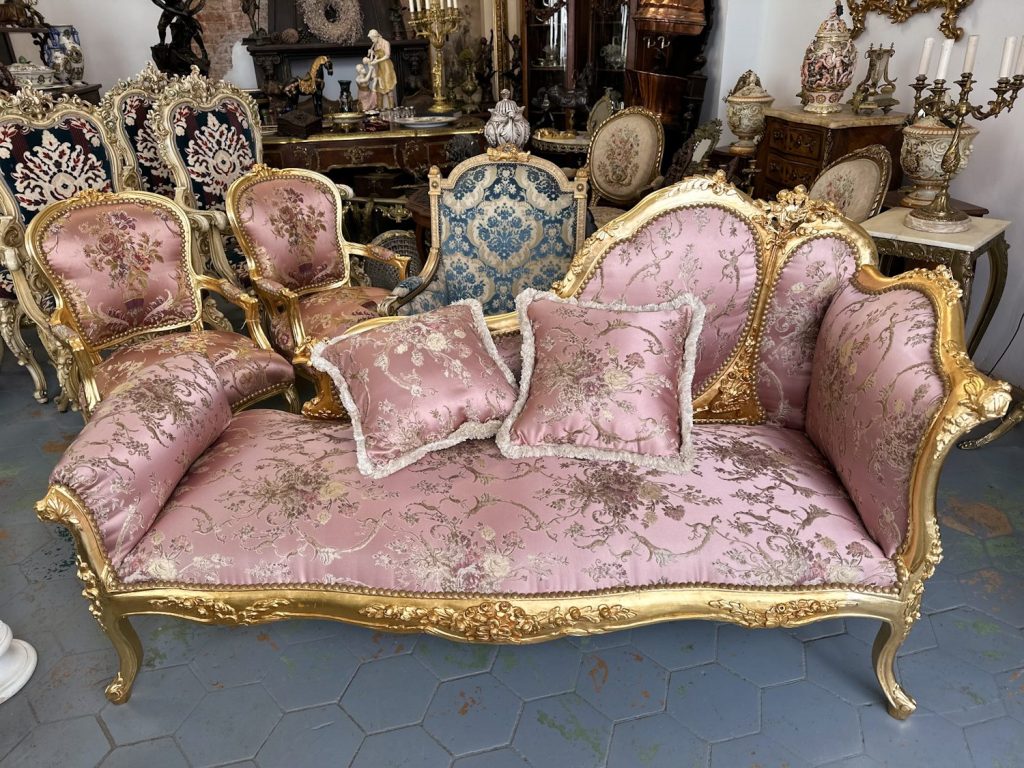
Антикварный комплект мебели с асимметричной резьбой — Историзм, конец XIX века. В набор входят диван и два кресла, выполненные из темного дерева с изысканной резьбой в стиле неорококо. Обивка из жаккарда или бархата нежно-розового оттенка с дамасским узором. 1 250,00 €
You’re now subscribed to price tracking for this product. We’ll notify you if the price drops. 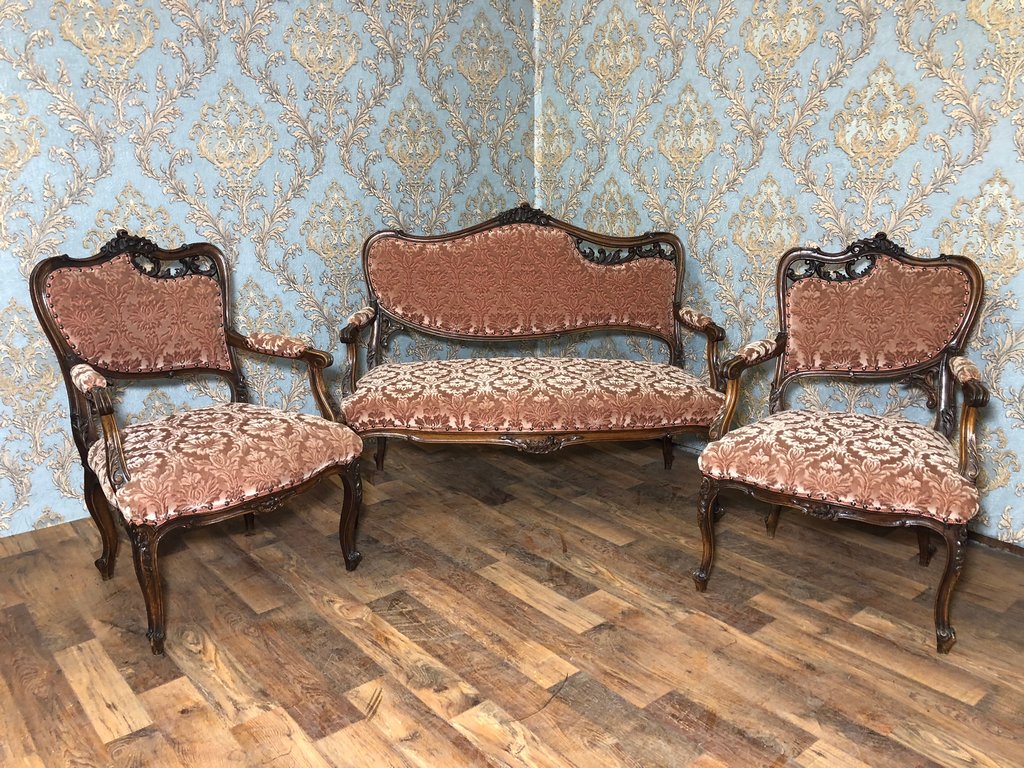
Антикварный комплект мебели асимметричной резьбы (диван + 2 кресла) — Историзм, конец XIX в.
Высота 93 cm, 99 cm Длина 120 cm Ширина 63 cm Цвет ОрехНатуральныйMahogany
Описание
Антикварный гарнитур мягкой мебели с асимметричной резьбой — Неорококо, Европа, конец XIX века (14)
Этот роскошный старинный гарнитур салонной мебели представляет собой редкий и высокохудожественный образец европейского мебельного искусства периода Историзма (стиль Неорококо / Людовика XV). В комплект входят двухместный диван (софа) и два кресла с подлокотниками. Главной ценностью гарнитура является сложнейшая асимметричная сквозная ручная резка по ценному темному дереву с мотивами распускающихся роз и завитков рокайль. Спинки мебели образуют плавный S-образный изгиб. Мебель обтянута изысканным жаккардовым брокатом нежного оттенка чайной розы с серебристыми дамасскими флоральными узорами. Предмет создан на пороге Прекрасной эпохи и служил центральным элементом роскоши и вкуса в домах европейской знати.
Снимок эпохи Бель Эпок: Марсель Пруст (Marcel Proust) медленно сел и закинул ногу за ногу… пока в углу комнаты тихо дышал утренний чай. Через приоткрытые шторы в комнату проникало парижское утреннее солнце, заставляя серебристые тканые цветочные узоры на ткани буквально оживать. Его пальцы на мгновение остановились на холодном темном дереве спинки софы, прослеживая ажурные линии асимметричной резьбы, которая в полутени казалась почти нематериальной и текучей. Этот элегантный салонный ансамбль со своей непоколебимой грацией хранил в себе беззаботность ушедших поколений и самые интимные секреты лучших салонов парижской аристократии, привнося в пространство невыразимую словами поэтическую ностальгию.
Гарнитур находится в превосходном антикварном состоянии. Деревянный каркас полностью прочный, стабильный, без трещин и повреждений. Мягкая часть плотная, пружинные блоки в отличном состоянии. Ткань чистая, без потертостей и пятен. Комплект полностью готов к использованию в интерьере. Состояние вещей полностью отображено на фотографиях.
Antique Louis XV style parlor suite — Late 19th-century European asymmetric hand-carved canapé and two armchairs
description:
This exceptional antique antique parlor suite, comprising a two-seater sofa (canapé) and a matching pair of open armchairs (fauteuils), is a rare and highly artistic masterpiece of late 19th-century European cabinet making. The defining characteristic of this investment-grade salon set is its unique asymmetric and fluid hand-carved framework. Meticulously sculpted from choice solid dark hardwood (walnut or mahogany), the frames are heavily embellished with deep high-relief roses, foliate scrolls, and intricate openwork asymmetrical rocaille piercings along the undulating camelback cresting rails. The structural lines flow seamlessly into padded armrests and drop down onto elegant cabriole legs detailed with acanthus leaves. This luxurious antique parlor suite features a meticulously preserved traditional upholstery executed in a sumptuous tea-rose pink jacquard-brocade fabric, woven with sophisticated, shimmering silvered damask floral motifs.
Late Victorian snapshot: Marcel Proust (Marcel Proust) slowly sat down and crossed his legs… while in the corner of the room, the morning tea steamed quietly. Through the heavy drapes of the ajar window, the Parisian morning sun drifted into the space, causing the silvered woven floral patterns on the fabric to come alive. His fingers lingered for a moment on the cold, dark wood of the sofa’s backrest, tracing the openwork lines of the asymmetrical carving that appeared almost immaterial and fluid in the half-shadow. This elegant salon ensemble, with its unyielding grace, held the quiet carelessness of bygone generations and the most intimate secrets of the finest Parisian aristocracy’s salons, bringing an indescribable poetic nostalgia into the room.
The parlor suite remains in exemplary antique condition, preserving absolute structural stability and remarkable historical character. The hand-carved wooden frames are completely solid, tight at the joints, and entirely free from cracks, splitting, or historic woodworm damage. The traditional sprung seats and padding remain firm and highly comfortable, beautifully retaining their original architectural form. The tea-rose damask fabric is exceptionally clean, free from threadbare areas or staining (as beautifully documented in file meble_032-600x450.jpg). The condition of the items is fully reflected in the photographs.
Antikes asymmetrisches Salonsofa-Garnitur — Historismus, Europa, Ende des 19. Jahrhunderts (14)
Diese herrschaftliche antike Salon-Sitzgruppe, bestehend aus einem zweisitzigen Sofa (Kanapee) und zwei passenden Sesseln mit Armlehnen, ist ein vollendetes Meisterwerk europäischer Möbelkunst aus der Phase des Historismus (Stil des Neorokoko / Louis XV). Das herausragende Merkmal dieses Ensembles ist die kunstvolle, asymmetrisch geschwungene Durchbruchschnitzerei aus edlem dunklem Hartholz, besetzt mit plastischen Rosenmotiven und Rocaillen. Die wellenförmigen Rückenlehnen gehen harmonisch in Cabriole-Beine über. Ein absoluter Luxusakzent ist die originale Polsterung aus schwerem Jacquard-Brokat in einem edlen Teerosen-Rosa, gewebt mit silberglänzenden floralen Damastmotiven. Entstanden in der Blütezeit der Belle Époque, war dieses Prunkensemble ein repräsentativer Mittelpunkt in den privaten Salons des europäischen Großbürgertums.
Spätviktorianische Momentaufnahme: Marcel Proust (Marcel Proust) wandte sich langsam zum Fenster… während in der Ecke des Zimmers der Morgentee leise dampfte. Durch die schweren Vorhänge des geöffneten Fensters drang die Pariser Morgensonne in den Raum und erweckte die gewebten silbernen Blumenmuster auf dem Stoff burtiski zum Leben. Seine Finger blieben für einen Moment auf dem kalten, dunklen Holz der Sofarückenlehne liegen, folgten den durchbrochenen Linien der asymmetrischen Schnitzerei, die im Halbschatten fast immateriell und fließend wirkte. Dieses elegante Salonensemble bewahrte mit seiner unerschütterlichen Anmut die unbeschwerte Leichtigkeit vergangener Generationen und die intimsten Geheimnisse der besten Salons der Pariser Aristokratie und brachte eine mit Worten nicht zu beschreibende poetische Nostalgie in das stille Zimmer.
Die Garnitur befindet sich in einem exzellenten, altersgerechten antiken Zustand. Der Holzrahmen ist vollkommen unbeschädigt, absolut stabil und frei von Rissen. Die traditionelle Federung ist fest und bietet hervorragenden Sitzkomfort. Der Damaststoff ist makellos sauber und frei von Flecken. Der Zustand der Gegenstände ist auf den Fotos vollständig wiedergegeben.
Salon de style Louis XV ancien en bois sculpté asymétrique — Époque Historisme, fin du XIXe siècle (14)
Ce somptueux mobilier de salon ancien, comprenant une causeuse deux places (canapé) et sa paire de fauteuils cabriolets assortis, est une pièce de maîtrise de la haute ébénisterie européenne de la fin du XIXe siècle. Ce salon d’apparat se distingue par son travail unique de sculpture en plein bois asymétrique et mouvementée. Entièrement sculptés dans un bois dur sombre sélectionné (noyer ou acajou), les fûts déploient un riche répertoire néo-rococo de roses en fort relief, de rinceaux et de superbes découpes ajourées asymétriques sur les dossiers. Les consoles d’accoudoirs galbées se terminent par de élégants pieds cambrés à enroulements. Ce salon a conservé sa garniture traditionnelle d’époque recouverte d’un magnifique brocart jacquard couleur vieux rose (rose thé) à riche décor tissé de motifs damassés floraux argentés.
Instantané de l’époque victorienne tardive : Marcel Proust (Marcel Proust) se tourna lentement vers la fenêtre… tandis que dans un coin de la pièce, le thé du matin fumait doucement. Par les lourds rideaux de la fenêtre entrouverte, le soleil matinal parisien s’infiltrait dans l’espace, faisant littéralement prendre vie aux motifs floraux argentés tissés sur l’étoffe. Ses doigts s’arrêtèrent un instant sur le bois sombre et frais du dossier du canapé, suivant les lignes ajourées de la sculpture asymétrique qui semblait presque immatérielle et fluide dans la pénombre. Cet élégant ensemble de salon, avec sa grâce immuable, gardait l’insouciance des générations passées et les secrets les plus intimes des plus grands salons de l’aristocratie parisienne, apportant une nostalgie poétique indicible par les mots à la pièce silencieuse.
Ce salon est dans un état de conservation d’origine remarquable. Les fûts en bois sculpté sont parfaitement sains, rigides et exempts de fentes. Les assises à ressorts sont fermes et confortables. Le tissu damassé est d’une grande fraîcheur, exempt de taches ou d’usures (comme l’illustre la photographie meble_032-600x450.jpg). L’état des objets est entièrement reflété dans les photographies.