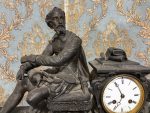
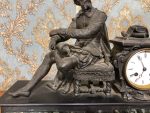
Монументальные антикварные французские каминные часы из черного камня и зеленого мрамора с фигурой писателя — стиль историзма, Франция, конец XIX века. Эти впечатляющие часы из массивного черного камня с вставками из зеленого мрамора украшены детализированной бронзовой скульптурой писателя. Прекрасный образец эпохи историзма. 700,00 €
You’re now subscribed to price tracking for this product. We’ll notify you if the price drops. 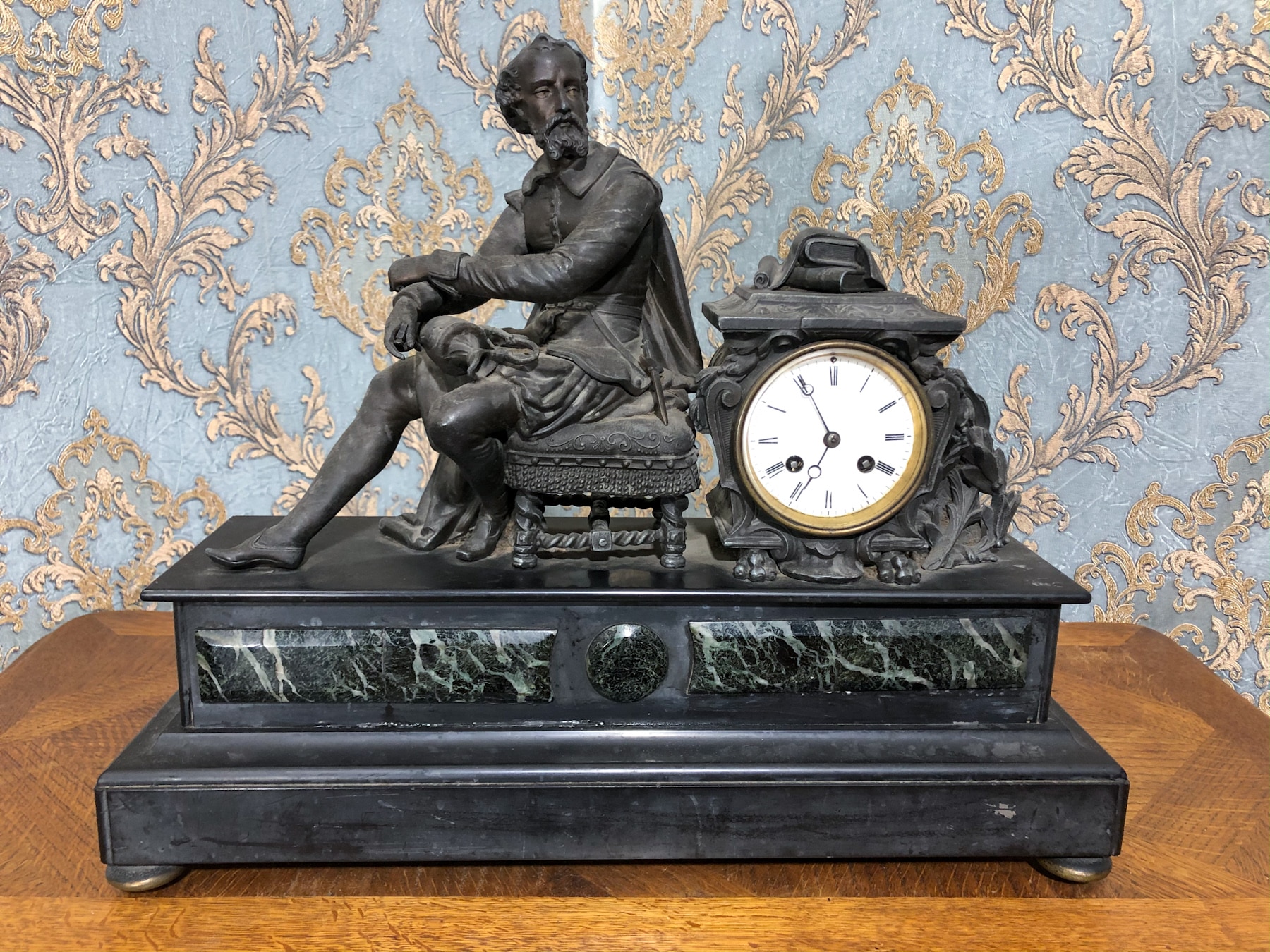
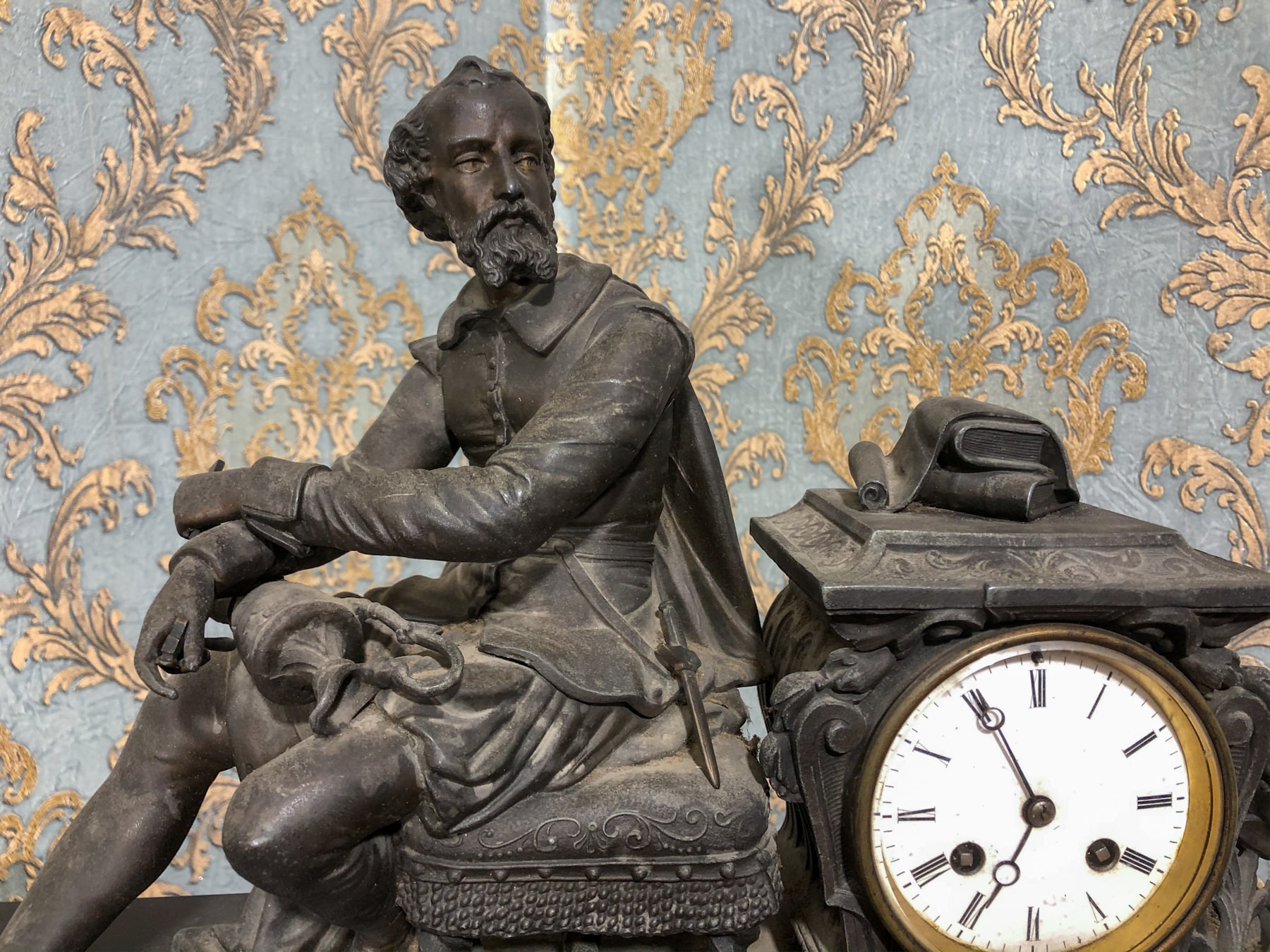
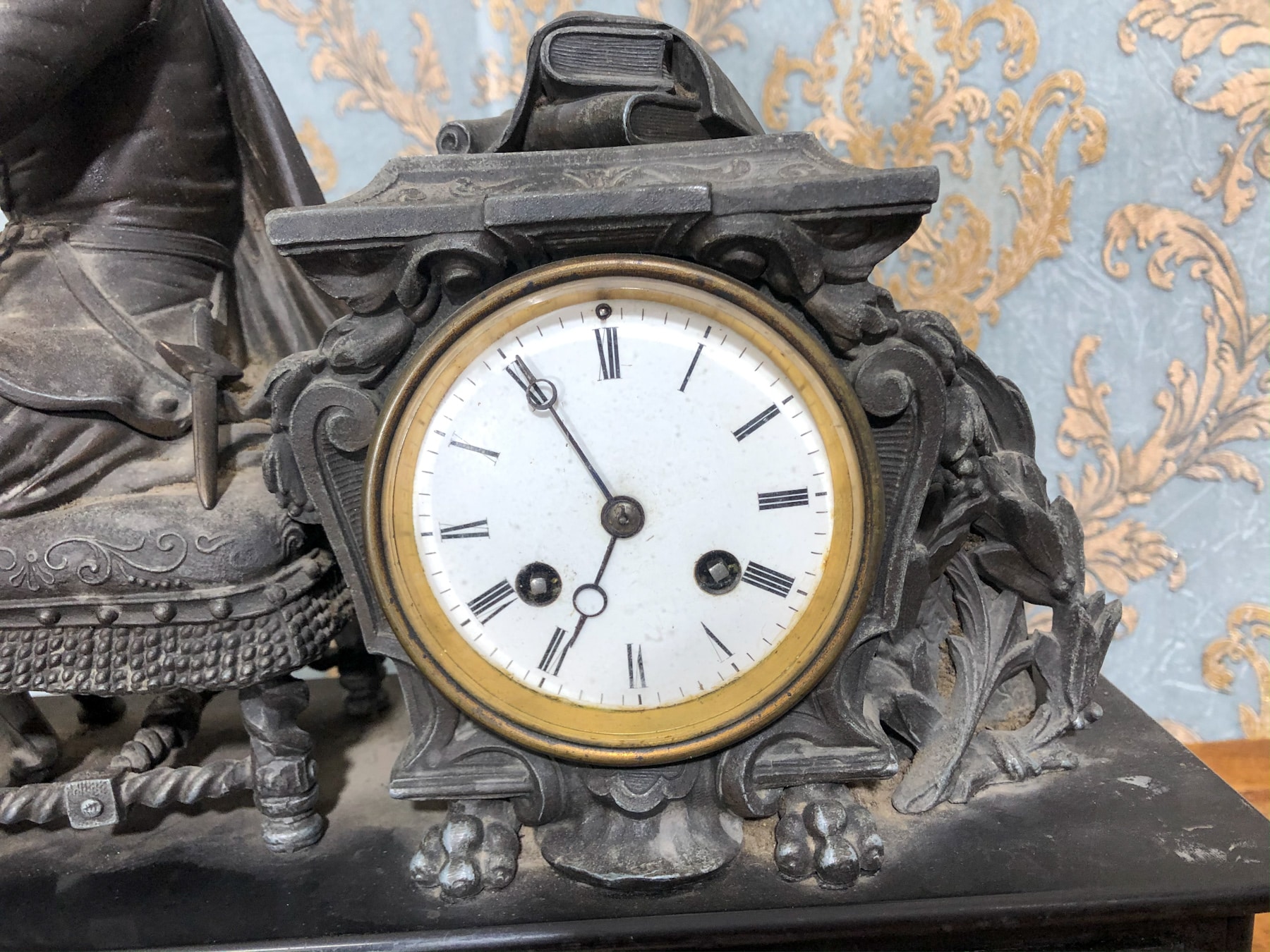
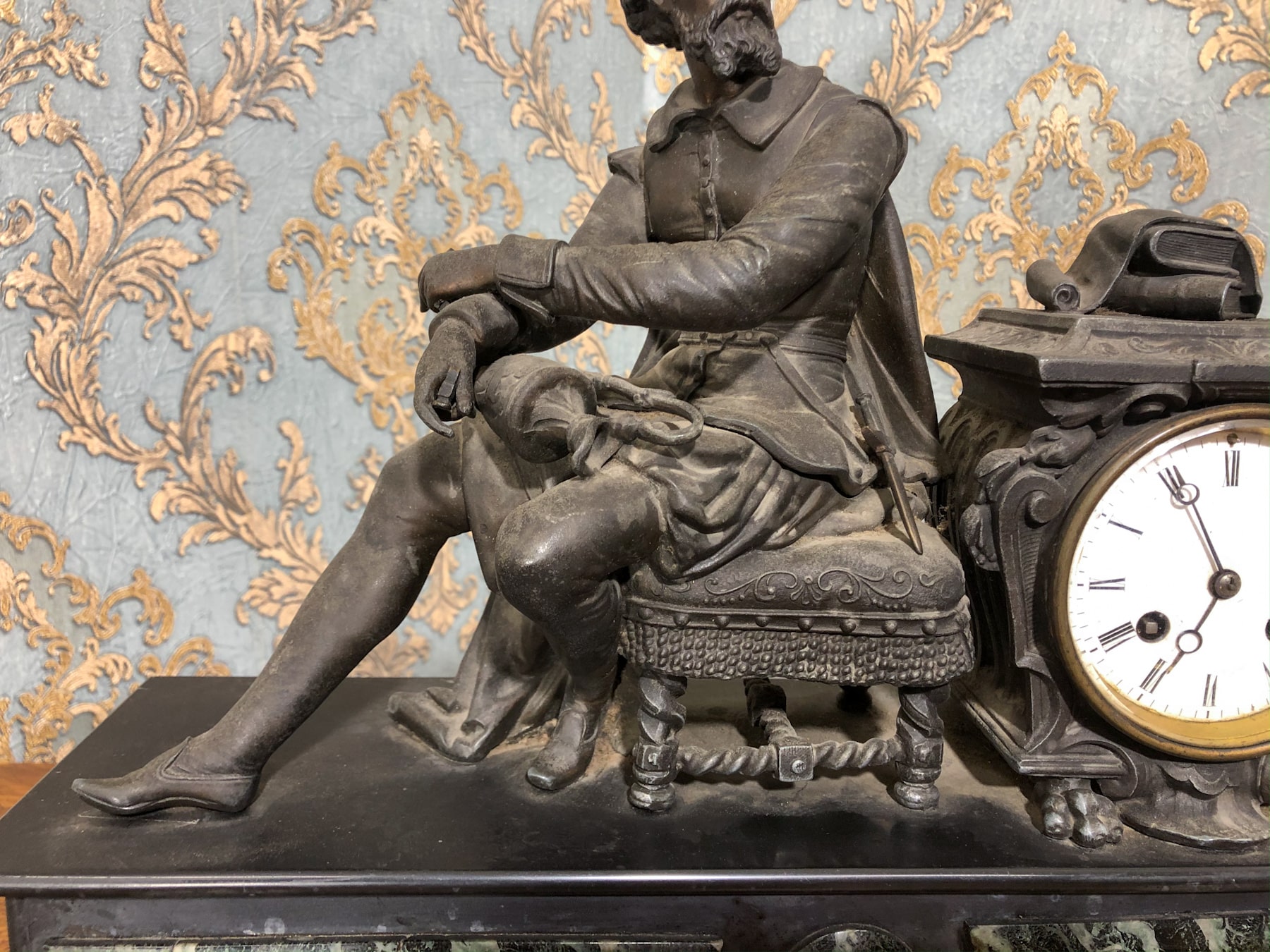
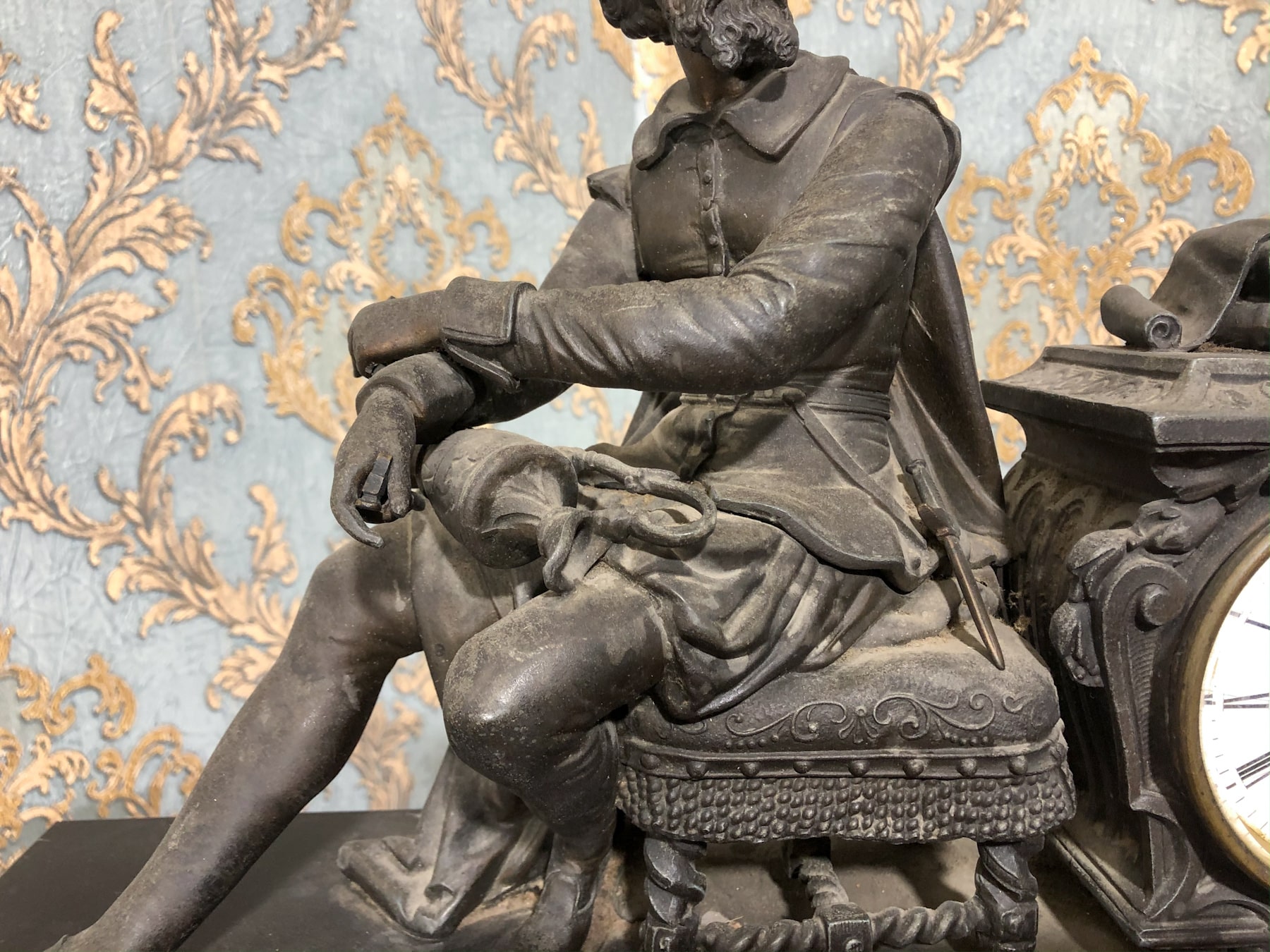
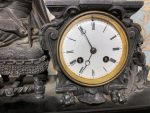
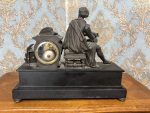
Монументальные антикварные французские каминные часы из черного камня и зеленого мрамора с фигурой писателя (537)
Высота 45 cm Ширина 53 cm

Описание
Антикварные французские каминные часы из черного камня и зеленого мрамора с фигурой писателя (antique french marble mantle clock)
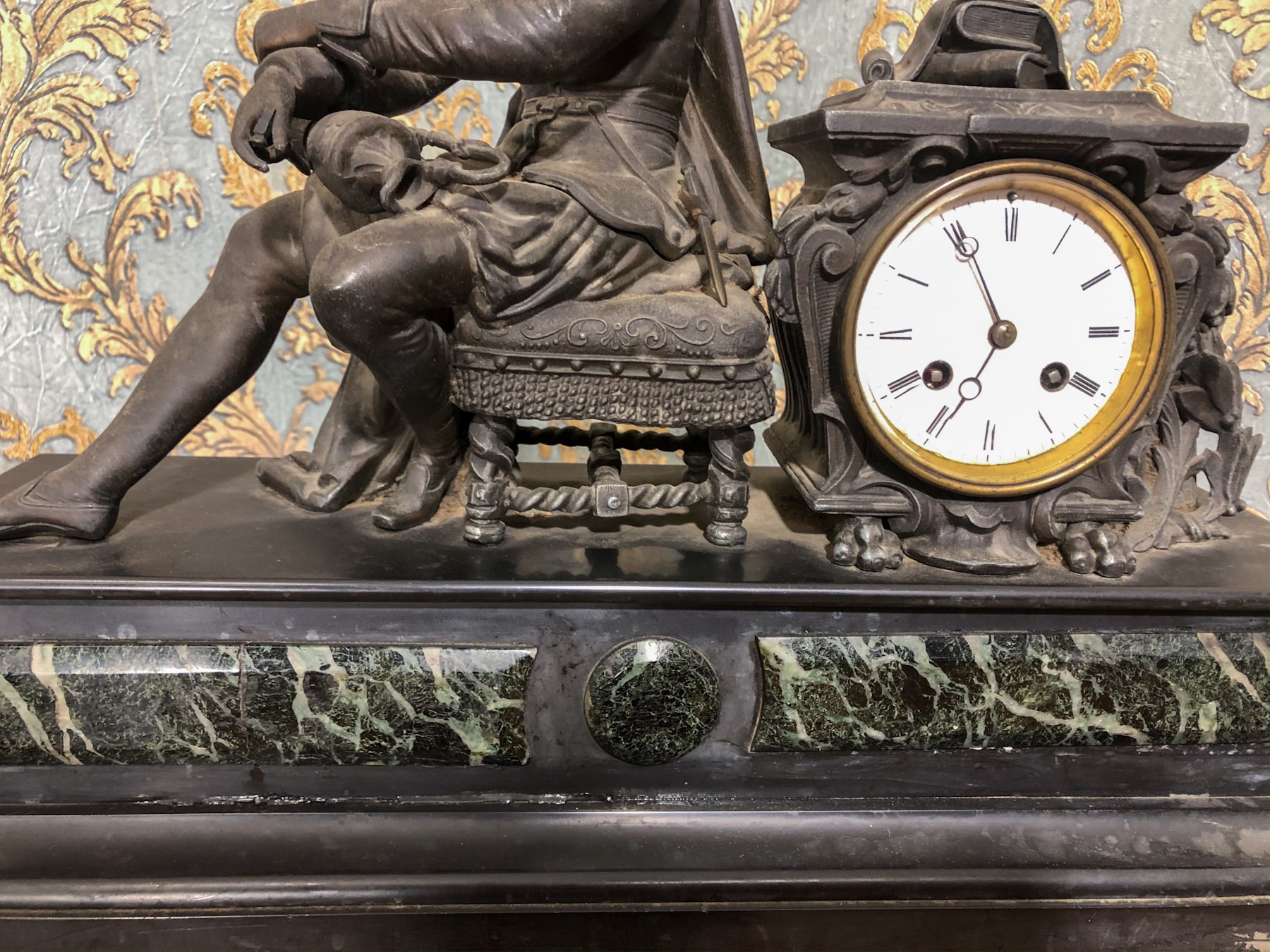
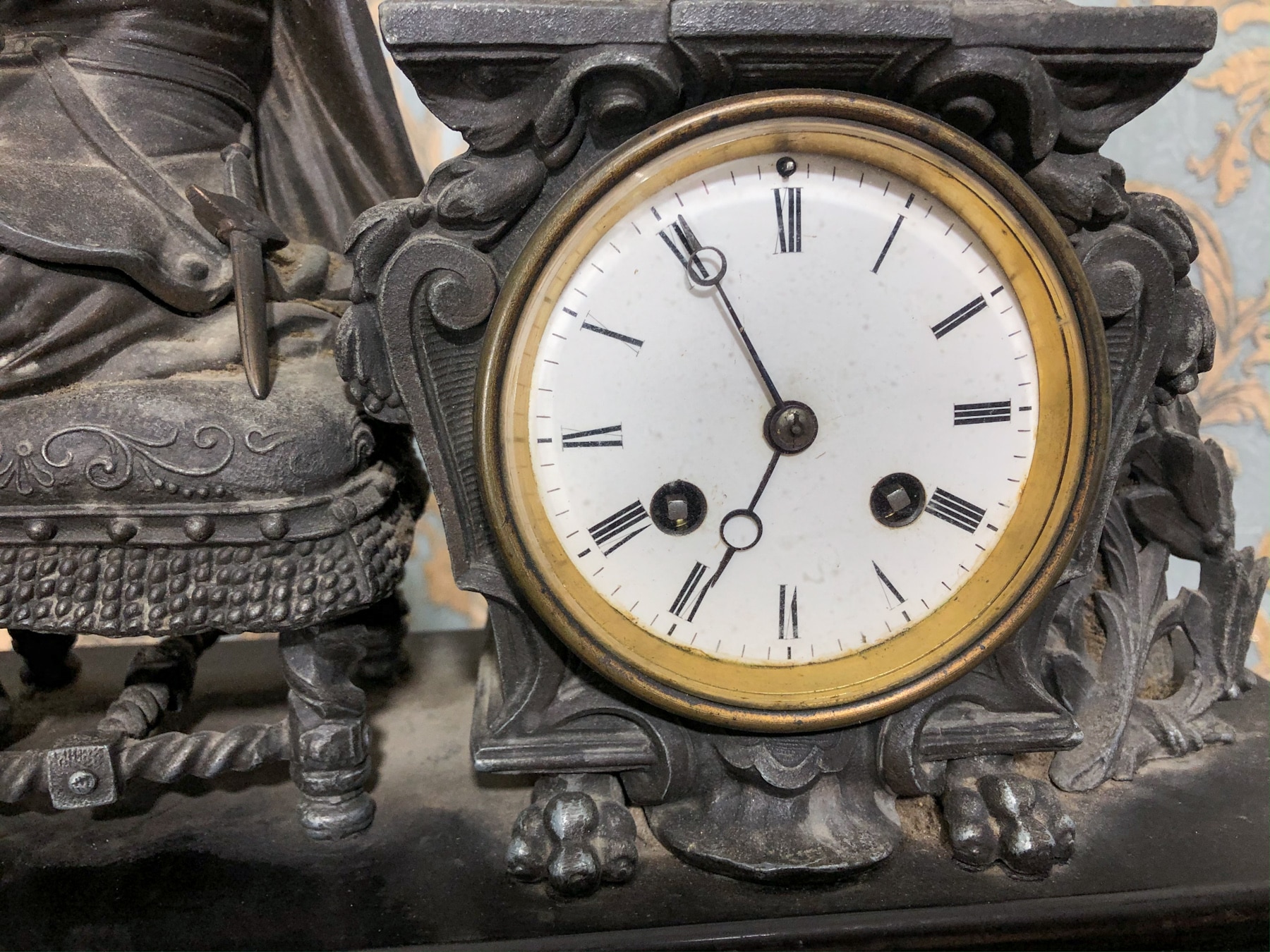
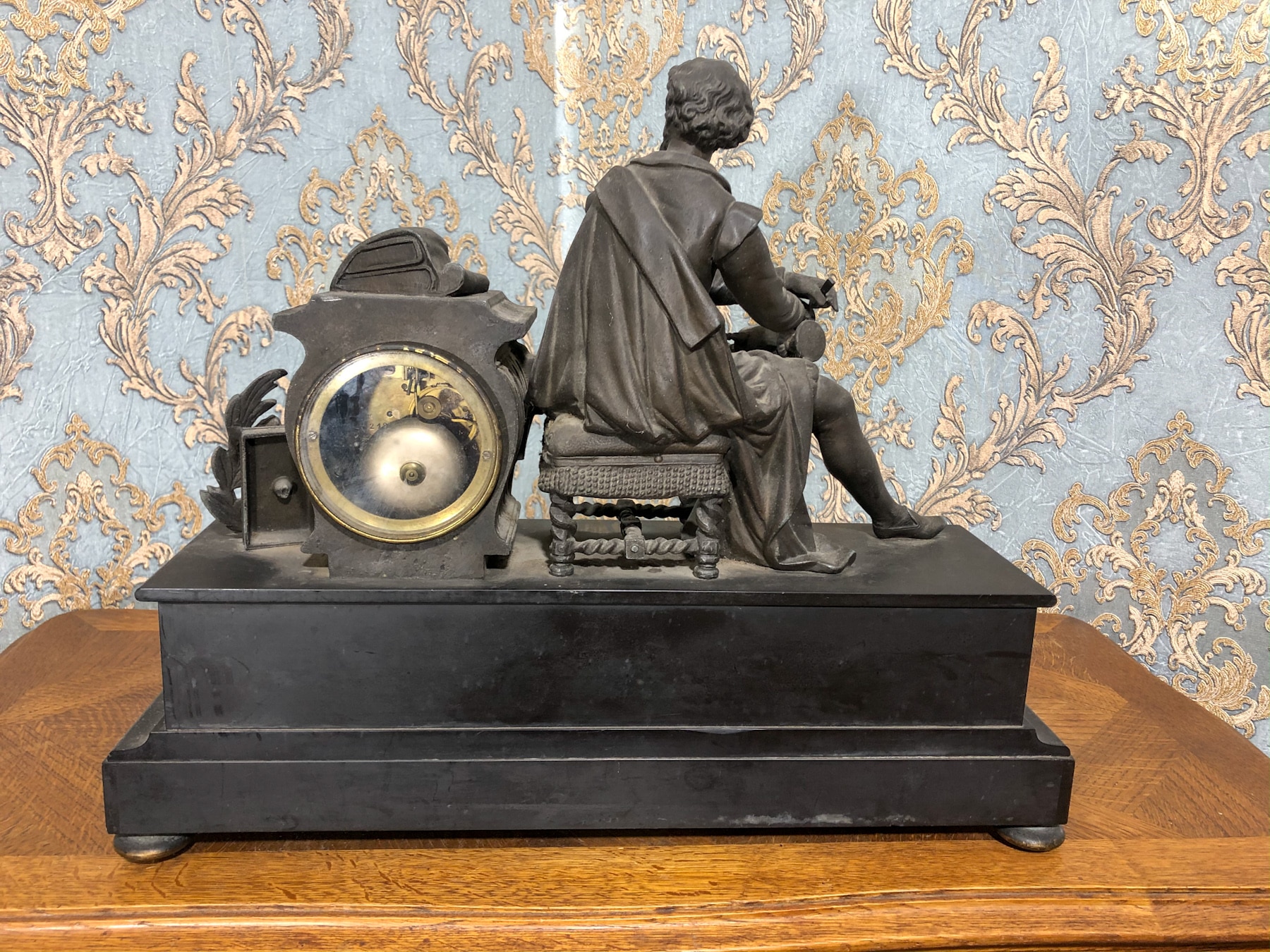
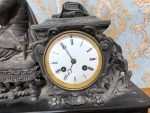
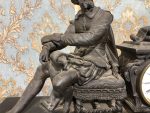
Монументальный размах камнерезного искусства позднего историзма и высокое академическое изящество конца XIX века соединились в этих крупных, необычайно тяжелых французских каминных часах. Корпус прибора высечен из глубокого черного бельгийского камня (Noir Belge), строгость архитектурных линий которого подчеркнута вставками из изысканного темно-зеленого мрамора (Vert de Mer) с выразительным природным рисунком вен. Композицию венчает большая, высокодетализированная фигура писателя или мыслителя эпохи Возрождения в историческом костюме, застывшего в глубоком раздумье над рукописью рядом со стопкой книг. Часы оснащены классическим белым эмалевым циферблатом с римскими цифрами и оригинальным французским механизмом.
Период изготовления
Последняя четверть XIX века, примерно 1880–1895 года — золотая эпоха, когда такие тяжелые каменные часы служили главным украшением парадных залов и кабинетов военной и интеллектуальной элиты Европы.
Состояние
Часы находятся в личном антикварном состоянии. Корпус из черного камня и зеленого мрамора полностью цел, без сколов, трещин и реставраций. Металлическая фигура сохранила благородную оригинальную темную патину. Эмалевый циферблат чистый, оригинальный механизм находится в полной комплектации. Состояние вещи полностью отражено на фотографиях.
Зарисовка эпохи, полярный исследователь Евстафий Тягин: В тихом, солидном доме в северной части Либавы царит покой воскресного вечера. Комнату наполняет мерное, тяжелое тиканье часов, перекликающееся с далеким гулом паровых молотов со стороны Тосмарского судостроительного завода. За столом, перелистывая старые экспедиционные дневники и первые метеорологические отчеты Новой Земли, сидит отставной флотский офицер, легендарный полярный исследователь Евстафий Тягин. Этот человек, защитник Севастополя, когда-то проявил невероятное мужество, отправившись в полярные пустыни Крайнего Севера вместе с женой и маленьким сыном, чтобы основать первое постоянное русское поселение и спасательную станцию на суровых арктических скалах.
Его взгляд останавливается в центре комнаты, где над комодом величественно возвышаются французские каминные часы из черного камня и глубокого зеленого мрамора. Бронзовая фигура сидящего мыслителя, застывшего с пером в руке над раскрытым свитком, в лучах заходящего солнца отбрасывает рельефные тени на белый эмалевый циферблат. Тягин подходит ближе и касается прохладной, идеально гладкой поверхности камня — этот шедевр французской классики, который в январе 1903 года зафиксирует последние минуты жизни старого мореплавателя перед его упокоением на Либавском Гарнизонном (Северном) кладбище, привносит в дом нерушимый дух европейского покоя и академического величия перед лицом вечности. За окном медленно тянутся повозки, а в кабинете время словно замерло вокруг одного бронзового пера.
Antique French Black Stone & Green Marble Mantle Clock with Bronze Figure of a Writer — Imposing Historicist Style (antique french marble mantle clock)
Academic weight, masculine grounding, and the architectural grandness of the late 19th-century Historicist movement converge in this exceptionally large and remarkably heavy antique French mantle clock. This horological masterpiece is a definitive statement piece, showcasing an elite marriage of sculpture and premium stone masonry. The monumental clock case is expertly hewn from deep, polished Belgian black stone (Noir Belge), its strict linear silhouette dramatically enhanced by rich panels and a central round medallion of deep green sea-marmor (Vert de Mer) displaying vivid, organic internal veining.
Crowning the structure is a substantial, highly detailed patinated bronze/metal sculpture depicting a Renaissance or Baroque era intellectual—a writer, poet, or philosopher in period dress with a dagger fixed to his belt. He is captured in a state of profound contemplation, seated upon an upholstered armchair with turned legs, his arm resting over a newly completed scroll while a stack of historical texts and an inkwell sit atop the clock casing below. The clock features a clean white enamel dial with crisp black Roman numerals flanked by dual winding apertures, protected by a burnished brass bezel with its original glass cover, while the reverse reveals a traditional French brass movement complete with its counting bell.
Production Period
Final quarter of the 19th century, circa 1880–1895. During this golden era of European revival design, substantial dark stone clocks crowned with academic or allegorical figures served as the definitive status symbols within the offices, grand libraries, and drawing rooms of high-ranking commanders and civic visionaries.
Condition
The clock stands in excellent antique condition. The Belgian black stone and green marble housing is entirely intact, displaying no chips or cracks while retaining its noble, historic high-gloss polish. The bronze figure is structurally robust, boasting an unaltered deep patina with all fine attributes fully preserved. The enamel dial is pristine, and the mechanical movement remains complete and visually clean. Fully reflected in the photos.
Historismus era snapshot, Polar Explorer Evstafiy Tyagin: Inside the quiet, substantial residence in the northern quarter of Libava, a peaceful Sunday afternoon unfolds. The room is filled with the slow, heavy ticking of a clock, punctuated only by the distant, rhythmic hum of steam hammers echoing from the nearby Tosmare shipyard. Sitting at his desk, reviewing old expedition logs and the very first meteorological charts of Novaya Zemlya, is the retired naval officer and legendary polar explorer Evstafiy Tyagin. He is a man of iron-willed Sevastopol conditioning, whose immense courage once led him to venture into the frozen Arctic wastes alongside his wife and infant son to establish the first permanent imperial rescue station upon those stark, unforgiving polar cliffs.
His gaze anchors upon the center of his desk where an extraordinarily heavy French black stone and green marble clock commands the space. The bronze thinker figure crowning the case, frozen with a pen in hand over an open manuscript, appears lost in a state of contemplation as deep as the explorer’s own, casting long, detailed shadows across the white enamel dial in the fading sunset. Tyagin steps forward, running his fingertips over the cool, flawless surface of the green marble panels—finding this masterpiece of French classicism, which would later log the old seafarer’s final hours in January 1903 before his burial at the Libava Northern (Garnizon) Cemetery, a reassuring sanctuary of old-world European order. Outside, horse-drawn carriages roll slowly past, while here inside the study, time stands still around a single bronze pen.