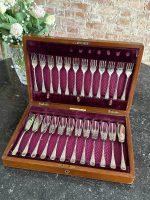
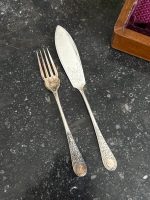
Антикварный изысканный комплект посеребренных приборов для рыбы на 12 персон в оригинальном деревянном футляре — Goulding Plymouth, Англия, конец XIX века (6583) 700,00 €
You’re now subscribed to price tracking for this product. We’ll notify you if the price drops. 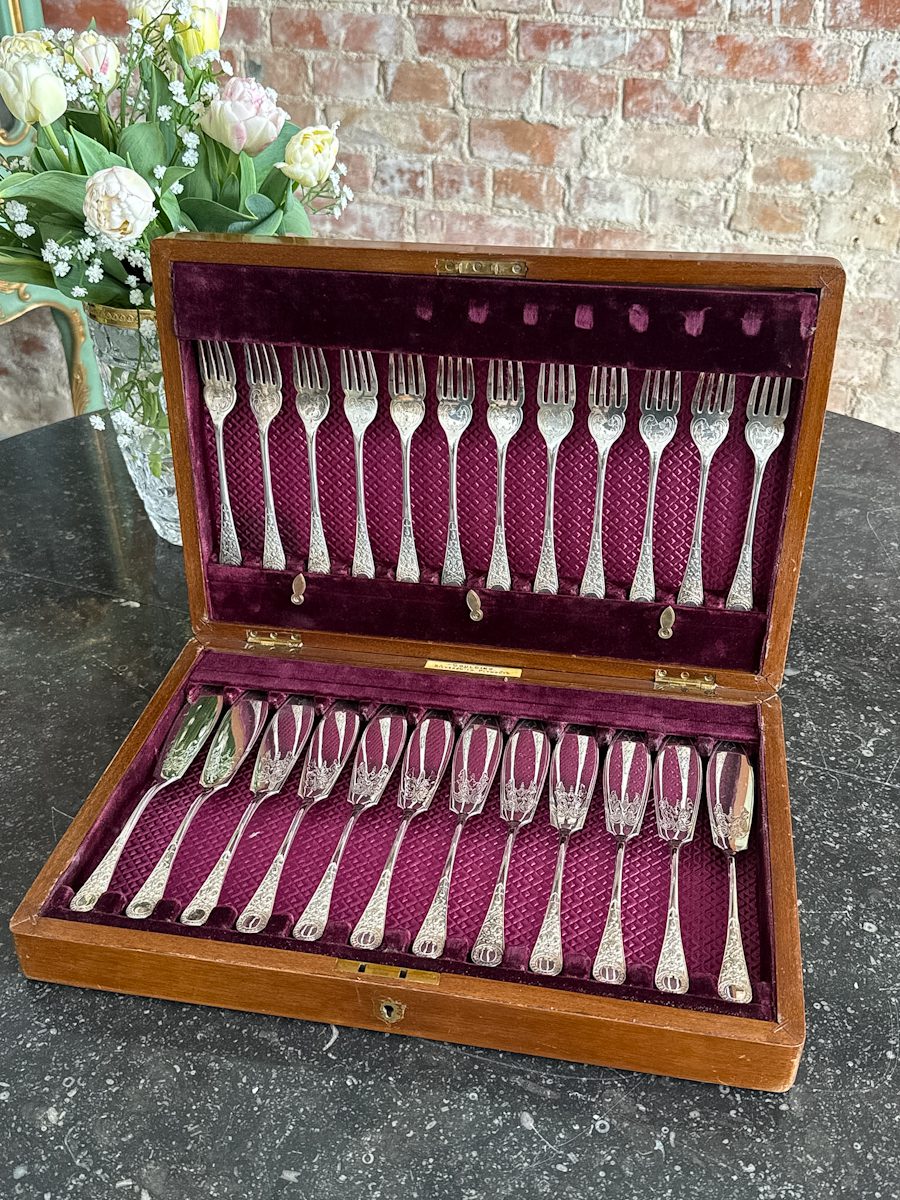
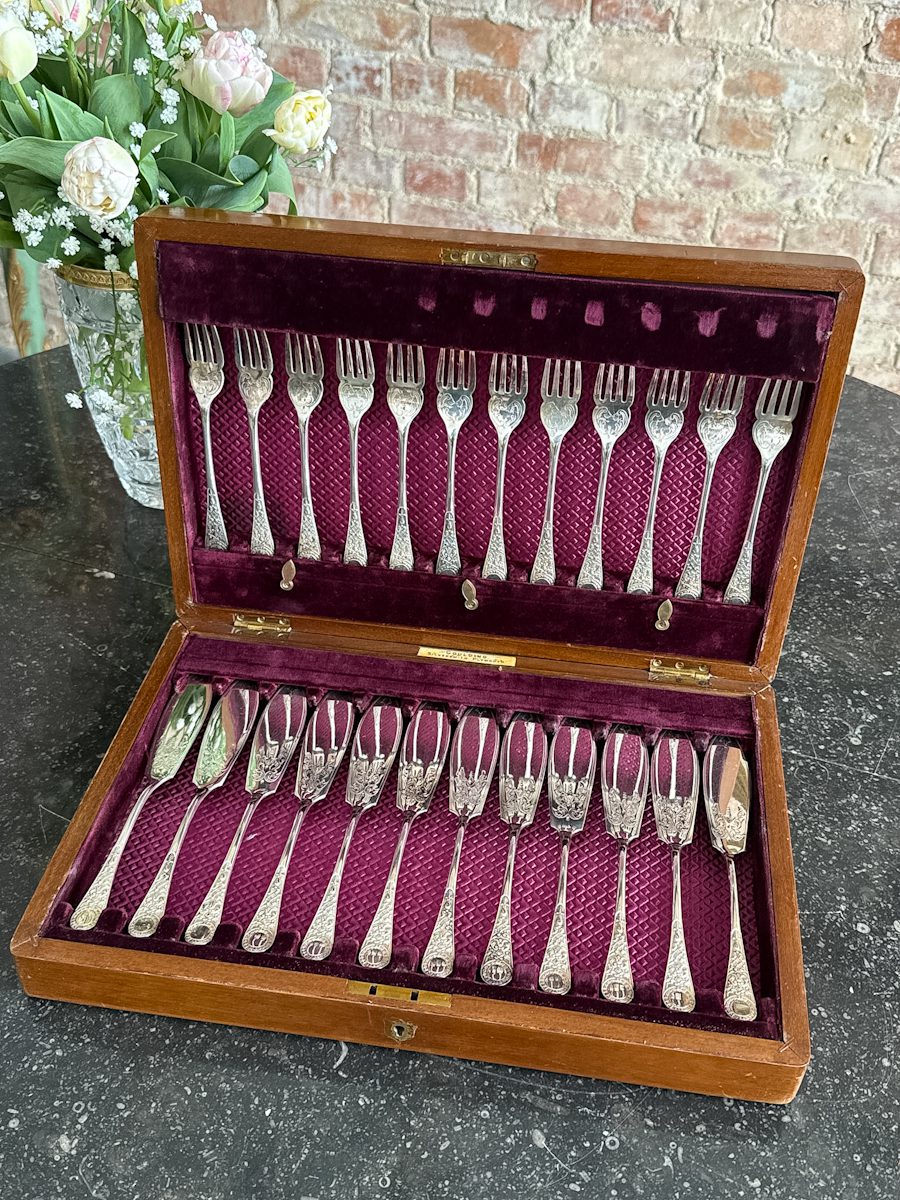
Антикварный набор столовых приборов для рыбы на 12 персон в оригинальном деревянном ящике — Goulding Plymouth (6583)
Цвет НатуральныйМахагонЛососёвый
Описание
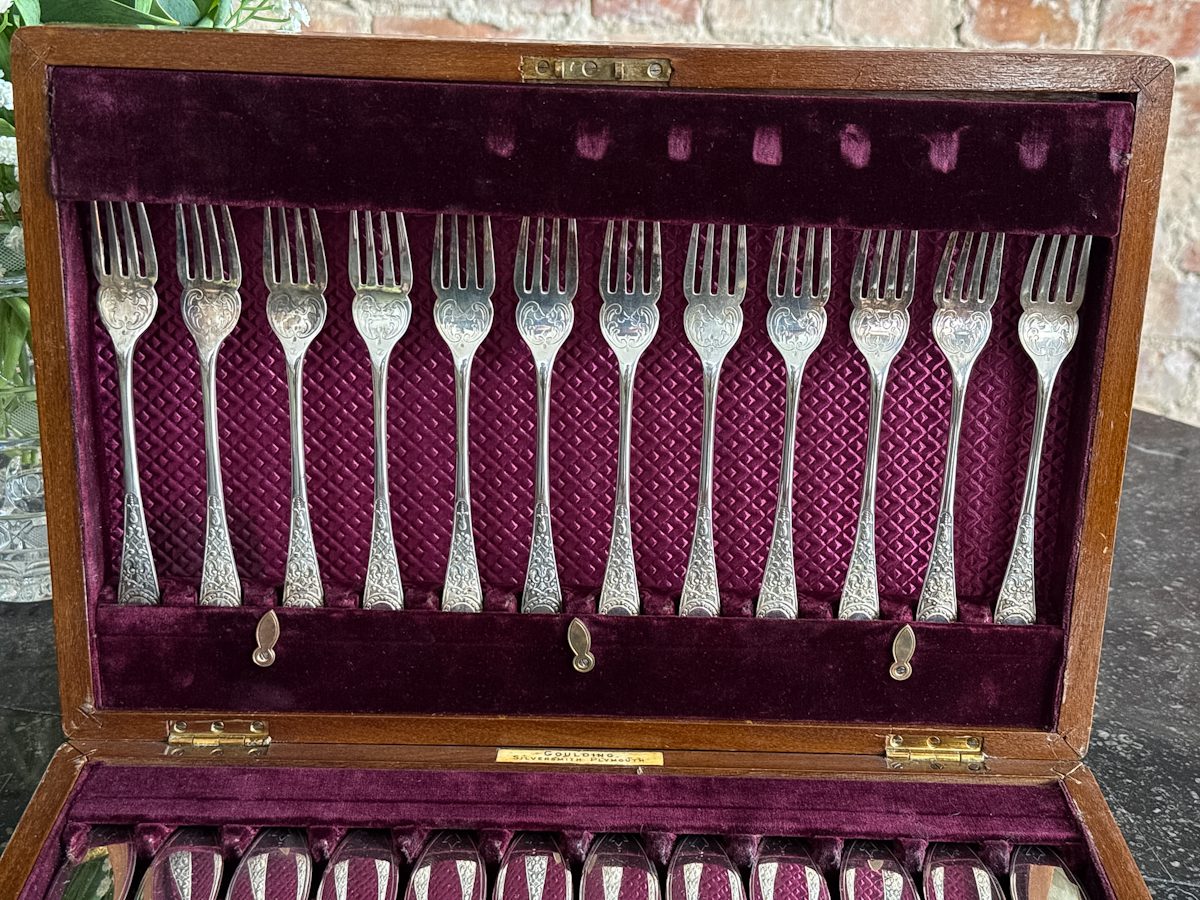
Антикварный изысканный комплект посеребренных приборов для рыбы на 12 персон в оригинальном деревянном футляре — Goulding Plymouth, Англия, конец XIX века (6583)
РАЗМЕРЫ:
-
Футляр: 39,5 см × 26,5 cm
-
Комплектация: 24 предмета (12 рыбных ножей и 12 соответствующих вилок).
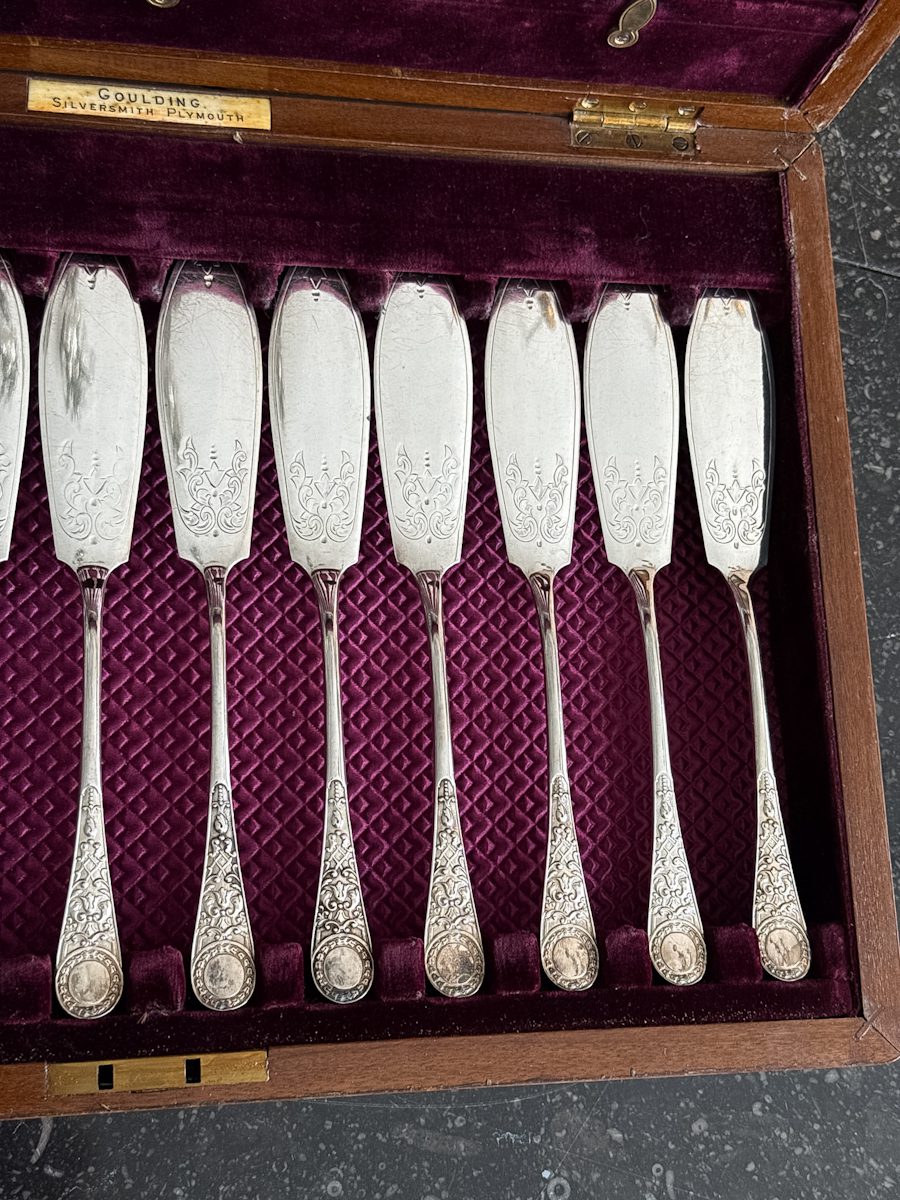
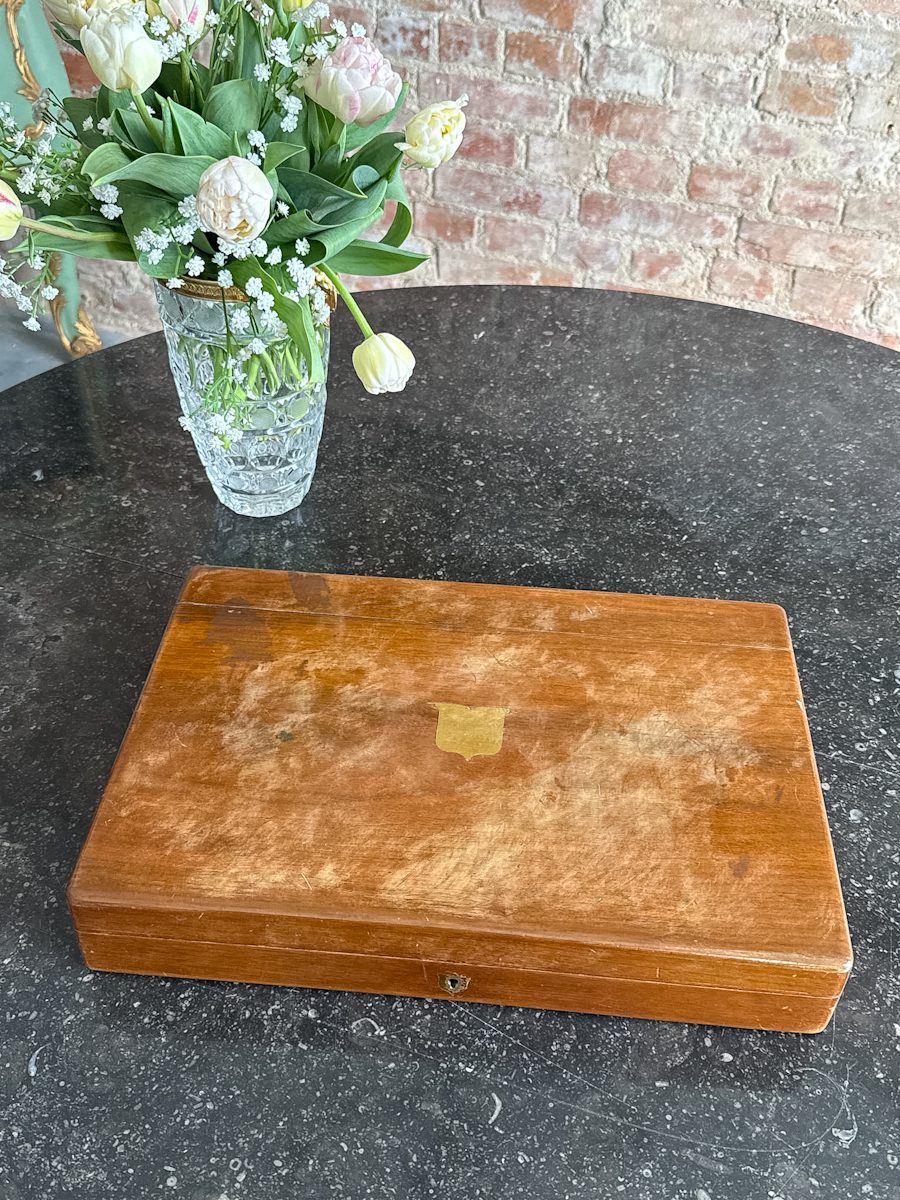
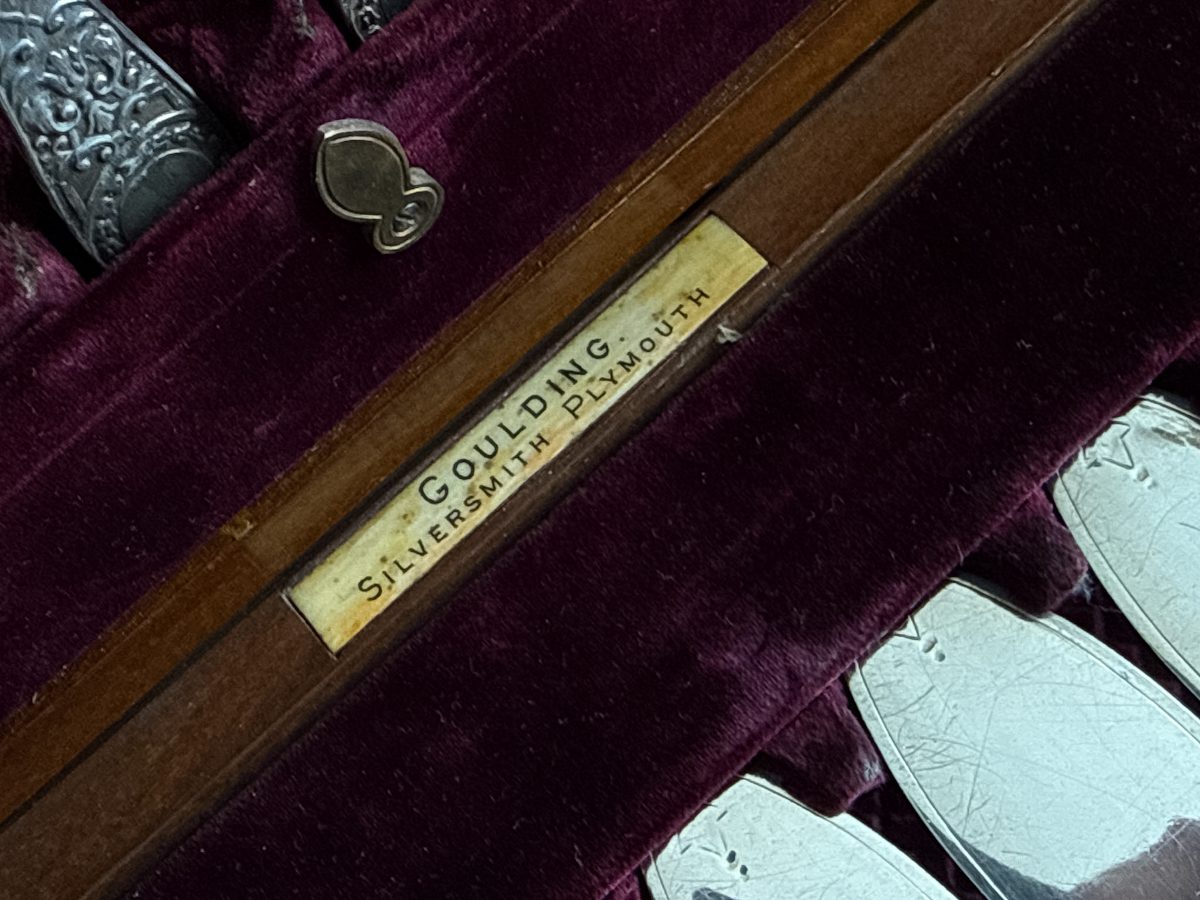
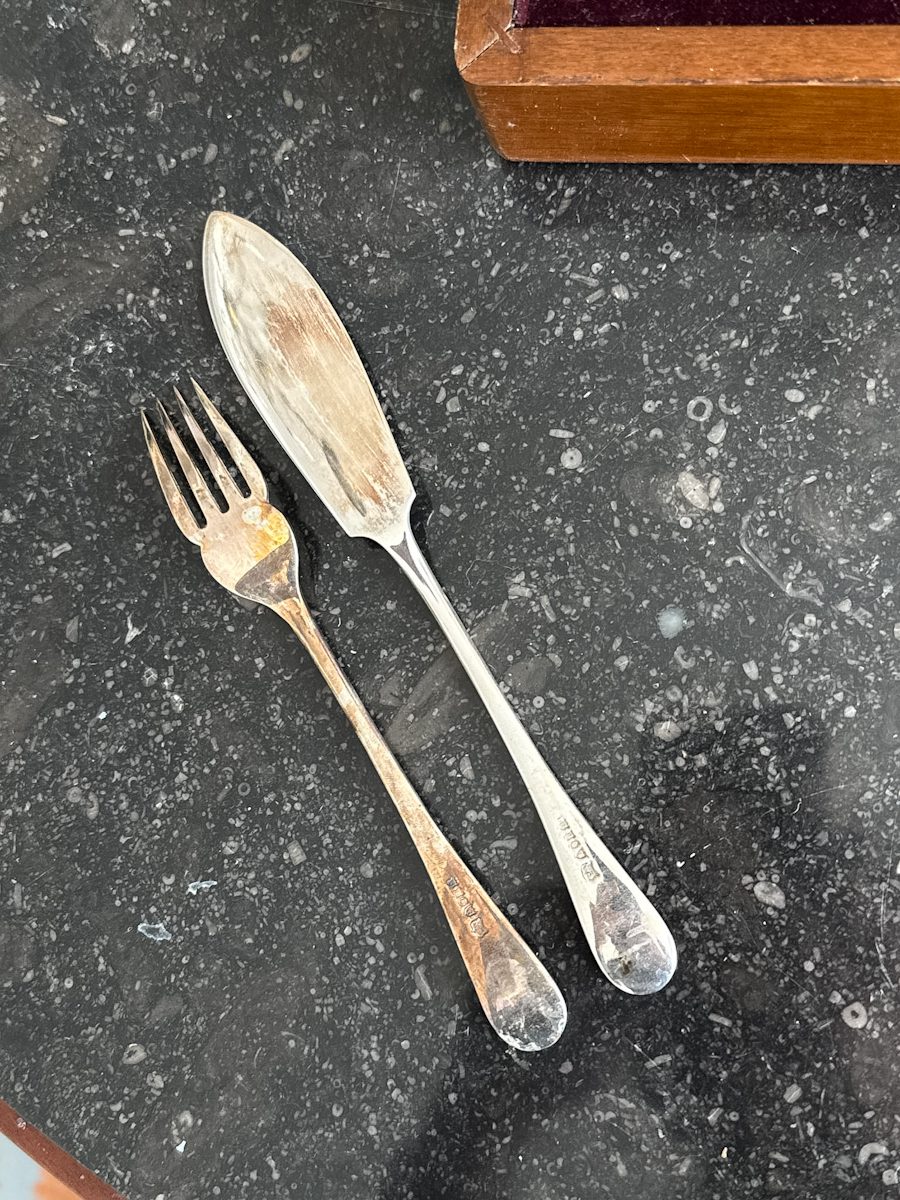
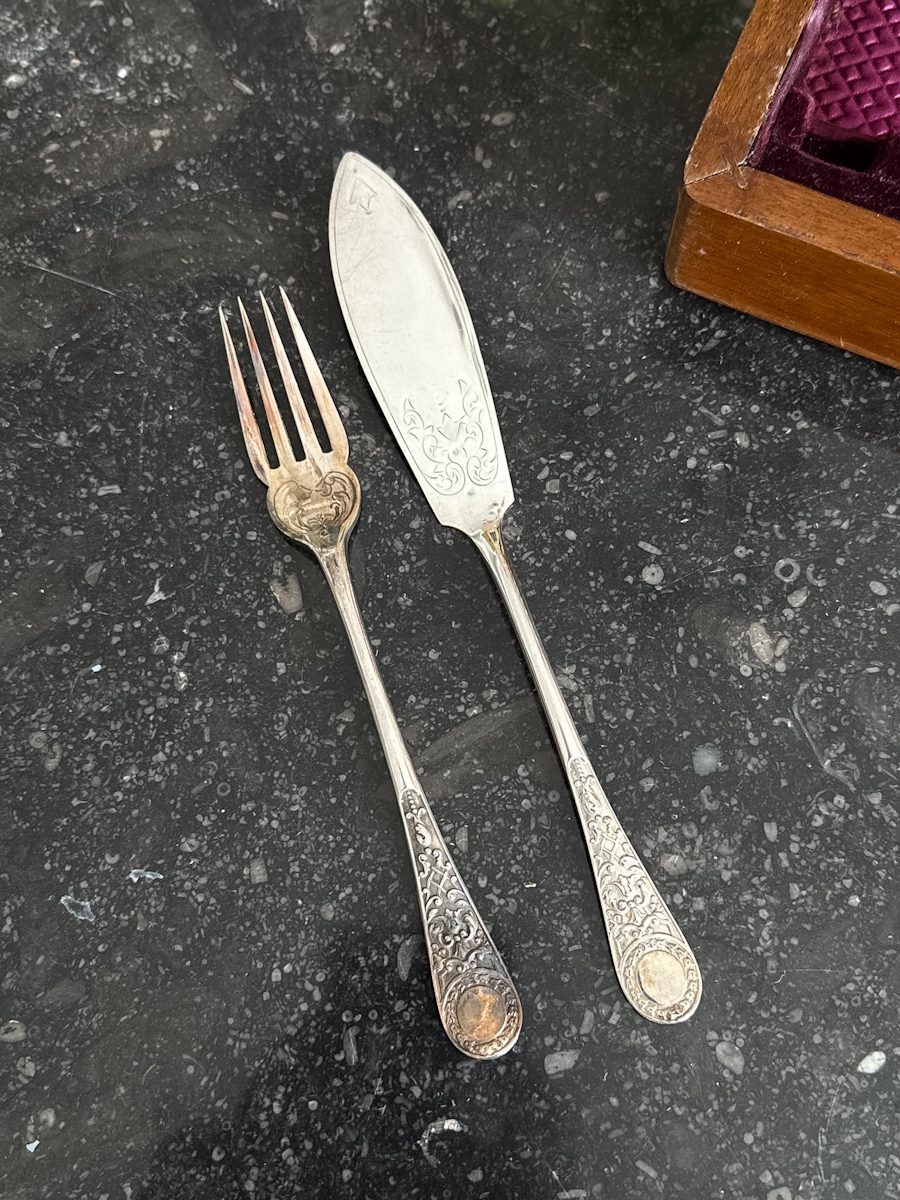
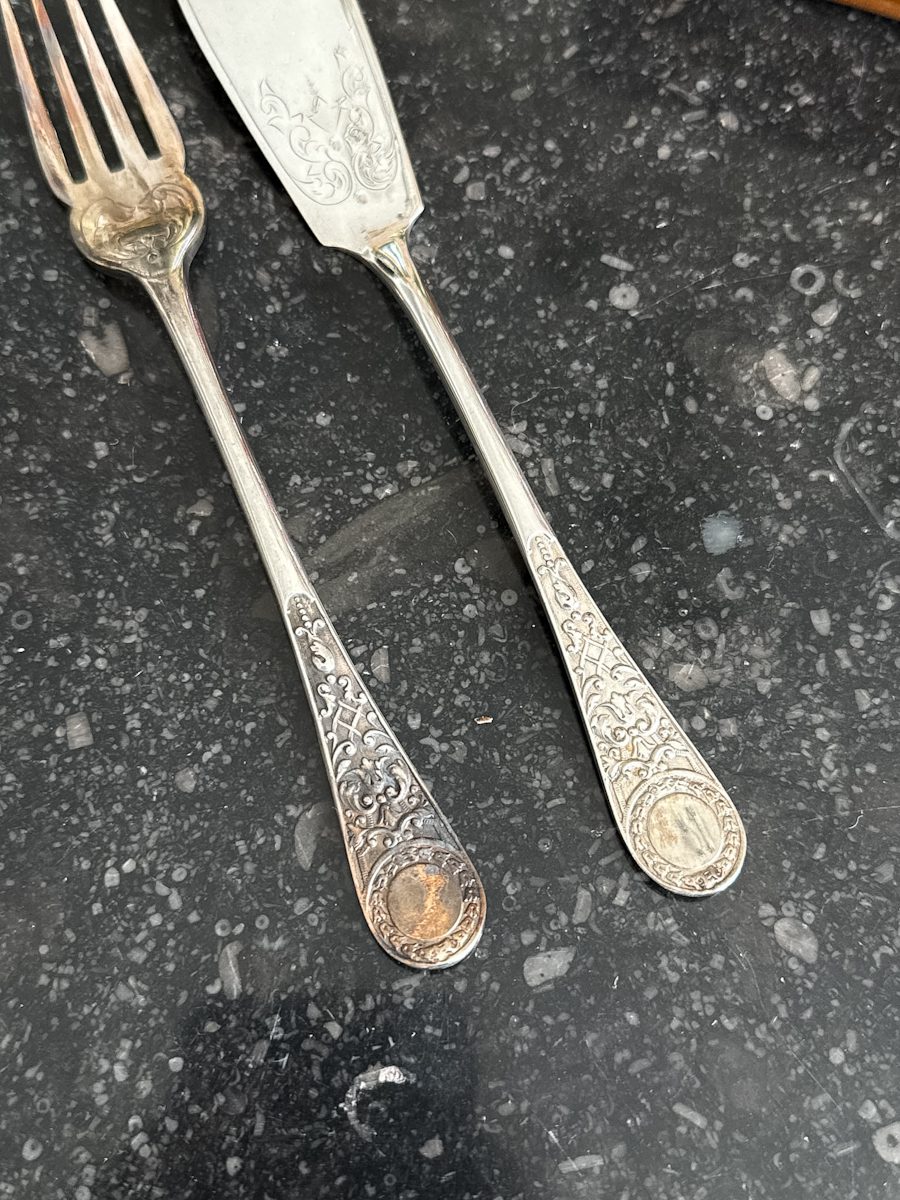
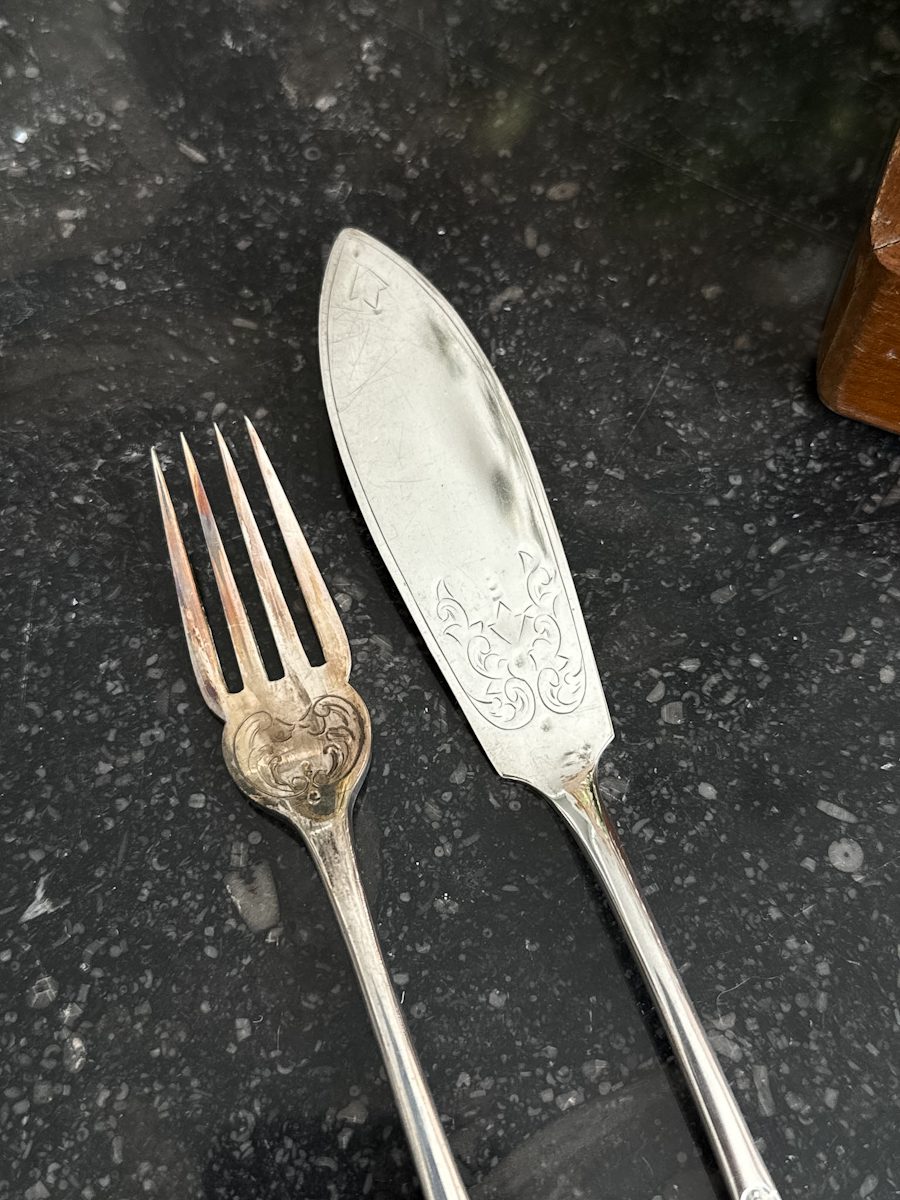
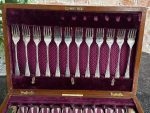
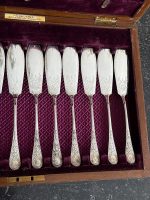
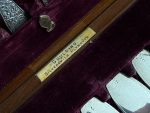
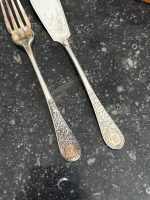
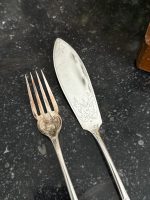
Этот исключительно роскошный и полный столовый ансамбль из высококачественного глубокого посеребрения (antique fish cutlery set / silver-plated) представляет собой редкий образец английского серебряного мастерства поздней Викторианской эпохи (около 1880–1895 годов). Широкие лезвия ножей и основания четырехзубых вилок украшены тончайшей ручной гравировкой с неорококо завитками и растительными мотивами. Массивные фигурные рукояти выполнены с рельефными бордюрами и чистыми медальонами для монограмм. Набор уложен в оригинальный массивный деревянный футляр из красного дерева, изнутри отделанный великолепным первозданным королевским фиолетовым бархатом и стеганым шелком, где для каждого прибора предусмотрен свой фиксатор. На внутреннем ободе футляра сохранена оригинальная костяная табличка с клеймом мастера: Goulding, Silversmith Plymouth.
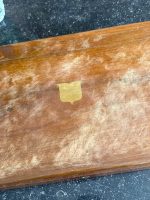
Снимок эпохи: В самом расцвете позднего Викторианского периода, в парадной столовой плимутской приморской усадьбы графа и члена парламента сэра Генри Эдвардса царил торжественный и аристократически интеллектуальный вечерний покой. В зале пахло дорогим портвейном, воском свечей и только что поданным запеченным лососем, а пламя подсвечников красиво отражалось в полированных панелях из красного дерева и тонком фарфоре. На столе стоял открытый тяжелый деревянный футляр с позолоченным щитом на крышке, в фиолетовых бархатных ложементах которого сияли приборы для рыбы. Гости с восхищением наблюдали, как при поднятии ножа гравированные листья аканта улавливали каждый луч света, создавая глубокие рефлексы. В культуре того времени такой гармоничный ансамбль был не просто утварью — это была застывшая визуальная поэзия, приносившая подлинное величие английского этикета в парадное пространство.
Все 24 прибора находятся в превосходном антикварном состоянии. Посеребрение сохранило яркий благородный блеск с минимальной естественной патиной времени на обороте. Деревянный футляр прочный, оригинальные латунные петли работают плавно, внутренний бархат чистый, без разрывов, а костяная табличка мастера полностью цела и легко читаема.
Antique fish cutlery set — Late Victorian sterling silver-plated 24pc fish eating service for 12 by Goulding Plymouth in original mahogany box
description:
DIMENSIONS:
-
Presentation Box: 39.5 cm × 26.5 cm
-
Composition: 24 pieces (12 fish knives and 12 matching fish forks).
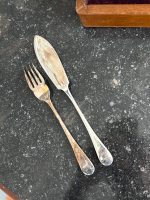
This highly elegant, remarkably well-preserved, and structurally imposing antique set for a full 12-person formal service is a spectacular survival of late 19th-century British silversmithing and high dining culture, dating to circa 1880–1895. Comprising 24 pieces in total, the service is meticulously crafted using premium heavy silver-plated (EPNS) technology over a substantial base metal, giving each knife and fork a satisfying weight, rigidity, and balance in hand. Executed in the definitive late Victorian and Rococo Revival taste, the defining character of this masterwork is its detailed ornamental finish. The broad, elegant blades of the fish knives and the faces of the four-tine forks are adorned with crisp, hand-engraved scrolls, acanthus foliage, and stylized botanical details. The heavy, shaped handles feature continuous rocaille borders enclosing smooth, unengraved circular cartouches at the terminals—traditionally left blank for an owner’s custom monogram or family crest.
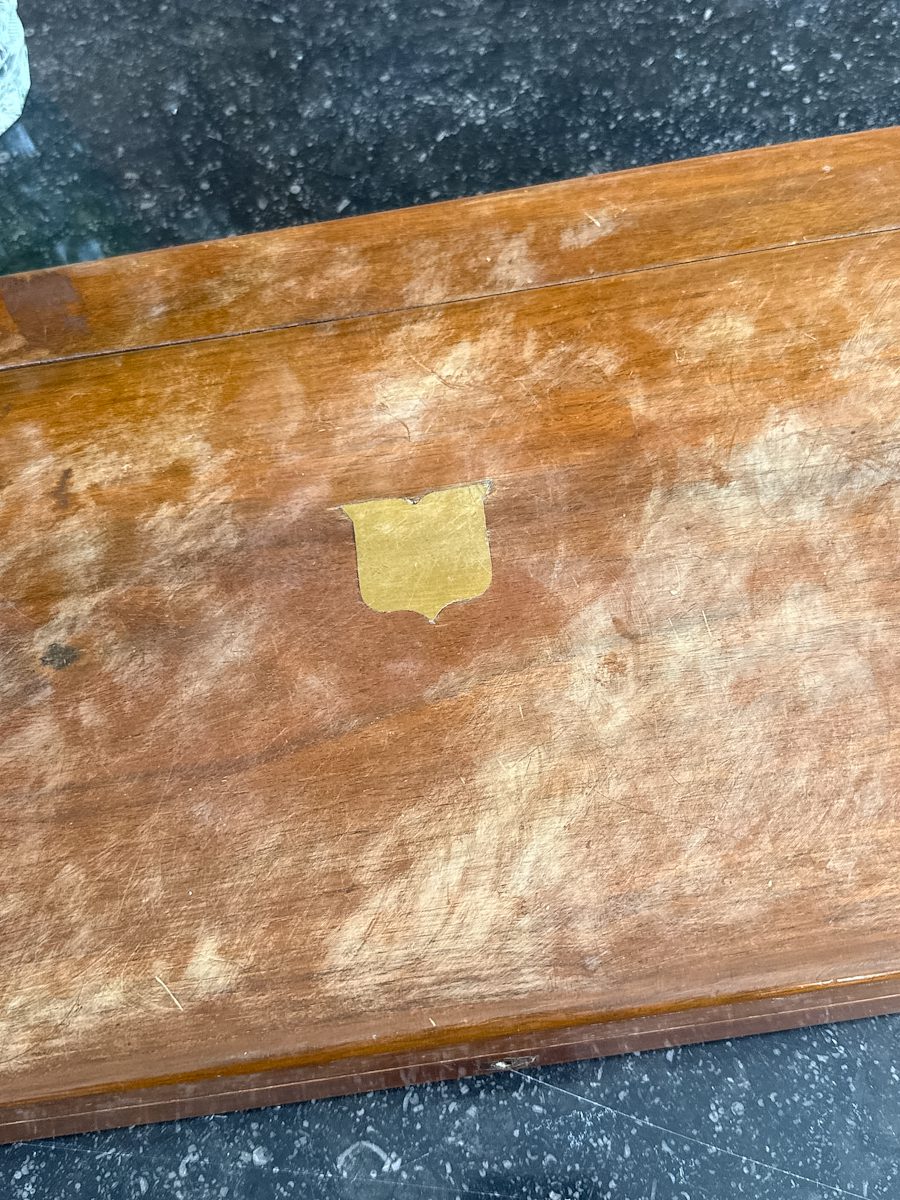
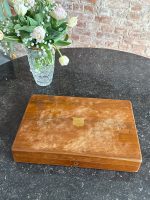
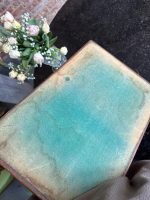
The collection is housed within its original, heavy presentation box made of solid rich-grained wood, mounted with a blank brass shield-shaped plaque on the exterior lid. The interior reveals an untouched example of period luxury, lined with its original deep royal purple velvet and quilted silk backing, featuring tailored slots for each individual piece. Secured along the upper wooden rim is the pristine, original bone maker’s label that reads: Goulding, Silversmith Plymouth.
Fin-de-Siècle snapshot: During the absolute heights of the grand Late Victorian period, within the elegant Plymouth coastal estate dining room of the celebrated Earl and Member of Parliament Sir Henry Edwards, a stately evening stillness held the space during a formal dinner party. The warm candlelight illuminated the heavy mahogany wall panels and fine porcelain, reflecting beautifully along the 24 pieces of silver-plated nestled in the open presentation box upon the buffet. As the baked salmon course was announced, the host raised a deeply engraved fish knife; the hand-cut acanthus scrolls caught the low room light, multiplying the rich reflections across the table. To visitors of the era, such a substantial apparatus was far more than a practical dining set; it was a frozen symphony and physical proof that classical British grace and fine silversmithing had dissolved into absolute aristocratic harmony.
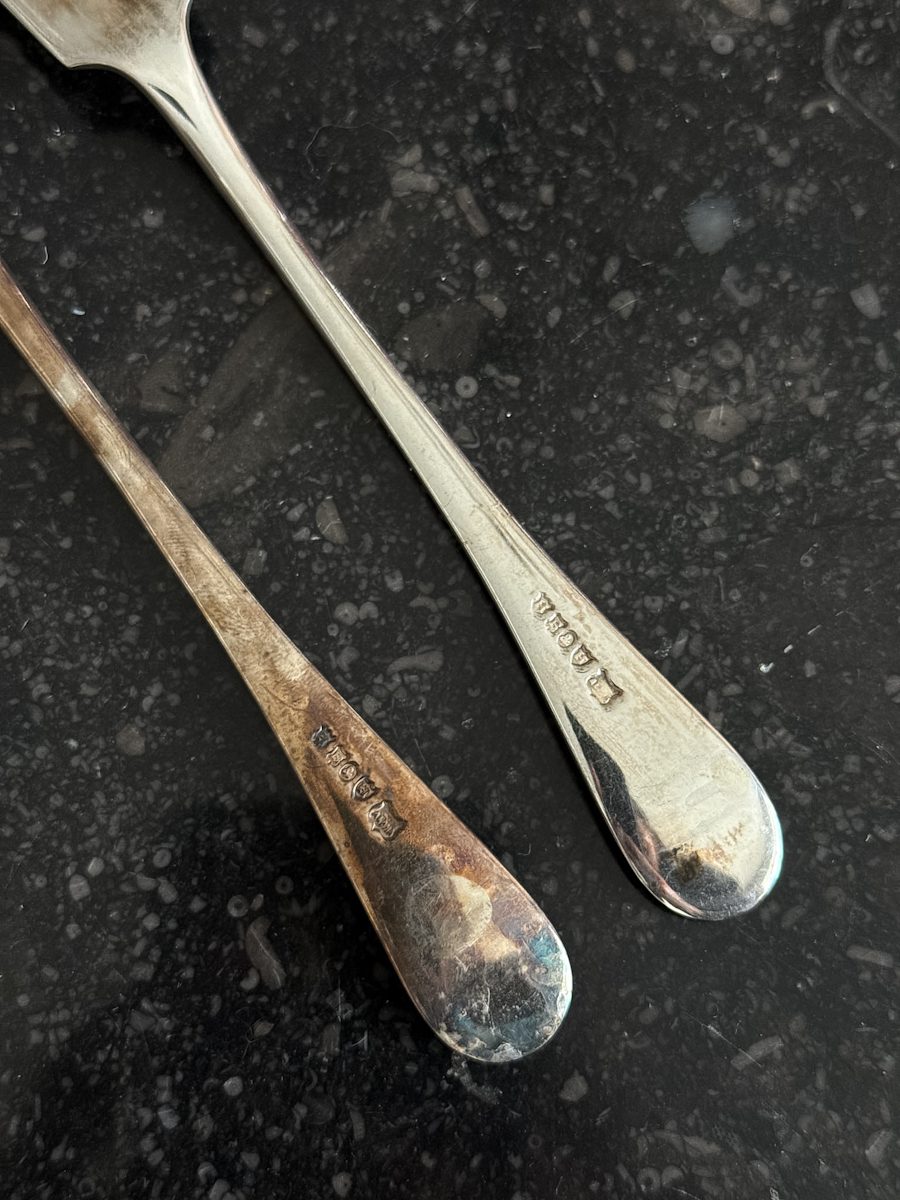
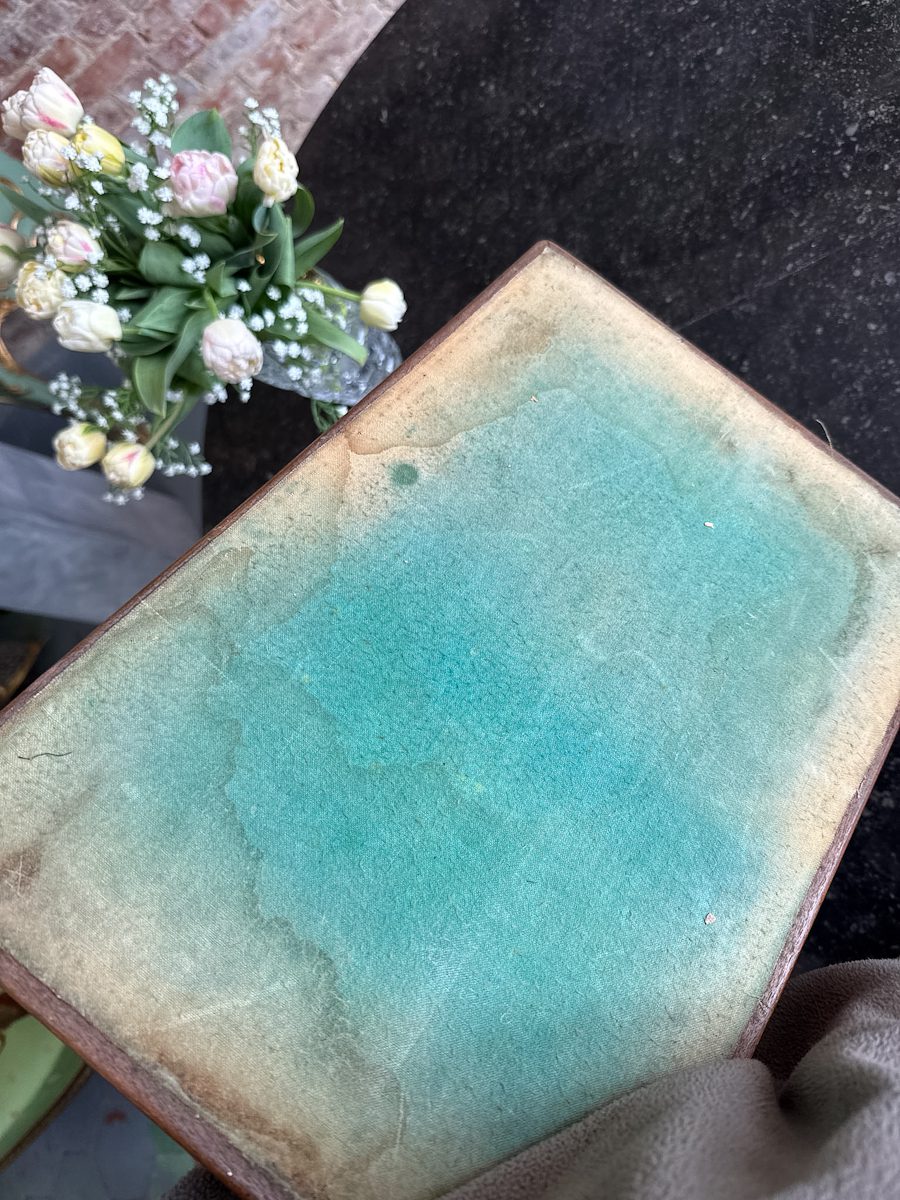
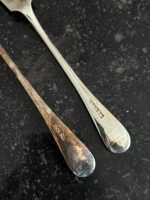
The antique set remains in outstanding condition. All 24 individual pieces are structurally straight and tight, showing no looseness at the bolster pins or joins. The silver-plated sheets retain a magnificent, bright historic luster with only minimal, authentic natural patination within the low recesses and hallmarks that validates its true age and pedigree. The solid wood presentation box is sturdy, with original brass hinges and lock mechanisms functioning smoothly. The interior purple velvet remains remarkably clean, free from structural tears or heavy fading, and the bone manufacturer’s plaque is fully complete and legible.
Antikes herrschaftliches Fischbesteck-Set für 12 Personen in Original-Holzkassette — Goulding Plymouth, England, um 1890 (6583)
ABMESSUNGEN:
-
Schatulle: 39,5 cm × 26,5 cm
-
Bestand: 24 Teile (12 Fischmesser un 12 passende Fischgabeln).
Dieses kunstvoll gestaltete, makellos erhaltene Fischbesteck-Set (antique set) mit hochwertiger, massiver Versilberung (silver-plated) ist ein exquisites Meisterwerk des englischen Spätviktorianismus (ca. 1880–1895). Das absolute Prunkstück dieses Entwurfs ist das herrschaftliche Arrangement aus 24 Teilen für eine vollendete Festtafel. Die breiten Klingen der Fischmesser sowie die Ansätze der vierzinkigen Gabeln sind vollständig mit einer feinen, dichten Handgravur aus Rocaille-Voluten und Pflanzenornamenten versehen. Die schweren, reliefierten Griffe enden in glatten Wappenmedaillons für Monogramme. Das Set ruht in seiner originalen Kassette aus edlem Mahagoniholz, die im Inneren mit königsvornehme, tiefviolettem Samt und gesteppter Seide ausgekleidet ist, wobei jedes Instrument seinen exakten Platz findet. Am Innenrahmen befindet sich das originale Herstellerschild aus Bein: Goulding, Silversmith Plymouth.
Momentaufnahme aus dem Viktorianismus: In der Blütezeit des späten Viktorianismus herrschte im eleganten Speisezimmer des Plymouth-Küstenguts des Grafen und Parlamentsmitglieds Sir Henry Edwards eine feierliche Abendstille. Im Raum duftete es nach edlem Portwein, Bienenwachskerzen und frisch zubereitetem Lachs, und das Licht der Silberleuchter spiegelte sich prachtvoll in den Mahagonipaneelen. Auf dem Tisch stand die geöffnete schwere Holzkassette, in deren violetten Samtbetten das versilberte Fischbesteck glänzte. Die Gäste beobachteten mit Bewunderung, wie die gravierten Akanthusblätter beim Aufnehmen der Messer jeden einzelnen Lichtstrahl des Raumes einfingen und tiefe Reflexe erzeugten. In der Kultur dieser Epoche war ein solch harmonisches Set eine erstarrte visuelle Poesie, die die vollendete Würde der englischen Tafelkultur in den herrschaftlichen Raum brachte.
Das Set befindet sich in einem hervorragenden Originalzustand. Alle 24 Teile sind vollkommen stabil und gerade, die Versilberung glänzt prachtvoll mit minimaler, authentischer Alterspatina auf der Rückseite. Die Holzkassette ist robust, die originalen Messingscharniere schließen perfekt, und das violette Samtfutter ist sauber und rissfrei erhalten.
Somptueux ménagère à poisson d’époque Viktorienne en métal argenté pour 12 personnes — Goulding Plymouth, France/Angleterre, vers 1890 (6583)
Описание en
DIMENSIONS :
-
Coffret de présentation : 39,5 cm × 26,5 cm
-
Composition : 24 pièces (12 couteaux à poisson et 12 fourchettes assorties).
Ce magnifique, très important et particulièrement brillant service à poisson d’art est une magnifique pièce de maîtrise de l’orfèvrerie britannique de la fin de l’époque Victorienne, vers 1880–1895. Conçu selon un modèle d’une grande distinction, cet ensemble exceptionnel comprend 24 pièces de haute qualité en métal argenté lourd (silver-plated / EPNS) sur métal de base blanc, conférant à chaque pièce un poids important et un équilibre parfait en main. Les larges lames des couteaux et le départ des fourchettes à quatre dents déploient un superbe décor de rinceaux feuillagés et de volutes de style Rocaille entièrement gravés main. Les manches massifs moulés sont ornés de filets sinueux et se terminent par des cartouches lisses destinés à recevoir des armoiries ou monogrammes. L’ensemble est présenté dans son précieux coffret d’origine en acajou massif, tapissé à l’intérieur de son rare velours de soie violet impérial d’origine et de soie capitonnée. Sur la bordure intérieure en bois, une plaque d’origine en os porte la signature de l’orfèvre : Goulding, Silversmith Plymouth.
Instantané de la Belle Époque : En plein apogée de la fin de l’époque Victorienne, dans la salle à manger d’apparat du domaine côtier de Plymouth du célèbre comte et membre du Parlement Sir Henry Edwards, un calme soir de réception enveloppait la pièce. Le salon embaumait le vieux porto, la cire d’abeille et le saumon rôti, tandis que la lumière des candélabres scintillait magnifiquement sur les buffets en acajou et les porcelaines fines. Sur la table, le lourd coffret en bois précieux était grand ouvert, révélant ses loges de velours violet où brillaient les couverts à poisson. Les convives admiraient avec émerveillement comment les motifs d’acanthe gravés à la main capturaient le moindre éclat lorsque l’hôte saisissait un couteau. Dans les décors de l’époque, un tel service d’apparat n’était pas une simple ménagère : c’était une poésie visuelle figée, apportant une élégance académique parfaite et une majestueuse dignité à l’art de la table britannique.
Cette ménagère de 24 pièces est dans un état de conservation d’origine remarquable. Tous les couverts sont parfaitement sains, rigides et stables, sans aucun jeu aux viroles. L’argenture a conservé tout son éclat d’origine avec une infime et superbe patine naturelle. Le coffret en bois est robuste, les charnières en laiton d’origine fonctionnent avec souplesse, le velours violet intérieur est resté propre sans déchirure, et la plaque nominative de l’orfèvre est parfaitement intègre et lisible.