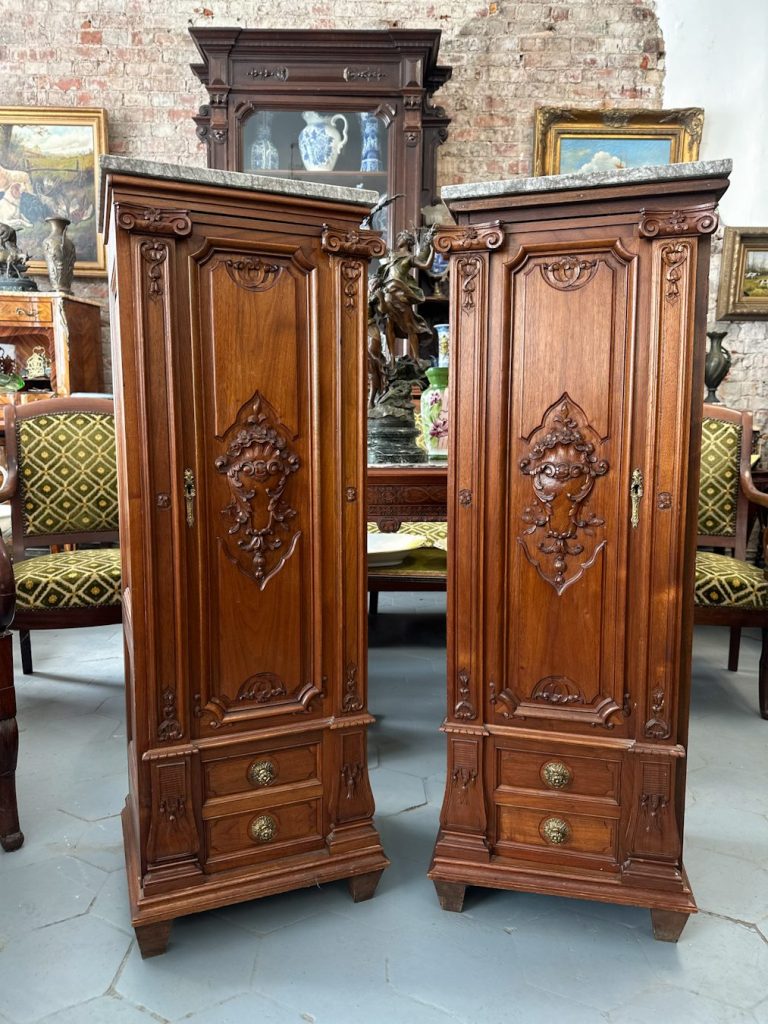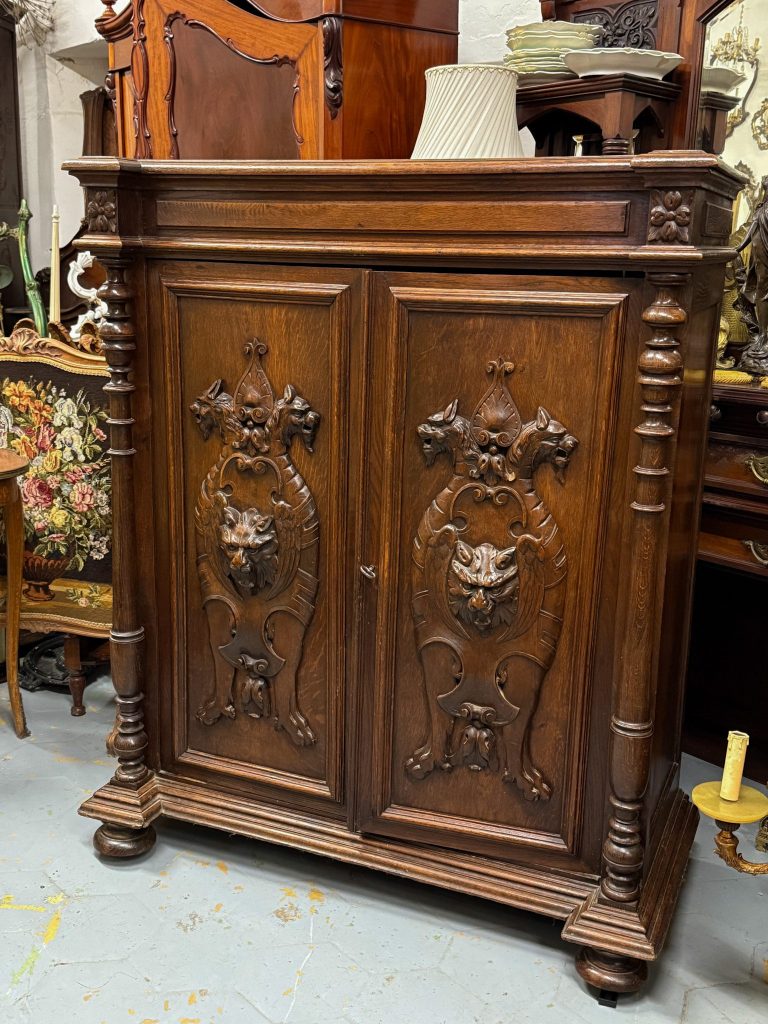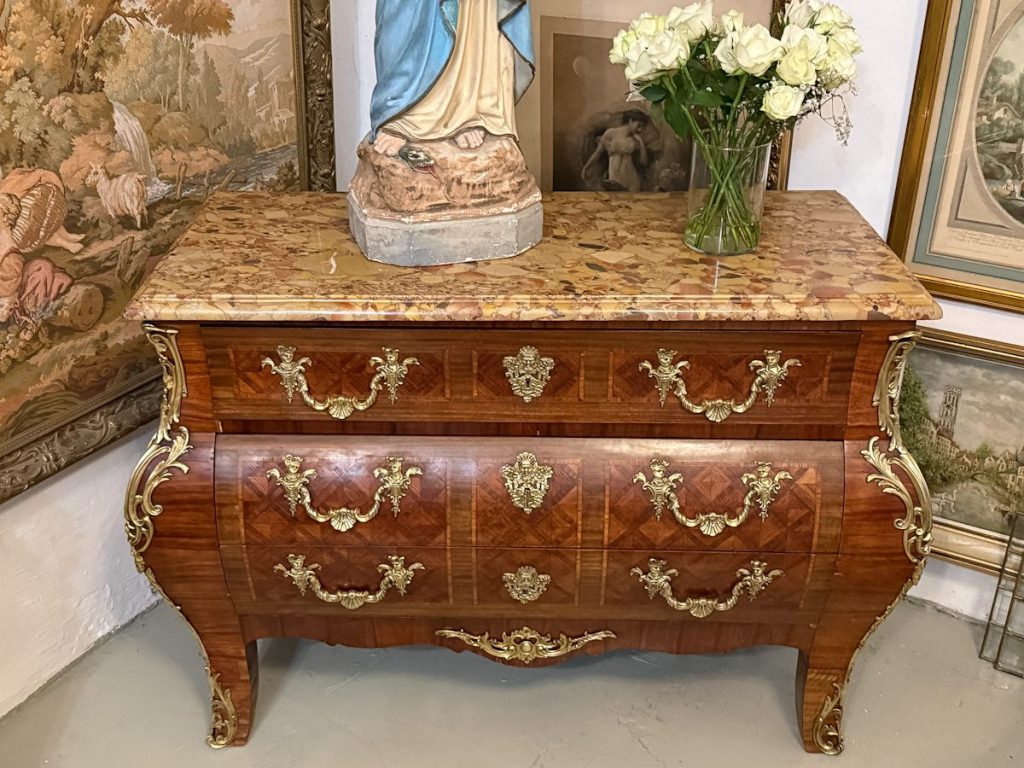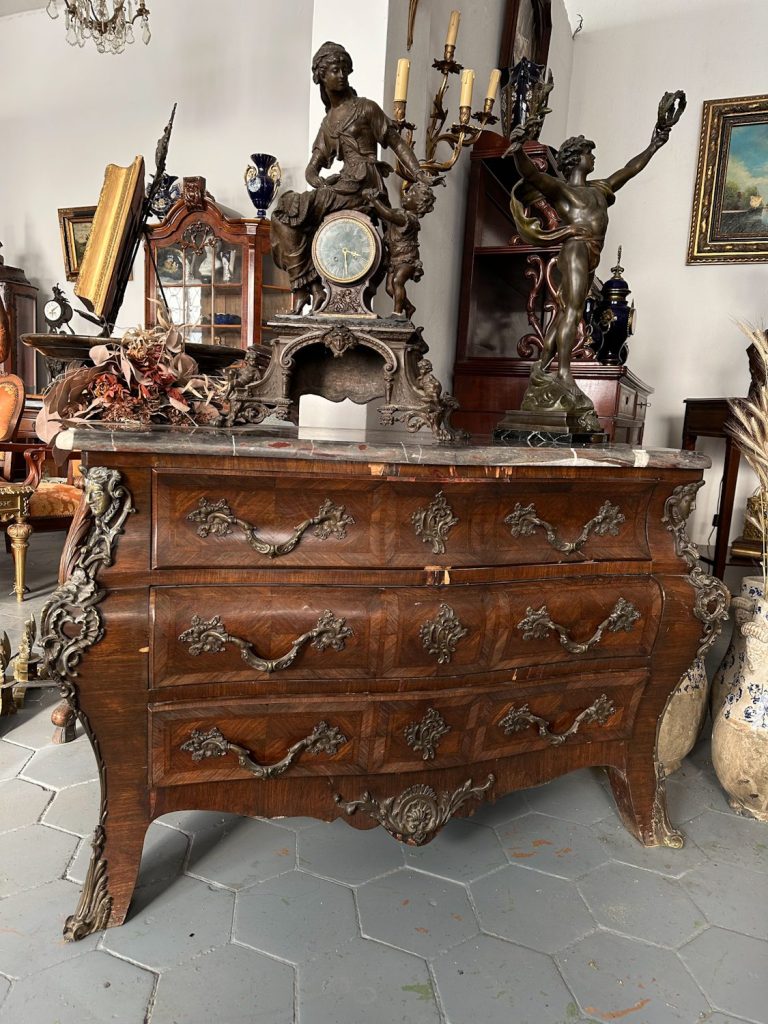
Luxurious walnut buffet with bronze trim and marble top — Louis XVI style, France, second half of the 19th century This exquisite single-door buffet (ormolu cabinet) is an example of the meuble d’appui tradition — a low, representative side cabinet… 1 350,00 €
You’re now subscribed to price tracking for this product. We’ll notify you if the price drops. 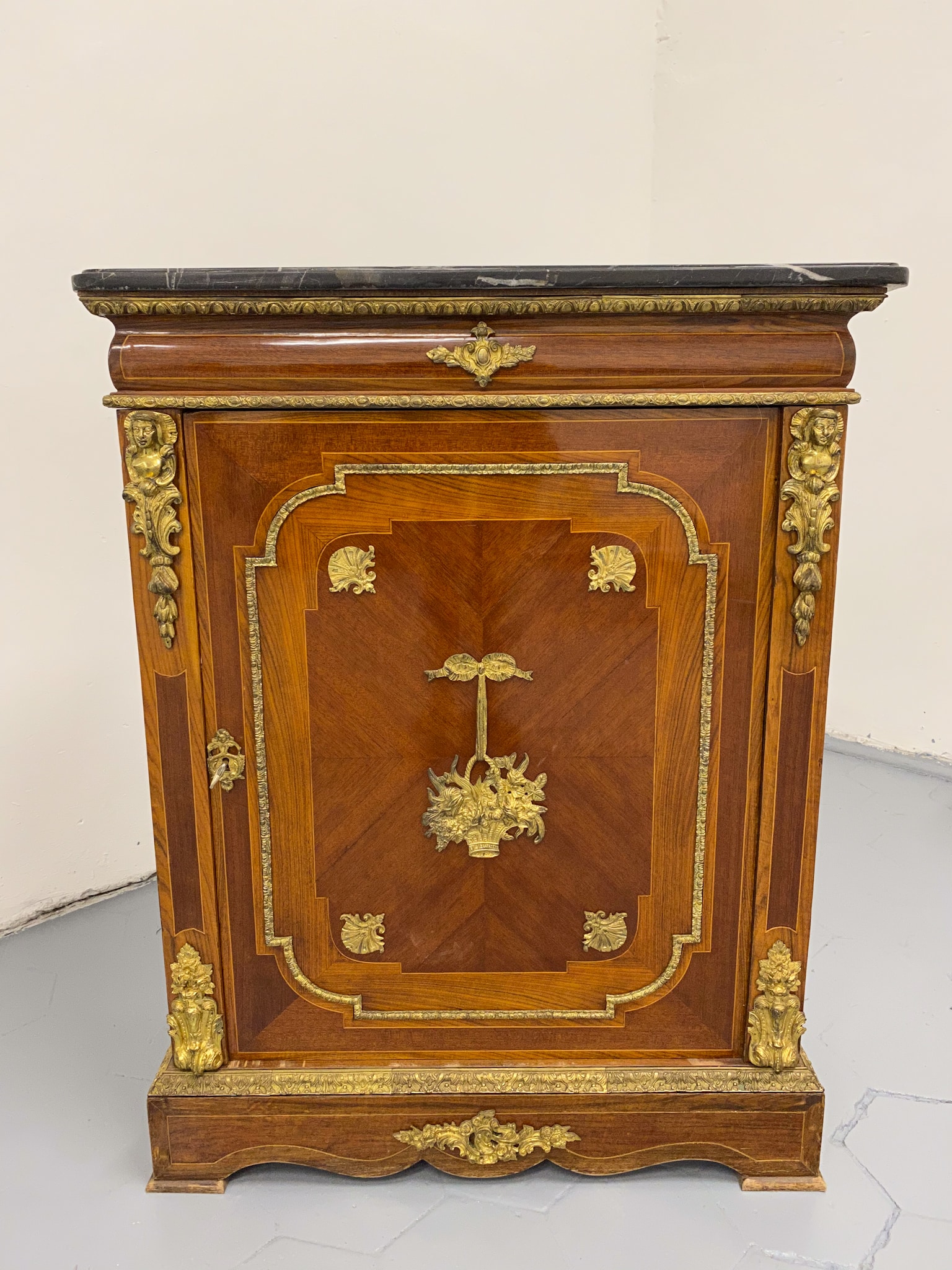
Luxurious Walnut Buffet with Bronze Trim and Marble Top, Louis XVI Style (2281)
Height 108.5 cm Width 85.5 cm Color BronzeGoldWalnut
Description
Height 108.5 cm · width 85.5 cm · depth 38.5 cm
Luxurious walnut buffet with bronze trim and marble top — Louis XVI style, France, second half of the 19th century
This exquisite single-door buffet (ormolu cabinet) is an example of the meuble d’appui tradition — a low, representative side cabinet created for the salon, not just for storage. It is adorned with rich gilt-bronze (ormolu) trim against a warm, lustrous walnut background, crowned with a dark black marble top. The work represents the Louis XVI and Napoleon III styles (style Louis XVI) of the second half of the 19th century.
The central door panel is framed by an inlaid bronze molding and adorned with a floral basket appliqué with a ribbon — the highest class of ormolu art. The corners are guarded by gilt-bronze caryatids — female busts with acanthus volutes that transition into leg forms. The top drawer and the plinth are decorated with bronze friezes with palmettes and floral motifs; on the sides — caryatid mascaron mounts. The marble top with light veining echoes the rectangular shape of the body and gives the furniture weight and completeness. Inside — an adjustable shelf.
A snapshot of a beautiful era: the sculptor Albert-Ernest Carrier-Belleuse leaned over the casting table late in the afternoon, as the first lamps were already lit in the workshop. His thumb tested the shoulder of a small female figure — whether the gilding would lie evenly over the curved bronze. Outside the window, Paris quietly turned to gold. He knew that this figurine would soon gleam in the half-light of a salon, unnoticed, but always present.
Period of manufacture, art style, era. The furniture dates from the second half of the 19th century, when in France, during the Napoleon III era, the Louis XVI style revived with its straight lines, classical ornaments, and rich gilt-bronze trim. Meuble d’appui type buffets — low, representative, with one or two doors — were the luxury of salons and living rooms, on whose surfaces clocks, candelabras, and porcelain were displayed.
Manufacturer. Without a stamp; the quality and composition of the bronze mounts indicate a good ébéniste and bronzier workshop working in the spirit of the Louis XVI revival. The modeling of the caryatids and the quality of the gilding attest to handwork.
Rarity and significance. A meuble d’appui with fully preserved figurative bronze trim and original is a valuable find today — figurative bronzes (caryatids, floral basket) are often lost or replaced.
Application in interior, design, and photography. The buffet serves in a salon, living room, or spacious hallway as a representative side cabinet. The is an ideal base for a clock, vase, candelabra, or sculpture. Its golden details and dark marble create a contrasting, photogenic accent in interiors and object photography.
Gift. A representative gift for an antique furniture enthusiast, collector, or interior designer.
Condition. The furniture is in good, exhibition condition; the gilt-bronze trim, walnut veneer, and are preserved. Minor signs of age and use, micro-cracks in the veneer, wear of gilding, or small retouches consistent with age are possible. The condition of the item is fully reflected in the photographs.