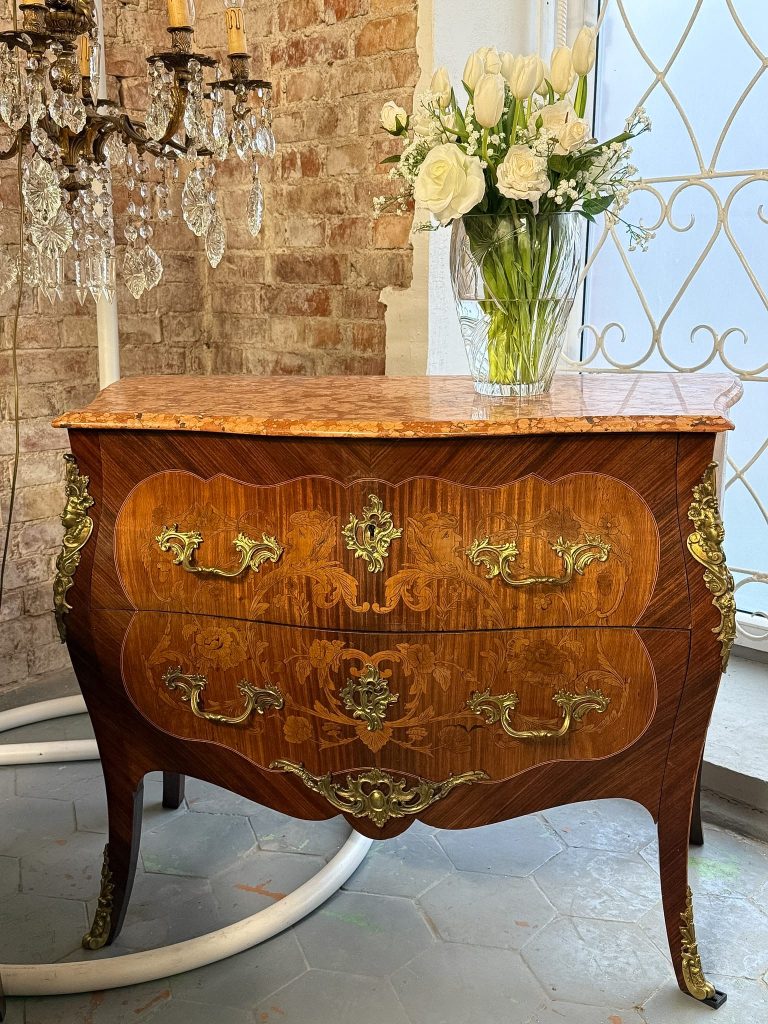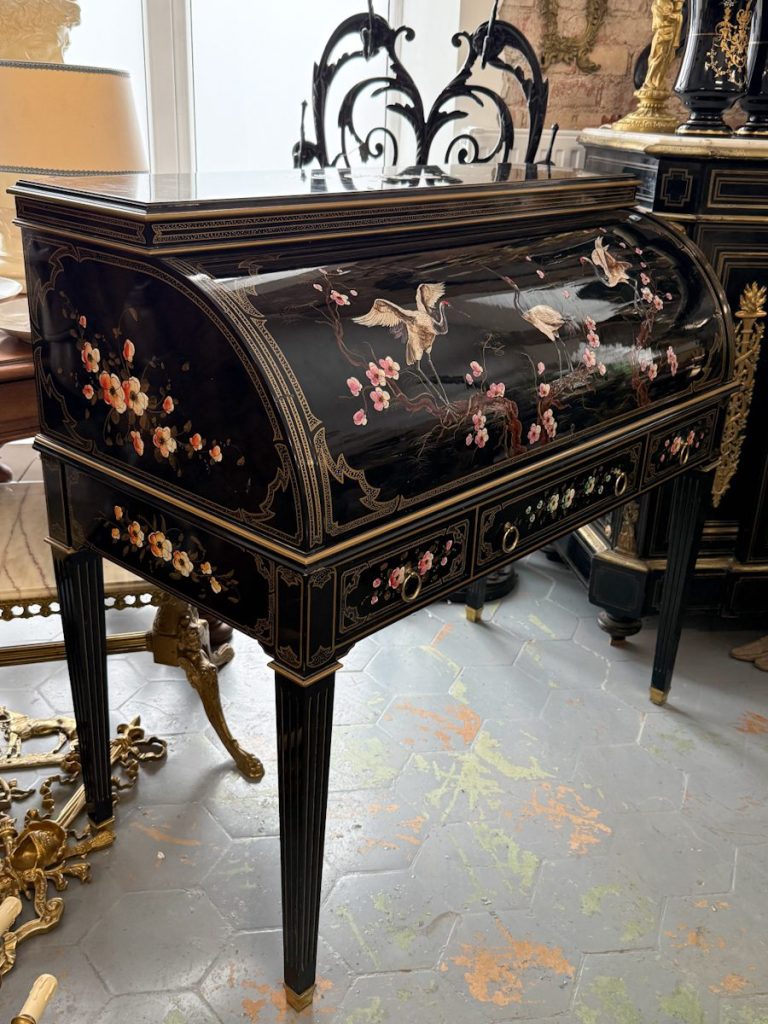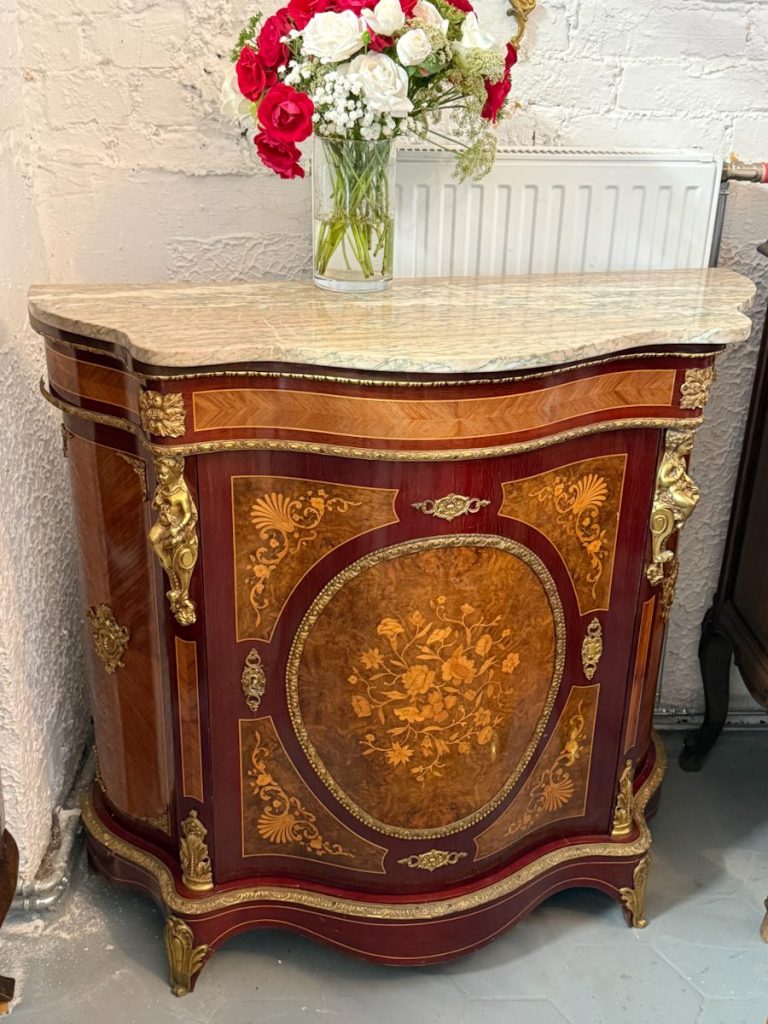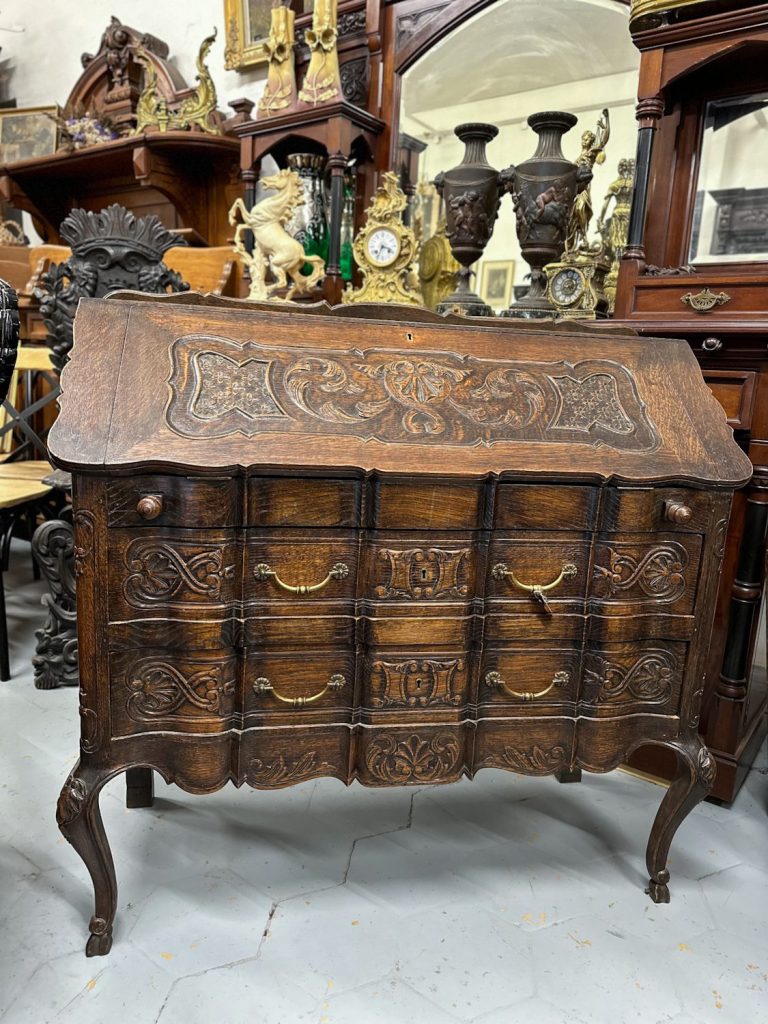
High Oak Chest with Gris de Flandre Marble Top — Louis XVI / Belle Époque, France/Belgium, 19th Century. Price is per piece; 2 available. This elegant cabinet showcases a blend of Louis XVI architectural discipline and Belle Époque decorative freedom. 1 550,00 €
You’re now subscribed to price tracking for this product. We’ll notify you if the price drops. 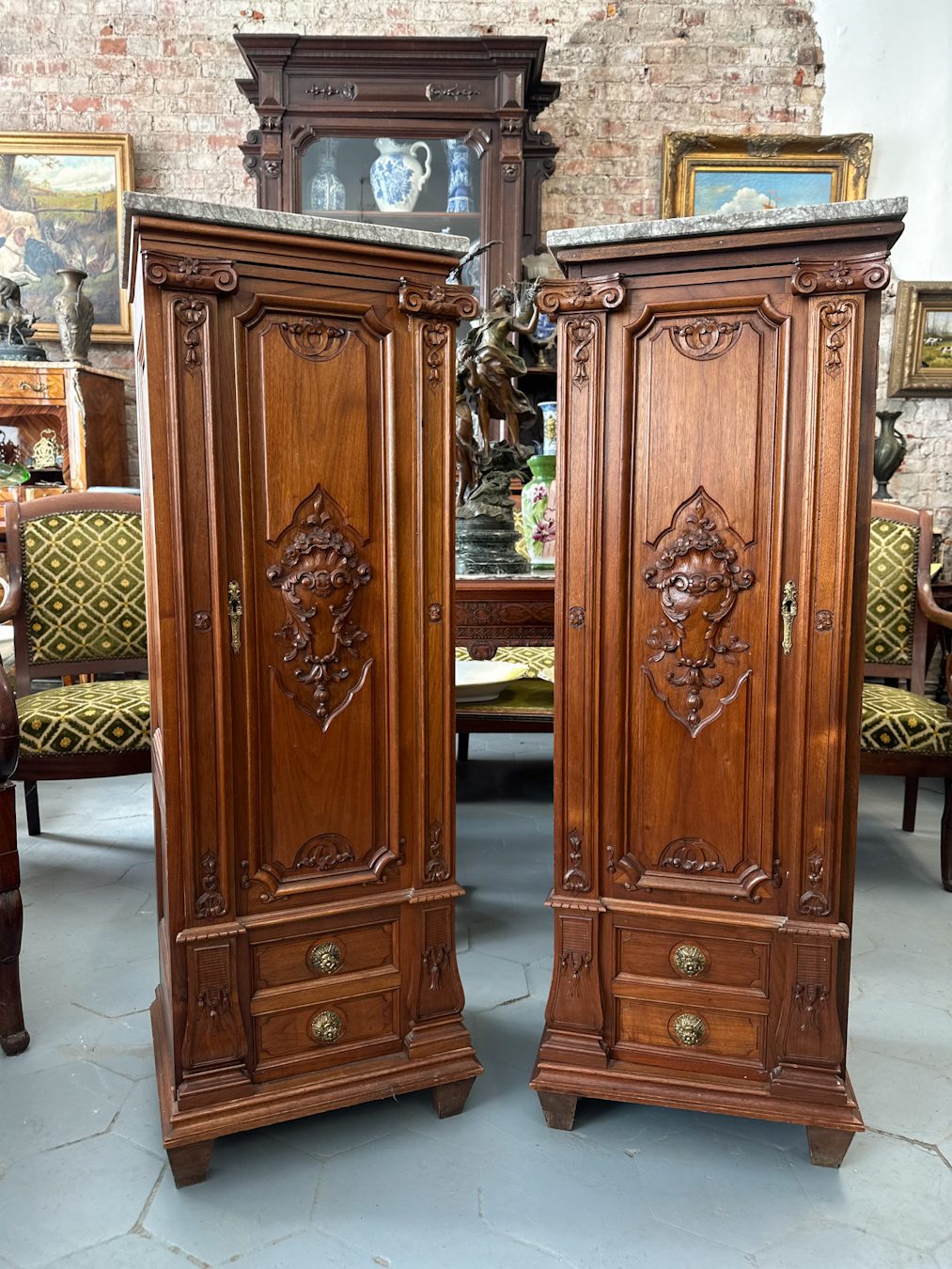
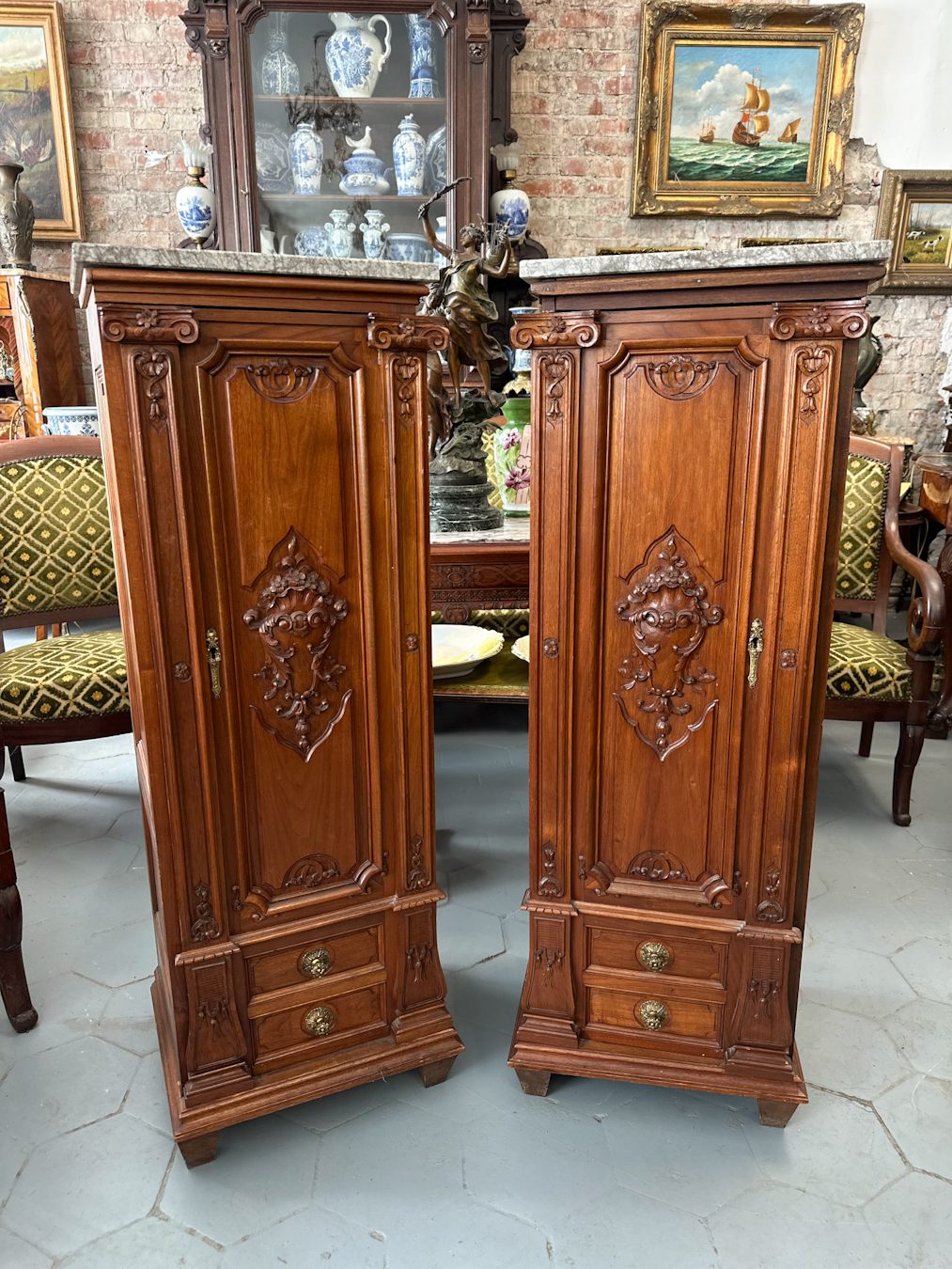
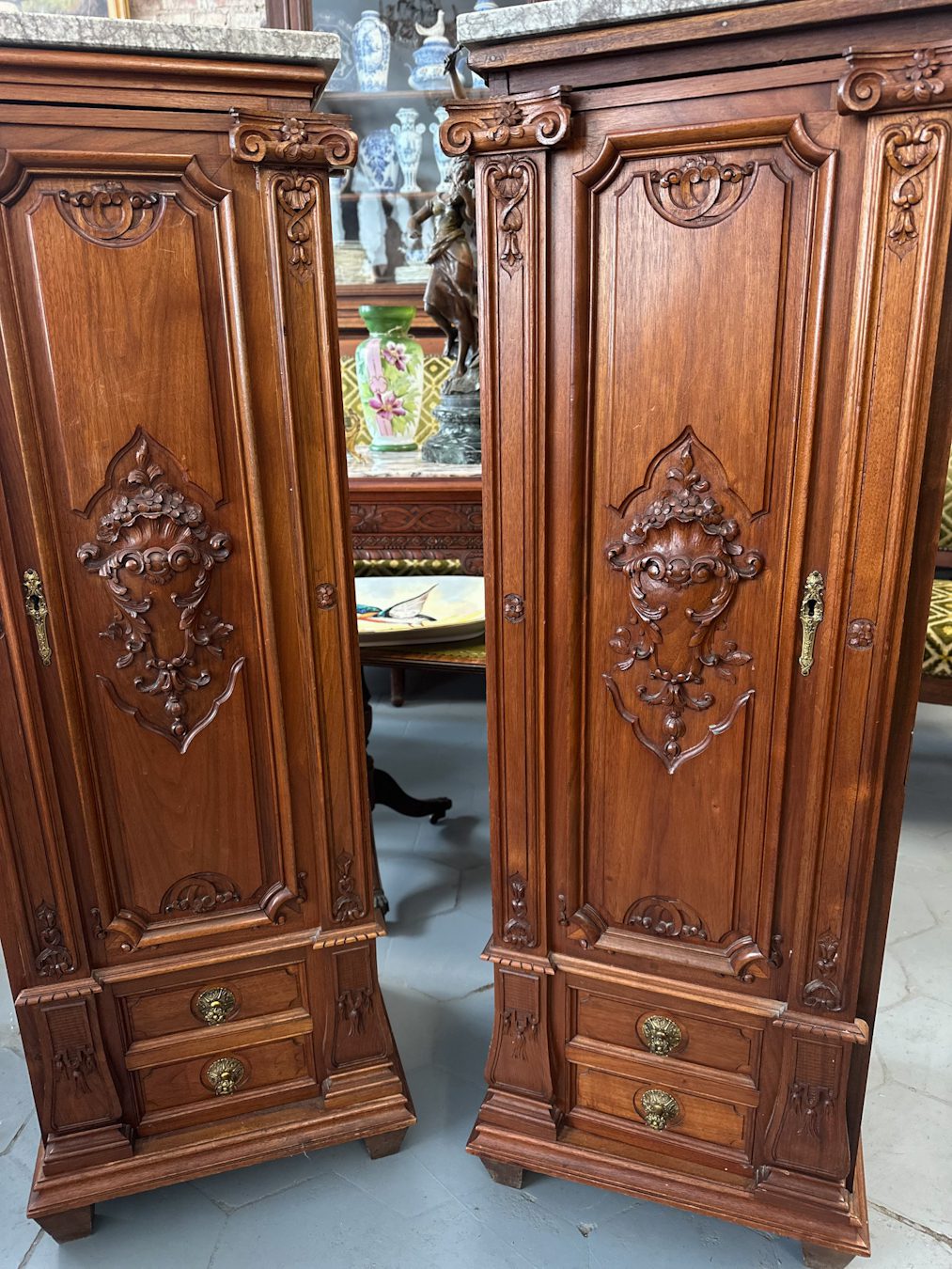
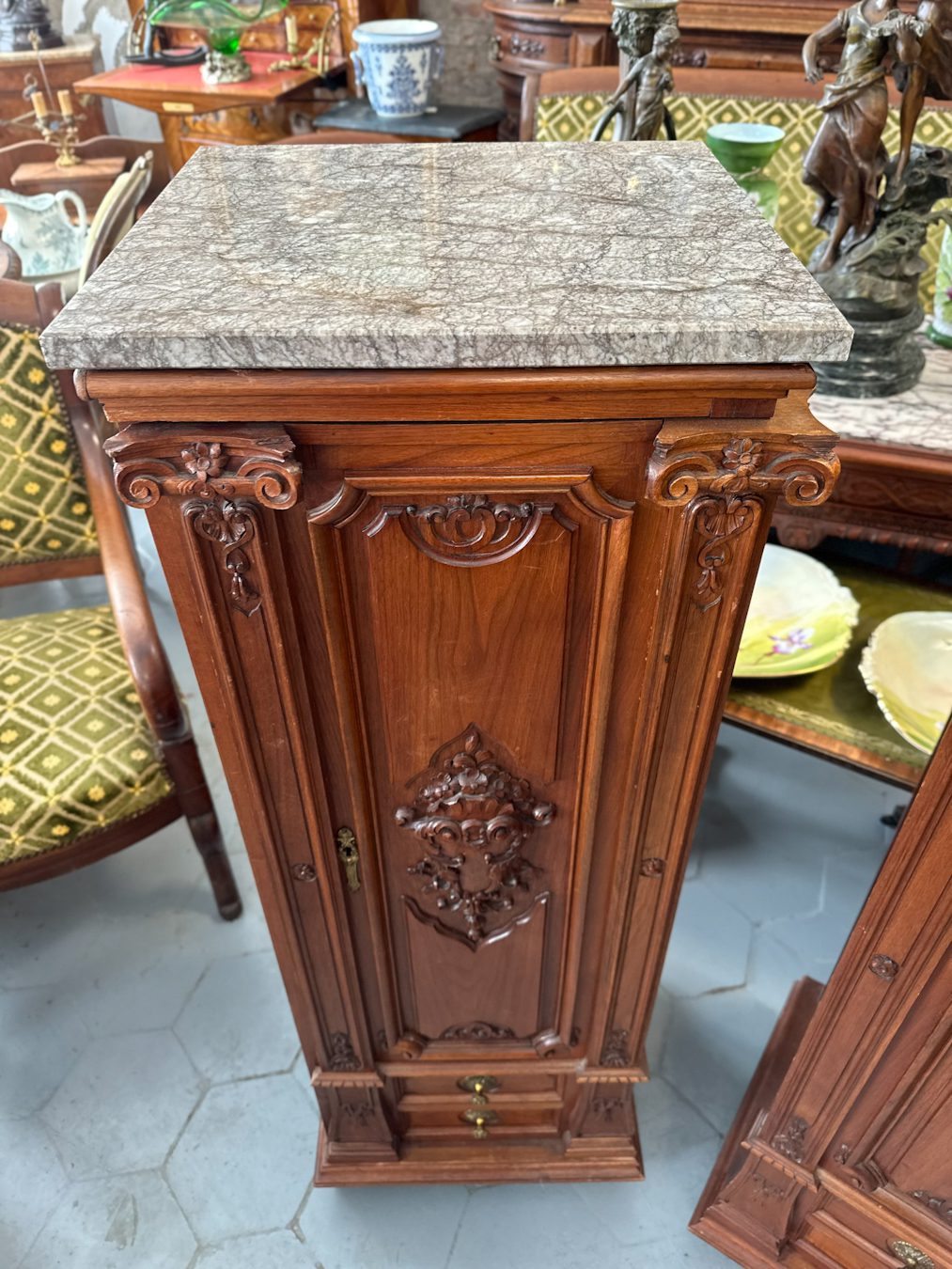
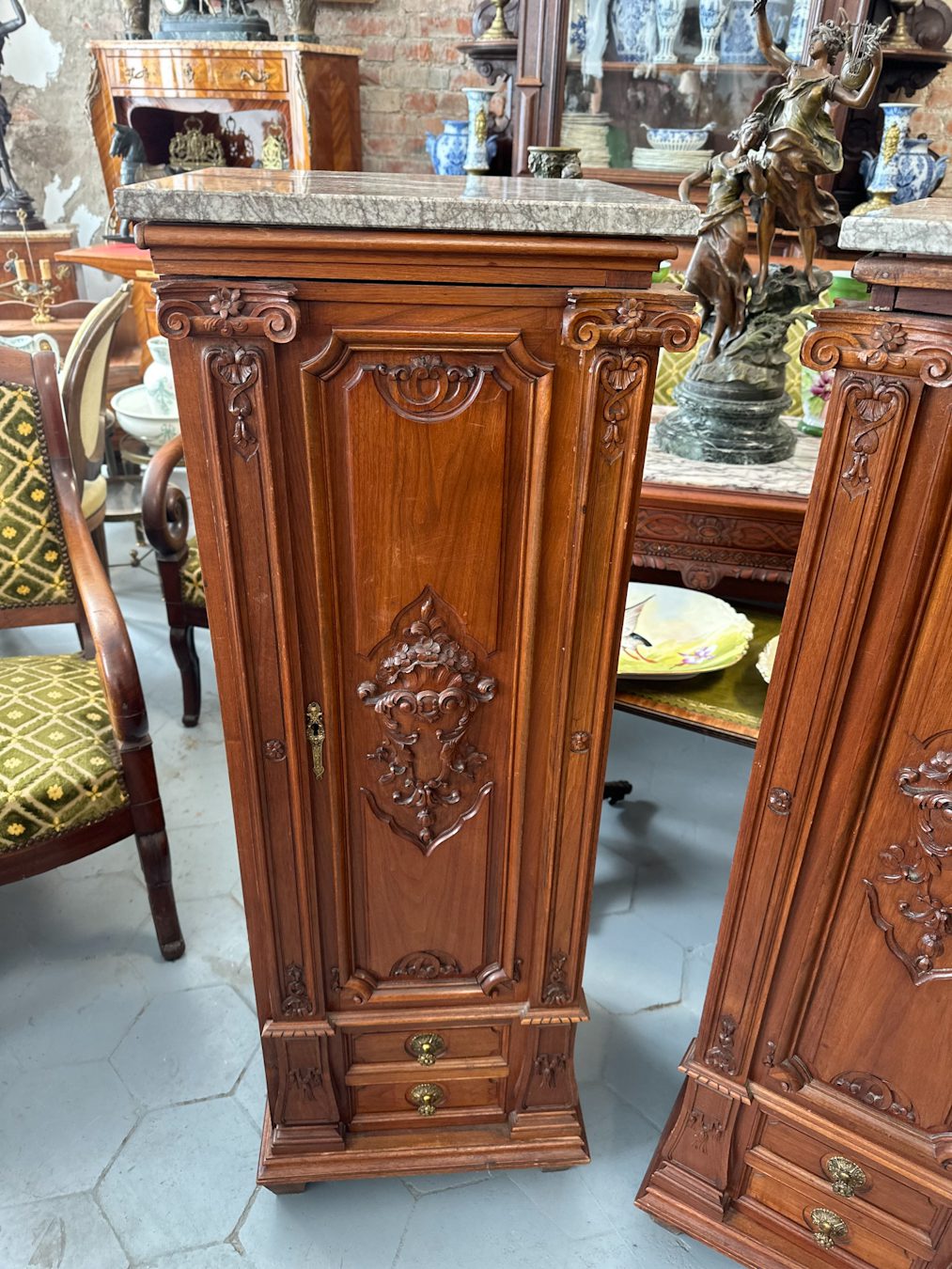
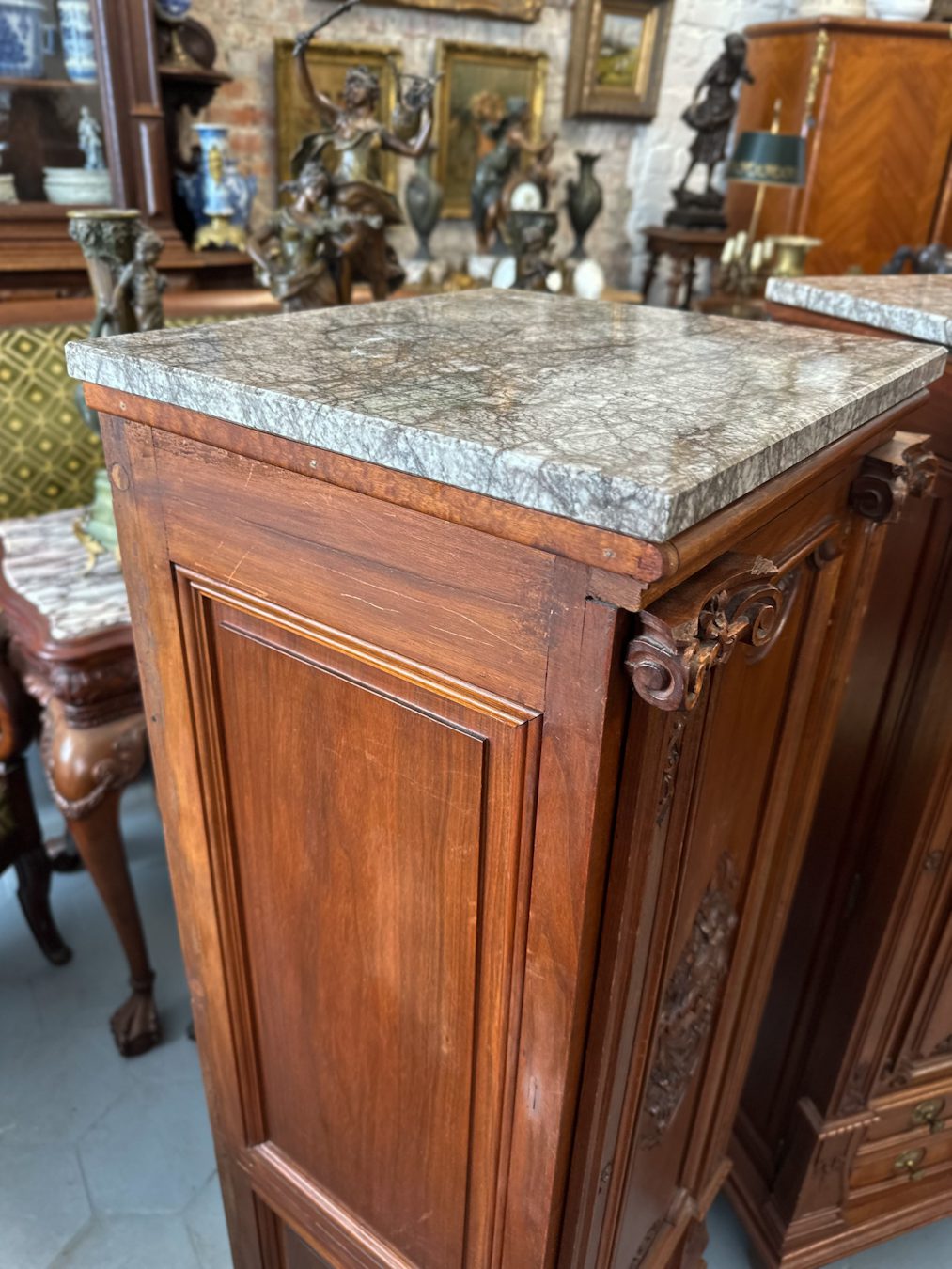
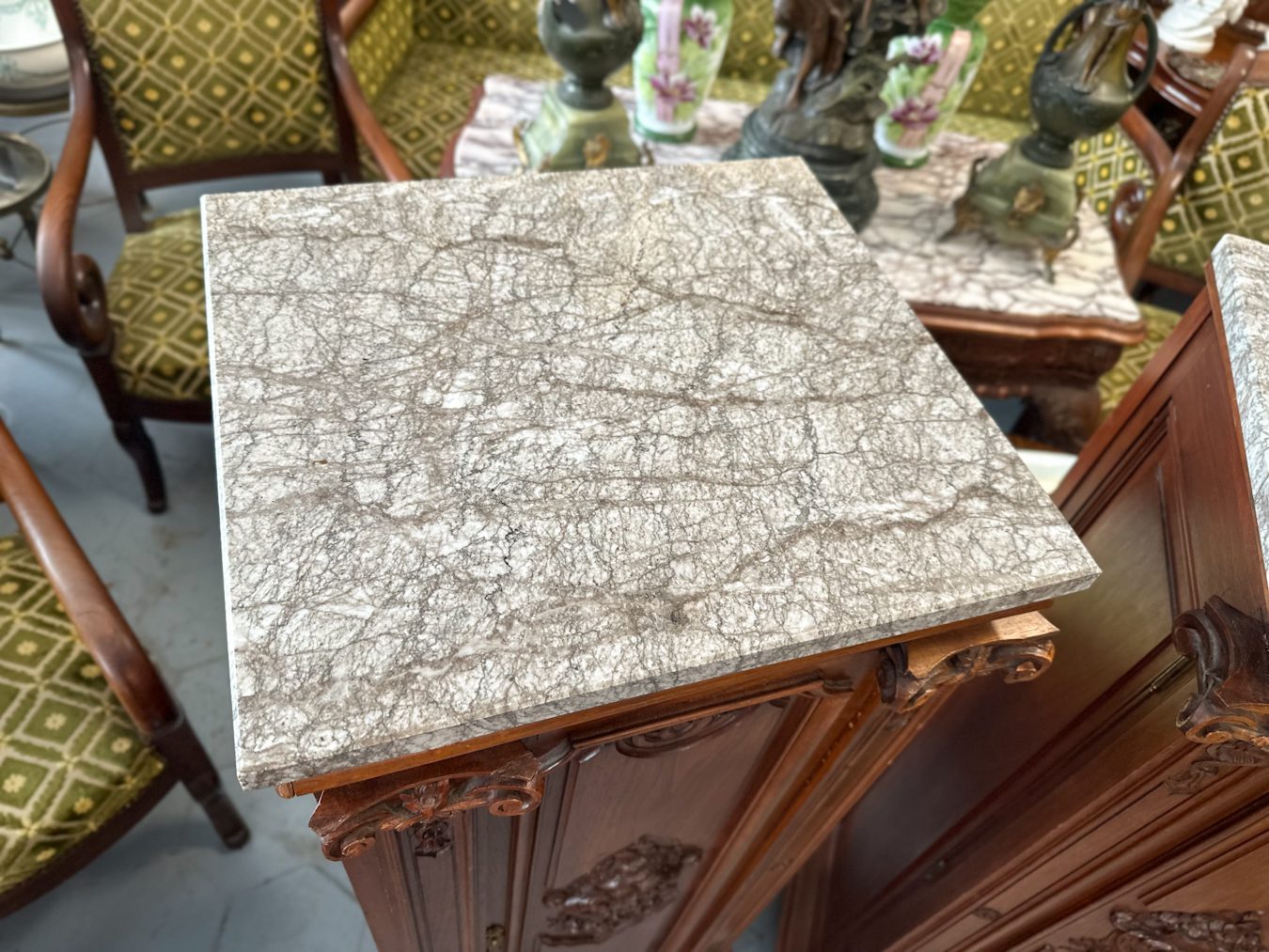
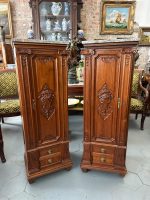
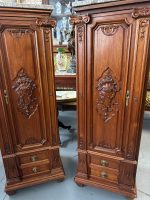
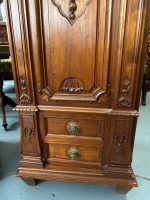
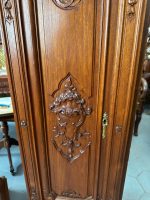
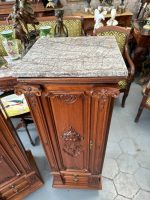
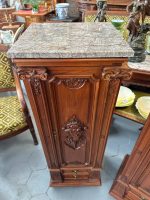
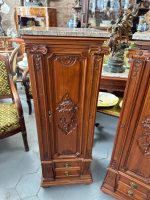
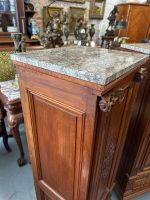
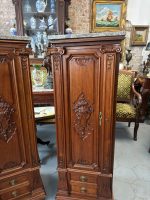
19th Century French/Belgian Louis XVI / Belle Époque Oak Chest of Drawers with Gri de Flandre Marble (4935)
Height 119 cm Width 42 cm Color BronzeWalnutNatural
Description
DESCRIPTION IN
Price listed per 1 item. Available: 2 pcs.
―――――――――――――――――――――
📐 DIMENSIONS Height 119 cm × width 42 cm × depth 39 cm. Available as a matching pair — both pieces identical.
―――――――――――――――――――――
Tall Walnut Pedestal Cabinet with Grey Marble Top — Louis XVI Style / Belle Époque, France or Belgium, circa 1875–1900.
―――――――――――――――――――――
🏛️ PERIOD, ARTISTIC STYLE, ERA
This cabinet — and its identical companion — belongs to the most elegant genre of the Belle Époque: the tall bonnetière or armoire colonne, which in the Louis XVI style interpretation became an icon of the Belle Époque bourgeois salon and bedroom.
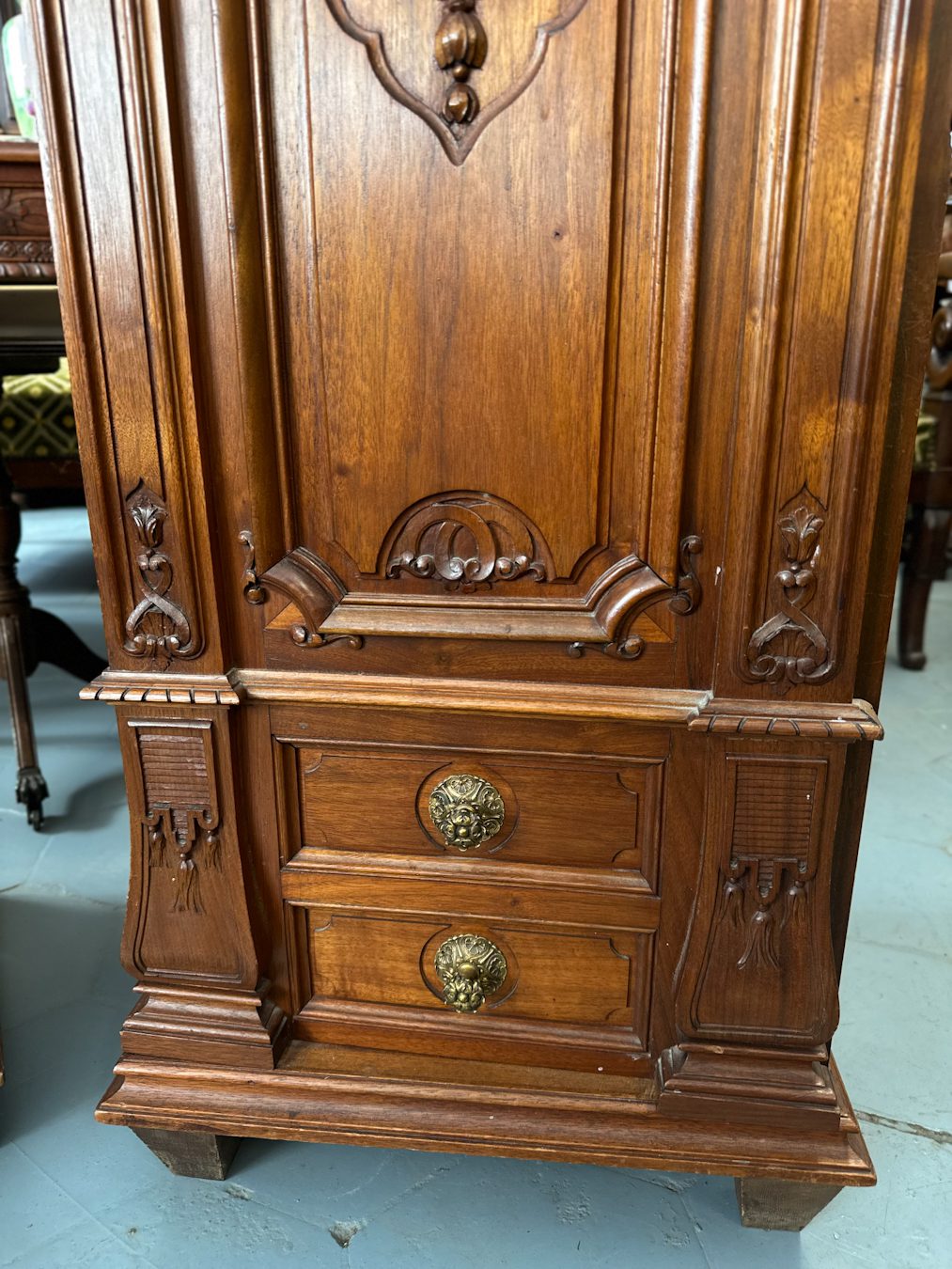
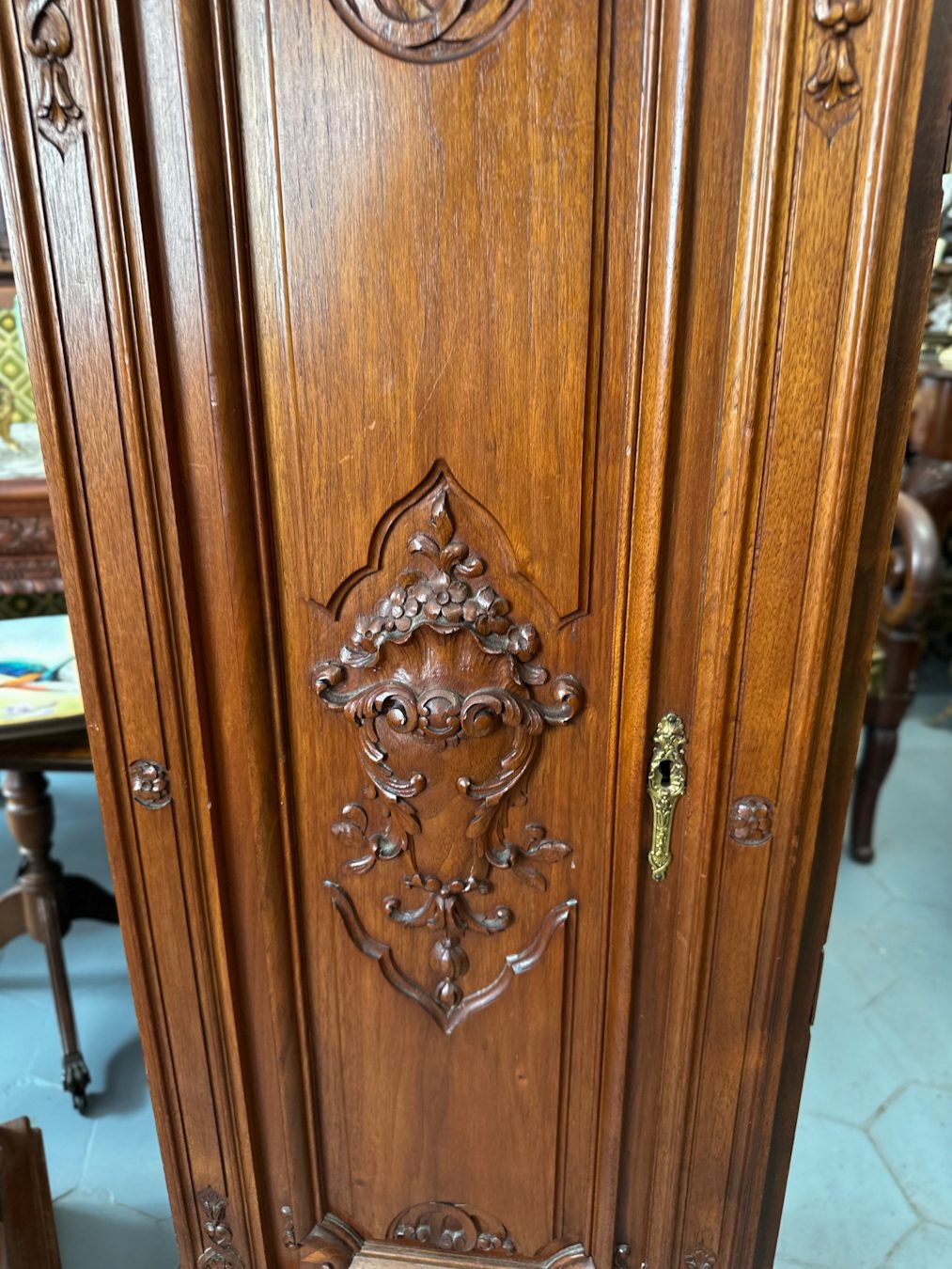
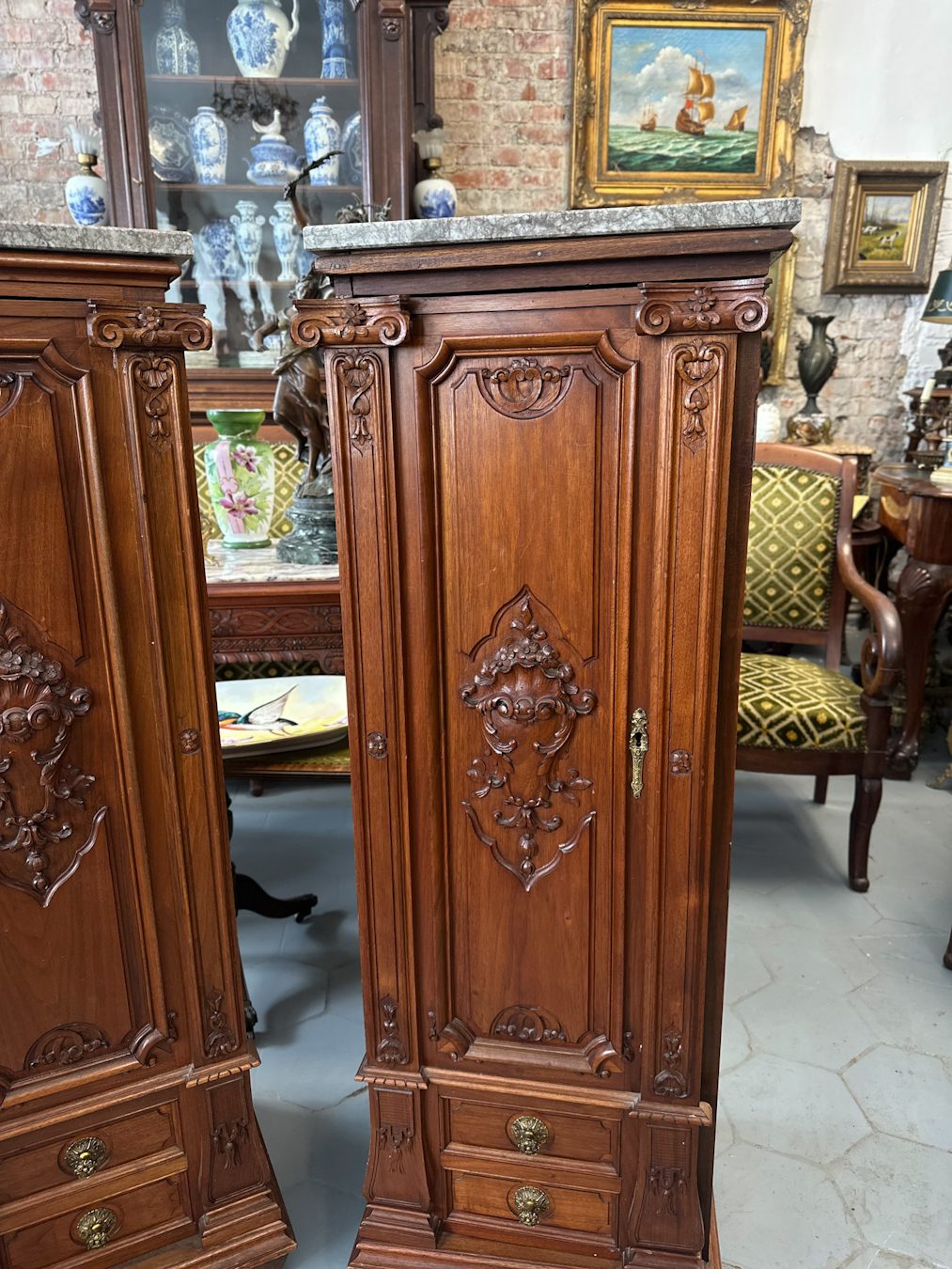
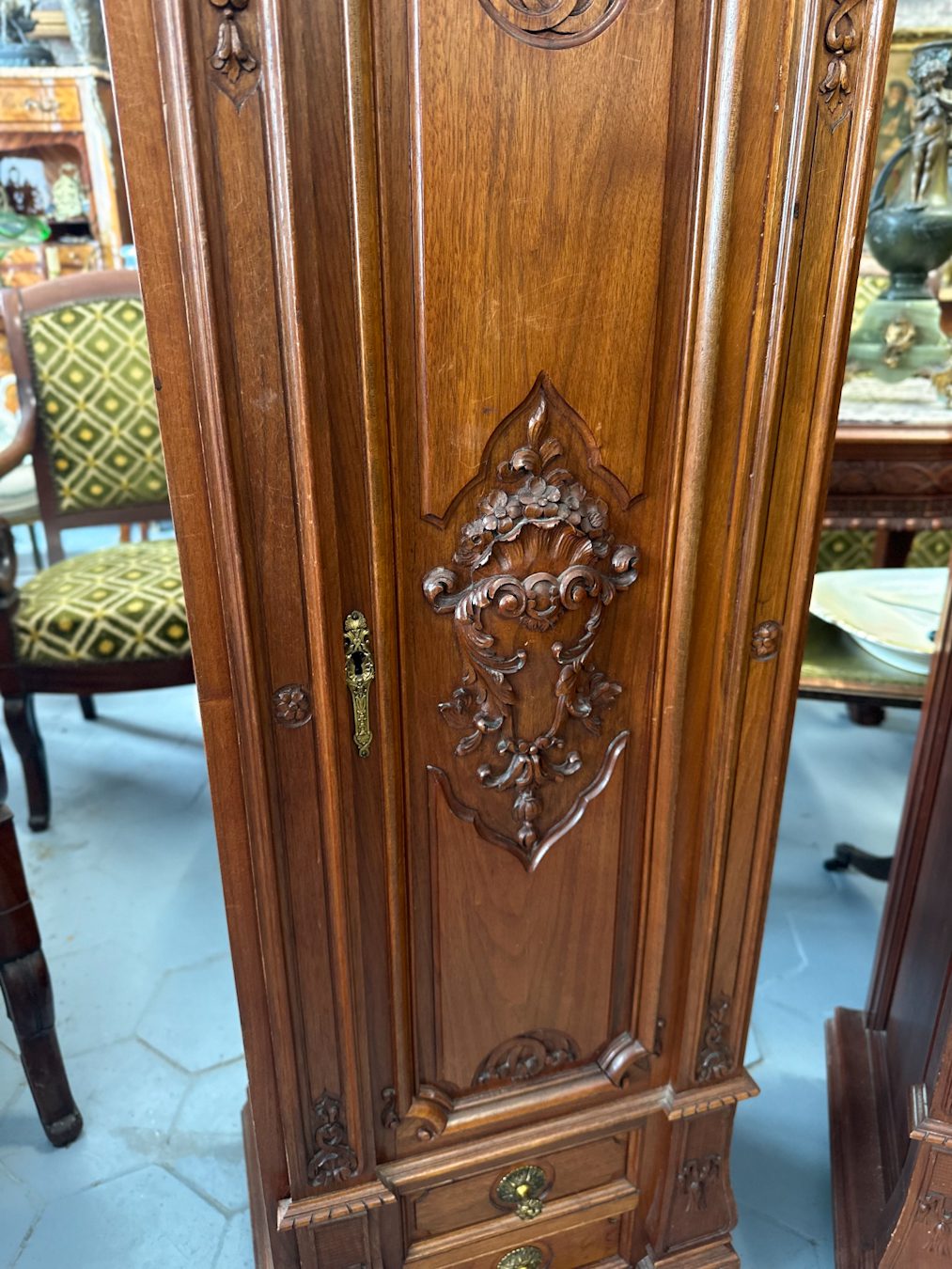
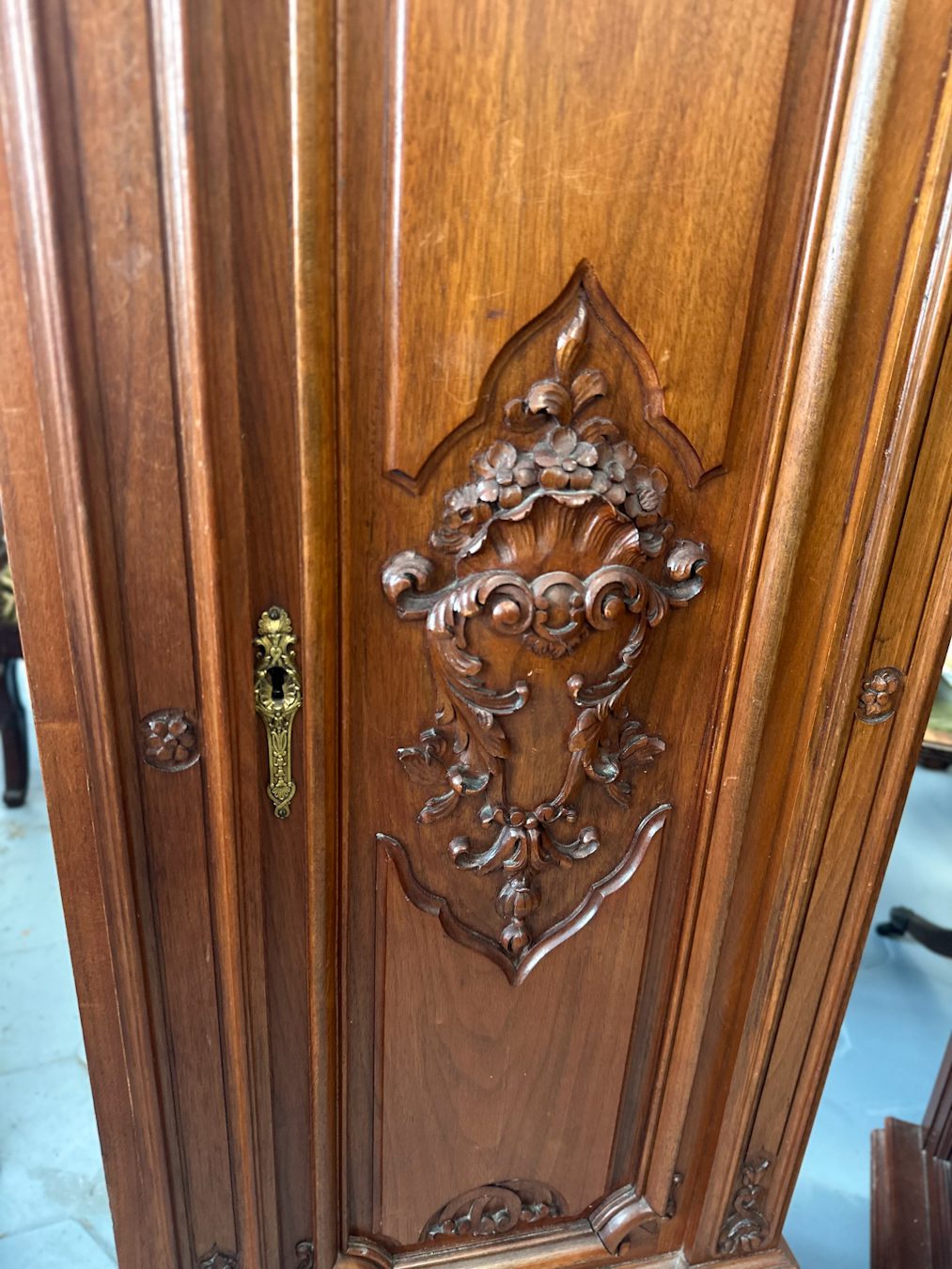
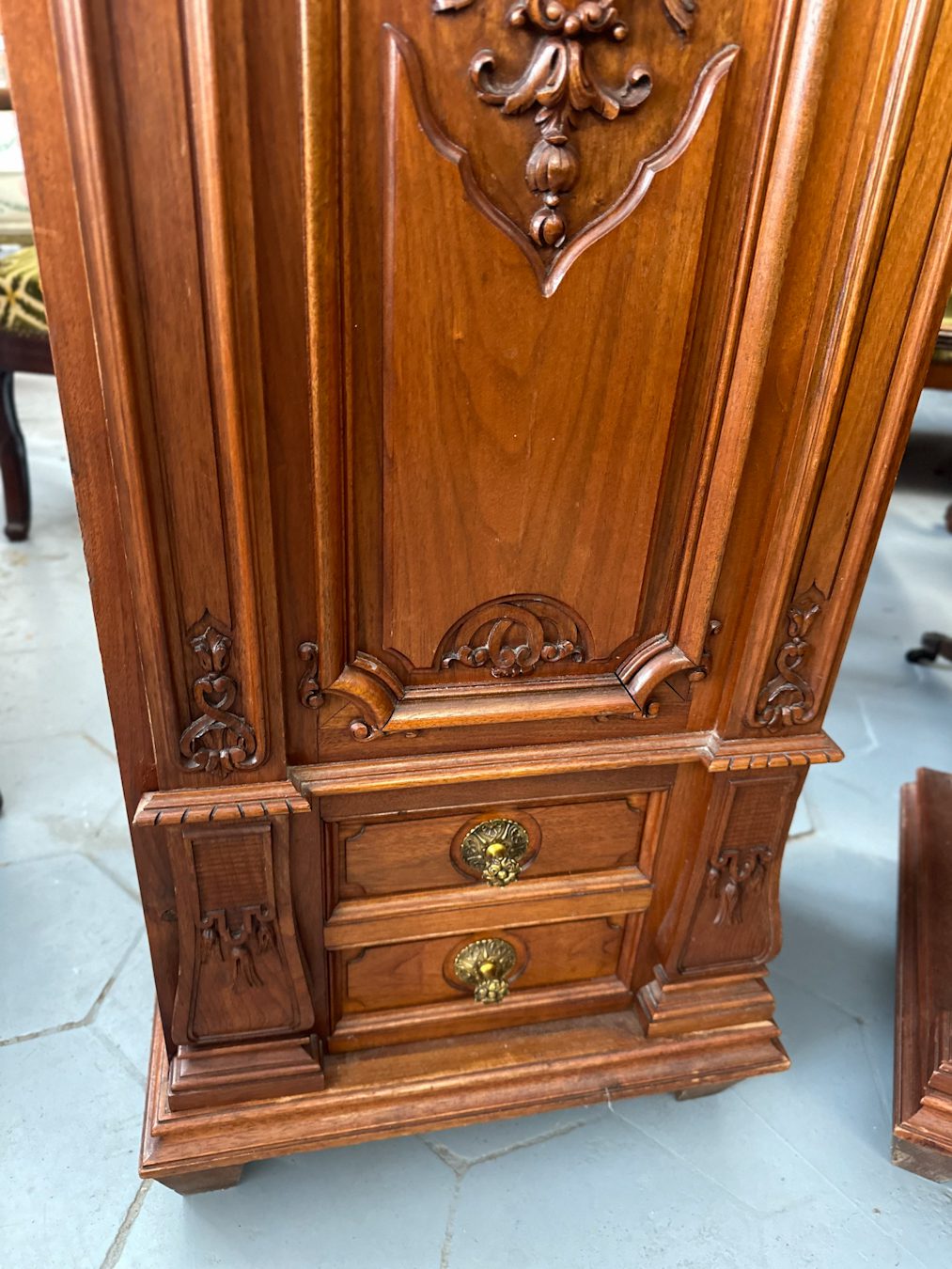
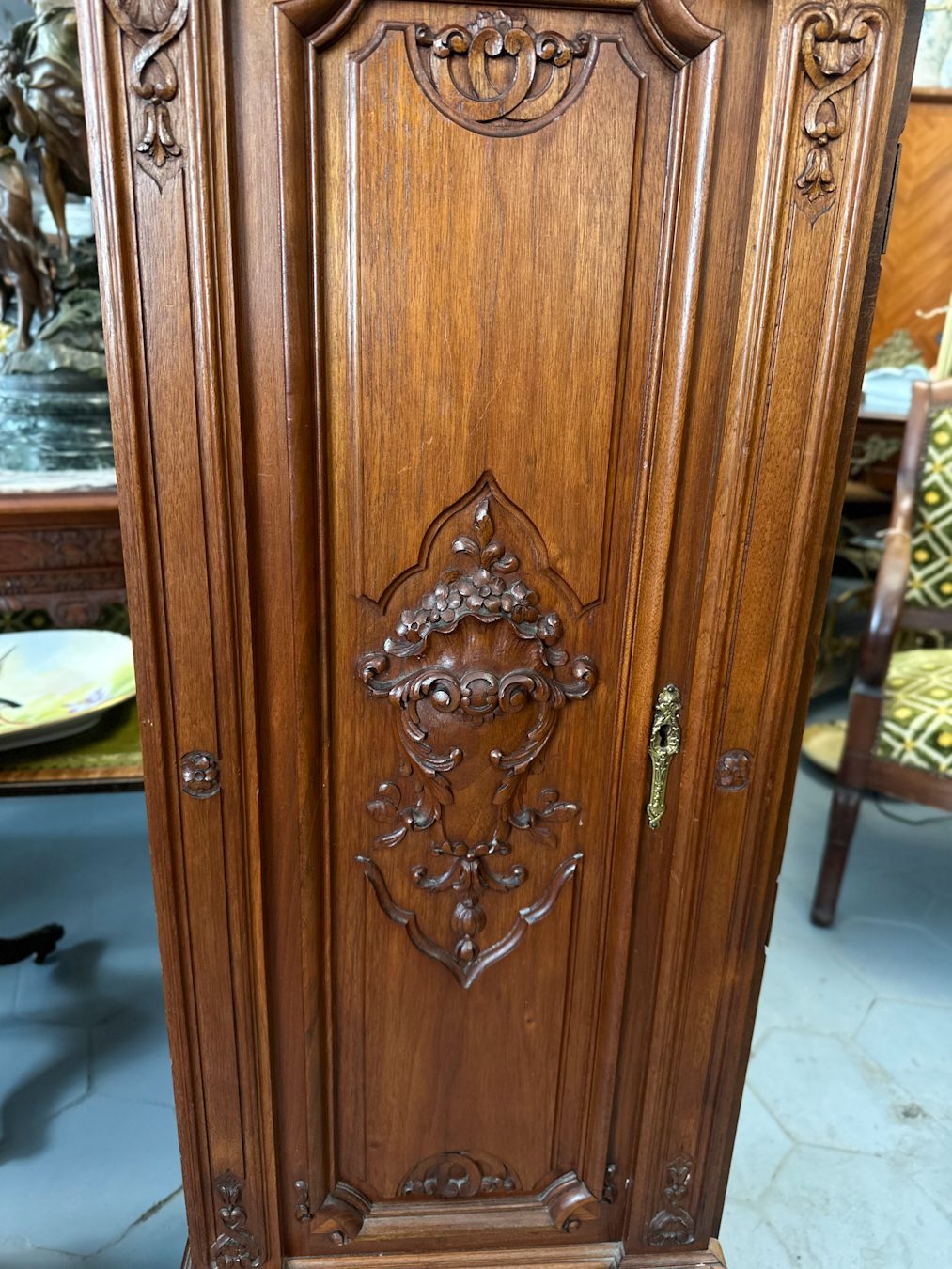
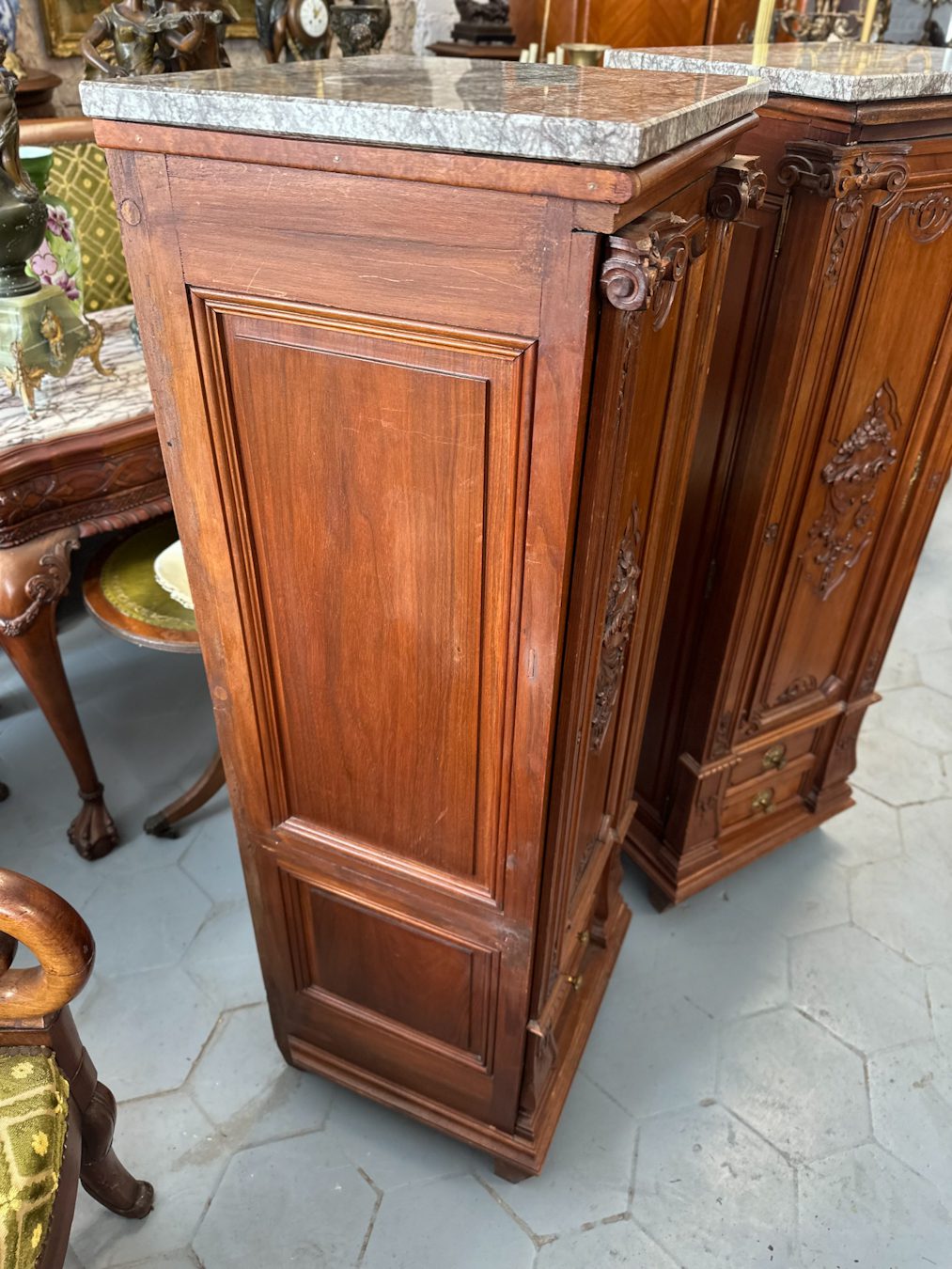
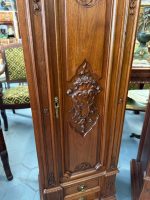
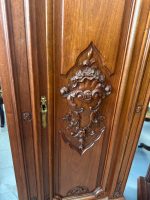
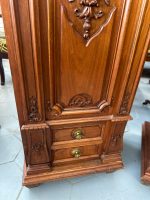
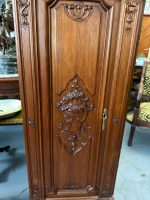
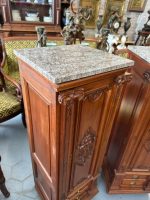
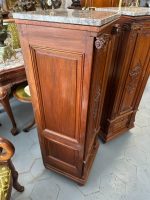
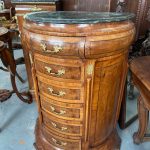
The architectural discipline characteristic of is beautifully balanced here with Belle Époque decorative freedom. Fluted pilasters at the side corners, strict cornice profiles, and the horizontal purity of the marble top carry the heritage. The relief cartouche medallion with a flower vase, volute scrolls, and leaf ornaments on the door panel, along with the spiral volute ornaments above the cornice, carry the Belle Époque artistic freedom that the next generation would recognise as a precursor to Art Nouveau.
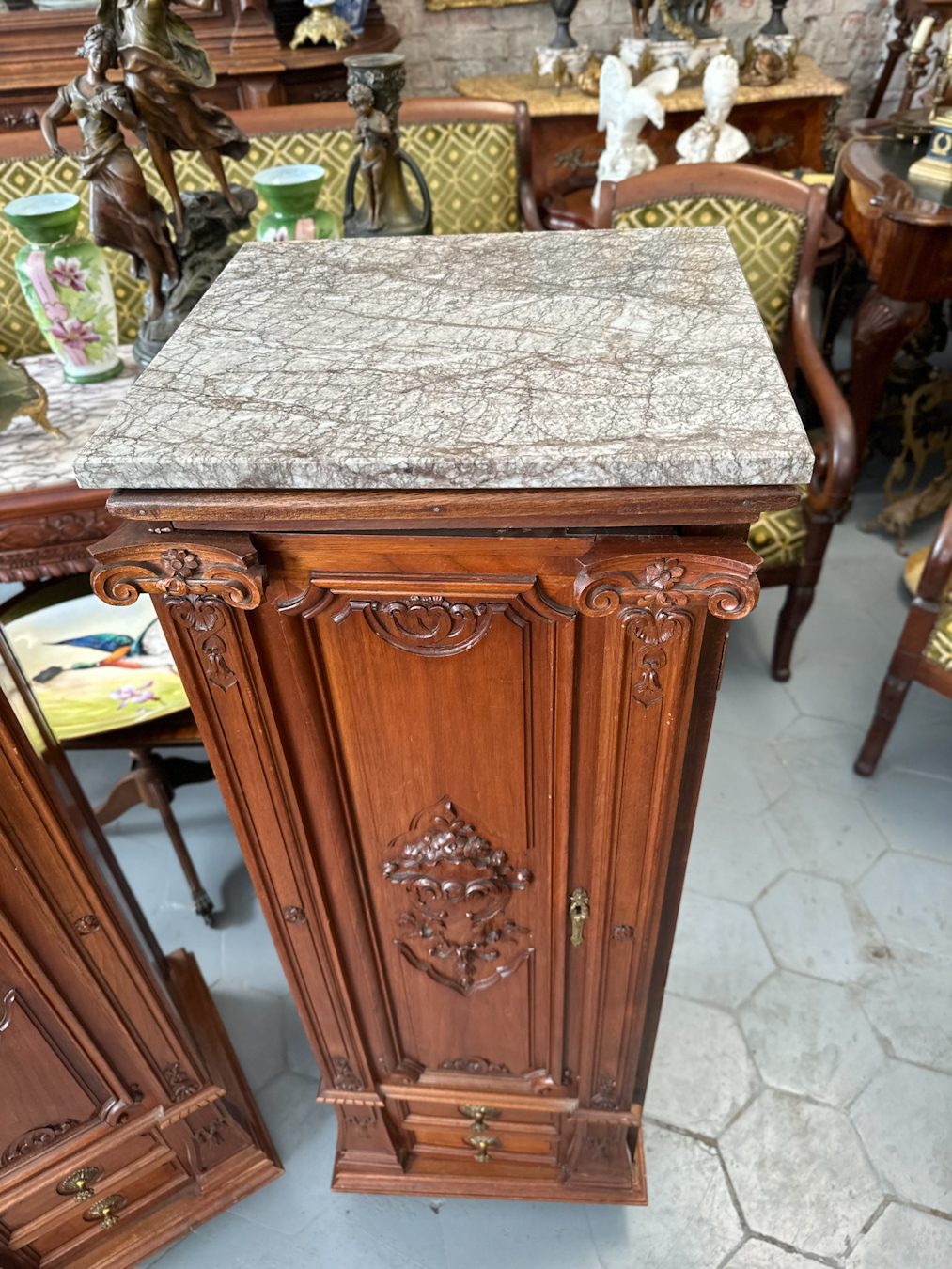
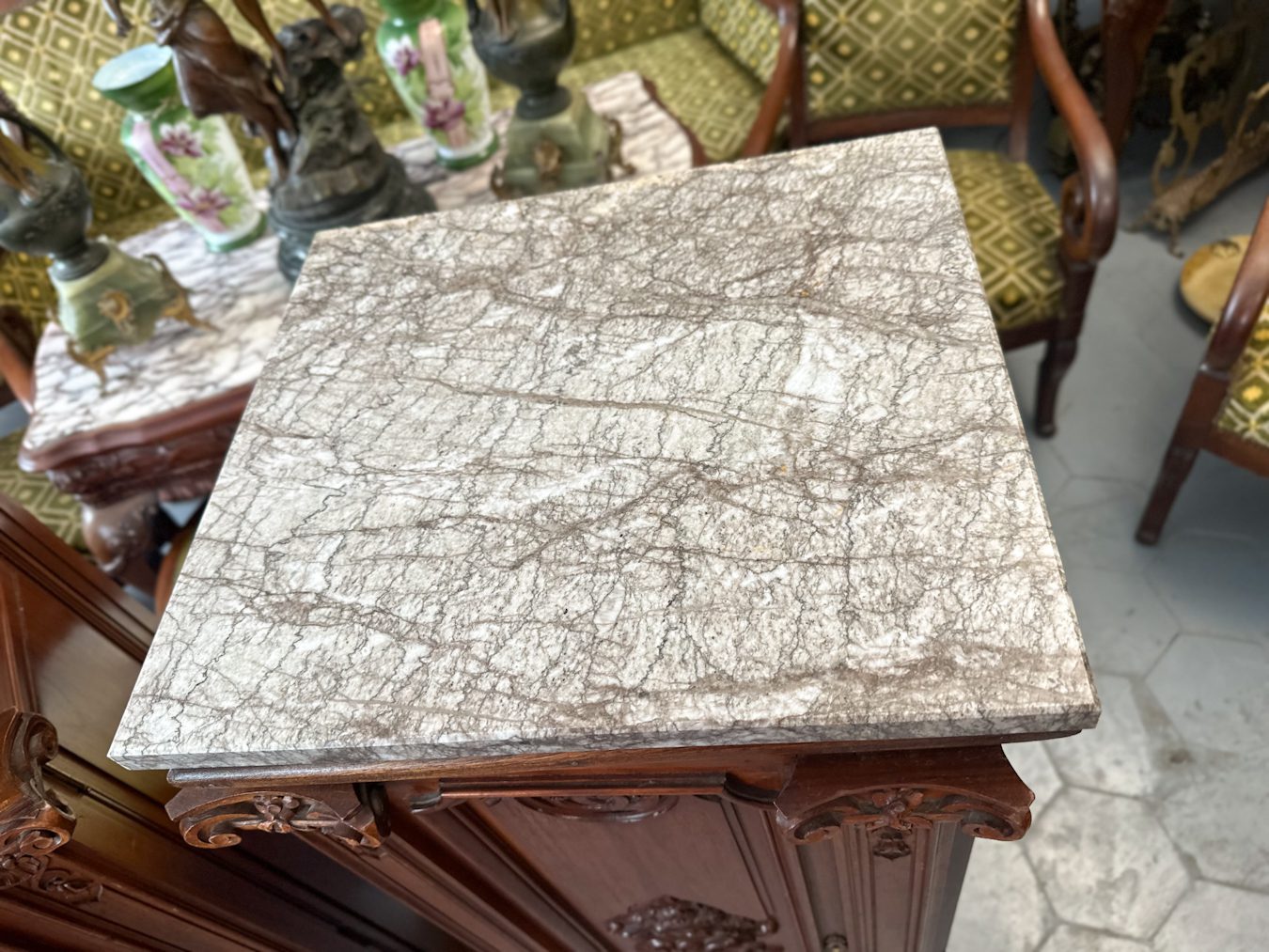
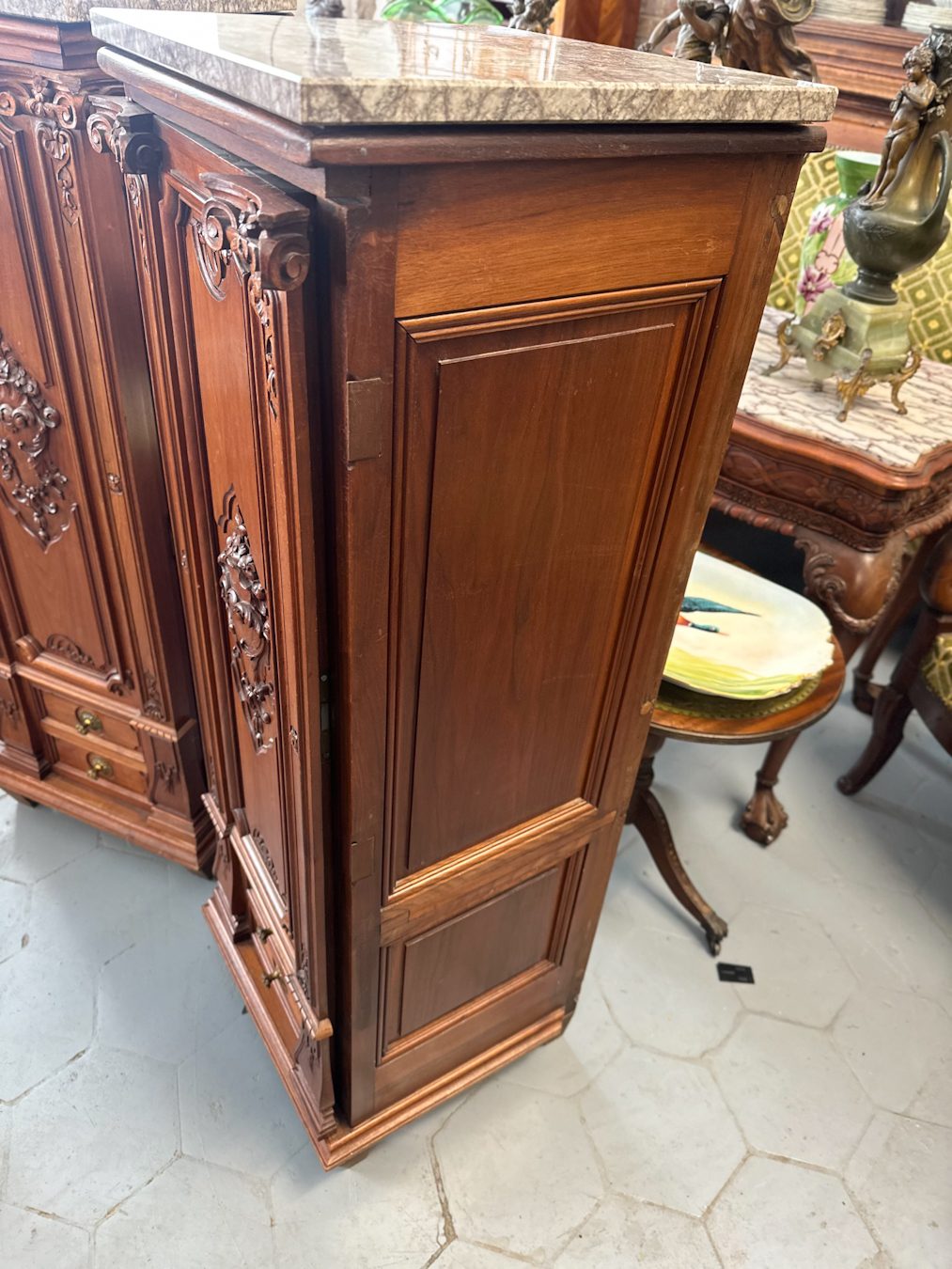
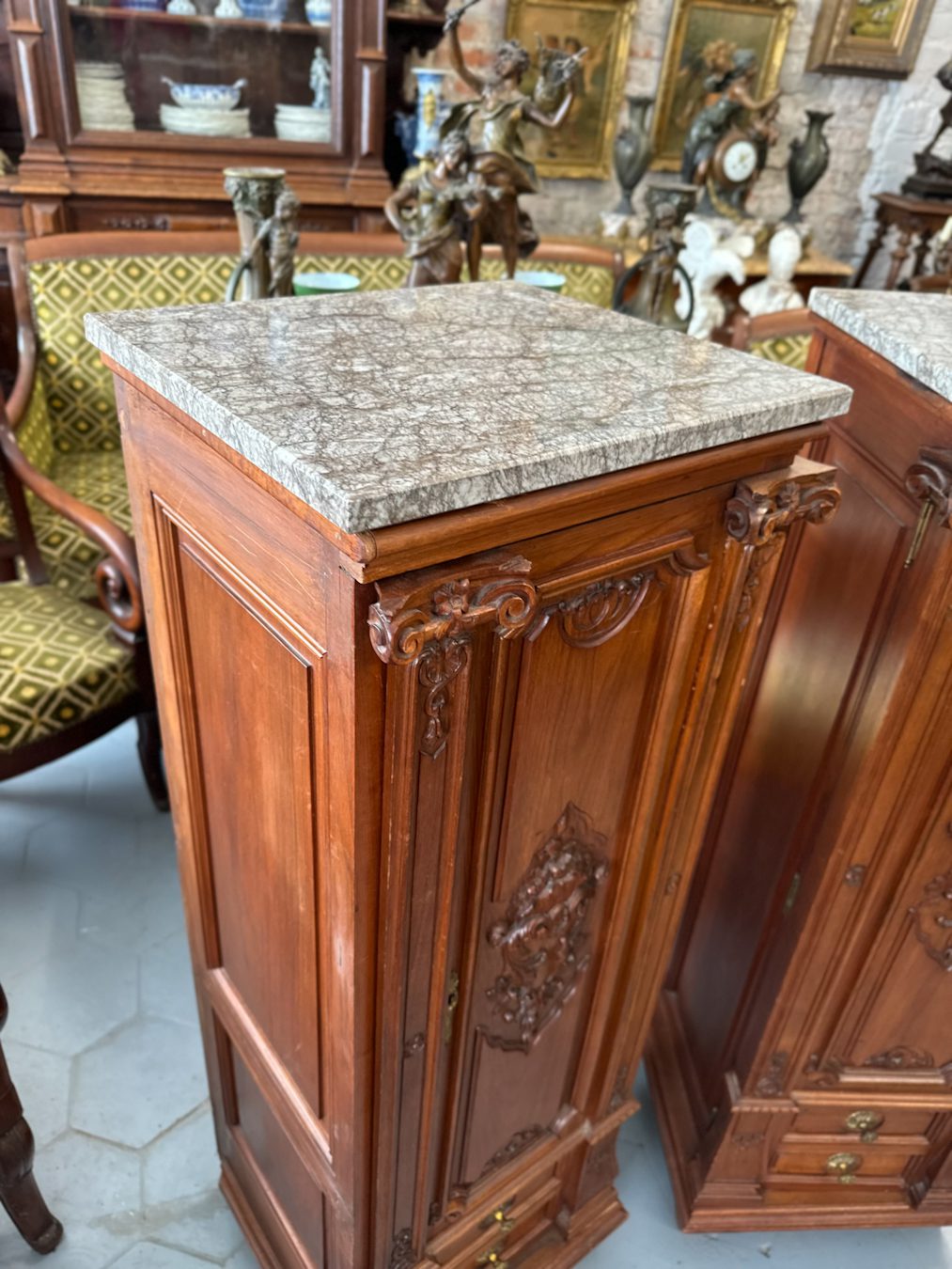
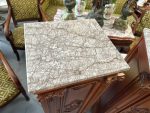
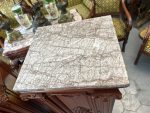
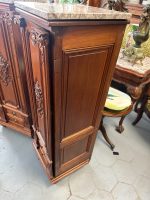
The grey marble with delicate brown vein patterns — most likely Gris de Flandre or Gris Saint-Anne from Belgium‘s Hainaut quarries — was an exceptionally sought-after material for high-end furniture in France and Belgium in the late 19th century. Its subtle tonal neutrality allowed it to harmonise with any wood species and interior palette.
Claude Debussy won the Prix de Rome in 1884 and departed for Italy — but before that he lived in Paris in precisely such appartements bourgeois, where tall cabinets like these stood in bedroom corners with candelabra and plaster medallion portraits above them. Music and furniture breathed in the same rhythm then.
―――――――――――――――――――――
⚜️ MAKER AND MARKS
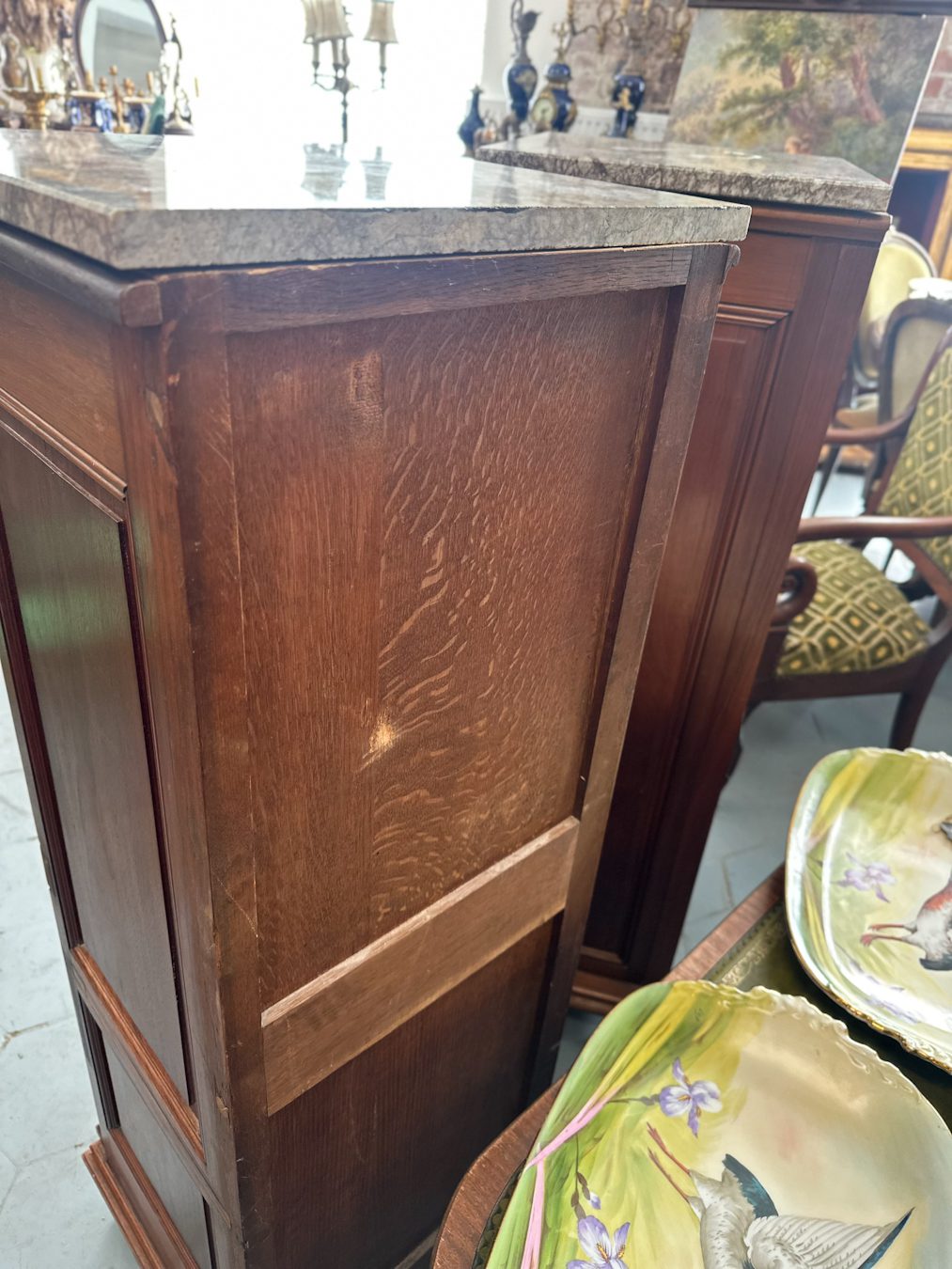
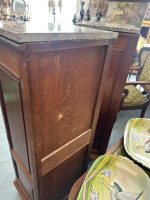
No visible maker’s mark. However, the quality of execution — the evenness of the oak grain, the plastic depth of the cartouche medallion carving, the fineness of the bronze rosette knobs, and the precise fit of the marble top to the wooden body — points to a professional northern or Belgian regional cabinetmaker’s workshop.
style tall cabinets with marble tops were particularly characteristic of Belgian and northern workshops — Liège, Lille, Tournai — where oak was a locally available material and the tradition was preserved and interpreted with great precision well into the last quarter of the 19th century.
Both pieces are identically made — indicating a carefully coordinated workshop commission, where two craftsmen or one master with an assistant worked in parallel to ensure the pair’s symmetry. Such precision was costly and confirms a high level of client expectation.
―――――――――――――――――――――
💎 RARITY AND SIGNIFICANCE
Identical pairs (paires) of tall cabinets with original marble tops, in complete symmetric integrity, are considerably rarer on the international antiques market than single pieces. Over time, pairs are often separated — one piece entering one collection, the other another. This pair has remained together, and both pieces are identical.
The bonnetière / armoire colonne format — a narrow, tall cabinet with a single door panel — was the 19th-century bedroom and dressing room standard in upper bourgeois and aristocratic homes. Two such pieces placed symmetrically on either side of a door, mirror, or fireplace is the classic Belle Époque interior compositional solution.
―――――――――――――――――――――
🕯️ INTERIOR, DESIGN AND PHOTOGRAPHY USE
Such a pair is an outstanding interior solution on either side of a door, mirror, fireplace, or bed — symmetrical, architectural, visually stabilising. The grey marble top is an ideal display surface for candelabra, vases, or small sculptural works.
Taken individually, each cabinet functions as an elegant accent piece in any room — corridor, bedroom, salon. Together as a pair — they are a complete architectural statement.
Interior designers and photographers value the symmetric composition of such a pair — two identical pieces in a frame create the rhythm of classical architecture that cannot be replicated with mismatched pieces.
―――――――――――――――――――――
🎁 AS A GIFT
A pair of identical cabinets is an exceptional gift for a new home, an interior renovation, or a collector building a style ensemble. As a corporate or representative gift, it suits any institution that appreciates the and Belgian savoir-faire tradition.
―――――――――――――――――――――
🔍 CONDITION
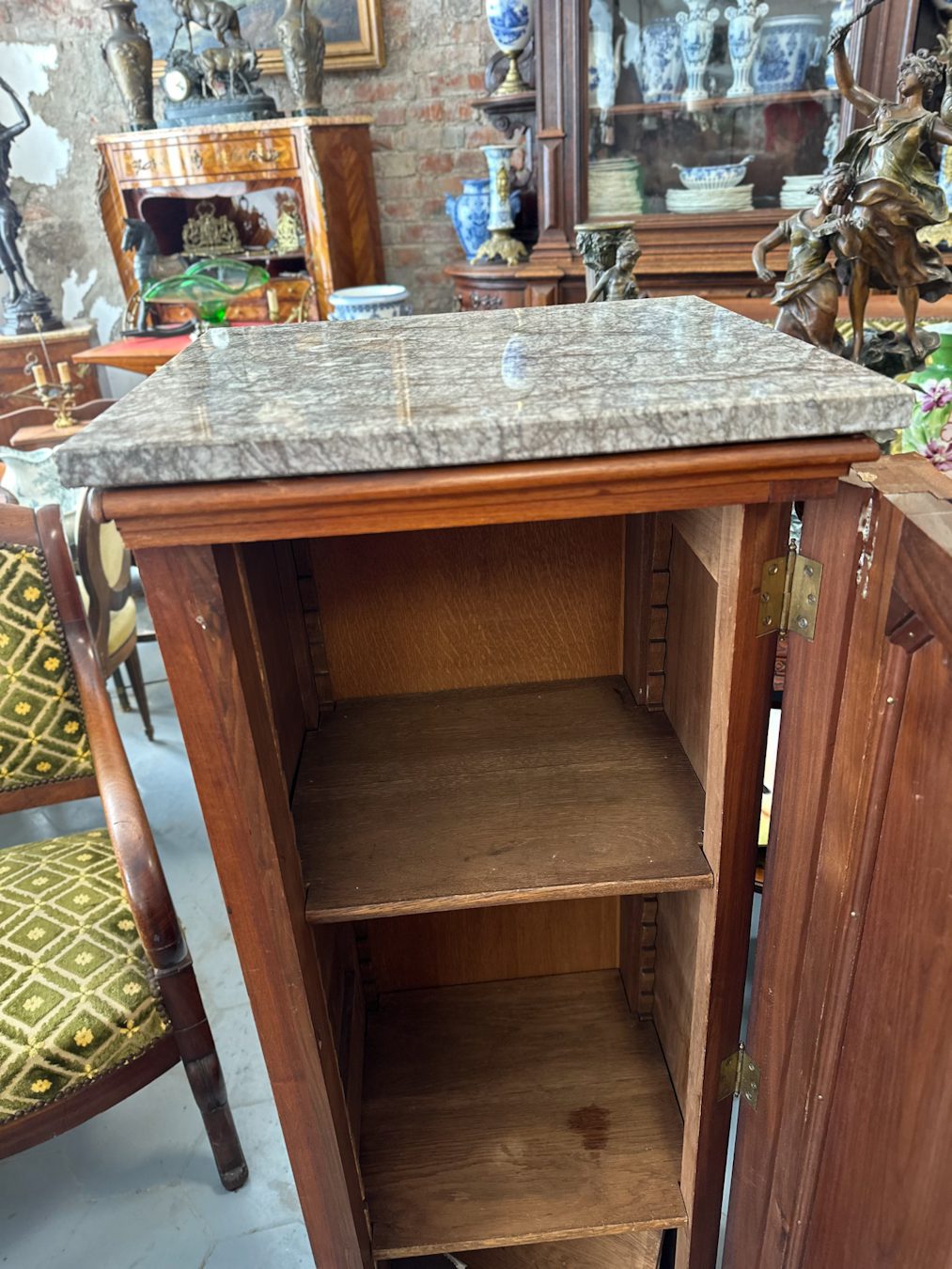
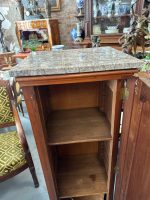
Good overall condition for both pieces. Oak with a natural warm age patina — tone even and consistent across both cabinets. Marble tops well preserved — natural surface marks visible, confirming authenticity. Bronze rosette knobs original, with natural patina. Cartouche medallion carving in full integrity. Interior oak shelving clean and functional. Original hinges, operational.
The condition of the pieces is fully reflected in the photographs.