The elegance of natural forms and supreme functional aesthetics meet in this late 19th or early 20th-century table serving masterpiece. This set, known in culture as a huilier-vinaigrier (oil and vinegar vessel), is an expressive and pure example of the… 300,00 €
You’re now subscribed to price tracking for this product. We’ll notify you if the price drops. 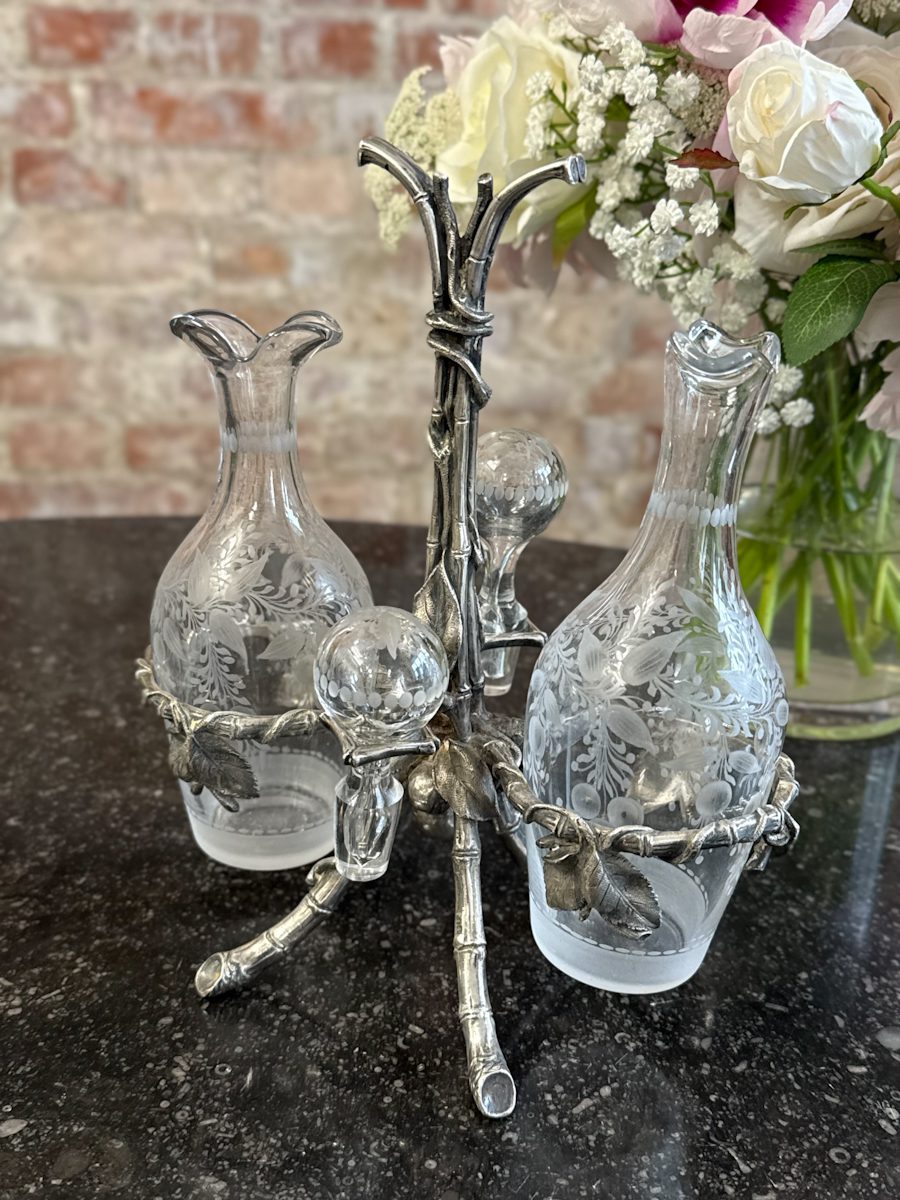
Antique Glass and Britannia Metal Cruet Set for Oil and Vinegar — Art Nouveau Style (6912)
Height 25 cm Width 21 cm
Description
Height 25cm, width 21cm. Antique Glass and Britannia Metal Cruet Set for Oil and Vinegar — Art Nouveau Style
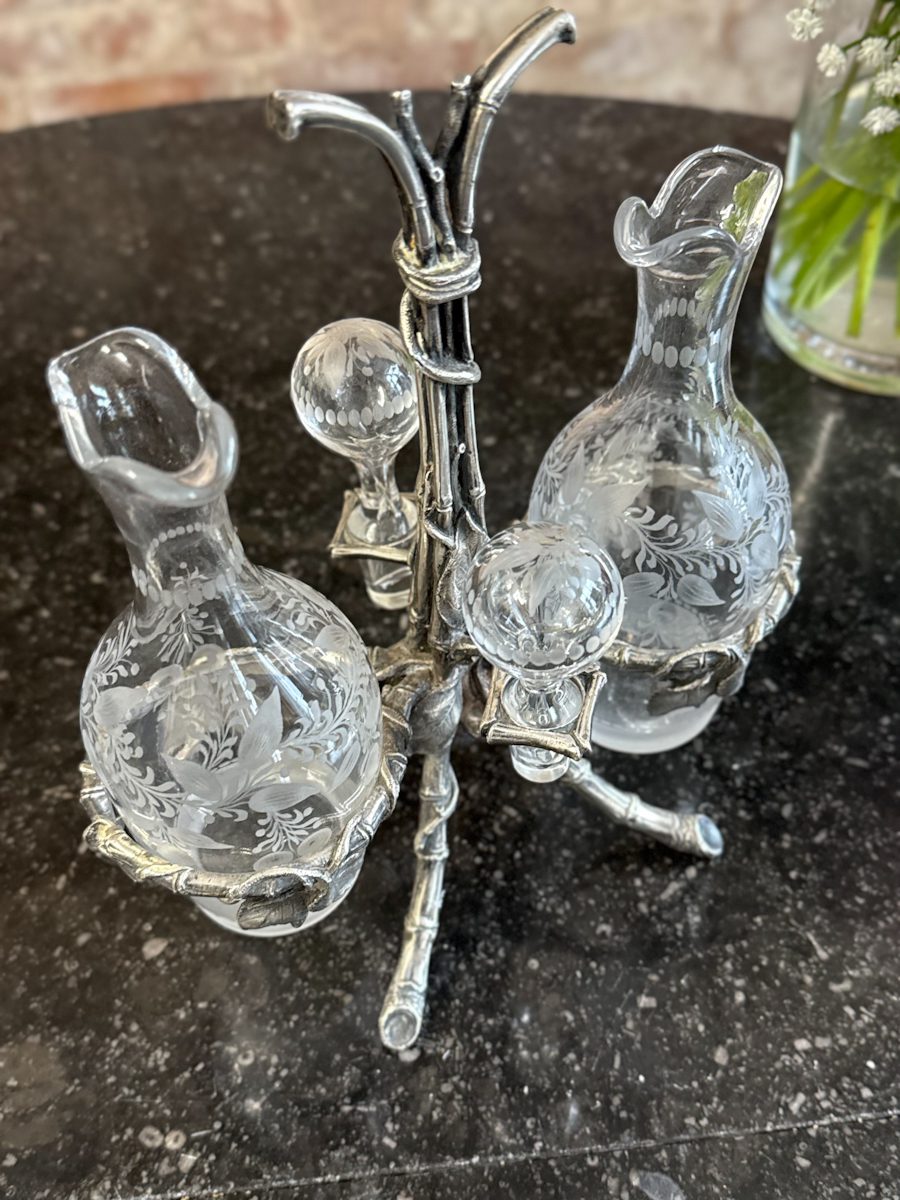
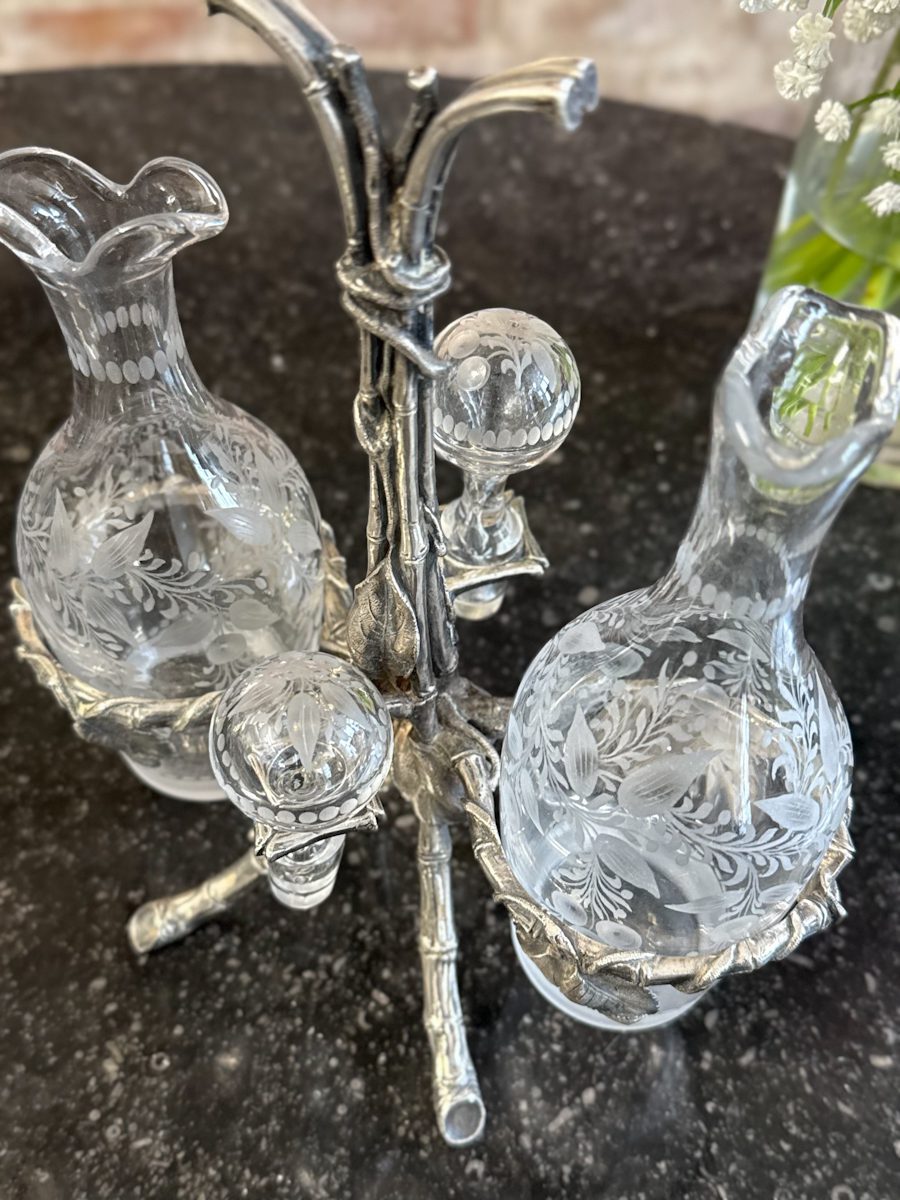
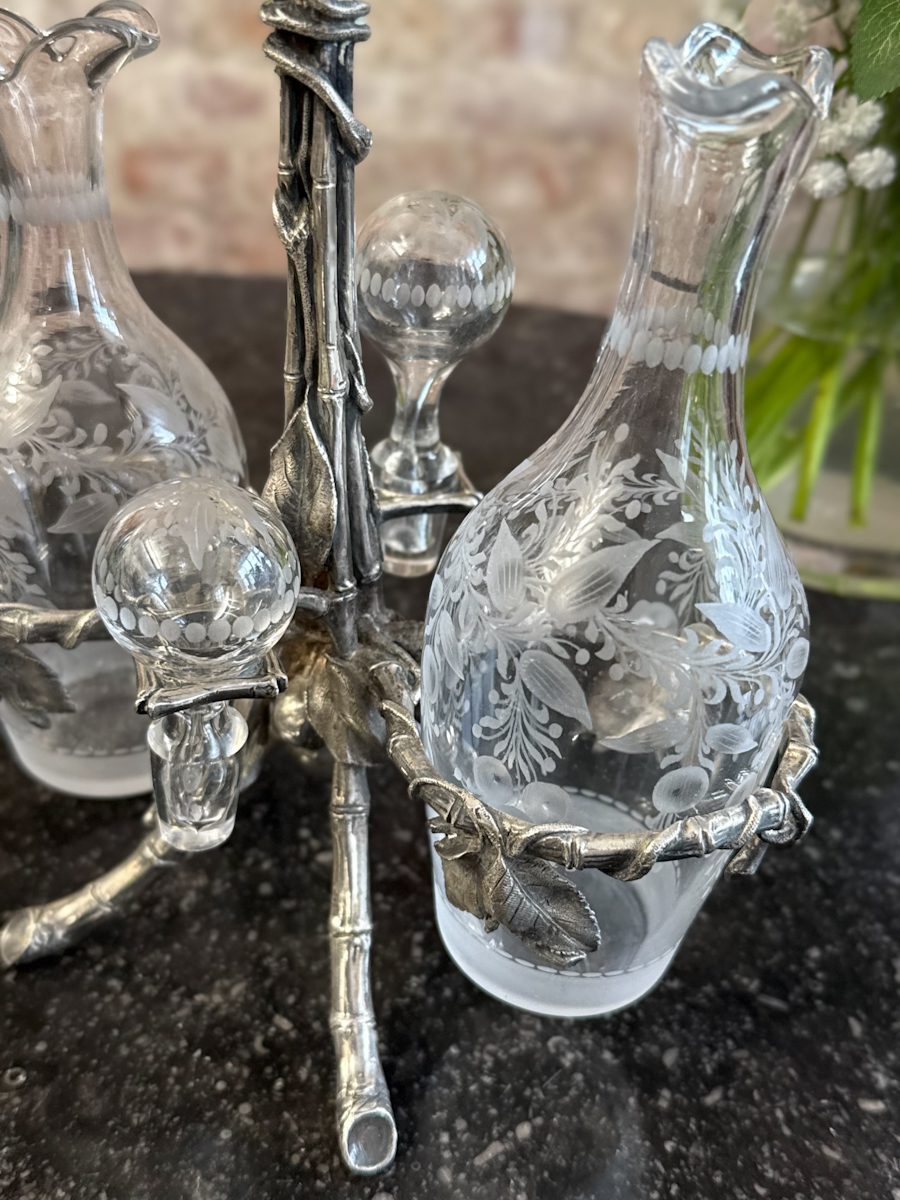
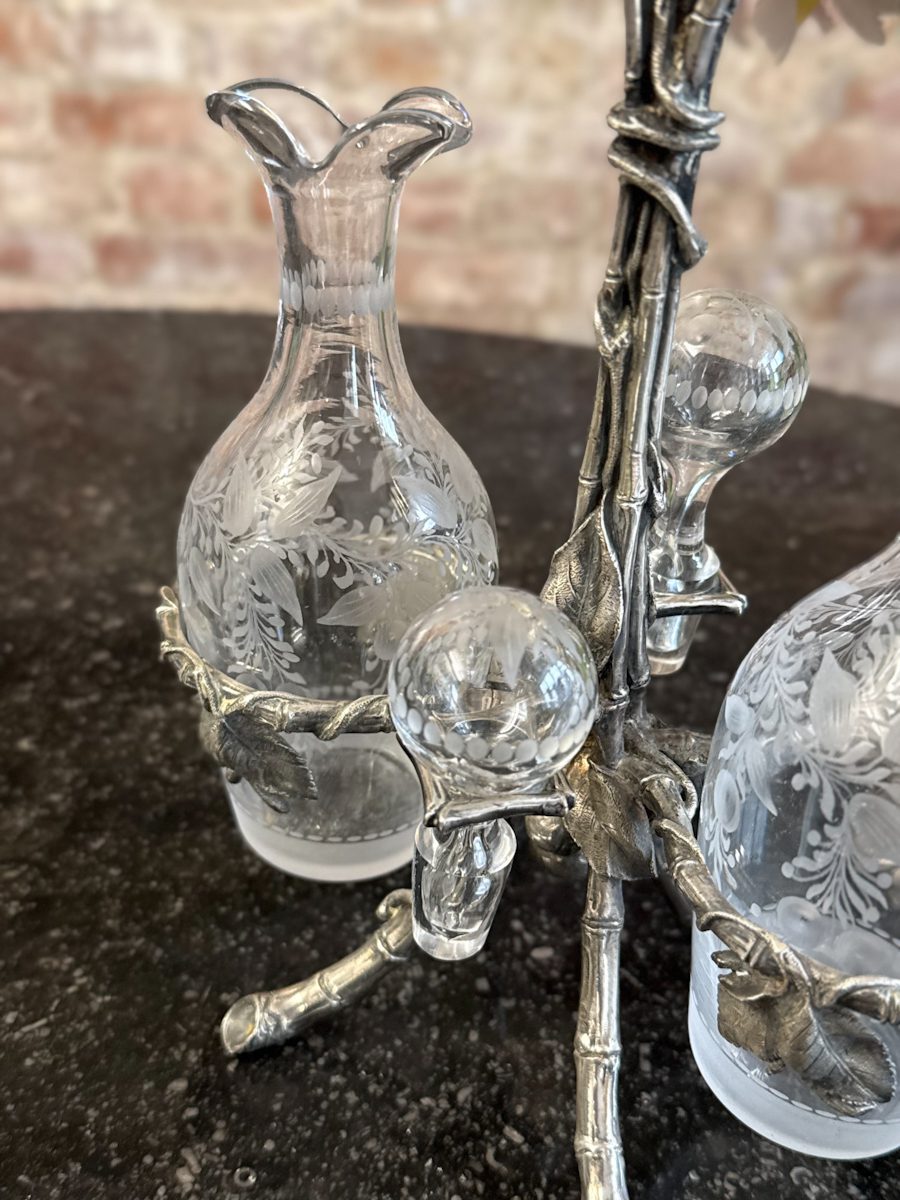
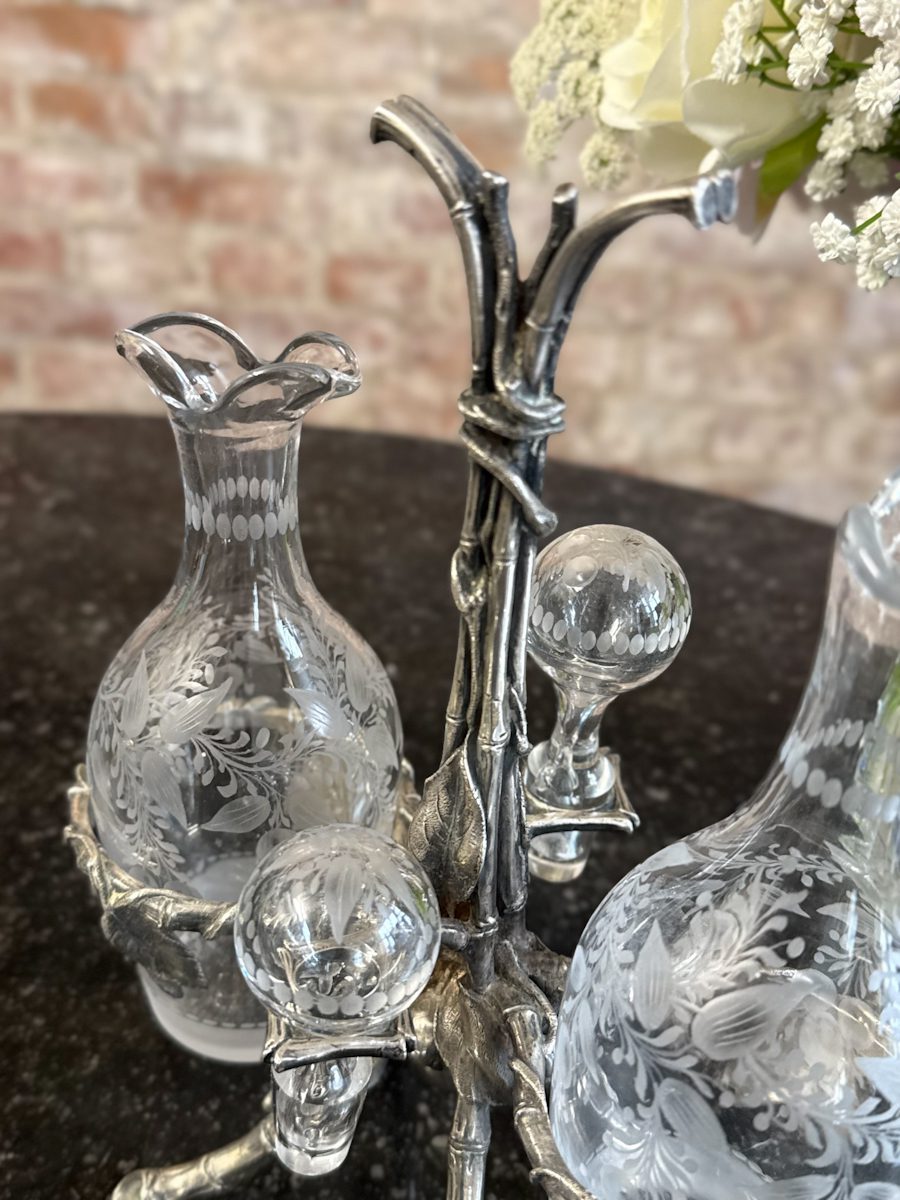
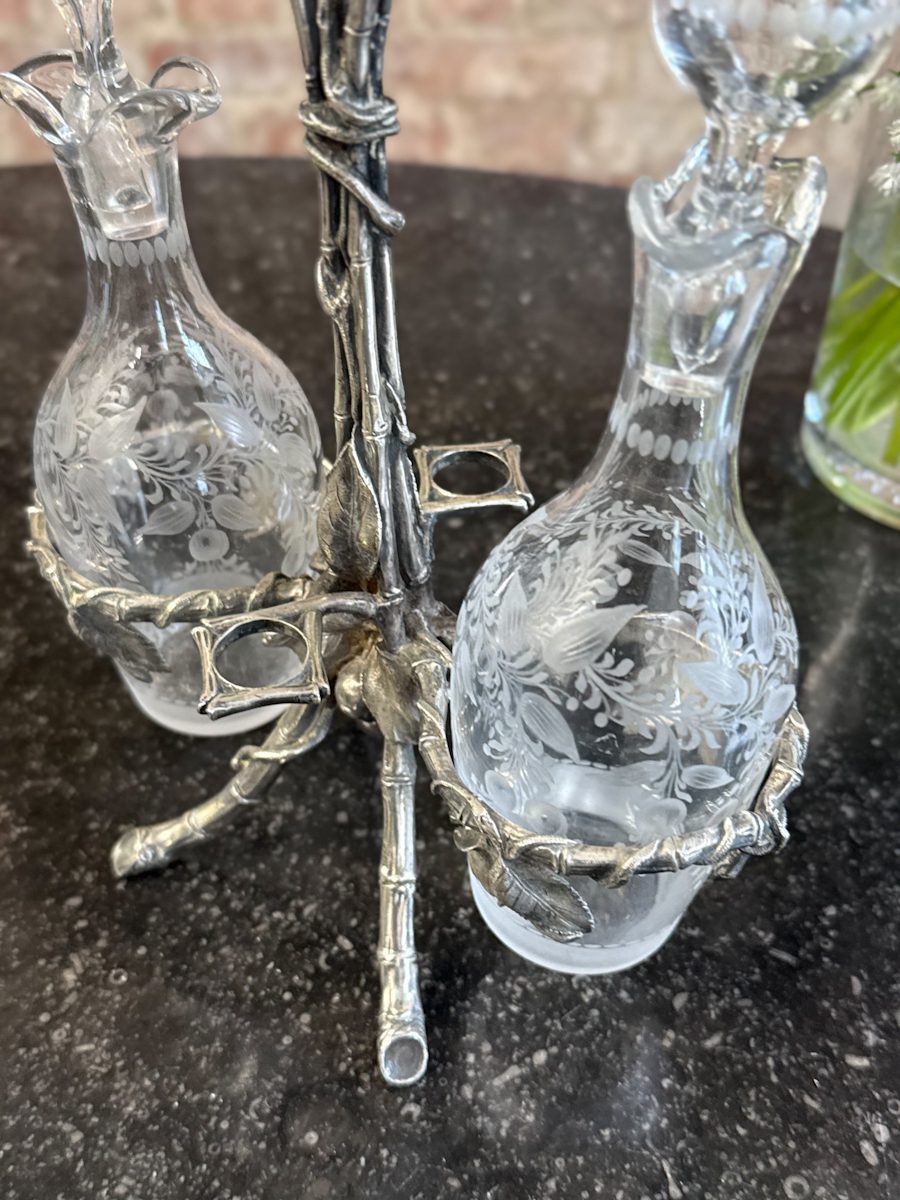
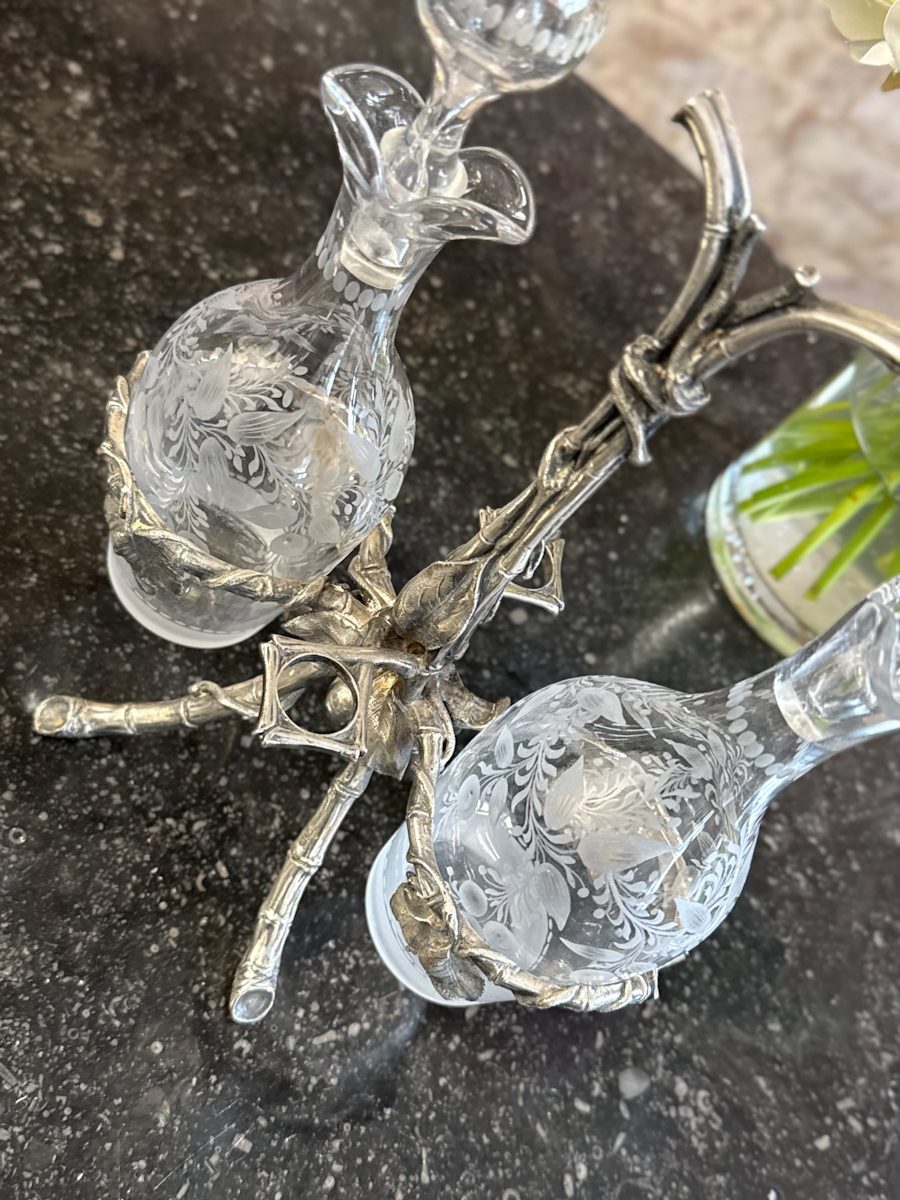
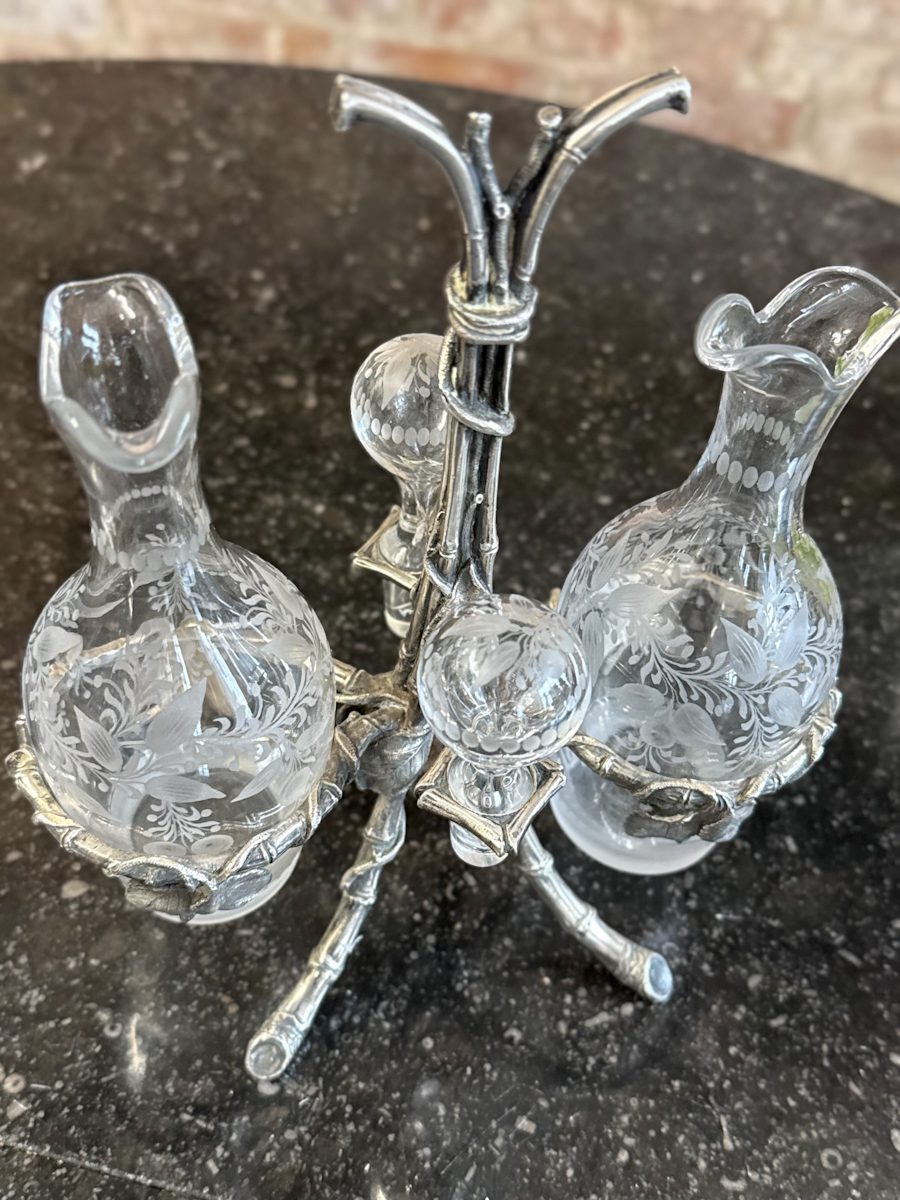
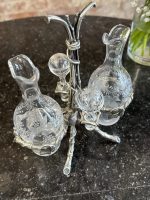
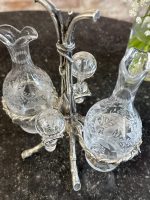
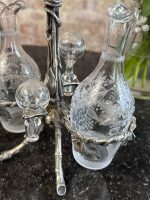
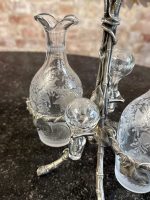
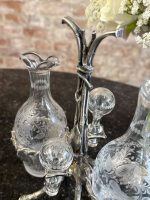
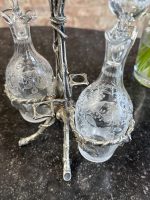
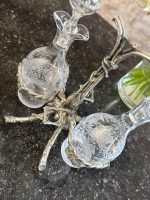
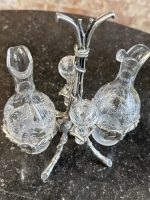
The elegance of natural forms and supreme functional aesthetics meet in this late 19th or early 20th-century table serving masterpiece. This set, known in culture as a huilier-vinaigrier (oil and vinegar vessel), is an expressive and pure example of the Art Nouveau style. The set is based on an artistically cast and structurally robust pewter alloy (Britannia metal) stand, whose axes and legs are naturalized as natural bamboo stalks or river reed twists, complemented by plastic, lively leaf forms. The two thin-walled glass bottles are decorated with delicate, frosted glass engraving — swirling floral and leaf motifs that harmoniously interact with the organic structure of the stand. This item testifies to a time when even the most everyday table accessories were transformed into standalone works of art. Craftsmanship & Period
Manufacturing period: late 19th or very early 10th century, approximately 1895–1905. This is a period when flowing lines triumphed in European design, abandoning the rigidity of historicism in favour of natural motifs. Maker / Signature / Mark
This piece represents the leading artistic workshop school of France or y (Jugendstil), whose created tableware and high-quality tin-antimony alloy castings reached the homes of the region’s wealthiest citizens and nobility through wholesale merchants in Riga and Libau. The construction of the stand and the grinding techniques of the bottles indicate top-class manufactory work. Rarity & Significance
The preservation of such cruet sets in their complete form to this day is a great rarity. Most often, over time, the delicate glass stoppers or the bottles themselves have been lost or broken. In this specimen, both bottles are completely identical, original, and both air-bubble-shaped stoppers have precisely ground bases that fit perfectly into the bottle necks, making this set a valuable collector’s item. Application & Interior Use
The set will serve as an exquisite and eye-catching accent on a festive or everyday dining table, in a restaurant interior, or in an antique Indonesian-style or classic buffet. It is fully ready for use for serving high-quality oil, aromatic vinegar, or homemade sauces, lending a mood of historical ritual to the meal. Condition
The condition of the item is excellent. The Britannia metal stand is completely rigid and undeformed, with a naturally formed, pleasantly matte patina of time that highlights the relief bamboo patterns. The glass bottles are clean, without limescale deposits, cracks, or chips. Both glass stoppers are intact. The condition of the item is fully reflected in the photographs. Art Nouveau Snapshot, Anna Pavlova (Anna Pavlova): The theatre backstage after the first act is steeped in the hot steam of lamps and the scent of powder, while a refreshing sea breeze wafts through the prima ballerina’s private boudoir by the window of the Riga Opera. By the mirror, amidst silk lace and turquoise satin ribbons, sits the dancer, her cool palm momentarily touching the cold, frosted metal on the surface of a small table. Her gaze follows the play of light through the transparent, water-clear glass, where the engraved floral swirls and bamboo stalk silhouettes seem to echo the plastic movements of her own hands, just performed on stage. The sound of violins from the hall softly fills the room, and the delicate glass sphere stoppers on the table gleam like frozen dewdrops, catching the last rays of the afternoon sun. At the same time, just next door, in the cosmopolitan port of Libau, huge steamers are preparing for their journey to New York, and the young intelligentsia of Tartu in student corporations are fervently discussing the philosophy of the new century. While the first automobiles begin to appear on the streets of the imperial capitals St. Petersburg and Warsaw, and in distant, exotic Tashkent and Tbilisi merchants load silk bales, here, in the quiet salon of the Baltic borderland, time is concentrated in a single line inspired by natural forms, where glass and metal merge in a flawless Art Nouveau moment.