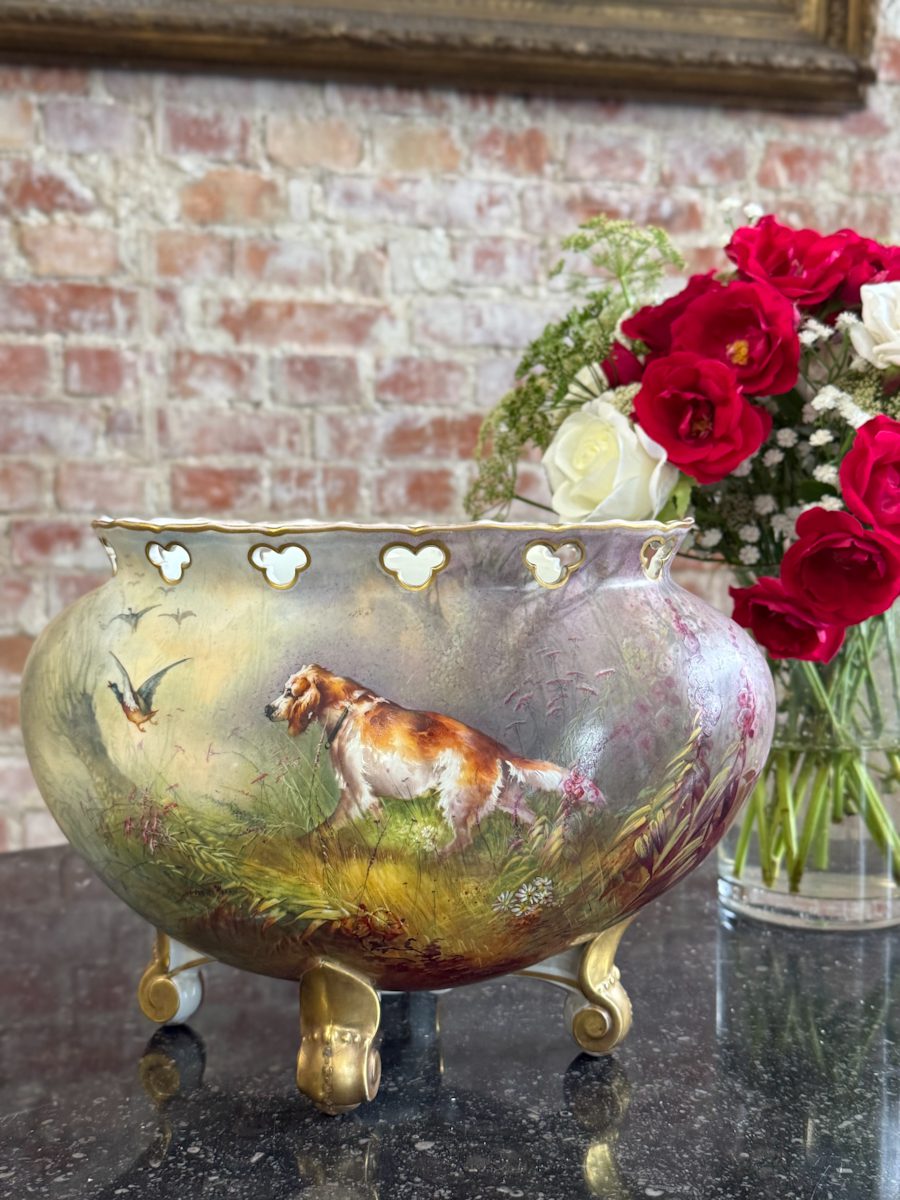
Painted porcelain cachepot with hunting motif — Neo-Rococo style This impressive, medium-sized porcelain cachepot (or decorative planter) is an outstanding masterpiece of ceramics, harmoniously combining the opulent form of the Neo-Rococo style with the Naturalism of late 19th-century painting. Its…
You’re now subscribed to price tracking for this product. We’ll notify you if the price drops. 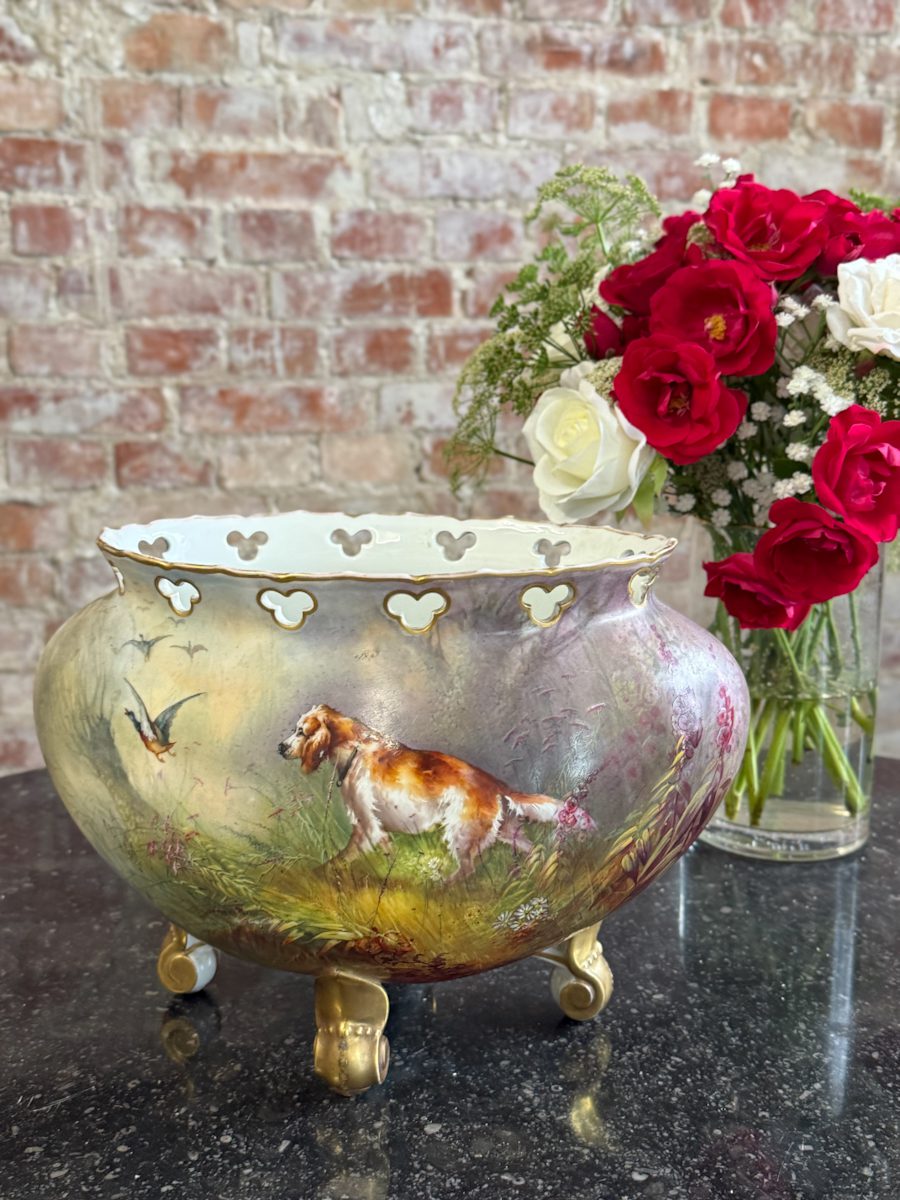


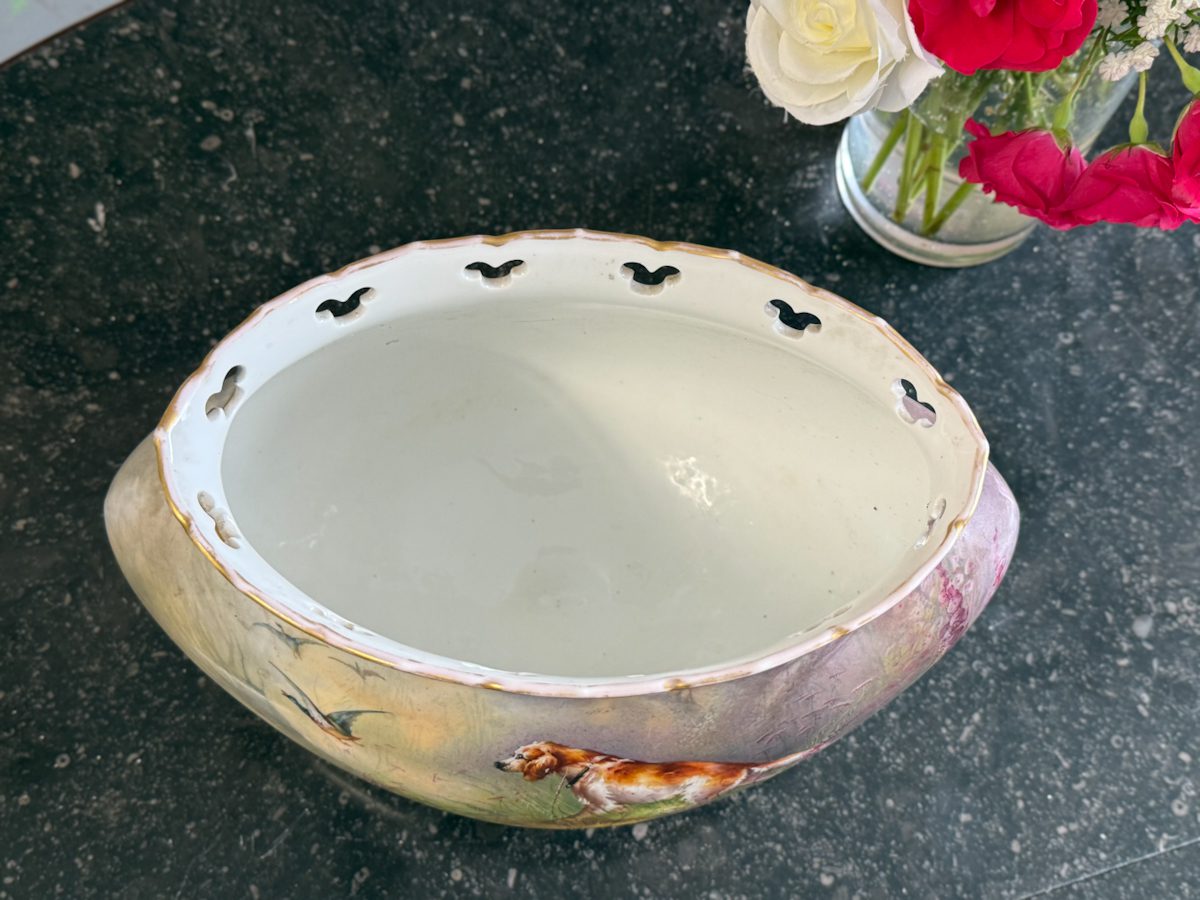
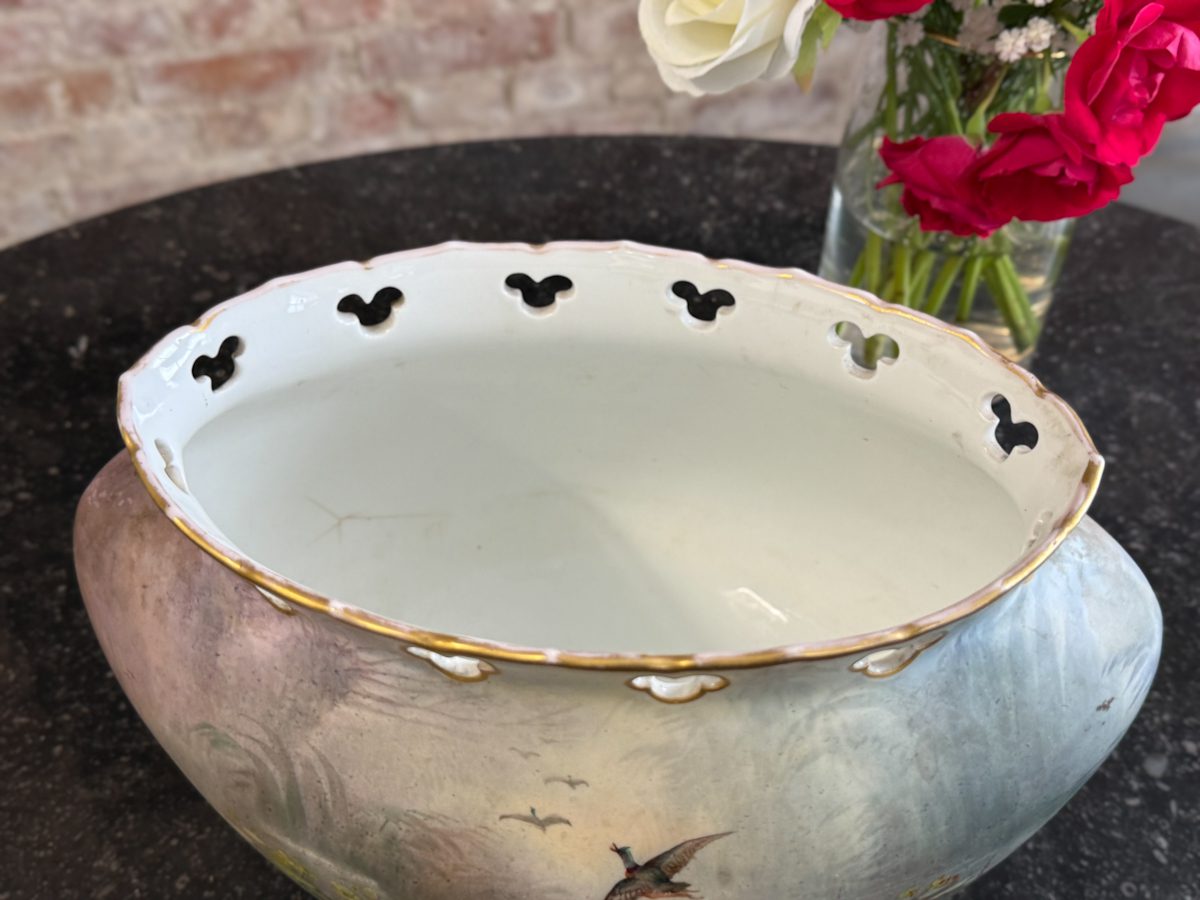






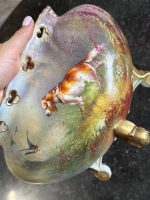
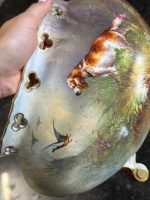

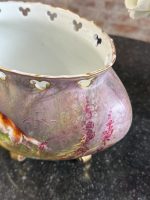

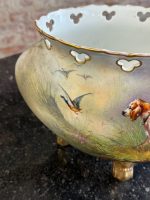






Painted porcelain cachepot with hunting motif — Neo-Rococo style (7066)
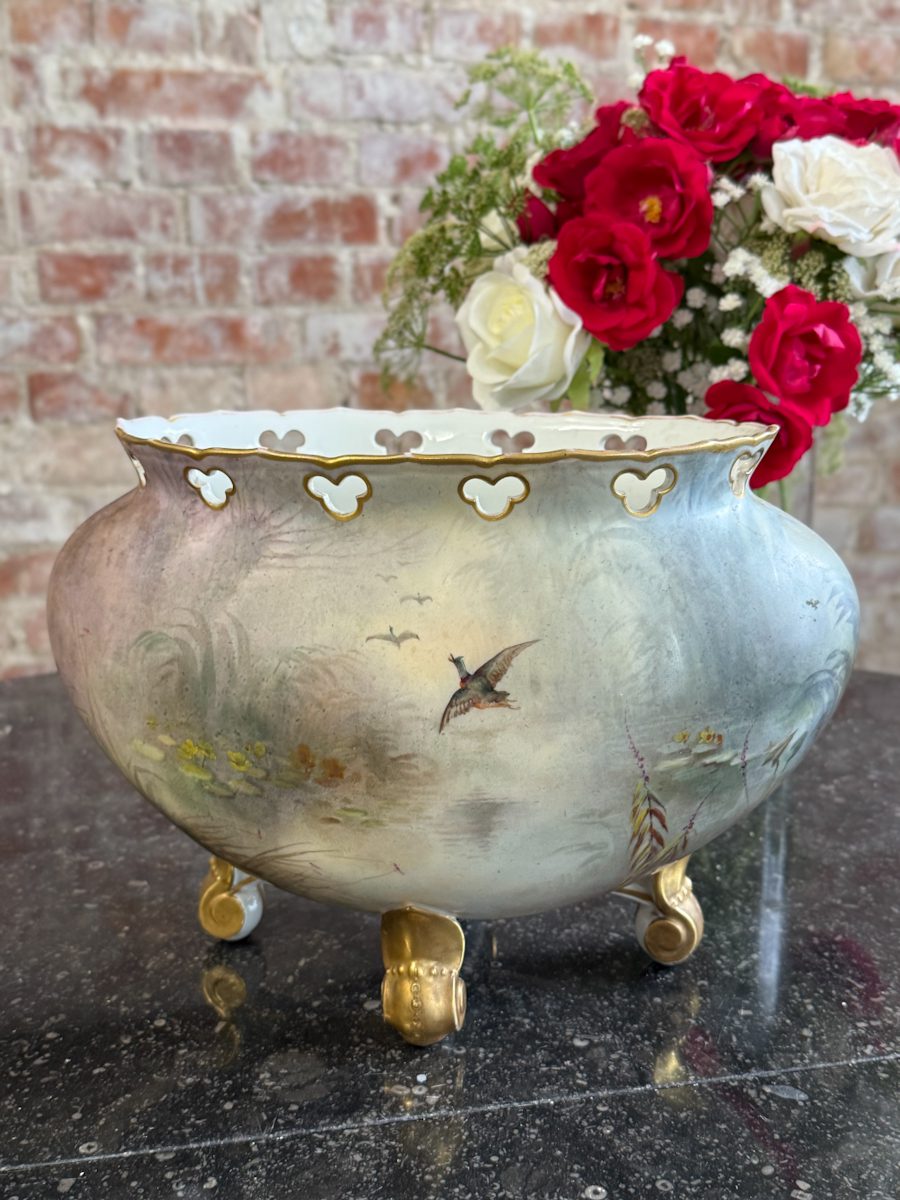
Height 22.5 cm Width 33 cm


Description
Dimensions: Height: 22.5 cm Width: 33 cm
Painted porcelain cachepot with hunting motif — Neo-Rococo style
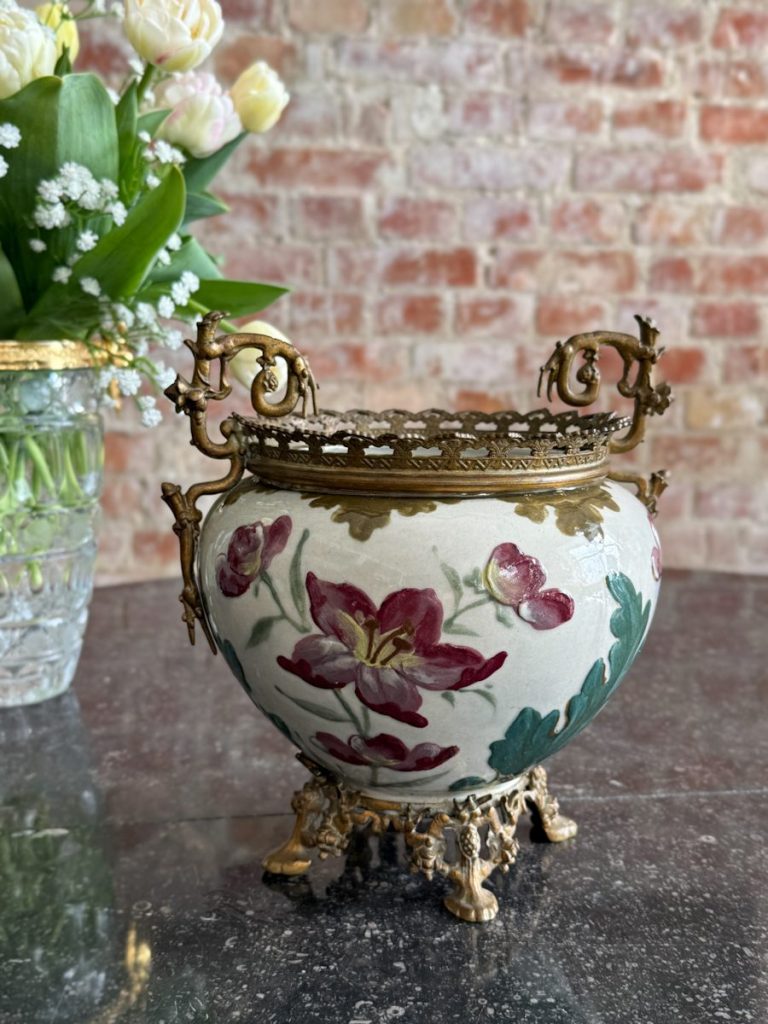
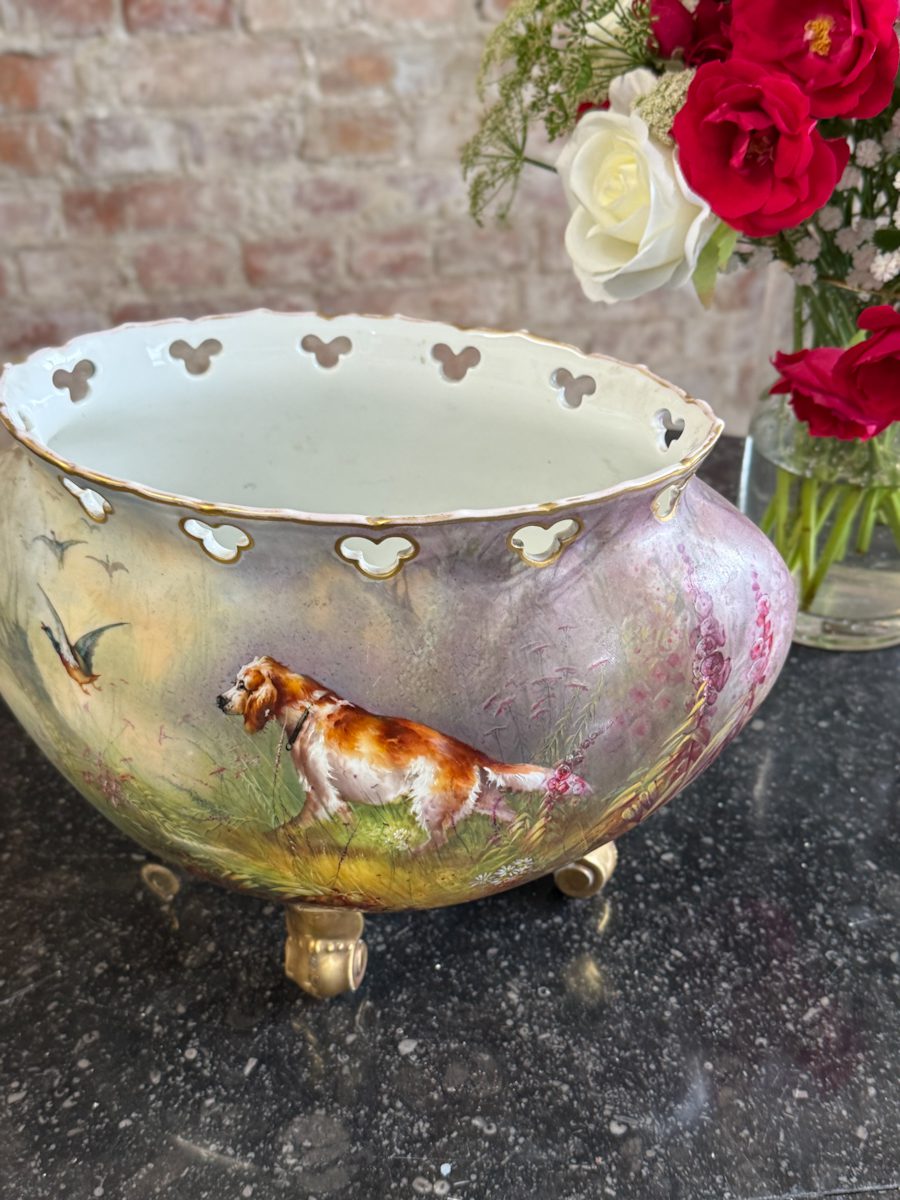
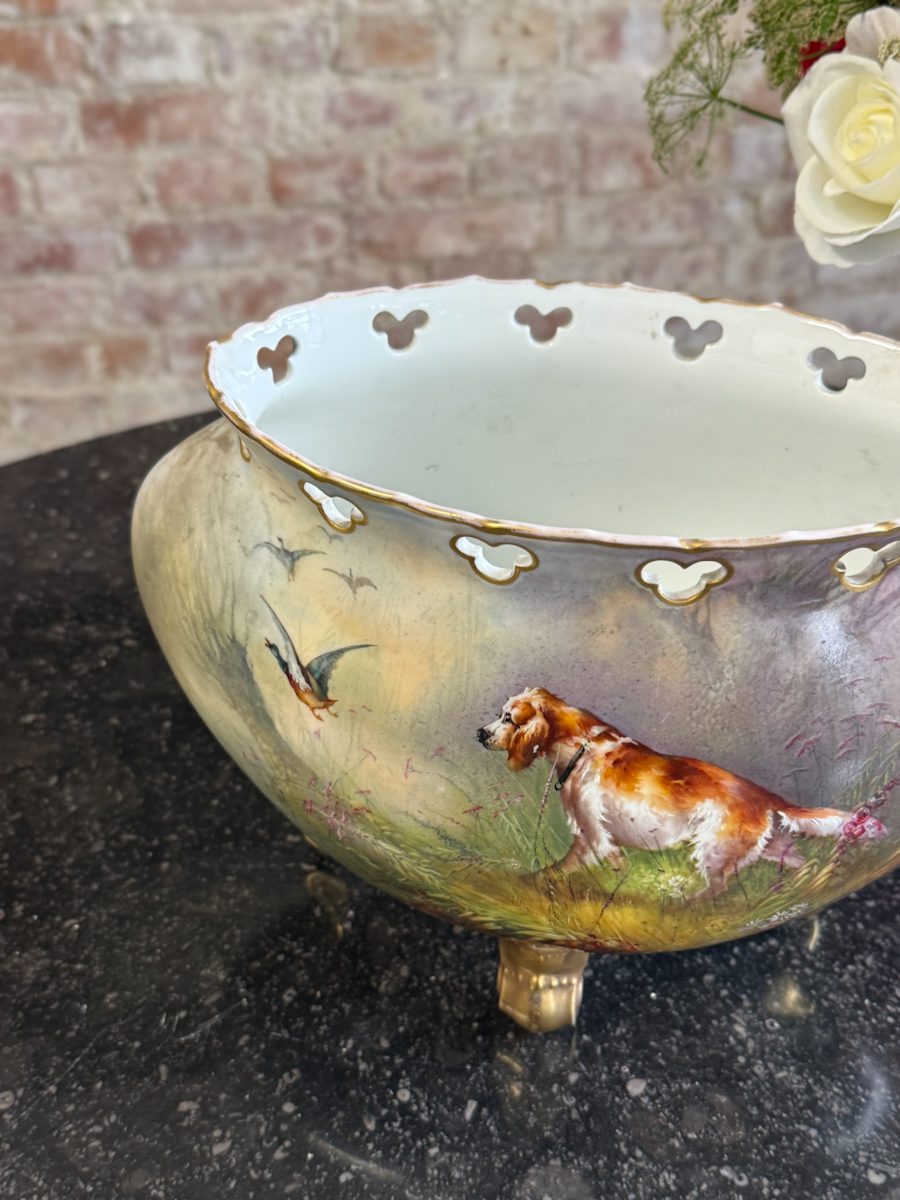
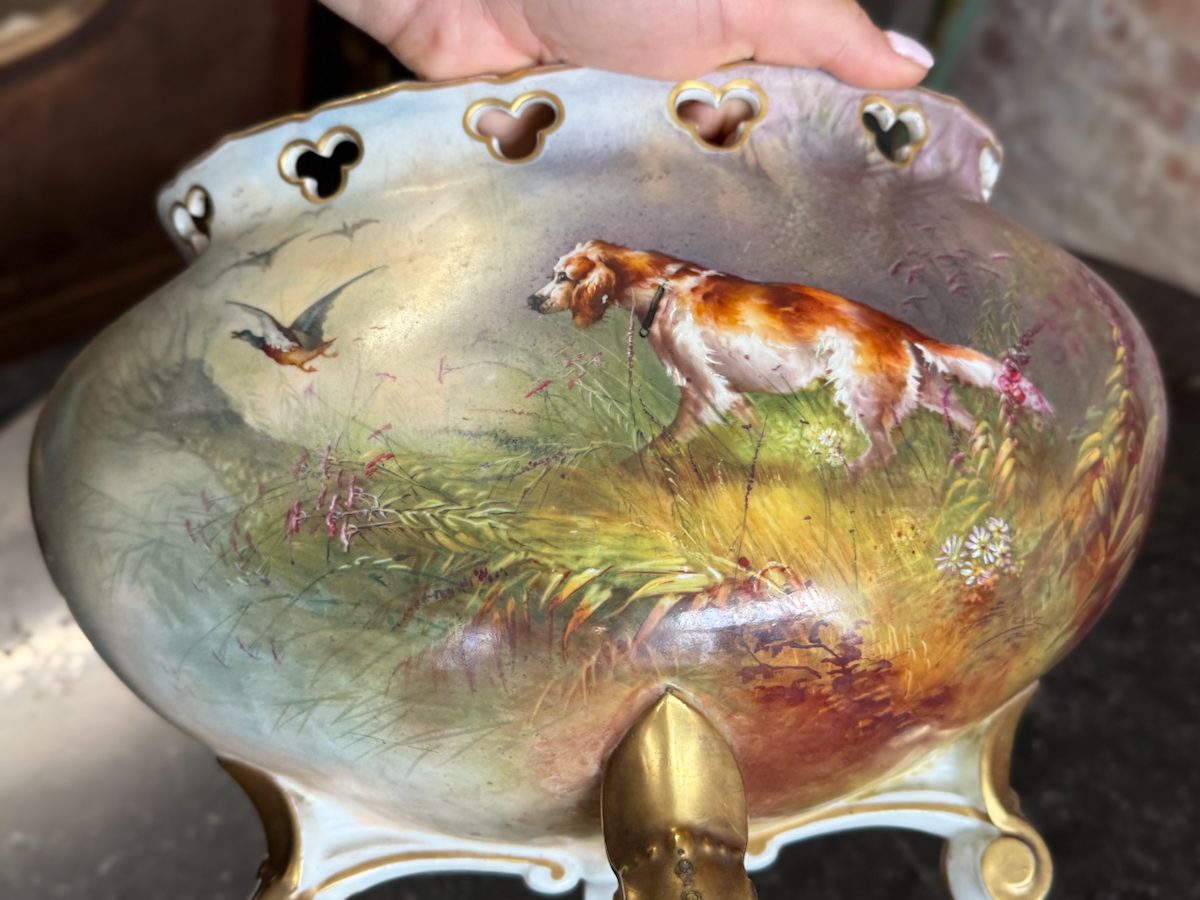
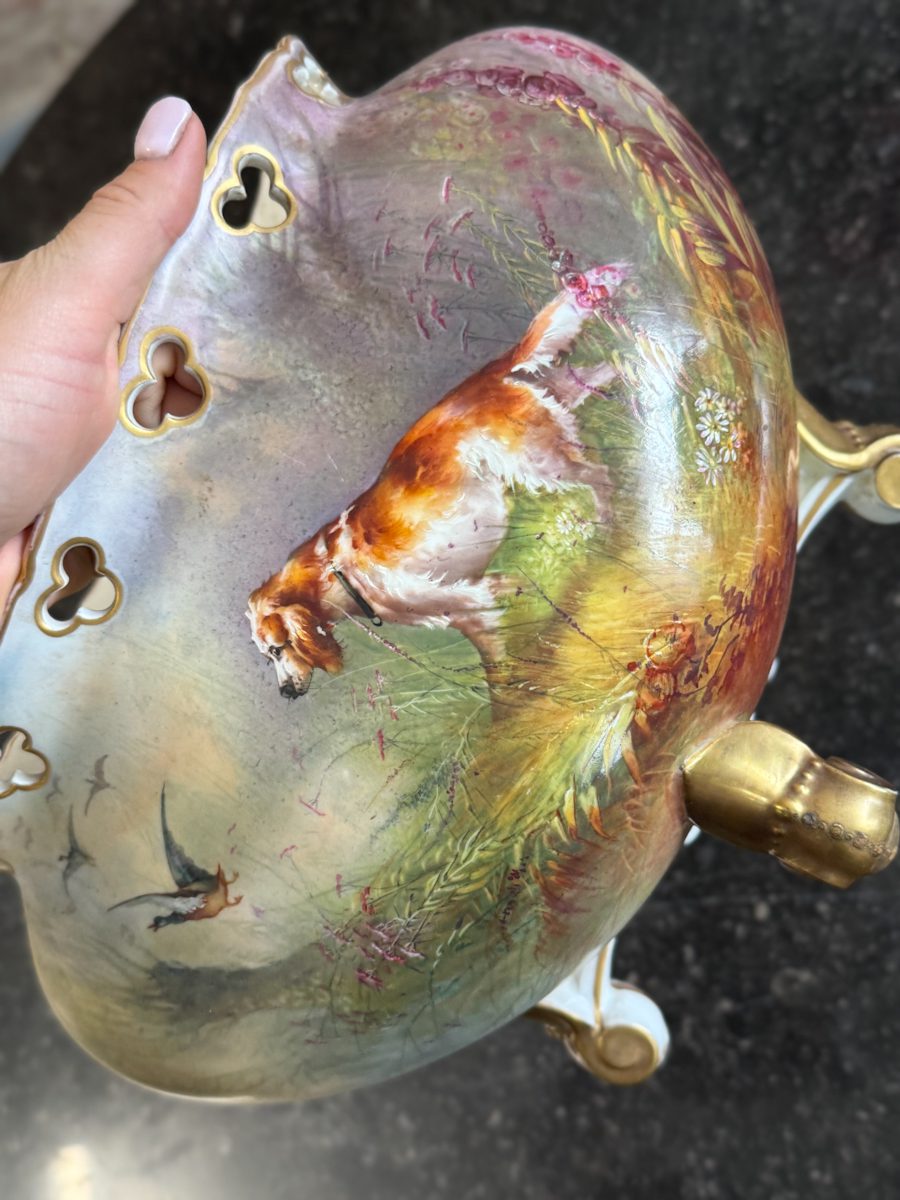
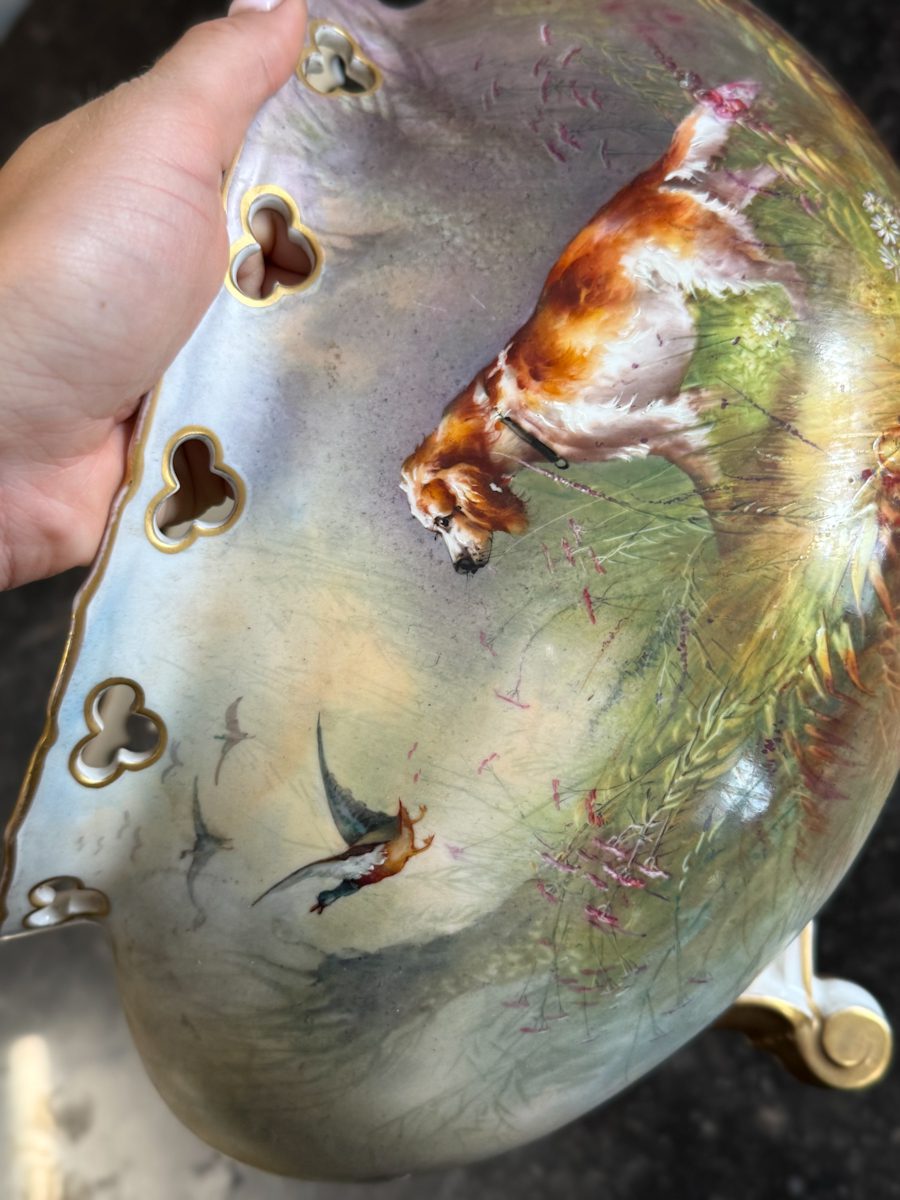
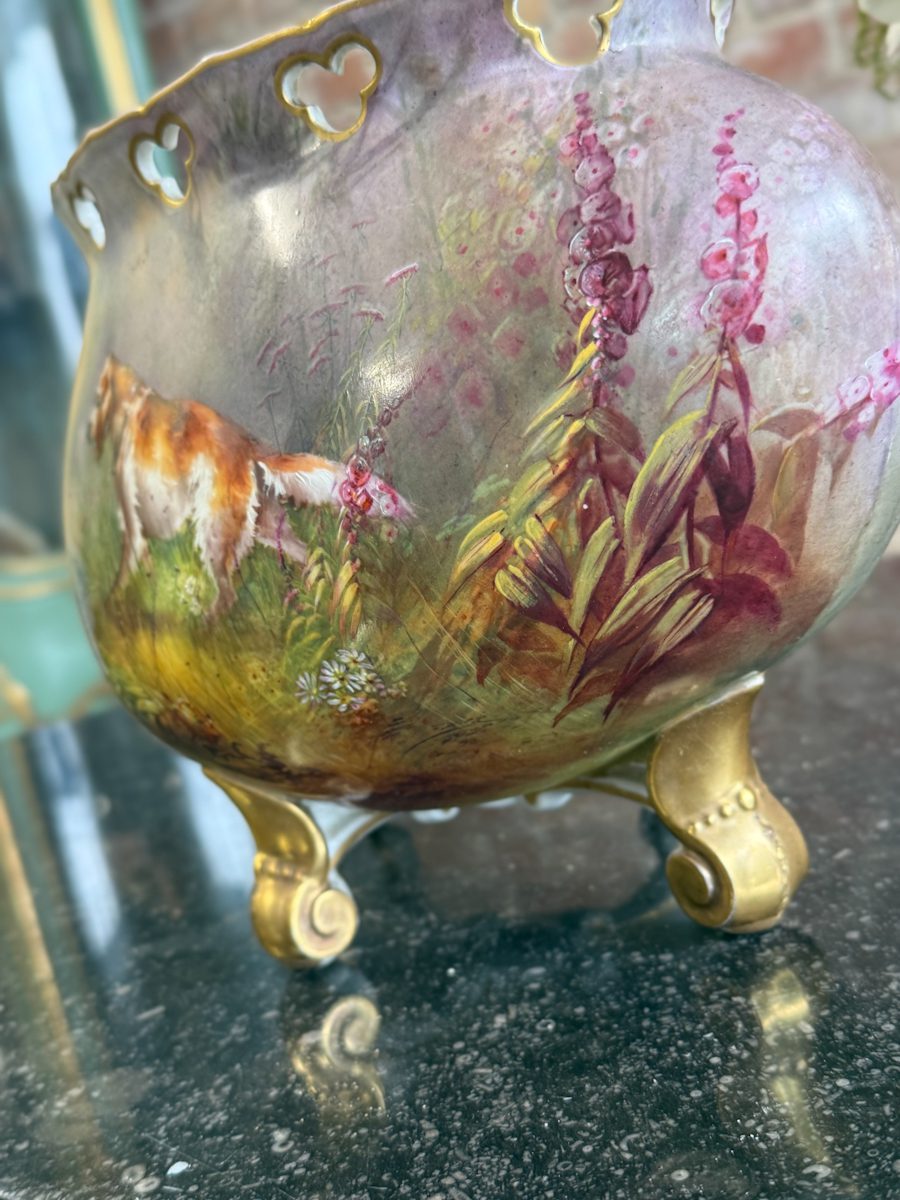
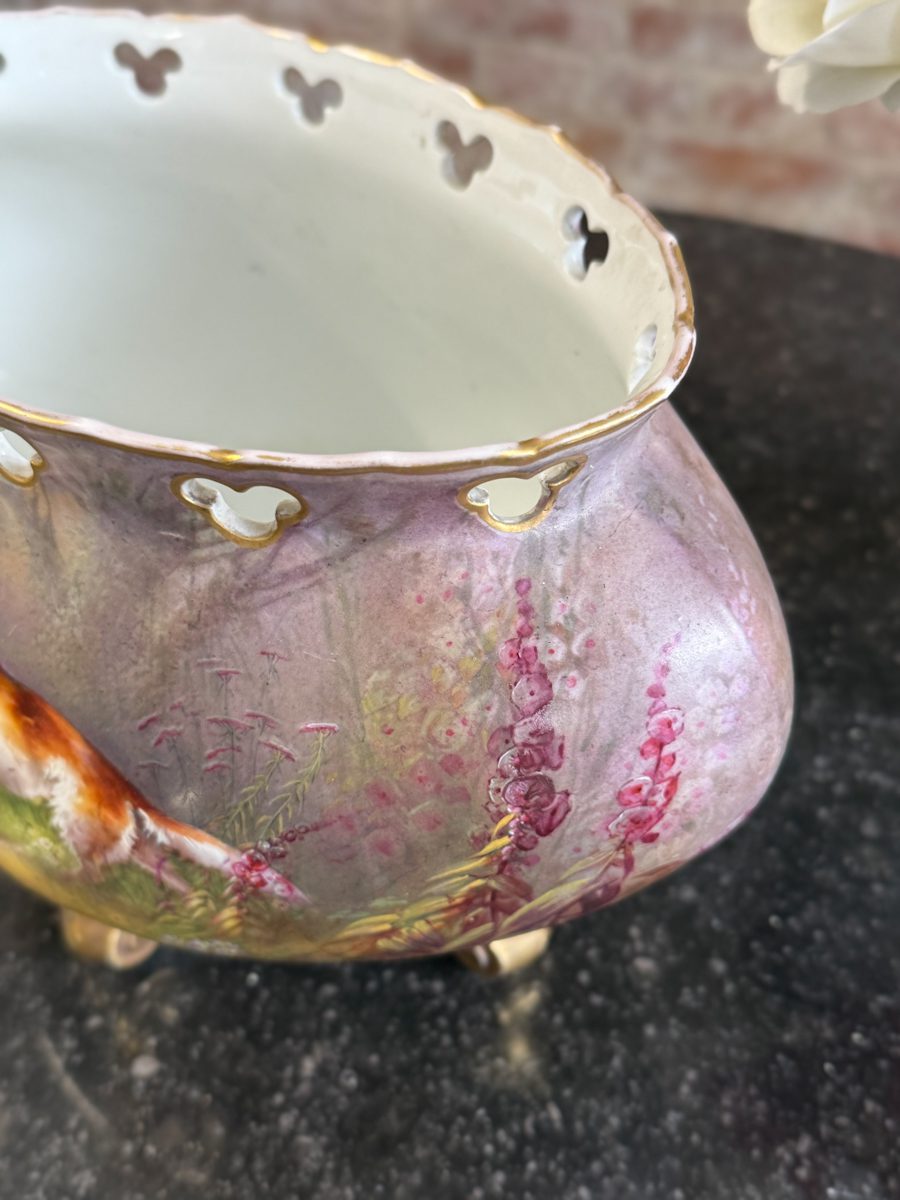
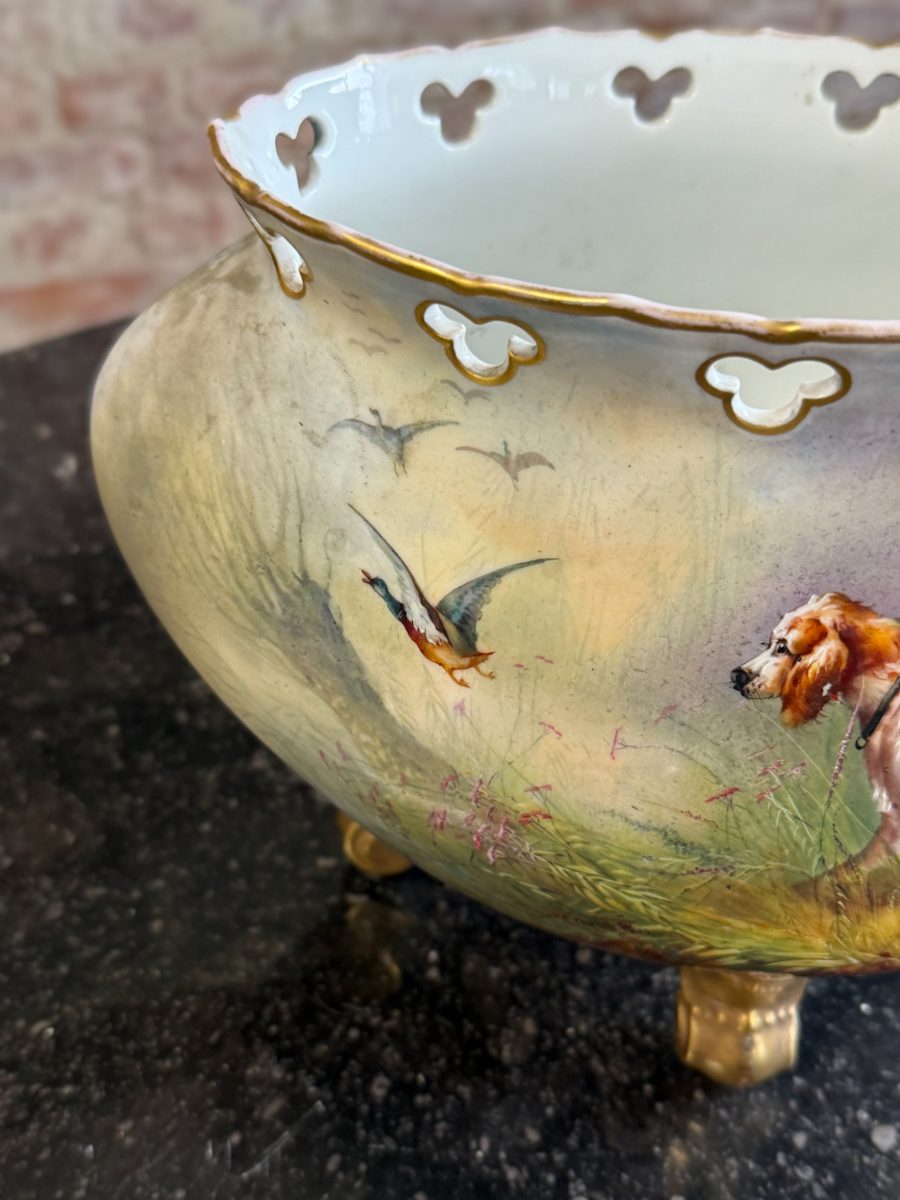
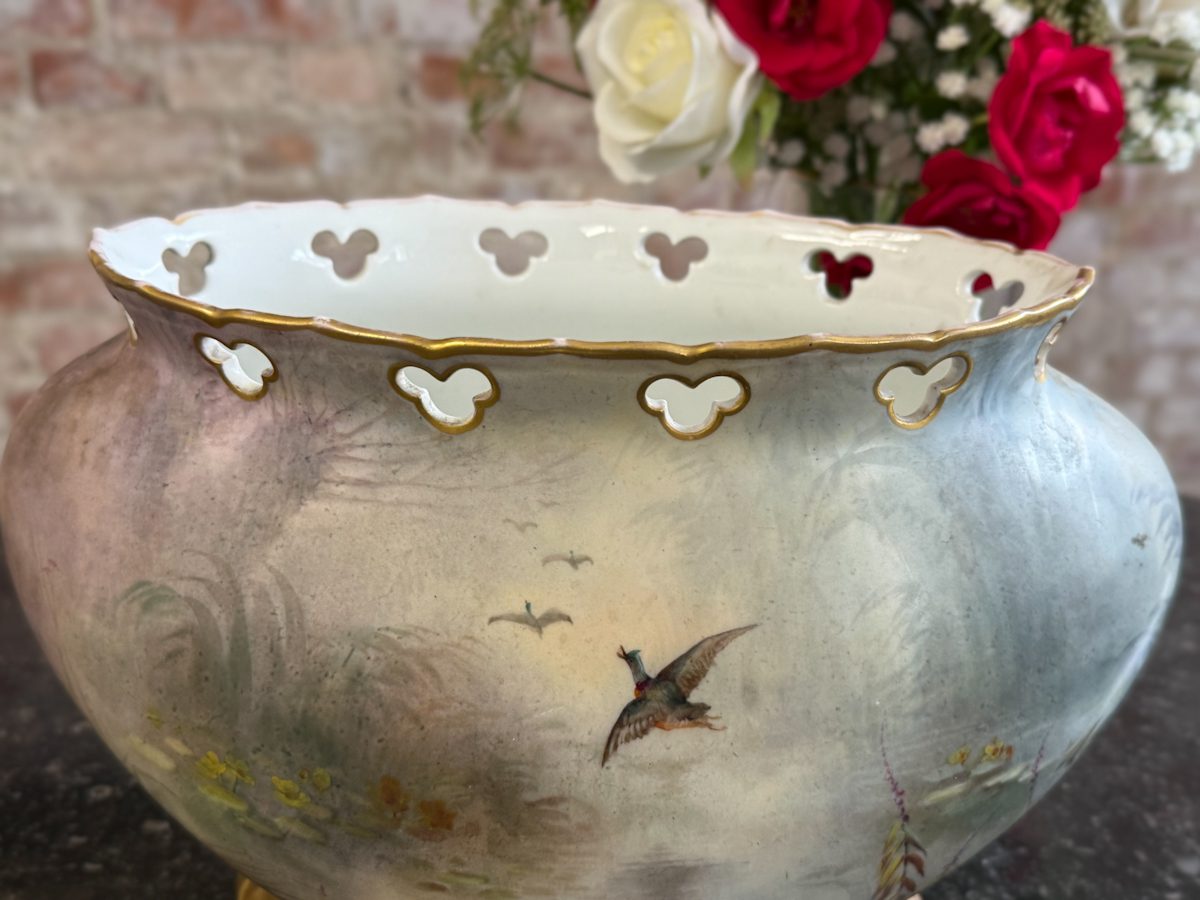
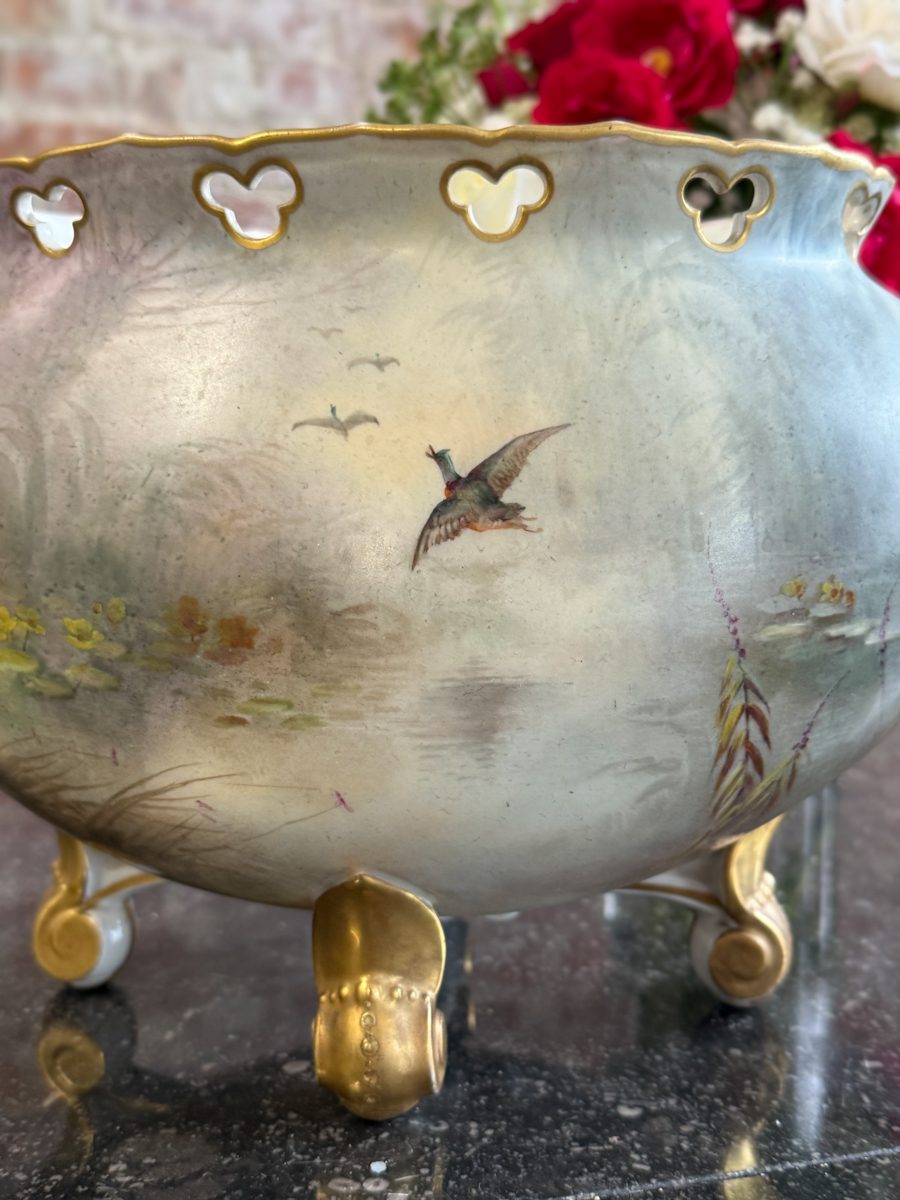
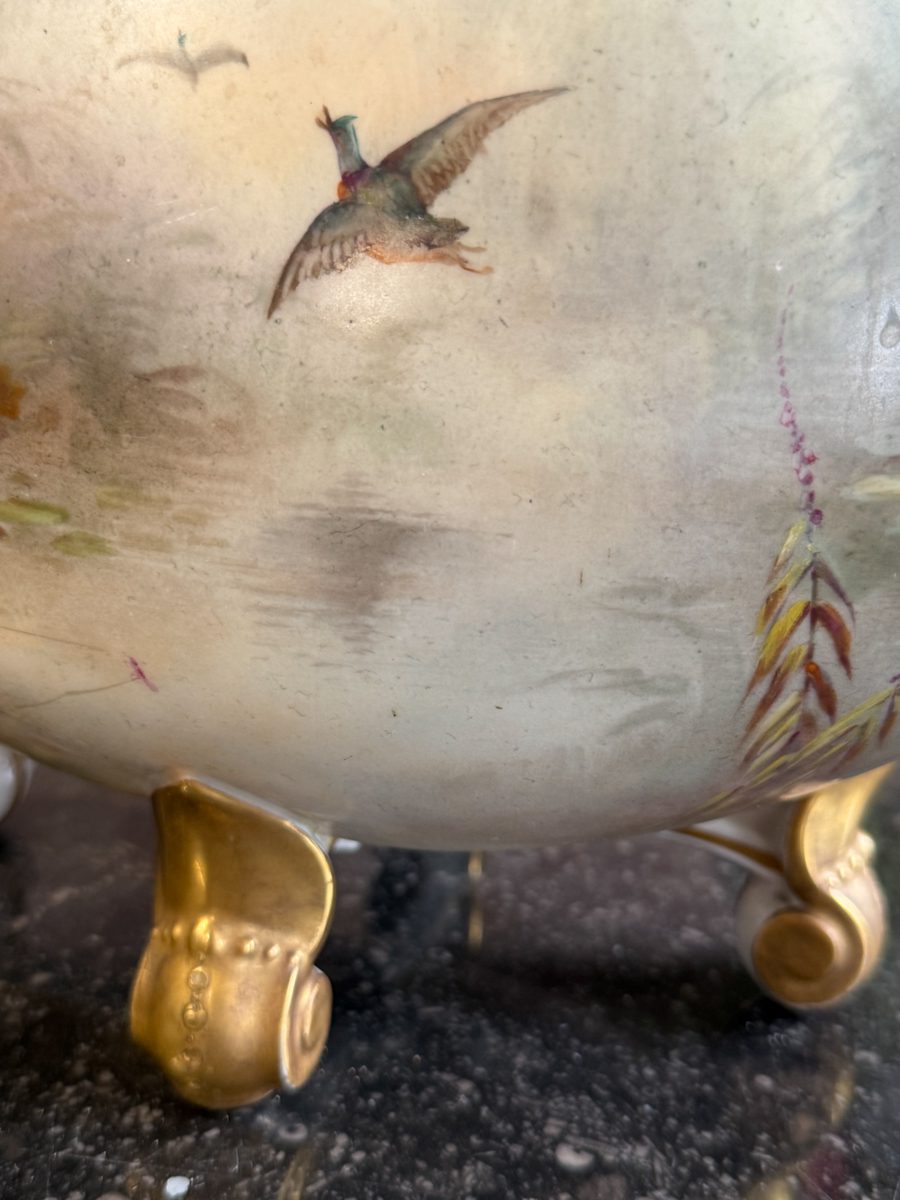
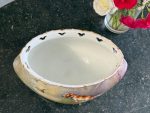
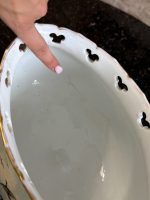
This impressive, medium-sized porcelain cachepot (or decorative planter) is an outstanding masterpiece of ceramics, harmoniously combining the opulent form of the Neo-Rococo style with the Naturalism of late 19th-century painting. Its exterior surface is adorned with delicate, hand-painted nature and hunting motifs—on one side, a majestic setter is frozen in pose, tracking a flying wild duck, with an autumnal meadow and flowers depicted in the background. Pastel transitions from soft yellow to violet-pink create the illusion of morning mist. The rim of the cachepot is decorated with elegant cut-outs (perforation) with a gilded border, while the base is supported by four substantial, gilded rocaille style feet, lending the piece an aristocratic spatiality and posture.
Period of Manufacture This item was crafted in the late 19th or early 20th century, reflecting the aesthetic favored by affluent circles of the time in their manors and country residences, where hunting scenes demonstrated the owner’s status.
Manufacturer and Mark A red stamp on the underside reads “Aux Fabriques réunies DEPIERREFIXE LIMOGES Boulev. de Fleurus, 9”, confirming its origin from the renowned Limoges porcelain manufactories in France, known for their highest quality and fine handiwork. The artist’s initials “M.R” are also found nearby.
Rarity and Significance A large-sized Limoges cachepot with such detailed and anatomically precise animalistic painting is a true rarity. The realistic hunting dog motifs, combined with opulent gilding, make this a highly desirable and valuable collector’s item.
Application Today, this Limoges porcelain cachepot would serve perfectly as an exquisite centerpiece on a large dining table, mantelpiece, or in a library. It can be used to house a lush houseplant or simply as a standalone art object in a classic, eclectic, or country-style interior.
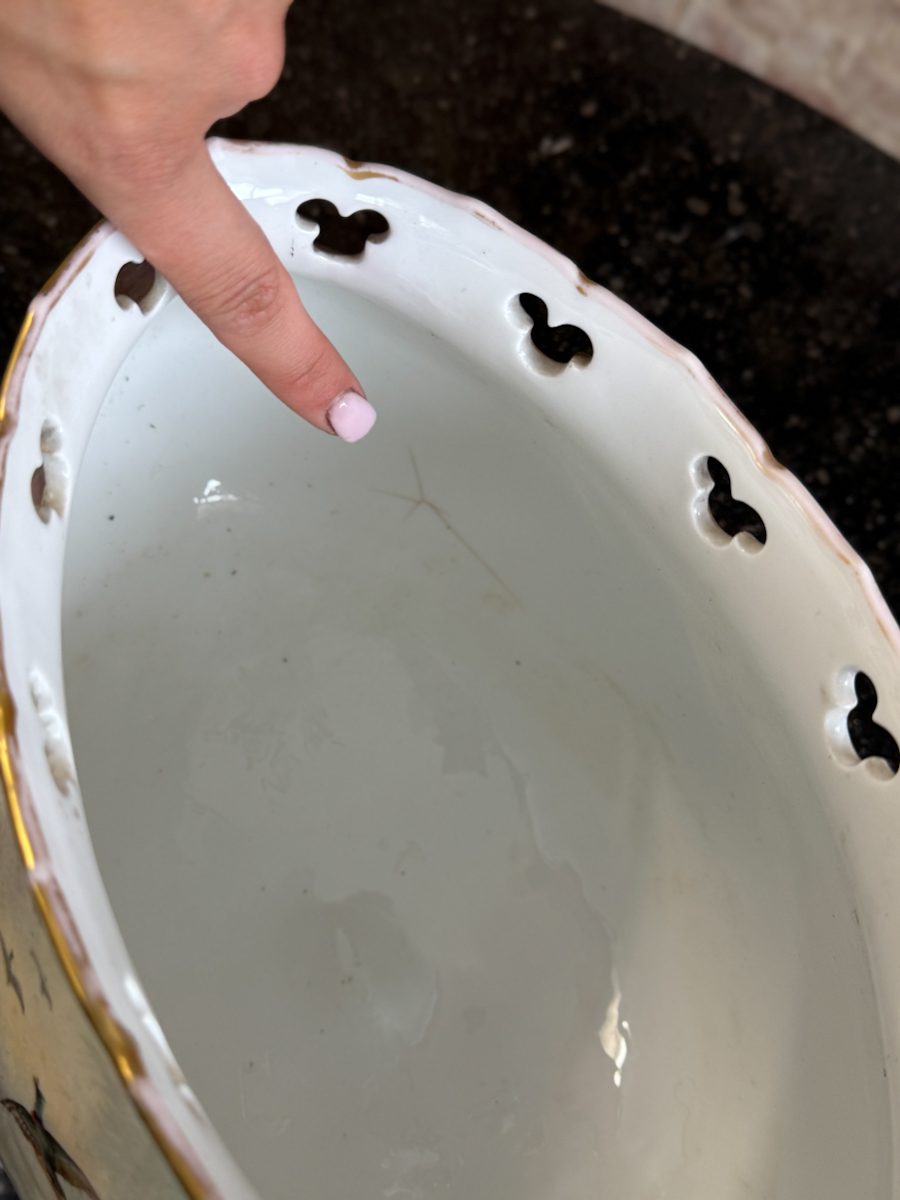
Condition The cachepot is in visually excellent condition, retaining vibrant colors and lustrous gilding. Internally, on the base, there is a small, microscopic hairline crack, which is a natural drying crack from industrial stress micro-network formed during the manufacturing process. It does not affect the structural integrity or external aesthetics of the item. The condition of the item is fully reflected in the photographs.
Château de By Atelier, Rosa Bonheur: Morning light streams generously through the wide studio windows, illuminating particles of hay and chalk dust floating in the air. The room smells of linseed oil, freshly mixed paints, and a hint of damp earth from the garden. The renowned animal painter, dressed in her usual paint-splattered work smock, has just finished mixing a complex combination of ochre and brown tones on her palette for a new canvas.
She steps back a few paces to observe the substantial porcelain vessel in the corner of the room, housing a lush green fern. The painter’s eyes study the tense pose of the setter on the ceramic surface, silently admiring the unknown Limoges master’s ability to capture the hunting dog’s character and the moment’s dynamics so vividly and anatomically precisely, while the golden morning sunbeams playfully reflect off the vessel’s curved rococo-style feet.