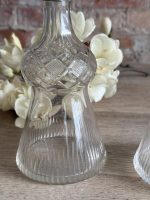
Price is for 1 pc. This massive and exceptionally elegant crystal decanter is an outstanding example of classic British glass and silversmithing art. The vessel features a highly stable, bell-shaped (or ship’s decanter influenced) form with a broad base decorated… 350,00 €
You’re now subscribed to price tracking for this product. We’ll notify you if the price drops. 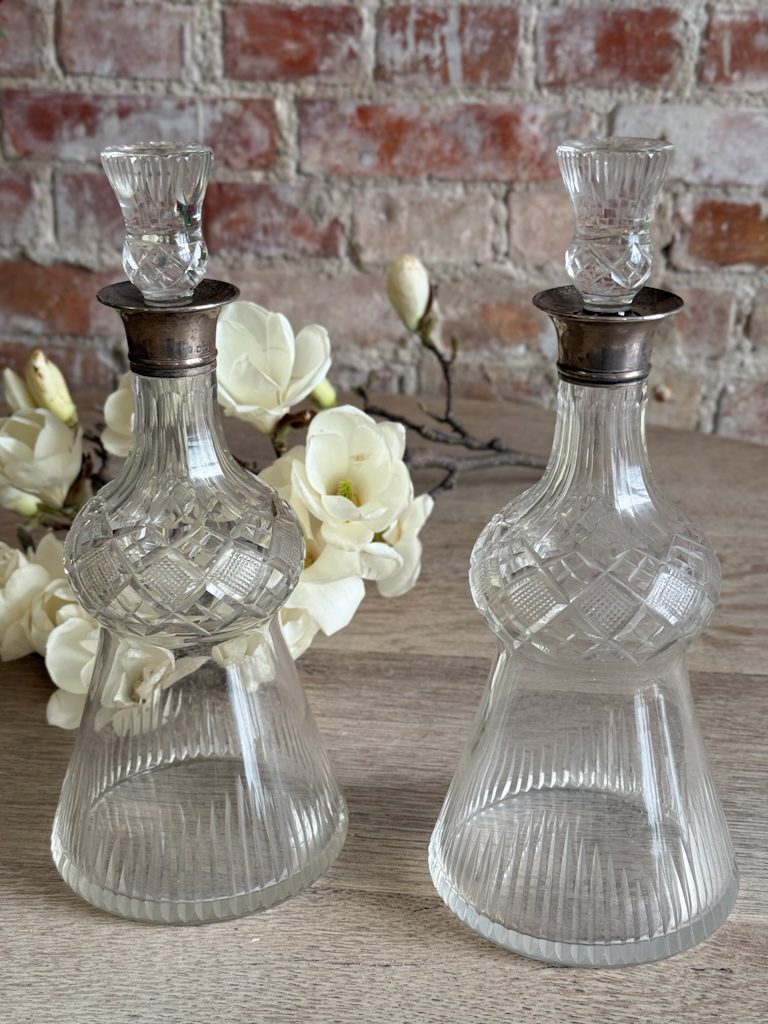
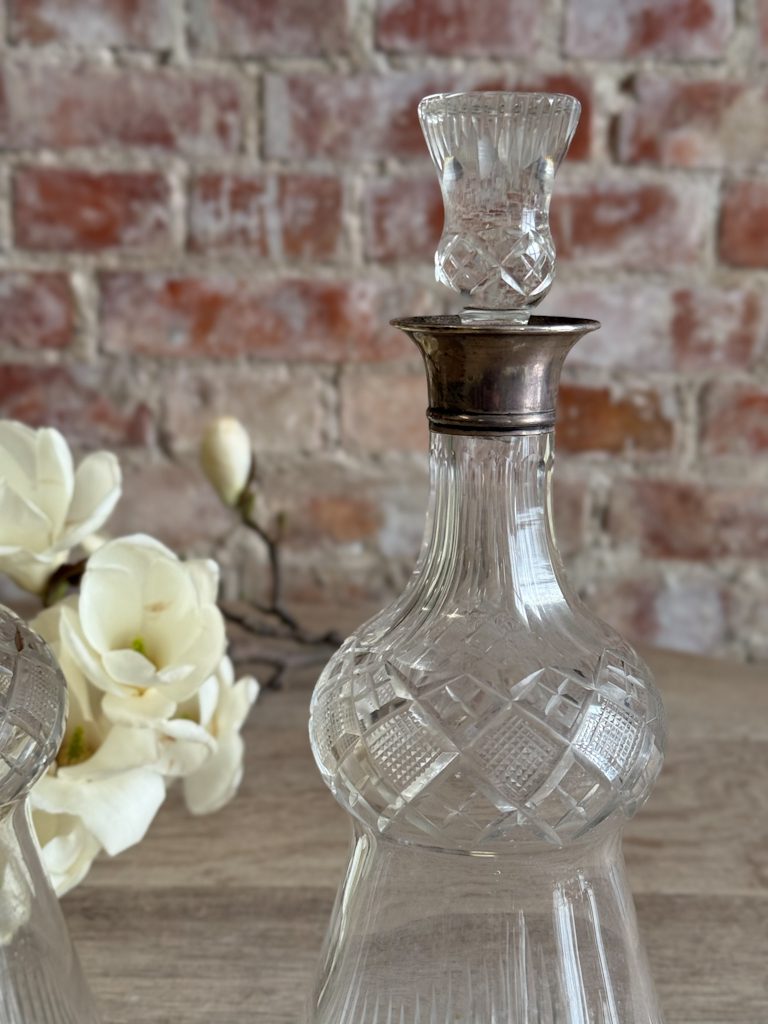
Crystal Decanter with Silver, 2 Available (5645)
Height 30 cm Width 13 cm
Description
Price per 1 pc.
Dimensions: height 30 cm, width 13 cm. (Please note: 2 identical decanters are available. The price is for 1 pc.)
Antique cut crystal decanter with silver collar
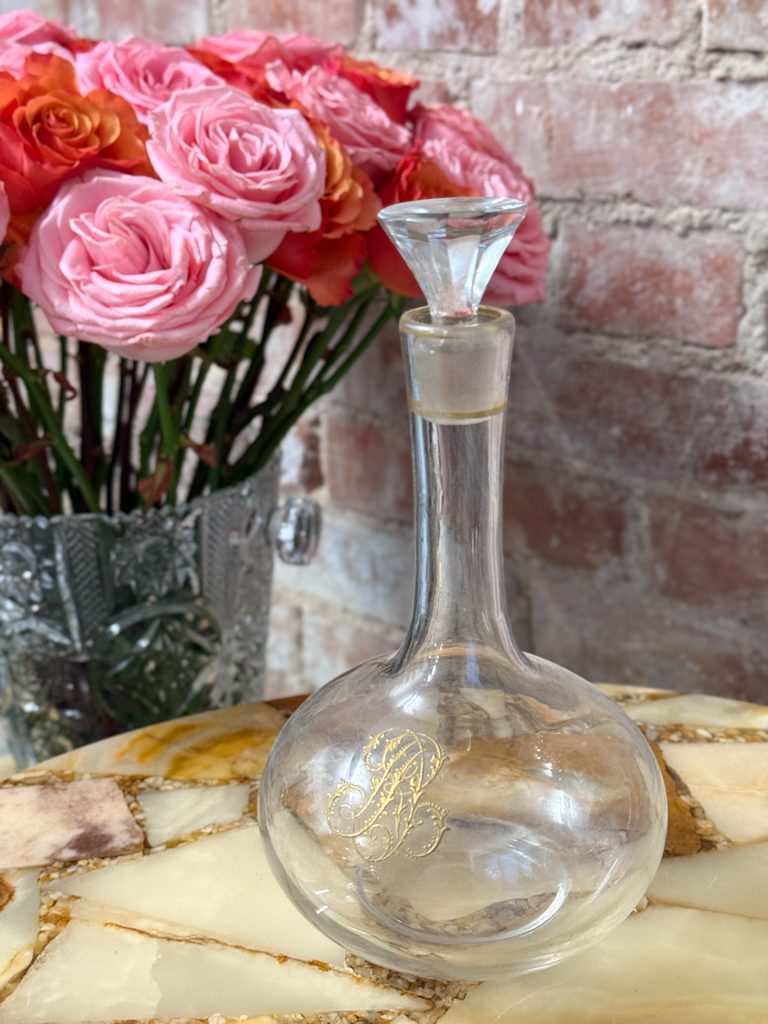
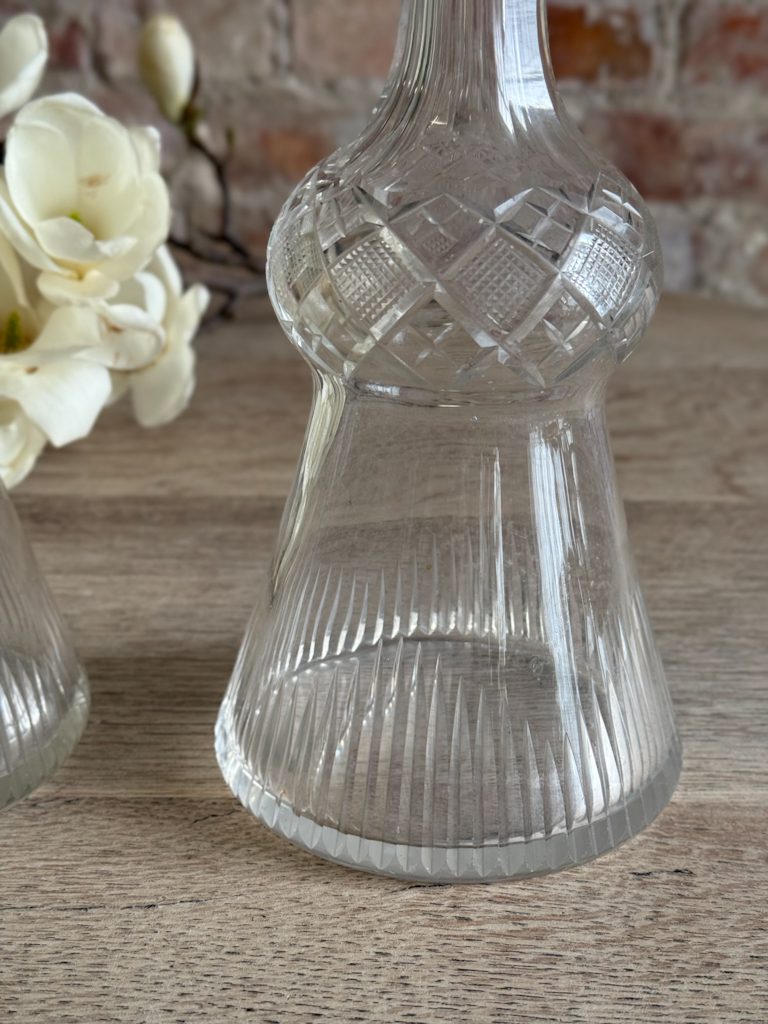
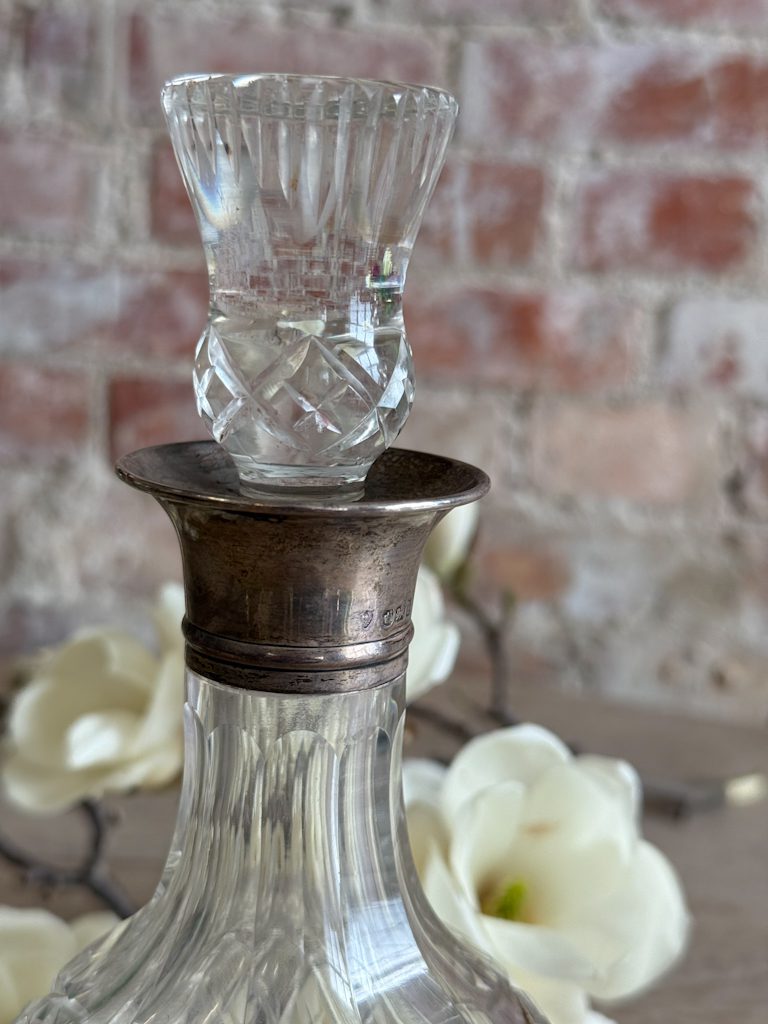
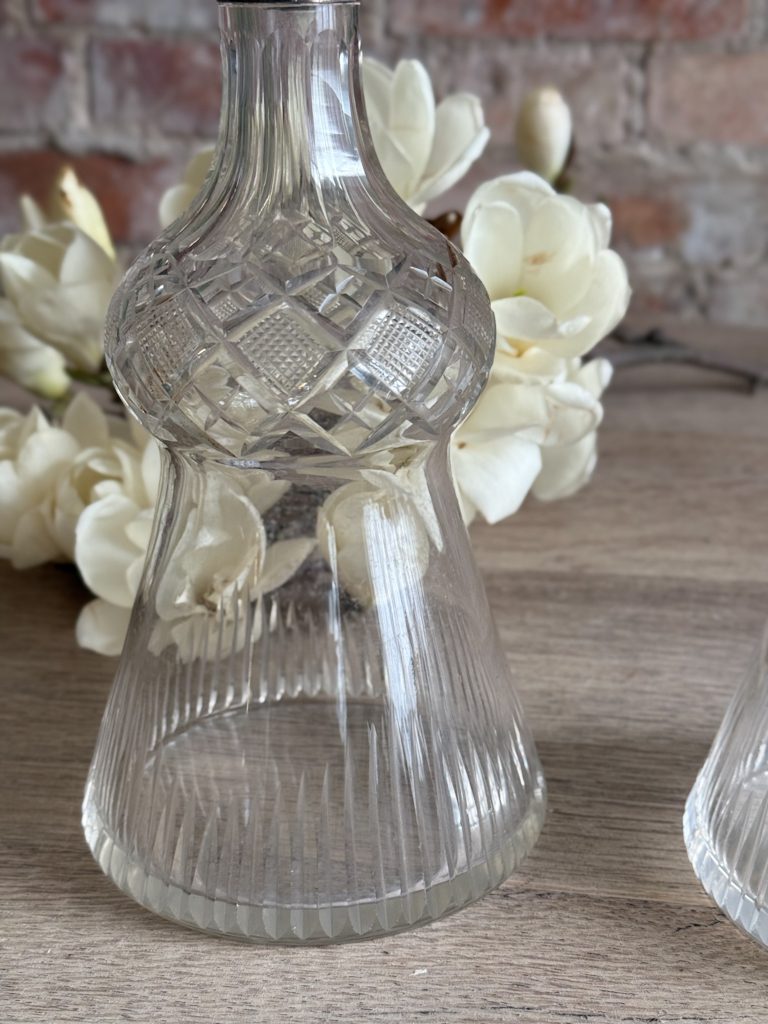
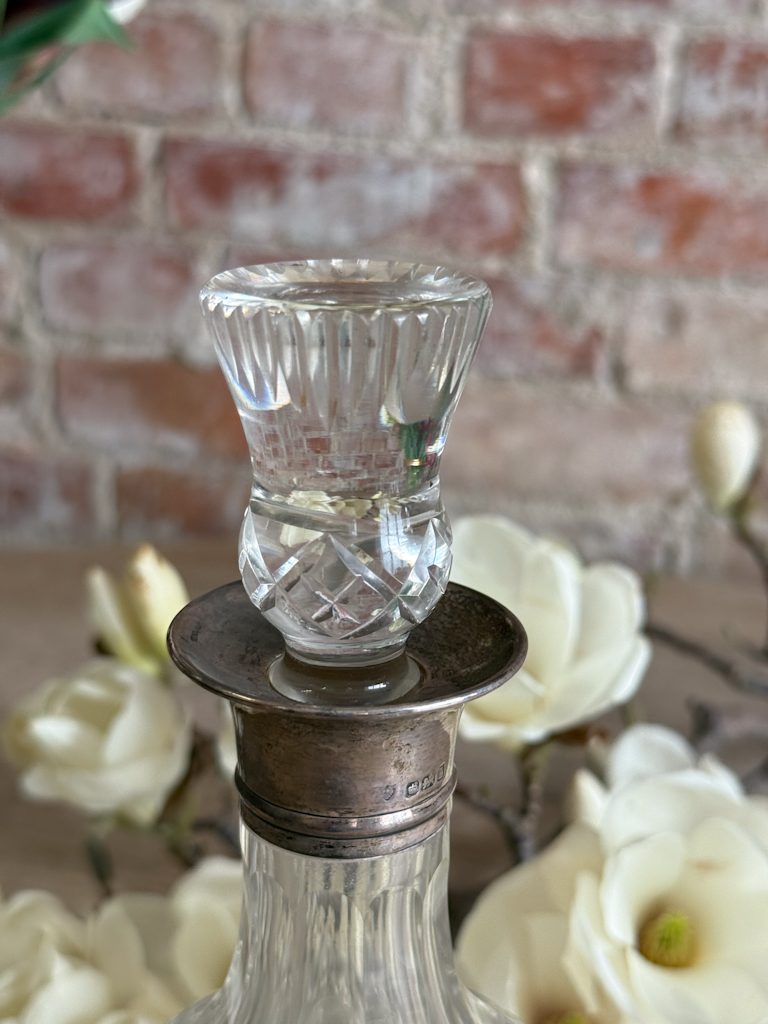
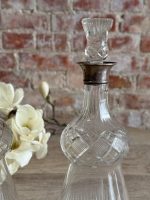
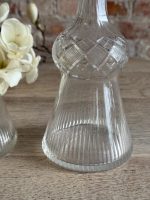
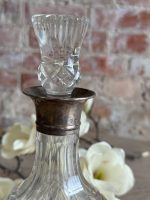
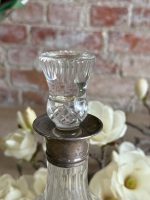
This massive and extremely elegant crystal decanter is an excellent example of classic British glass and silversmithing. The vessel has a very stable, bell-shaped (or influenced by a ship’s decanter) form with a wide base decorated with classic vertical fluting. The upper part transitions into a bulbous section with intricate, three-dimensional diamond cutting that wonderfully captures and refracts light. The design is crowned by a smooth, solid silver collar and a heavy, faceted crystal stopper.
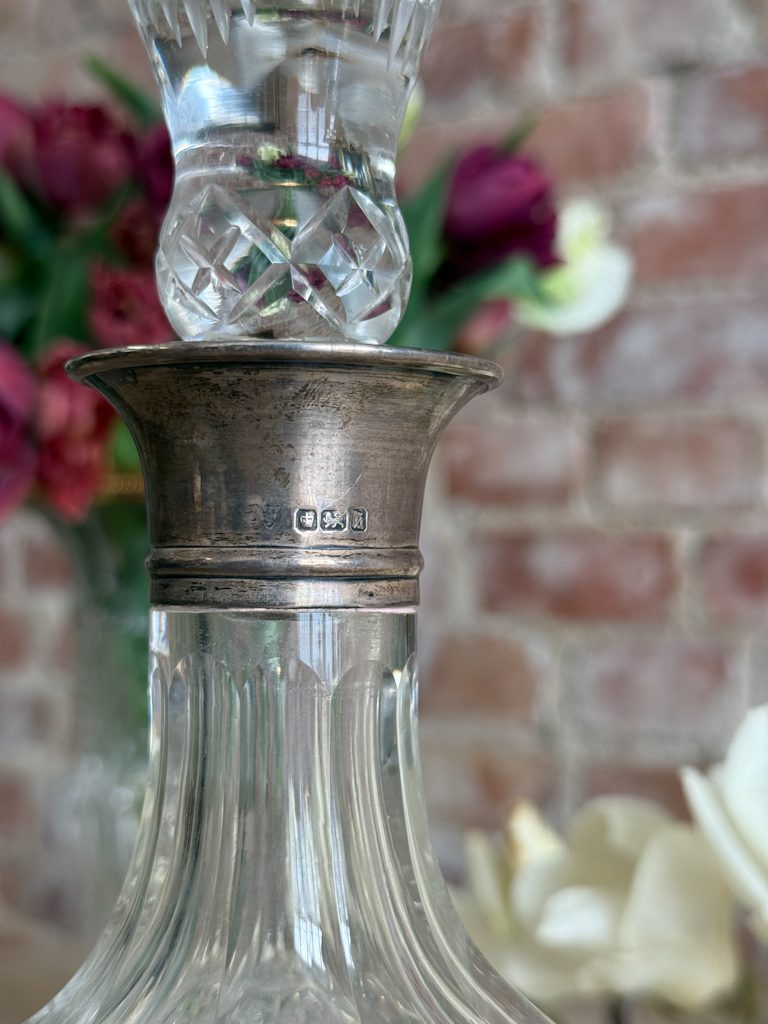
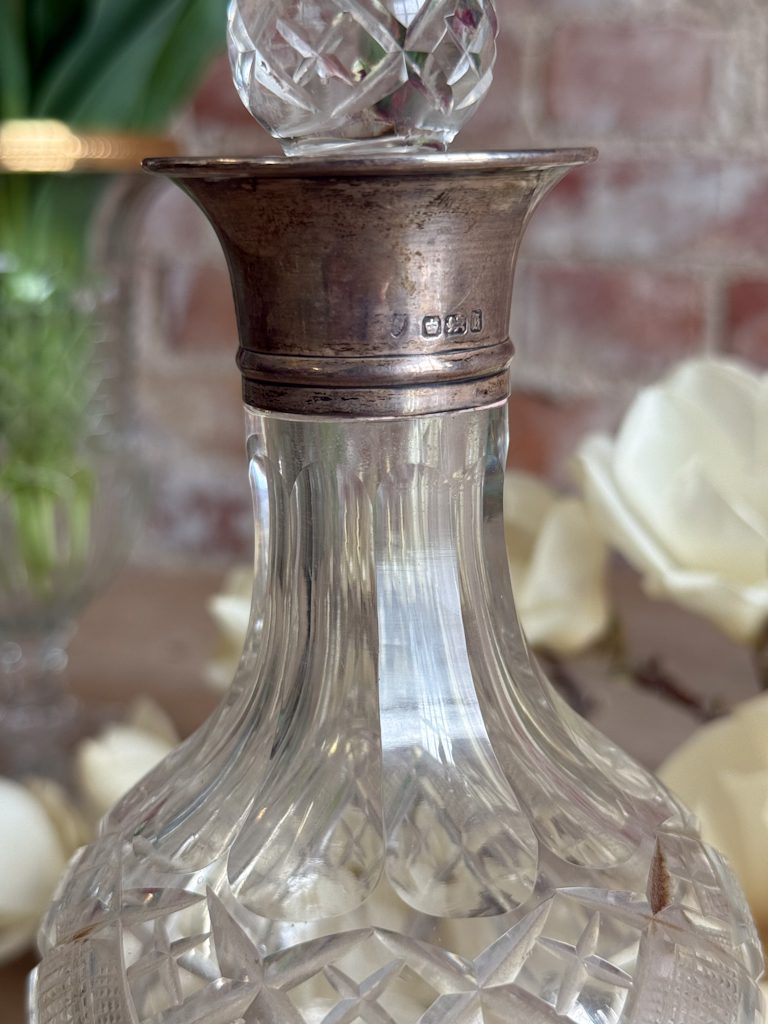
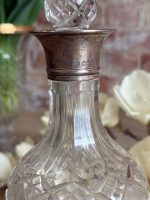
Manufacturer, Hallmarks, and History The silver collar bears clearly legible historical hallmarks, providing absolute assurance of the item’s authenticity and provenance. Among them are visible the Lion Passant, attesting to high-quality Sterling (.925) silver, and the anchor, indicating the Birmingham assay office. For centuries, Birmingham was the capital of silversmithing for Great Britain and much of Europe. The crystal decanter body itself most likely comes from renowned crystal manufacturers such as Thomas Webb or Stuart Crystal, who traditionally supplied high-grade crystal blanks to which silversmiths then affixed the precious metal mounts.
-
Date Letter “m”: The lowercase letter “m” in its specific shield shape (with a straight bottom edge and slightly rounded top corners) within the London assay office system corresponds precisely to the year 1907.
-
Leopard’s Head (uncrowned): Indicates the London assay office. The uncrowned leopard’s head has been used for all items hallmarked in London since 1822.
-
Lion Passant: This symbol (a lion passant to the left) is the standard hallmark certifying high-quality 925 or Sterling silver.
-
Maker’s Mark: The hallmark on the left is slightly worn over time. However, in one of the images, within a rectangular cartouche on the right, the letter “G” is clearly visible. The first letter appears to be “J”. Considering the nature of the item—high-quality cut glass and silver-mounted decanters produced in London in 1907—the most probable manufacturer is John Grinsell & Sons (whose marks often contain the initials “JG”). They were highly regarded and specialized precisely in the production of such silver-mounted glass items.
Overall, these are exquisite and authentic examples of early 20th-century (Edwardian era) British decorative arts.
Period and Stylistic Influence Judging by the silver hallmarks and design, this decanter dates to the early 20th century—the Edwardian era (circa 1901–1910). Unlike the heavy and cluttered Victorian period, the Edwardian era is characterized by a return to more restrained, classical, and airy elegance. The combination of clear crystal and smooth silver embodies an aristocratic simplicity that perfectly suited the refined gentlemen’s clubs and dining rooms of the time.
Rarity and Demand in the Antique World In the antique market, massive cut crystal decanters with genuine silver collars are always highly valued and sought after for classic interiors. Most often, the original stoppers are lost or broken over time, or the silver collars are damaged. Finding a perfectly preserved specimen is a great find, but the fact that a matching pair of these decanters is available is a remarkable rarity! Due to the symmetry they provide, pairs of decanters are particularly sought after by collectors to adorn luxury bar carts or festive tables.
Condition The decanter is in excellent antique condition. The crystal is clear, heavy, and free from cracks or significant scratches. The original silver collar has acquired a beautiful, age-appropriate natural patina, while the hallmarks remain perfectly preserved and sharp.