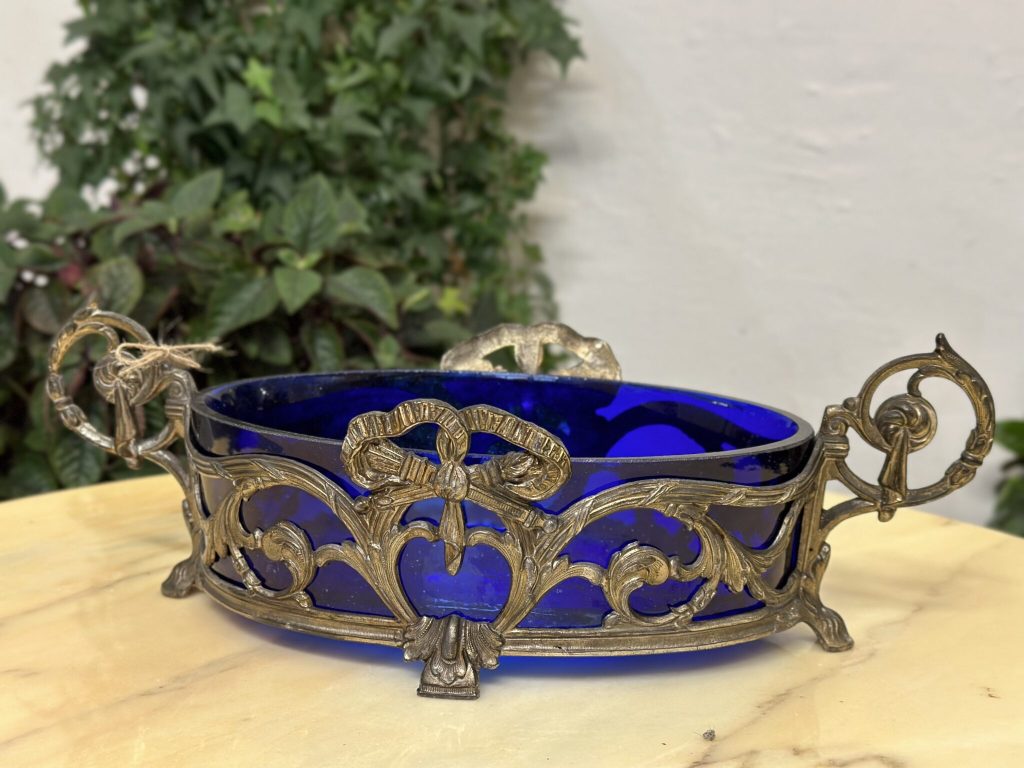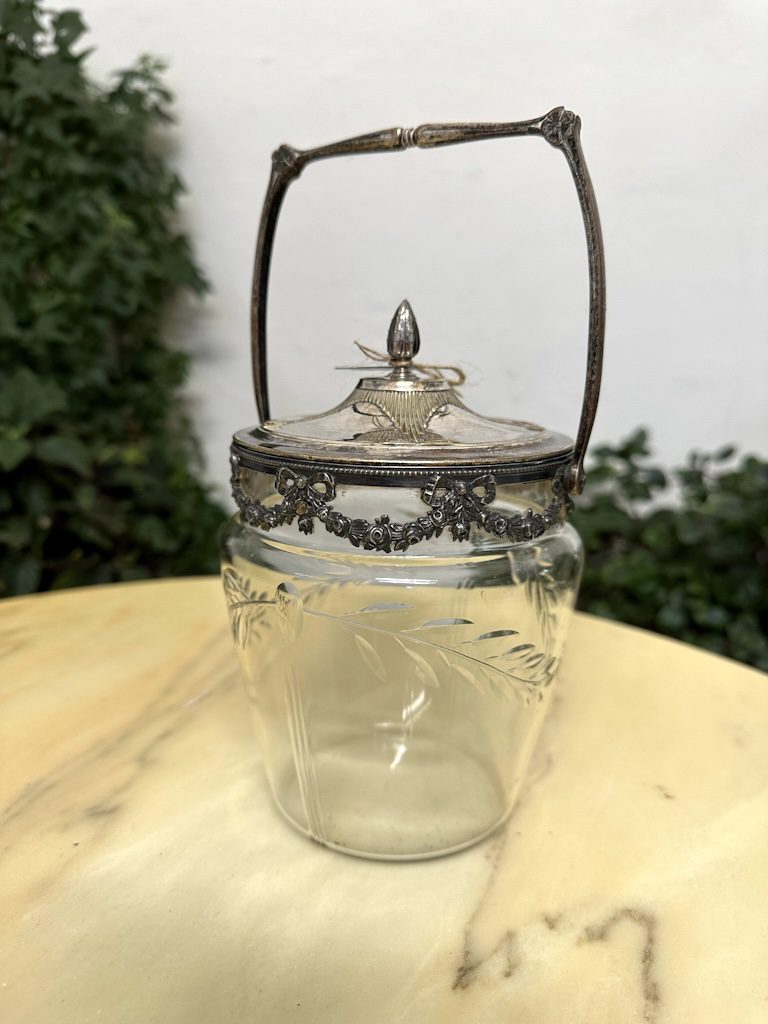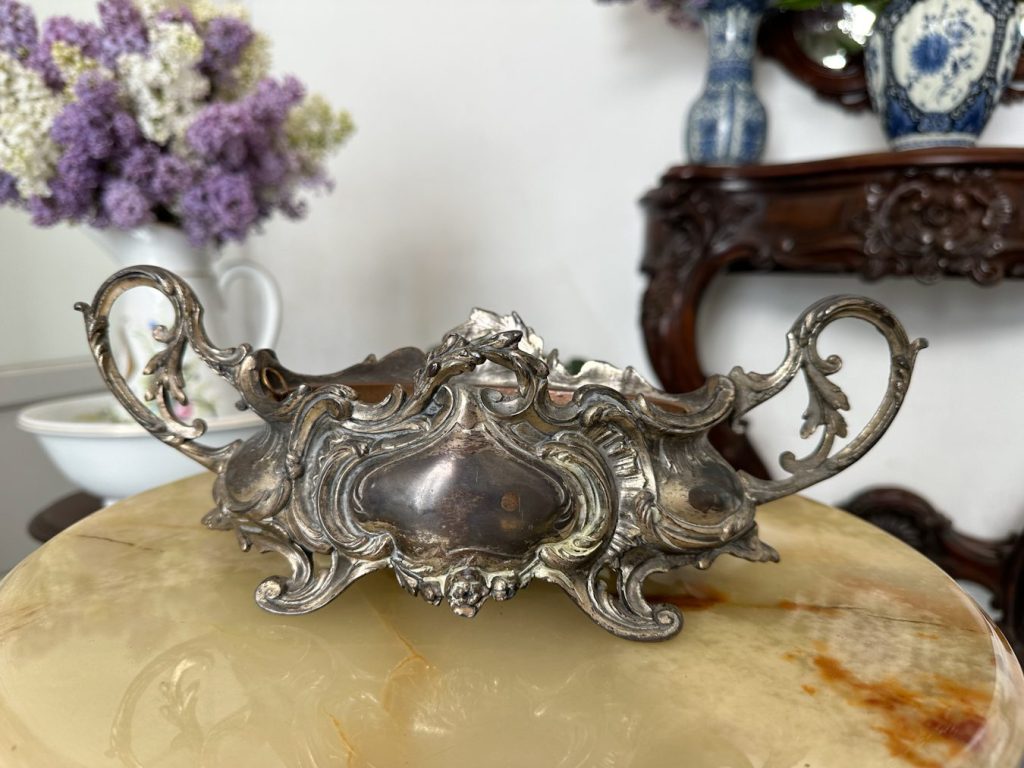
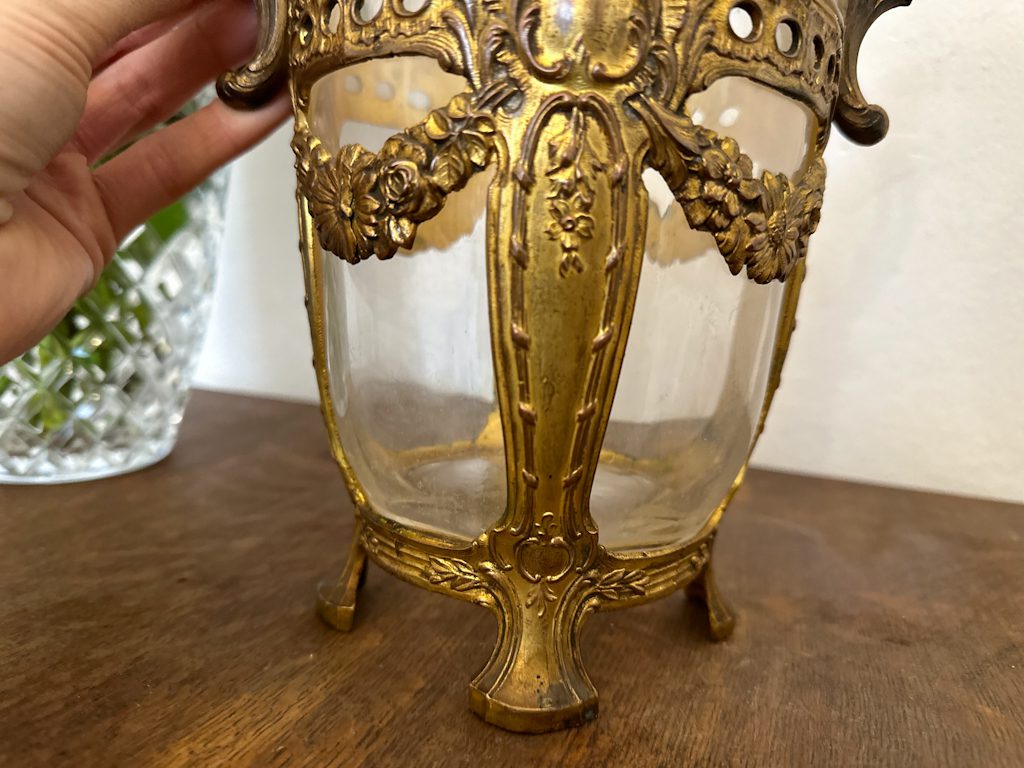
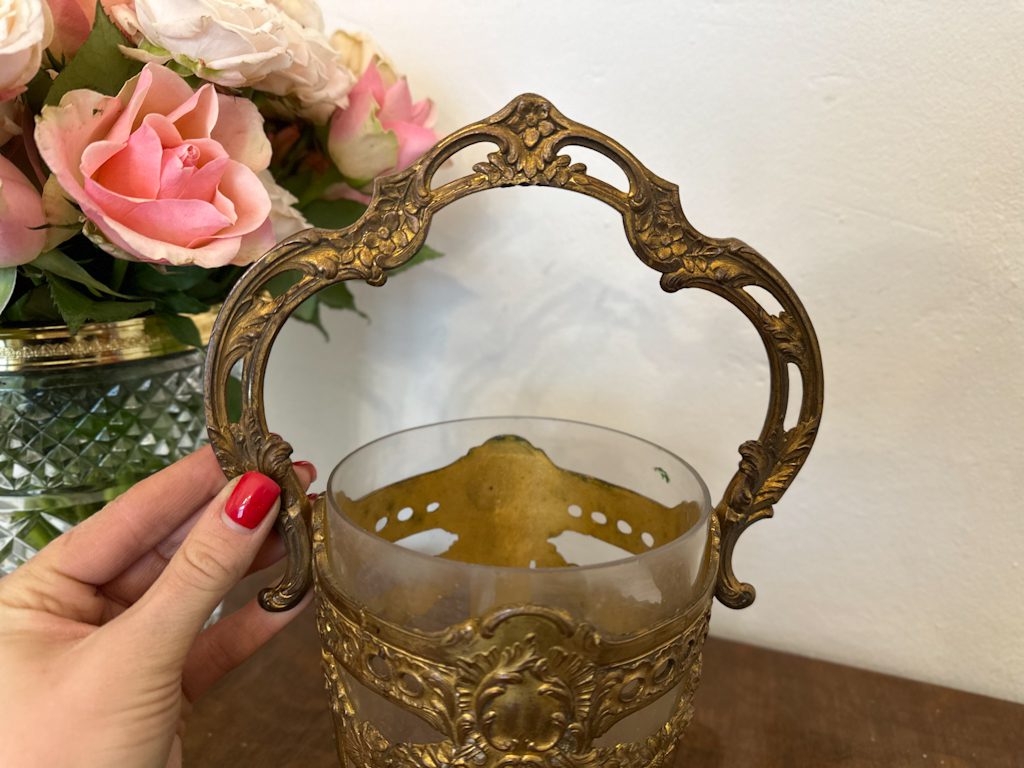
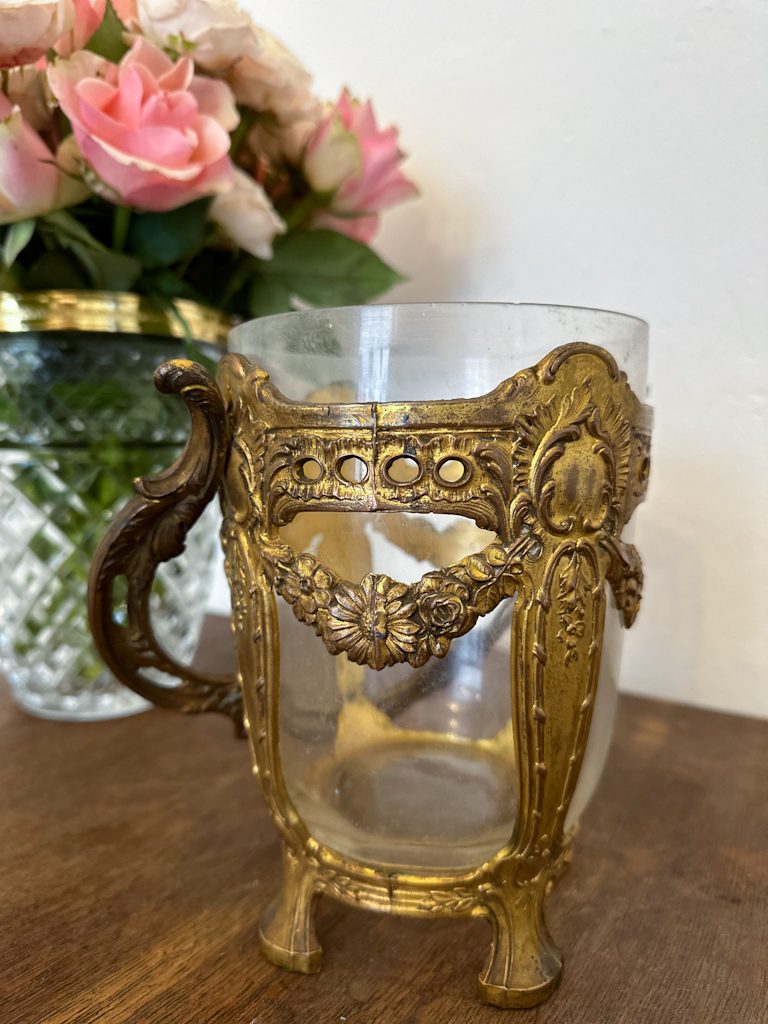
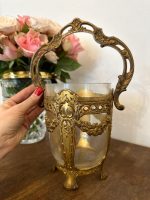
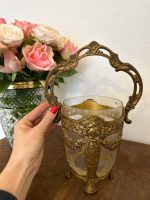
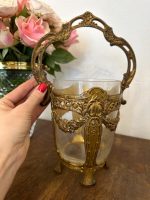
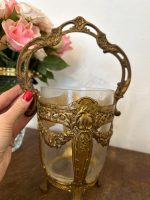
An exquisite and sculpturally detailed late 19th-century glass bonbonniere or sauce boat in an ornate, cast brass holder (antique glass bonbonniere brass frame with handle) with a high, arched handle and floral garland reliefs (4564). 280,00 €
You’re now subscribed to price tracking for this product. We’ll notify you if the price drops. 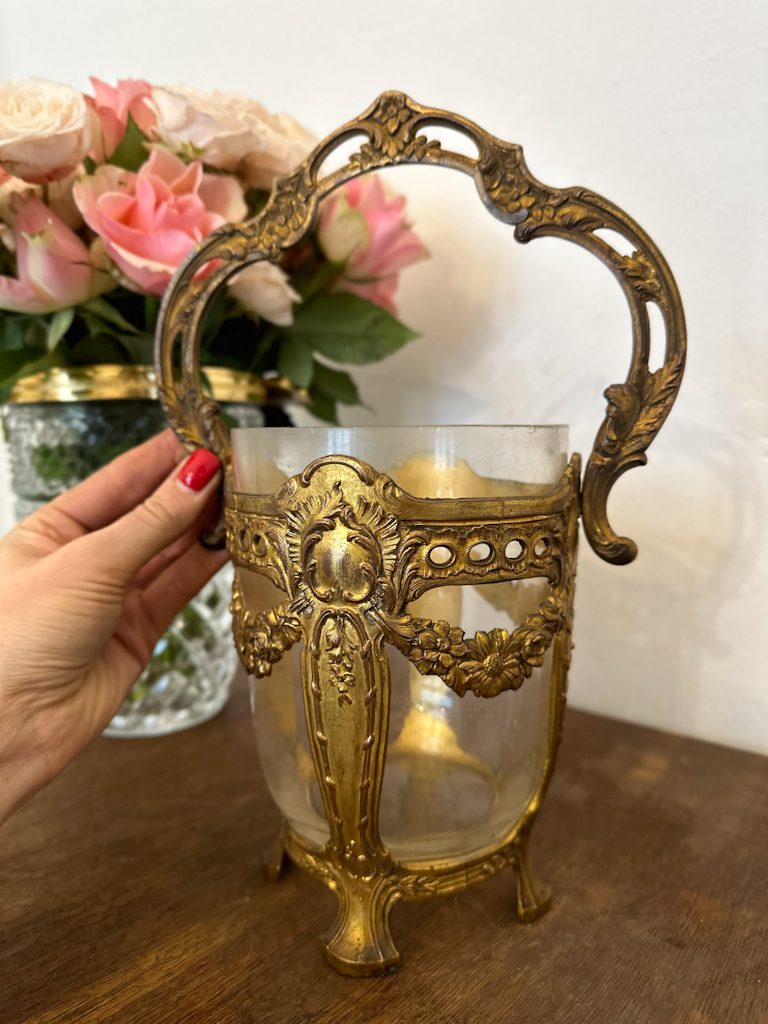
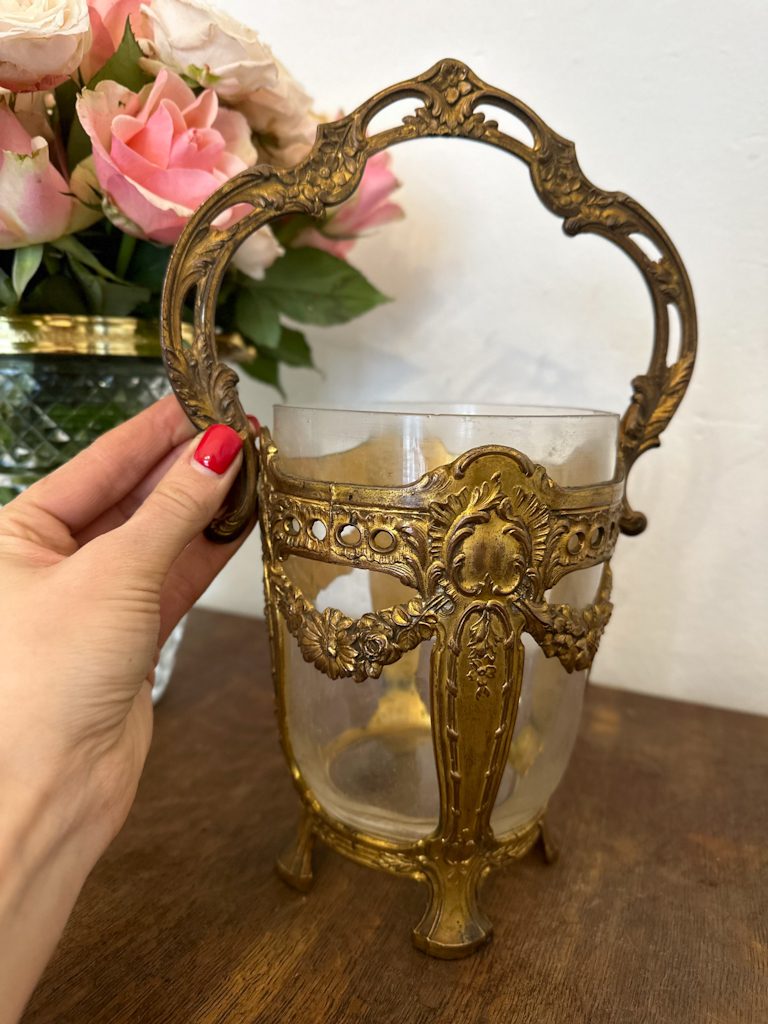
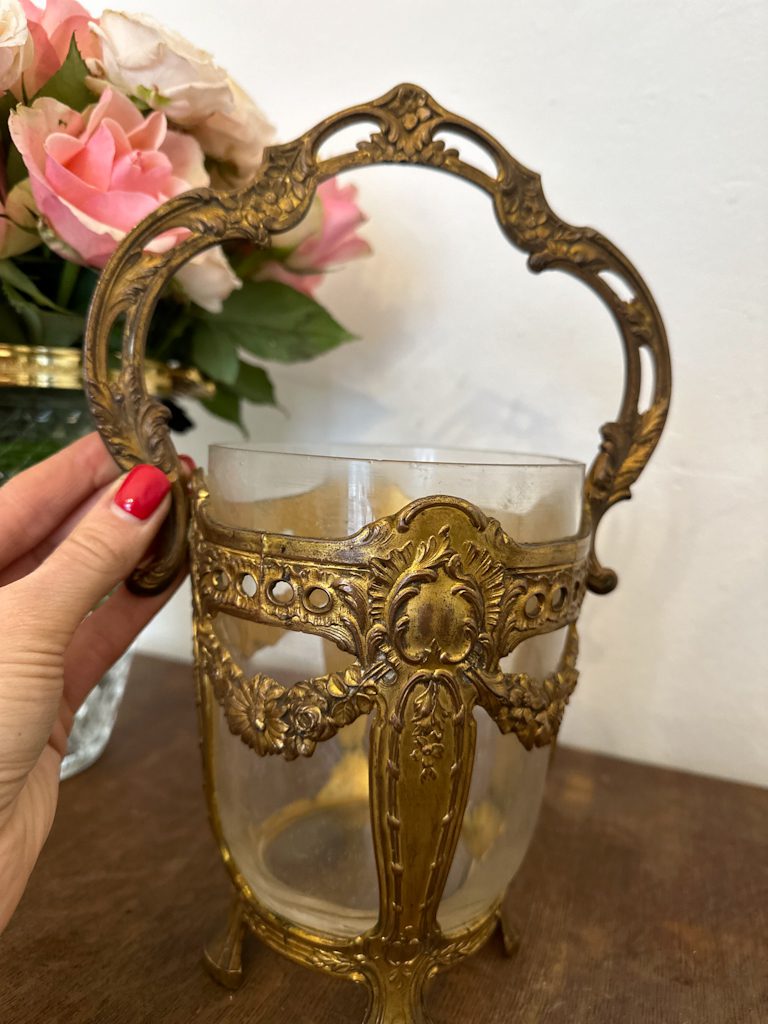
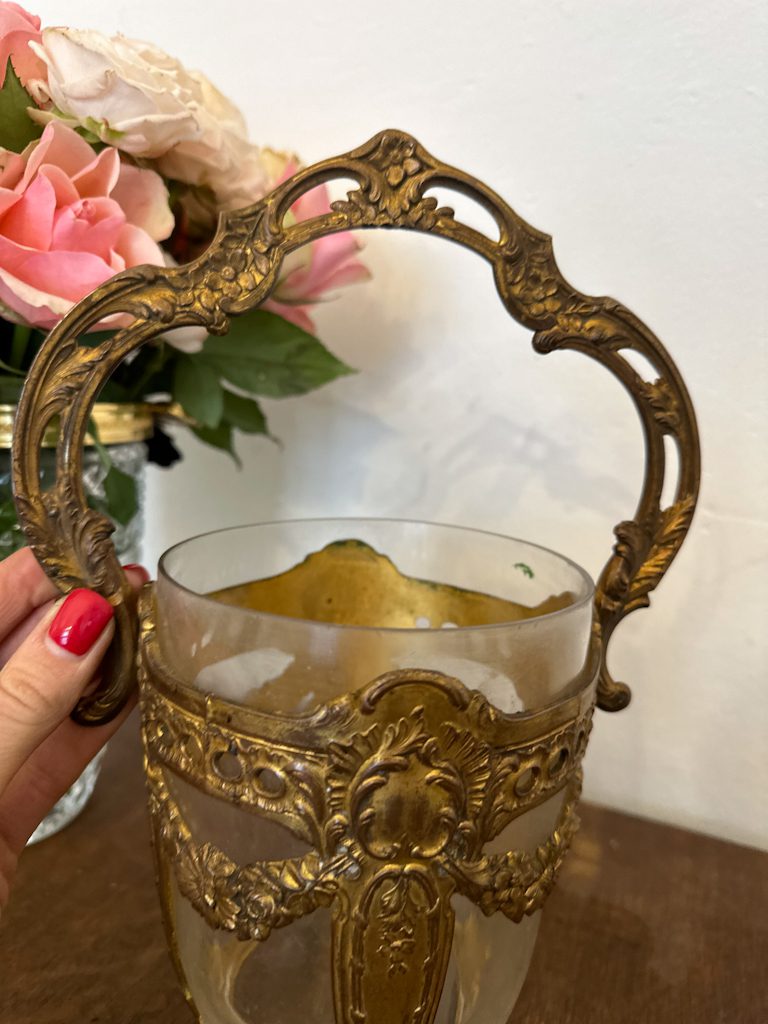
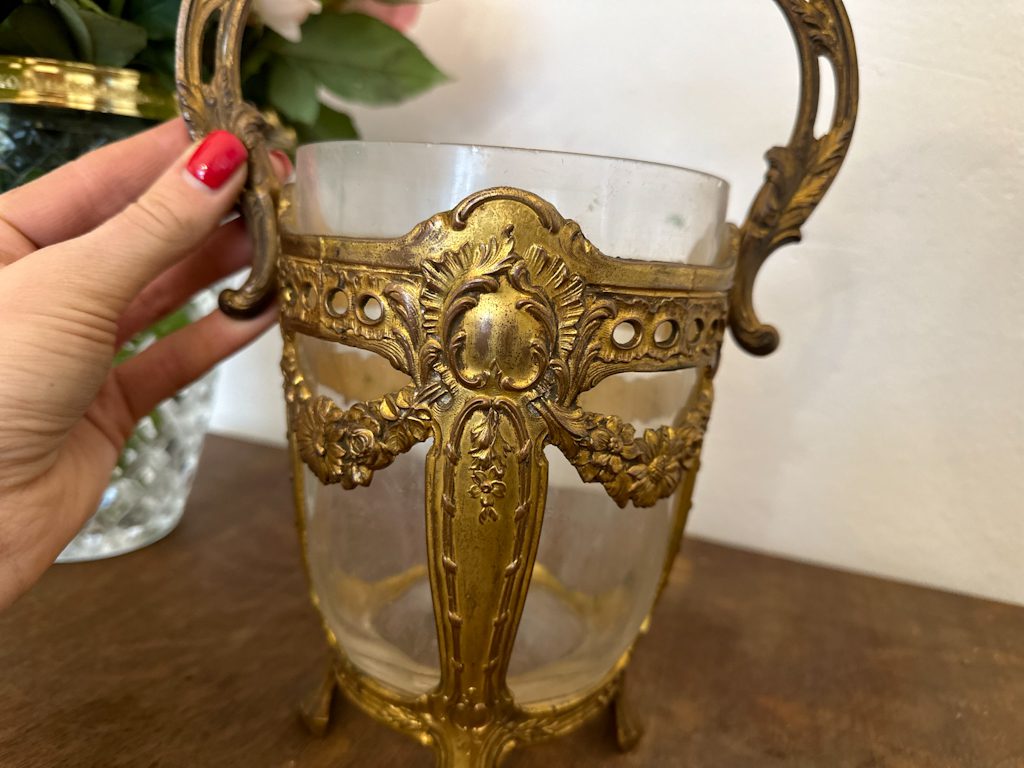
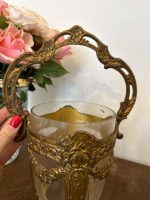
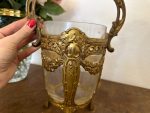
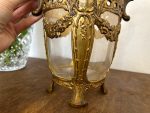
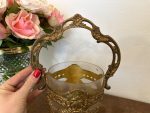
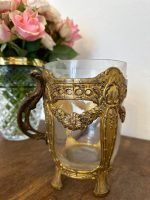
Antique Glass Bonbonniere in Ornate Brass Frame with Handle — Historicism Style (antique glass bonbonniere brass frame with handle) (4564)
Height 18 cm Width 13 cm Color GoldPink
Description
Dimensions: Dish height — 18 cm Height with handle raised — 29.5 cm Width — 13 cm
Antique Glass Bonbonniere in Decorative Brass Frame with Handle
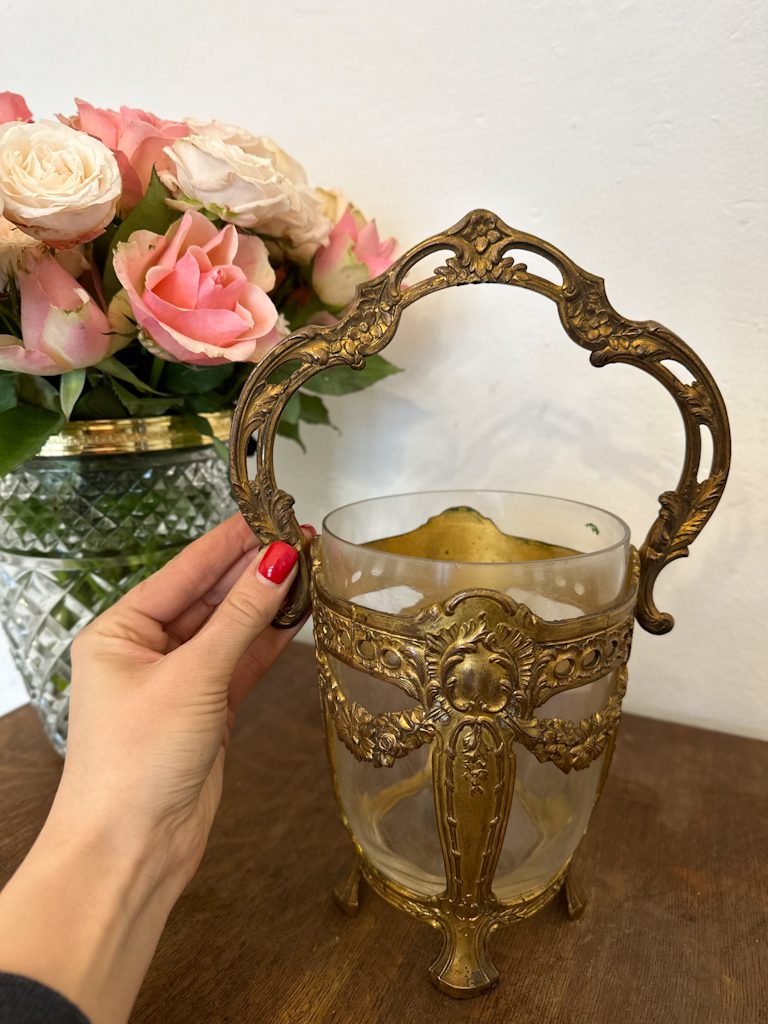
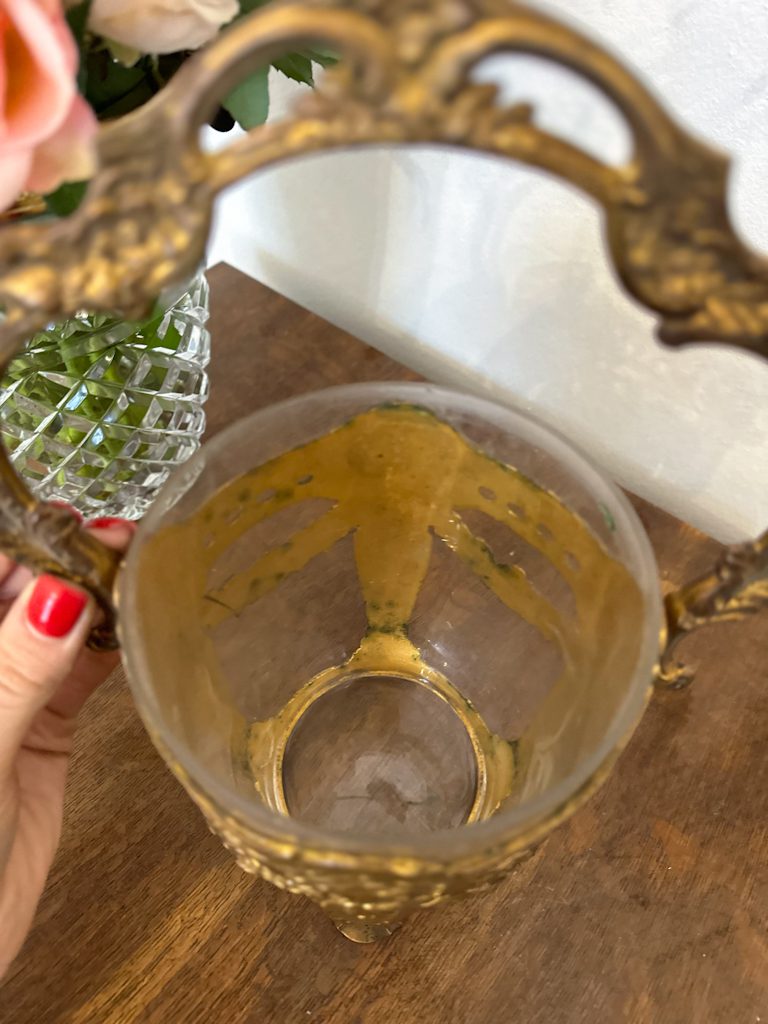
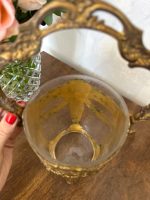
An artistically valuable, small-sized, and expressively ornate European table culture object from the second half of the 19th century – a cylindrical glass bonbonniere or sweet dish in a decorative frame (antique glass bonbonniere brass frame with handle). The set is based on a removable, thick, and clear colorless glass dish with a smooth surface and a ground upper rim. The glass body is placed in a finely crafted, cast and gilded brass (or bronze) holder, adorned with magnificent Historicism and Neo-Rococo style decorative elements. The upper band of the frame consists of a rhythmic openwork oval belt, below which dense floral bud and leaf garlands, as well as classical medallions, stand out in relief. The dish is crowned by a high, sculptural, and curved arched handle with a fluted profile and acanthus leaf motifs at the base, ensuring comfortable and stable carrying of the item. The entire construction is supported by four integrated, stylized legs with a graceful, expanded profile curve.
Craftsmanship & Period Late 19th century, approximately 1880–1890. Historicism period, France or y.
Maker / Signature / Mark The dish represents the output of leading late 19th-century European art foundries and table silverware manufacturers specializing in the production of combined glass and metal luxury vessels. Specific master stamps or proofs on the metal frame ribs have not been preserved, which fully corresponds to the traditions of decorative brass casting of this period.
Rarity & Significance Bonbonnieres of this scale and sophistication, which have preserved their original, undamaged glass insert and a sturdy, undeformed metal structure with a high handle, are highly valued among collectors. The artistic value of the item lies in the elegant contrast of materials, where clear, light glass meets heavy, intricately crafted, and patinated metal.
Application & Interior Use The dish is fully functional and serves excellently as a bonbonniere for serving candies and fine sweets at festive occasions or daily. It also serves as an unusually noble and elegant decorative accent in a classical interior on a serving table, console, dining table center, or in a display cabinet, attracting attention with its historical charm.
Condition In excellent antique preservation. The clear glass insert is completely intact, without cracks, chips, or melting defects. The heavy brass frame, four legs, and high arched handle are completely firm, stable, and straight. The original, uneven historical patina and the gleam of gilding in the recesses have been preserved on the metal surface, which perfectly highlights the cast floral garland relief. The condition of the item is fully reflected in the photographs.
Victorian snapshot: The artist Vilhelms Purvītis sat at his studio table late in the evening, quietly and serenely humming a recently heard theatre melody. He rhythmically tapped his brush-like pencil on the edge of the table, gazing at the freshly completed sketch of a winter landscape, where the lines of snowdrifts slowly merged with the twilight haze. Right next to him, by the lit lamp, stood the small glass dish in its ornate brass frame – the poetess Aspazija had just left a few colorful bonbons in it, their sweet sparkle catching the warm light through the clear glass and the cast metal garland edges. Complete, laconic peace reigned in the room, and this substantial object, where delicate glass naturally combined with the weight of the gilded brass casting, instantly transformed an ordinary working night moment before mixing paints into a complete and noble ritual of beauty.