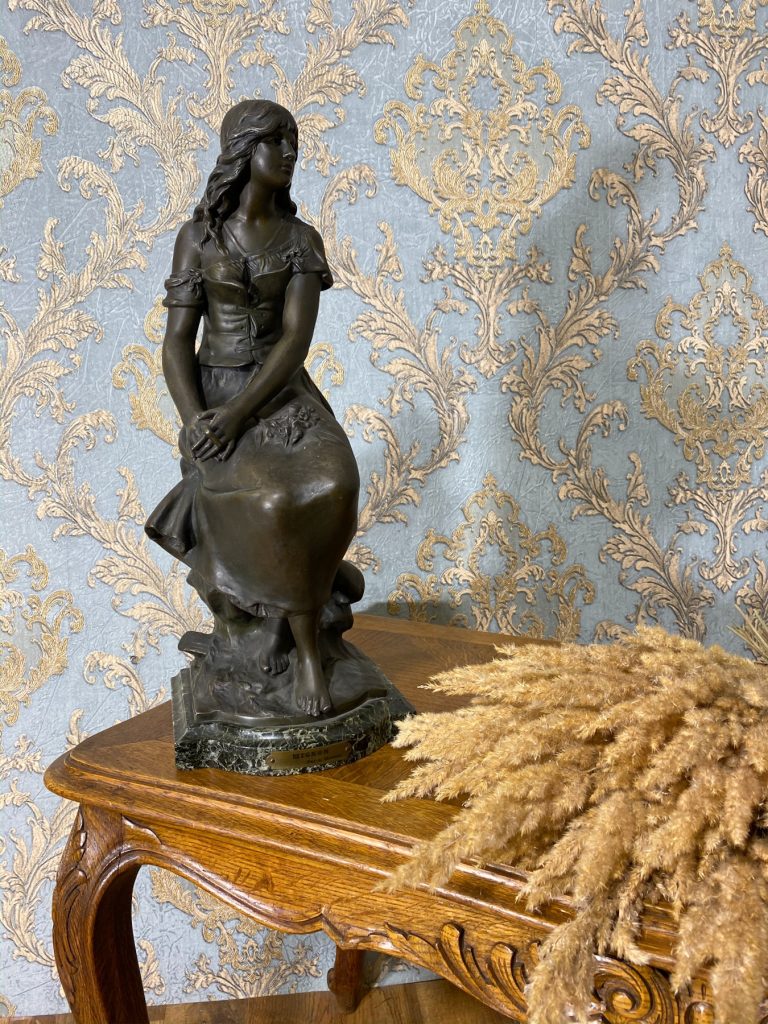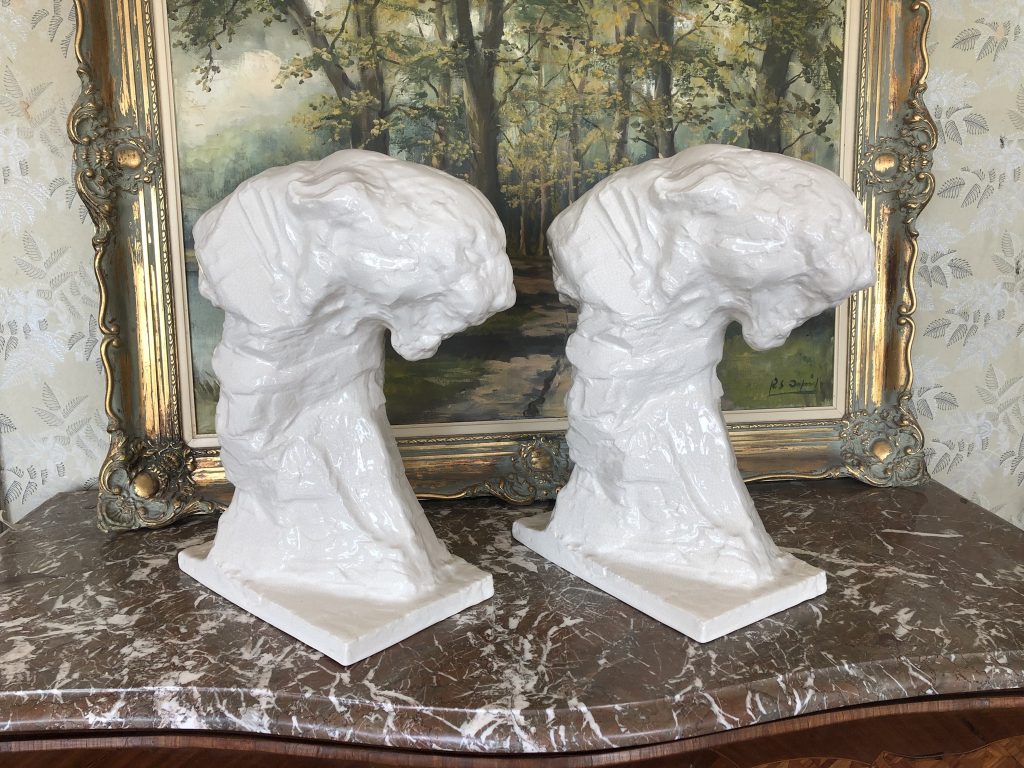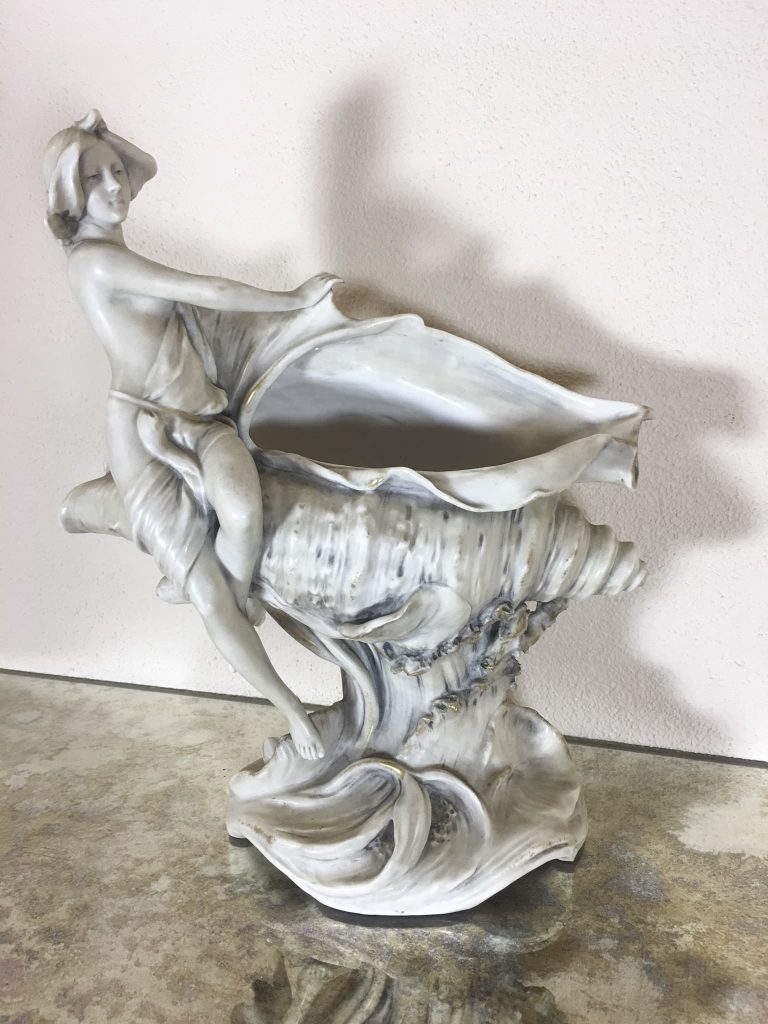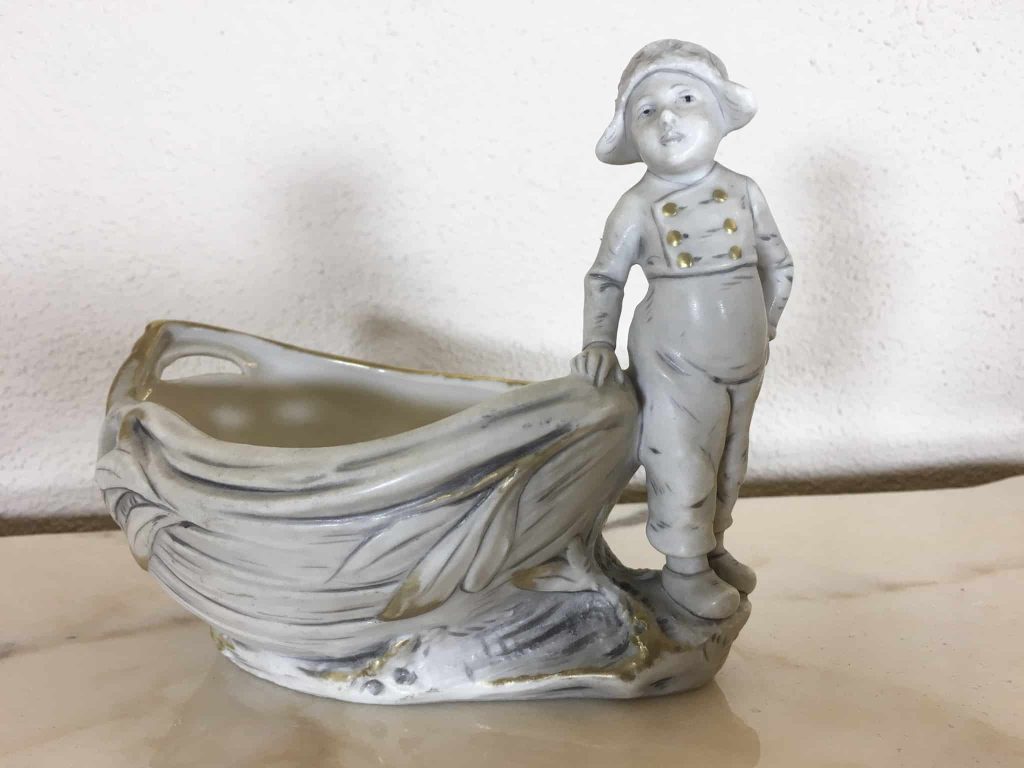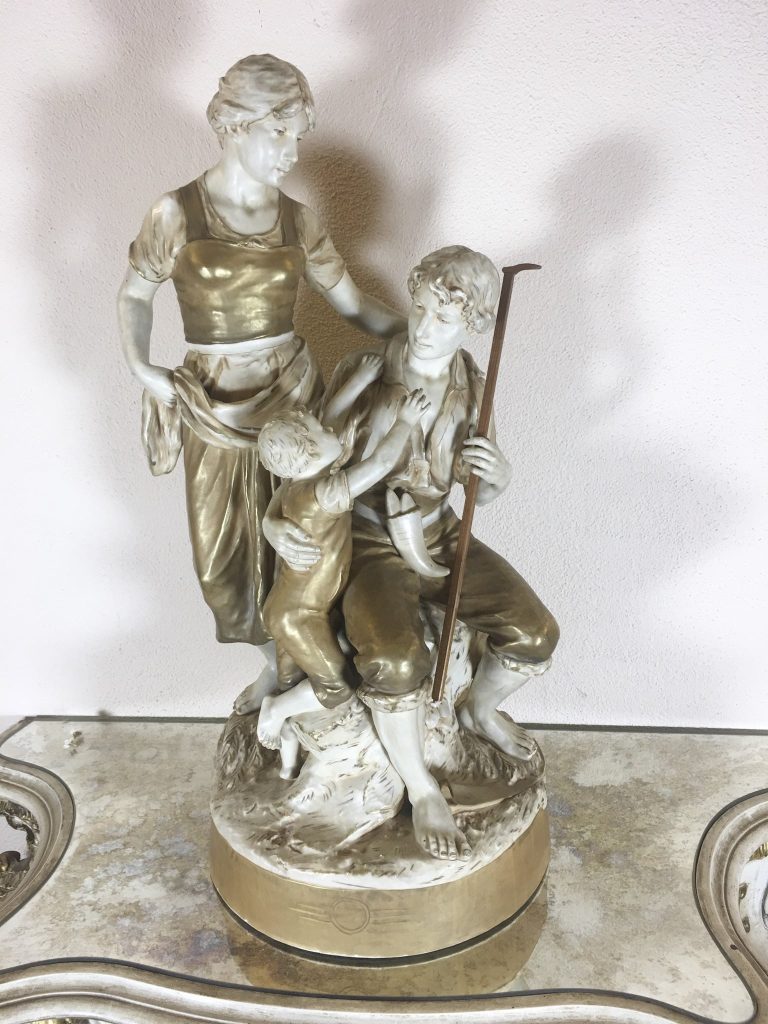
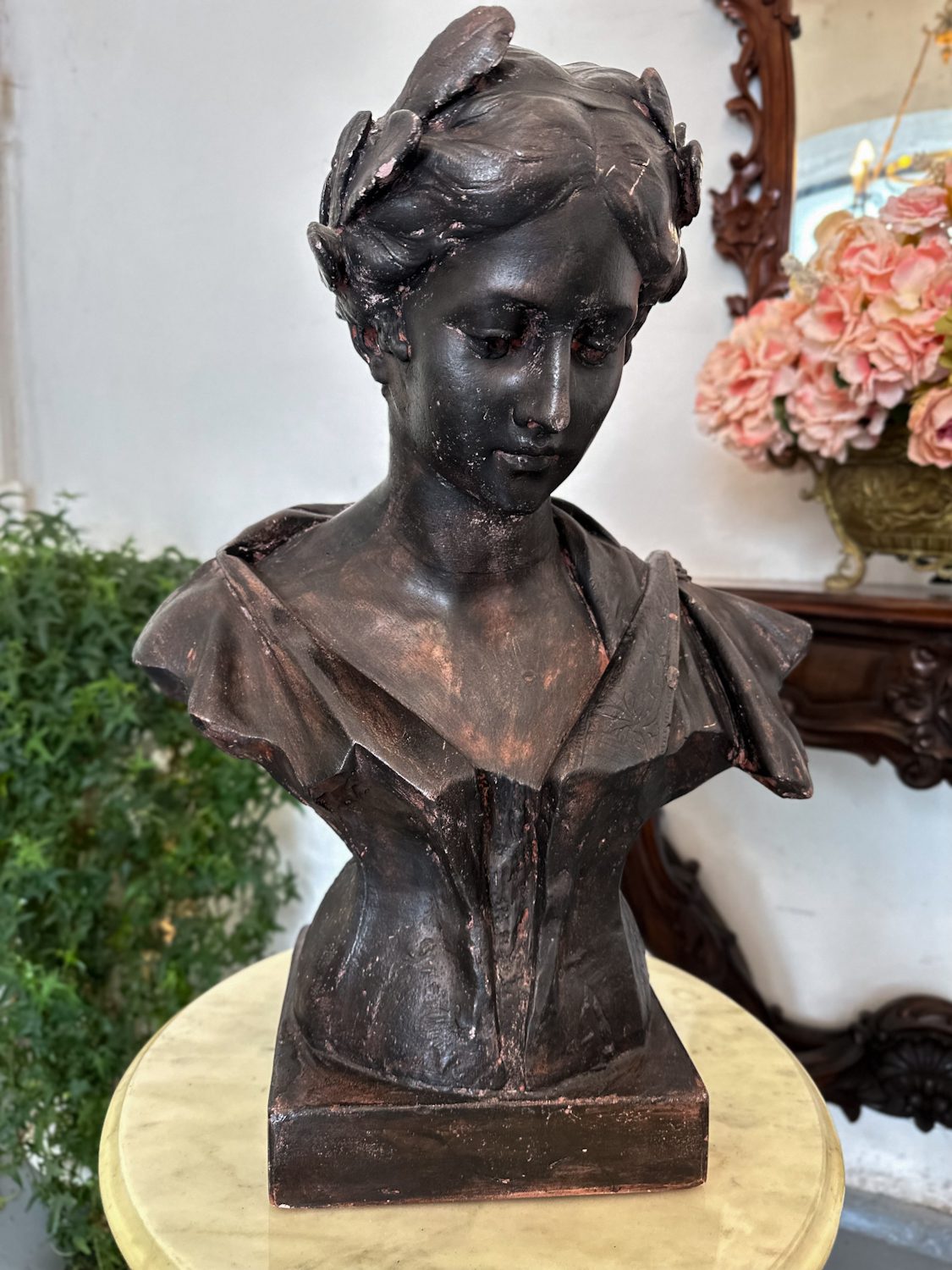
This medium-sized female bust with a laurel wreath represents a fascinating blend of Historism and Art Nouveau prelude, originating from France or Central Europe around 1880–1900. It captures the essence of a transitional period in art history. 350,00 €
You’re now subscribed to price tracking for this product. We’ll notify you if the price drops. 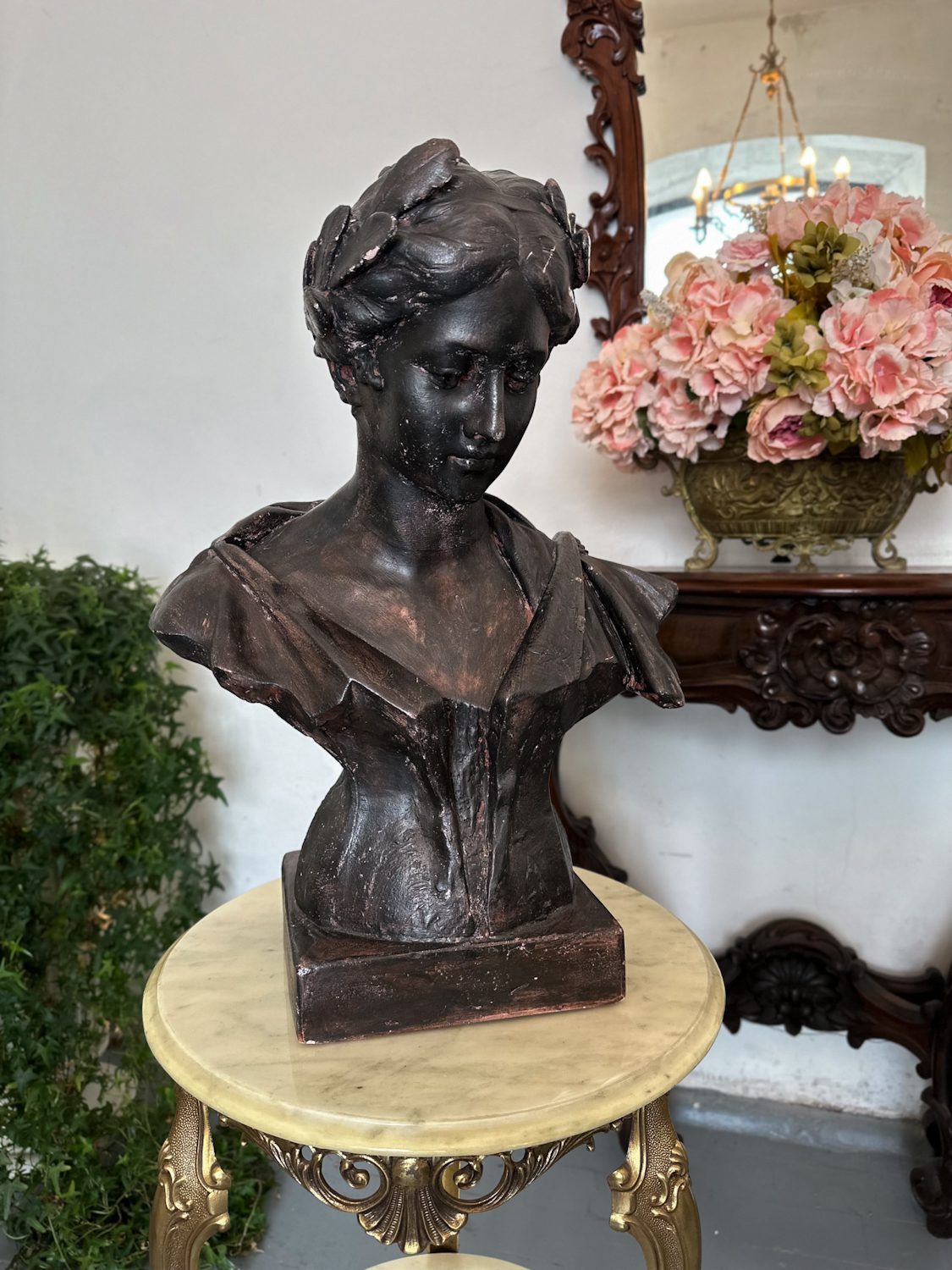
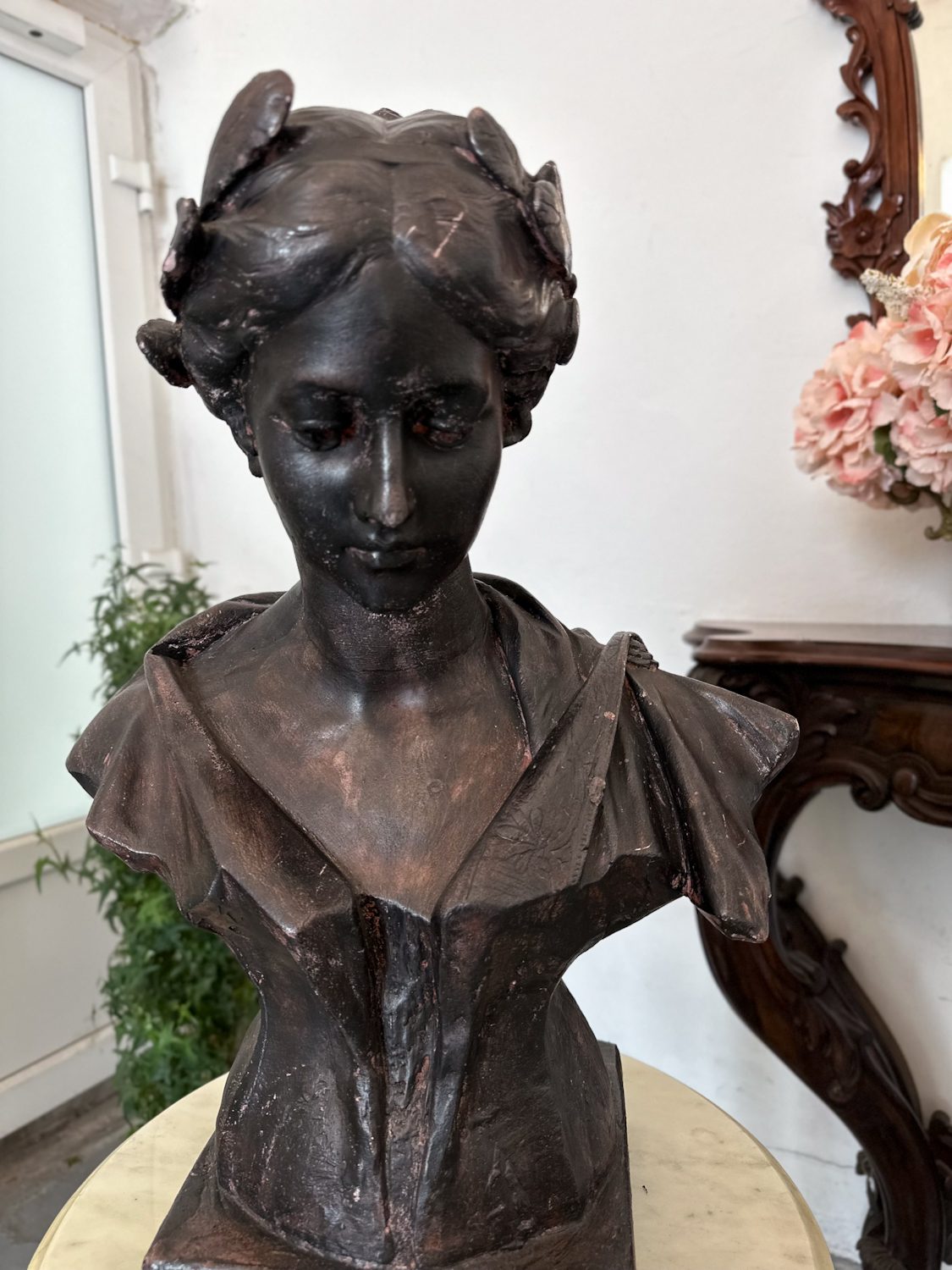
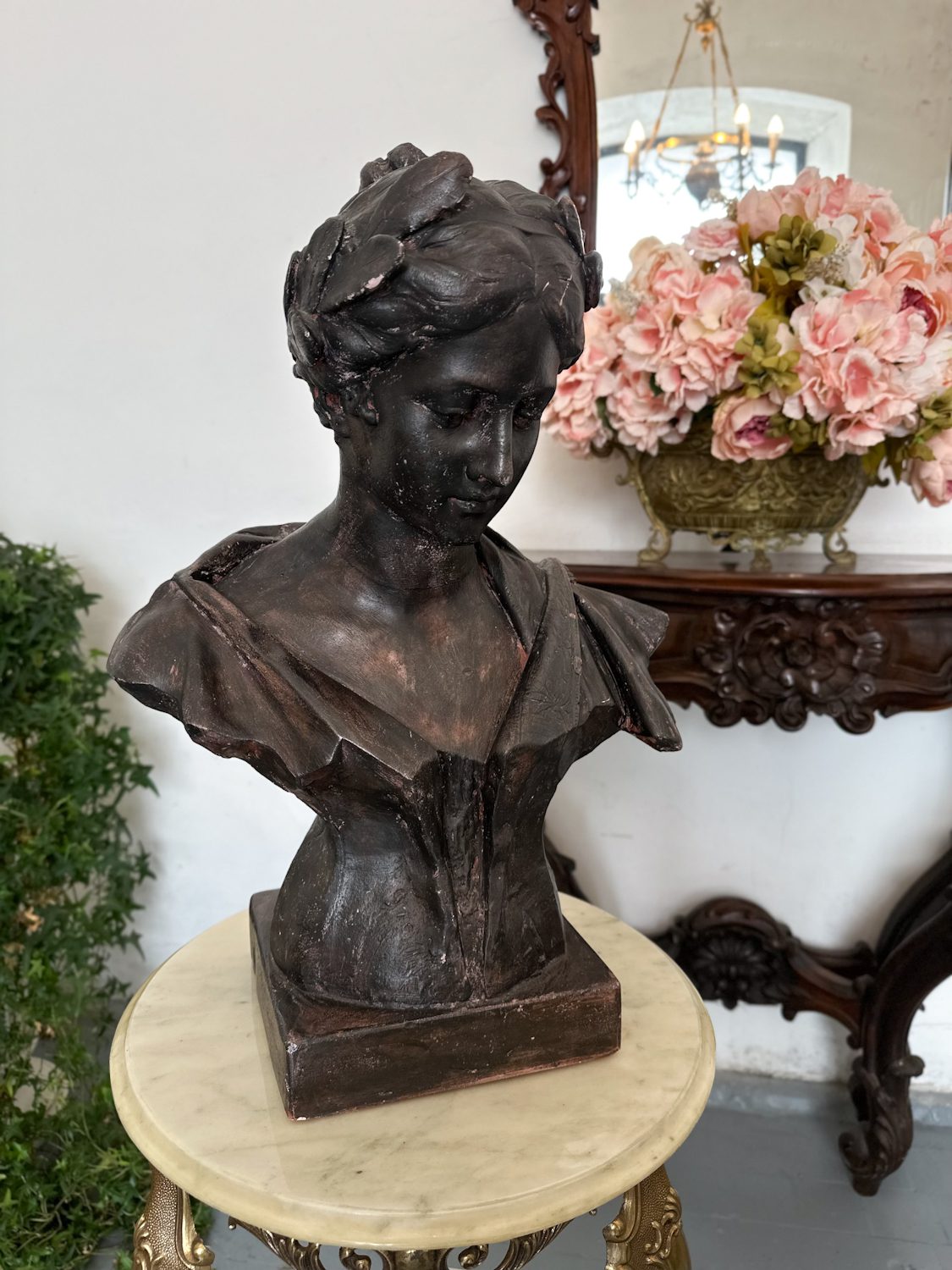
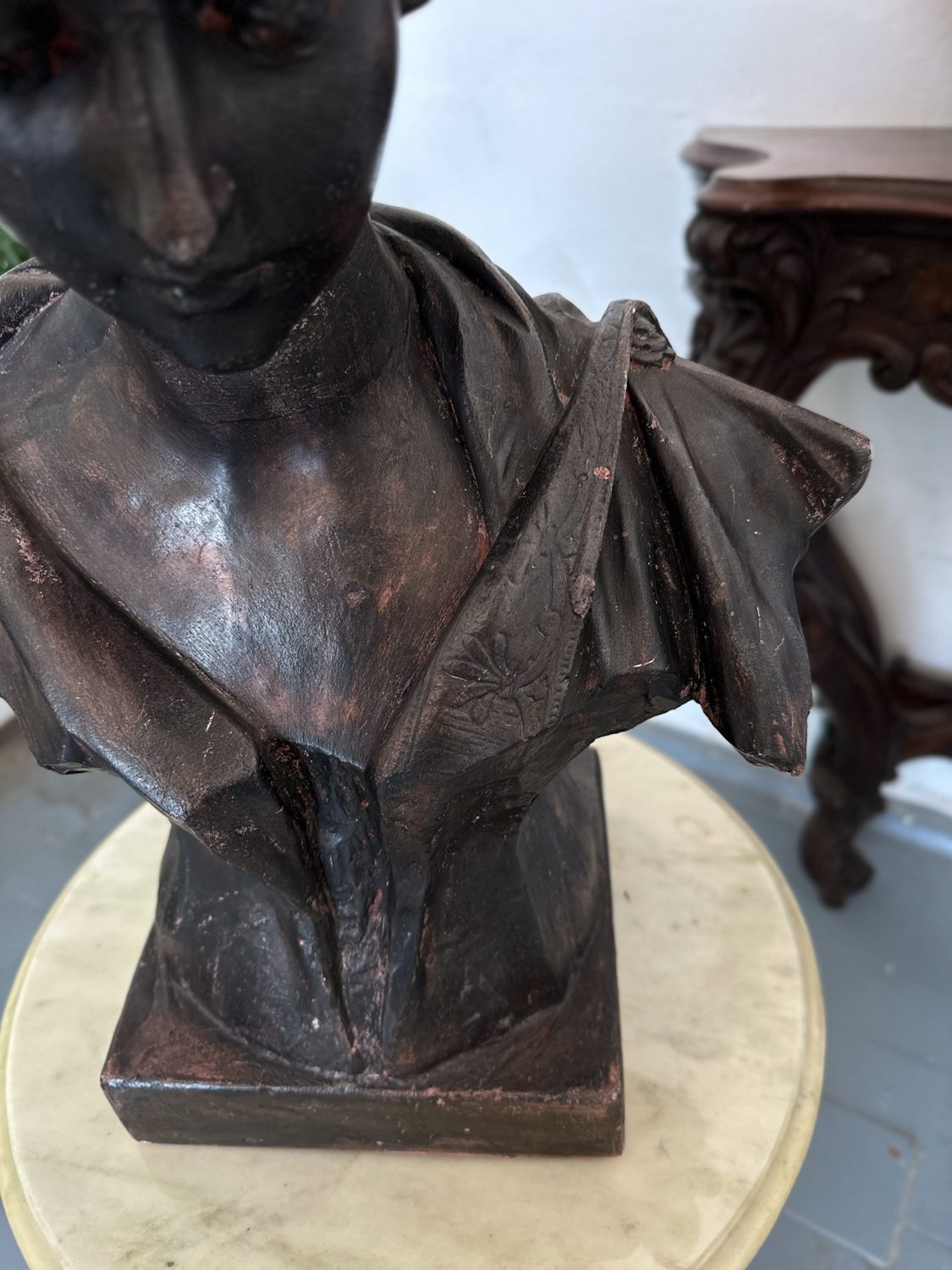
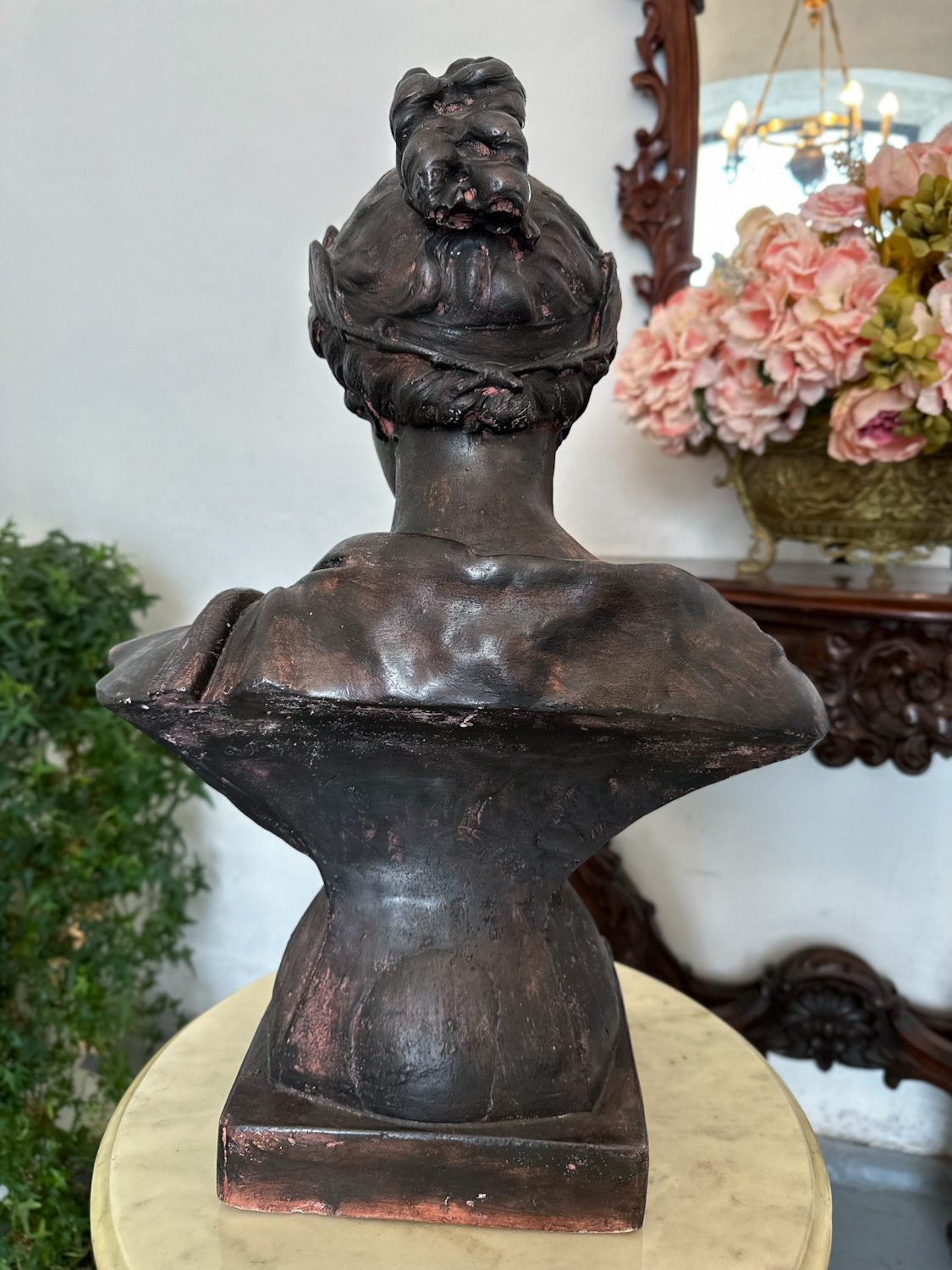






Sievietes Biste, Vidēja Izmēra, Smaga (4735)
Height 53 cm Width 36 cm Color BronzeDark brown
Description
DESCRIPTION IN
Female Bust with Laurel Wreath — Historicism and the Prelude to Art Nouveau, France or Central Europe, circa 1880–1900
―――――――――――――――――――――
📐 DIMENSIONS
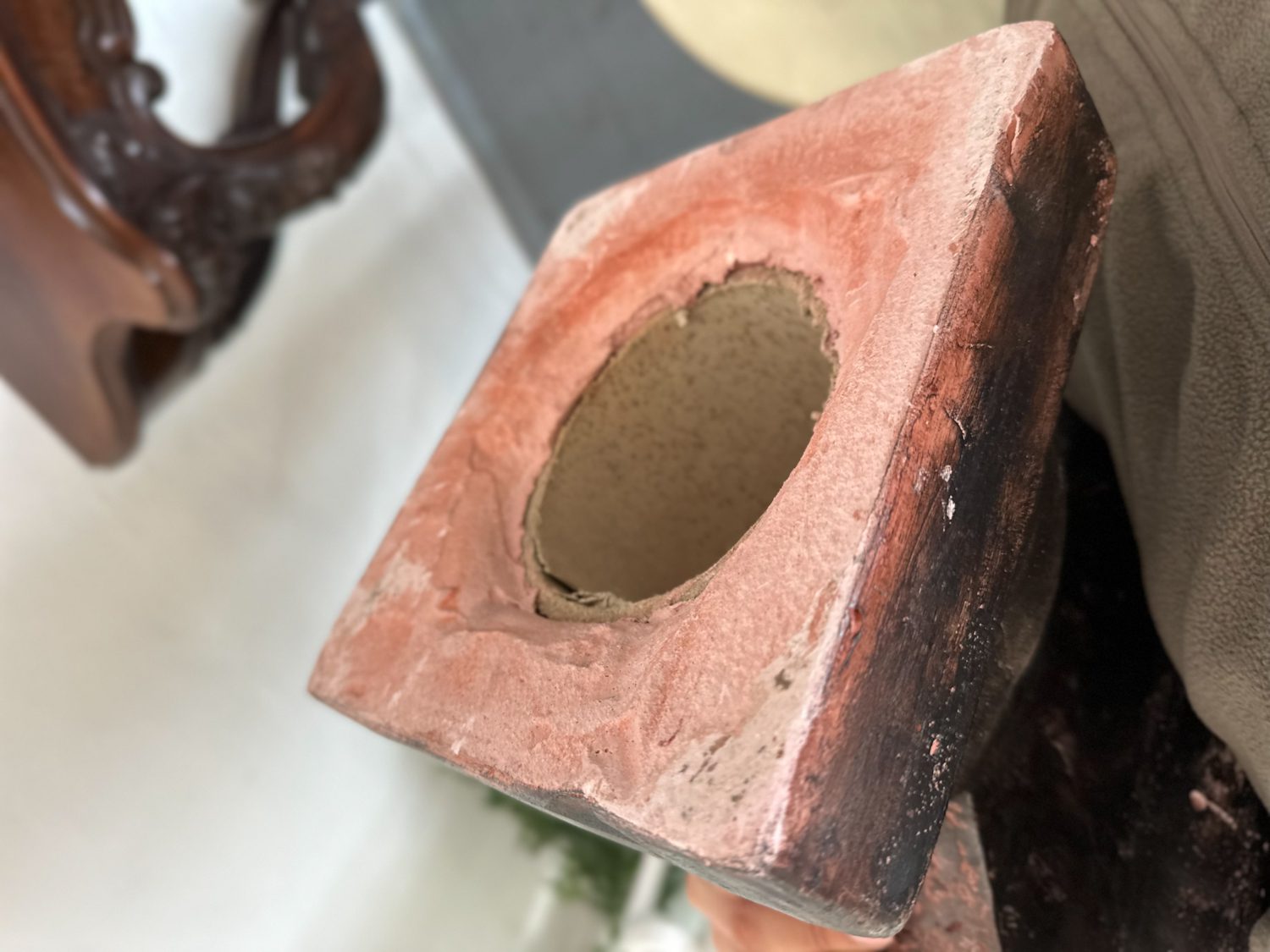
Height: 53 cm. Width: 36 cm. Weight: substantial — the hollow terracotta casting technique (an oval aperture is visible on the underside) reduces overall mass, yet the figure remains imposing and stable. Rectangular integral base.
―――――――――――――――――――――
🏛️ PERIOD, ARTISTIC STYLE, ERA
This bust belongs to that fertile transitional moment when Historicism still held its forms — the antique laurel wreath, the classical tradition of head composition, academic proportionality — while Art Nouveau was already bringing a new plastic language: freely flowing, slightly unruly hair, an emotionally inward facial expression with lowered eyes, and the extraordinarily loose, almost theatrical fall of the drapery. Both aesthetics coexist within this single object.
The woman’s face is classically academic — regular features, a strong chin, high cheekbones. Yet her gaze — lowered, quietly dreaming — already carries that Art Nouveau quality of inner withdrawal from the world, so familiar from Alphonse Mucha’s graphics and Gustav Klimt’s portraits. The laurel wreath is a double symbol: both the ancient mark of victory and the 19th-century Romantic imagination of ideal femininity — muse, poetess, goddess.
―――――――――――――――――――――
⚜️ MAKER AND STYLISTIC ATTRIBUTION
No maker’s signature or stamp is visible in the photographs; however, several elements allow precise placement within the tradition of high-quality European decorative sculpture. The hollow terracotta technique with the characteristic red clay visible at the base is direct evidence of professional industrial production of the kind associated with the major Parisian, Viennese and Berlin terracotta workshops of the 1880s–1900s. The painted finish — a dark brown patina with exposed red clay areas — was a standard method of giving terracotta the appearance of bronze, which was in great demand among the upper bourgeoisie: it delivered the visual effect of luxury at a more accessible cost than a true bronze cast.
Busts of this type — large-format, depicting a woman crowned with laurel — were featured in the catalogues of Parisian and Viennese decorative sculpture firms catering to a broad but discriminating market. Comparable pieces are known from Manufrance catalogues (France) as well as Austrian and Bohemian terracotta workshop production.
―――――――――――――――――――――
💎 RARITY AND SIGNIFICANCE
Terracotta busts of this scale and quality — with the distinctive beauty of a stylistic transitional period, a well-preserved original dark patina and no significant structural damage — appear comparatively rarely on the antiques market. In the majority of cases, pieces of this type have lost details over time (laurel leaf tips, textile shoulder edges) or the patina has been overpainted in modern restorations. This example survives in a remarkably original state. Collectors seeking large-format figures from the Historicism or Art Nouveau transitional period with strong emotional presence hold this era in high regard.
―――――――――――――――――――――
🕯️ USE IN INTERIOR, DESIGN AND PHOTOGRAPHY
At 53 cm in height, this bust is a significant interior element that establishes the mood of a room in its own right. Placed on a marble or wooden pedestal within a classical or eclectic interior, it creates the impression of a museum-grade collection piece. Within Historicist or Art Nouveau settings — alongside darkened oak furniture, a leather armchair or heavy textiles — the bust becomes the focal point. In contemporary interiors, particularly where walls are grey or white and furnishings follow a metal-and-concrete aesthetic, this dark brown figure functions as a powerful contrast that immediately elevates the space into a higher aesthetic category. In fashion and interior photography, such a figure is a prized prop — it speaks of era, refinement and history without words.
―――――――――――――――――――――
🎁 AS A GIFT AND PERSONALISATION
A female bust crowned with laurel — the symbol of victory, wisdom and artistic achievement — is an exceptional gift for a woman who values art, cultural history and aesthetics. It is well suited as a representative gift within the art world: for gallery directors, heads of cultural institutions, or collectors. The laurel wreath as a symbol of triumph also makes it an appropriate gift to mark significant achievements — a defended dissertation, an awarded project, or a milestone anniversary marking a major turning point in life.
―――――――――――――――――――――
🔍 CONDITION
The bust survives in generally good condition for its age and scale. The original dark brown patina with areas of exposed red clay is authentic and unrestored — it has developed through natural ageing rather than modern intervention. The laurel wreath leaves show mechanical wear — several are partially chipped or rounded at the tips, which is to be expected in pieces with such delicate projecting details. Minor chips are present along the edges of the shoulder drapery. The oval aperture on the underside is intact and clearly reveals the authentic red terracotta clay. No restorations or overpainting are visible. The condition of the piece is fully reflected in the photographs.