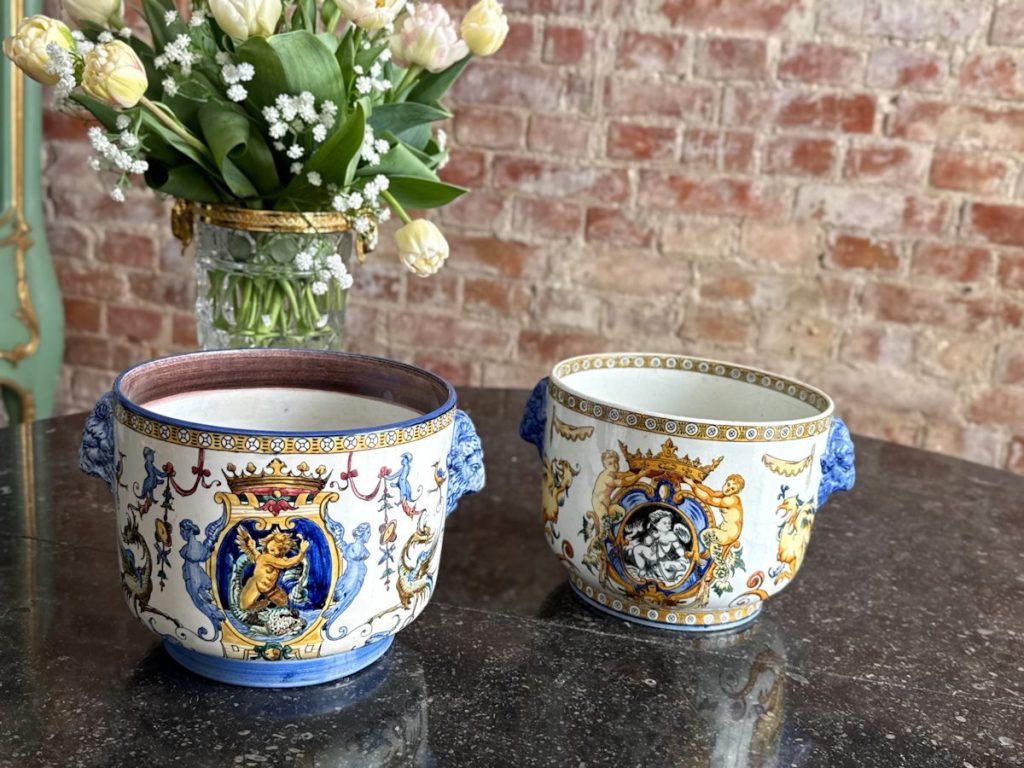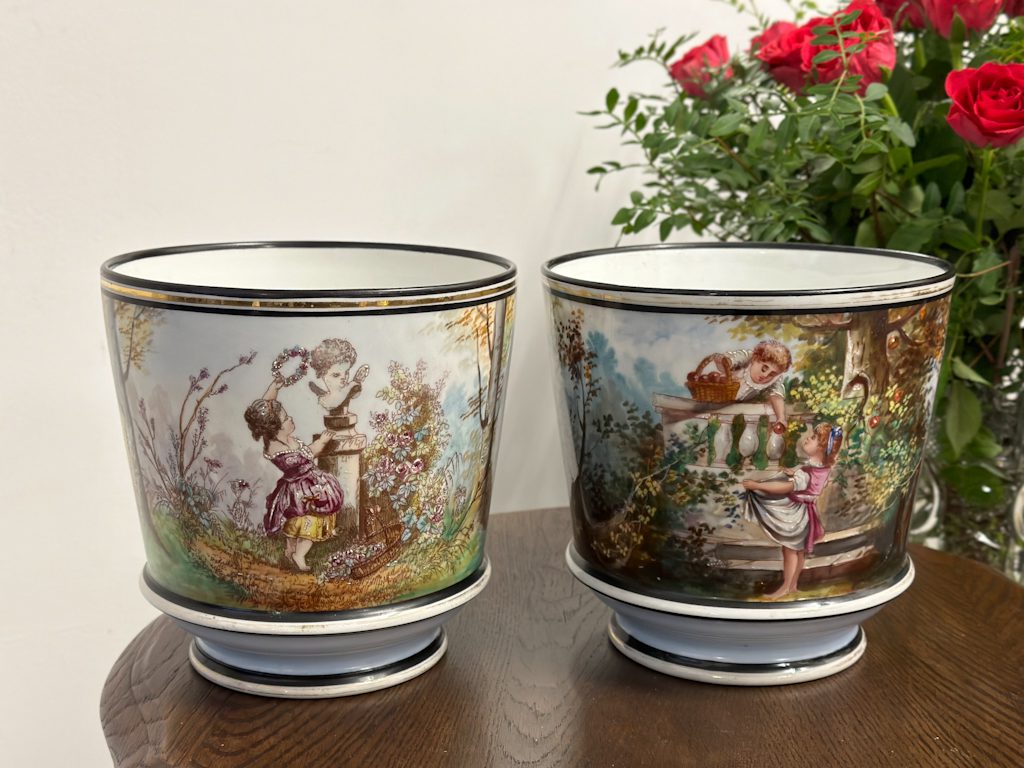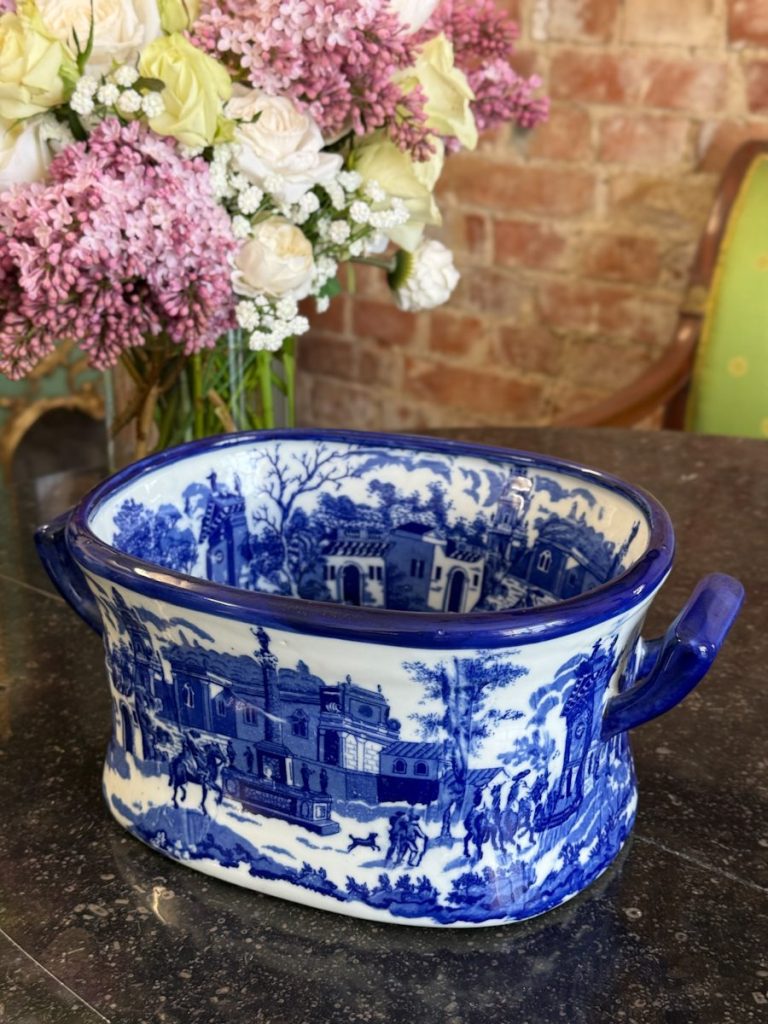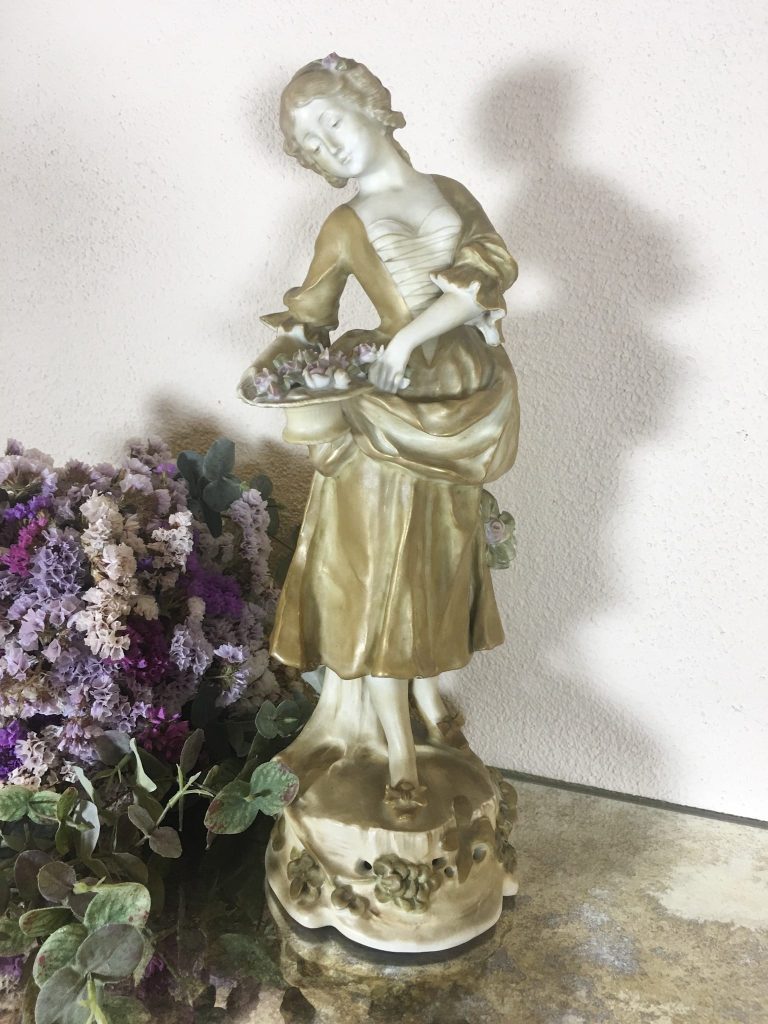
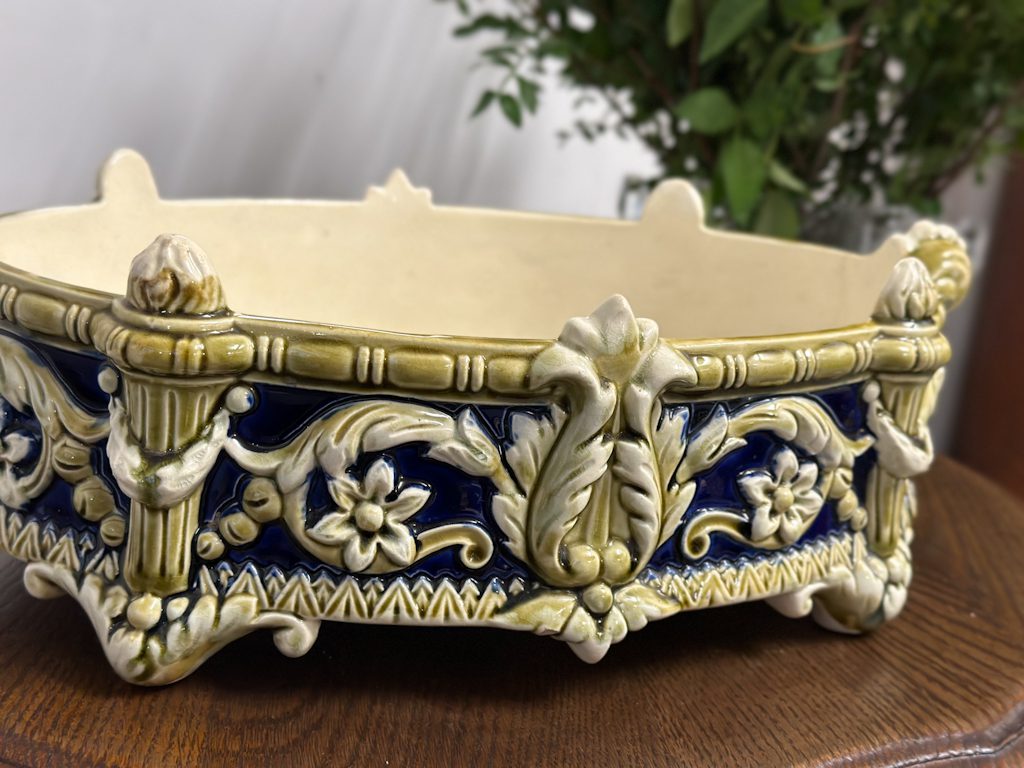
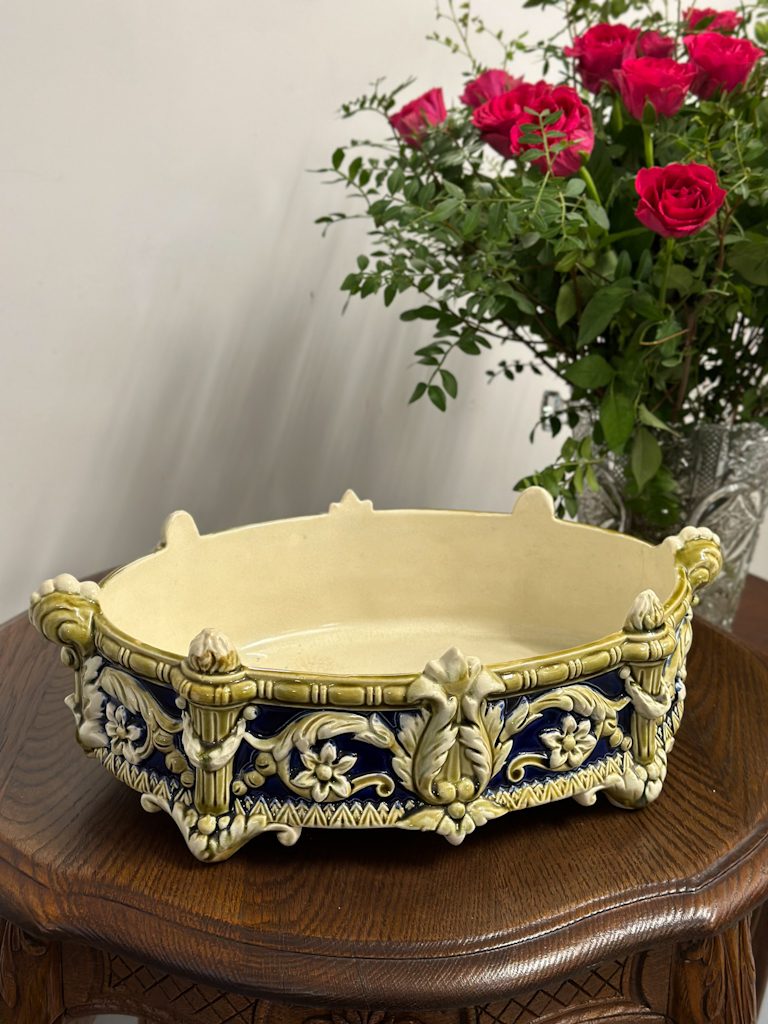
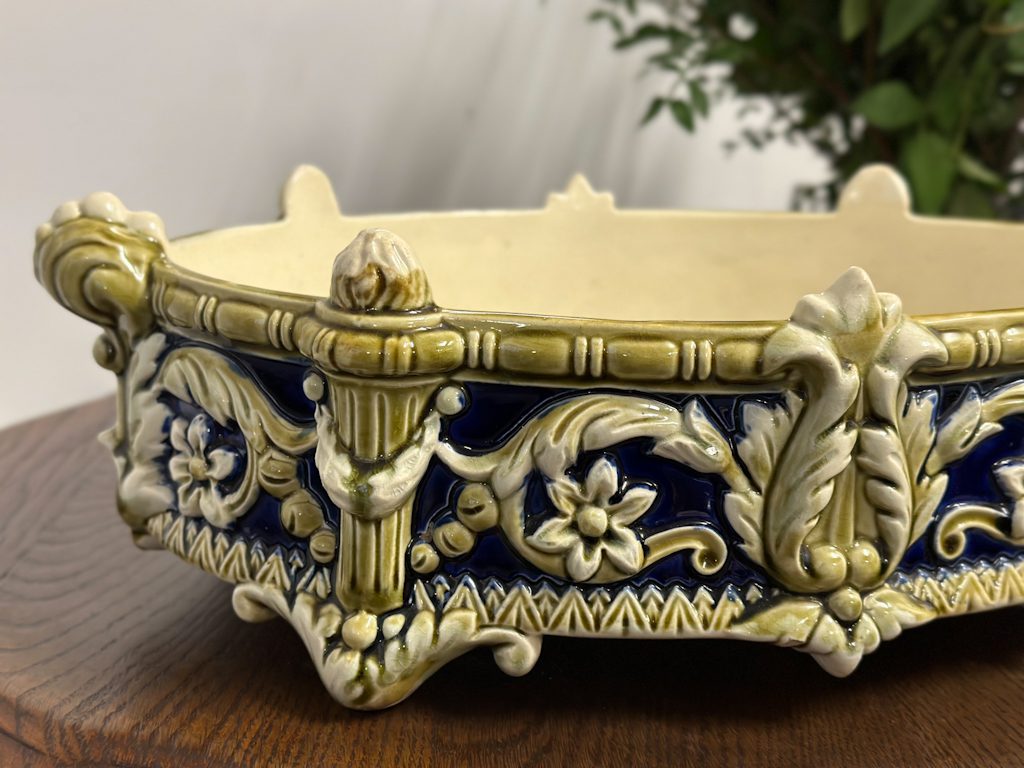
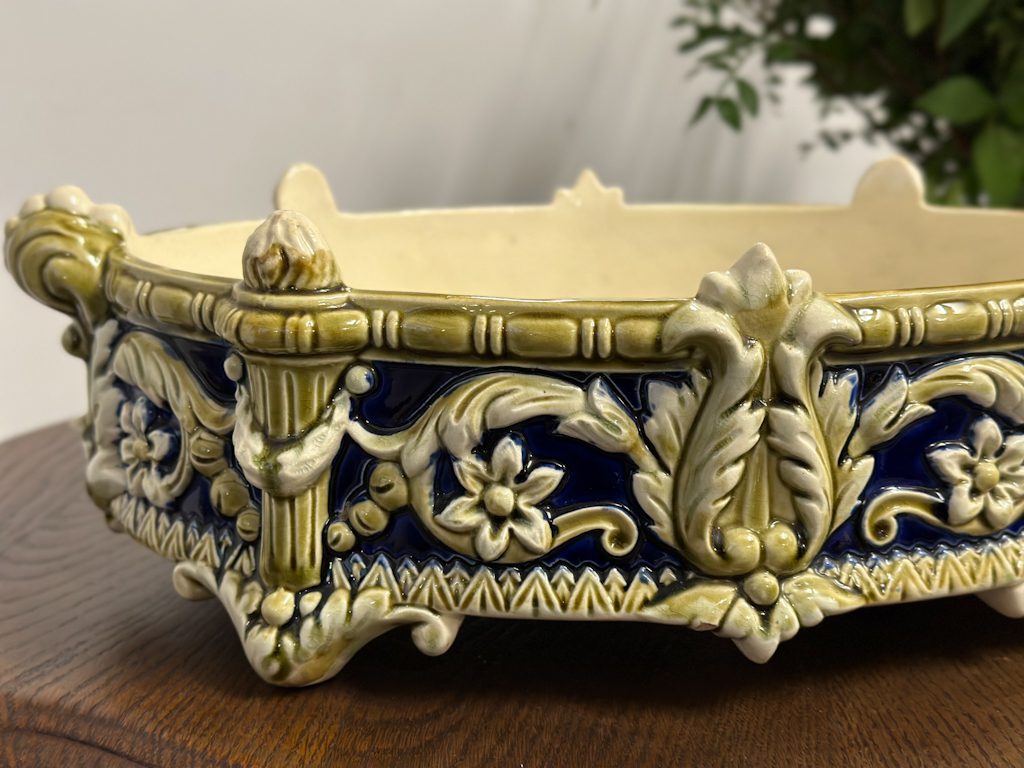
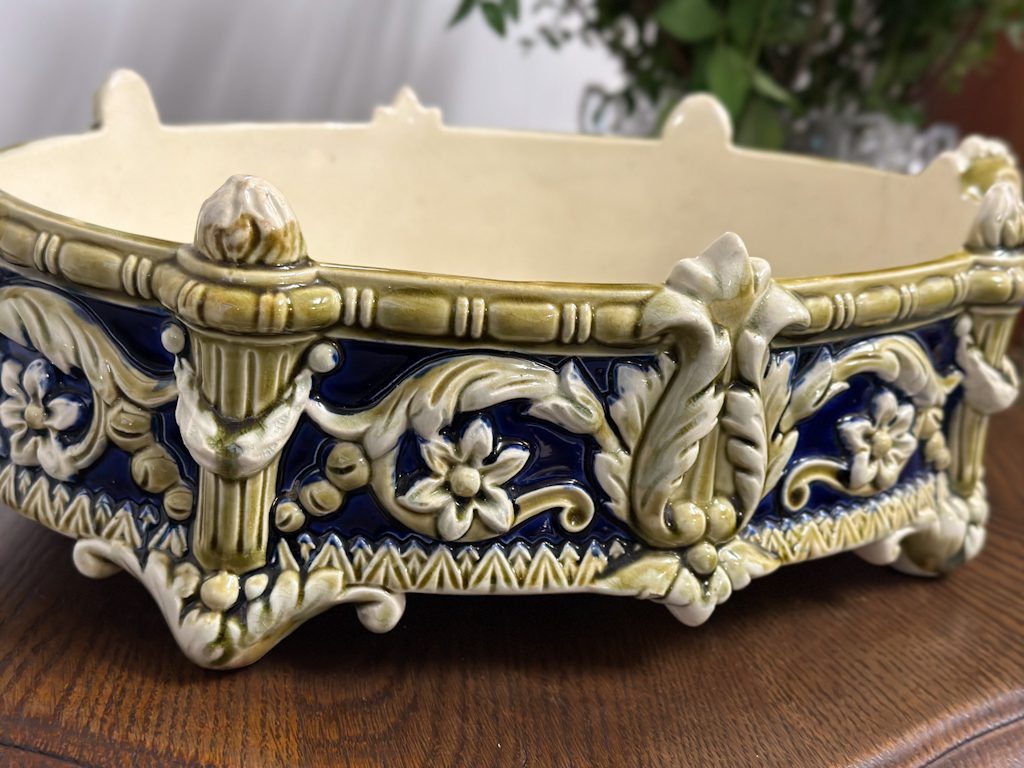
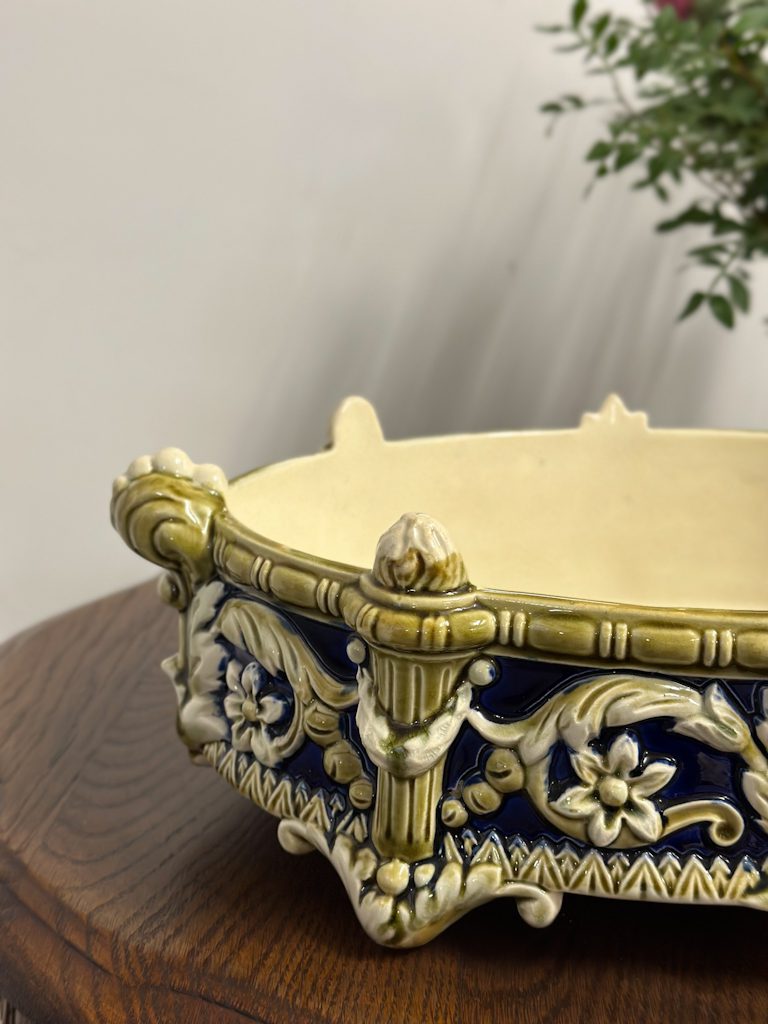
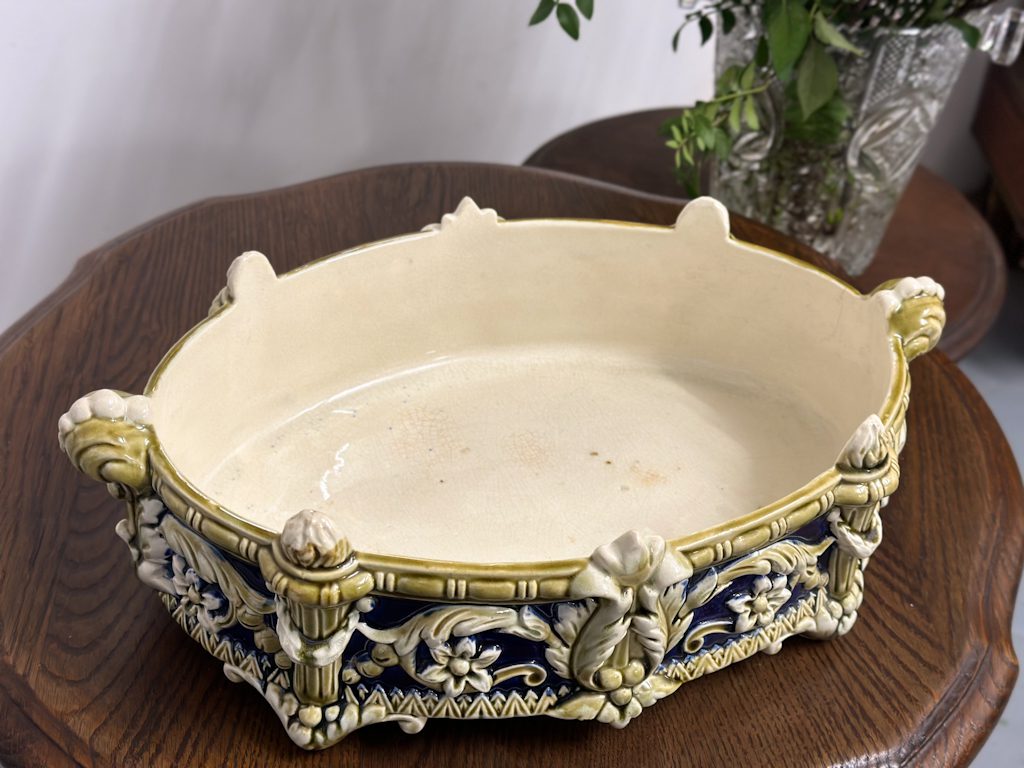
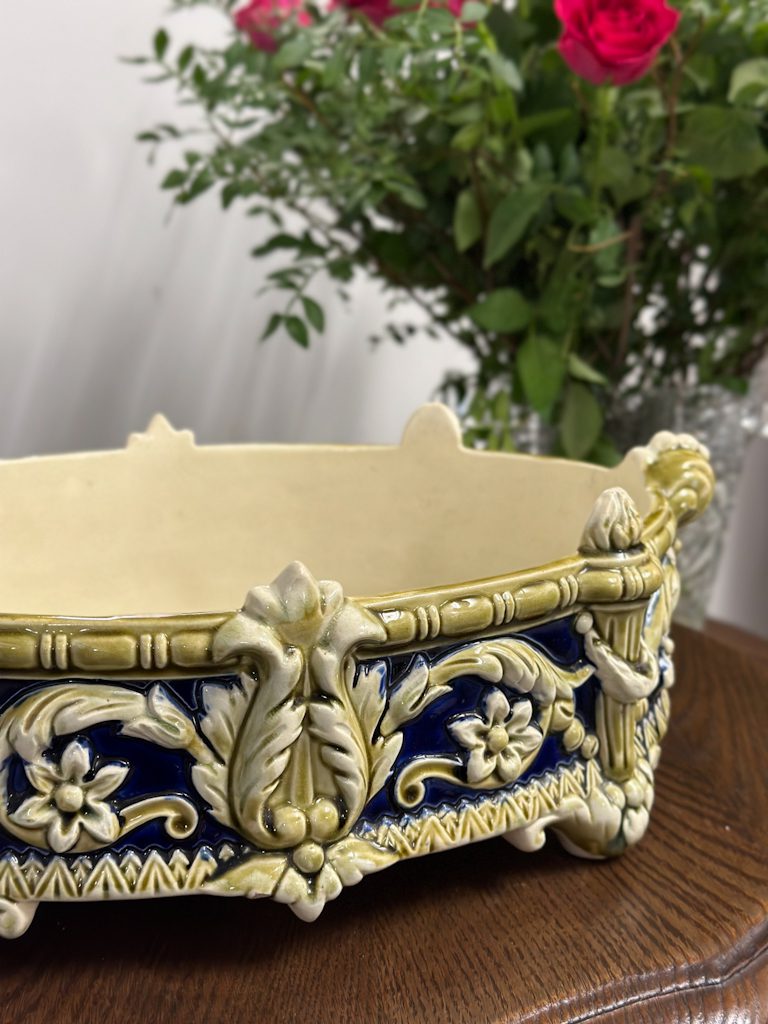
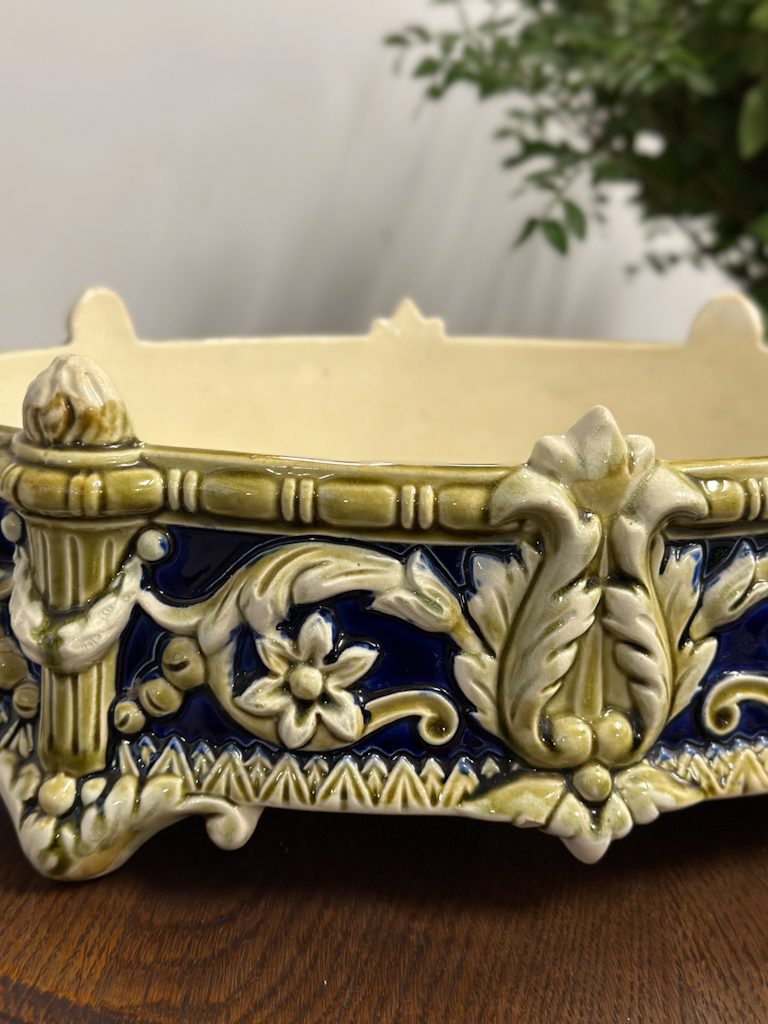
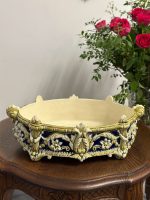
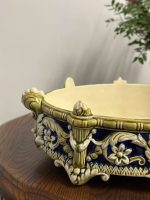
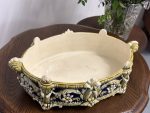
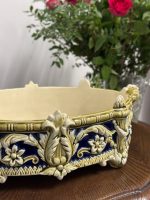
This majolica/faience jardinière, featuring Renaissance ornamentation in cobalt blue and olive green glaze, dates from the Historicism/Neo-Renaissance period, circa 1870–1895. Originating from Austria-Hungary or Germany, this faience cachepot is a medium-sized vessel in green tones. 250,00 €
You’re now subscribed to price tracking for this product. We’ll notify you if the price drops. 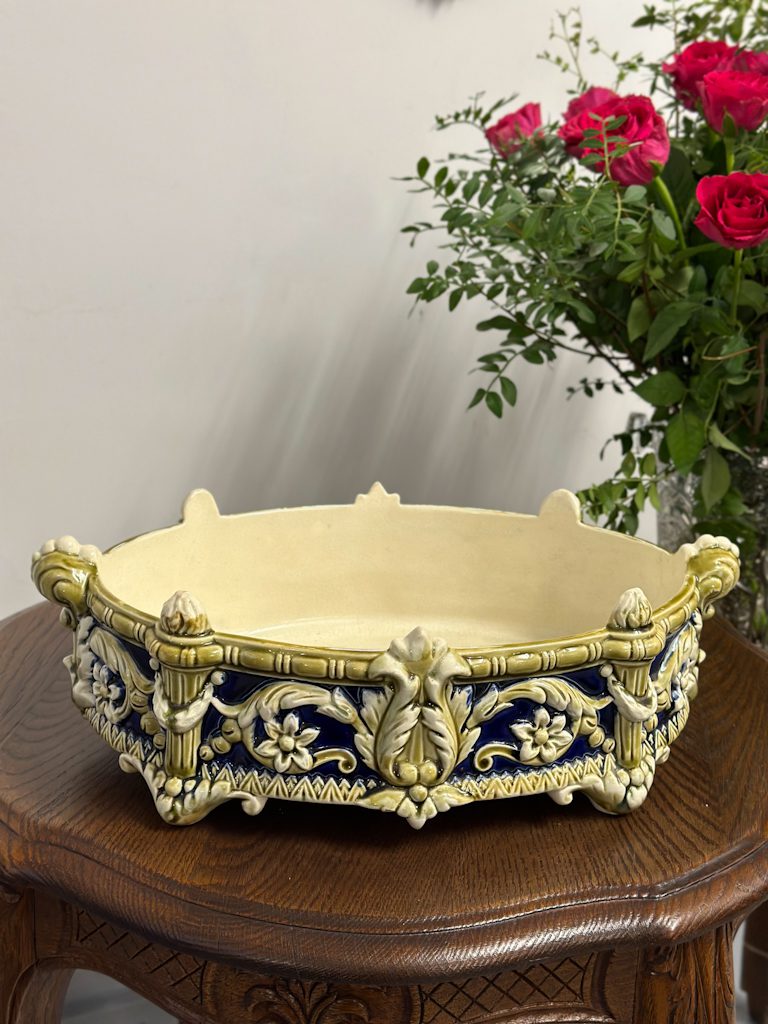
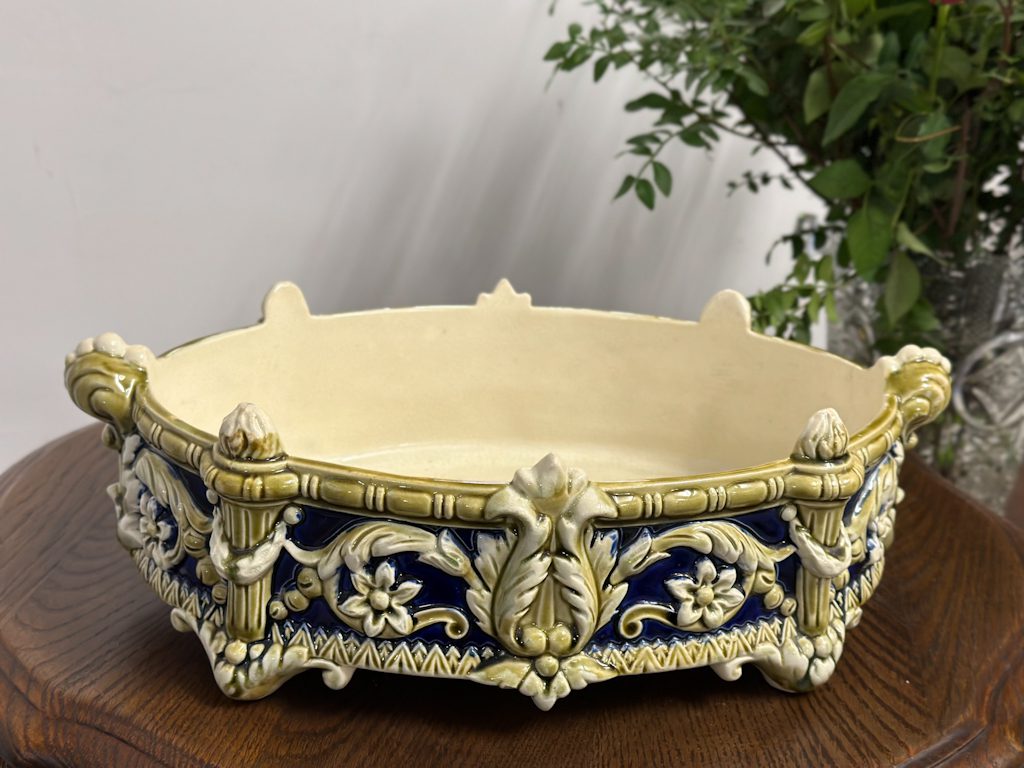
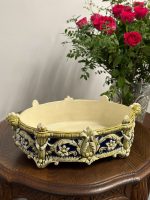
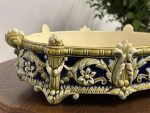
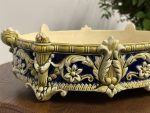
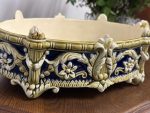




Majolica Faience Jardiniere with Renaissance Ornament, Cobalt Blue and Olive Green Glazes (5213)

Description
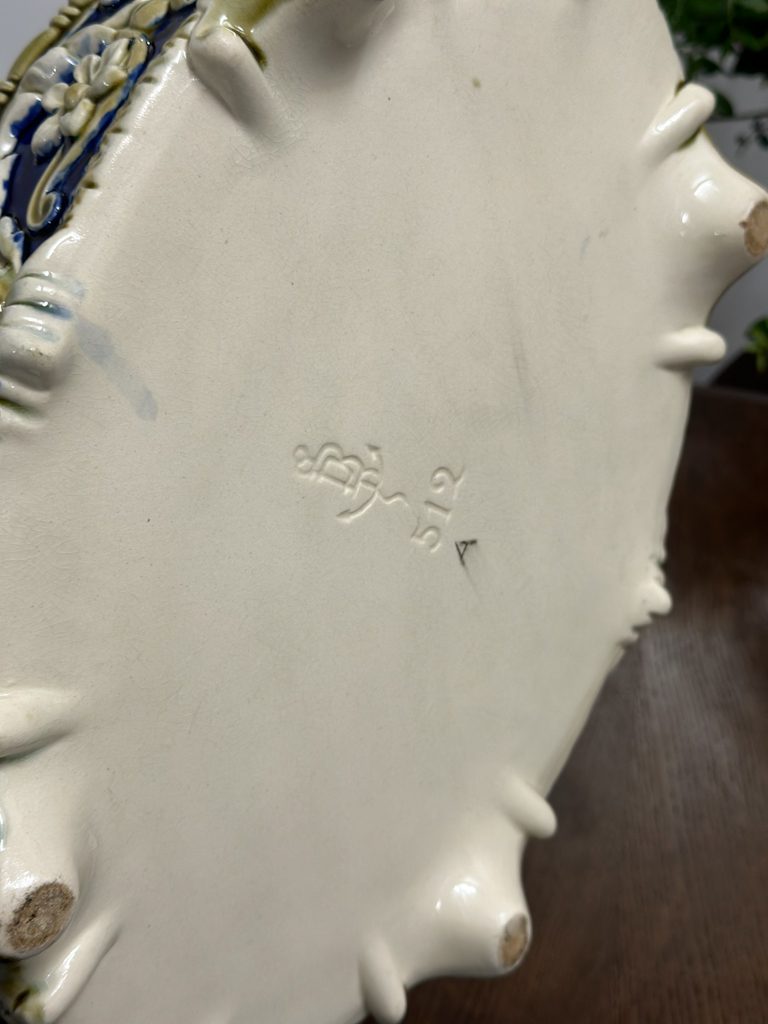
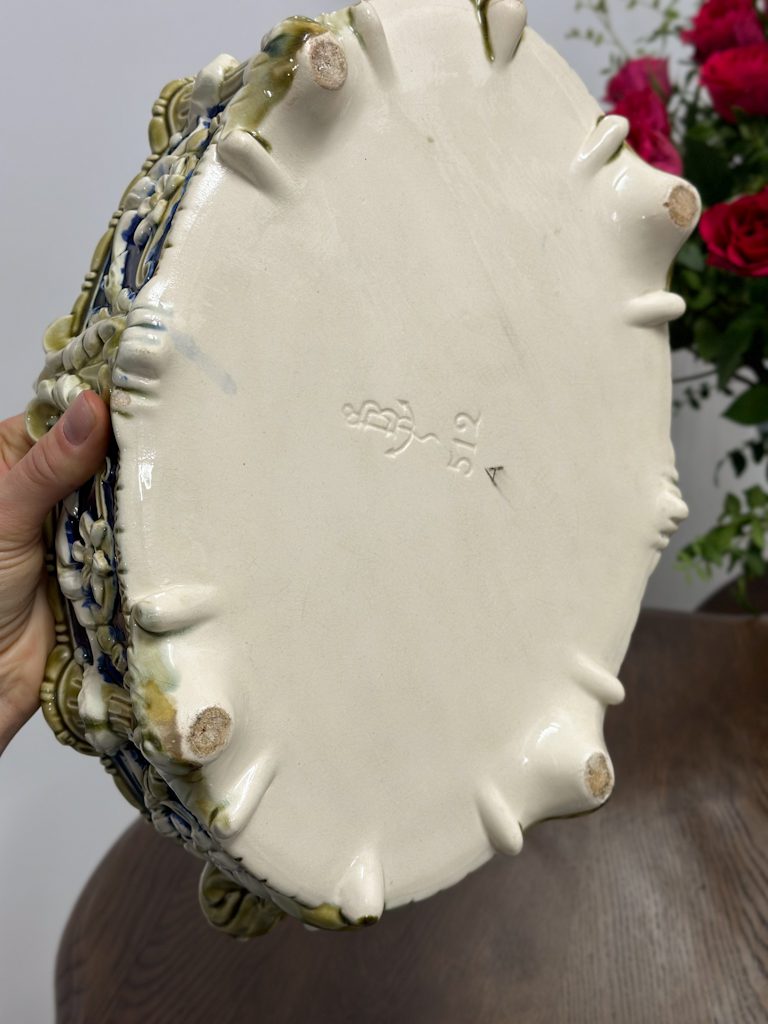
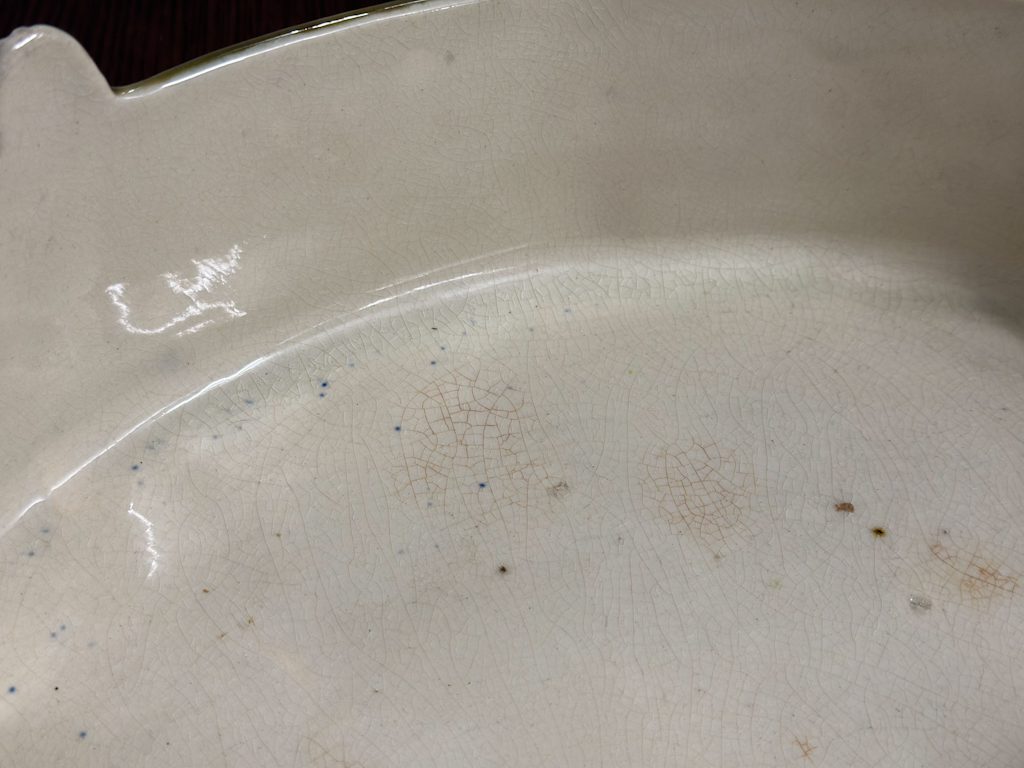
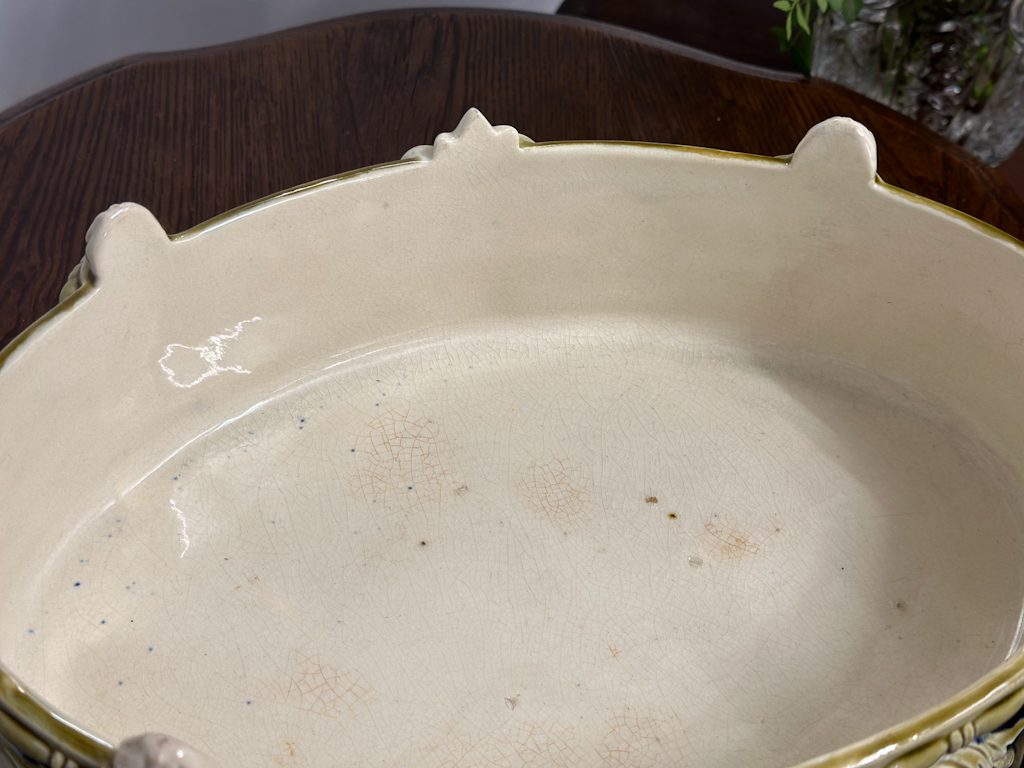
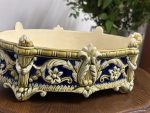
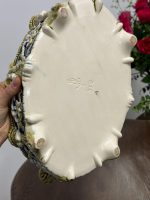
Length 37.5 cm x height 12 cm x width 23.5 cm. A horizontally elongated, low, and wide form – classic proportions for a table centrepiece or mantelpiece jardiniere. Majolica / faience jardiniere with Renaissance ornament in cobalt blue and olive green glazes – Historicism / Neo-Renaissance style, Austro-Hungary or y, circa 1870-1895. PERIOD, ARTISTIC STYLE, HISTORICAL CONTEXT This piece is a fine example of the European Historicist majolica tradition – the period during which the manufactories of the later 19th century returned with conscious enthusiasm to the ornamental language of Renaissance Italy and classical ancient Rome, regarding it as the supreme decorative achievement of European civilisation. The form is classically Neo-Renaissance: a low oval vessel with a curved, profiled rim, relief feet, and pierced projections along the upper rim – all organised according to an architectural logic. The outer wall is structured as a miniature architectural frieze: column shafts with entasis divide the wall into regular panels, within which acanthus leaves, rhythmically placed flowers, and sinuous tendril spirals develop in olive-green and cream-white relief against a deep blue ground – a composition that directly cites the 16th-century Italian majolica and architectural frieze tradition, as well as the decoration of Roman triumphal arches and thermae. The combination of cobalt blue and olive green is the identifying mark of this tradition – employed by both Palissyware imitations and and Austro-Hungarian majolica manufactories that supplied the interiors of European aristocratic homes and bourgeois villas throughout this period. MAKER AND MARKS The base bears an impressed mark – a complex ligature with letters or a monogram, alongside the numerals 512 and 4. The form of the mark – stylised, with a decoratively intertwined letter structure – is characteristic of Austro-Hungarian or ceramic manufactories of the second half of the 19th century. The mark style and product character most closely correspond to the majolica production of Villeroy & Boch (Mettlach, y) or Schutz Cilli (Cilli / Celje, Slovenia, then Austro-Hungary) – both were leading European majolica and faience producers of this period, whose wares appeared regularly at the World Expositions in Paris, Vienna, and Berlin. The Villeroy & Boch Mettlach division was particularly known for precisely this glaze pairing in Neo-Renaissance ornament – the so-called ‘Mettlach ceramics’ were a prestigious collector’s object throughout European high society from the 1870s to 1900s. The numeral 512 is likely a form number, while 4 denotes a batch or workshop designation. Villeroy & Boch, founded in 1748, had by the later 19th century become one of Europe’s largest ceramic groups, supplying European royal courts, the aristocracy, and prestigious hotels, as well as the most distinguished art dealers in Paris and Berlin. RARITY AND SIGNIFICANCE Majolica jardinieres with this Neo-Renaissance ornament and striking two-tone glazing from the second half of the 19th century represent a consistent collector’s category – particularly when the mark is identifiable and the ornamental quality is high. This piece is visually striking and well preserved, with a deep glaze intensity and clear relief definition. Wares of this type in the European antique art market – particularly in y, Austria, and England – are classified as Historicist decorative arts witnesses of the highest quality category. USE IN INTERIORS, DESIGN AND PHOTOGRAPHY The rich, contrasting glaze tones on a cream-white ground are visually powerful and versatile – this piece works in a classically furnished dark-wood interior as a representative table centrepiece, on a mantelpiece as an architectural accent, or in a library as a cultural-historical object. In a modern interior the deep glaze colour functions as a dramatic counterpoint. For photographers it is an ideal subject – the depth of the relief in raking side light brings each acanthus leaf and each flower to life individually, creating an effect close to architectural photography. AS A GIFT This jardiniere is a representative gift at the highest level – for an architect, historian, art collector, or anyone whose interior is governed by the atmosphere of classical European culture. As a corporate or diplomatic gift it is an object with unmistakable cultural weight and visual authority. CONDITION The majolica is in overall good condition. The interior shows glaze crazing with areas of brown oxide absorption – a natural and expected characteristic of majolica of this age, confirming the object’s authenticity. The outer relief ornament glaze is preserved with deep cobalt intensity and no cracking. The feet are complete, with wear on the unglazed tips. No visible restoration. The condition of the item is fully reflected in the photographs.