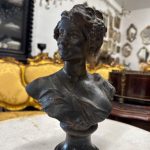
Plaster bust of Jules Verne, France, late 19th century. 45cm high. A rare Belle Époque collector’s piece with his characteristic beard and bow tie. 220,00 €
You’re now subscribed to price tracking for this product. We’ll notify you if the price drops. 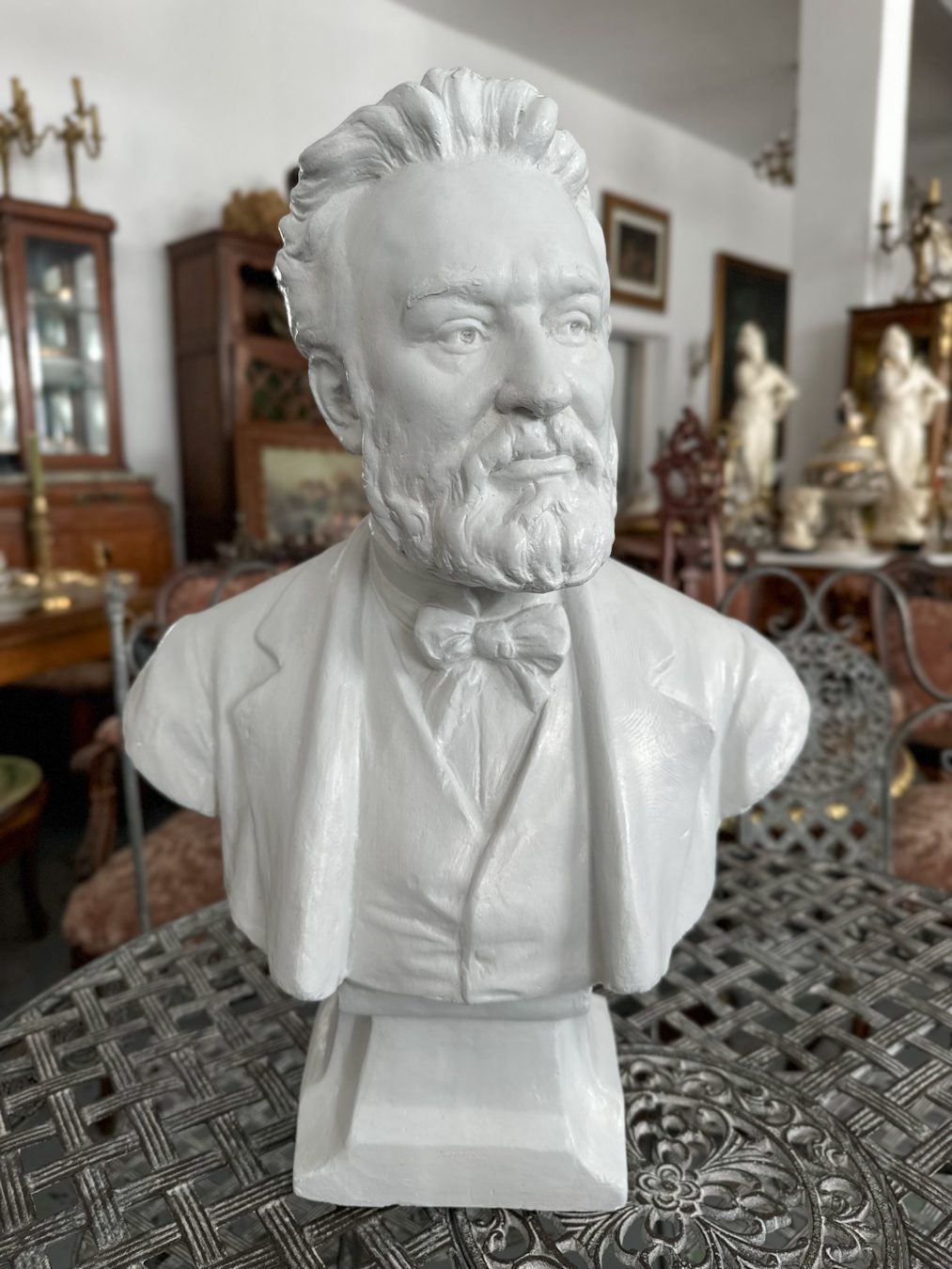
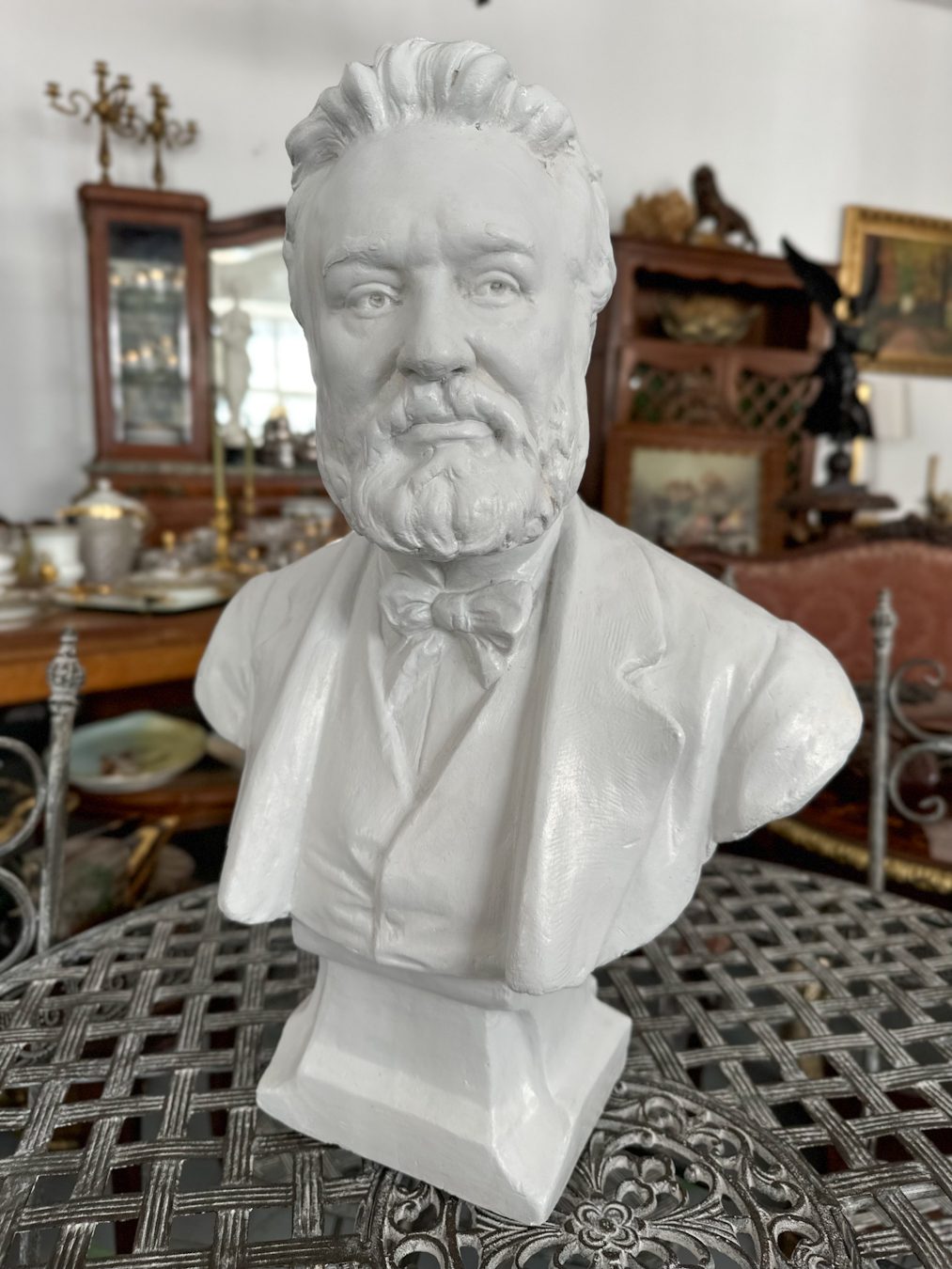
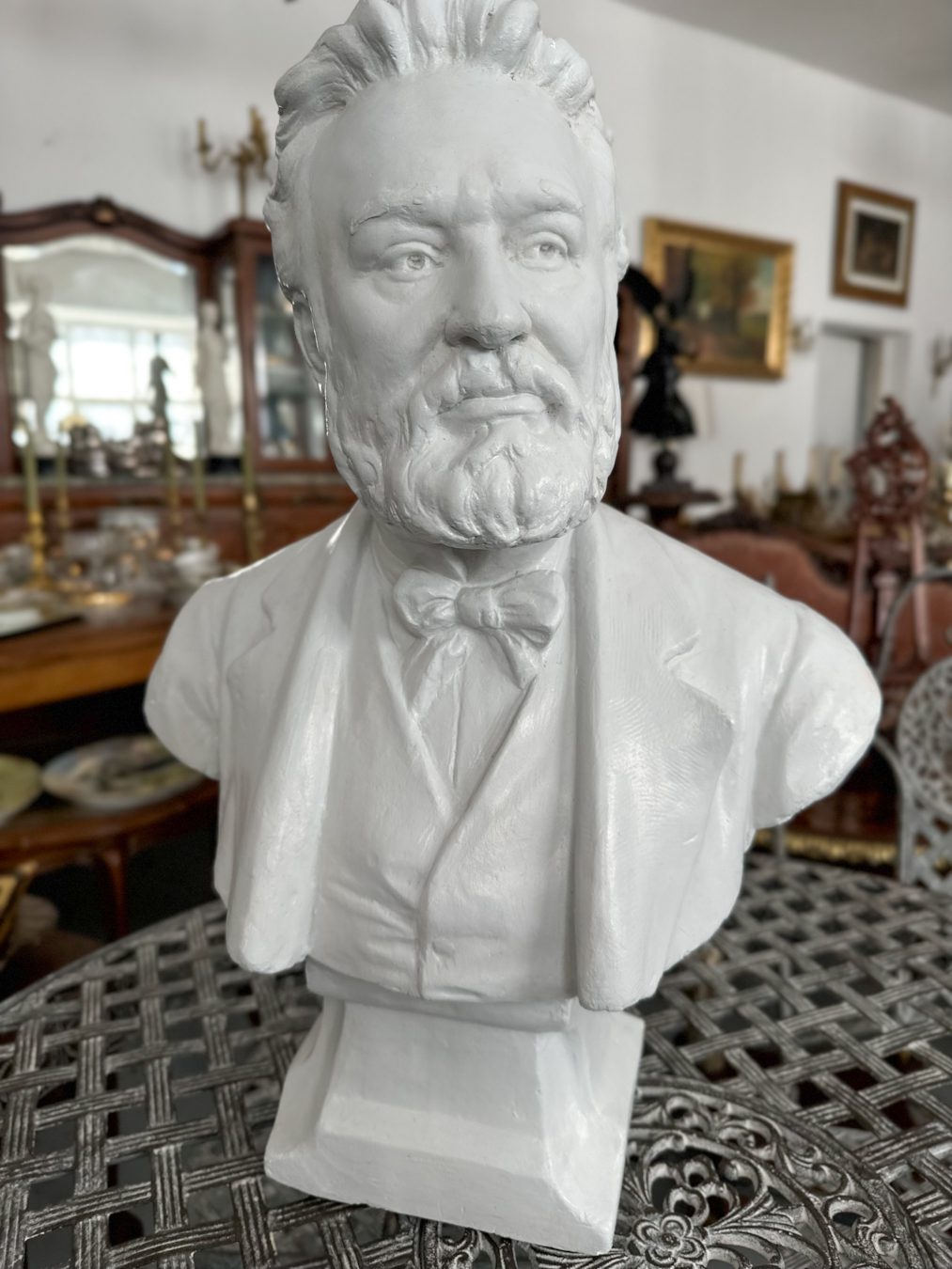
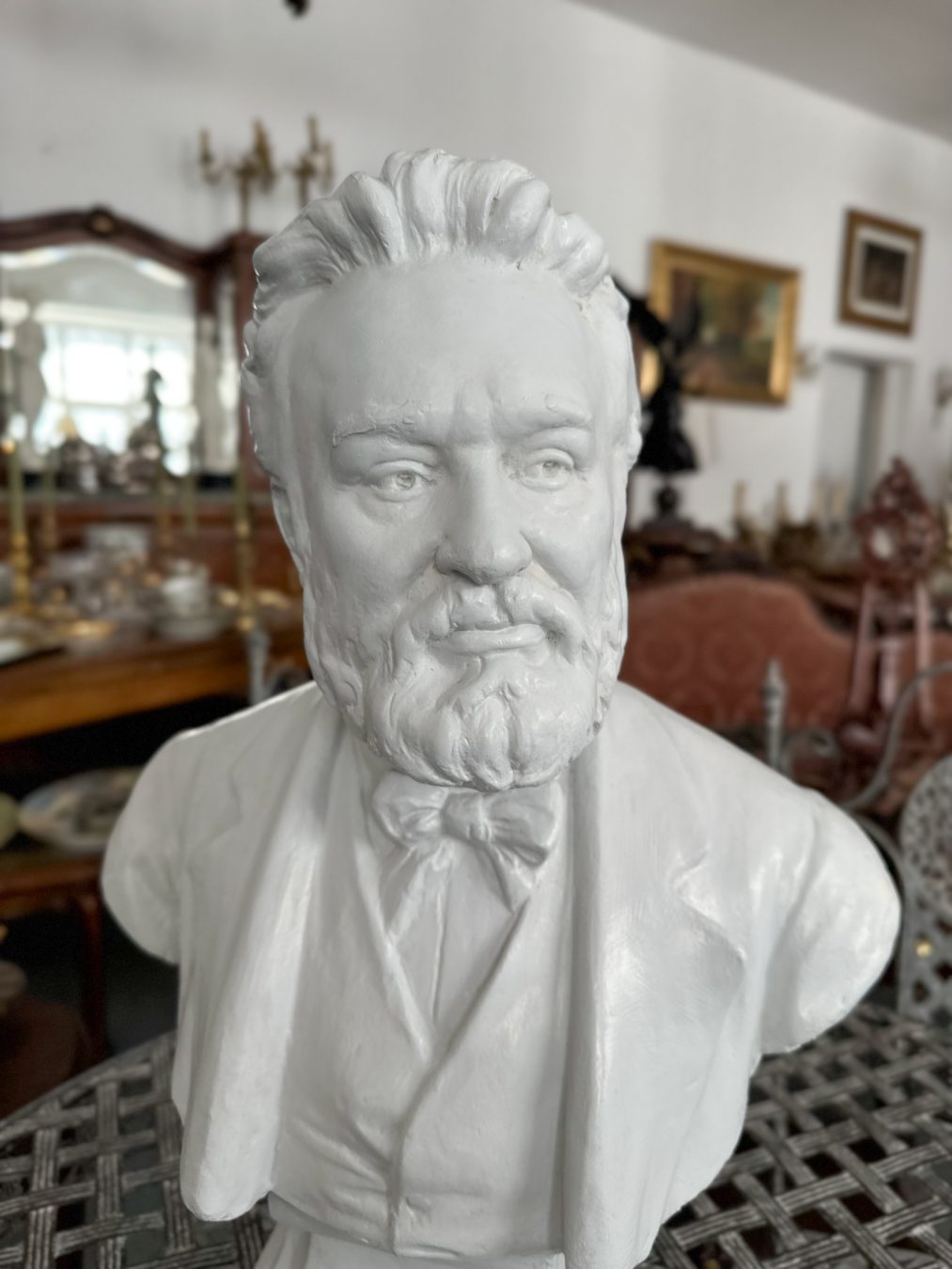
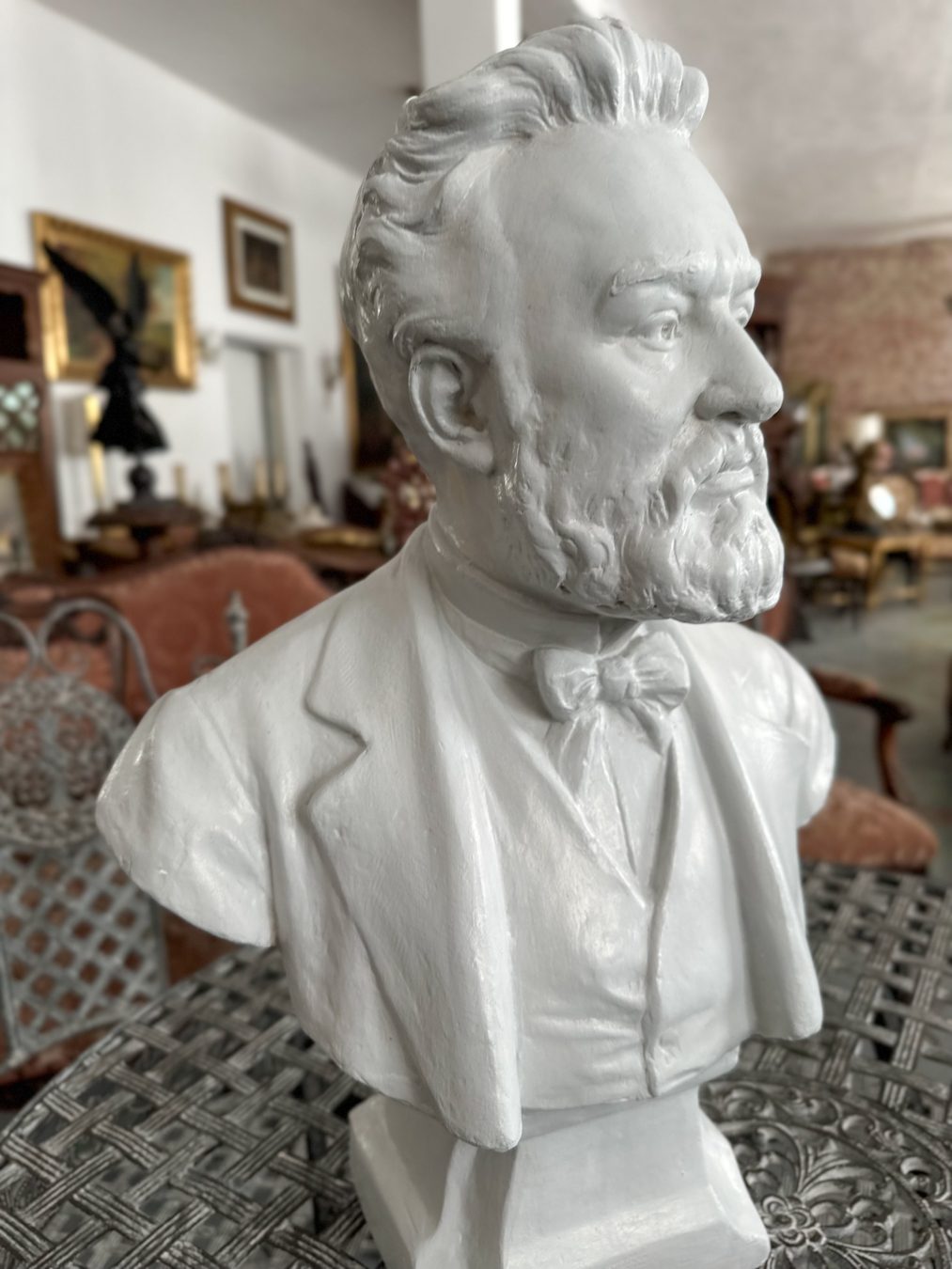
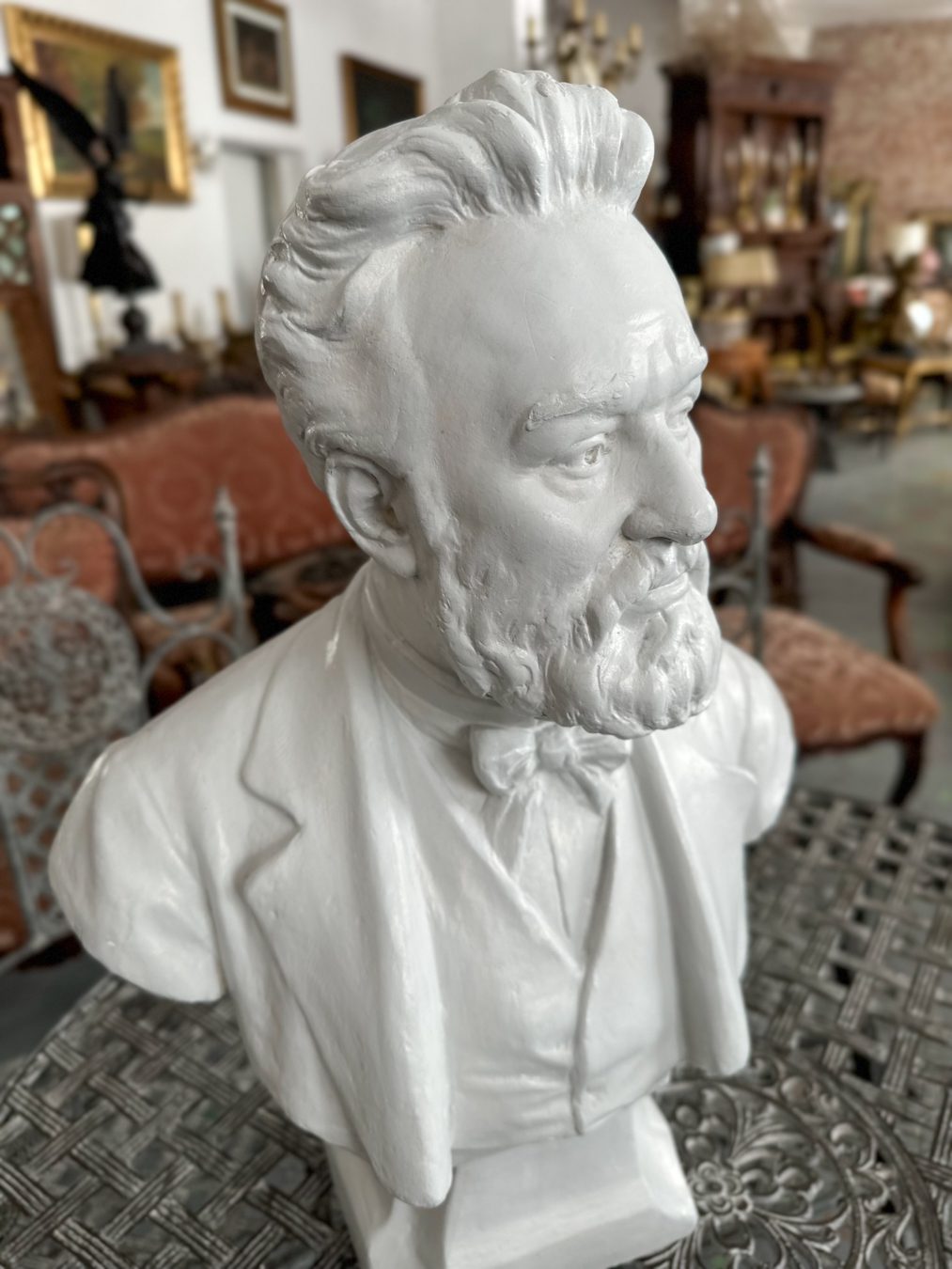
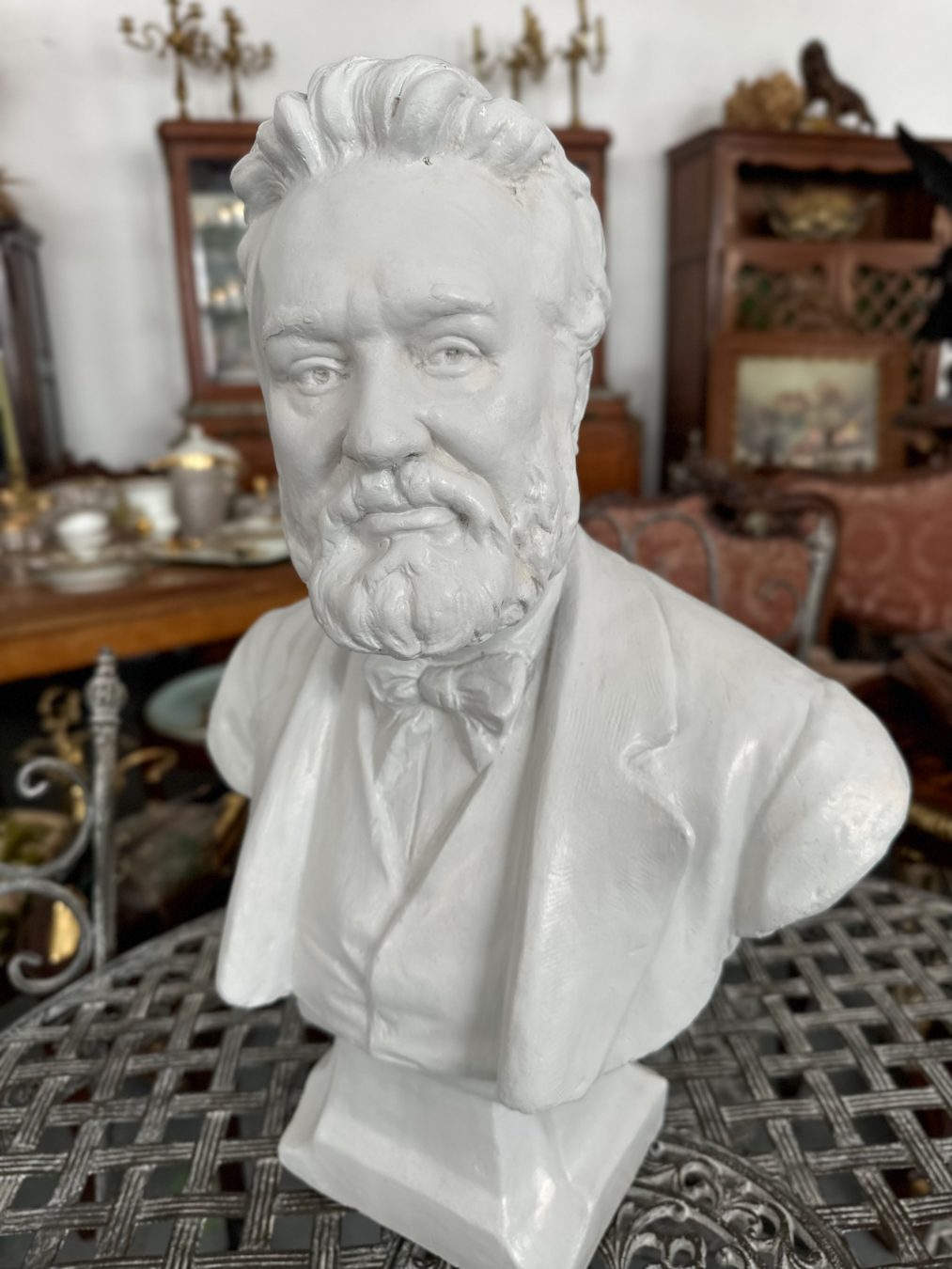
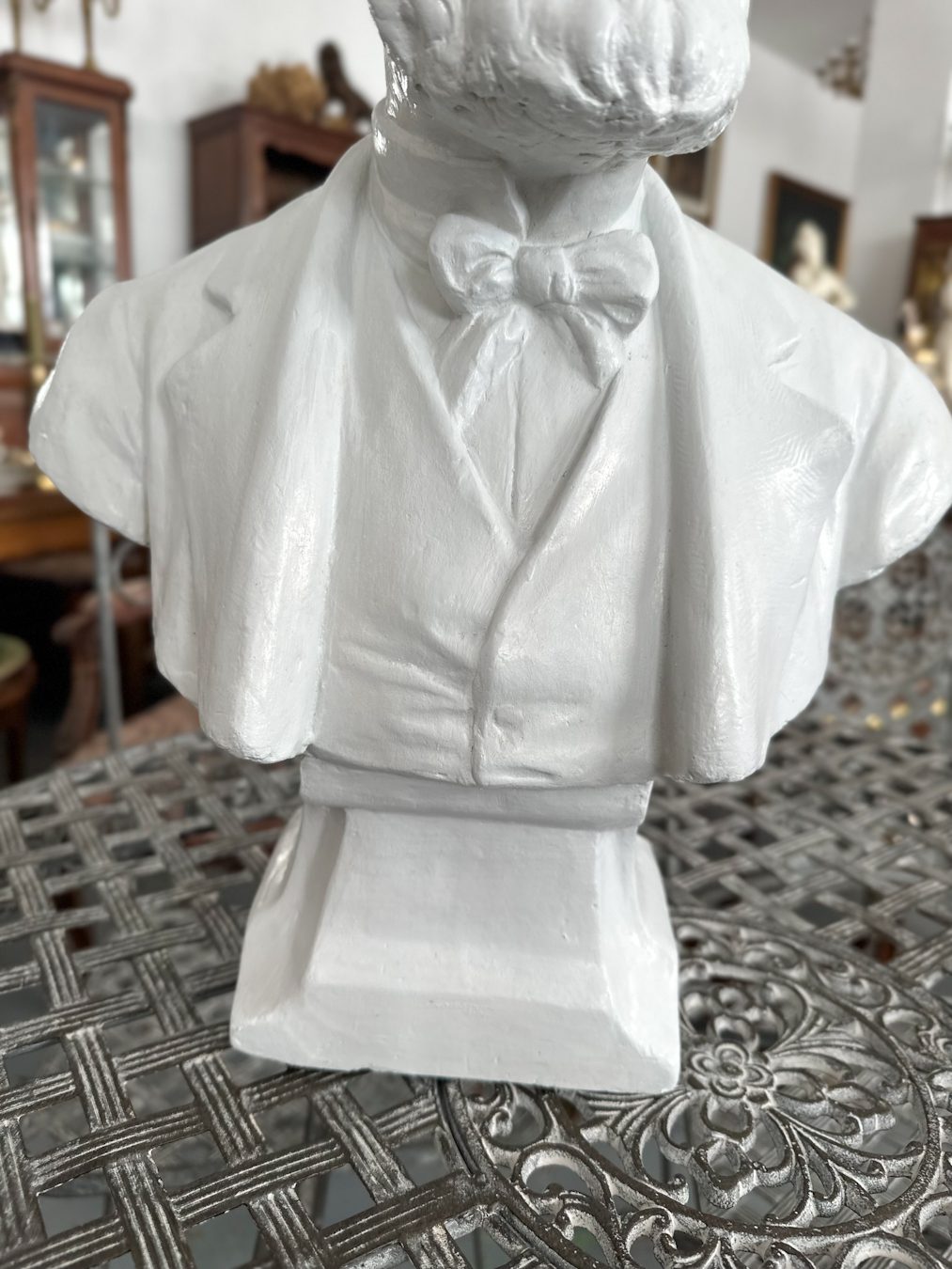
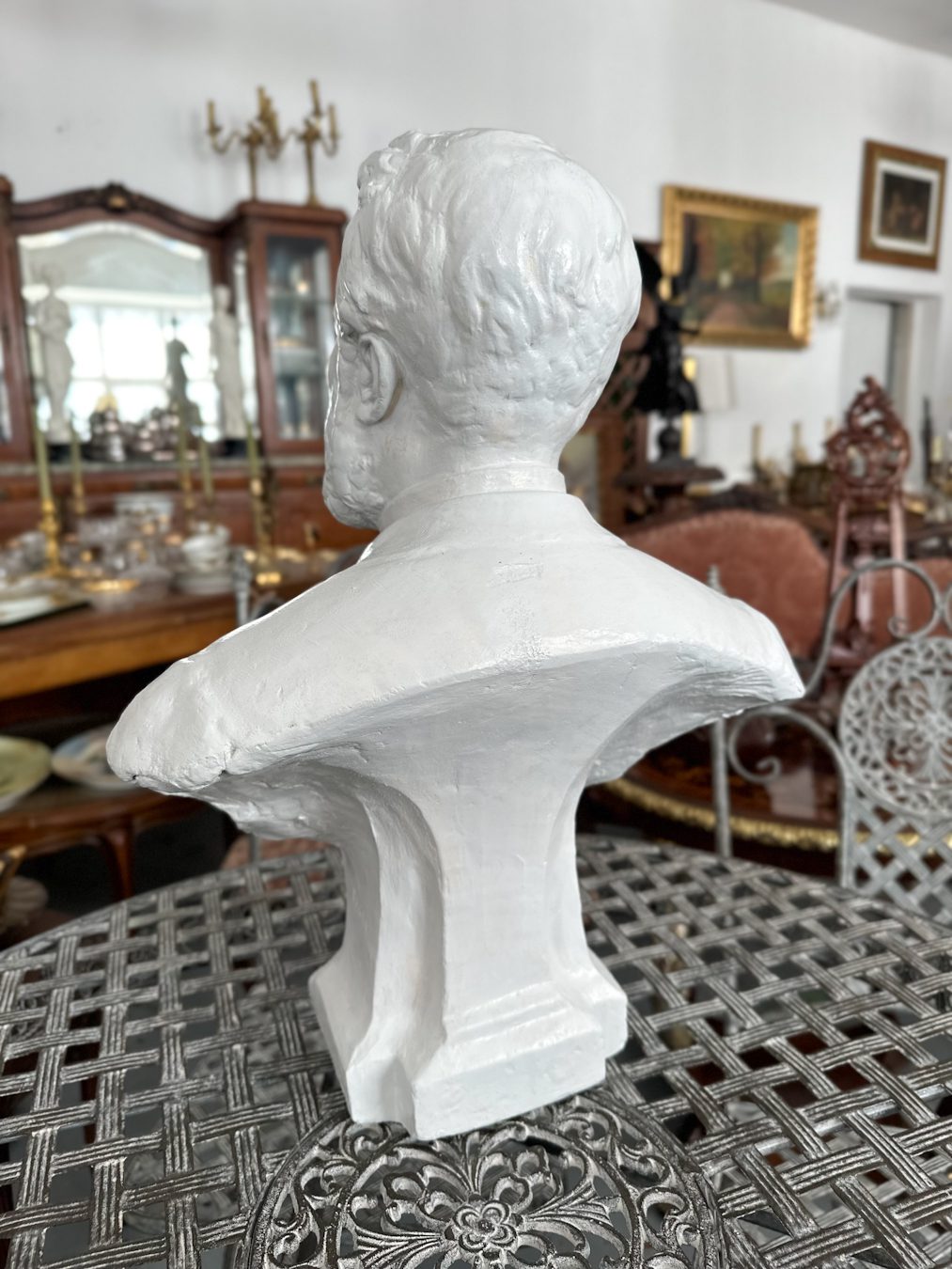







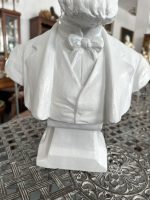
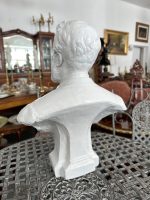
Bust of Jules Verne — Plaster, France, Late 19th Century (4860)
Height 45 cm Width 34 cm Color BronzeBrownWhite
Description
Jules Verne Bust — plaster, France, late 19th century — early 20th century
This bust was created at the turn of the Belle Époque and Historicism eras — a period when Jules Verne (1828–1905) was not just a writer, but a living legend, the most famous author worldwide. His works were already translated into more than a hundred languages; even students in Riga, Warsaw, Bucharest reading rooms, and St. Petersburg city libraries read “Captain Grant” and “Captain Nemo’s” adventures in original translations years before the author’s death. Plaster busts of famous personalities were an integral part of the Belle Époque cultural space — they decorated school classrooms, reading rooms, cultural society halls, private libraries, and bourgeois studies across Europe.
The bust depicts in his mature years — with his characteristic beard, thick, combed-back hair, and a bow tie (plastron), which was a hallmark of his personal style. The face is rendered with portrait accuracy: heavy eyebrows, round cheeks, an expressive gaze with a hint of irony are visible. The bust confirms that it was created based on a known portrait or sculpture — not a fantasy, but a documented likeness.
A snapshot of the Belle Époque era: In February 1895, in Amiens, where Verne had lived for twenty years, the city librarian received a new shipment — twenty copies of “L’Île mystérieuse” in a new edition and a small plaster bust in paper packaging. She placed it on a shelf between a globe and Dickens, turned slightly to the right. Verne at that moment was sitting in his study three blocks away, correcting the proofs of the first chapter of “Maître du Monde”.
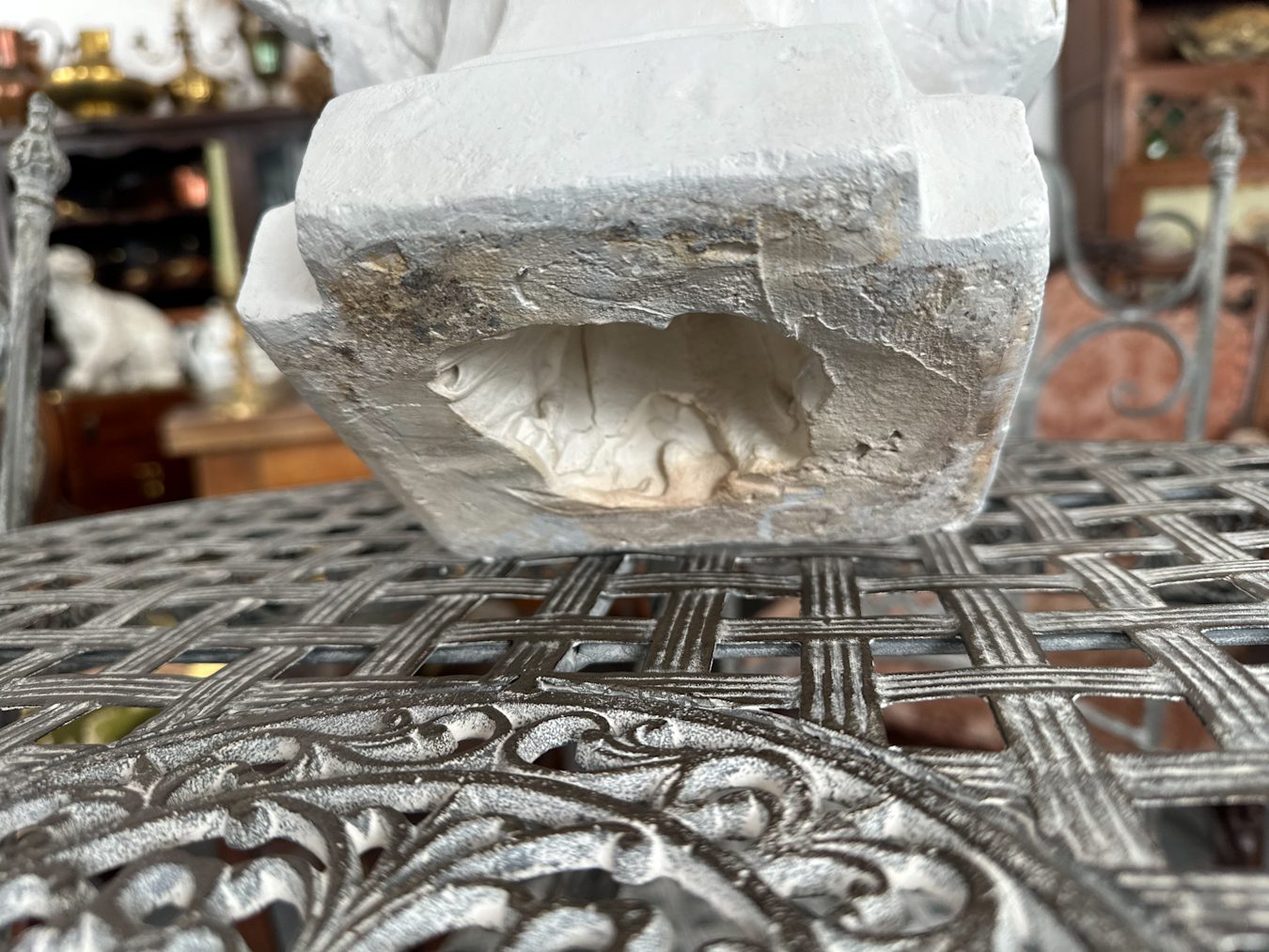
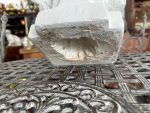
The bust is made of plaster, painted white or treated with lait de chaux — this is a typical method for mass-produced public and private busts of the late 19th century. The bottom part — an open, unfinished plaster cavity, indicating an industrial foundry product. The marking has not been preserved or was not present — this is characteristic of this type of commercial sculpture, which was produced by several competing and workshops according to unified catalog models. The portrait accuracy suggests that the bust was created based on Verne’s most famous photographic portrait — possibly from Nadar’s photo studio material or the salon portrait tradition of that time.
is the world’s most translated writer in history — UNESCO data confirms that in terms of the number of translations, he surpasses even Shakespeare and Agatha Christie. This bust is not just a decorative object — it is a material witness to an era when Verne’s name was synonymous with curiosity, discovery, and the dream of the future. Authentic Belle Époque plaster busts with portrait accuracy are a rare phenomenon in the antique market today — most such items are either damaged or have been lost in inventory.
The bust organically fits into a classical library — on a shelf between books, on a desk, or on a study wall. It also suits vintage and loft interiors as a conceptual element — the contrast of white plaster surfaces with dark wood or metal creates a strong visual effect. Interior designers often use busts of famous personalities as a focal point — they give the space character and an intellectual dimension. For photographers — an ideal prop with strong narrative potential.
The bust is an excellent gift for travelers, scientists, engineers, sailors, writers, or anyone whose childhood or youth was spent with Verne’s books. It serves as a corporate gift for innovation, technology, or education companies — is a symbol of a dreamer and a harbinger. Under the star sign — Gemini (curiosity, diversity) or Aquarius (vision, future) — this gift resonates deeply.
The bust is in generally good condition. The surface is painted white or treated — the paintwork is even, without major damage. The bottom shows an open plaster cavity with an unfinished mass — a typical sign of a foundry product, functionally insignificant. Minor signs of wear or age are possible — fully visible in the photographs.
The condition of the item is fully reflected in the photographs.