Chippendale Style Writing Desk with Leather Top and Decorative Sides — Chippendale Style, England / Europe, c. 1880–1910 (3158) 2 800,00 €
You’re now subscribed to price tracking for this product. We’ll notify you if the price drops. 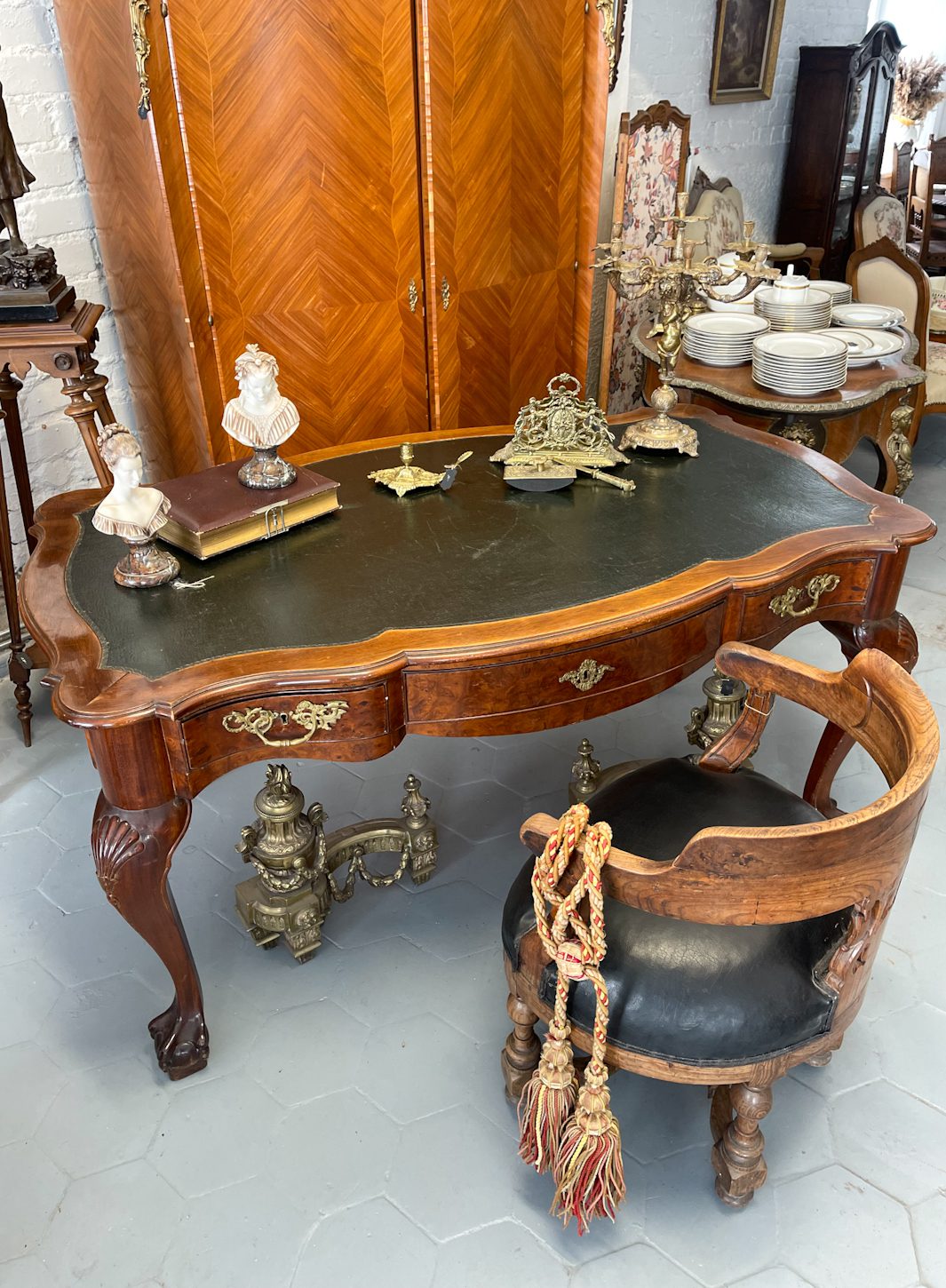
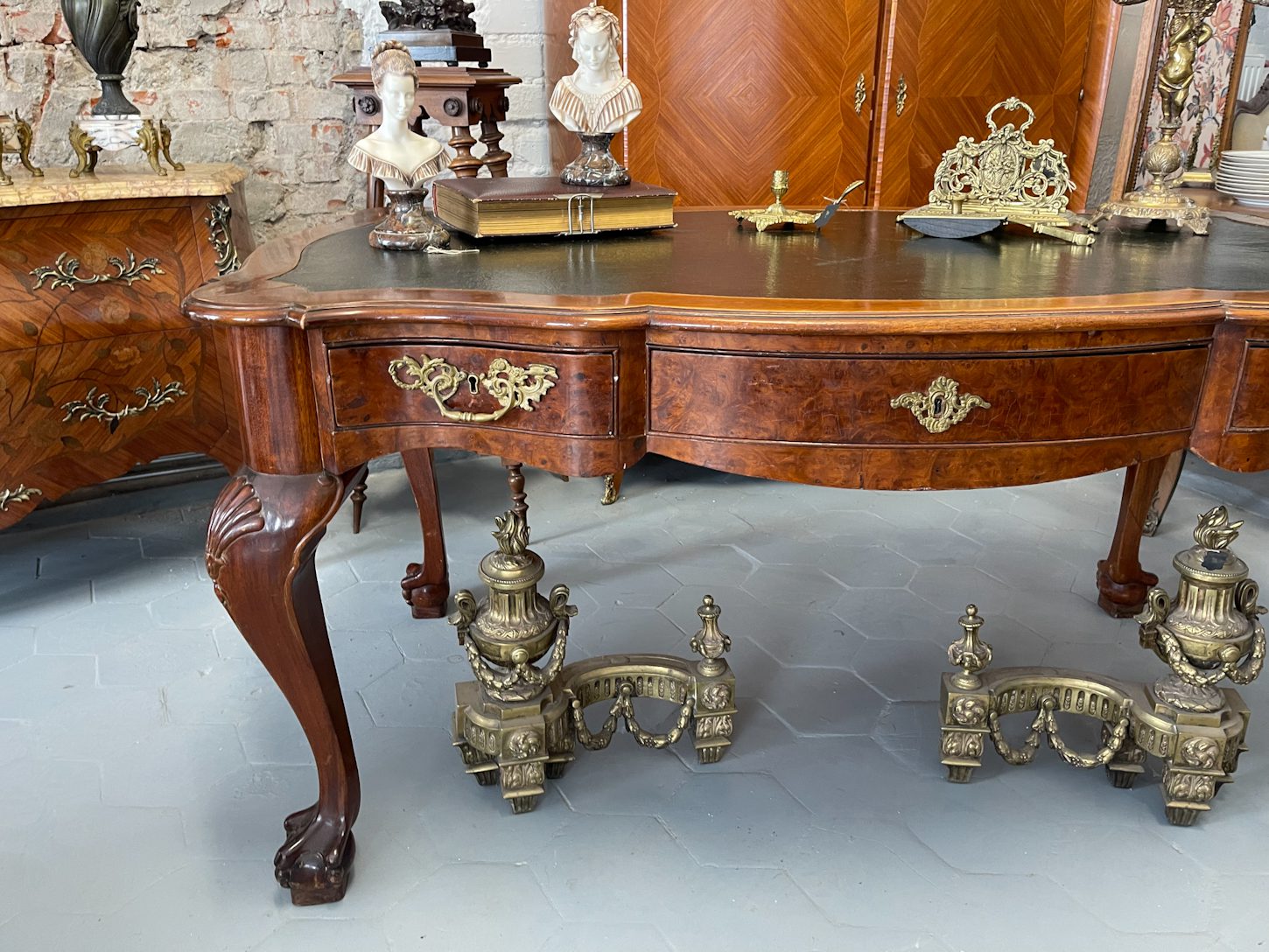
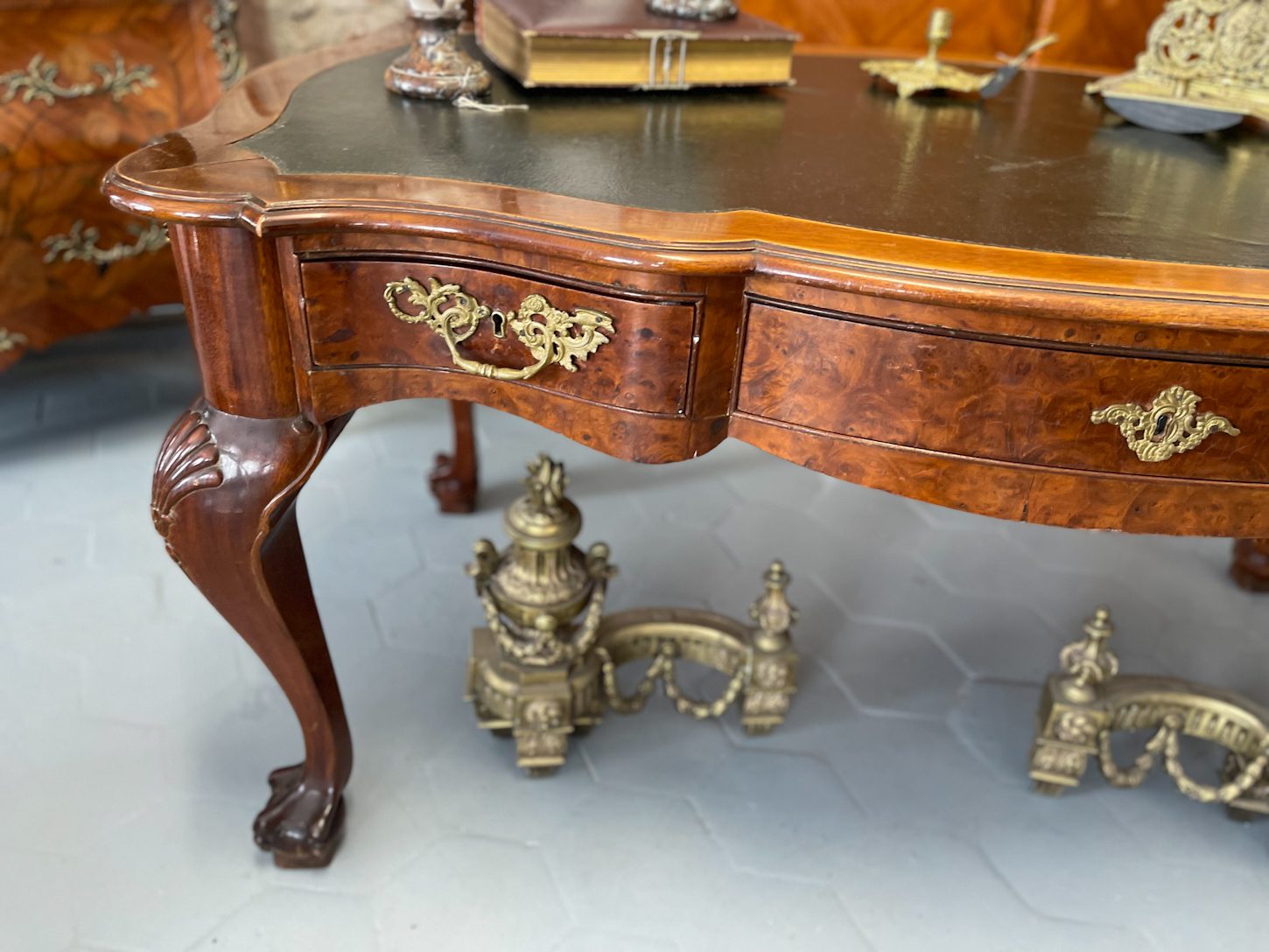
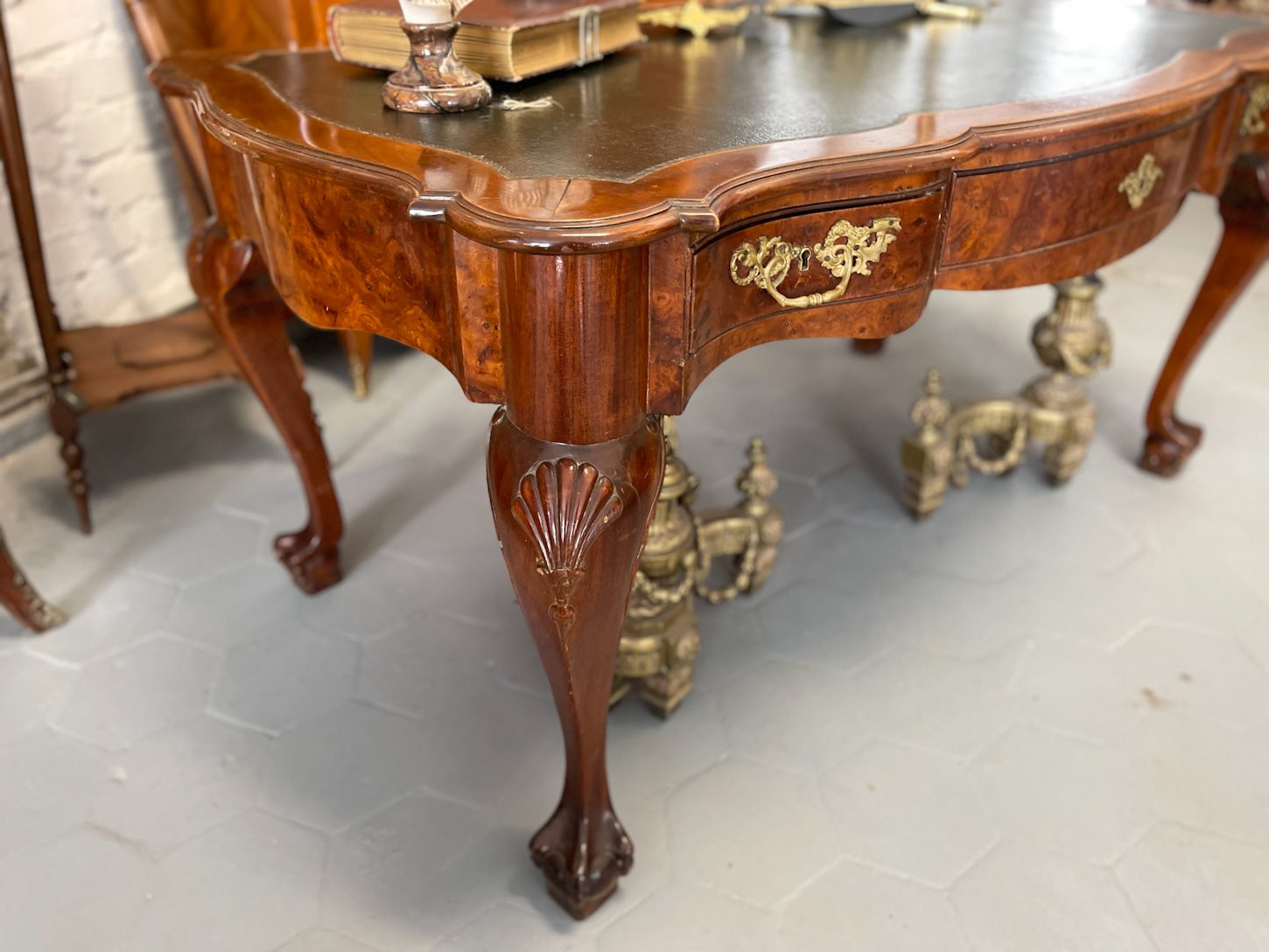
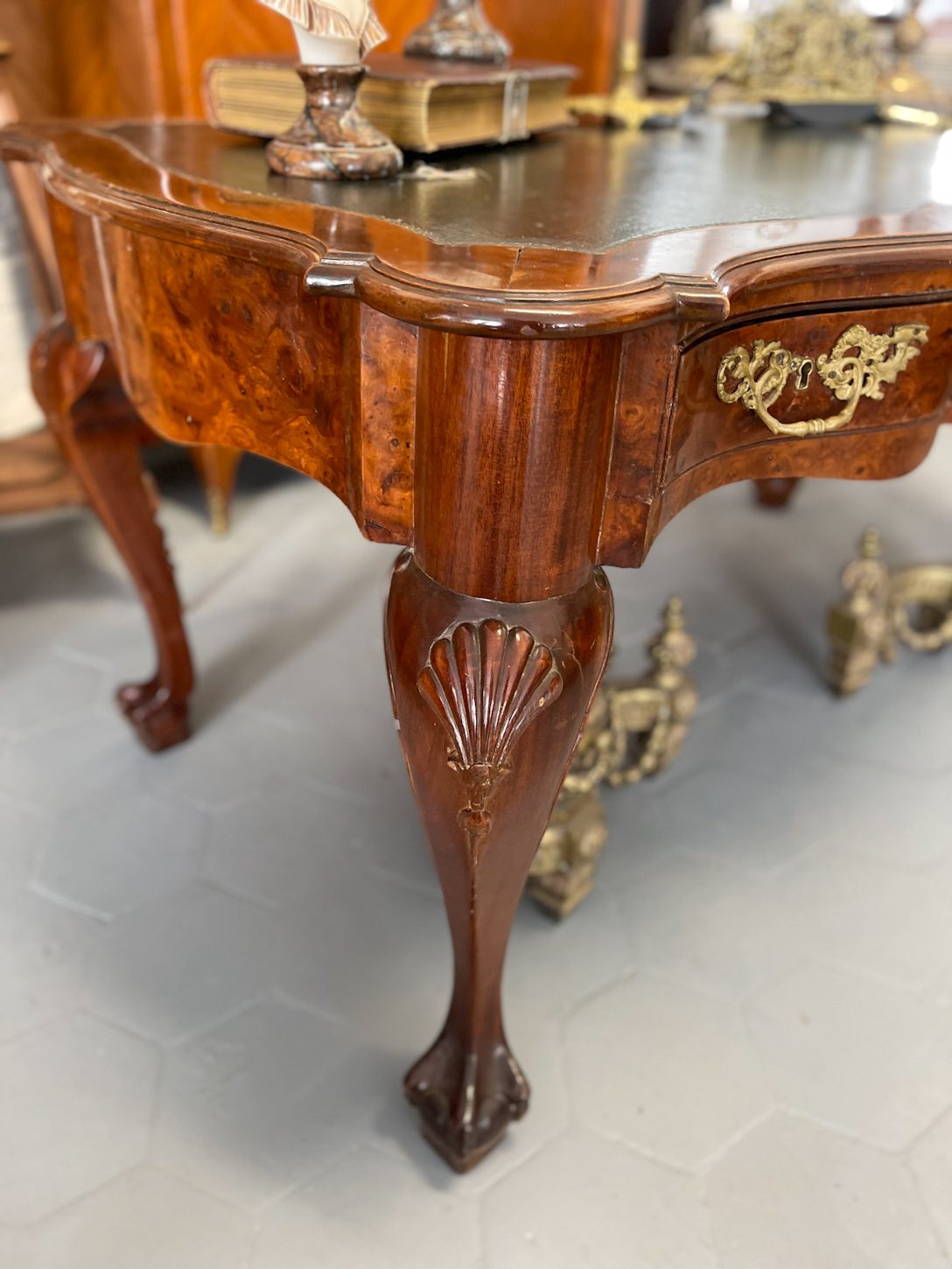
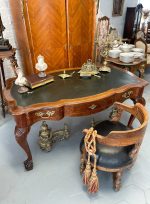
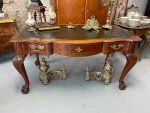
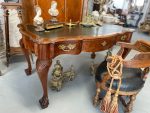
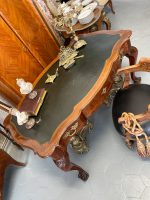
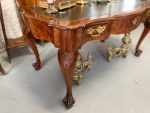
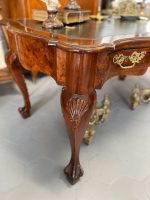
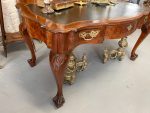
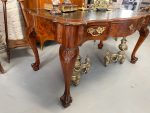
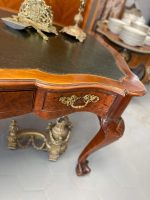
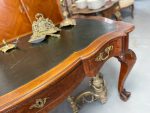
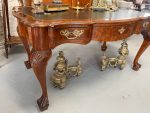
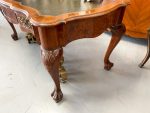
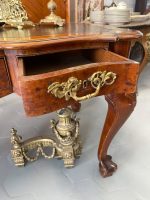
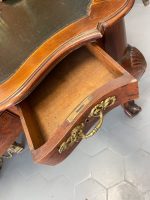
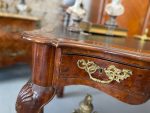
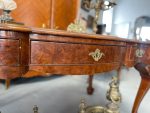
Chippendale Style Desk with Leather Top and Decorative Both Sides — England / Europe, c. 1880–1910 (3158)
Height 165 cm Width 97 cm
Description
Augstums 81 cm × garums 165 cm × platums 97 cm
Chippendale Style Writing Desk with Leather Top and Decorative Sides — Chippendale Style, England / Europe, c. 1880–1910 (3158)
Chippendale style. England / Continental Europe. Circa 1880–1910.
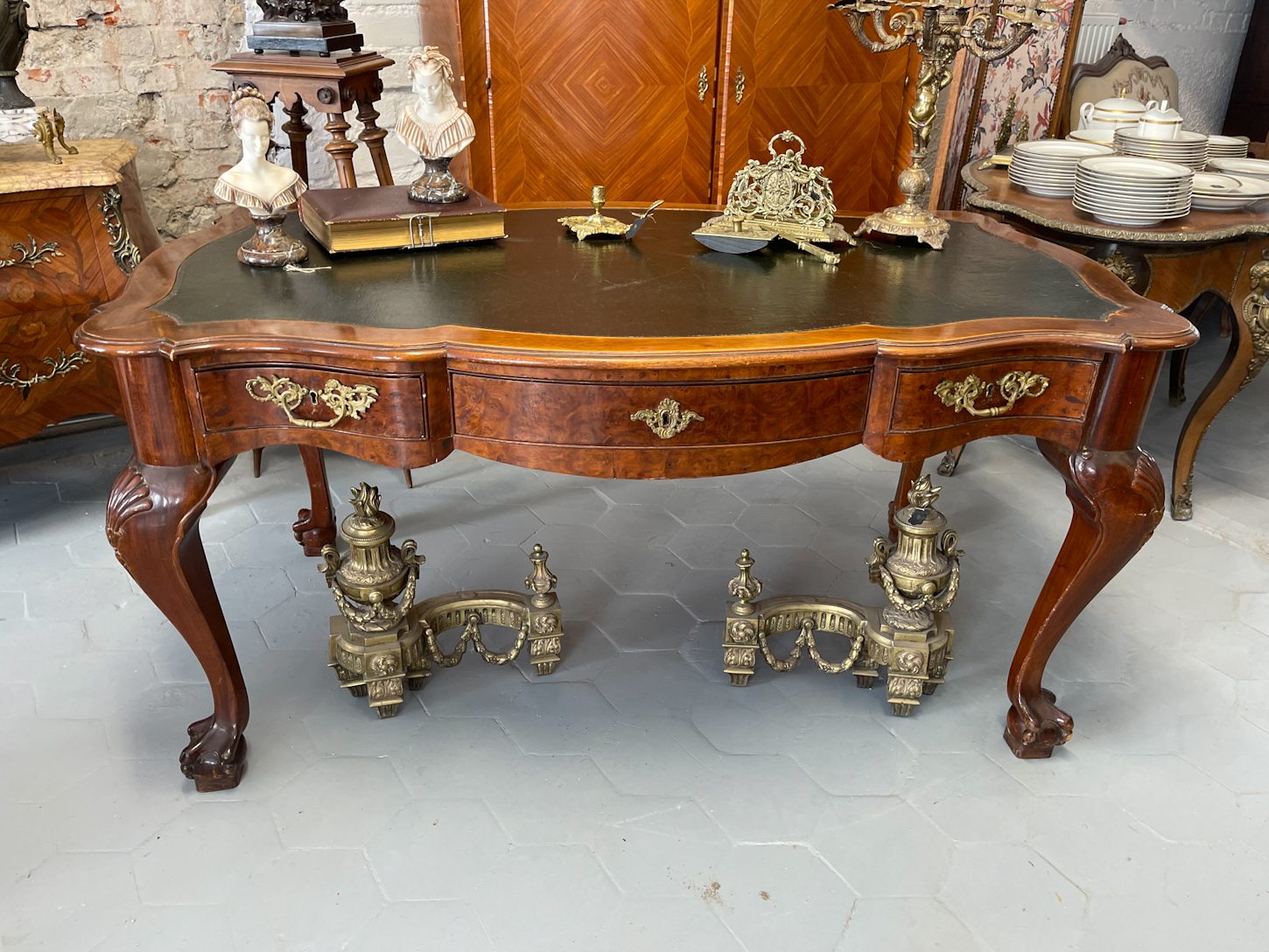
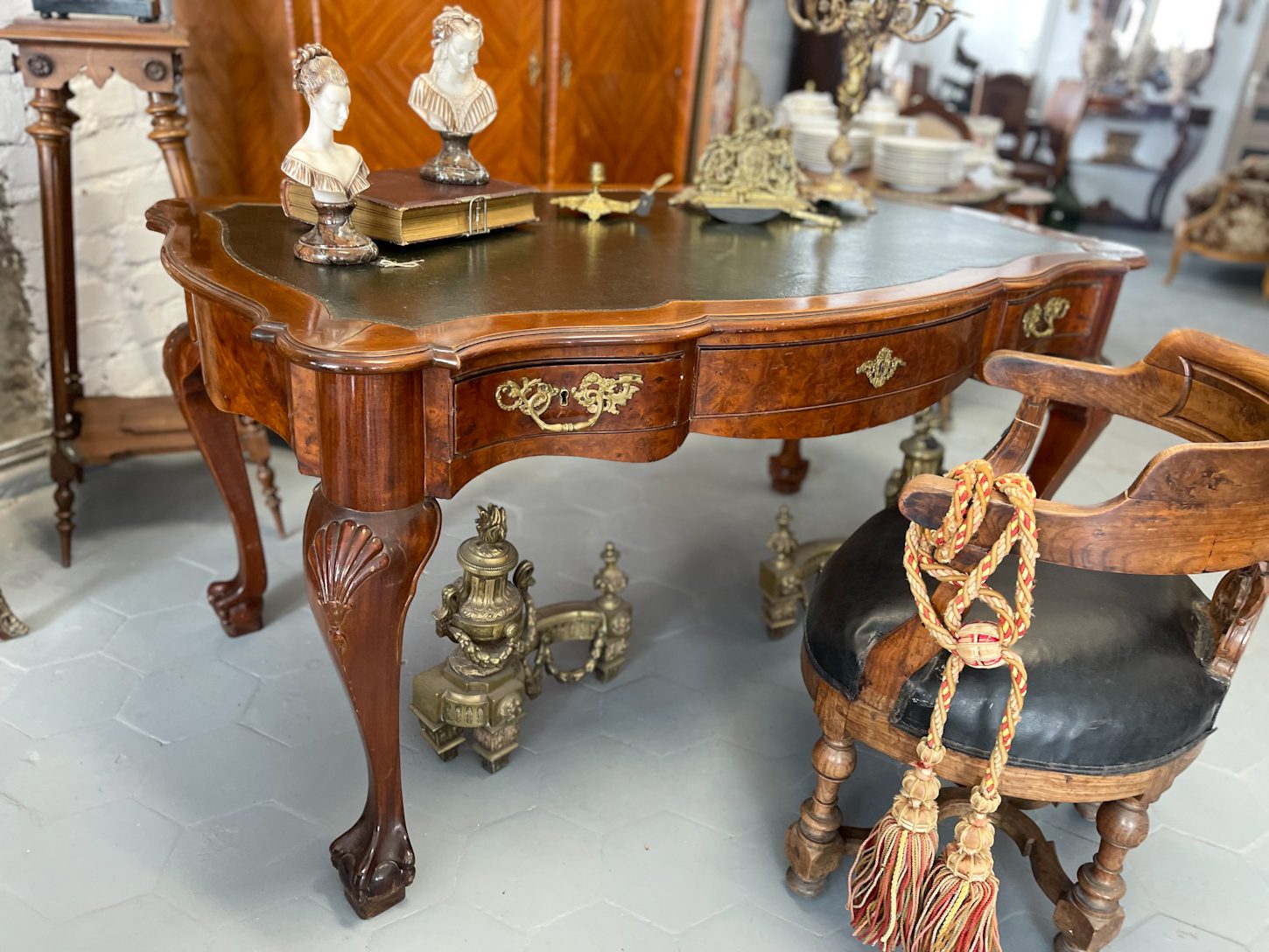
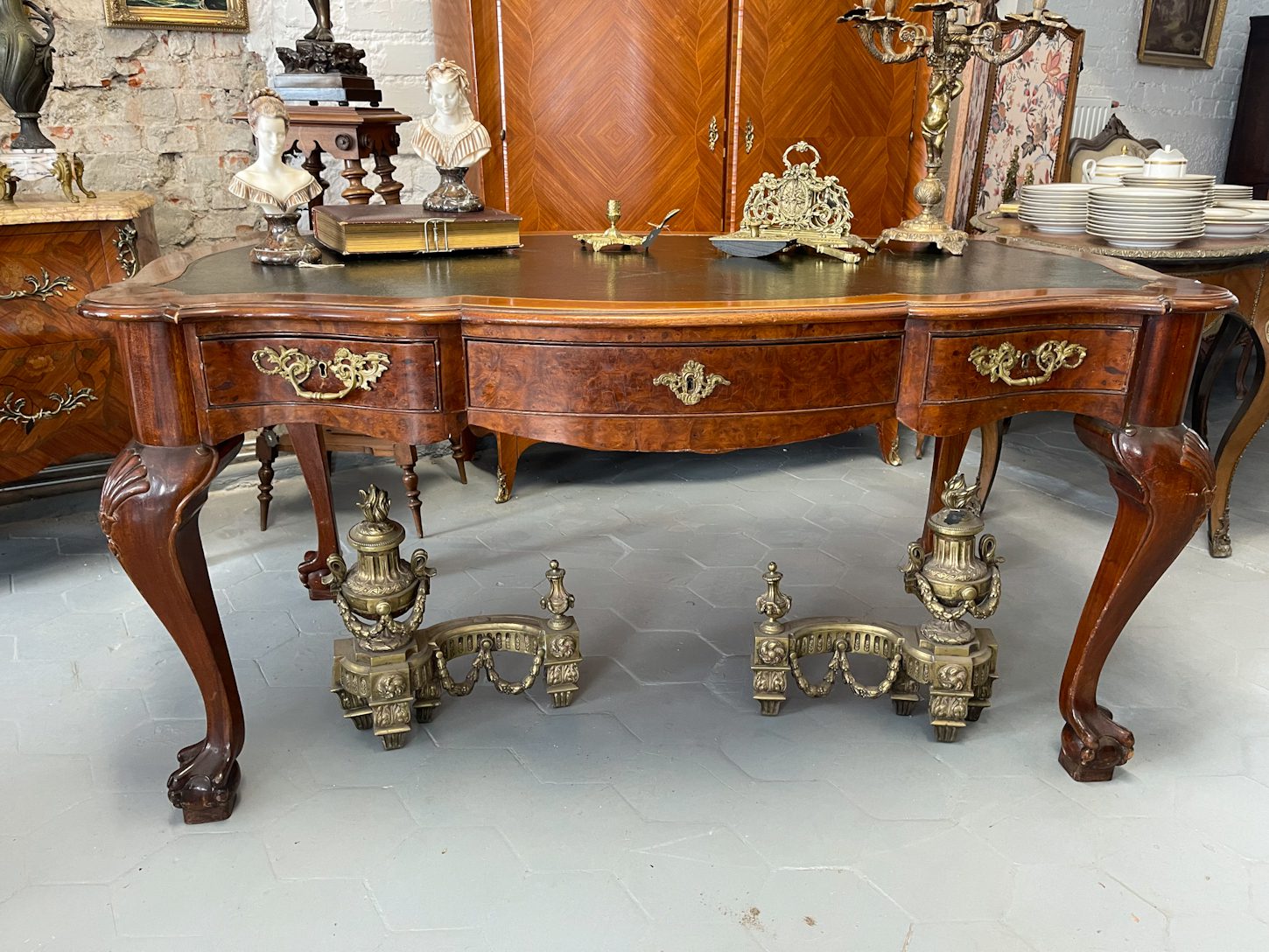
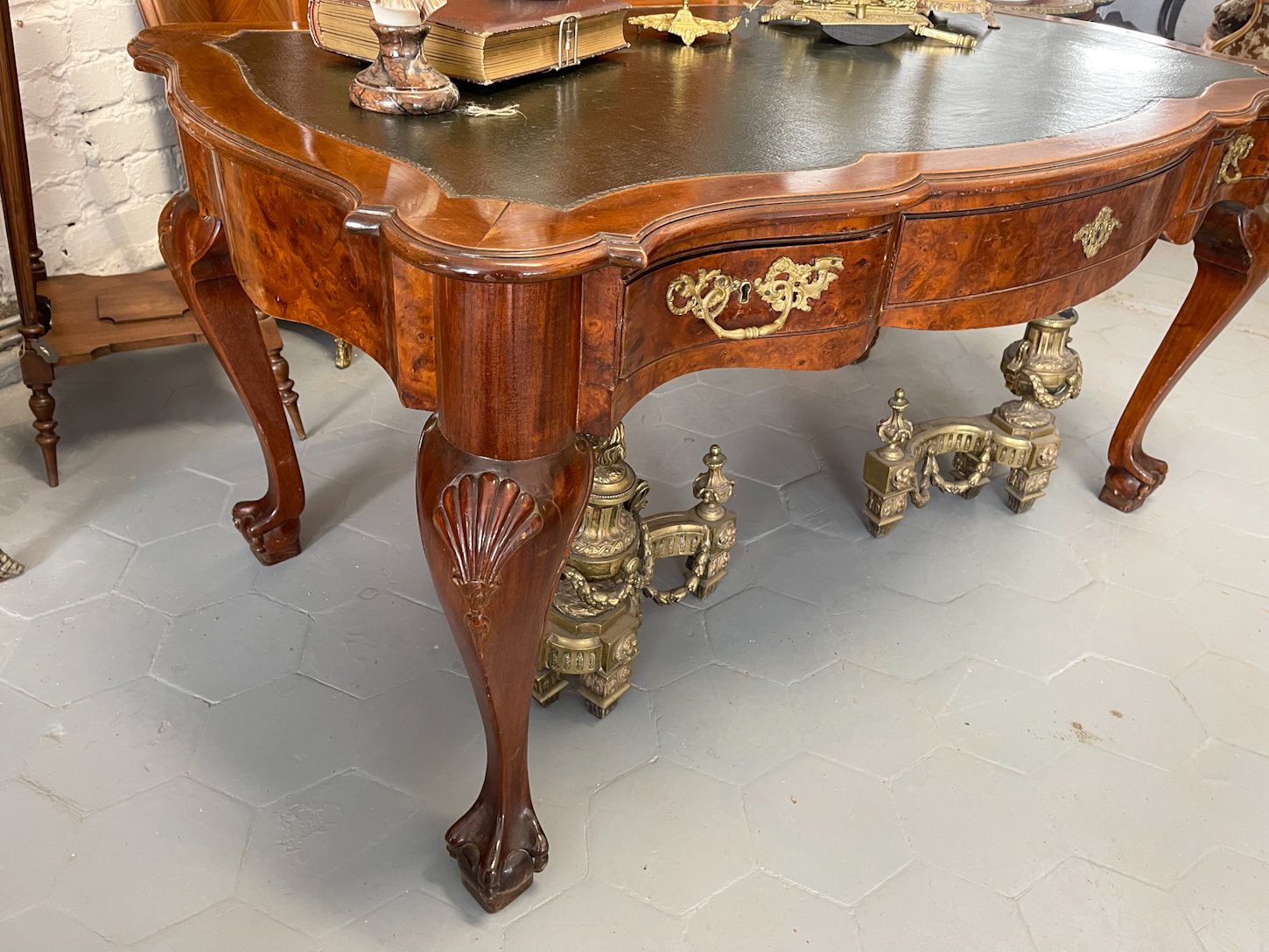
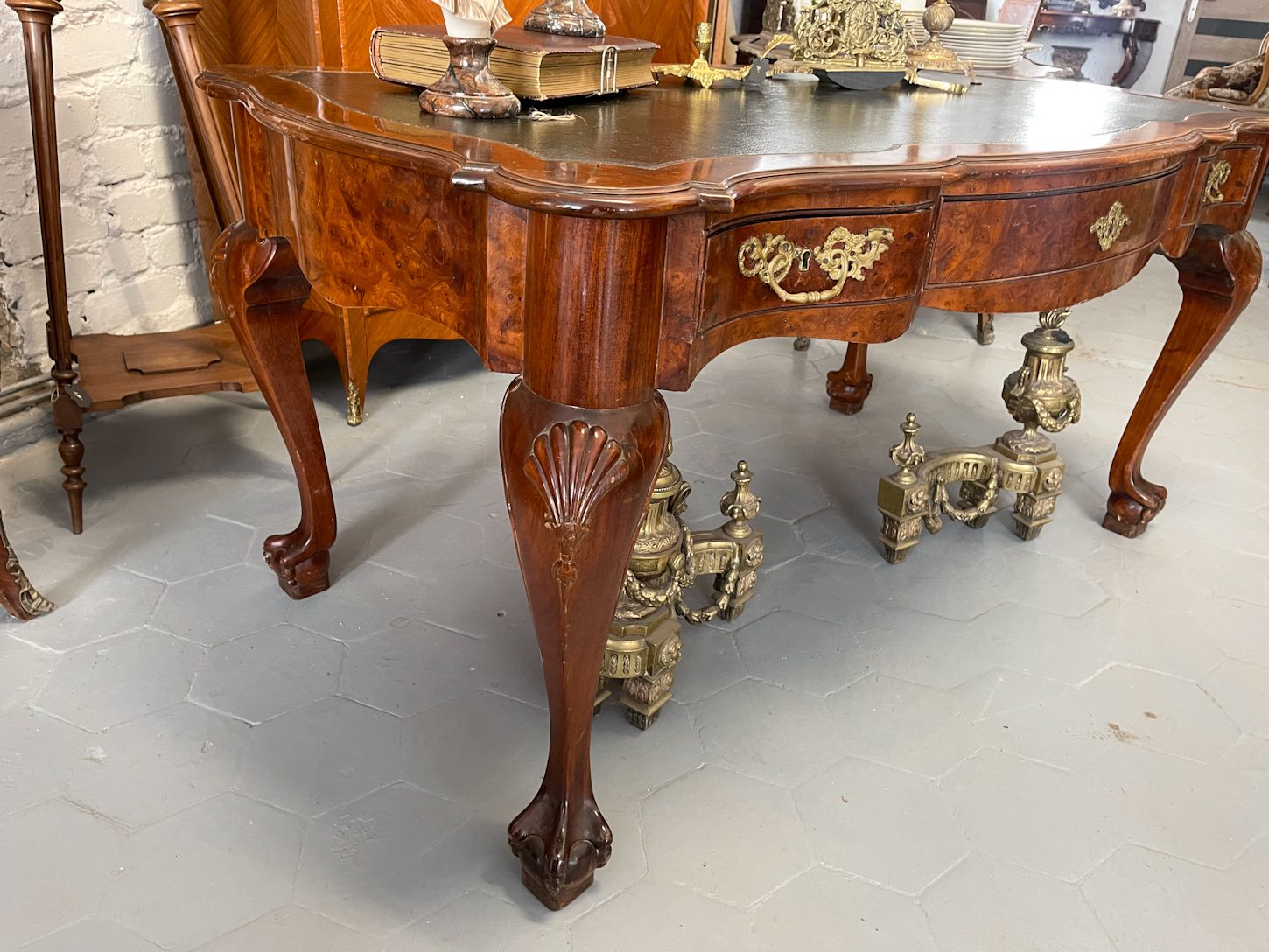
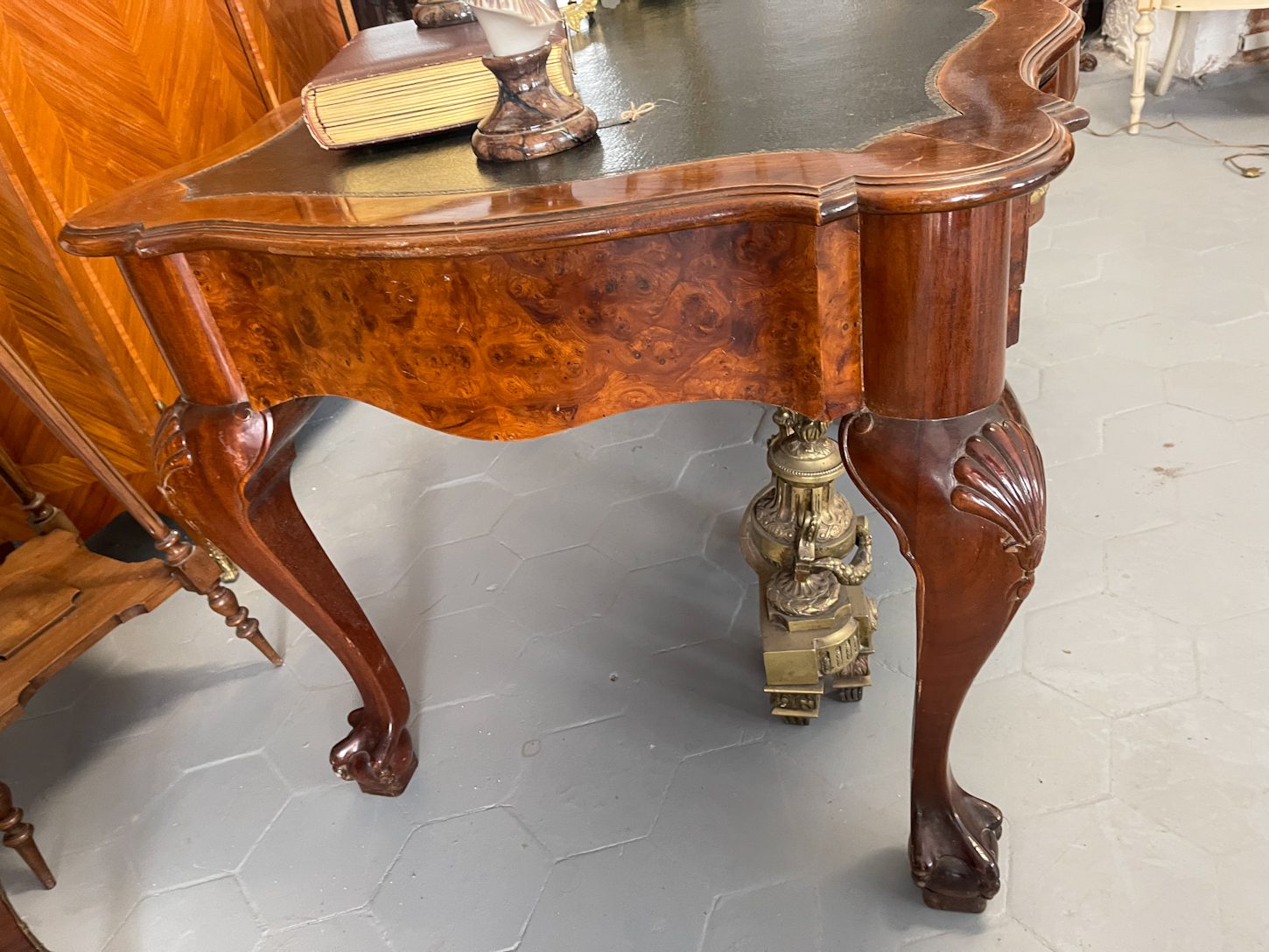
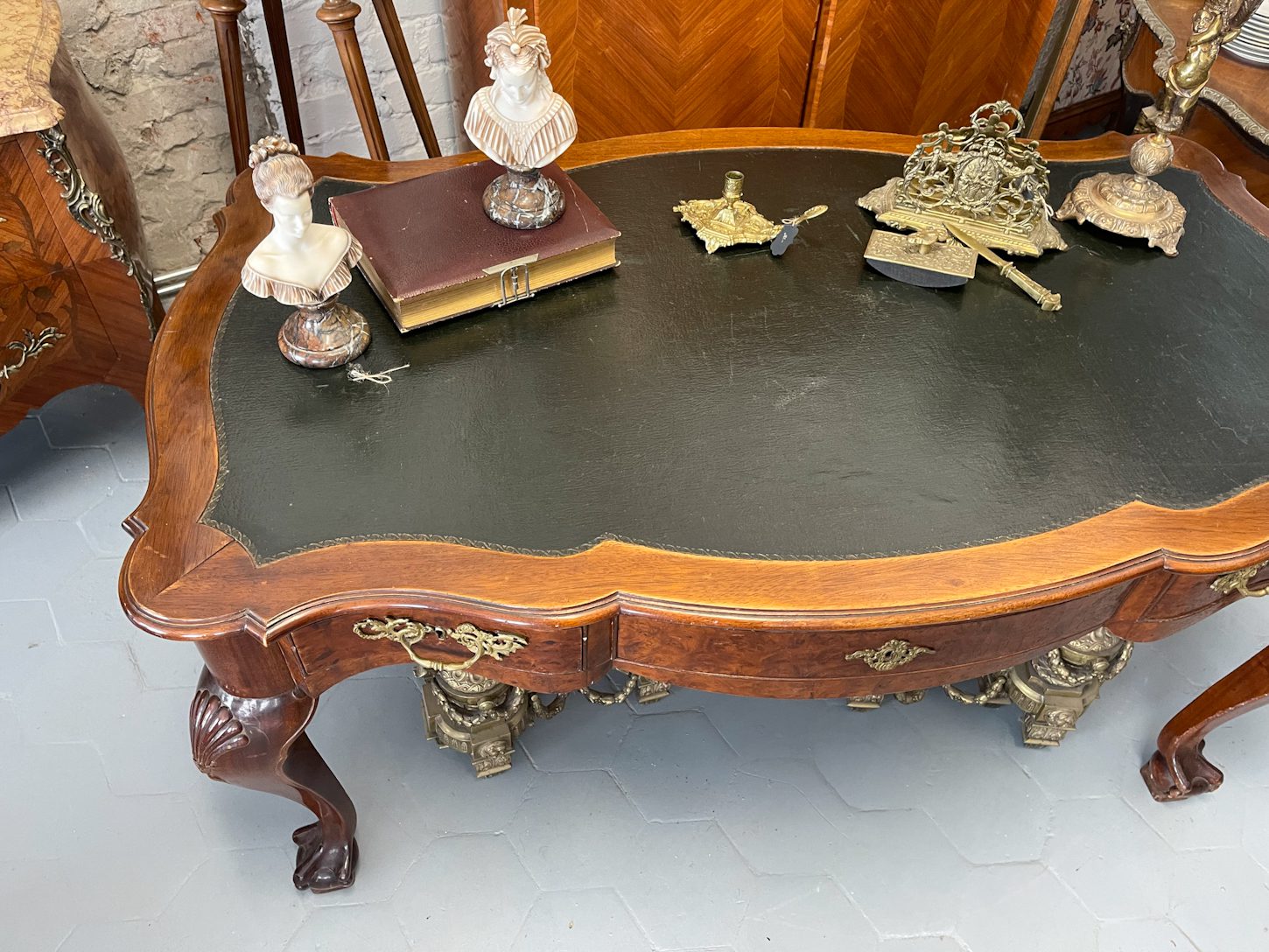
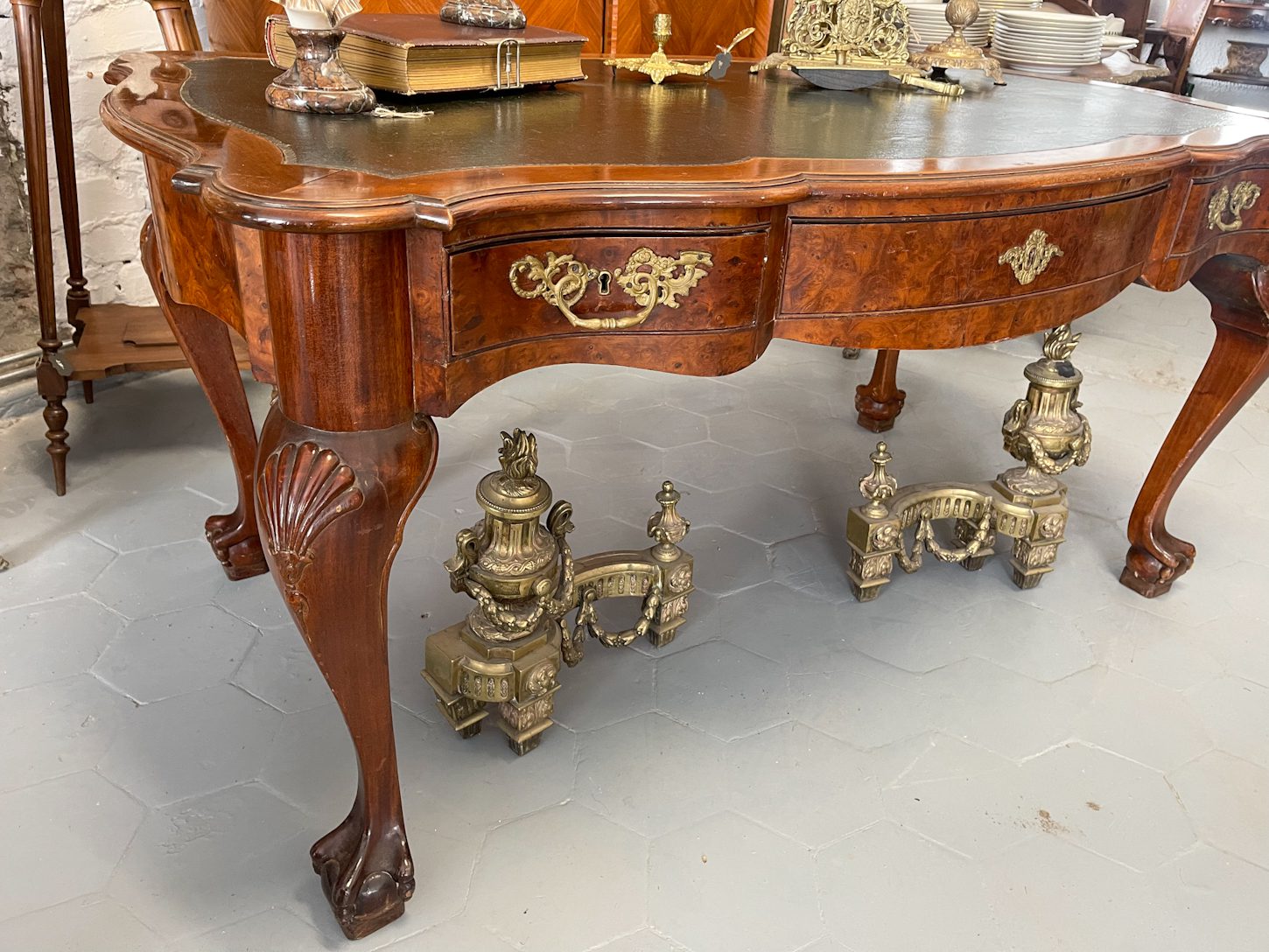
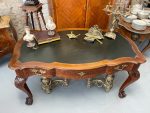
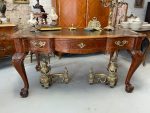
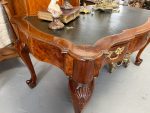
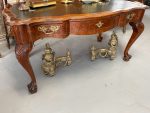
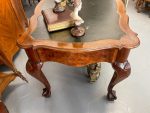
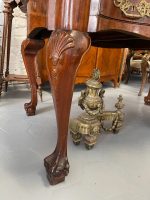
This commanding bureau plat unites two traditions — English Chippendale cabriole legs with ball-and-claw feet and richly figured walnut burl veneer characteristic of the finest Continental cabinetmaking. A piece with no wrong side, no back, no hierarchy of views.
Belle Époque snapshot: Oscar Wilde (Oscar Wilde) paused. He had circled the desk three times already — that was how he thought. The burl pattern shifted with every step, and for a moment it seemed to him that the green surface held not a blank sheet but a sentence already written — the one he had been searching for all morning.
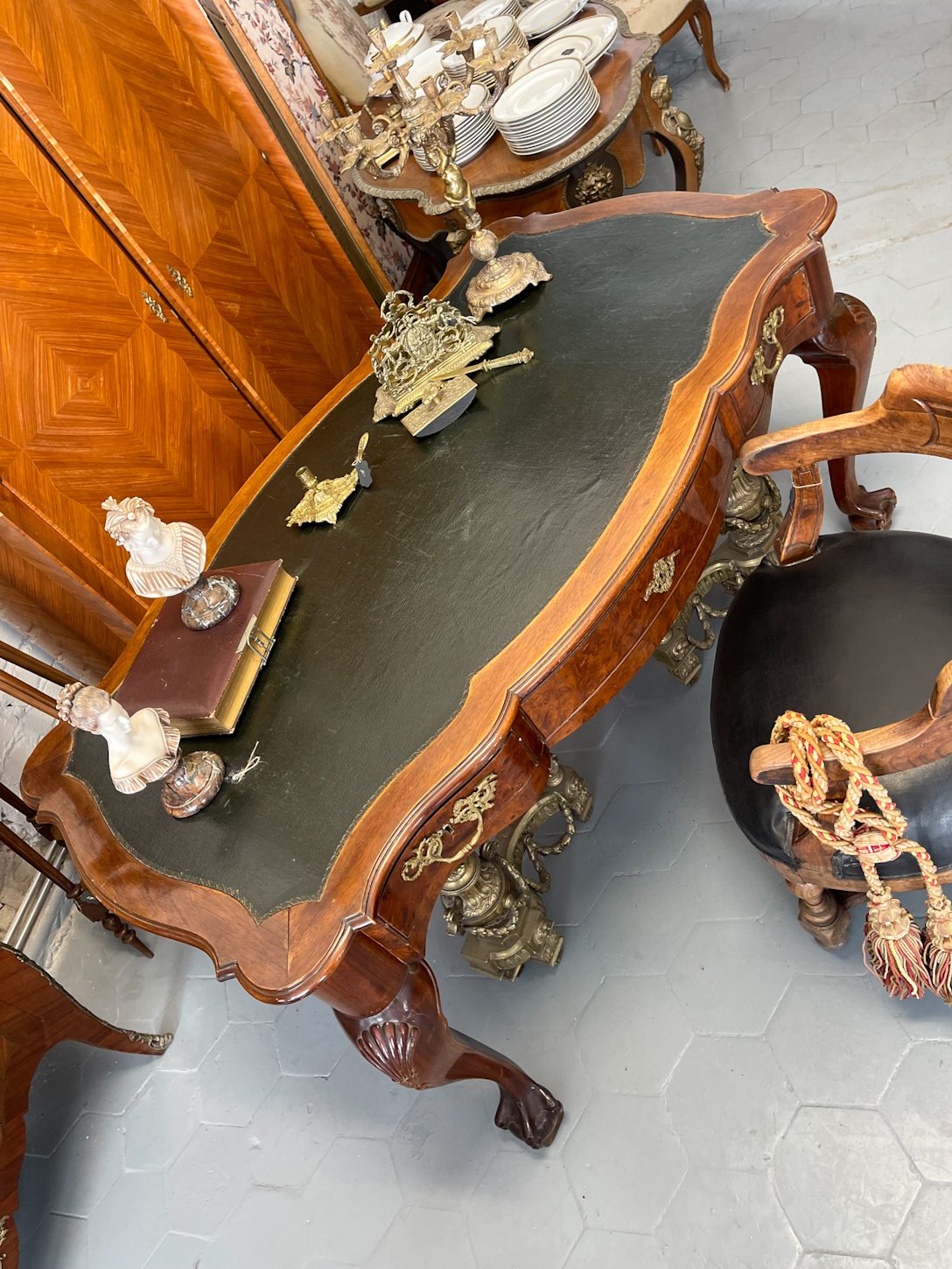
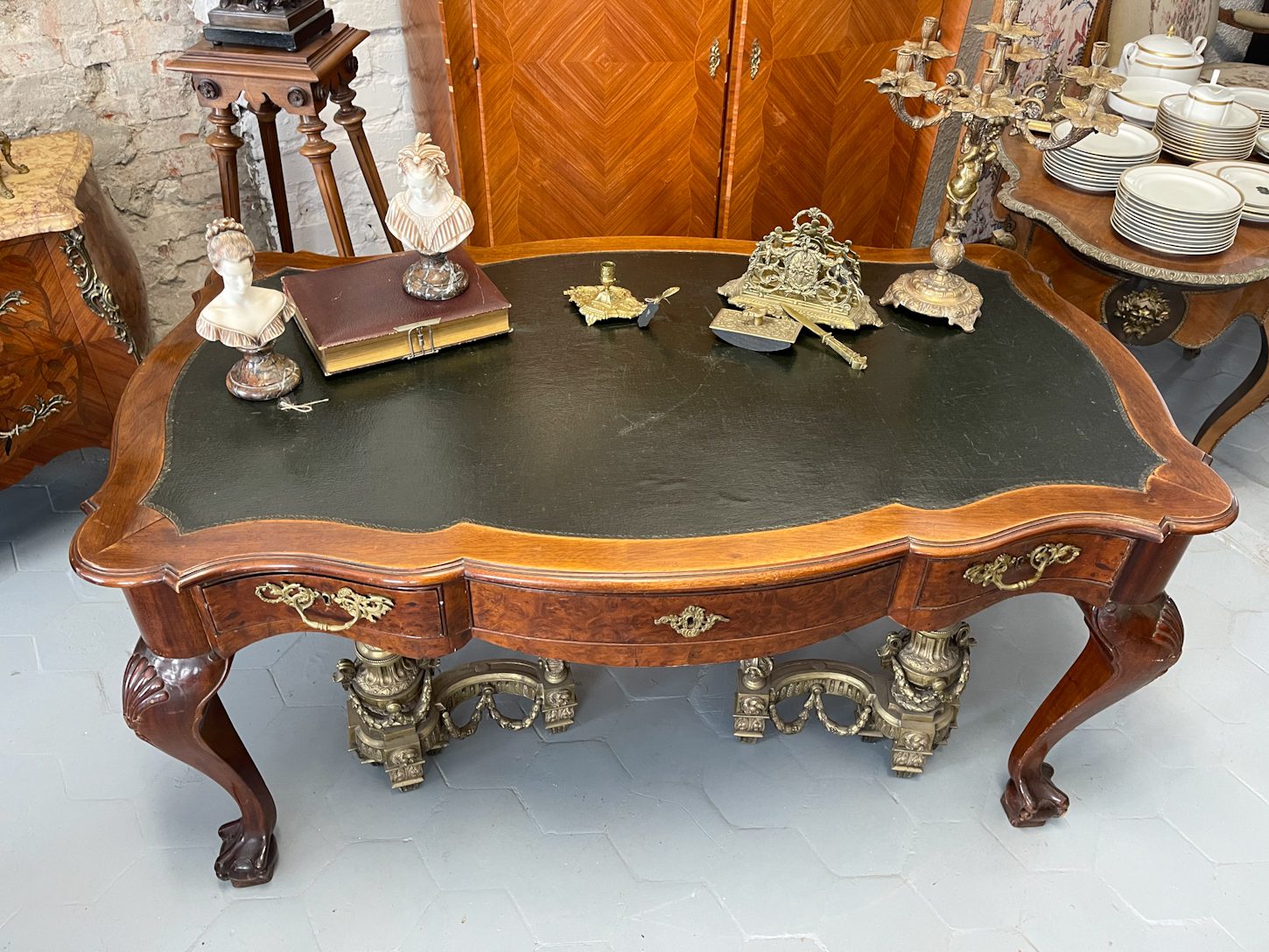
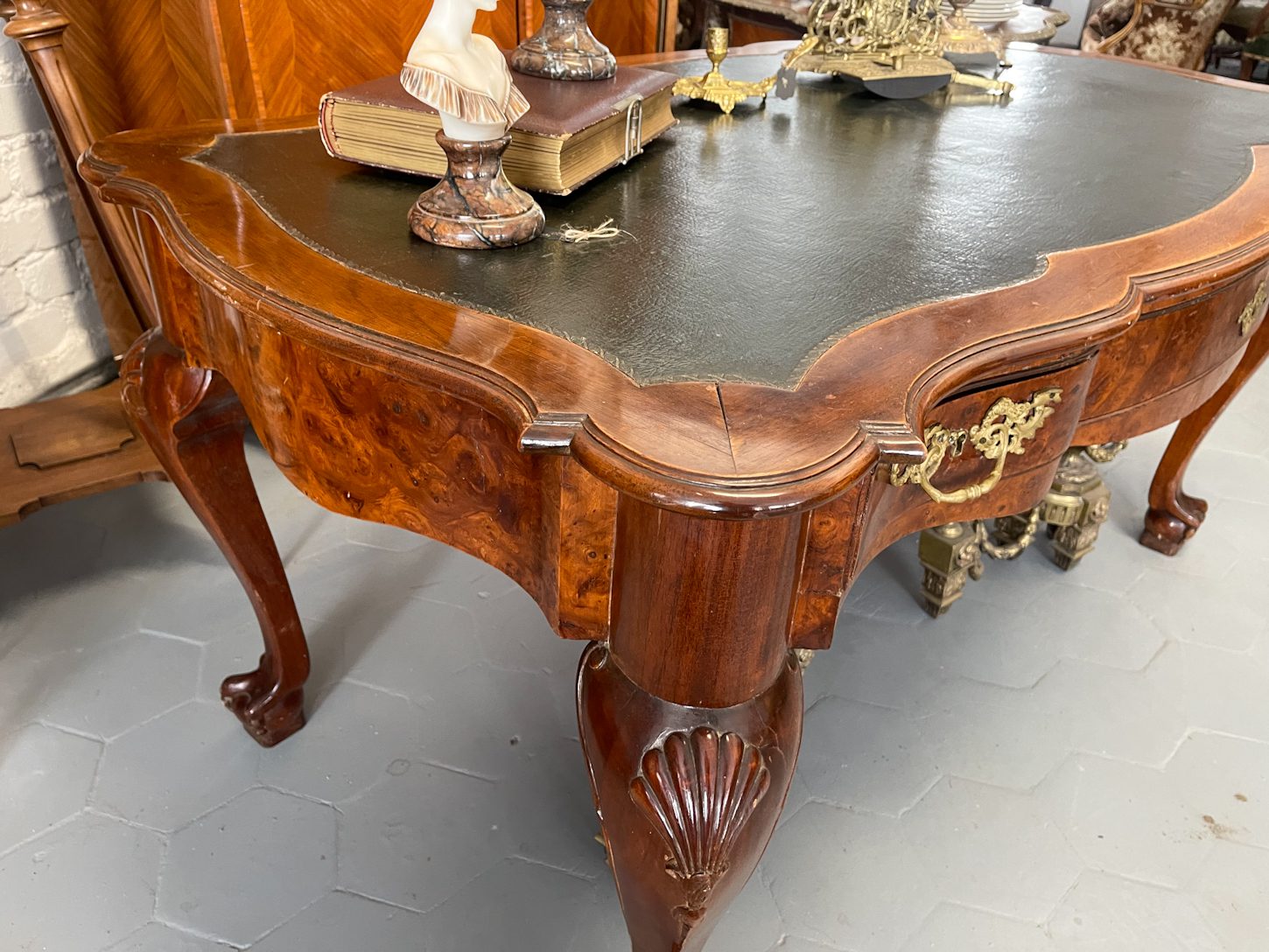
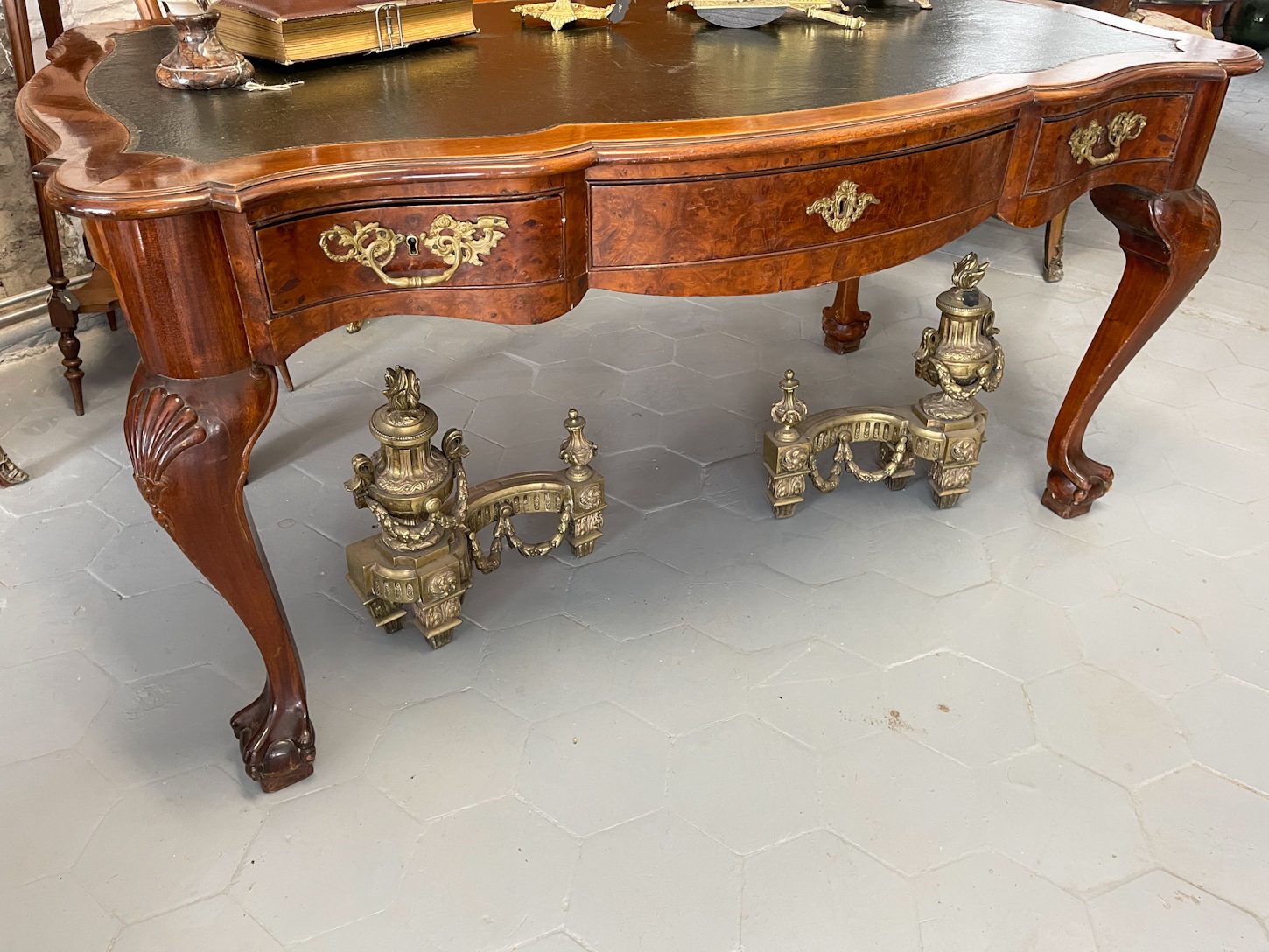
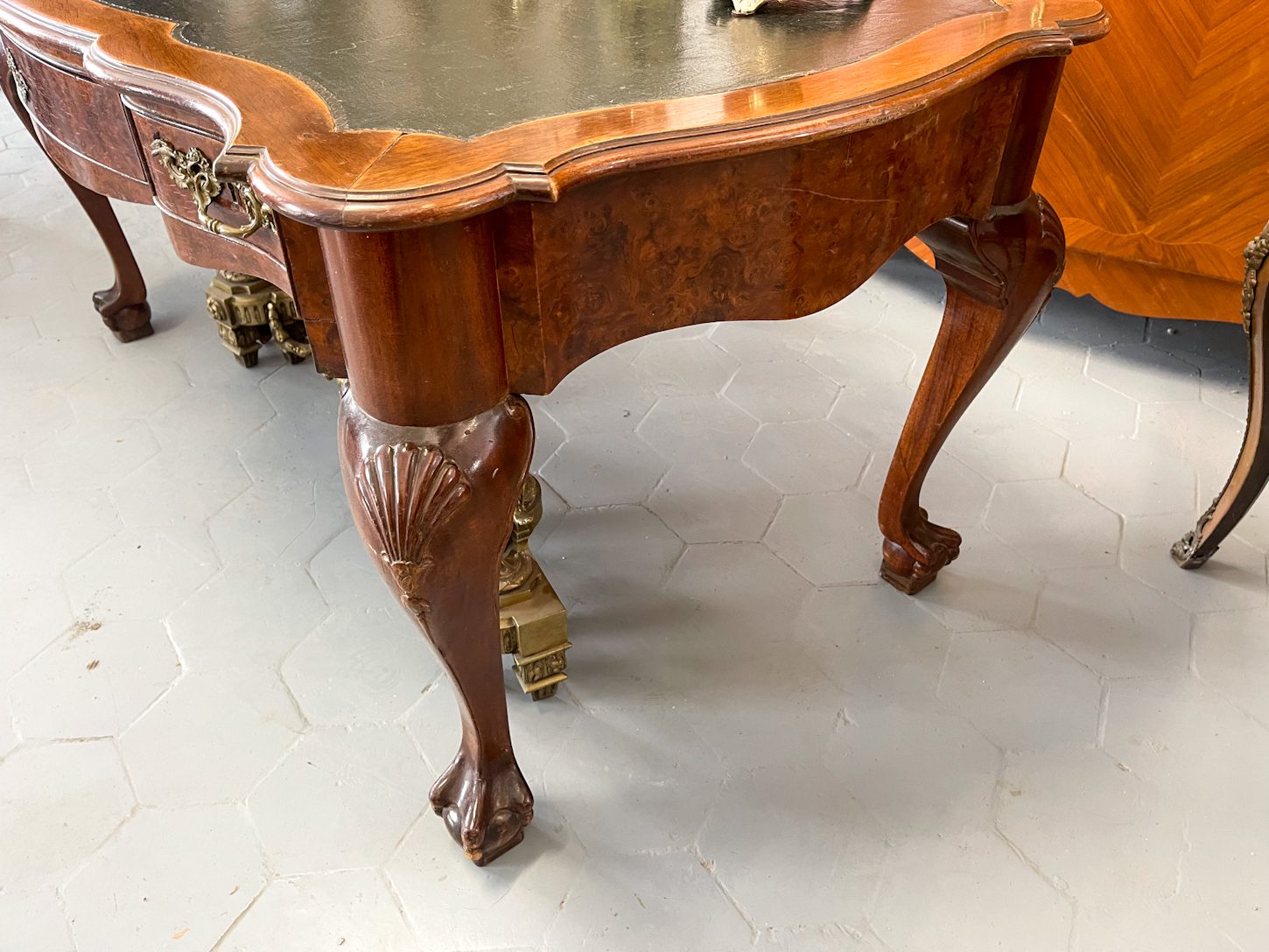
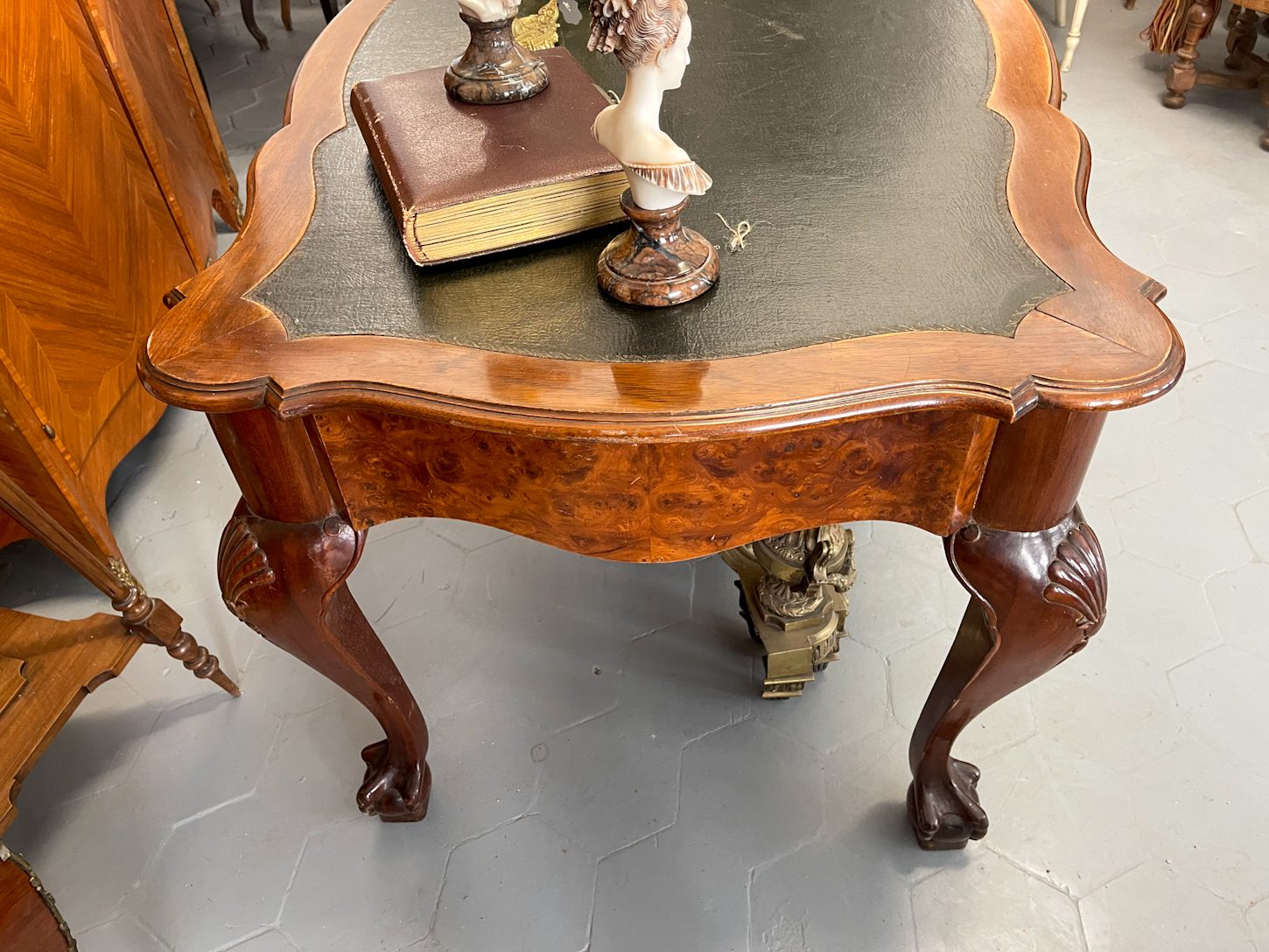
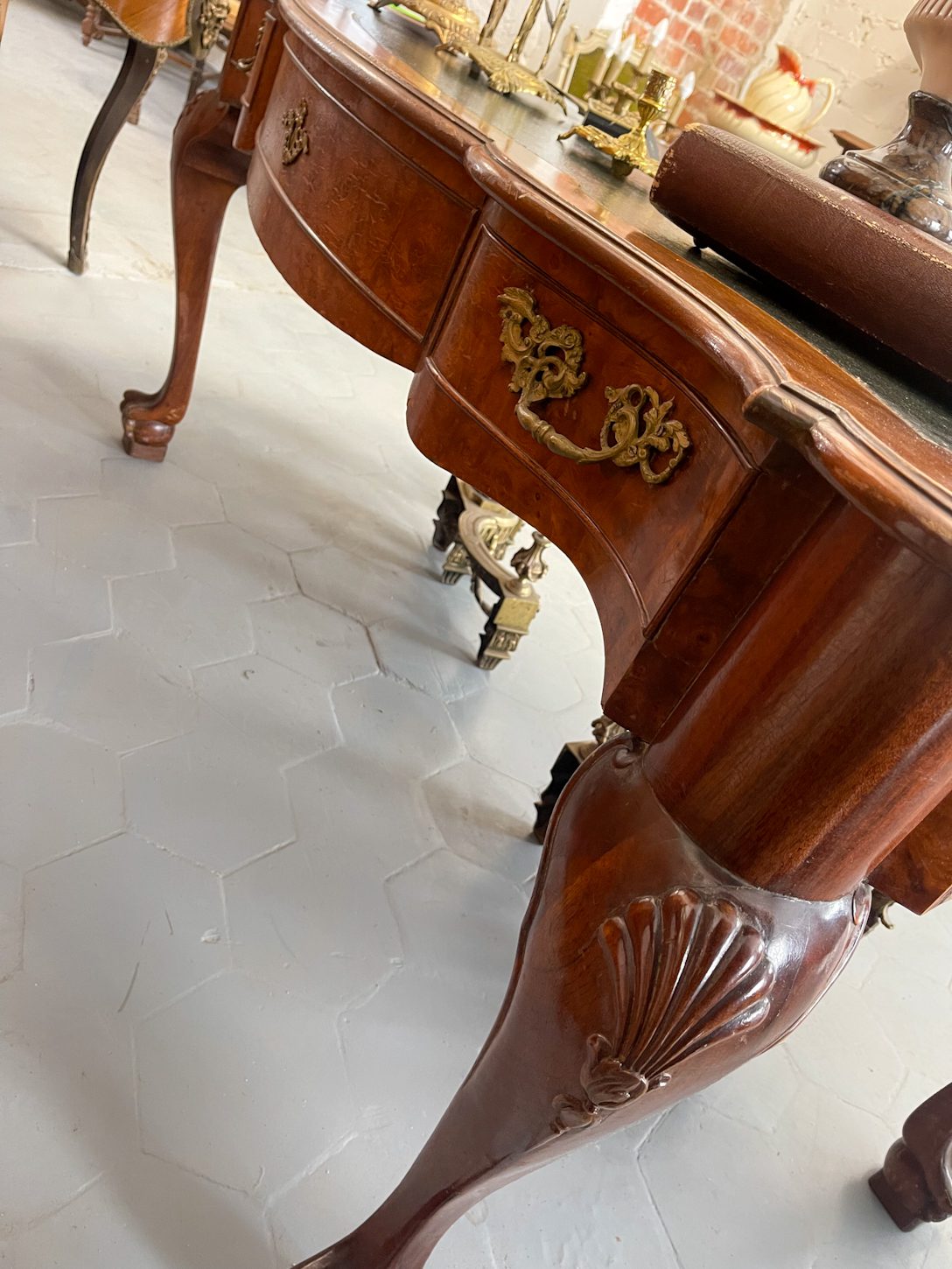
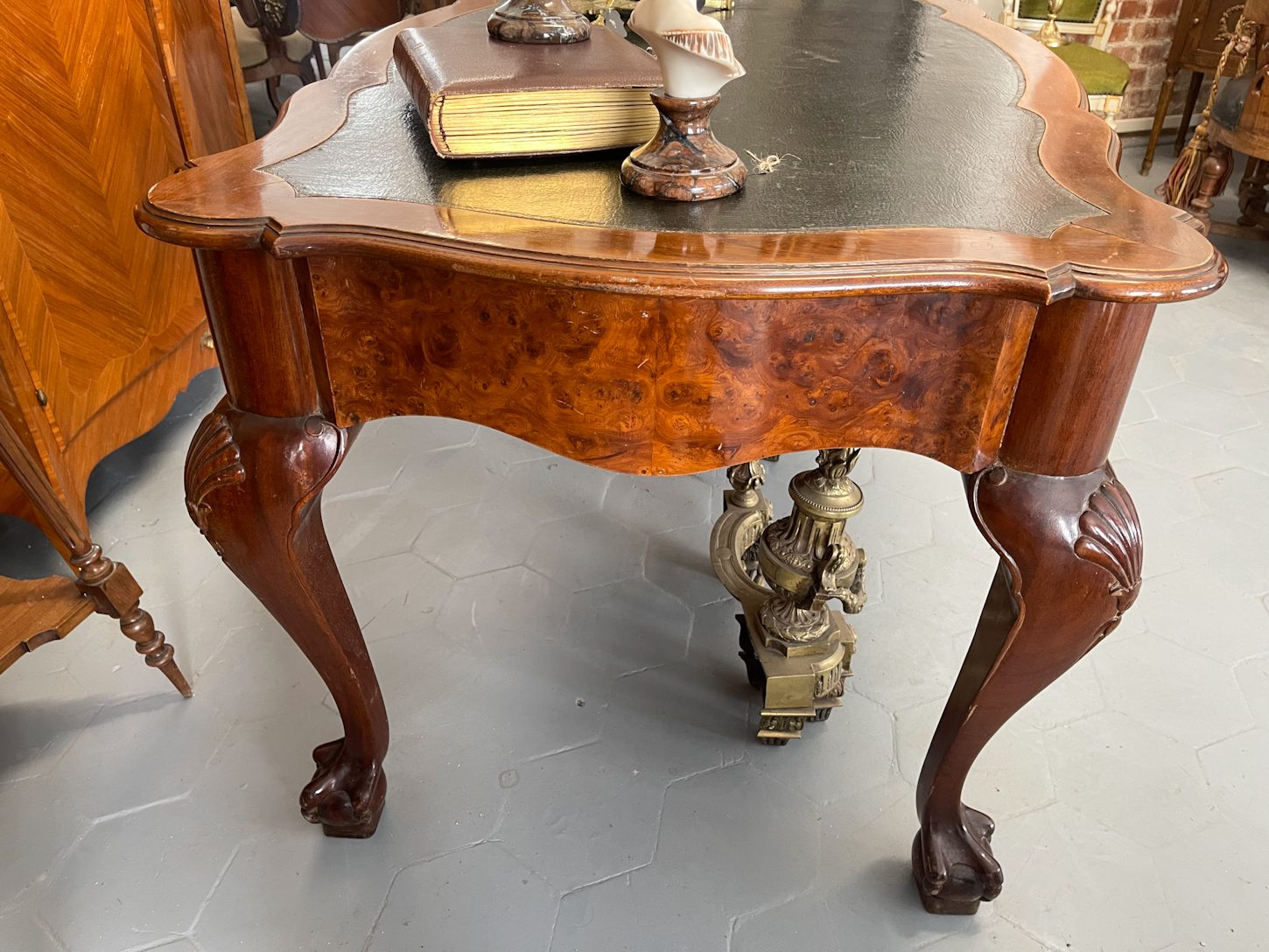
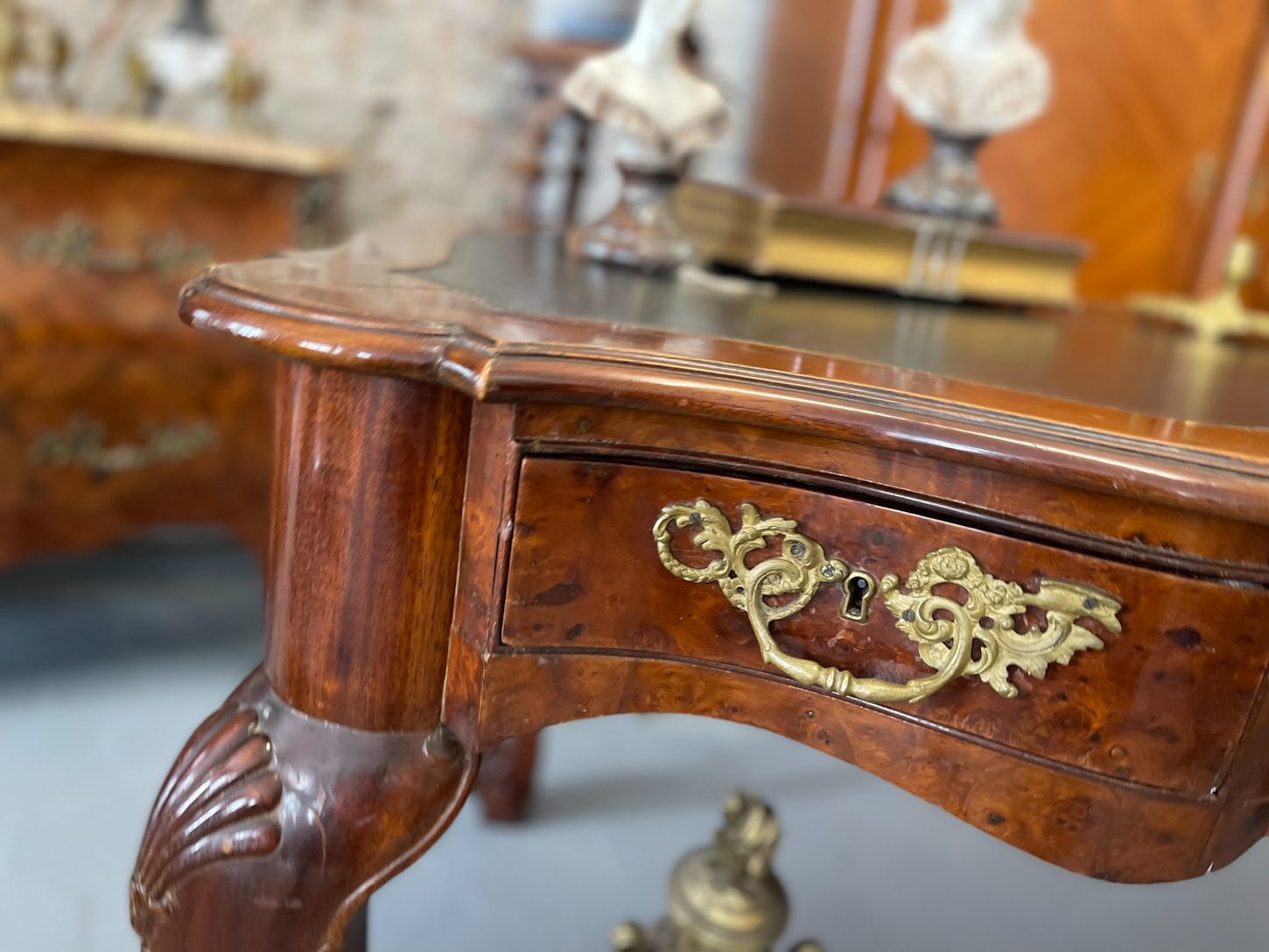
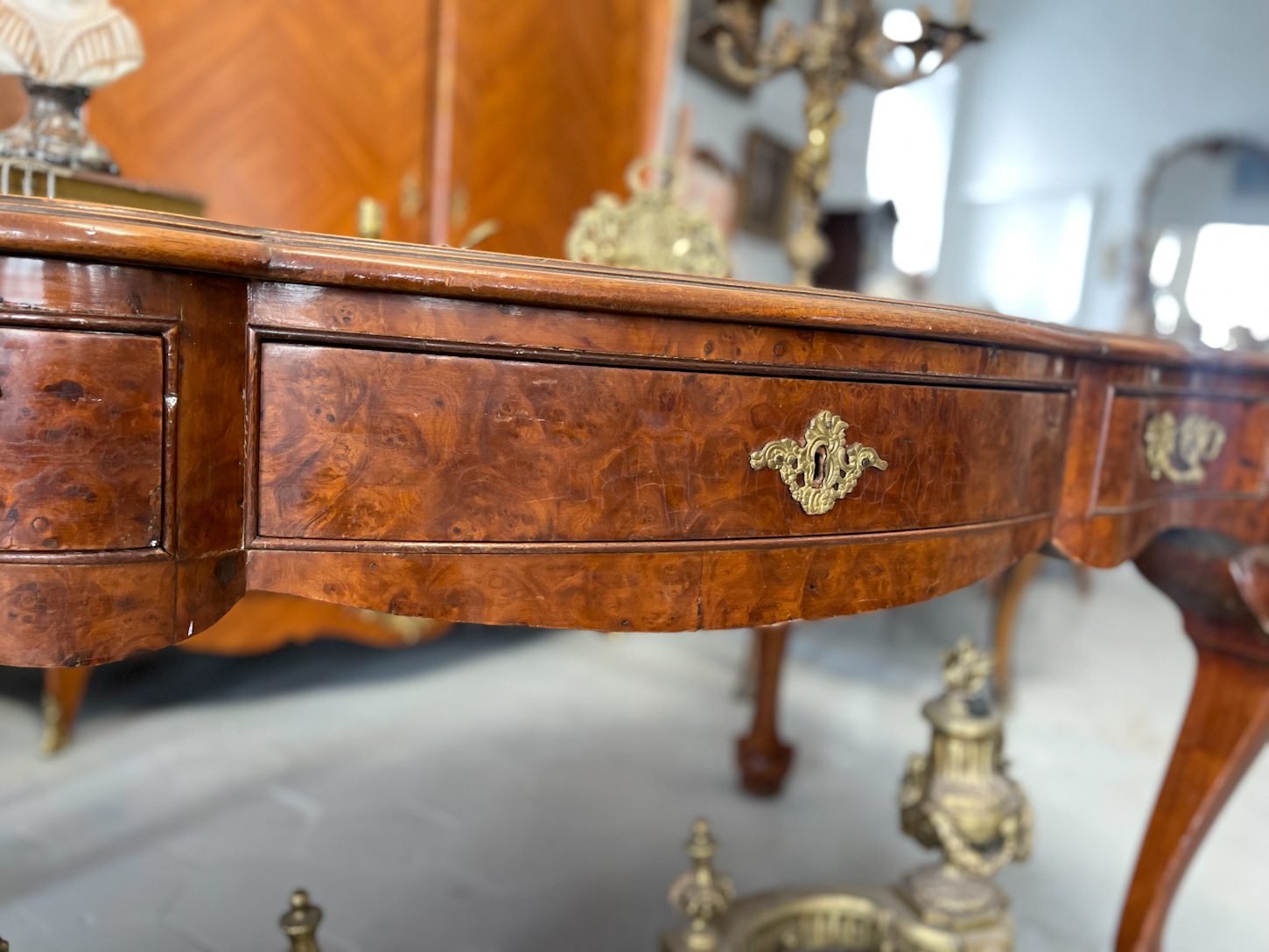
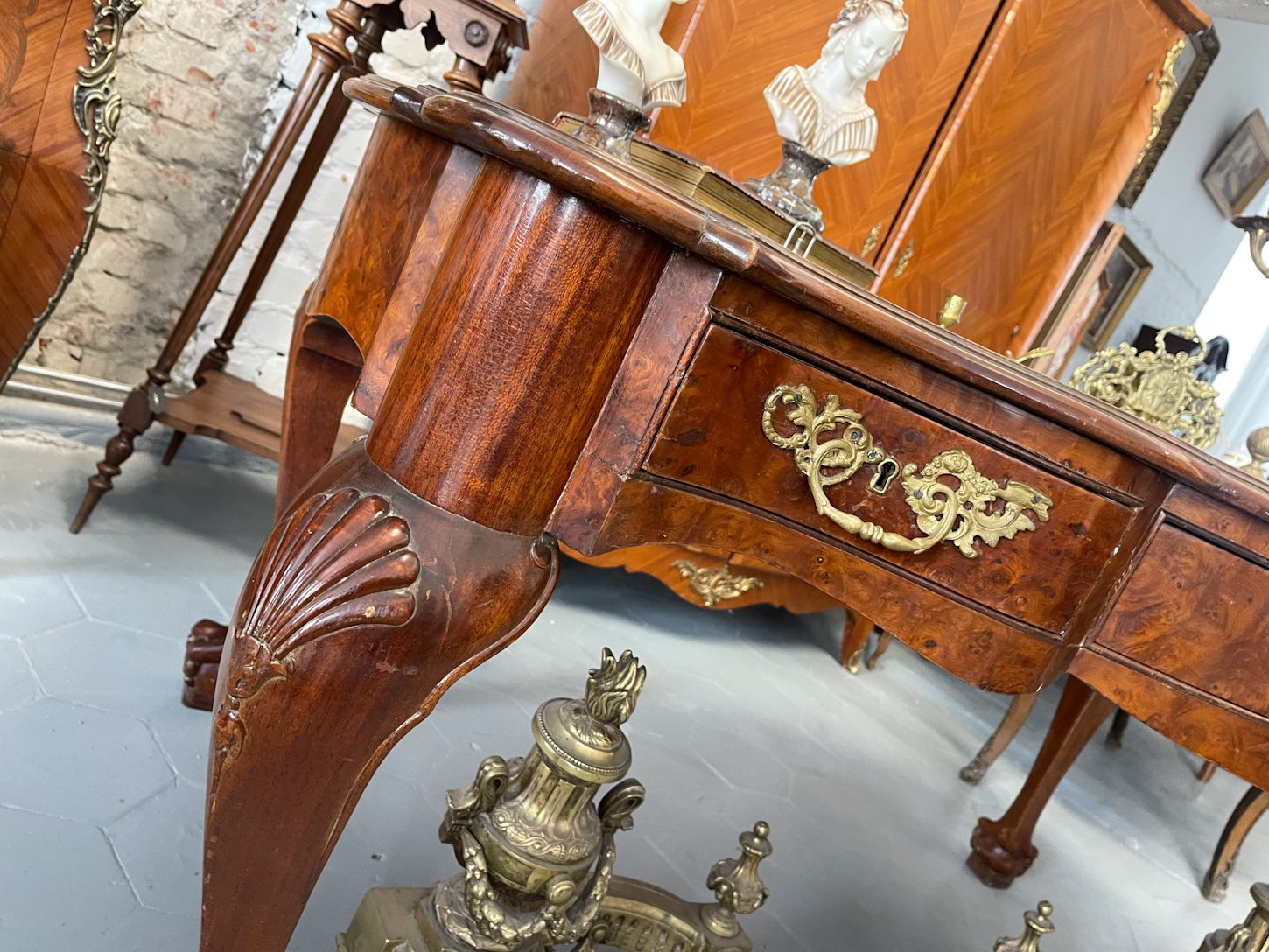
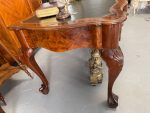
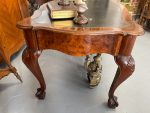
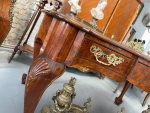
Form. Pronounced serpentine outline with carved corner indentations — organic, almost sculptural. Both sides equally finished with continuous walnut burl veneer, allowing the desk to stand freely in a room as a true island piece.
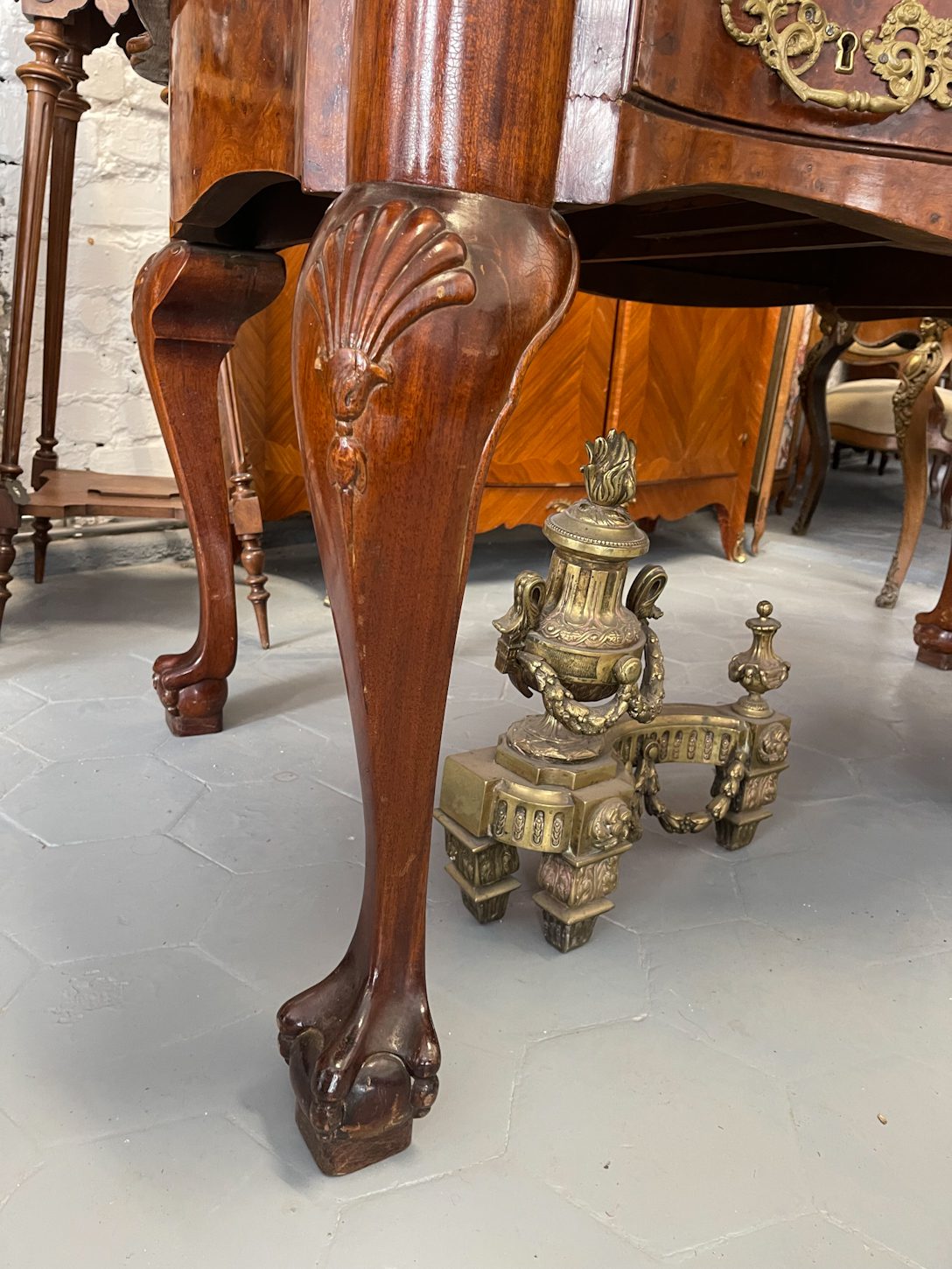
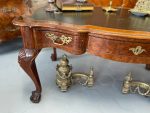
Wood. Walnut burl veneer with a vivid swirling figure, warm reddish-brown with deep lustre. Corner pilasters with fluting — structural and decorative in equal measure.
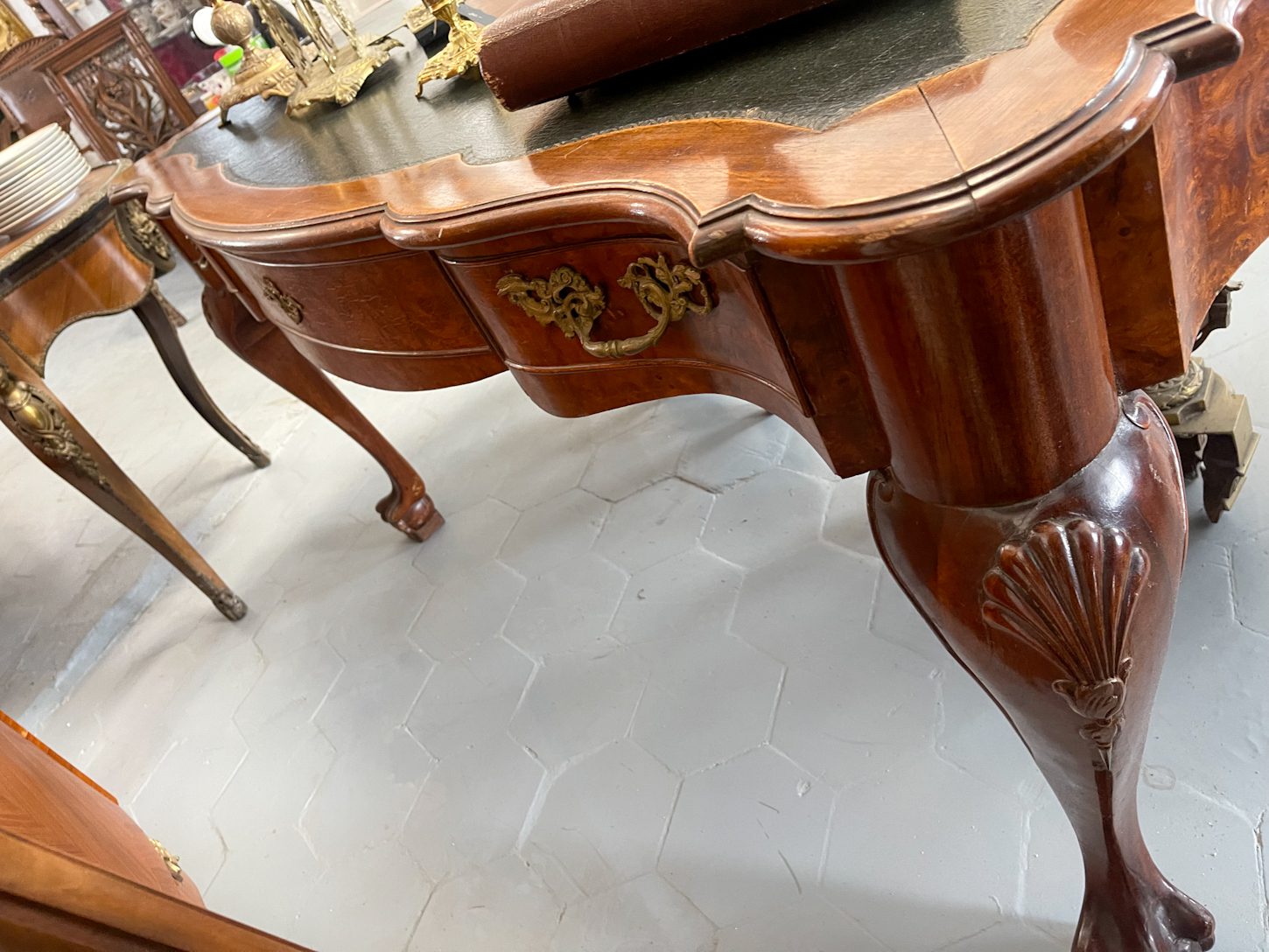
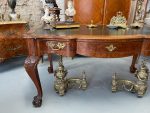
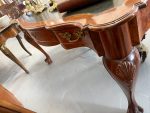
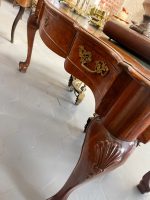
Legs. Cabriole legs with carved shell (coquille) motifs at the knee in high relief. Classical ball-and-claw feet — the most iconic signature of the antique Chippendale writing desk.
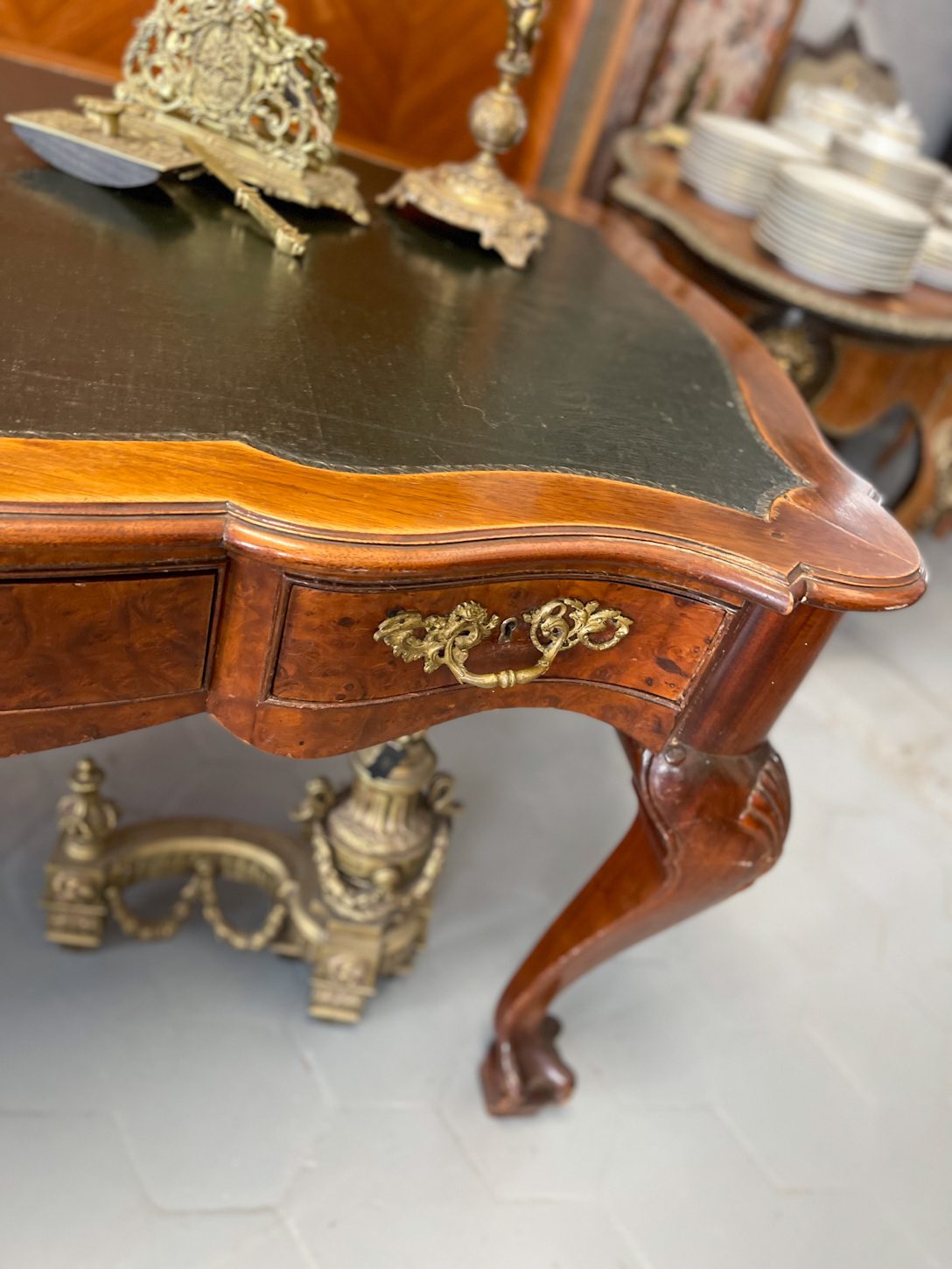
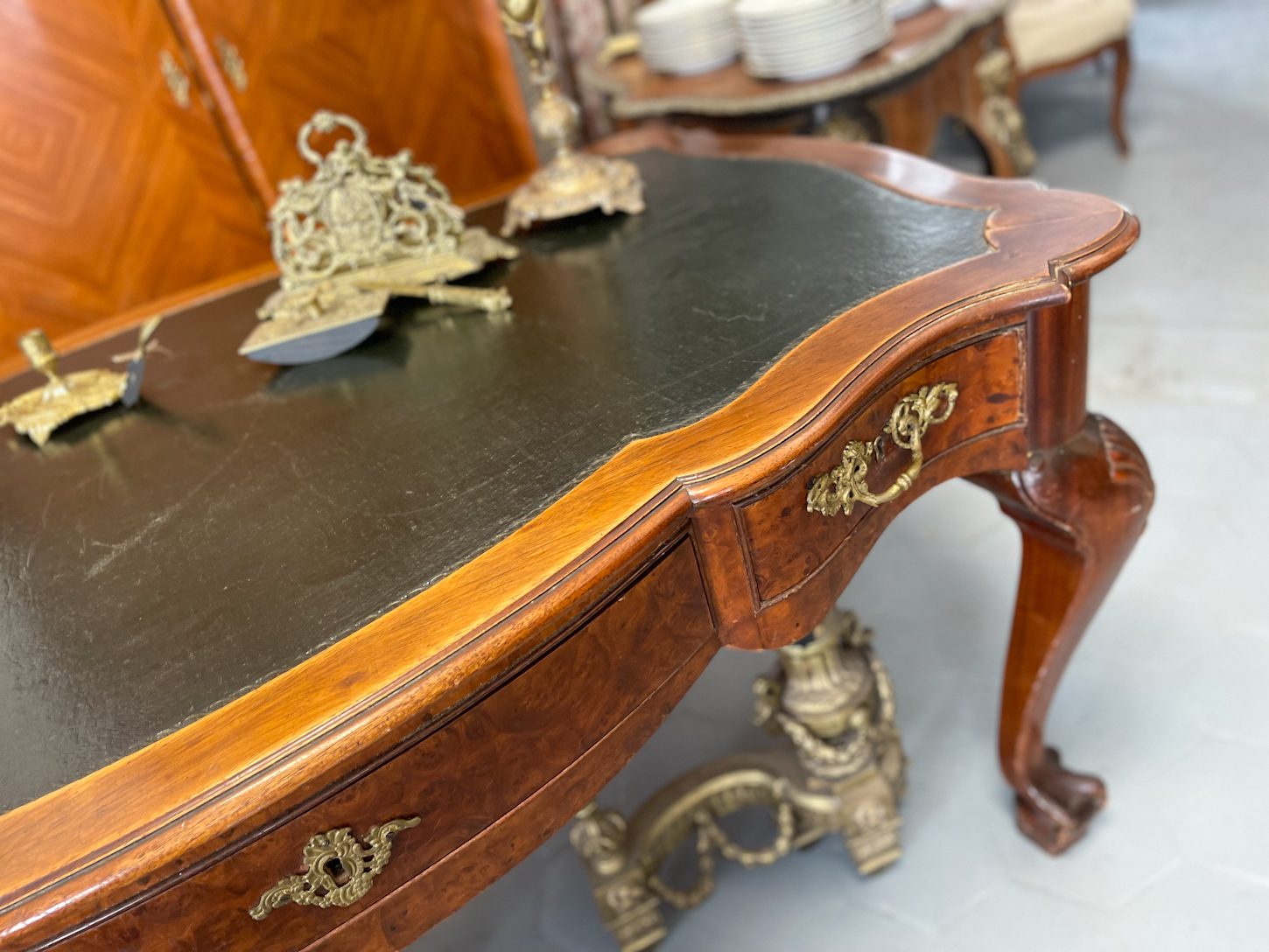
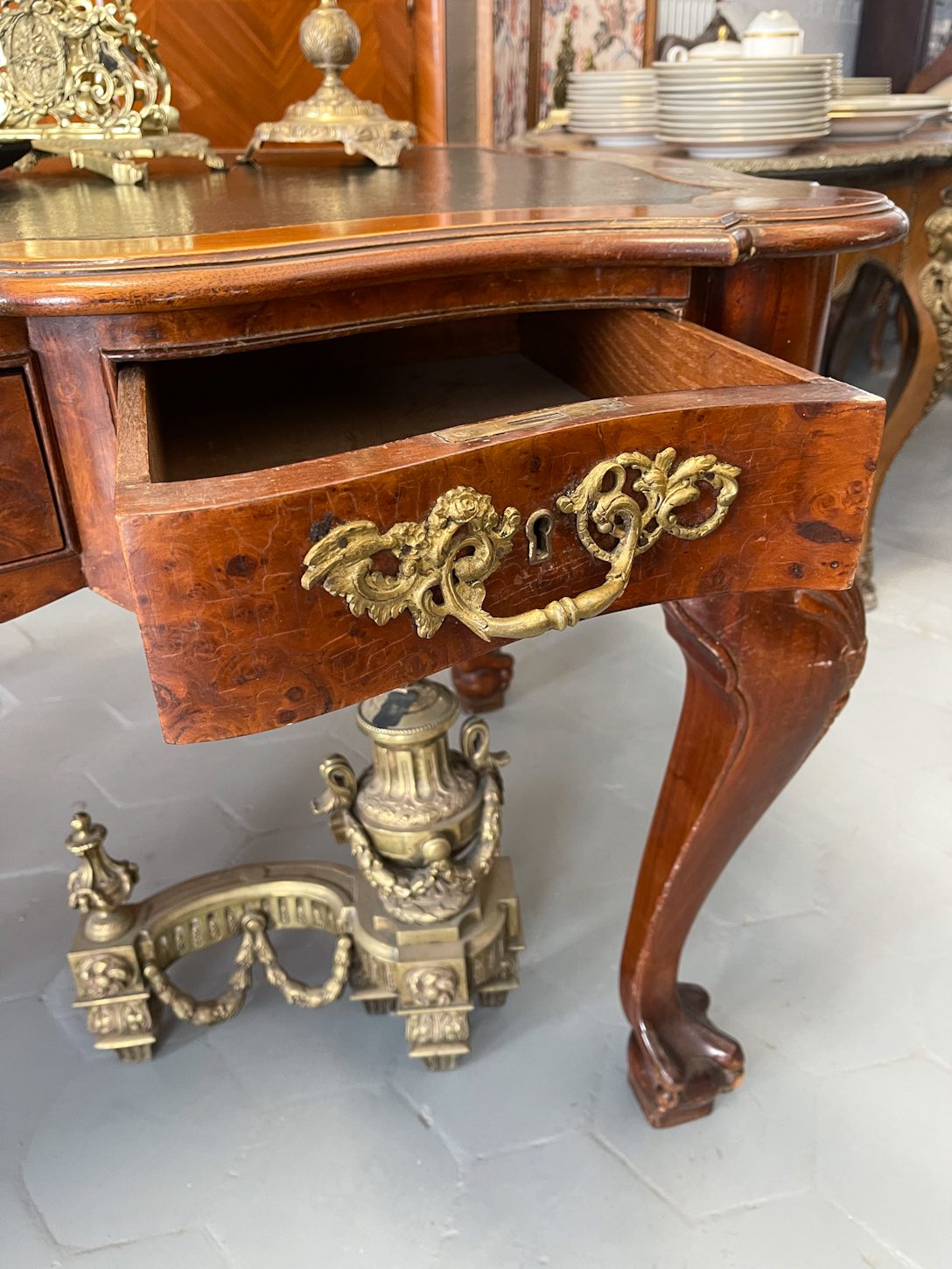
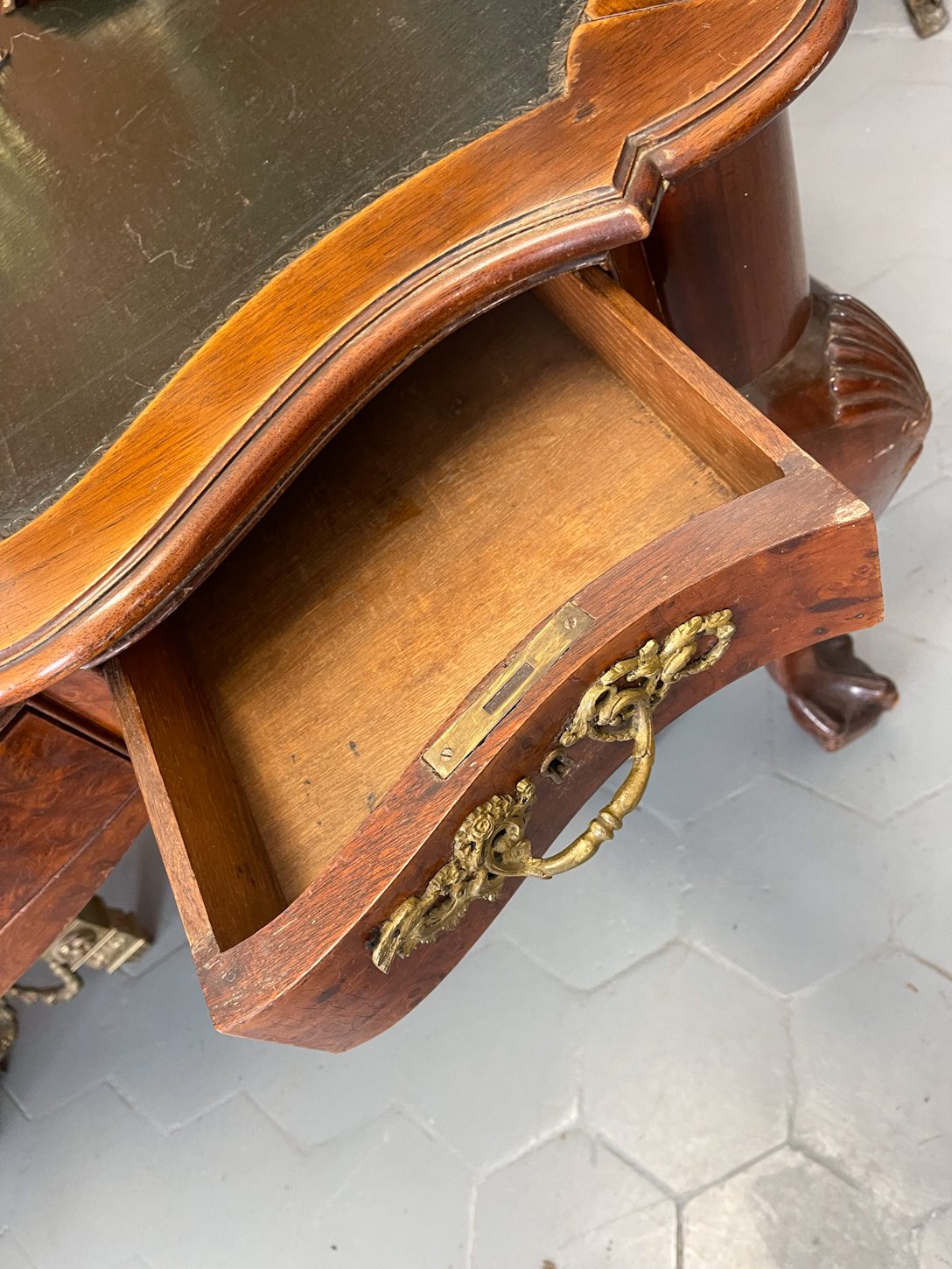
Hardware. Rococo-style gilt bronze handles with asymmetric scroll ornament on all drawers. Matching escutcheon plates throughout.
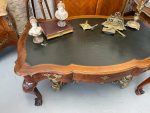
Top and drawers. Green leather top with patina and gilt-tooled border. Three drawers to the front with original bronze hardware; solid pine interiors with original screw fittings preserved.
This rare antique Chippendale writing desk at 165 × 97 cm is a genuine room centrepiece. Condition: leather top with patina and wear; bronze hardware with natural oxidation; burl veneer with minor isolated losses; legs and carving in good condition. Condition fully reflected in photographs.
Höhe 81 cm × Länge 165 cm × Breite 97 cm
Bureau Plat de Style Chippendale avec Dessus en Cuir et Côtés Décoratifs — Style Chippendale, Angleterre / Europe, vers 1880–1910 (3158)
Style Chippendale. Angleterre / Europe continentale. Vers 1880–1910.
Ce monumental bureau plat réunit deux traditions — les pieds cabriole à griffes ball-and-claw anglais et le placage de ronce de noyer caractéristique du meilleur ébénisterie continentale. Un meuble sans mauvais côté, sans hiérarchie de vues.
Instantané de la Belle Époque : Oscar Wilde (Oscar Wilde) s’arrêta. Il avait déjà fait le tour du bureau trois fois — c’était ainsi qu’il pensait. Le dessin de la ronce changeait à chaque pas, et un instant il lui sembla que sur la surface verte ne reposait pas une feuille blanche, mais une phrase déjà écrite — celle qu’il cherchait depuis le matin.
Forme. Contour serpentine prononcé avec des décrochements d’angle — organique, presque sculptural. Les deux côtés également finis avec un placage continu de ronce de noyer, permettant au bureau de trôner librement au centre d’une pièce.
Bois. Placage de ronce de noyer au dessin tourbillonnant, ton brun-roux chaud avec un lustre profond. Pilastres d’angle cannelés — à la fois constructifs et décoratifs.
Pieds. Pieds cabriole avec motifs sculptés en coquille (coquille) au genou en haut relief. Pieds ball-and-claw classiques — la signature la plus iconique de l’ancien bureau Chippendale.
Ferrures. Poignées en bronze doré de style rocaille à ornement de volutes asymétriques sur tous les tiroirs. Entrées de serrure assorties conservées.
Plateau et tiroirs. Dessus en cuir vert avec patine et filet doré toolé. Trois tiroirs en façade avec ferrures d’origine en bronze ; intérieur en pin massif avec visserie d’origine conservée. État : dessus en cuir avec patine et usure ; ferrures en bronze avec oxydation naturelle ; placage de ronce avec quelques pertes mineures isolées ; pieds et sculptures en bon état. L’état de la pièce est intégralement documenté dans les photographies.