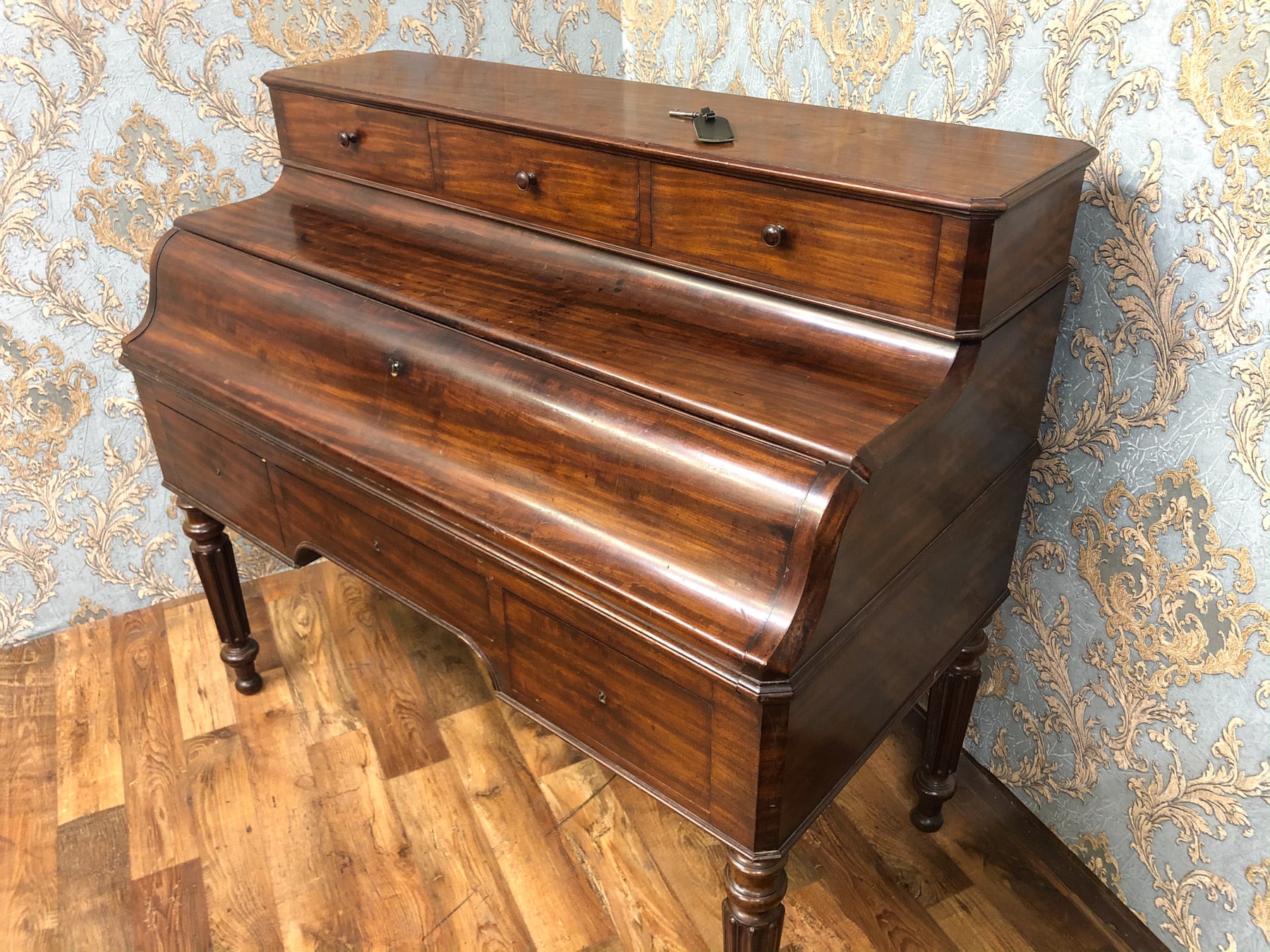
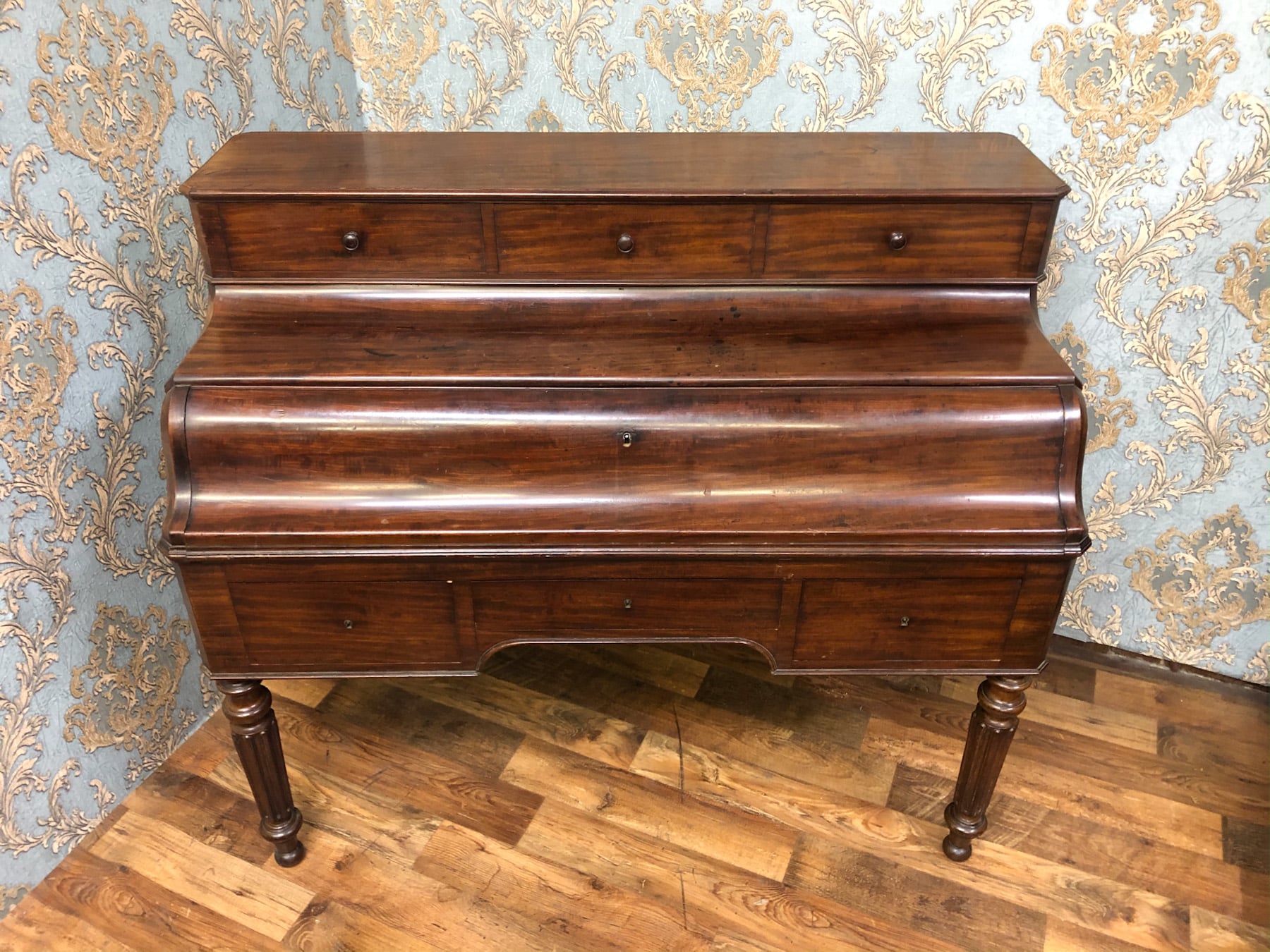
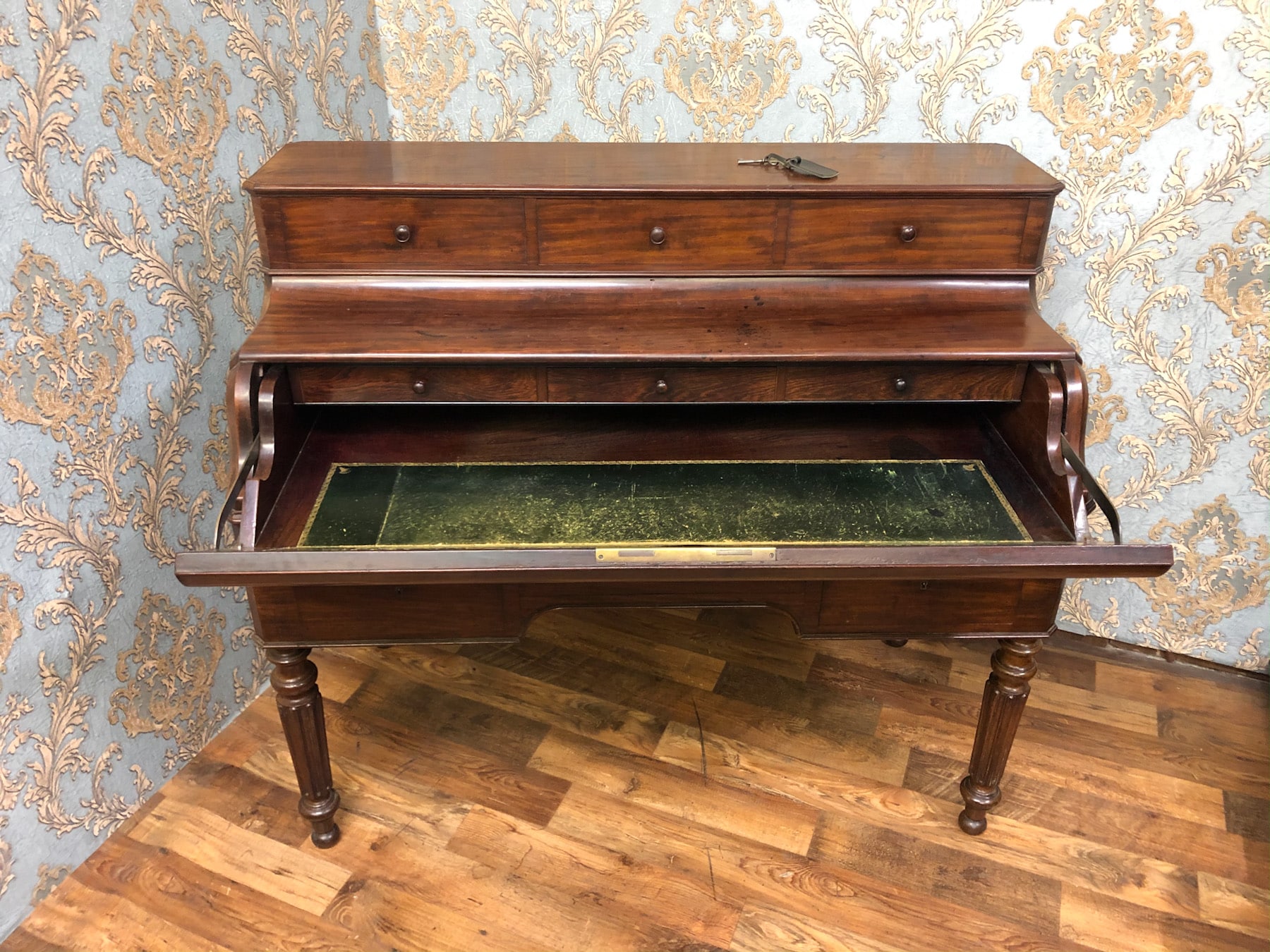
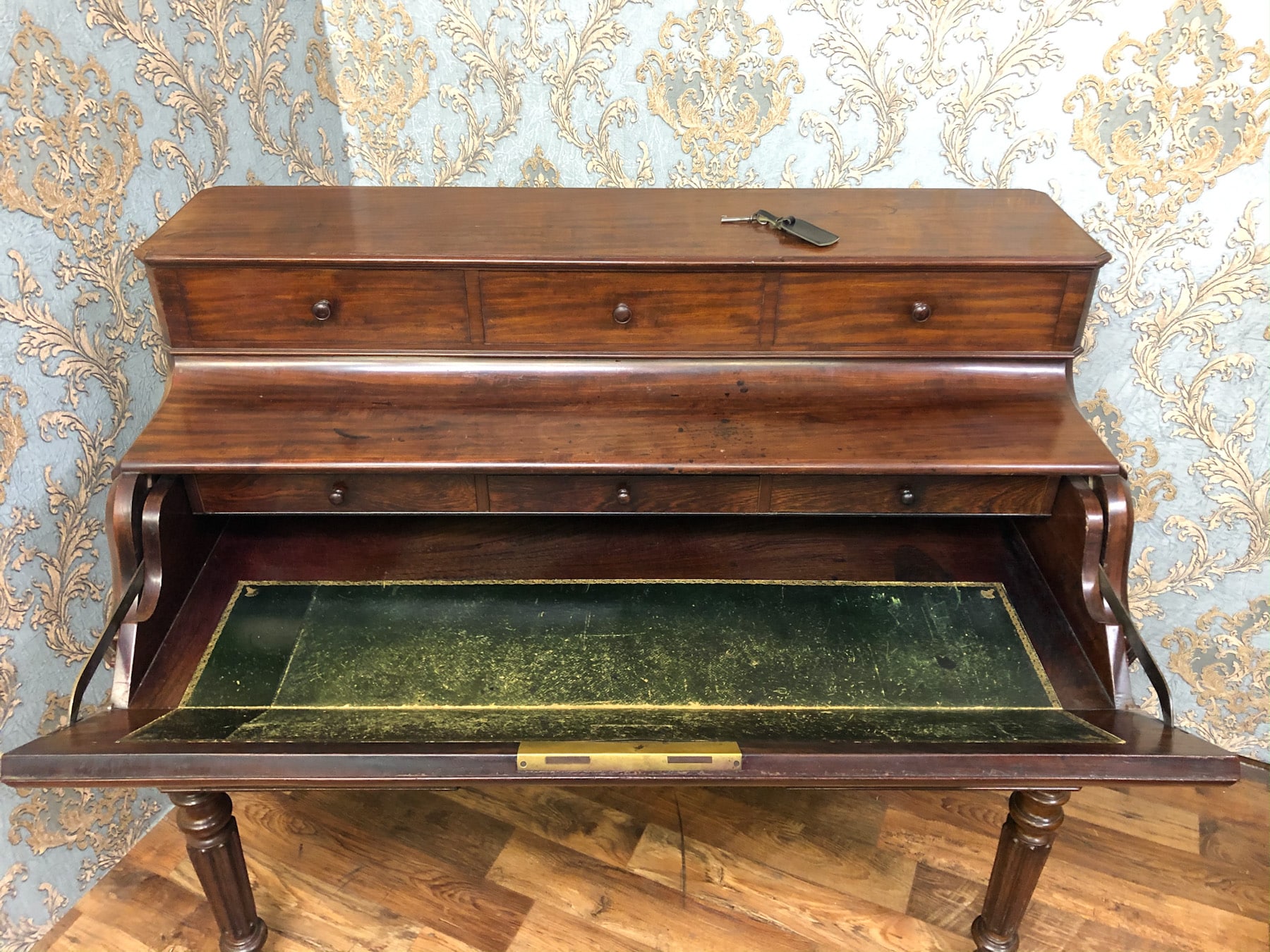
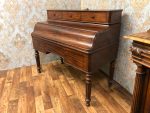
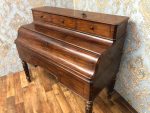
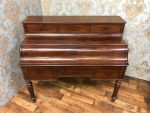
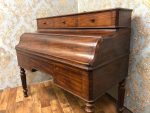
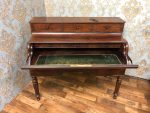
Cylinder Bureau — Victorian Era, England, circa 1840–1870. This monumental mahogany desk features a lockable tambour cylinder and a pull-out writing surface with original green leather. A highly functional and architecturally assured piece, ideal for a classic or dark academia interior. 1 150,00 €
You’re now subscribed to price tracking for this product. We’ll notify you if the price drops. 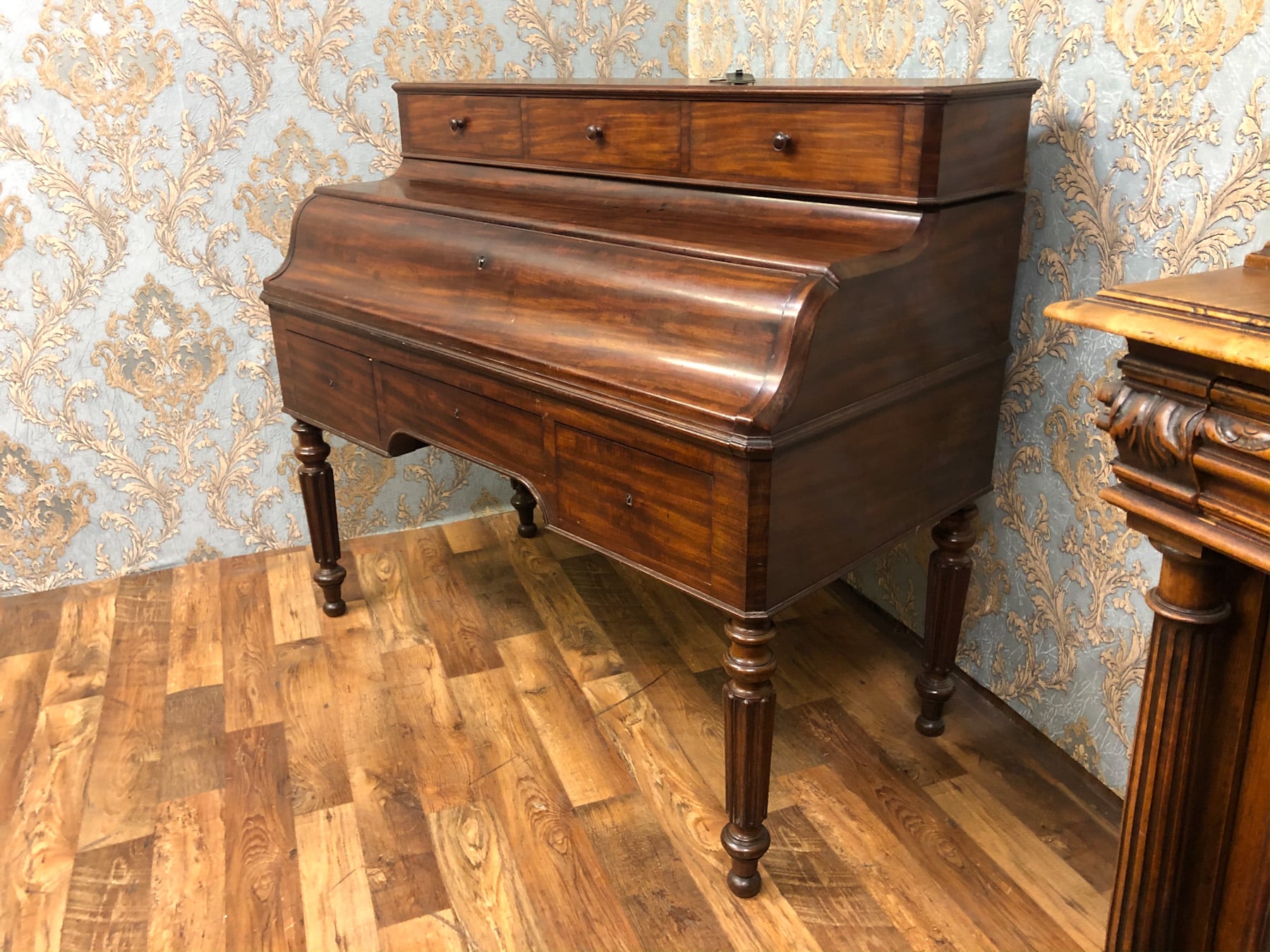
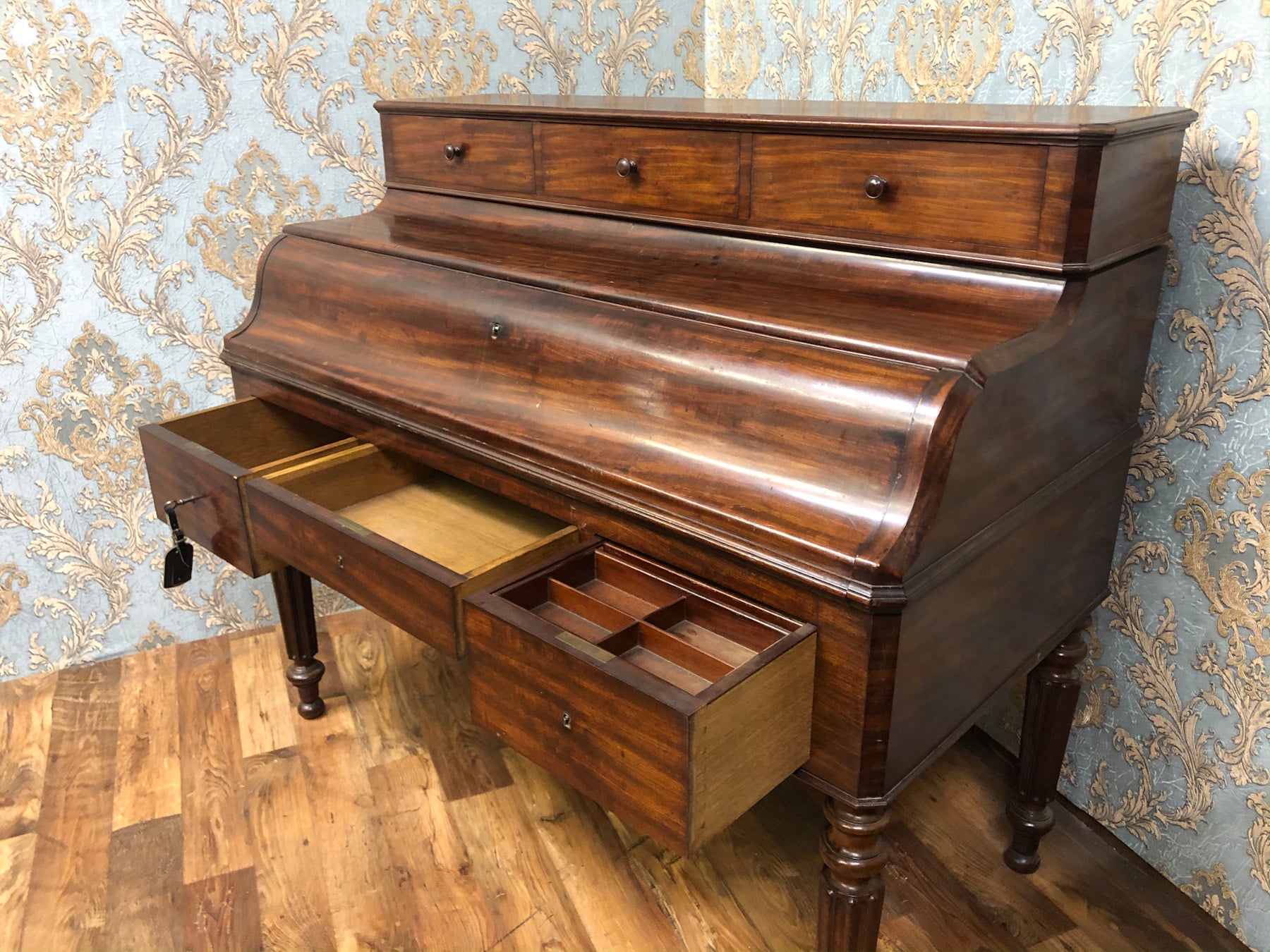
Victorian Cylinder Bureau Secretary Desk, England, c. 1840-1870
Height 111 cm Length 128 cm Color NaturalMahoganyDark green
Description
Cylinder Bureau Bureau à Cylindre — Victorian Era, England / Northern Europe, circa 1840–1870 (312)
Victorian era. England or Northern Europe. Circa 1840–1870.
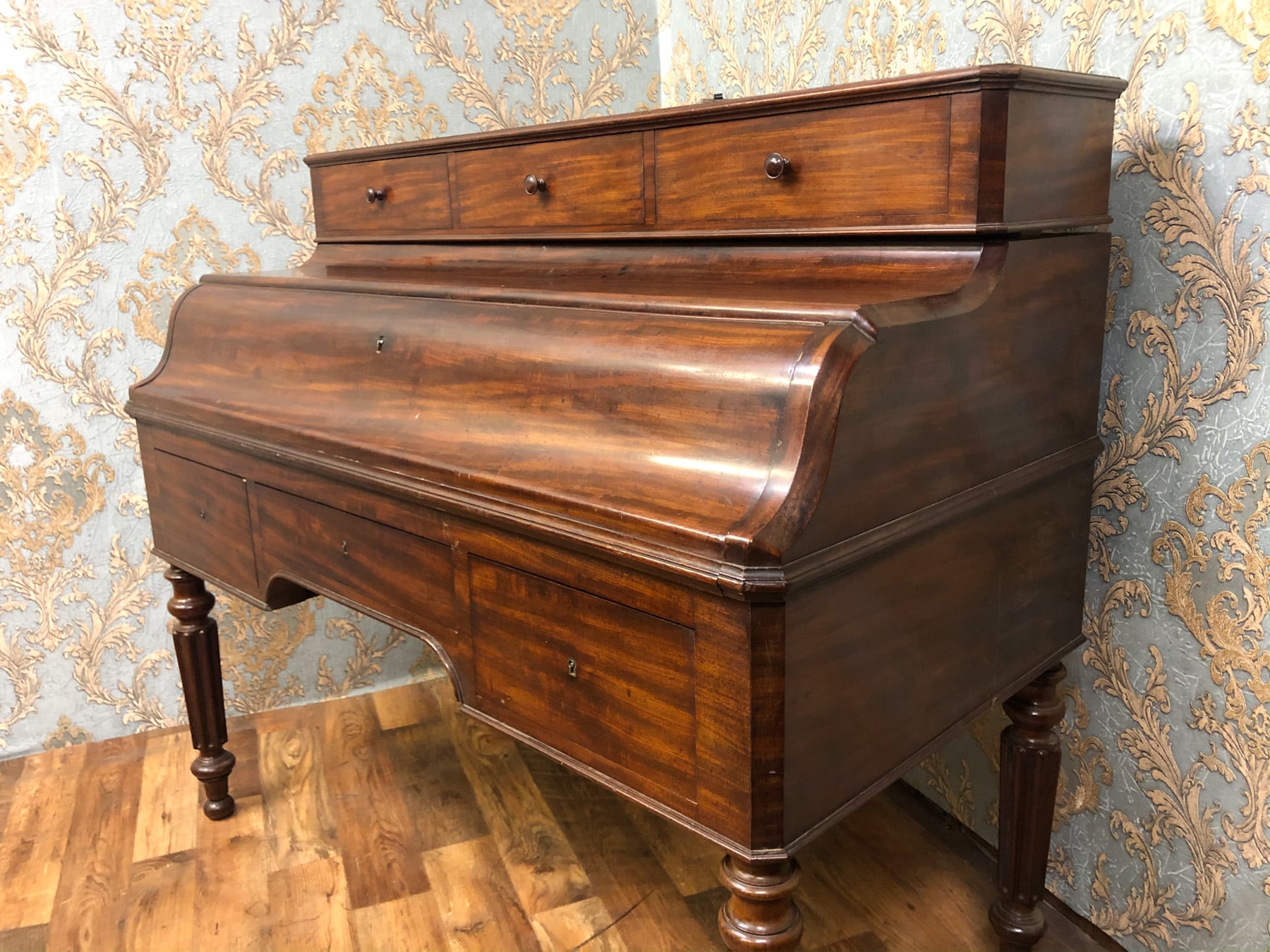
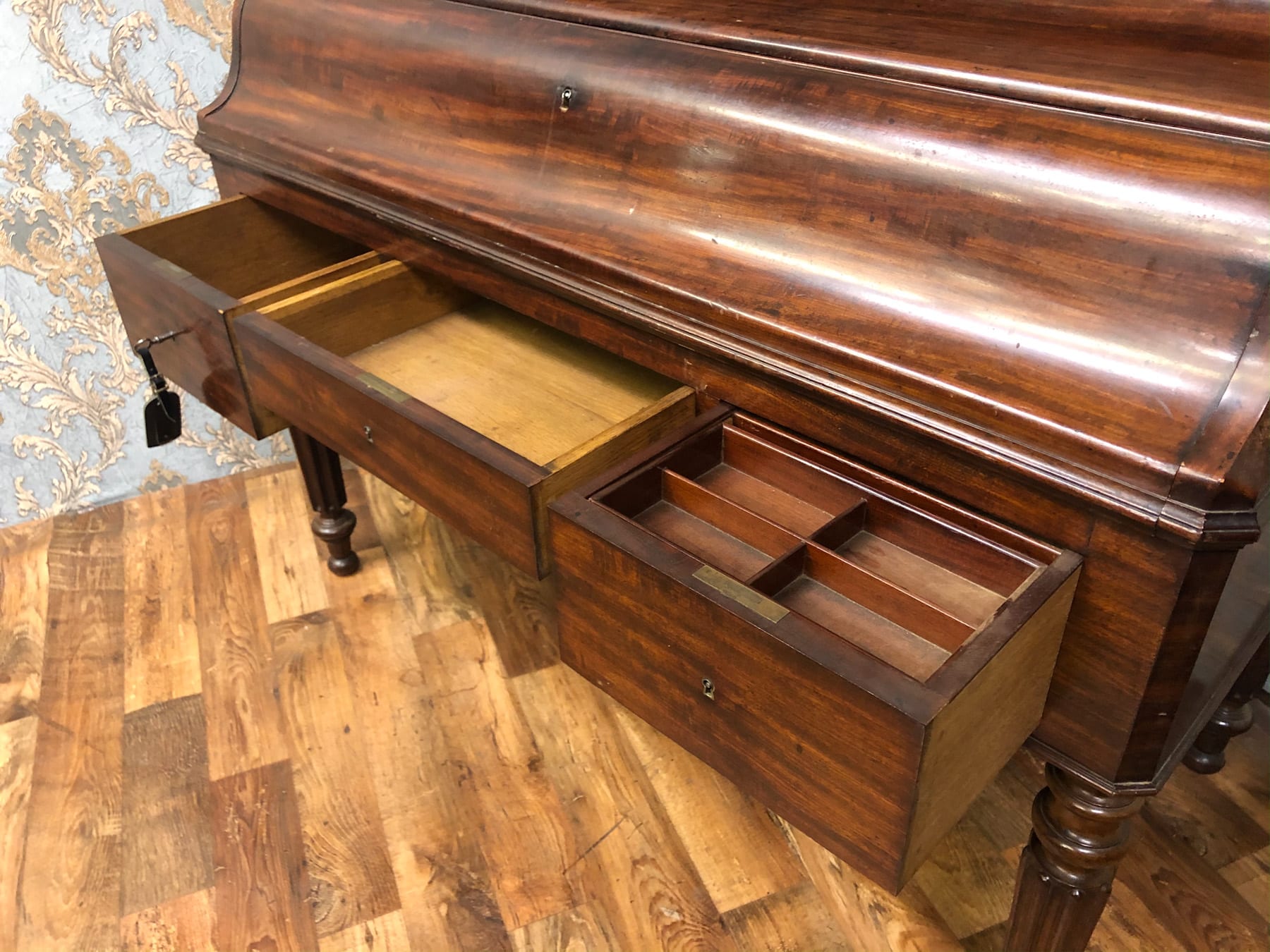
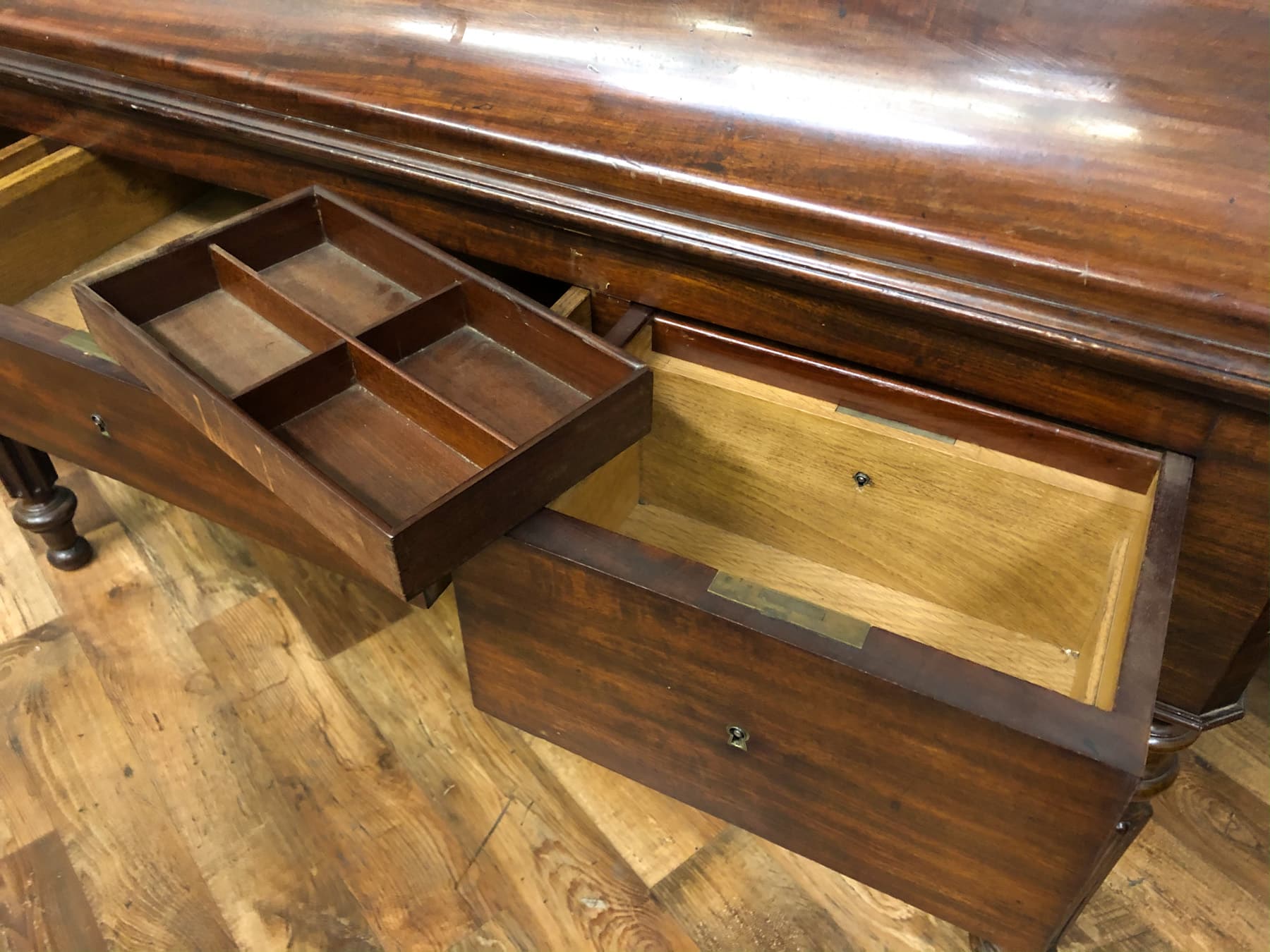
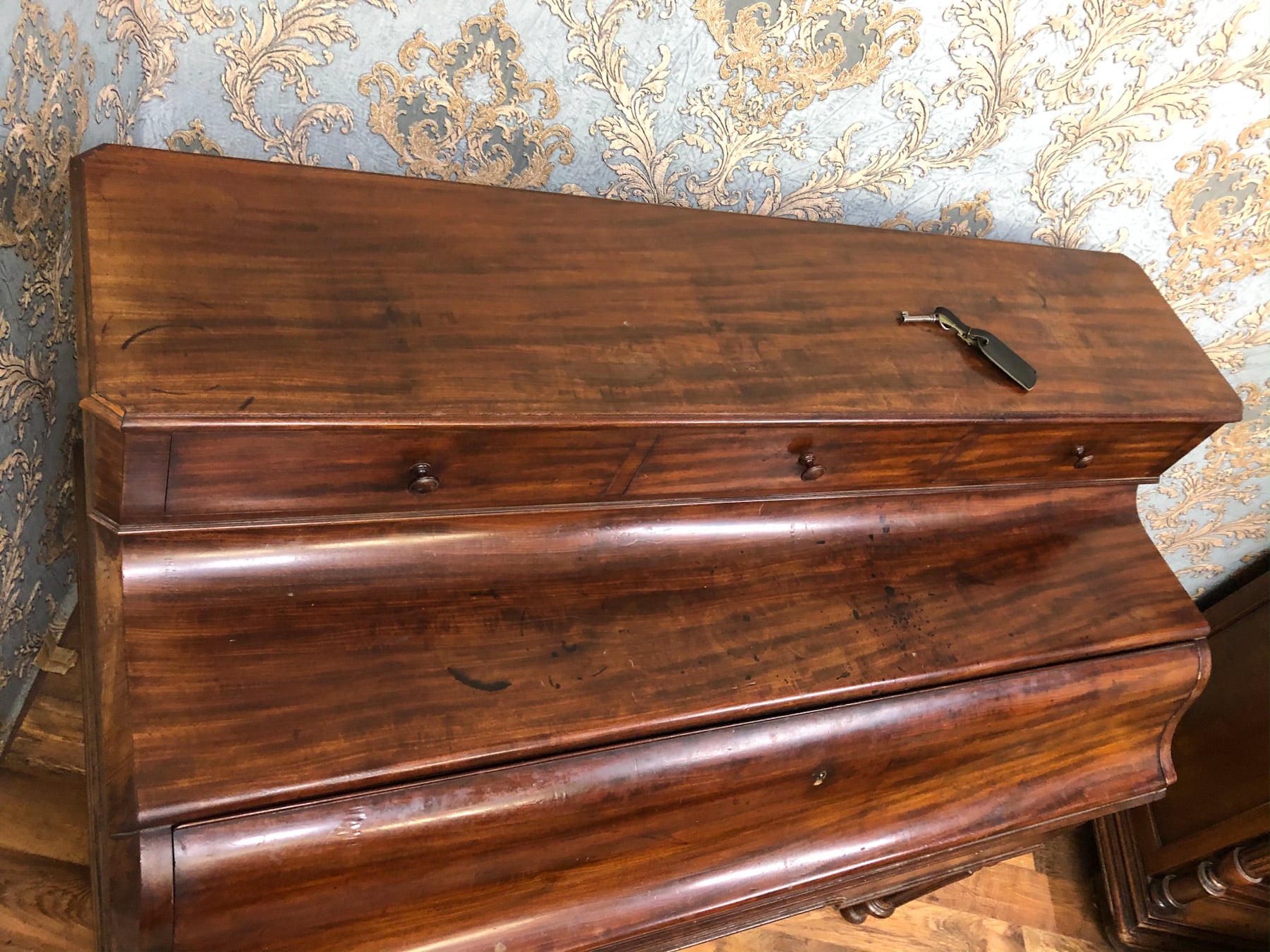
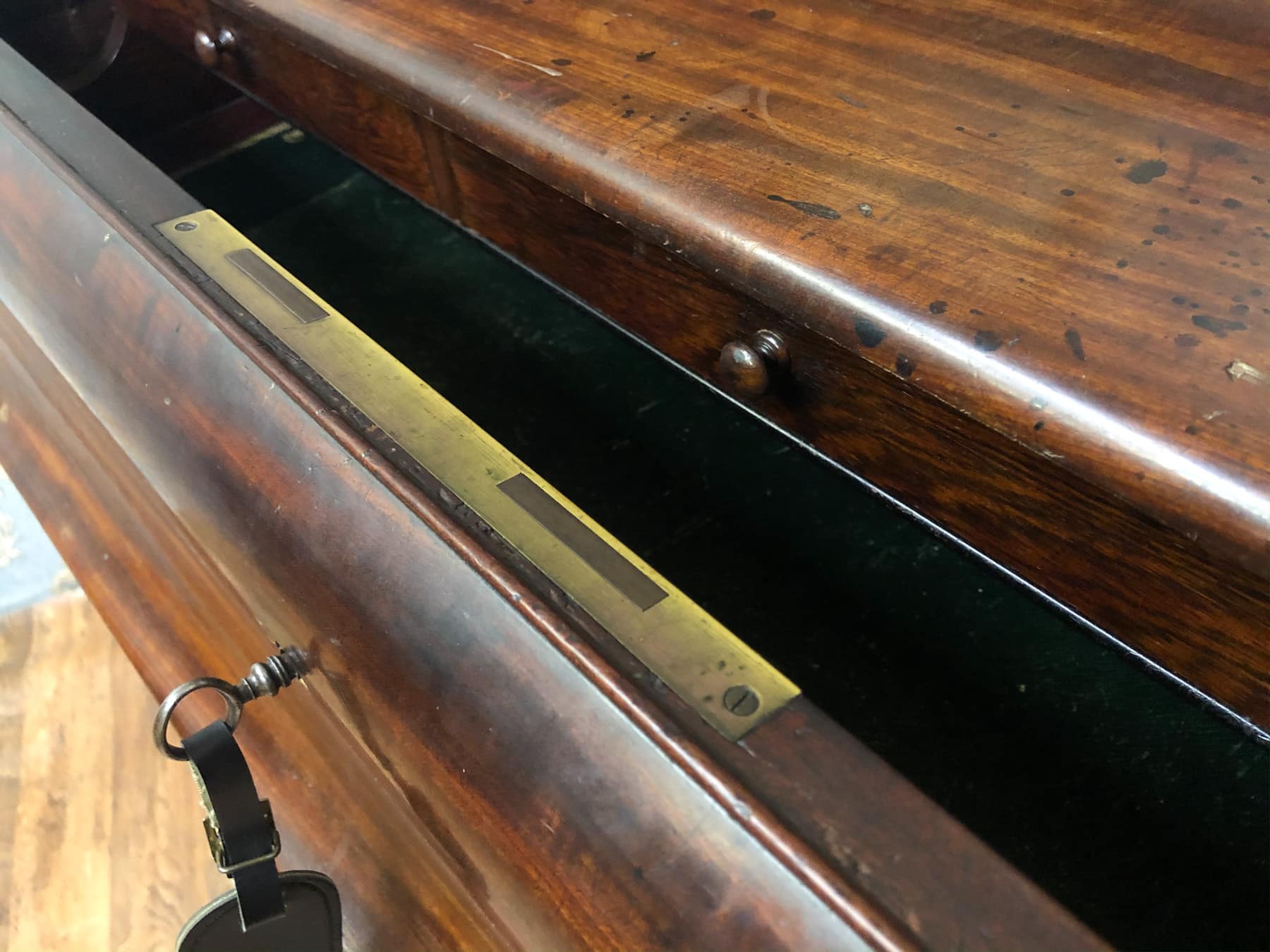
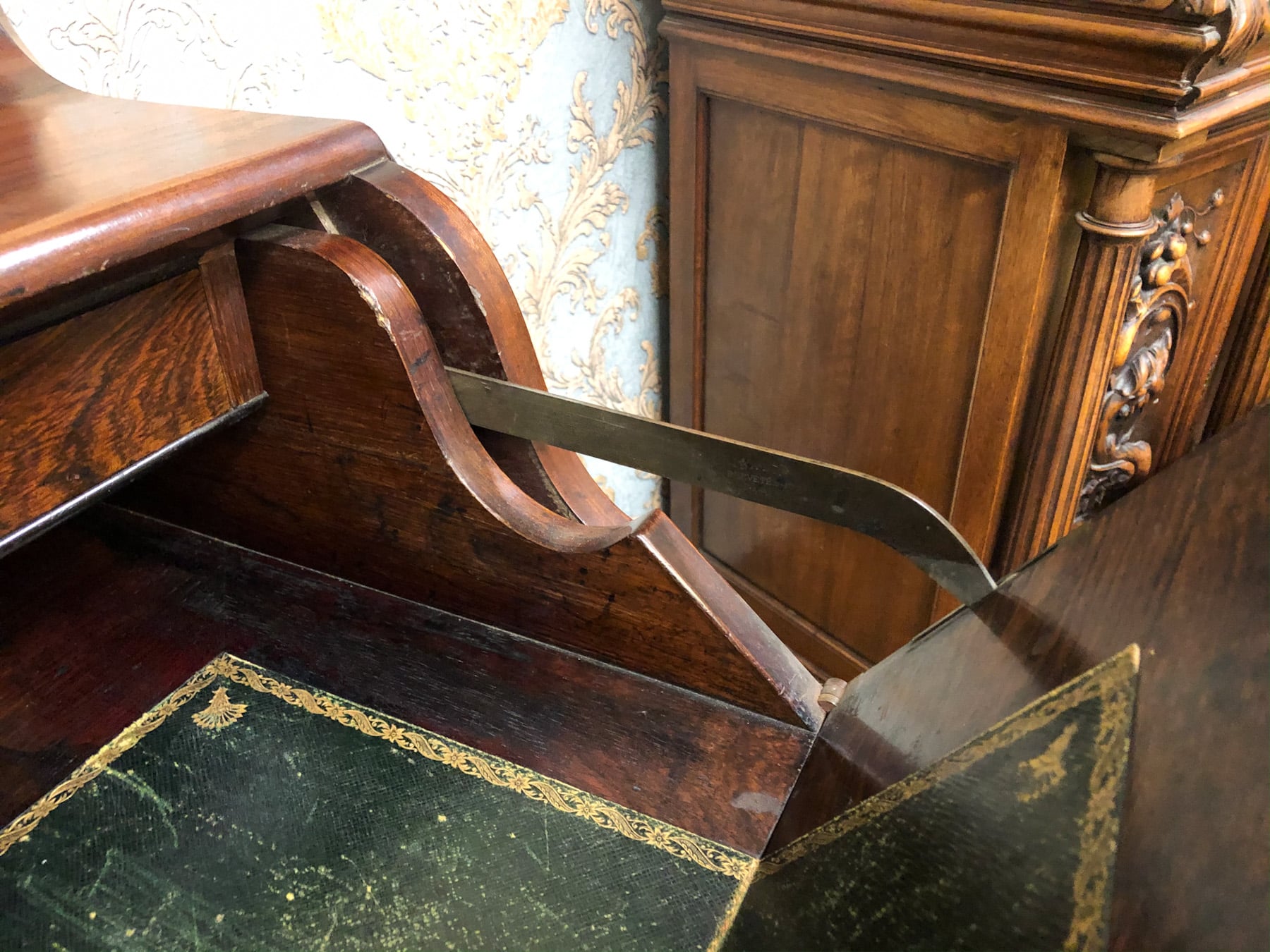
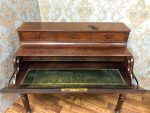
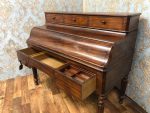
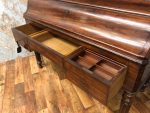
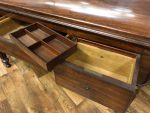
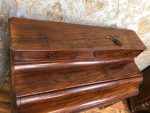
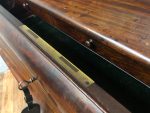
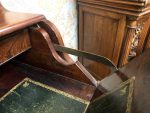
A monumental mahogany cylinder bureau (bureau à cylindre) — one of the most functional and architecturally assured desk types of the mid-19th century, uniting the finest cabinetmaking tradition with a practical intelligence about the organisation of working life. The piece divides clearly into two sections: the upper, with three small drawers and a lockable tambour cylinder; the lower, with two broad drawers, the right-hand one fitted with an interior divided tray for writing implements, seals, and documents. The pull-out writing surface — pupitre coulissant — is covered in dark green leather with gilt tooling border, preserving the full authenticity of the original finish.
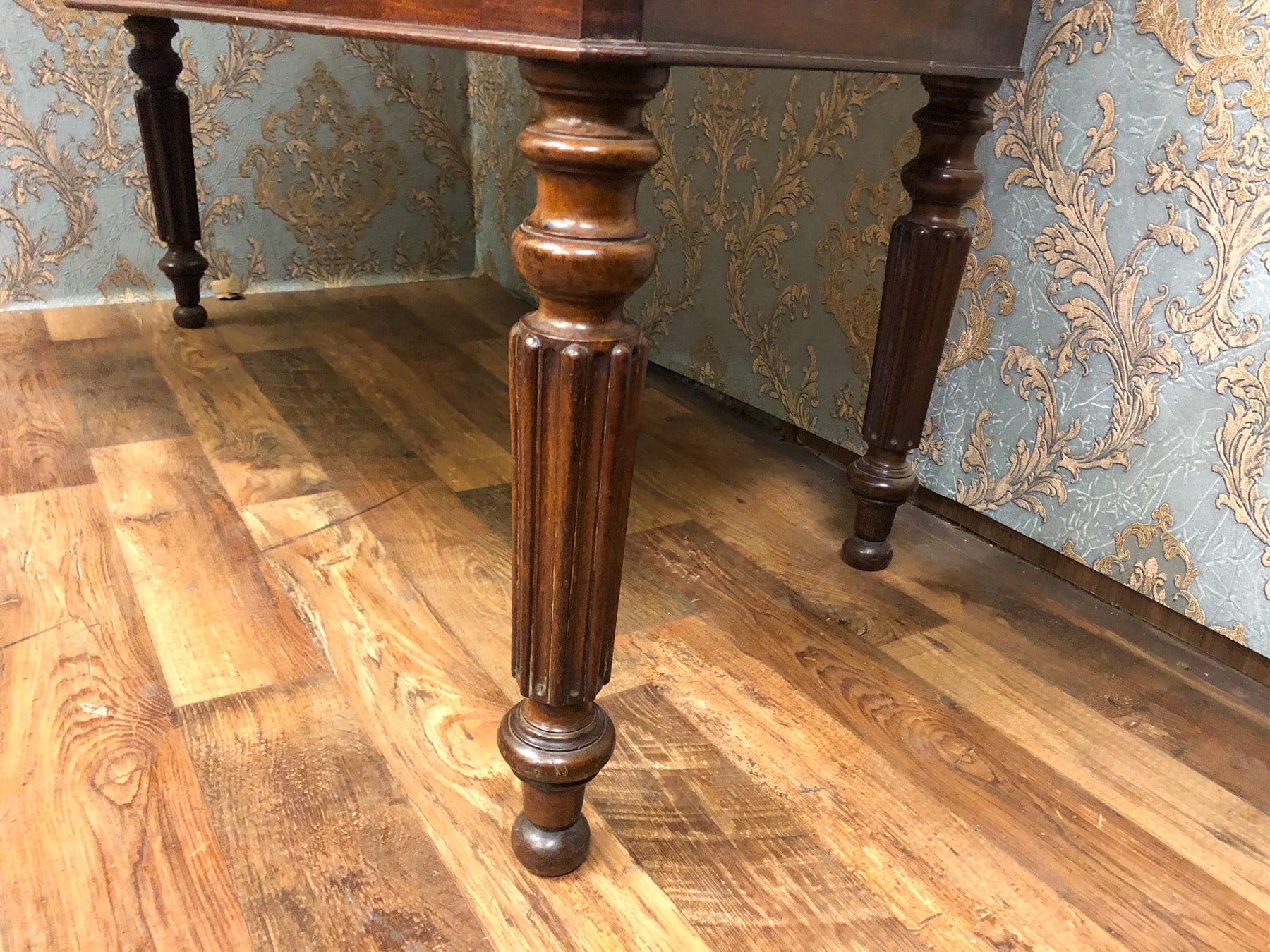
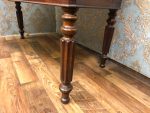
The mahogany veneer is of deep warm tone with a natural silken lustre suggesting Cuban or Honduran timber of the finest grade. The reeded turned legs with delicate anneau rings and ball feet are a characteristic element of Northern European and Victorian cabinetmaking — restrained but of precise proportional intelligence. The original iron key is present.
Victorian era snapshot: London, an autumn evening in 1863. Charles Dickens (Charles Dickens) set his pen down on the green surface at Gad’s Hill — just as he always did when the sentence was finished but the thought was not. The cylinder was locked. The key was in his pocket. That meant no more writing tonight.
Maker and marks. No maker’s mark is visible in the photographs. The quality of construction — the depth of the veneer, the precision of the drawer divisions, and the execution of the tambour mechanism — points to a professional London or Hamburg cabinetmaking atelier working at the height of the Victorian era. The original key and green leather writing surface are undisturbed — exceptionally rare in a bureau of this age.
Rarity and significance. A bureau à cylindre with original green leather writing surface, fitted interior drawer, and original key is an actively sought piece on the antiques market. Functional integrity — everything working exactly as it did 160 years ago — is a high criterion of collector value.
Interior and photographic use. The bureau suits a working study in a classical, dark academia, or Victorian interior. The cylinder mechanism allows the working surface to be entirely concealed — a practical advantage for the modern user. For photographers, an outstanding prop for historical, literary, or legal visual shoots.
Condition. The mahogany veneer shows natural aged patina with minor surface scratching consistent with age. The tambour mechanism operates. The green leather writing surface with gilt tooling is undisturbed and well preserved. The original key is present. The condition of the item is fully reflected in the photographs.
Höhe 111 cm × Länge 128 cm × Tiefe 65 cm